
Trianon

The Crown of St. Stephen of Hungary

Looking back at the treaties that ended the First World War, it appears that the Hungarian half of the Kingdom of Austria-Hungary was made to pay the heavier price for what was essentially the Emperor Franz Joseph’s decision to go to war against the Serbs for assassinating the heir to the throne in Sarajevo. According to Wikipedia:

The treaty regulated the status of the Kingdom of Hungary and defined its borders generally within the ceasefire lines established in November-December 1918 and left Hungary as a landlocked state that included 93,073 square kilometres (35,936 sq mi), 28% of the 325,411 square kilometres (125,642 sq mi) that had constituted the pre-war Kingdom of Hungary (the Hungarian half of the Austro-Hungarian monarchy). The truncated kingdom had a population of 7.6 million, 36% compared to the pre-war kingdom’s population of 20.9 million.Though the areas that were allocated to neighbouring countries had a majority of non-Hungarians, in them lived 3.3 million Hungarians – 31% of the Hungarians – who then became minorities.

How Trianon Chopped Hungary to Bits

Pieces of Hungary went to Yugoslavia, Romania (the largest chunk, all of Transylvania), Russia, Czechoslovakia, and even Austria. What did Austria lose for its participation in the war? Essentially, Bohemia (to Czechoslovakia) and the much of the Tirol (to Italy). The new borders of Hungary became to larger of the two green areas in the above map.

I can understand separating out the Slovenians, Croatians, Russians, and Slovaks; but a great injustice was done to the Hungarians of Transylvania, who are treated as second-class citizens of Romania.

Seven Years in Siberia

My Grandfather’s Obituary in the Cleveland Papers

The story of the Czechoslovak Legion was one of amazing heroism and almost unbelievable feats. I had always heard that my father’s father was a member of this fighting force and was captured and served time in Siberia. Today, going through some old papers, I received confirmation from his obituary in a Cleveland newspaper.

In World War I, the Czechoslovak Legion fought on the side of the forces arrayed against Germany, in hopes that after the war, their efforts would result in a free Czechoslovakia. The unit to which Emil Paris Sr belonged did its fighting in Russia. When the Bolshevik Revolution occurred late in 1917, they fought for the Whites against the Red Army. As the Germans invaded the Ukraine, they found escape through Europe blocked and elected to fight their way across Siberia along the line of the Trans-Siberian Railroad to Vladivostok, from where they would find ships back to Europe.

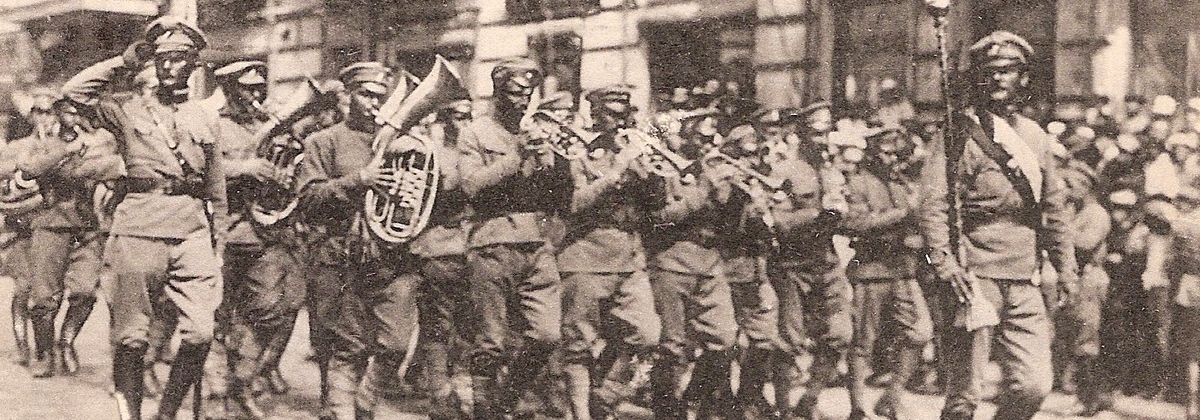
Men from the Czechoslovak Legion in Vladivostok

Emil didn’t quite make it. He was captured by the Red Army and interned in Siberia for seven years, before he was released. During that time, my father Alex, my Uncle Emil Jr, and my Aunt Margit were on their own in the Tatra Mountains of Slovakia in the middle of the postwar famine, just trying to survive.

I have a few memories of my grandfather and his wife before he died some time before my brother’s birth in 1951. I remember his funeral, and I remember visiting him before Irma died in 1947. During that visit, I was given a toy boat. It must have been one of my earliest memories. I was two years old at the time.

Czech Stamp Honoring a Battle Won by the Legion

My grandfather might have been heroic, but he was famed for being a mean man who once sued his son, my father, over a five dollar debt.

I am one of the three grandchildren referred to in the obituary, the others being Emil Jr’s children Emil and Peggy. My brother was to join that company in April 1951.