“The Divinity of the Groves”

Tree Cutting

Tree Cutting

Then we went to work to cut down the trees. The slim stems were an easy task to a good woodman, and one after another they toppled to the ground. And meantime, as I watched, I became conscious of a strange emotion.

It was as if someone were pleading with me. A gentle voice, not threatening, but pleading—something too fine for the sensual ear, but touching inner chords of the spirit. So tenuous it was and distant that I could think of no personality behind it. Rather it was the viewless, bodiless grace of this delectable vale, some old exquisite divinity of the groves. There was the heart of all sorrow in it, and the soul of all loveliness. It seemed a woman’s voice, some lost lady who had brought nothing but goodness unrepaid to the world. And what the voice told me was that I was destroying her last shelter.

That was the pathos of it—the voice was homeless. As the axes flashed in the sunlight and the wood grew thin, that gentle spirit was pleading with me for mercy and a brief respite. It seemed to be telling of a world for centuries grown coarse and pitiless, of long sad wanderings, of hardly won shelter, and a peace which was the little all she sought from men. There was nothing terrible in it. No thought of wrong-doing. The spell which to Semitic blood held the mystery of evil, was to me, of the Northern race, only delicate and rare and beautiful. Jobson and the rest did not feel it, I with my finer senses caught nothing but the hopeless sadness of it. That which had stirred the passion in Lawson was only wringing my heart. It was almost too pitiful to bear. As the trees crashed down and the men wiped the sweat from their brows, I seemed to myself like the murderer of fair women and innocent children. I remember that the tears were running over my cheeks. More than once I opened my mouth to countermand the work, but the face of Jobson, that grim Tishbite, held me back.—John Buchan, “The Grove of Ashtaroth,” The Moon Endureth: Tales and Fancies

Imagine a Puddle

Some More from Douglas Adams

Some More from Douglas Adams

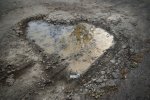
Imagine a puddle waking up one morning and thinking, “This is an interesting world I find myself in — an interesting hole I find myself in — fits me rather neatly, doesn’t it? In fact it fits me staggeringly well, must have been made to have me in it!” This is such a powerful idea that as the sun rises in the sky and the air heats up and as, gradually, the puddle gets smaller and smaller, it’s still frantically hanging on to the notion that everything’s going to be alright, because this world was meant to have him in it, was built to have him in it; so the moment he disappears catches him rather by surprise. I think this may be something we need to be on the watch out for. We all know that at some point in the future the Universe will come to an end and at some other point, considerably in advance from that but still not immediately pressing, the sun will explode. We feel there’s plenty of time to worry about that, but on the other hand that’s a very dangerous thing to say.—Douglas Adams, Speech

La Poderosa’s Final Tour

Ernesto “Che” Guevara

Ernesto “Che” Guevara

Due to a premonition, Alberto didn’t want to drive [the motorcycle nicknamed “La Poderosa,” “The Mighty One”], so I sat up front though we only did a few kilometers before stopping to fix the failing gearbox. A little further on, as we rounded a tight curve at a good speed, the screw came off the back brake, a cow’s head appeared around the bend, then many, many more of them, and I threw on the hand brake which, soldered ineptly, also broke. For some moments I saw nothing more than the blurred shape of cattle flying past us on each side, while poor Poderosa gathered speed down the steep hill. By an absolute miracle we managed to graze only the leg of the last cow, but in the distance a river was screaming toward us with terrifying efficacy. I veered on to the side of the road and in the blink of an eye the bike mounted the two-meter bank, embedding us between two rocks, but we were unhurt.

…. [W]e were put up by some Germans who treated us very well. During the night I had a bad case of the runs and, being ashamed to leave a souvenir in the pot under my bed, I climbed out on to the window ledge and gave up all my pain to the night and blackness beyond. The next morning I looked out to see the effect and saw that two meters below lay a big sheet of tin where they were sun-drying their peaches; the added spectacle was impressive. We beat it fast.—Ernesto “Che” Guevara, The Motorcycle Diaries

The Proverbs of Hell

Blake’s Illustration

Blake’s Illustration

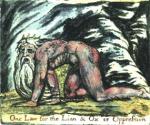
In seed time learn, in harvest teach, in winter enjoy.
Drive your cart and your plow over the bones of the dead.
The road of excess leads to the palace of wisdom.
Prudence is a rich ugly old maid courted by Incapacity.
He who desires but acts not, breeds pestilence.
The cut worm forgives the plow.
Dip him in the river who loves water.
A fool sees not the same tree that a wise man sees.
He whose face gives no light, shall never become a star.
Eternity is in love with the productions of time.
The busy bee has no time for sorrow.
The hours of folly are measur’d by the clock, but of wisdom: no clock can measure.
All wholsom food is caught without a net or a trap.
Bring out number weight & measure in a year of dearth.
No bird soars too high, if he soars with his own wings.
A dead body revenges not injuries.
The most sublime act is to set another before you.
If the fool would persist in his folly he would become wise.
Folly is the cloke of knavery.
Shame is Prides cloke.

Prisons are built with stones of Law, Brothels with bricks of Religion.
The pride of the peacock is the glory of God.
The lust of the goat is the bounty of God.
The wrath of the lion is the wisdom of God.
The nakedness of woman is the work of God.
Excess of sorrow laughs. Excess of joy weeps.
The roaring of lions, the howling of wolves, the raging of the stormy sea, and the destructive sword, are portions of eternity too great for the eye of man.
The fox condemns the trap, not himself.
Joys impregnate. Sorrows bring forth.
Let man wear the fell of the lion. woman the fleece of the sheep.
The bird a nest, the spider a web, man friendship.
The selfish smiling fool, & the sullen frowning fool shall be both thought wise, that they may be a rod.
What is now proved was once only imagin’d.
The rat, the mouse, the fox, the rabbet; watch the roots; the lion, the tyger, the horse, the elephant, watch the fruits.
The cistern contains: the fountain overflows.
One thought fills immensity.
Always be ready to speak your mind, and a base man will avoid you.
Every thing possible to be believ’d is an image of truth.
The eagle never lost so much time, as when he submitted to learn of the crow.
The fox provides for himself. but God provides for the lion.
Think in the morning. Act in the noon. Eat in the evening. Sleep in the night.
He who has suffer’d you to impose on him knows you.
As the plow follows words, so God rewards prayers.
The tygers of wrath are wiser than the horses of instruction.
Expect poison from the standing water.
You never know what is enough unless you know what is more than enough.
Listen to the fools reproach! it is a kingly title!
The eyes of fire, the nostrils of air, the mouth of water, the beard of earth.
The weak in courage is strong in cunning.
The apple tree never asks the beech how he shall grow; nor the lion, the horse, how he shall take his prey.
The thankful reciever bears a plentiful harvest.
If others bad not been foolish, we should be so.
The soul of sweet delight can never be defil’d.
When thou seest an Eagle, thou seest a portion of Genius. lift up thy head!
As the catterpiller chooses the fairest leaves to lay her eggs, so the priest lays his curse on the fairest joys.
To create a little flower is the labour of ages.
Damn braces: Bless relaxes.
The best wine is the oldest, the best water the newest.
Prayers plow not! Praises reap not!
Joys laugh not! Sorrows weep not!—from William Blake, “The Marriage of Heaven and Hell”


“A Spark from the Original Soul”

Martin Buber

Martin Buber

Question: We are commanded to love our neighbor as ourselves. How do I do this if my neighbor has wronged me?

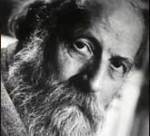
Answer: You must understand these words rightly. Love your neighbor as something which you yourself are. For all souls are one. Each is a spark from the original soul, and this soul is inherent in all souls, just as your soul is inherent in all the members of your body. It may come to pass that your hand will make a mistake and strike you. But would you take a stick and chastise your hand because it lacked understanding, and so increase your pain? It is the same if your neighbor, who is of one soul with you, wrongs you because of his lack of understanding. If you punish him, you only hurt yourself.

Question: But if I see a man who is wicked before God, how can I love him?

Answer: Don’t you know that the primordial soul came out of the essence of God, and that every human soul is a part of God? And will you have no mercy on man, when you see that one of his holy sparks has been lost in a maze and is almost stifled?—Martin Buber, Ten Rungs: Hasidic Sayings

Feature Attractions

4.2.3

Tarkovsky’s Stalker

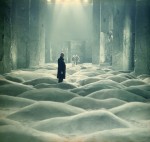
This long tracking sequence, following the trolley as it clanks and clangs along, is the most straightforward journey imaginable—horizontal, flat, right to left, in a straight line—and full of all the promised wonders of cinema. That’s what we are being sold in the trailers that precede what used to be called the “feature presentation”. Unfortunately, this has become the most debased wonder in the history of the earth. It means explosions, historical epics in which the outcome of the Battle of Hastings is reversed by the arcane CGI prowess of Merlin the Magician, it means five-year-old children turning suddenly into snarling devils, it means wrecking cars and reckless driving, it means a lot of noise, it means I have to time my arrival carefully (twenty minutes at least) after the advertised programme time if I am to avoid all this stuff which, if one were exposed to it for the full hour and a half, would cause one’s capacity for discernment to drop by fifty percent (or, conversely, one’s ability to tolerate stuff like this to increase a hundredfold). It means sitting there shaking one’s middle-aged head; it means that one is wary about going to the cinema. It means that there are more and more things on the street, in shops, on-screen and on telly from which one has to avert one’s ears and eyes.—Geoff Dyer, Zona

Spirit Voices

Gobi Desert

Gobi Desert

When a man is riding through this desert by night and for some reason—falling asleep or anything else—he gets separated from his companions and wants to rejoin them, he hears spirit voices talking to him as if they were his companions, sometimes even calling him by name. Often these voices lure him away from the path and he never finds it again, and many travelers have got lost and died because of this…. Even by daylight men hear these spirit voices, and often you fancy you are listening to the strains of many instruments, especially drums, and the clash of arms. For this reason bands of travelers make a point of keeping very close together. Before they go to sleep they set up a sign pointing in the direction in which they have to travel, and round the necks of all their beasts they fasten little bells, so that by listening to the sound they may prevent them from straying off the path.—Marco Polo, Travels


“Fun With Substance”

David Foster Wallace

David Foster Wallace

At first, you have:

“fun with substance, then very gradually less fun, then significantly less fun because of like blackouts you suddenly come out of on the highway going 145 kph with companions you do not know, nights you awake from in unfamiliar bedding next to somebody who doesn’t even resemble any known sort of mammal, three-day blackouts you come out of and have to buy a newspaper to even know what town you’re in; yes, gradually less and less actual fun but with some physical need for the Substance, now, instead of the former voluntary fun; then at some point suddenly just very little fun at all, combined with terrible daily hand-trembling need, then dread, anxiety, irrational phobias, dim siren-like memories of fun, trouble with assorted authorities, knee-buckling headaches, mild seizures, and the litany of what Boston AA calls Losses … then more Losses, with the Substance seeming like the only consolation against the pain of mounting Losses, and of course you’re in Denial about it being the Substance that’s causing the very Losses it’s consoling you about—”—David Foster Wallace, Infinite Jest

“Life Is a Pure Flame”

Sir Thomas Browne

Sir Thomas Browne

There is nothing strictly immortal, but immortality. Whatever hath no beginning, may be confident of no end;—all others have a dependent being and within the reach of destruction;—which is the peculiar of that necessary essence that cannot destroy itself;—and the highest strain of omnipotency, to be so powerfully constituted as not to suffer even from the power of itself. But the sufficiency of Christian immortality frustrates all earthly glory, and the quality of either state after death, makes a folly of posthumous memory. God who can only destroy our souls, and hath assured our resurrection, either of our bodies or names hath directly promised no duration. Wherein there is so much of chance, that the boldest expectants have found unhappy frustration; and to hold long subsistence, seems but a scape in oblivion. But man is a noble animal, splendid in ashes, and pompous in the grave, solemnizing nativities and deaths with equal lustre, nor omitting ceremonies of bravery in the infamy of his nature.

Life is a pure flame, and we live by an invisible sun within us. A small fire sufficeth for life, great flames seemed too little after death, while men vainly affected precious pyres, and to burn like Sardanapalus; but the wisdom of funeral laws found the folly of prodigal blazes and reduced undoing fires unto the rule of sober obsequies, wherein few could be so mean as not to provide wood, pitch, a mourner, and an urn.

Five languages secured not the epitaph of Gordianus. The man of God lives longer without a tomb than any by one, invisibly interred by angels, and adjudged to obscurity, though not without some marks directing human discovery. Enoch and Elias, without either tomb or burial, in an anomalous state of being, are the great examples of perpetuity, in their long and living memory, in strict account being still on this side death, and having a late part yet to act upon this stage of earth. If in the decretory term of the world we shall not all die but be changed, according to received translation, the last day will make but few graves; at least quick resurrections will anticipate lasting sepultures. Some graves will be opened before they be quite closed, and Lazarus be no wonder. When many that feared to die, shall groan that they can die but once, the dismal state is the second and living death, when life puts despair on the damned; when men shall wish the coverings of mountains, not of monuments, and annihilations shall be courted.

While some have studied monuments, others have studiously declined them, and some have been so vainly boisterous, that they durst not acknowledge their graves; wherein Alaricus seems most subtle, who had a river turned to hide his bones at the bottom. Even Sylla, that thought himself safe in his urn, could not prevent revenging tongues, and stones thrown at his monument. Happy are they whom privacy makes innocent, who deal so with men in this world, that they are not afraid to meet them in the next; who, when they die, make no commotion among the dead, and are not touched with that poetical taunt of Isaiah.

Pyramids, arches, obelisks, were but the irregularities of vain-glory, and wild enormities of ancient magnanimity. But the most magnanimous resolution rests in the Christian religion, which trampleth upon pride and sits on the neck of ambition, humbly pursuing that infallible perpetuity, unto which all others must diminish their diameters, and be poorly seen in angles of contingency.

Pious spirits who passed their days in raptures of futurity, made little more of this world, than the world that was before it, while they lay obscure in the chaos of pre-ordination, and night of their fore-beings. And if any have been so happy as truly to understand Christian annihilation, ecstasies, exolution, liquefaction, transformation, the kiss of the spouse, gustation of God, and ingression into the divine shadow, they have already had an handsome anticipation of heaven; the glory of the world is surely over, and the earth in ashes unto them.

To subsist in lasting monuments, to live in their productions, to exist in their names and predicament of chimeras, was large satisfaction unto old expectations, and made one part of their Elysiums. But all this is nothing in the metaphysicks of true belief. To live indeed, is to be again ourselves, which being not only an hope, but an evidence in noble believers, ’tis all one to lie in St Innocent’s church-yard as in the sands of Egypt.—Sir Thomas Browne, Hydriotaphia
I Guess He Didn’t Like Cheltenham

RRCoverSThe Warwickshire Avon falls into the Severn here, and on the sides of both, for many miles back, there are the finest meadows that ever were seen. In looking over them, and beholding the endless flocks and herds, one wonders what can become of all the meat! By riding on about eight or nine miles farther, however, this wonder is a little diminished; for here we come to one of the devouring Wens; namely, Cheltenham, which is what they call a “watering place;” that is to say, a place, to which East India plunderers, West India floggers, English tax-gorgers, together with gluttons, drunkards, and debauchees of all descriptions, female as well as male, resort, at the suggestion of silently laughing quacks, in the hope of getting rid of the bodily consequences of their manifold sins and iniquities. When I enter a place like this, I always feel disposed to squeeze up my nose with my fingers. It is nonsense, to be sure; but I conceit that every two-legged creature, that I see coming near me, is about to cover me with the poisonous proceeds of its impurities. To places like this come all that is knavish and all that is foolish and all that is base; gamesters, pickpockets, and harlots; young wife-hunters in search of rich and ugly and old women, and young husband-hunters in search of rich and wrinkled or half-rotten men, the former resolutely bent, be the means what they may, to give the latter heirs to their lands and tenements. These things are notorious; and Sir William Scott, in his speech of 1802, in favour of the non-residence of the Clergy, expressly said, that they and their families ought to appear at watering places, and that this was amongst the means of making them respected by their flocks! Memorandum: he was a member for Oxford when he said this!—William Cobbett, Rural Rides