

A Viking Battle Scene
Once again, I am inspired by one of Jóhannes Benediktsson’s “Daily Life” columns on the Iceland Review website. This one appeared on March 7 of this year, while I was involved in a typical tax season imbroglio not unlike the one illustrated above.
The subject of Jóhannes’s column was based on a meditation about the inevitability of death:
I’ve come to the conclusion, that I must somehow cheat death. Like artists do. They live on through their art. And the same goes for politicians. They will always be remembered in history books.
But there is another way to become immortal, I’ve discovered. And it is so much easier.
The trick is, according to the Icelandic Sagas, to say something incredibly witty, right before you die. It doesn’t matter who you are.
Following are some (well, actually most) of the highlights from his column. First up is a messenger sent by some assassins to see whether Gunnar of Hlidarendi was home:
“You’ll have to find that out for yourself. I do know his halberd was home.”
The name of the assassin, according to Njals Saga (the greatest of all the Icelandic sagas), was Þorgrímur Austmaður, and it is his only appearance in the saga. After his famous line, he collapsed in his own blood. Shown below is a halberd:
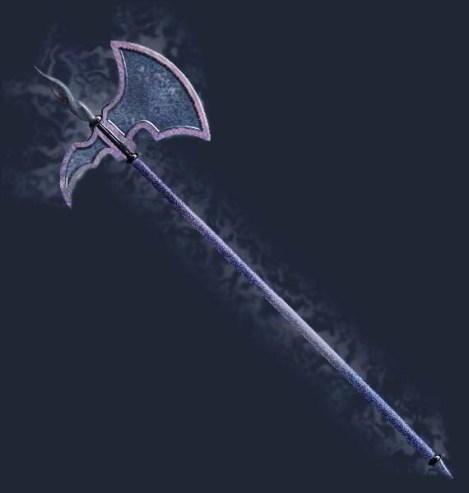
A Halberd
When gutted by a spear in the Gisla Saga (a.k.a. Gisli Sursson’s Saga), Véstein Vésteinsson cried out, “Bullseye!” (Mighty sporting of him, that!)
Then, in my second favorite saga, Grettir’s Saga, Átli Asmundarson cries out when hit by a broad spear: “Ah! It seems that broad spears have become fashionable.”
Finally, there is poor Þormóður Kolbrúnarskáld in The Saga of the Confederates who is all but disemboweled. Looking at his guts lying on the ground, he exclaims, “The king has fed us well!”
Now there are many reasons to love the sagas, and there is far more than gory violence and unbelievable sangfroid to be encountered in them (though it is by no means absent). I have read all the sagas from which Jóhannes quotes, most of them more than once, and keep finding myself sucked in by a frontier society that strives to arrive at some sort of balance in the absence of a king or any effective hierarchical government.
All the early Icelanders had to rely on was themselves, with the occasional help of some of the more prosperous families who offered their services as intermediaries in the disputes that inevitably arose.
In many ways, it was very much like our own Wild West.
 Tarnmoor
You must be logged in to post a comment.