The Luminescent World of Cacti

The Cactus Garden at the Huntington Library and Gardens

The Cactus Garden at the Huntington Library and Gardens

Although she is still struggling to get a good night’s sleep, Martine wanted us to go yesterday to the Huntington Library and Gardens in San Marino. So off we went. We usually take the same route through the gardens, ending up in the large and rather spectacular cactus garden on the eastern edge of the park. It is Martine’s favorite, and for me shares top billing with the lily ponds (about which more in a future posting).

There is something otherworldly about cacti. They catch the light in a certain way and play with it. The result, as with the cholla cacti above, is eerily luminescent. One feels a desire to hug the thorny plants as if they were overstuffed teddy bears. Ah, but the thorns of the cholla are barbed like tiny fishhooks and are difficult to remove. Beautiful, but deadly.

Part of the fascination that Martine and I feel wth the cactus garden is that in the slanting light of late afternoon—and it is always the last stop of our round tour of the gardens—the cacti have an almost supernatural look to them. One result is that my photos of the cacti are usually the best pictures of the lot.


Laughing in the Face of Death

A Viking Battle Scene

A Viking Battle Scene

Once again, I am inspired by one of Jóhannes Benediktsson’s “Daily Life” columns on the Iceland Review website. This one appeared on March 7 of this year, while I was involved in a typical tax season imbroglio not unlike the one illustrated above.

The subject of Jóhannes’s column was based on a meditation about the inevitability of death:

I’ve come to the conclusion, that I must somehow cheat death. Like artists do. They live on through their art. And the same goes for politicians. They will always be remembered in history books.

But there is another way to become immortal, I’ve discovered. And it is so much easier.

The trick is, according to the Icelandic Sagas, to say something incredibly witty, right before you die. It doesn’t matter who you are.

Following are some (well, actually most) of the highlights from his column. First up is a messenger sent by some assassins to see whether Gunnar of Hlidarendi was home:

“You’ll have to find that out for yourself. I do know his halberd was home.”

The name of the assassin, according to Njals Saga (the greatest of all the Icelandic sagas), was Þorgrímur Austmaður, and it is his only appearance in the saga. After his famous line, he collapsed in his own blood. Shown below is a halberd:

A Halberd

A Halberd

When gutted by a spear in the Gisla Saga (a.k.a. Gisli Sursson’s Saga), Véstein Vésteinsson cried out, “Bullseye!” (Mighty sporting of him, that!)

Then, in my second favorite saga, Grettir’s Saga, Átli Asmundarson cries out when hit by a broad spear: “Ah! It seems that broad spears have become fashionable.”

Finally, there is poor Þormóður Kolbrúnarskáld in The Saga of the Confederates who is all but disemboweled. Looking at his guts lying on the ground, he exclaims, “The king has fed us well!”

Now there are many reasons to love the sagas, and there is far more than gory violence and unbelievable sangfroid to be encountered in them (though it is by no means absent). I have read all the sagas from which Jóhannes quotes, most of them more than once, and keep finding myself sucked in by a frontier society that strives to arrive at some sort of balance in the absence of a king or any effective hierarchical government.

All the early Icelanders had to rely on was themselves, with the occasional help of some of the more prosperous families who offered their services as intermediaries in the disputes that inevitably arose.

In many ways, it was very much like our own Wild West.

The Tar Baby and the Dead Zones

The Violence Is Inexorably Spreading

The Violence Is Inexorably Spreading

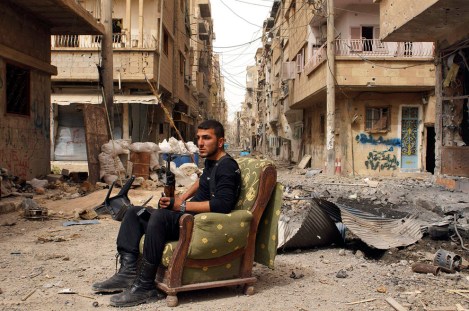
Around the world, in various locations, there are increasingly more dead zones—places where there is no effective governance, where everyday life is characterized by violence and murder, and where there doesn’t seem to be much hope for improvement.

Right now, a distressingly large number of these areas are in North Africa and the Middle East. As recently as a year or two ago, there was hope with the arrival of the Arab Spring. Egypt and Libya look good for a while, but are sinking back into the same old cycle of totalitarian rule accompanied by an increase of Islamic fundamentalism. (Has Islamic fundamentalism ever helped any Muslims—anywhere? at any time?) Somalia continues as a snake pit to be avoided by all, though some light is breaking through. Syria is a basket case that is only getting worse.and threatening to suck in its neighbors.

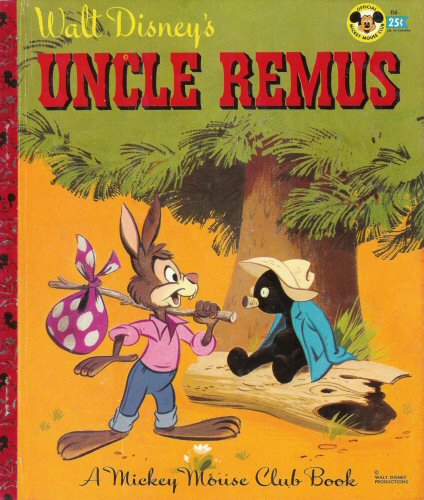
There are still U.S. legislators (like Senator John McCain of Arizona) who think we should get involved, but I keep remembering the Uncle Remus story of the tar baby:

How to Get Irretrievably Stuck

How to Get Irretrievably Stuck

As you may recall, Br’er Rabbit encounters a stick figure plastered with gooey tar. He asks it some questions. When it doesn’t answer, he gets riled up and starts hitting away at it. But alas, he is hopelessly stuck in the tar and can’t get loose.

Ever since the end of the Second World War, the United States has been getting stuck by such tar babies as Viet Nam, Lebanon, Somalia, Iraq, and Afghanistan. And what do we have to show for it other than fresh plantings at veterans’ cemeteries around the country.

Increasingly, I am becoming a non-interventionist, at least where “boots on the ground” are involved. We can’t alleviate the mess of these dead zones, but we can certainly get stuck in various “Green Zones” such as the one in Baghdad from which we are afraid to venture out without risking being blown to bits.


Acres and Acres of Carbs

Most Supermarkets Are—To Me Anyhow—Carb-filled Minefields

Most Supermarkets Are—To Me Anyhow—Carb-Filled Minefields

Under my new way of life, after I learned that my pancreas was in the process of giving up the ghost, mealtimes are fraught with danger. This morning was all right: I ate a can of smoked trout from Trader Joe’s and a few stoned wheat crackers. I made it through lunch all right, too: A tasty spicy calamari salad at a local Thai restaurant. Tonight, Martine and I will eat some of my ham and lima bean casserole, which has not proven too destructive, along with, perhaps, some cherries and a white peach. As for my beverages, it’s always unsweetened hot or iced tea.

But God, how I miss the carbohydrates! There are times I would sell my soul for some white rice, potatoes, noodles, bread, or candy. As for pizza, it is a thing of the past, a fond memory of times gone by.

I wish I had something to replace rice. My doctor says that barley has too many carbs (though it has an acceptable glycemic index). In tonight’s casserole, the lima beans are filling in for the carbs, though again my endocrinologist says they have too high a carb count, but an acceptable glycemic index. Perhaps I could serve Styrofoam pellets with meat and vegetables?

Going to the supermarket is like crossing a dangerous border. Whole aisles of the market are loaded with stuff I can’t eat. I never realized before that our whole culture is based on carbohydrates, that Americans eat vast amounts of the stuff. Some of them become grossly obese, some of them develop diabetes sooner than they normally would otherwise.

Tonight I will go to the market, mostly for tomatoes (they’re OK) and sweet peppers and other stuff I can munch upon without sending my sugar levels into the red zone.

It used to be that my doctor told me that if I lost weight, I might overcome my diabetes. But how does one lose weight when one has to take Prednisone, a known appetite-enhancer, just in order to survive? Oh, I can lose weight all right; but I would have to be in a concentration camp.

But I have free will to choose anything I want at the market. Perhaps some tasty noodles, some sugar-laden breakfast cereal (like 99% of them) or a fruit smoothie. But no, I will try to be good. I lost both of my parents to Type II Diabetes. I want to survive, even at the cost of jettisoning virtually everything I like to eat and concentrating on salads, fish, fruits, vegetables, and tea.

If you see a sad guy in the supermarket line with a pile of stuff that’s good for you, it may well be me.


“The Earth Laughs in Flowers”

Flower from the Tropical Greenhouse at the L.A. Arboretum

Flower from the Tropical Greenhouse at the L.A. Arboretum

The sentiment is from Ralph Waldo Emerson, as is the following: “Flowers … are a proud assertion that a ray of beauty overvalues all the utilities of the world.”

When I was a child, I was always surprised that my parents expended so much effort surrounding their house with elegant (and hard to care for) tree roses and other flowers. Perhaps I was slightly jaundiced in my opinion because my brother and I had to keep the blossoms and leaves free of voracious Japanese Beetles.

Now that my parents are gone, I begin to appreciate how they felt. One of the things that I noticed was that they could always tell if a Hungarian family lived in a particular house based on the flowers they planted. I guess it’s partially a genetic thing. Although Martine and I do not raise flowers—after all, we live in an apartment—we go out of our way to visit Huntington Gardens, Descanso Gardens, the Los Angeles Arboretum, and other places where one could walk in floral beauty.

It seems that the Japanese Beetles never made it out to California. Perhaps the intervening deserts and mountains deterred them. One result is that the flower gardens out here in Southern California are particularly beautiful.

The orchid illustrated above is from the L.A. Arboretum’s tropical greenhouse, which contains a treasure of such exotic blossoms.


The Delta of the Paraná

The Delta of the Paraná River near Buenos Aires

The Muddy Delta of the Paraná River near Tigre

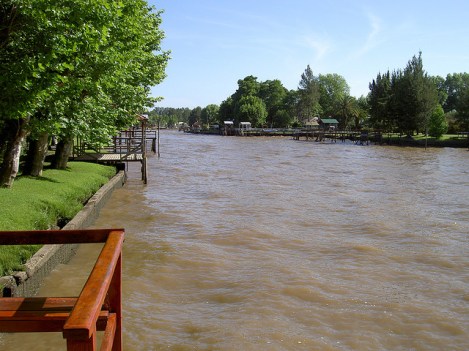
Here I am, within a couple of weeks of lifting off for Iceland; and what is going through my mind? Other places I want to visit. I am far from finished with Argentina. Above is the delta of the muddy Paraná River near where it debouches in the Rio de la Plata near Buenos Aires. I was never able to see Bariloche because of the volcanic eruption at Cordon Caulle in Chile. And Martine did not want to visit the Iguazu Falls along the northeast border with Brazil and Paraguay (those pesky mosquitoes!) nor the old Jesuit missions in Paraguay and Misiones Province (again, the bugs).

I don’t know how many years (or months or weeks or days) are left to me—and I don’t want to know. I just know that my sense of wonder is expanding even as my time is contracting. Will my last breath be inhaled near Ulan-Ude on the Trans-Siberian Railroad or at Machu Picchu in the Peruvian Andes or by the Látrabjarg Bird Cliffs in the West Fjords of Iceland or by the ruins of Petra in Jordan or the Széchenyi Baths in Budapest or … wherever?

It doesn’t much matter to me where. I keep thinking of the words from Witter Bynner’s translation of the Tao Teh Ching by Lao Tzu:

From wonder, into wonder
Existence opens.

If I had the money, and if I were no longer committed by my lack of funds to work in accounting, I would be on the road at least half the time.

Then, and only then, I would buy a good notebook computer to take with me. (Otherwise, it’s more of an onus than a bonus to me.)

Note: Since I originally published this, I saw Robert Louis Stevenson’s poem “The Vagabond,” of which this stanza is the refrain:

Let the blow fall soon or late,
Let what will be o’er me;
Give the face of earth around
And the road before me.
Wealth I seek not, hope nor love,
Nor a friend to know me;
All I seek, the heaven above
And the road below me.


Architecture and Personal Power

Proposed Peter Zumthor Design of New L.A. County Museum of Art

Proposed Peter Zumthor Design of New L.A. County Museum of Art

Has that museum building been hanging around too long? You know the one I mean: The one with the central court that goes up four floors. Rather nice for a building designed in the 1960s. Well, it’s gotta go! It will be razed in favor of Swiss architect Peter Zumthor’s space station illustrated above in a photo from the Los Angeles Times.

In Europe, people are not quite so quick to go to the wrecking ball. And it’s not just because of earthquakes: We see new architecture as an attribute of personal power. Basically, the executives of LACMA are just flexing their muscles. They’ll have to close down most of the museum’s collections for several years while the new monstrosity is being constructed.

By the time the new wing opens, I will probably have just written LACMA off as a place I’m interested in seeing. The works I like the most (click here) will probably be crated up and stored in some sub-basement until the Zumthorian space station emerges out of the dark matter by the La Brea Tar Pits. Of course, all the 20th century stuff I hate will continue to be on view in an adjacent building.

This Is the Rather Handsome Museum Building Doomed to Be Torn Down

This Is the Rather Handsome Museum Building Doomed to Be Torn Down

I really feel for those people in Istanbul who are rioting because the Turkish government wants to turn an old Ottoman-era barracks, sitting on one of the few parks in the city, into a shopping mall. Even Recep Tayyip Erdogan, the Prime Minister, has gotten into the act—presumably because he has been paid off by the developers.

Why don’t the people of Los Angeles rise up against the morons who run LACMA and toss them into the adjoining Tar Pits. It would be no more than they deserve!

The Endless Trek

The Immortal NCC-1701

The Immortal NCC-1701

Today I saw Star Trek Into Darkness—by myself because Martine refuses to see any film that’s over ninety minutes long. I had wanted to see the film because, well, I’m sort of a Trekkie. No costumes or anything like that. Perhaps I just have a hankering for green women.

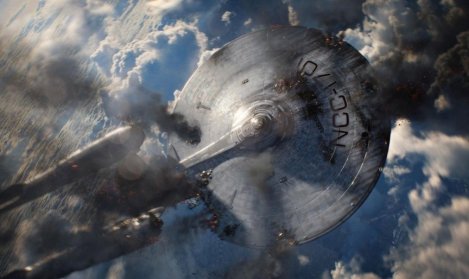
While I enjoyed the film for the most part, all the CGI work bored me. I have no doubt that most of the production money was spent on scenes that meant nothing to me. Ever since the original Star Wars, space ships have been at least as big as the Burj Kalifa (the world’s tallest building, these particular fifteen minutes) and have featured leagues of heavy metal whose mining would have reduced Planet Earth to the size of an inconsequential cinder. What I want to know is: Who did all the dusting and mopping?

On the plus side, the acting was pretty good, with Chris Pine as a believable, super-insubordinate James T. Kirk; Zachary Quinto as the son of the Leonard Nimoy Spock (that seems to go against the chronology, as this takes place before the Shatner/Nimoy original); John Cho as a fearsome Sulu; and Alice Eve (below) as an exceptionally cute addition to the Enterprise.

Alice Eve in a Gratuitous but Welcome Cheesecake Shot

Alice Eve in a Gratuitous but Not Unwelcome Cheesecake Shot

What worked best were when Director J. J. Abrams paid homage to the original series. Referred to in this version were The Wrath of Khan and the TV episode on which it was based (“Space Seed”), and also the TV episode entitled “The Trouble with Tribbles.”

In the end, I think Star Trek Into Darkness was a good addition to the franchise, but no masterpiece.