She Makes Her Uncle Proud

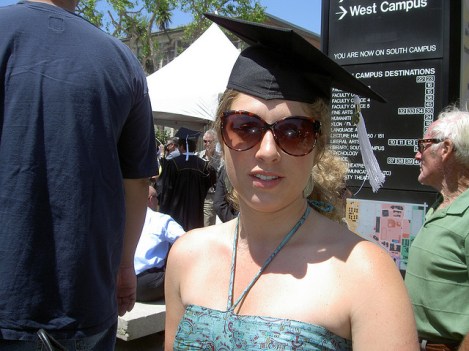
Hilary Paris at her Graduation from Cal State Long Beach in 2008

Hilary Paris at her Graduation from Cal State Long Beach in 2008

Time passes quickly. Just five years ago, I was attending her graduation from California State University at Long Beach. Today, I find she is engaged to be married. Hilary Paris has always done her father and me proud. She is a yoga instructor in the Seattle area, speaks fluent Spanish and Portuguese (that was her college major), and is in general an attractive young woman with  more poise and good judgment than most of her peers. You can find out more about her from her Yoga Blaze website.


One Day in Isafjördur …

Icelandic Weightlifters in the Rain

Icelandic Weightlifters in the Rain

I had just spent a couple of hours at Isafjördur’s little Westfjords Folk Museum and started to trudge back to my youth hostel in a drizzle that was progressively growing worse, when all of a sudden I came across a sight that struck me by its incongruousness, especially given the weather. Just outside the tourist information center, several hefty Icelandic men were hoisting over their heads what looked like a hot water heater. Surrounding them were several locals cheering them on and taking pictures. I had never seen weightlifters before working with improvised weights, but I guess it’s all the same thing. After all, we were right by the fishing port, and there were several large scales in evidence that could be used to verify the weight.

Despite my eagerness to get out of the weather, I stuck around for the end of the show. Afterwards, I took several pictures of the contestants. They turned out to be a friendly group and didn’t mind posing for a few snapshots.

One of the things that I love most about travel are the little surprises, such as the time in Merida, Mexico, when there was a brass band concert on the zócalo around six in the morning. Another time, in Guadalajára, there was a parade of Mexican military cadets through the center of town, accompanied by several bands playing marching music. Finally, on a frigid day in London, there were a number of slightly blue fashion models in clad in skimpy bikinis for the opening of some store.

In the end, what remembers most fondly were the things one didn’t plan for, that just unfolded in front of one’s eyes. It is always special to be there on the spot when that happens.

The Conquistador

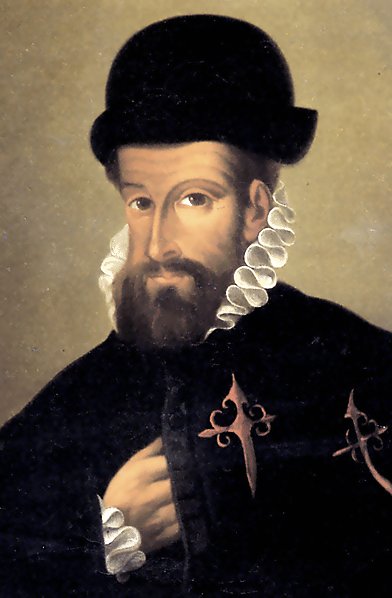
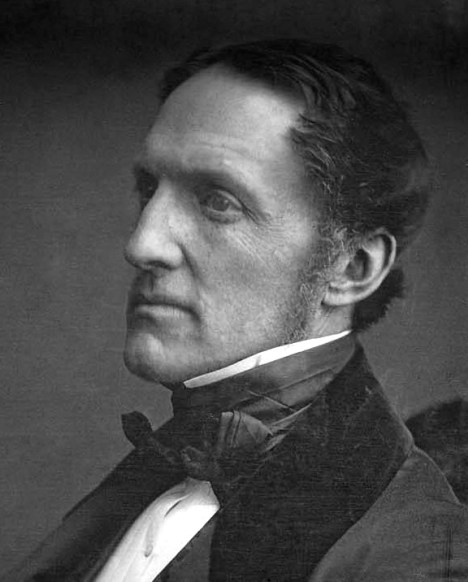
Francisco Pizarro (d. 1541)

Francisco Pizarro (d. 1541)

No one is quite sure when the great conquistador Francisco Pizarro was born. As he was a bastard, no one noted such niceties. He was raised to be a soldier—and he was a good one. But he was also illiterate, because no one took care that he learn to read and write, or to act the part of a gentleman. So he grew up a litle on the wild side, a man of great talents and a great destiny. With a handful of men, he destroyed an empire.

On this Columbus Day—a holiday which we are growing ever more abashed about celebrating without twinges of guilt—it is interesting to note the career of this man, who took on the mighty Inca empire, killed Atahuallpa, its leader, and sent vast treasures of gold and silver to his monarch across the Atlantic.

Pizarro founded cities, most especially Lima, enslaved the native Incas, acted at times with condign cruelty, and at other times with lightness and gentility. But, in the end, all was thrown into chaos by a partnership that failed. At the outset, he formed a compact with his fellow conquistador (and fellow bastard) Diego de Almagro. It was Pizarro, however, who seemed to get all the credit for the conquest from Charles V in Spain, who only belatedly recognized the one-eyed Almagro for his role in the conquest. In the meantime, envy had taken control; and Almagro wrested Cuzco from his partner. Francisco Pizarro’s brother Hernando defeated the rebel at Las Salinas, after which he had him tried, convicted, and executed by garroting.

The brief civil war did not have a clear victor, as, within three years, Francisco Pizarro, was assassinated by remnants of the Almagro faction in Lima. Finally, the Spanish had to step in to restore order.

In his magisterial History of the Conquest of Peru, William H. Prescott waxes lyrical about all the might-have-beens in the late conquistador’s life:

Nor can we fairly omit to notice, in extenuation of his errors, the circumstances of his early life; for, like Almagro, he was the son of sin and sorrow, early cast upon the world to seek his fortunes as he might. In his young and tender age he was to take the impression of those into whose society he was thrown. And when was it the lot of the needy outcast to fall into that of the wise and virtuous? His lot was cast among the licentious inmates of a camp, the school of rapine, whose only law was the sword, and who looked upon the wretched Indian as their rightful spoil.

Who does not shudder at the thought of what his own fate might have been, trained in such a school? The amount of crime does not necessarily show the criminality of the agent. History, indeed, is concerned with the former, that it may be recorded as a warning to mankind; but it is He alone who knoweth the heart, the strength of the temptation, and the means of resisting it, that can determine the measure of the guilt.

Contrast Pizarro with Cortés, who knew how to read and write and who was able to protect his own place in history with his writings after the conquest of the Aztecs. Nonetheless, it is interesting to note that in neither Mexico or Peru are there any monuments to the conquistadores who secured those lands for Spain.

Costa, Sierra y Selva

Omna Peru in Tres Partes Divisa Est

Omna Peru in Tres Partes Divisa Est

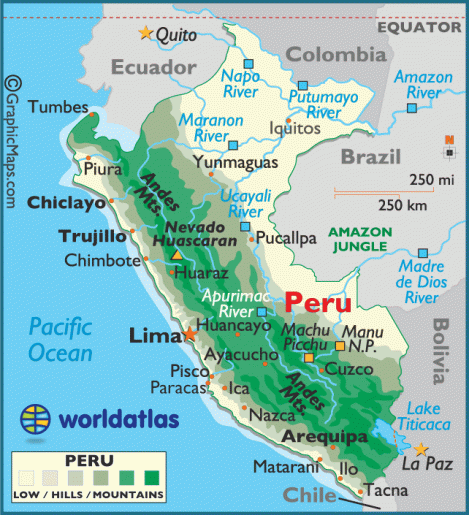
Excuse the schoolboy Latin, but Peru, like Gaul, is divided into three parts: the coast, the mountains, and the jungle. In Spanish, that comes out as the Peruvian schoolkid mantra costa, sierra y selva. As you can see from the above map, the narrow coastal strip is the smallest of the three—and by far the most populated. It contains the largest cities, including the capital Lima. It is also the driest, being a northern extension of the Atacama Desert, where rainfall does not, for all practical purposes, ever occur.

When we think of Peru, we generally think of the Andes, which takes up the second largest chunk of Peruvian territory. Here are the tourist meccas of Cusco, Machu Picchu, and Lake Titicaca, as well as several isolated mountain metropolises like Arequipa, Huancayo, and Ayacucho. The locals here speak mostly Quechua and Aymara. This is the second most populated region.

Finally, there is the jungle. The mighty Amazon has its source in rivers flowing into the Marañon and Ucayali River systems from various parts of Peru, Ecuador, and Colombia. Here is two-thirds of the total land area of Peru, but only 11% of its population. Culturally, it is one of the most interesting parts of the country, but many (including myself) are deterred by Yellow Fever, Malaria, Dengue, and a whole host of tropical diseases.

If I went to Peru, I would concentrate on Lima and the high country between Lake Titicaca and Machu Picchu. (That is, if I don’t develop severe soroche. If I do, I might take a side trip to Northern Chile via Tacna and Arica.)

In Praise of Past Times

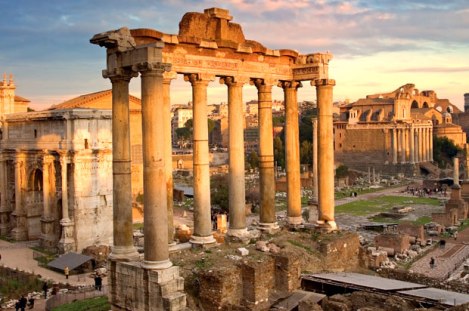
Roman Forum

Roman Forum

For several months now, I have been lifting quotes from a website called Laudator Temporis Acti, a blog site where I go to get inspired. And it never fails to do so. The Latin means, roughly, “One who praises past times.” About half of my long quotations are lifted bodily from the site, with the only acknowledgment being a tag at the end that reads laudator-temporis-acti.

Run by a scholar in Conyers, Georgia, by the name of Michael Gilleland, the website pays homage to the thinking of times past, from ancient Greece and Rome through the nineteenth century. Each quotation is well documented. When translation is necessary, an honest attempt is made to get to the gist accurately and, sometimes, elegantly.

Some people—my own brother included—think that I live in the past. If that were so, why would I be blogging here? Why would I own a cellphone? Why would I drive to work in an automobile? No, I like to investigate the past because nothing serves to help me understand the present than to see what is both constant and meritorious in the human condition. That’s why I am concurrently reading Marcus Tullius Cicero and William H. Prescott (History of the Conquest of Peru). Oh, I could be reading something contemporary about philosophy, but I probably wouldn’t understand it as easily as I could understand the Roman. And I can (and will) be reading contemporary books about Peru, but it was Prescott who originally got the ball rolling. Everything since published about the Inca owes a debt to the Harvard-educated historian of the 1800s. And no one has written on the subject more eloquently.

I don’t frequently recommend websites, and none do I recommend so whole-heartedly as Laudator Temporis Acti. I visit it several times a week and urge you to do so as well. Among other things, you will discover what William Faulkner did, that “the past is never dead. It’s not even past” (from his Requiem for a Nun).

Sir Walter Scott, Bookworm

Sir Walter Scott

Sir Walter Scott

He at this time occupied as his den a square small room, behind the dining parlour in Castle Street. It had but a single Venetian window, opening on a patch of turf not much larger than itself, and the aspect of the place was on the whole sombrous. The walls were entirely clothed with books; most of them folios and quartos, and all in that complete state of repair which at a glance reveals a tinge of bibliomania. A dozen volumes or so, needful for immediate purposes of reference, were placed close by him on a small moveable frame—something like a dumb-waiter. All the rest were in their proper niches, and wherever a volume had been lent, its room was occupied by a wooden block of the same size, having a card with the name of the borrower and date of the loan, tacked on its front. The old bindings had obviously been retouched and regilt in the most approved manner; the new, when the books were of any mark, were rich but never gaudy—a large proportion of blue morocco—all stamped with his device of the portcullis, and its motto, clausus tutus ero—being an anagram of his name in Latin. Every case and shelf was accurately lettered, and the works arranged systematically; history and biography on one side—poetry and the drama on another—law books and dictionaries behind his own chair. The only table was a massive piece of furniture which he had had constructed on the model of one at Rokeby; with a desk and all its appurtenances on either side, that an amanuensis might work opposite to him when he chose; and with small tiers of drawers, reaching all round to the floor. The top displayed a goodly array of session papers, and on the desk below were, besides the MS. at which he was working, sundry parcels of letters, proof-sheets, and so forth, all neatly done up with red tape. His own writing apparatus was a very handsome old box, richly carved, lined with crimson velvet, and containing ink-bottles, taper-stand, &c. in silver—the whole in such order that it might have come from the silversmith’s window half an hour before. Besides his own huge elbow chair, there were but two others in the room, and one of these seemed, from its position, to be reserved exclusively for the amanuensis. I observed, during the first evening I spent with him in this sanctum, that while he talked, his hands were hardly ever idle—sometimes he folded letter-covers—sometimes he twisted paper into matches, performing both tasks with great mechanical expertness and nicety; and when there was no loose paper fit to be so dealt with, he snapped his fingers, and the noble Maida aroused himself from his lair on the hearth-rug, and laid his head across his master’s knees, to be caressed and fondled. The room had no space for pictures except one, an original portrait of Claverhouse, which hung over the chimneypiece, with a Highland target on either side, and broadswords and dirks (each having its own story), disposed star-fashion round them. A few green tin-boxes, such as solicitors keep title-deeds in, were piled over each other on one side of the window; and on the top of these lay a fox’s tail, mounted on an antique silver handle, wherewith, as often as he had occasion to take down a book, he gently brushed the dust off the upper leaves before opening it. I think I have mentioned all the furniture of the room except a sort of ladder, low, broad, well carpeted, and strongly guarded with oaken rails, by which he helped himself to books from his higher shelves. On the top step of this convenience, Hinse of Hinsfeldt—(so called from one of the German Kinder-märchen )—a venerable tom-cat, fat and sleek, and no longer very locomotive, usually lay watching the proceedings of his master and Maida with an air of dignified equanimity; but when Maida chose to leave the party, he signified his inclinations by thumping the door with his huge paw, as violently as ever a fashionable footman handled a knocker in Grosvenor Square; the Sheriff rose and opened it for him with courteous alacrity,—and then Hinse came down purring from his perch, and mounted guard by the footstool, vice Maida absent upon furlough. Whatever discourse might be passing, was broken every now and then by some affectionate apostrophe to these fourfooted friends. He said they understood every thing he said to them, and I believe they did understand a great deal of it. But at all events, dogs and cats, like children, have some infallible tract for discovering at once who is, and who is not, really fond of their company; and I venture to say, Scott was never five minutes in any room before the little pets of the family, whether dumb or lisping, had found out his kindness for all their generation.—John G. Lockhart, Memoirs of the Life of Sir Walter Scott, Bart., Vol V

Fair and Balanced? Hah!

No, This Is Not About Faux News

No, This Is Not About Faux News

The so-called liberally-biased media have created a monster. About ten or more years ago, it was thought by the news media that letting alternate points of view have their own voice would prevent accusations of bias. The right-wing jumped on that. They still accused the media of bias, but their representation in news story jumped to such an extent that the increasingly dim American public assumed their opinions were equally meritorious.

If you give the village idiot a soap box, you will find that crowds will gather; and people will sagely nod their heads as if they were receiving words of wisdom.

My opinion is probably a little more undemocratic. Instead of giving the Tea Party adherents a voice, I would have them pistol-whipped. What one former Republican consultant has called “a neo-Confederate insurgency” has now become, in effect, a coup d’état. That’s why some of my recent posts have sounded a little draconian. I don’t think that sitting down and negotiating with John Boehner is going to accomplish anything other than re-arranging the deck chairs on the Titanic. Perhaps if we arrested Boehner, Cantor, and some of their confederates and then proceeded to play hard ball with them, we might get through this.

I am not willing at this point to concede any points to the Tea Party and their Congressional stooges. Hit them hard and fast. Otherwise, welcome to the Confederate States of America II.


To Each According to His Needs

Llama

Llama

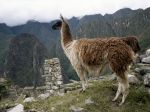
A similar arrangement prevailed with respect to the different manufactures as to the agricultural products of the country. The flocks of llamas, or Peruvian sheep, were appropriated exclusively to the Sun and to the Inca. Their number was immense. They were scattered over the different provinces, chiefly in the colder regions of the country, where they were intrusted to the care of experienced shepherds, who conducted them to different pastures according to the change of season. A large number was every year sent to the capital for the consumption of the Court, and for the religious festivals and sacrifices. But these were only the males, as no female was allowed to be killed. The regulations for the care and breeding of these flocks were prescribed with the greatest minuteness, and with a sagacity which excited the admiration of the Spaniards, who were familiar with the management of the great migratory flocks of merinos in their own country.

At the appointed season, they were all sheared, and the wool was deposited in the public magazines. It was then dealt out to each family in such quantities as sufficed for its wants, and was consigned to the female part of the household, who were well instructed in the business of spinning and weaving. When this labor was accomplished, and the family was provided with a coarse but warm covering, suited to the cold climate of the mountains,—for, in the lower country, cotton, furnished in like manner by the Crown, took the place, to a certain extent, of wool,— the people were required to labor for the Inca. The quantity of the cloth needed, as well as the peculiar kind and quality of the fabric, was first determined at Cuzco. The work was then apportioned among the different provinces. Officers, appointed for the purpose, superintended the distribution of the wool, so that the manufacture of the different articles should be intrusted to the most competent hands. They did not leave the matter here, but entered the dwellings, from time to time, and saw that the work was faithfully executed. This domestic inquisition was not confined to the labors for the Inca. It included, also, those for the several families; and care was taken that each household should employ the materials furnished for its own use in the manner that was intended, so that no one should be unprovided with necessary apparel. In this domestic labor all the female part of the establishment was expected to join. Occupation was found for all, from the child five years old to the aged matron not too infirm to hold a distaff. No one, at least none but the decrepit and the sick, was allowed to eat the bread of idleness in Peru. Idleness was a crime in the eye of the law, and, as such, severely punished; while industry was publicly commended and stimulated by rewards.—William H. Prescott, History of the Conquest of Peru


Food Fight

William H. Prescott (1796-1859)

William H. Prescott (1796-1859)

It all started with a food fight in the Harvard University dining hall, or commons. A not particularly distinguished student from a famous family, William Hickling Prescott was hit in the left eye with a crust of bread. The impact destroyed the vision of his left eye for life and, in fact, knocked him out. The trouble began when he started suffering degeneration in his right eye. During his youth, there were whole months at a time when Prescott was blind and had to stay in a darkened room.

But things got better. By then, Prescott went to Europe and fell in love with the history of Spain. He wrote The History of the Reign of Ferdinand and Isabella (1837), followed by The History of the Conquest of Mexico (1843) and The History of the Conquest of Peru (1847). During his most productive years, there were still times when he was unable to read or even see. Using the help of secretaries and a device called a noctograph, which enabled him to write clearly in total darkness, Prescott managed to write some of the greatest works of history published in the nineteenth century. In his Preface to The Conquest of Peru, he wrote:

While at the University, I received an injury in one of my eyes, which deprived me of the sight of it. The other, soon after, was attacked by inflammation so severely, that, for some time, I lost the sight of that also; and though it was subsequently restored, the organ was so much disordered as to remain permanently debilitated, while twice in my life, since, I have been deprived of the use of it for all purposes of reading and writing, for several years together. It was during one of these periods that I received from Madrid the materials for the “History of Ferdinand and Isabella,” and in my disabled condition, with my Transatlantic treasures lying around me, I was like one pining from hunger in the midst of abundance. In this state, I resolved to make the ear, if possible, do the work of the eye. I procured the services of a secretary, who read to me the various authorities; and in time I became so far familiar with the sounds of the different foreign languages (to some of which, indeed, I had been previously accustomed by a residence abroad), that I could comprehend his reading without much difficulty. As the reader proceeded, I dictated copious notes; and, when these had swelled to a considerable amount, they were read to me repeatedly, till I had mastered their contents sufficiently for the purposes of composition. The same notes furnished an easy means of reference to sustain the text.

Still another difficulty occurred, in the mechanical labor of writing, which I found a severe trial to the eye. This was remedied by means of a writing-case, such as is used by the blind, which enabled me to commit my thoughts to paper without the aid of sight, serving me equally well in the dark as in the light. The characters thus formed made a near approach to hieroglyphics; but my secretary became expert in the art of deciphering, and a fair copy—with a liberal allowance for unavoidable blunders—was transcribed for the ‘use of the printer. I have described the process with more minuteness, as some curiosity has been repeatedly expressed in reference to my modus operandi under my privations, and the knowledge of it may be of some assistance to others in similar circumstances.

Though I was encouraged by the sensible progress of my work, it was necessarily slow. But in time the tendency to inflammation diminished, and the strength of the eye was confirmed more and more. It was at length so far restored, that I could read for several hours of the day though my labors in this way necessarily terminated with the daylight. Nor could I ever dispense with the services of a secretary, or with the writing-case; for, contrary to the usual experience, I have found writing a severer trial to the eye than reading,—a remark, however, which does not apply to the reading of manuscript; and to enable myself therefore, to revise my composition more carefully, I caused a copy of the “History of Ferdinand and Isabella” to be printed for my own inspection, before it was sent to the press for publication. Such as I have described was the improved state of my health during the preparation of the “Conquest of Mexico”; and, satisfied with being raised so nearly to a level with the rest of my species, I scarcely envied the superior good fortune of those who could prolong their studies into the evening, and the later hours of the night.

But a change has again taken place during the last two years. The sight of my eye has become gradually dimmed, while the sensibility of the nerve has been so far increased, that for several weeks of the last year I have not opened a volume, and through the whole time I have not had the use of it, on an average, for more than an hour a day. Nor can I cheer myself with the delusive expectation, that, impaired as the organ has become, from having been tasked, probably, beyond its strength, it can ever renew its youth, or be of much service to me hereafter in my literary researches. Whether I shall have the heart to enter, as I had proposed, on a new and more extensive field of historical labor, with these impediments, I cannot say. Perhaps long habit, and a natural desire to follow up the career which I have so long pursued, may make this, in a manner, necessary, as my past experience has already proved that it is practicable.

It is with some frustration that I note that Prescott and his great contemporaries, Francis Parkman (The Oregon Trail, The French in North America) and John Lothrop Motley (The Rise of the Dutch Republic) are virtually ignored today—despite the fact that their literary histories are on a par with the best. That he was able to accomplish so much with his vision problems is a miracle. In fact, his histories in general are a miracle.

In preparation for an eventual visit to Peru, I am now reading The History of the Conquest of Peru and marvelling at its author’s insightfulness and sparkling literary style.

The Nature of the Soul

Cicero

Cicero

It’s impossible to locate an earthly origin of souls. There’s nothing mixed or compounded in souls, they’re not earth or made of earth. They’re not even moist or airy or fiery. There’s nothing in these elements that accounts for the power of memory, mind or thought, that recalls the past, foresees the future or comprehends the present. These faculties are divine; you won’t find a way for them to get to man except from god. The natural power of the soul is therefore unique, distinct from the usual and familiar elements. Whatever it is that thinks, knows, lives and grows must be heavenly, divine, and therefore eternal. And god, who is recognized by us, can only be recognized by a mind that is free and unencumbered, distinct from any mortal compound, sensing all and setting all in motion, itself endowed with eternal movement. The human mind consists of the same element, the same nature.—Marcus Tullius Cicero, Consolation