The World’s Greatest Epitaph

And Who, Might You Ask, Was Mel Blanc?

And Who, Might You Ask, Was Mel Blanc?

If you were born under a rock in Uzbekistan, you may not ever have heard the voice of Mel Blanc. But if you’ve ever seen a Warner Brothers Cartoon that featured Bugs Bunny, Daffy Duck, Sylvester the Cat, Porky Pig, Tweety Bird, Yosemite Sam, Foghorn Leghorn, Speedy Gonzales, Wile E. Coyote, Pepé le Pew, Marvin the Martian, or the Tasmanian Devil, you’ve heard just some of the wizardry of Mel Blanc.

Just to refresh your memory, here’s a little sample:

This afternoon Martine and I went to Hollywood Forever cemetery where many of the greats of Hollywood are buried. There you can find Rudolf Valentino, film moguls like Harry Cohn and Jesse L. Lasky, directors like Cecil B. DeMille and Edgar G. Ulmer, members of the Little Rascals like Carl “Alfalfa” Switzer and Darla Hood, and literally hundreds of Russians, Armenians, and Jews who have decided to spend a part of eternity at 6000 Santa Monica Boulevard. There is even the grave of aspiring starlet Virginia Rappe, who died of being raped at a famous party hosted by silent film star Roscoe “Fatty” Arbuckle.

But the best epitaph award clearly goes to Mel Blanc. After his death, Warner Brothers tried to find a replacement, but no one could match Melvin Jerome Blanc. He had a million voices, all of them clearly distinguishable one from the other, and they were all great.

A Joke Becomes a Reality

Now You Can Use a 3-D Printer to Make a Pizza

Now You Can Use a 3-D Printer to Make a Pizza

(No, this is not about the recently concluded midterm election: There’s nothing I could say about THAT subject that is fit for civilized company. So I will just shut up, grit my teeth, and soldier on.)

Years ago, I worked for a company called Urban Decision Systems which sold demographic data for site analysis. My office as Director of Corporate Communications was adjacent to the sales area, where there were three cubicles for order-takers. Nrxt to them was a counter with a FAX machine. One of the order-takers was a salesperson whom I shall call Vida. Once, when the FAX was not functioning properly, Vida asked me what was wrong. I answered her by saying that the sales manager had a pizza FAXed to him the previous evening, and that some of the pepperonis got caught in the machine during transmission. To my shock, she seemed to believe my story.

Today, thanks to a machine called the Foodini, a pizza can be “printed” using 3-D printer technology. I’m not quite sure how the pizza gets cooked in the printing process, but I’m sure that the engineers at Foodini will find a solution to that problem. (Of course, cold pizzas can be delicious, and are one of my favorite breakfast foods.)


Mucho Magma

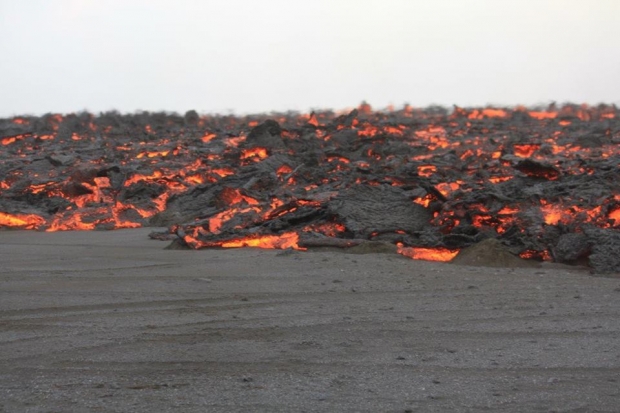
Magma from Holuhraun

Magma from Holuhraun

It’s actually a coincidence that my last two vacations were spent in countries where there are many active volcanoes. Iceland, where I spent part of Summer 2013, is now experiencing a huge eruption that is five to six times bigger than 2010’s eruptiojn at Eyjafjallajökull, which put a stop to much of Europe’s air traffic because it reduced air visibility over a wide area. It is also four times greater than Grimsvötn in the following year, which also was a major spewer of ash.

The difference with Holuhraun is that, although it has blanketed Iceland with dangerous levels of sulfur dioxide, it is known more for the massive amounts of magma produced. To date, one cubic kilometer of lava has been produced. According to The Iceland Review:

In terms of volume of lava, the Holuhraun eruption is now the biggest in Iceland since the 1783 Laki eruption (aka Skaftáreldar). The lava which surfaced during that disastrous eruption is 14 times the volume of the Holuhraun eruption.

“It now covers an area the size of Reykjavík and in some places it is 10-20 meters thick,” geophysicist Magnús Tumi Guðmundsson, who is on the Civil Protection Department’s Scientific Advisory Board, said of the new lava in Holuhraun.

This year I spent three weeks in Peru, where I saw the Volcano Sabancaya in eruption. What’s next for me? Krakatoa?

What Do We Have to Offer Them?

ISIS Fighters

ISIS Fighters

By “them,” I mean disaffected teenagers of Sunni Muslim backgrounds. By “we,” I mean Western democracies such as the United States, Britain, and France. Let’s face it, Islamic immigrants are looking for a better life. Many of them find it; but many wind up as dysfunctional families in which the kids want to nullify their parents’ decision to emigrate. These teens are prime candidates for ISIS, and many are trying to make the long trip to Syria—whether they are of Syrian extraction or not—and join up with the violent forces that are wreaking such damage in the Middle East.

In the end, all we have to offer them is a bullet—perhaps the sooner the better.

I am not saying that we should forbid Muslims to enter America: It’s just that we as a society have to be prepared to accept a certain amount of undesirable blowback. Once an American kid has decided to fight in a conflict as a combatant in an organization that our country has designated as terrorist, then he possibility of a good outcome declines to near zero. This is a particular problem in Britain because so many immigrants there hail from Commonwealth countries such as Pakistan that are rigidly fundamentalist. With France, the Islamic population is predominantly North African and therefore less likely to identify with Arab goals.

What can we do? I think that intervening to prevent kids from traveling to Iraq and Syria is a good start, but difficult, especially since there are no direct flights. A teenager could fly to Europe and then enter the combat zone by flying to Saudi Arabia, the United Arab Emirates, or some other intermediate Arabic destination, and only then crossing the border by land.

Human nature being what it is, we cannot prevent immigrant families from becoming dysfunctional. And, let’s face it, we have troubles enough with our non-Muslim children joining gangs, taking drugs, and committing heinous felonies.


The Man Who Gave Us the Tingler

He Made Being Scared Fun

He Made Being Scared Fun

Last Saturday, Martine and I visited one of the three places worth seeing in Hollywood, namely the Hollywood Heritage Museum, which is almost in the shadow of he Hollywood Bowl off Highland Avenue. (The other two places worth seeing are the Egyptian Theater, especially during Cinecon, and the Los Angeles Fire Department Historical Society’s museum on Cahuenga.)

It is not the museum I want to talk about right now—though I’ll get to it later—but an exhibit I saw there honoring that great showman of horror, William Castle, director of such classics as Macabre (1958), The House on Haunted Hill (1959), The Tingler (1959), 13 Ghosts (1960), Mr. Sardonicus (1961), and Homicidal (1961). Although he was active since the early 1940s, it is during this relatively short period in the 1950s and 1960s that he almost pre-empted the horror genre.

Could This Be the Original Prop for The Tingler?

Could This Be the Original Prop for The Tingler?

What make Castle famous at the time was that he were his publicity gimmicks. When he released Macabre, he had to mortgage his house, so he came up with some hilarious ideas to promote the picture, such as giving every customer a certificate for a $1,000 life insurance policy from Lloyds of London in case they should die of fright during the film. He stationed nurses in the lobbies and had hearses parked outside the theaters.

My favorite of his films was The Tingler, filmed in “Percepto.” According to Wikipedia:

The title character is a creature that attaches itself to the human spinal cord. It is activated by fright, and can only be destroyed by screaming. Castle purchased military surplus air-plane wing de-icers (consisting of vibrating motors) and had a crew travel from theatre to theatre attaching them to the underside of some of the seats (in that era, a movie did not necessarily open on the same night nationwide). In the finale, one of the creatures supposedly gets loose in the movie theatre itself. The buzzers were activated as the film’s star, Vincent Price, warned the audience to “scream—scream for your lives!” Some sources incorrectly state the seats were wired to give electrical jolts. Filmmaker and Castle fan John Waters recounted in Spine Tingler! how, as a youngster, he would search for a seat that had been wired in order to enjoy the full effect.

Well, he wasn’t the only one. Several years ago, the Alex Film Society in Glendale not only showed The Tingler, but claimed that some of the seats were “wired.” I was disappointed to see that the wiring was nothing more than some aluminum foil attached to the underside of some of the seats.

It didn’t matter. Martine and I loved the film anyhow, and we loved Castle’s gimmicks. Okay, maybe we were too sophisticated to be taken in by them, but we loved the idea that he made the horror picture not only scary, but funny.

I don’t know if Castle was a “great” director, but I still enjoy seeing his films.

Japangeles

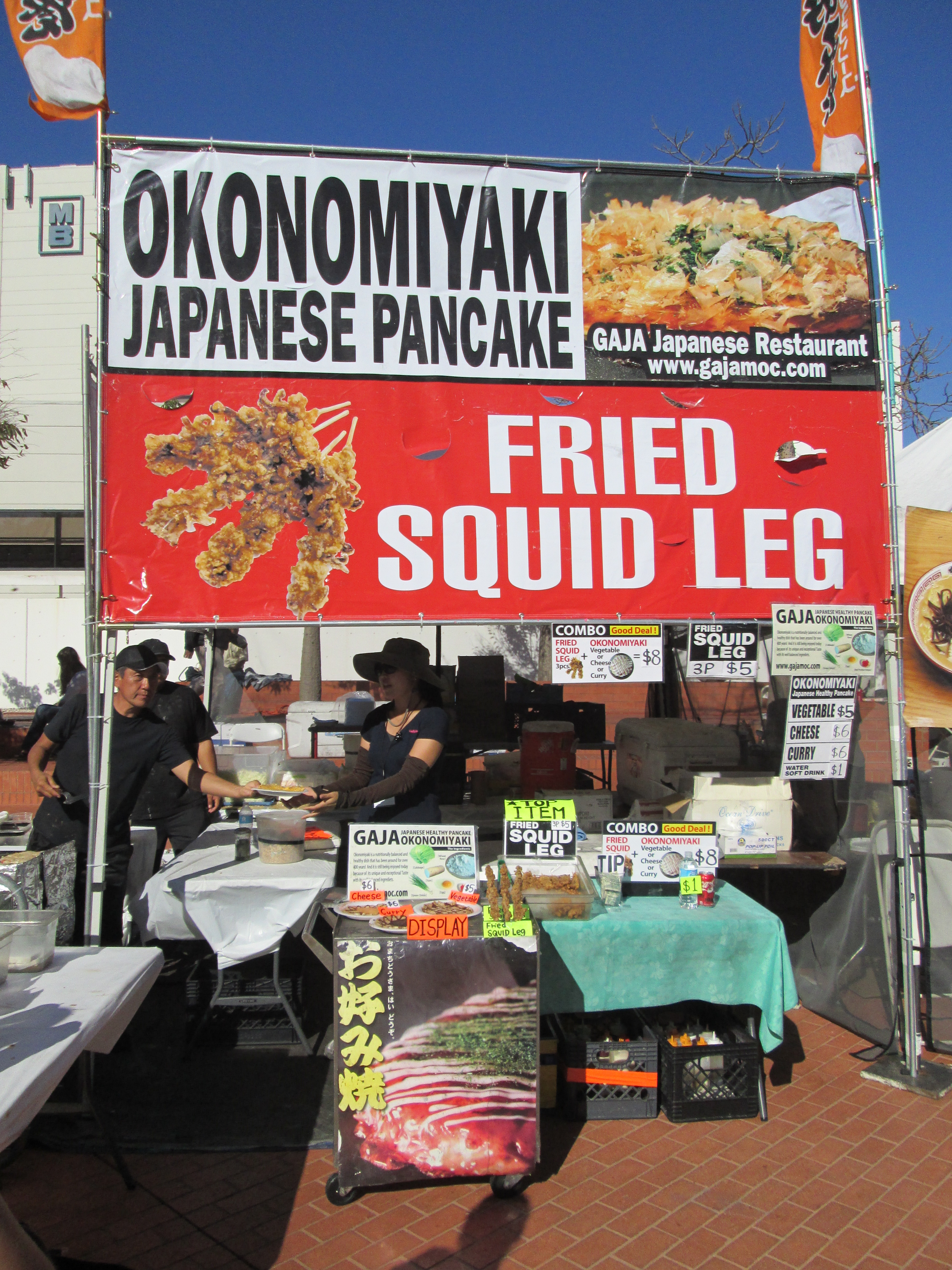
Get Your Fried Squid Legs Here!

Get Your Fried Squid Legs Here!

What I like most about Los Angeles is its rich texture of ethnicities, from the Mexicans of “East Los” to the Salvadoreños of Pico-Union to the Armenians of Glendale to the Japanese of Little Tokyo to the Russians of West Hollywood and the Koreans of Koreatown—I could go on for another four or five lines before running out of options—Los Angeles is a veritable crossroads, especially from countries bordering the Pacific.

Yesterday and today saw the first annual Japan Fair held in Little Tokyo. There was a full program of entertainment, most notably a seventeen-year-old boy who played the shamisen with the sophistication and maturity of a master. There were numerous interesting snacks, including several types of pancake dishes, which are apparently very popular in Japan.

We took the bus downtown as it cost much less than finding a good parking spot—especially as there was a sold-out Hello Kitty exhibition and convention a scant two blocks away. I did not want to mix it up with any of those Hello Kitty thugs: They are the worst!

Shamisen Player

Shamisen Player


Ebola’s Four-Legged Victims

How Do You Say “Quarantine” to a Dog?

How Do You Say “Quarantine” to a Puppy?

One of the odder manifestations of the ebola hysteria in the United States is that we now have separate news stories about the pets of people who are undergoing quarantine. For instance, we have this CNN news story about ebola survivor Nina Pham being reunited with her dog. When we look at the news stories underneath this one, and presumably less important, we come to realize that stories about pets that may (or may not) have ebola is a story that has legs. (Four to be precise.)

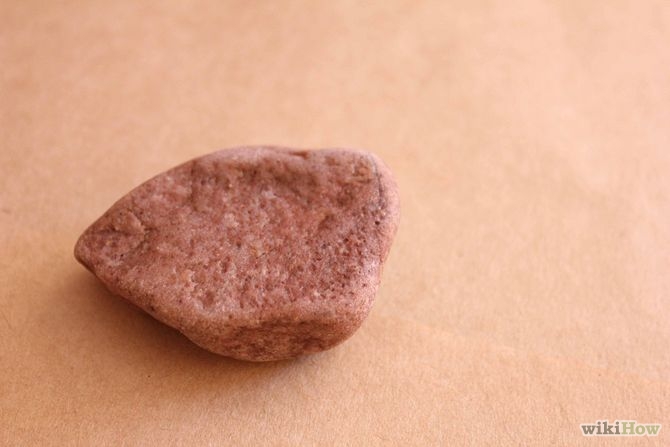
It is tragic when one considers not only the human toll of the disease, but its ravages on goldfish, lizards, turtles, and even pet rocks belonging to its victims. Take, for example, the fate that befell Rocky (below), a pet stone belonging to a healthcare worker who succumbed in Sierra Leone.

Rocky, a Victim

Rocky, a Victim

We have learned that, after its master passed on, Rocky was unceremoniously thrown into a pile of wild lithic rubble where his unique talents are no longer appreciated. The cute facial expression that was painted on Rocky has since worn off from abrasion and water damage, and Rocky is now just another anonymous rock.


Happy Halloween!

It’s the Most Boo-tiful Time of the Year!

It’s the Most Boo-tiful Time of the Year!

I know that all of you are either getting ready for some serious cosplay or stockpiling candy for the ravenous hordes preparing to descend onto your doorstep. Be sure to read some scary books (see my post entitled Thirteen More Horrors for a reading list) and see some scary movies (see my post entitled Thirteen Horrors for a list of my faves from last year).

It’s Good To Be King

An Ode to the Carnie Lifestyle

An Ode to the Carny Lifestyle

After a lifetime of hating Stephen King—not that I ever gave him much of a chance—I picked up Joyland chiefly because I thought the cover illustration by Glenn Orbik (above) was hot. It showed a scene that was not even in the book: a red-headed Erin Cook (a co-worker of the book’s hero) screaming in fear while casually wielding a Speed Graphic camera which, if she had ever made a regular practice of doing so, would have left her with a forearm like Popeye’s.

So, what did I think? Actually, I liked the book. Partly because I am drawn to the whole carny world after reading William Lindsay Gresham’s Nightmare Alley, and partly because I thought King exercised admirable restraint in crafting the novel. I wasn’t quite sure about the action scenes at the end, and there were a couple of connections I never quite understood, but I liked the tone of the whole thing.

Devin Jones is a twenty-one-year-old college student who spends a summer working for a North Carolina amusement park called Joyland. He is a man who has been discarded by his apathetic girlfriend Wendy, who, once she parts from him, consigns him to oblivion posthaste. He likes the carny lifestyle, makes friends easily, discovers he has a talent for entertaining “zamps” (small children), and doesn’t object to some of the less desirable tasks around the midway.

He is drawn by the mystery of a young woman named Linda Gray who had been killed by an unknown assailant in the scary funhouse. In fact, he drops out of college and hangs on into the fall, when the only work is preparing the park for the next summer. During that time, he makes the acquaintance of a young mother with a severely disabled son—one who can foretell the future. You can bet this figures in the plot. Devin finally loses his virginity—to Annie Ross, the mother—and becomes a favorite of her son.

Stephen King

Stephen King

Finally, it all comes together for Devin. The killer is … someone Devin knows who calls him at home minutes after his discovery and lures him to the park, where King suddenly goes into overt mode. Perhaps one of the reasons I haven’t liked King all these years is that I thought he was too overt and not sufficiently psychological. But Joyland strikes a nice balance.

Also, I loved all the carny slang, which King took from this website. Maybe, I’ll read some more King: I always liked Kubrick’s film version of The Shining. Perhaps I’ll read that, or Dolores Claiborne, as suggested by my friend Lynette.

Day of the Condor

Condor at Cruz del Condor

Condor at Cruz del Condor

As I promised you, here is one of my photos of the condors at Cruz del Condor in the State of Arequipa. We were standing on the south side of Colca Canyon at a place that is famous for its thermals, which the condor population uses in the mornings as if it were an elevator to reach maximum altitude with minimum effort.

Because I do not have a super-telephoto lens that weighs half a ton, I had to enlarge the condor in this image. Even when they’re rising on a thermal, condors are lightning fast—at the same time that they are gigantic. The Andean condor has a wingspan of up to 10½ feet. Curiously, there are larger birds: the Southern Royal Albatross and the Dalmatian and Great White Pelicans, whose span can be as much as a foot longer.

Still, it is the condor that captures the imagination of South Americans. I’ll never forget seeing my first ones in Argentina in 2011, while Martine and I were taking a bus from El Calafate to Puerto Banderas to see the glaciers on Lago Argentino. Then, too, there is that most pervasive of songs, “El Condor Pasa,” a zarzuela composed by the Peruvian Daniel Alomia Robles in 1913 and popularized by Simon and Garfunkel in their Bridge Over Troubled Water album. If you’re not familiar with the tune, click here. In Lima, at the Palacio de Gobierno, I even saw a Peruvian military band goose-stepping to the music as they played it.

Paintings of archangels done by the Quechua painters of the Cusco School of Art are wearing the wings of mature condors, which are two-toned.

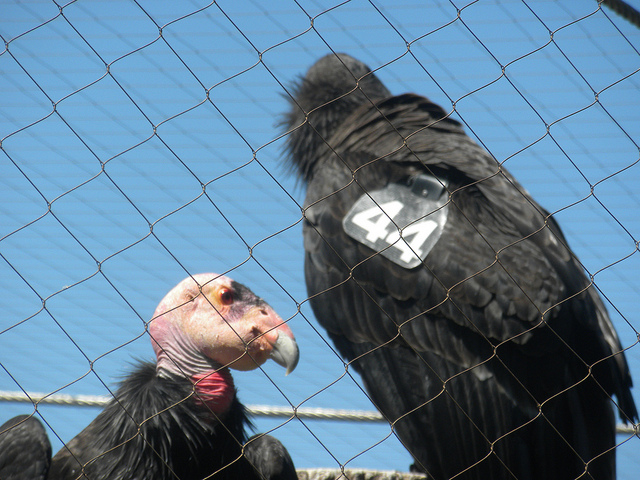
We in California have our own condors, which we are trying desperately to save from extinction. I saw a couple of them once at the Santa Barbara Zoo (below) looking very disconsolate from their extended captivity.

California Condors at Santa Barbara Zoo

California Condors at Santa Barbara Zoo

God knows they are not the most beautiful of creatures, but they come close to being among the most magnificent.