Turtles—But No Rain

Turtles at Mulberry Pond

Turtles at Mulberry Pond

There is a Native American rain ritual involving turtles, which, being a Hungarian American, I feel would not work if I performed it. So I watched the turtles at Descanso Gardens, which seemed to be having a population explosion. Maybe they’re doing the rain turtle ceremony themselves; and maybe, later in March, we will have a proper inundation.

I have come to suspect, however, that weather forecasters are evil sorcerers. Whenever we get some measurable rain, and we’ve had more so far than last year at this time, I believe that the forecasters suck it all up for filling their swimming pools. They take such pleasure in telling us after every rain that it did nothing to relieve the drought: In fact, it probably made it worse.

Then, whether the weather gets hot and dry, they take even more pleasure in announcing how lovely the weather is, what with all the surrounding brown hillsides with are bound to catch fire in the fall.

There’s more here than meets the eye!

Tulpomanie

That’s Dutch for “Tulip Mania”

That’s Dutch for “Tulip Mania”

Tulips are my favorite flowers. Sadly—in Southern California anyhow—they are in bloom only during the months of March and April. Wouldn’t you know it: That’s just when I am most occupied doing overtime work on taxes. When I got an e-mail from Descanso Gardens saying the tulips were in bloom, I wasted no time getting out there with my camera. Even though Martine has not been feeling good lately, the flowers and the warm weather made her feel a little better. As for me, it was a major lift for my spirits.

There was a time in the Seventeenth Century that tulips were big business in the Netherlands. Introduced to Europe late in the previous century from Turkey, tulips spread like wildflower (sorry about the pun). British journalist Charles Mackay wrote a book in 1841 called Extraordinary Popular Delusions and the Madness of Crowds, in which there was a chapter about Dutch tulip mania, or tulpomanie. At its height around 1637, a single bulb for the tulip called “The Viceroy” (see below) cost between 3,000 and 4,200 guilders—this while the average skilled tradesman made around 300 guilders for an entire year.

Catalog Picture of “The Viceyoy” Tulip

Catalog Picture of “The Viceroy” Tulip

If you are interested in reading more, you can still find the Mackay book around, and you may be even more interested in reading Alexandre Dumas Père’s The Black Tulip, which dramatizes the whole tulip mania period in Holland. When the City of Haarlem offers 100,000 guilders to anyone who can produce a black tulip, all hell breaks loose.

Favorite Films: Orpheus (1950)

Heurtebise and Orpheus in the Underworld

Heurtebise and Orpheus in the Underworld

In just three hours, Turner Classic Movies is going to show one of my favorite films: Jean Cocteau’s Orpheus (1950), starring Jean Marais, Maria Casares, François Périer, and Marie Déa. Cocteau took a Greek myth and adapted it to the French experience in the Second World War and came up with a majestic dreamlike work which not only works but sticks in the memory. (Also great is Cocteau’s Beauty and the Beast, which also takes a myth and somehow improves on it.)

Particularly memorable are the scenes in the underworld, where Orpheus (Marais) goes with Heurtebise (Périer) to bring his wife Eurydice (Déa) back. According to the myth—and the film—Orpheus is not supposed to ever look upon his wife again once she has been rescued from the world of the dead. That did not work, and before long Orpheus himself is shot and finds himself walking by the ruined barracks where Cocteau’s underworld is set. One new difference is that Death herself, played by the severe and beautiful Maria Casares has fallen in love with him. This was not part of the Greek myth, either, but it makes for a better story.

I do not remember how many times I have seen Orpheus. However many times it was, it was apparently not enough.

Vacation Planning Around Disasters

Wildfires in Argentina’s State of Chubut

Wildfires in Argentina’s State of Chubut

Whenever one is traveling anywhere in the world, one must keep up with the news. When Martine and I went to Argentina in 2011, for example, there was a major Chilean volcanic eruption that spewed ash all over the State of Rio Negro, forcing us to remove San Carlos Bariloche from our itinerary and replace it with El Calafate. This time, there is a huge wildfire near Los Alerces National Park and the town of Cholila. While the eruption of the Puyahue/Cordón Caulle volcano in 2011 lasted for months, I am confident that the Chubut fires will be doused well before November, especially as there will be an intervening rainy season.

Among the Chubut locales I hope to visit are El Maitén, Esquel, and Trevelin.

The Area Around Cholila Before the Fire

The Area Around Cholila Before the Fire


Silvina Ocampo and Our Other Selves

Another Great Argentinean Writer for Your Consideration

Another Great Argentinean Writer for Your Consideration

She is incredibly well connected insofar as Argentinian literature is concerned. Her husband was Adolfo Bioy Casares, who was a frequent collaborator with Jorge Luis Borges. Her sister, Victoria Ocampo, published the literary magazine Sur, for which both Bioy Casares and Borges wrote. In her own right, Silvina Ocampo is a superb writer of short stories. (Thus Were Their Faces is an excellent collection published by New York Review Books, which I have just finished reading.) Together with Borges and Bioy Casares, she edited a book of fantasy and horror stories called The Book of Fantasy which was published in 1990.

I like the following poem because it seems to have been influenced by Borges. Or was it she influenced Borges?

In Every Direction

We go leaving ourselves in every direction,
in beds, in rooms, in fields, in seas, in cities,
and each one of those fragments
that has ceased to be us, continues being
as always us, making us
jealous and hostile.
“What will it do that I would like to do?”
we think. “Who will it see that I would like to see?”
We often receive chance news
of that creature . . .
We enter its dreams
when it dreams of us,
loving it
like those whom we love most;
we knock at its doors
with burning hands,
we think it will return in the illusion of belonging to us
mistaken as before
but it will keep being treacherous and unreachable.
As with our rivals we would kill it. We will only be able
to glimpse it in photographs. It must survive us.

New York Review Books has also published a volume of her poetry translated into English that I will probably be ordering soon. The above poem is from that edition.

Badasstan

ISIS Exists for a Reason

ISIS Exists for a Reason

Bad Asses of the World, Unite! You now have your own country, so to speak. Even if you’re not a devout Muslim, or not a Muslim at all, you now have a place to go where mayhem is sanctioned. That’s why so many disaffected youths—male and female—are making their way to Syria and ISIS, where they can be as bad as they want, just so long as it is in tune with what the self-professed Caliph, Abu-Bakr al-Baghdadi, permits.

And that’s where many of the new recruits will go astray. In the end, organized international mayhem is not as much fun as the local criminal kind. Instead of the cops, you have the Caliph’s masked minions; and now you can be blown to bits by bombers or Kurdish Peshmerga or (unless they feel disinclined) Iraqi armed forces. It’ll take them a while to discover that, because, as we know, bad asses are not known for thinking things through. And you can’t be all that spontaneous in an organizational context.

Oh, things will be gravy for a while, as you get your own Yazidi or other heretic girl to play house with, but eventually the pall descends; and you will be interviewed by Western news media as to why you deserted the cause.


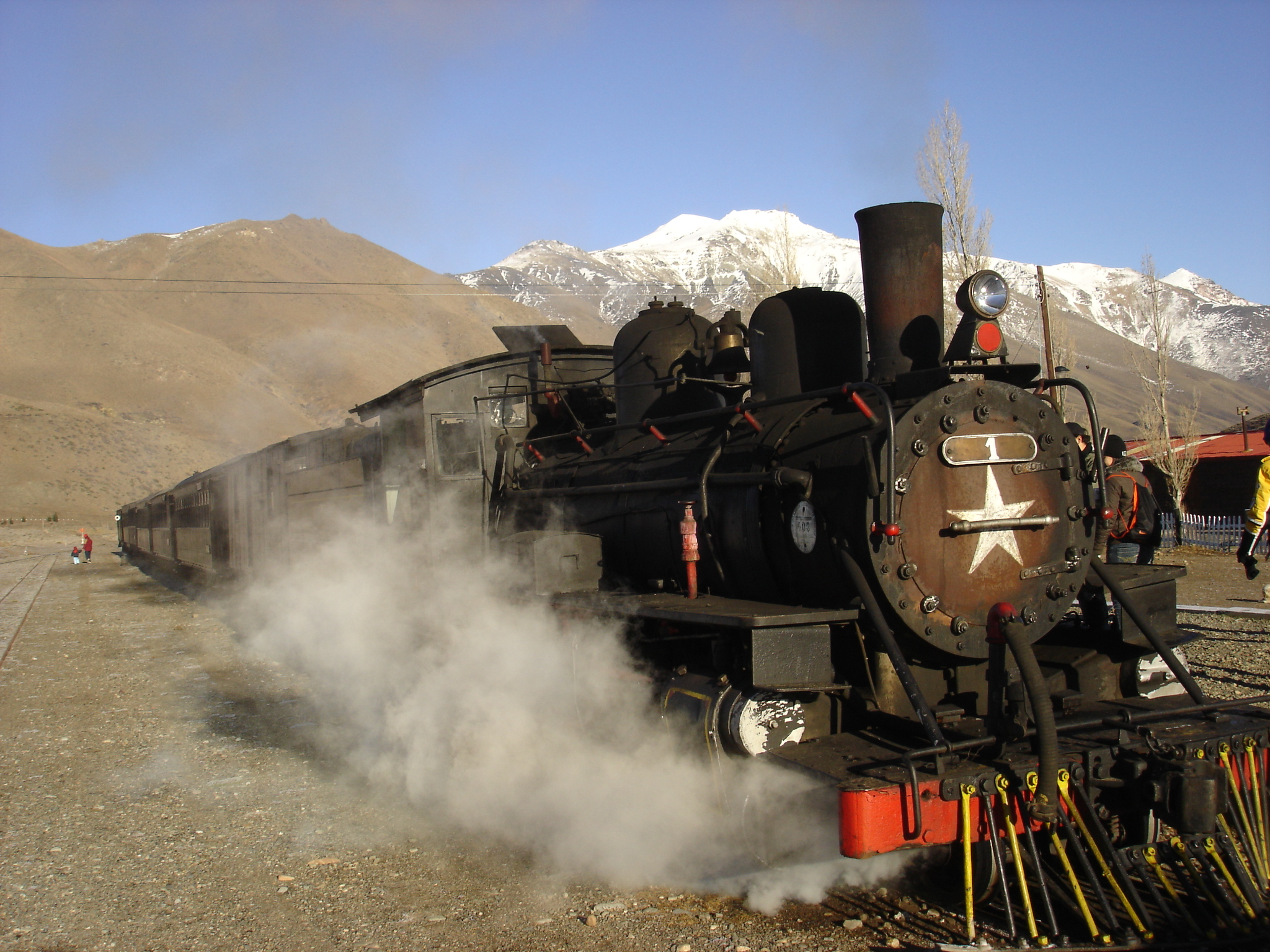
La Trochita

One of the Two Remaining Stretches of Patagonia’s Classic Narrow-Gauge Railway

One of the Two Remaining Segments of Patagonia’s Classic Narrow-Gauge Railway

In the mid-1970s, Paul Theroux wrote the book that first got me interested in South America, The Old Patagonian Express. He traveled by rail starting in Boston and as far south as he could go in the Americas using more or less connected rail routes.That sort of fell apart in Central America, where there is no reliable way to cross Panama’s Darien Gap by rail—or road for that matter. But from Bolivia to Esquel in Argentina’s Northern Patagonia, the rails were still in use.

Now, some forty years later, Argentina has no train between the Bolivian border and Tucumán, between Bahia Blanca and Viedma, and between Ingeniero Jacobacci and Esquel. And the segment from Tucumán to Buenos Aires will probably close soon.

The stretch that interested me most was the one between Ingeniero Jacobacci and Esquel using a narrow-gauge route referred to today as La Trochita (“The Little Narrow Gauge”) or El Trencito (“The Little Train”). Shortly after Theroux wrote his most memorable chapter about the last leg of his trip, La Trochita was no more …

… except in the fond memories of Argentinians who decided to keep a couple of stretches of the steam train active for tourists. One is between El Maitén and Thomae and between Esquel and Nahuel Pan. Being an unregenerate railroad buff, I plan to take both segments. That is to say, if I can schedule it right.

Where Theroux in his typically snarky way wrote about Patagonia that “Nowhere is a place,” I, who am really from Nowhere (Cleveland, Ohio, which was destroyed by Maynard G. Krebs’s mythical The Monster That Devoured Cleveland), think that the eastern range of the Andes in Patagonia is truly beautiful. But then, Theroux was never an aficionado of fine scenery or especially of anything that threatened his comfort. (Hey, I still love his travel books!)

Probably about half or more of my next trip to Argentina will be exploring the town between Bariloche and Trevelin along the eastern slope of the Andes. I might even hop across to the border to Futaleufu in Chile, which is accessible only through Trevelin in Argentina.

The last time I saw a real steam locomotive in use was in 1977 when I was traveling by rail from Budapest to Košice in what was then Czechoslovakia. Near Miskolc in Hungary, the railroad yard was full of steam locomotives shuttling freight cars back and forth.


Tarnmoor’s ABCs: Scotland

The Isle of Skye in the Hebrides

The Isle of Skye in the Hebrides

All the blog posts in this series are based on Czeslaw Milosz’s book Milosz’s ABC’s. There, in the form of a brief and alphabetically-ordered personal encyclopedia, was the story of the life of a Nobel Prize winning poet, of the people, places, and things that meant the most to him.

My own ABCs consist of places I have loved (Iceland, Patagonia, Quebec), things I feared (Earthquakes), writers I have admired (Chesterton, Balzac, Proust, and Borges); locales associated with my past life (Cleveland and Dartmouth College), people who have influenced me (John F. Kennedy), foods I love (Olives), and things I love to do (Automobiles and Books). This blog entry is my own humble attempt to imitate a writer whom I have read on and off for thirty years without having sated my curiosity. Consequently, over the weeks to come, you will see a number of postings under the heading “Tarnmoor’s ABCs” that will attempt to do for my life what Milosz accomplished for his. To see my other entries under this category, hit the tag below marked “ABCs”. I don’t guarantee that I will use up all 26 letters of the alphabet, but I’ll do my best. Today the letter is “S” for Scotland.

When I write about the places I love most, Scotland ranks high on my list. I have been there four times, but have barely scratched the surface. Twice I went with Martine, who liked it as much as I did. To this day, she still wears the Cardigan sweater she bought at a woolen mill near Oban, and I still have two Scottish sweaters I bought almost forty years ago, which I still wear occasionally even though they are starting to pill a bit.

Nowhere else in the British Isles are you likely to get as tasty food as in Scotland. Scots are typically friendlier than the folk south of Hadrian’s Wall—probably because they know so many Americans have Scottish blood flowing in their veins as a result of the Highland Clearances that took place after Culloden.

What really distinguishes the Scots in my mind is their sense of history. There’s not only the rebellion of 1745, in which the Highlands wasted their manpower for the unworthy Bonnie Prince Charles, but going farther back, back to Somerled and the Lords of the Isles, William Wallace and Robert the Bruce, the struggles of the House of Stewart to establish themselves, the great tragedy of Flodden Field, the death of Mary Queen of Scots, the cruelty of Butcher Cumberland, and that brave late 18th century renaissance that brought so many Scottish thinkers and inventors to the fore. As with Hungarians, the Scots live the entire spectrum of their history.

Edinburgh is probably one of my two or three favorite cities in the world, especially that long walk downhill along the Royal Mile from Edinburgh Castle to the Palace of Holyroodhouse, and then the climb of Arthur’s Seat to see “Auld Reekie” in all its glory. But if you really want to see Scotland, go for the isles, for Mull, Iona, Islay, Skye, and the Orkneys. When you walk among the graves by the church at Iona, remember that Macbeth and a score of early Scottish kings are buried there in unmarked graves.

Martine and I have looked for the Loch Ness Monster at Drumnadrochit. (We didn’t see it.) We visited castles, Scotch whisky distilleries, ate haggis and neeps (at least, I did), and enjoyed a bowl of cullen skink.

Then were all those novels by Nigel Tranter and Sir Walter Scott, not to mention the poems of Robert Burns, whose museum I saw at Dumfries.

Och, it’s time to go back!


Gentleman, Vocative

My Guide at the Archbishop’s Palace in Lima

My Guide at the Archbishop’s Palace in Lima

She was as cute as a button. On a whim, I had decided to take a tour of the Archbishop’s Palace at Lima’s Plaza de Armas, conveniently next door to the massive cathedral. Apparently, I was the only tourist who had wandered in at that hour (about eleven a.m.), and I had a guide all to myself. By this time during my trip, I had come to appreciate the beauty of Peruvian women; and my guide was, I felt, a real looker.

But wait, Jim! This young lady was probably a postulant—that is to say, a future nun. Her clothing had a definite clerical look to it. For all that, she might already have made her vows and belonged to one of the orders that didn’t wear more conservative garb.

She kept addressing me in the vocative case as “Gentleman” as in: “Gentleman, this statue dates back to the Sixteenth Century.”

She knew every feature of that vast archiepiscopal palace, and kept addressing me as Gentleman.

In that most Catholic of countries, I couldn’t be anything other than the Gentleman I was thought to be. I enjoyed every minute of that tour and hope I conveyed my appreciation to the young lady for a very pleasant visit.


Roadside Saints

Argentinians Have Made Up Some of Their Own Saints

Argentinians Have Made Up Some of Their Own Saints

This comes from a post on Multiply.Com which I wrote on August 18, 2011. Some changes have been made:

Oh, oh! I’ve been thinking about Argentina again, and that means you’re going to hear about some more really obscure (but, IMHO fascinating) stuff.

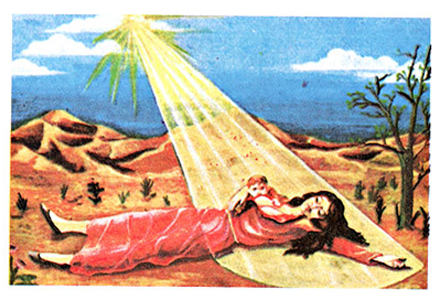
To begin with, Argentina is such a Catholic country that it had to create additional saints native to its own soil. Let’s begin with La Difunta Correa, which means, literally, the Dead Correa:

According to popular legend, Deolinda Correa was a woman whose husband was forcibly recruited around the year 1840, during the Argentine civil wars. Becoming sick, he was then abandoned by the Montoneros [partisans]. In an attempt to reach her sick husband, Deolinda took her baby child and followed the tracks of the Montoneros through the desert of San Juan Province. When her supplies ran out, she died. Her body was found days later by gauchos that were driving cattle through, and to their astonishment found the baby still alive, feeding from the deceased woman’s “miraculously” ever-full breast. The men buried the body in present-day Vallecito, and took the baby with them. [from Wikipedia]

All over the country, there are roadside shrines to La Difunta Correa, many surrounded by gifts left by truck drivers and travelers in a hope for a safe journey to their destination. Remember that Argentina is the eighth largest country on earth, and that distances can be farther than one imagines, especially on unpaved ripio roads.

There are two other popular saints with shrines all across the nation: Gauchito Gil (“Little Gaucho Gil”) and El Ángelito Milagroso (“The Little Miraculous Angel”), a.k.a. Miguel Ángel Gaitán.

Gauchito Gil hails from the state of La Rioja near the Bolivian border. A farmworker, Gil was seduced by a wealthy widow. When the police chief, who also had a thing for the widow, and her brothers came after Gil, he joined the army in the War of the Triple Alliance against Paraguay (perhaps the bloodiest war ever fought in the Americas, with the exception of our own Civil War). When he returned home, the Army came after him to join in one of Argentina’s many civil wars. Not to put too fine a point on it, the Gauchito deserted. He was discovered by the police, who wanted to execute him. Whereupon Gil prophesied to the head of the police detail that if he were merciful, the officer’s child, who was gravely ill, would get better. Instead of being shown mercy, Gil was executed.

When he returned home, the police officer found that his son was indeed very ill. So he prayed to Gauchito Gil, and his son got better. It was this police officer who returned to the scene of the execution, gave Gil a proper burial, and built a shrine in his memory. Today there are hundreds of such shrines scattered throughout the country.

By the way, the Gauchito is not the only deserter hero in Argentina’s past. Perhaps the national epic is Martin Fierro by José Hernández, about a gaucho who deserts from the so-called “Conquest of the Desert”—really a war of genocide against the native tribes of the Pampas—and is pursued by the police militia.

The Nineteenth Century in Argentina was unusually bloody, what with civil war, wars against the native peoples, and wars against other countries such as Paraguay and Brazil. So it is not unusual to find deserters as heroes, which is unthinkable in Europe and North America.

Finally, there is another La Rioja “saint” named Miguel Ángel Gaitán, El Ángelito Milagroso, who died at the tender age of one in 1967. When his body didn’t rot, the locals thought that meant it was supposed to be exposed for veneration—and so it was.