[Fashionable Term] A Nightclub

Say What?

Say What?

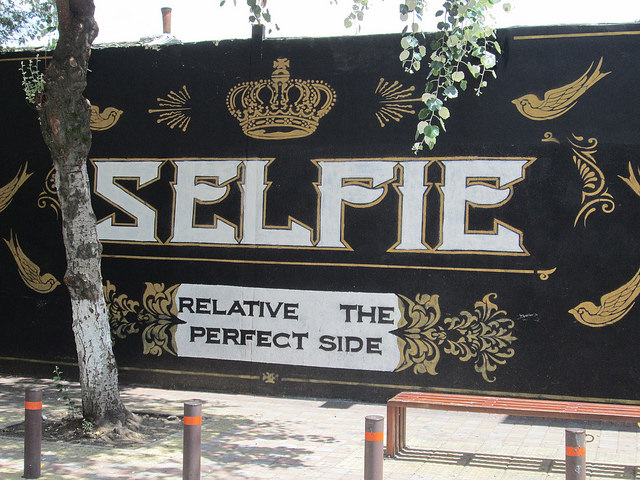
The Mariscal district of Quito is so full of nightclubs, including the oddly named (and described) one illustrated above. One could meditate for years on what “Relative the Perfect Side” really means. No matter: The term “Selfie” is hot right now, irrespective of any Perfect Side.

Apparently, people in Quito with money to invest think they can make a killing by opening a club. Walk down Diego Almagro or Reina Victoria, and you will, within a few blocks, pass several dozen clubs. My brother and I marveled at whether they were making any money at all. After all, probably most of the tourists are traveling on the cheap and staying at youth hostels.

Needless to say, neither of us wasted any time listening to loud music and drinking dubious concoctions.


Public Spaces

There Are Some Things at Which Latin Americans Excel

There Are Some Things at Which Latin Americans Excel

American planners stink when it comes to designing comfortable spaces for the public. A classic example is Los Angeles’s Pershing Square, which is essentially an underground parking garage. Do Angelenos want a place where they could sit down, read the paper, get their shoes shined, perhaps listen to an impromptu concert? Well, they’re out of luck: American planners design facilities primarily for hypothetical people who don’t really exist.

Compare that with Quito’s Plaza de la Independencia (see above), where one could sit and pass an hour or two without getting hassled. You can even feed the pigeons if you want. Take the Plaza de Armas in Arequipa, Peru (see below). Instead of chasing you away for feeding the pigeons, there are native women who will sell you some birdseed for a nueva sol or two.

The Plaza de Armas in Arequipa, Peru

The Plaza de Armas in Arequipa, Peru

Whenever I have some time to kill in Latin America, I will simply find a park bench and sit down for a while. In Cuenca’s Parque Calderón, I got into an interesting discussion with a Peruvian visiting from Cuzco. Admittedly, he was selling some pictures—and I bought some from him because I thought he was a talented artist.

I would have a hard time finding an equivalent in Los Angeles without getting panhandled or run over.


Walking Straight Up a Hill

Indigenous Couple in Alausi

Elderly Indigenous Couple in Alausi

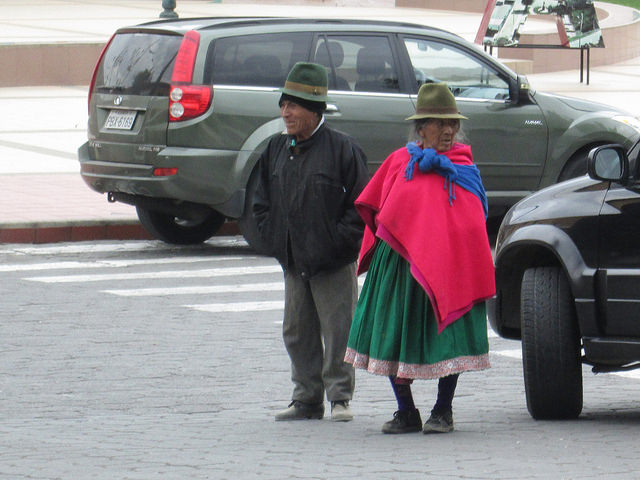
I’m not going to call them Indians because they feel insulted by the term: They are the indigenous peoples of the Andean highlands. I almost never saw them unless they were carrying babies or various other loads on their backs, sometimes obviously heavy.

The day I left Alausi, I waited at La Estación on the Pan-American Highway for two and a half hours for a bus to Cuenca. (See yesterday’s post.) At one point, a native woman who looked to be in her fifties or sixties greeted me, crossed the Pan-American Highway, and proceeded to walk straight up the hill on the other side. She was wearing cheap slipper-like shoes. There did not look to be much of a trail, and I saw her for upwards of thirty minutes while she ascended and began to harvest some tall grasses, which she put in her pack.

The Hill Across the Highway

The Hill Across the Highway

I waited for her to come back down, but by then, my bus to Cuenca had arrived. I think it was Thomas Hobbes who said that man’s life was “nasty, brutish, and short”—and this was a woman, and not a young one at that!

The native peoples of the Andes fill me with awe.

Dealing with Uncertainty

La Estación Near Alausi

La Estación Near Alausi

If you are unable to deal with uncertainty when traveling in other countries, it is possible that South America is not for you. One of my main destinations this trip was the Nariz Del Diablo railroad journey between Alausi and Sibambe. When I went to the bus terminal in Cuenca, I could not find a bus company that would sell me a ticket to Alausi; so I ponied up a few extra dollars for a ticket to Riobamba from the Patria bus company.

Alas, my Spanish is not good enough to understand what the ticket-sellers were trying to tell me. So I showed up the next morning and boarded my Patria bus, after telling the conductor I wanted to be let off on the Pan-American Highway near Alausi, which was a few kilometers away. I was met with another torrent of Spanish which I did not understand. (In this situation, it never helps to be flustered: I just played stupid and found my seat.)

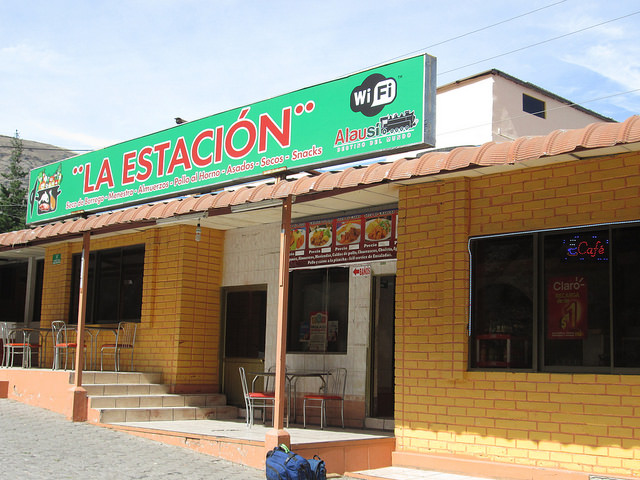
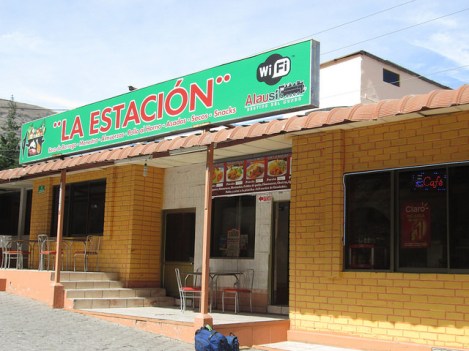
Five hours later, the bus pulled up for a lunch stop at La Estación (shown above), from which Alausi was visible in the valley below. Not only could I get off there, but the conductor called a cab for me, for which I thanked him. I suspect what everyone was trying to tell me was that the bus did not actually go into the town, but I knew that to begin with.
My Bus Back to Cuenca

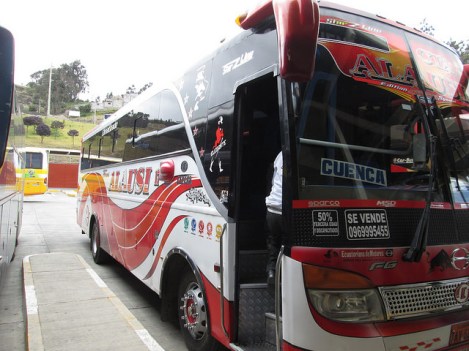
My Bus Back to Cuenca

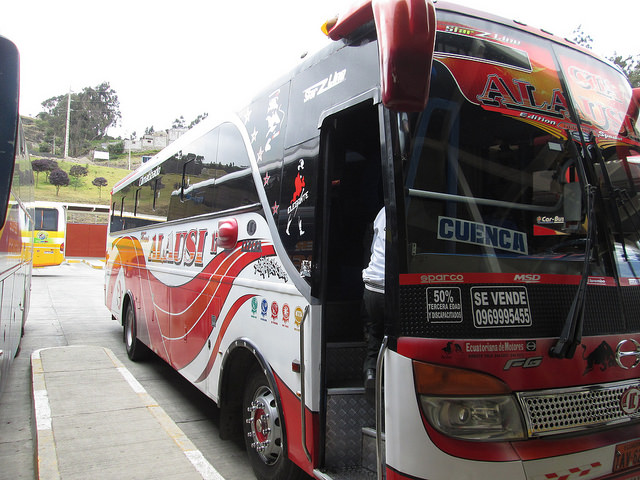
Getting back was even more complicated. I took a cab from my hostería back to La Estación, where I waited two and a half hours for a bus back to Cuenca. I was going under the mistaken assumption that all buses stopped there. Apparently, they didn’t. (You can see my two blue bags in the first photo above.)

Just when I gave up hope, I walked to the edge of the highway prepared to flag down any bus. No sooner did I do that than—from a side street a couple hundred feet ahead of me—a second class bus from Alausi’s own line pulled onto the highway and stopped for me. I saw the Cuenca sign in the window and boarded.

We drove like a bat out of hell and covered the distance to Cuenca’s Terminal Terrestre in an hour less than the Patria bus took. The driver hit speed bumps and rumble strips at high speed, and my head bounced off the ceiling a couple of times. But I made it to Cuenca in good time and was happy.


Trains and Trolleys

Pacific Electric Red Car

Pacific Electric Red Cars

If you’ve ever seen Who Framed Roger Rabbit? (1988) you know that the Pacific Electric Red Cars were probably the world’s greatest interurban railway—until they were destroyed by Judge Doom, ably played by Christopher Lloyd.

The Red Cars were already history when I arrived in Los Angeles at the tail end of 1966. Imagine my surprise when I saw a whole collection of them, along with their predecessors, at the Orange Empire Railway Museum in Perris, California. It appears the collection was put together by a private individual named Walter Abbenseth, who died in 2006.

Trolleys were not the only things Martine and I saw at the Orange Empire museum: There were steam and diesel locomotives, passenger and freight cars, and a whole slew of cabooses. The museum was staffed by old railroad pros who knew their stuff and were delighted to answer questions.

There was even a nice exhibit devoted to Fred Harvey and the Harvey Girls, whose Harvey House station restaurants, particularly in the Southwest, stood for quality.

I had always intended to visit this museum, but was put off by the 85-mile drive along the 60 Freeway to get there. Now both of us want to return. We had a great time.

Quito’s English Bookshop

Mark Horton at the English Bookshop

Mark Halton at the English Bookshop

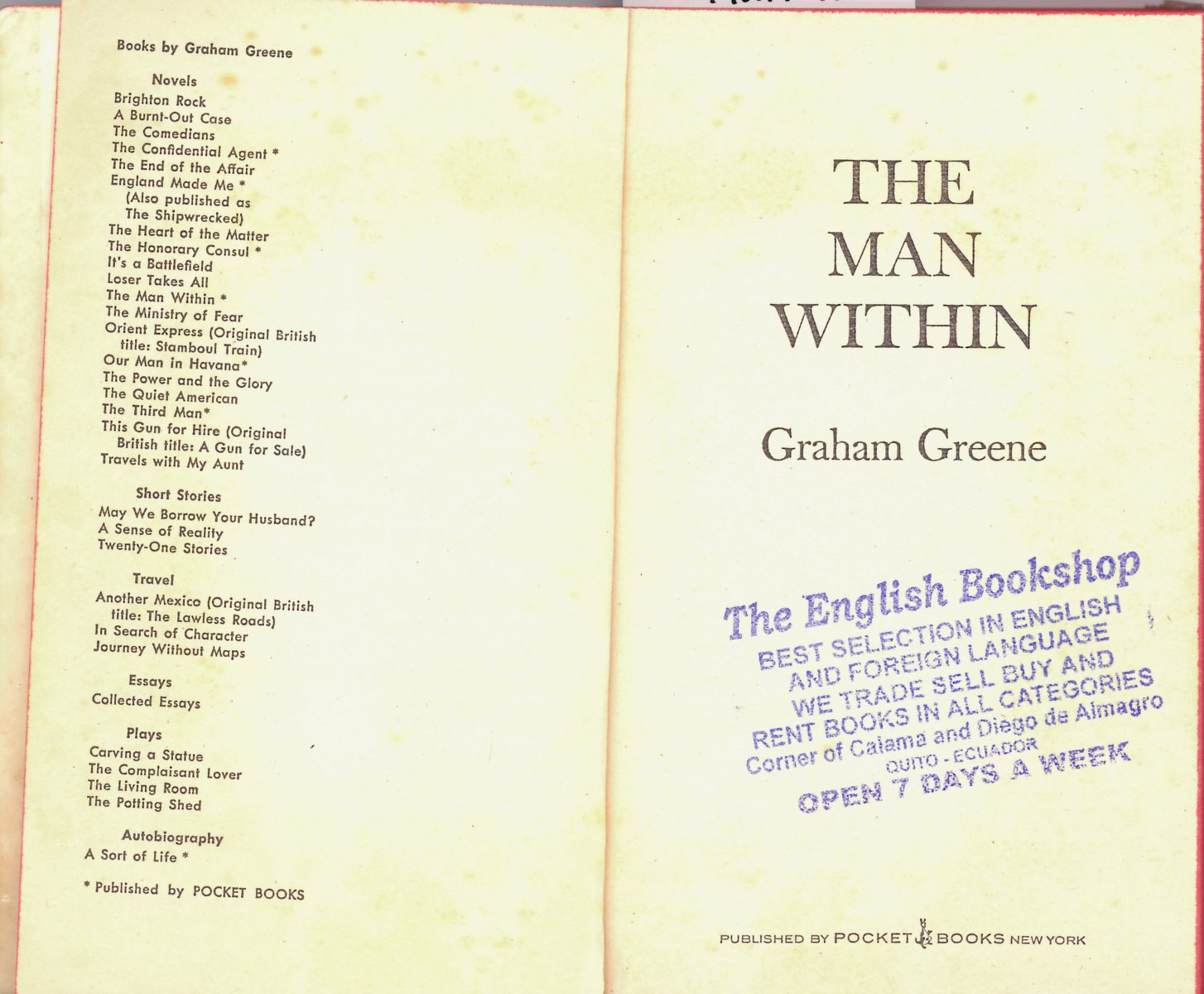
My brother had left a few days earlier, and I was due to fly back to Los Angeles the next day. Martine had given me strict instructions to bring back five Ecuador 2017 calendars that we could distribute as gifts, so I walked around the Mariscal district of Quito. A couple weeks earlier, Dan and I had stopped in at the English Bookshop at the corner of Calama and Diego de Almagro to ask if he had an Ecuador or Quito street atlas. The owner, Mark Halton, gave us a couple of good leads—though, alas, we could not find any such animal.

So, on this (dire) election day, I stopped back at the English Bookshop and got into an interesting discussion with Mark. He was kind enough to brew me an excellent cup of tea, and we had a wide-ranging conversation about books, politics, technology, and a variety of other subjects. He even told me where I could find the calendars. And they were exactly where he pointed me. There were just five left, and I bought all of them.

Mark has a large selection of hardbound and paperback books, mostly in English. It is a fun place for travelers to pick up some interesting titles and sit down and talk books.

If I ever find myself in Quito again—and I hope I do—I will make a point of stopping in at the English Bookshop and Mark’s excellent hospitality.

One of the Two Books I Bought There

One of the Two Books I Bought There

Favorite Films: The Big Lebowski (1998)

The Dude Abides

The Dude Abides

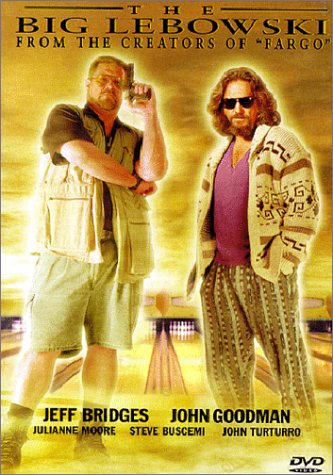
There are few films that have been produced in the last twenty years that do for me what The Big Lebowski by the Coen Brothers does. In the last thirty days, I have seen it twice; and Im still drawn in by it.

This is a film about mistaken identities and incorrect snap judgments. “The Dude” is Jeff Lebowski (played by Jeff Bridges), an unemployed layabout who loves to bowl. He is confused for a more wealthy Jeff Lebowski, whose young trophy wife has supposedly been kidnapped. One of the Dude’s bowling partners is Walter Sobchak (John Goodman), a harebrained security consultant who is a poster boy for making bad decisions. The two get drawn into the kidnap plot, but things go from bad to worse—until Donny (Steve Buscemi), also on the Dude’s bowling team, dies when the Dude and Walter and confronted by the kidnappers.

Along the way are such great bit parts as Jesus Quintana (John Turturro), a egomaniacal bowler; Maude Lebowski (Julianne Moore), the other Lebowski’s daughter; Bunny Lebowski (Tara Reid), the trophy wife; and the Stranger (Sam Elliott), who runs into the Dude at the bowling lanes.

A Poster for the DVD Release of the Film

A Poster for the DVD Release of the Film

What is it about the film which has such a strong appeal for me? Probably it is because The Big Lebowski captures the whole Southern California lifestyle with accuracy and feeling. There are bowlers, millionaires, porno film producers, twisted cops, nihilists, wacko artists, and even a detective who seems to have lost his way. Oddly, Joel and Ethan Coen are New Yorkers who do not look down on L.A. as the land of mashed yeast and right turns at red lights: It looks as if they had actually spent some time here profitably.

I don’t guarantee that the Dude will do for you what he has done for me, but I think he just might.

For Your Next Vacation …

Book Your Interstellar Trip Now!

Book Your Interstellar Trip Now!

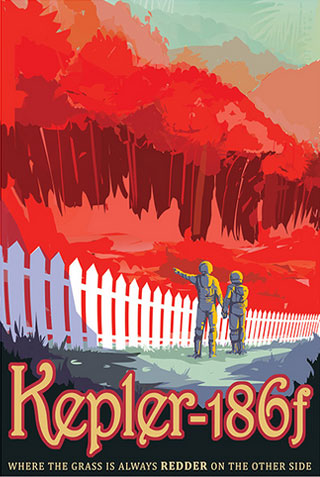
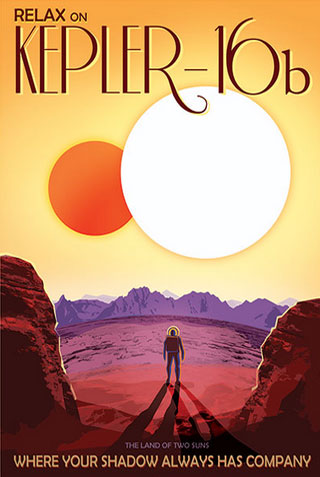
The Jet Propulsion Laboratory (JPL) has released travel posters for earth and other interplanetary and even interstellar destinations. Kepler-186f excels with its red grass … and I rather like that white picket fence. Then, too, there’s Kepler-16b, “where your shadow always has company.”

Then, Too, There’s Kepler-16b

Then, Too, There’s Kepler-16b

I think it’s probably premature to sell tickets for space travel to other solar systems and galaxies, but it might be a good destination for Republicans and other disaffected Americans, one way of course.

La Nariz Del Diablo, Part Dos

Train Conductors at Sibambe

Train Conductors at Sibambe

The destination for our day trip was the village of Sibambe, at the foot of the mountain we so laboriously came down. We were given an hour to buy snacks or handicrafts or watch the costumed dancers go through their paces. There were horses and llamas one could mount and be photographed wearing a campesino hat. There was even a mirador (viewpoint) and museum for those who felt like ascending about a hundred steps. (I myself did not.)

I just looked up at the mountain we had just descended and marveled at the ingenuity of those 19th century engineers who built the line:

The Mountain Where We Descended

The Mountain Where We Descended


Tomorrow, I will upload a video of the Nariz Del Diablo train departing from the sation at Alausi.