The Bookseller

Michael R. Weinstein, Bookseller, in His Torrance Store

Booksellers are a hardy breed. Even as the cost of commercial rentals is going up, the unit sales price for most books seems to be holding steady. Five years ago, I stopped at Alpine Village Market in Torrance near the intersection of Torrance Boulevard and Vermont, probably to buy some of their high quality meats and groceries. A few doors down from the market was a used bookstore signed only as Collectible Books. I was pleasantly surprised to see that it was a used book store with a fairly large stock.

The genial owner, Michael R. Weinstein knows his business and has an interesting selection of literature, history, genre fiction, and miscellaneous non-fiction in his labyrinthine store. I cannot pay him a visit without making some sort of find.

I remember when Los Angeles had dozens of used book stores, including three within walking distance of my apartment. No more. I used to go as far afield as Glendale to visit Brand Books, but it is gone. Sam Johnson Books in Mar Vista is still there, but its co-owner, my friend Bob Klein, passed away a couple years ago.

So, Michael, eat a healthy diet, get plenty of sleep and exercise, because I need good booksellers like you to supply me with what I need to make it through the day.


 

Civilization in the Desert Wilds

William S. Hart in His Living Room

At least once or twice a year, we visit the William S. Hart Museum in Newhall, California, originally home to one of the greatest cowboy stars. In December, the face of nature in Southern California can be harsh. A cold wind was blowing, contributing to some of the gigantic brush fires that still haven’t been put down. Although people who profess to love nature endow it with a cuddly aspect, which it certainly doesn’t have in the Santa Clarita Valley, it does have a certain stark beauty. The plants all look downright prickly: Even the trees look as if they did not want to be hugged under any circumstances. Even the beautiful Bird of Paradise (below) looks as if it could administer a nasty cut.

Bird of Paradise

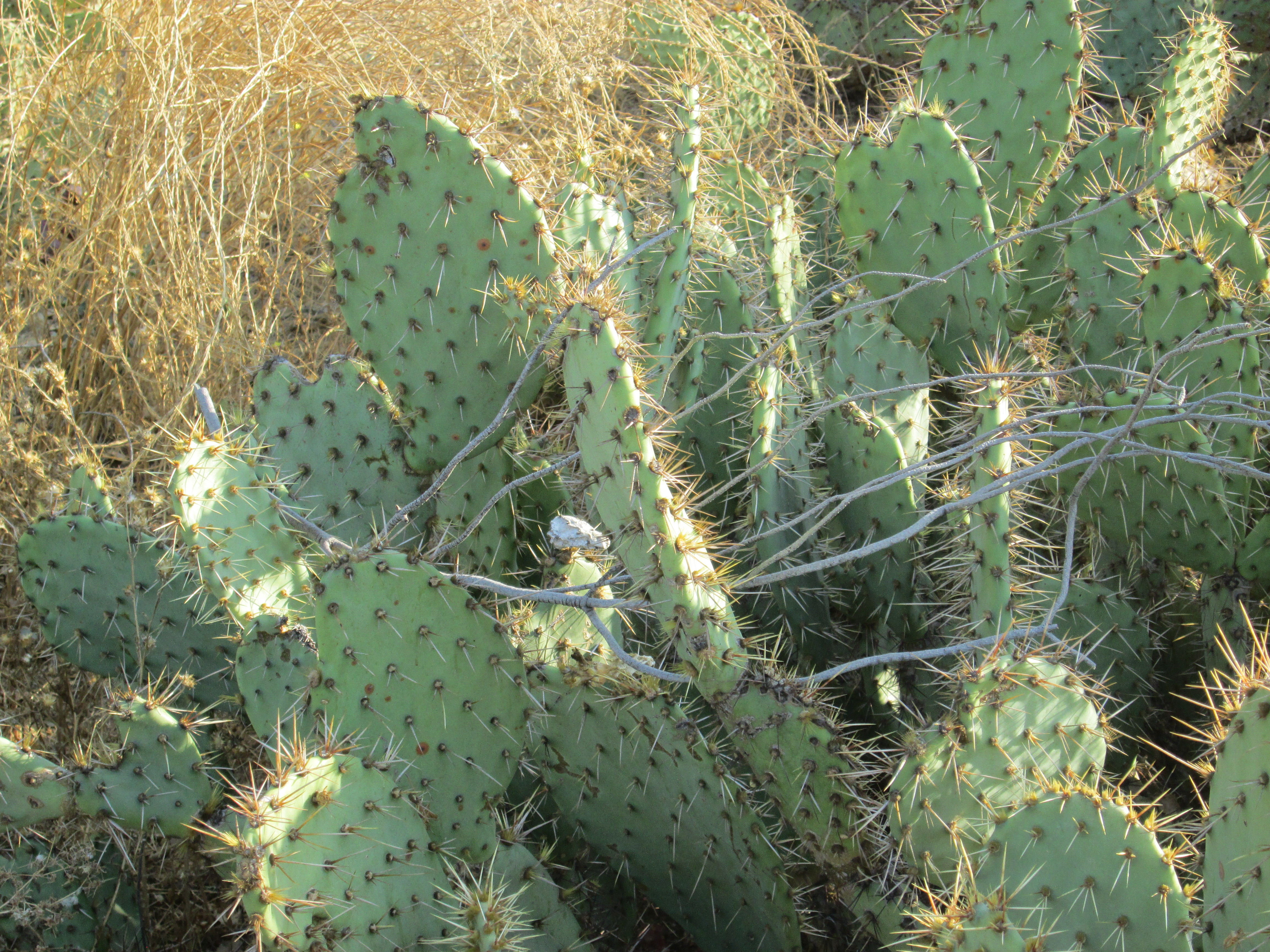
What, then, of the Prickly Pear cacti and trapped tumbleweeds on the trail to the Hart museum? California has a reputation for being a beautiful state—and it is!—but not in the way that people unfamiliar with the state think.

Prickly Pear Cactus on the Trail

And yet the Hart Museum is like a fortress of civility in the wilds of desert California. The aging cowboy star lived there, mostly alone with his sister Mary Ellen, and whichever of his Hollywood friends trekked through miles of dusty dirt roads to get to La Loma de los Vientos, “The Hill of the Winds,” and the cozy fellowship of one of the most beautiful living rooms I have ever seen.

The Living Room in the Hart Museum


Getting to Hello

When You Answer the Telephone, What Do You Say?

I owe this post to the folks at Futility Closet, one of my favorite websites. Apparently, the word “Hello” has a recent history. Although it was Alexander Graham Bell who invented the telephone, it was Thomas Edison who dictated what we said when we answered the call. In August 1877, he wrote a letter to the president of a telegraph company that was planning to introduce the telephone to Pittsburgh: “Friend David, I don’t think we shall need a call bell as Hello! can be heard 10 to 20 feet away. What do you think? EDISON.”

Edison’s thinking was that a bell was not necessary: The word “Hello” was sufficient to get the other party’s attention. It seems that we got the ringer anyway—as well as the word Hello.

It’s far better than what Alexander Graham Bell was planning to use as a greeting: “Hoy! Hoy!” By the time the caller stopped laughing, the call recipient would have hung up in frustration.

Nowadays, most of the calls I receive begin not with a greeting, but a click as some sort of machinery cranks up the robocall script. Perhaps I should just say, “Hoy! Hoy!” and hang up at once.


Dürer’s Melancholia I

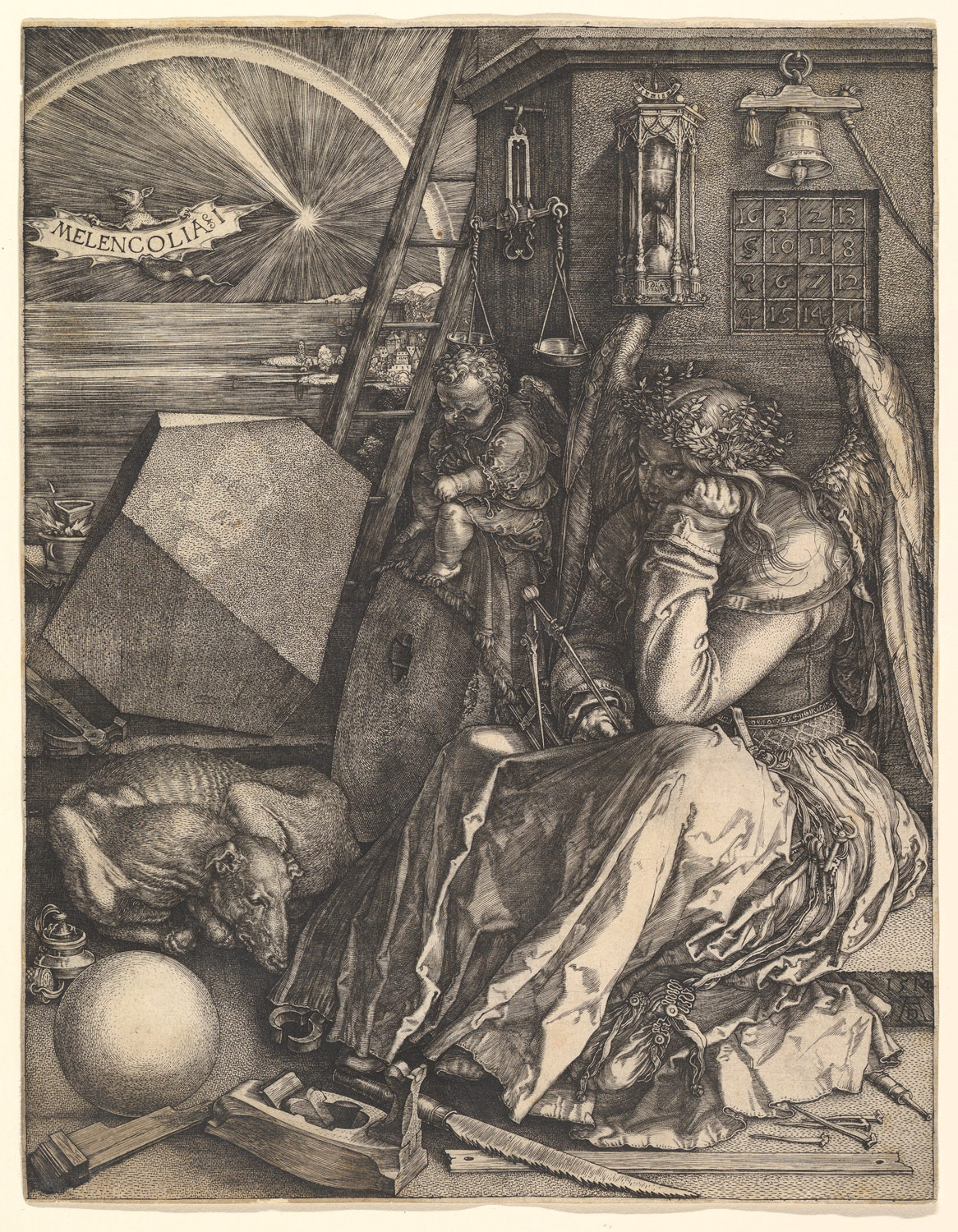
Albrecht Dürer’s Engraving “Melancholia I”

I have written before of my admiration for Albrecht Dürer (1471-1528), probably Germany’s greatest artist. Now I am even more certain of my admiration, since I discovered that he is of Hungarian descent—his father was a goldsmith named Albrecht Ajtósi.

Slowly poring through Will Durant’s The Reformation: A History of European Civilization from Wyclif to Calvin 1300-1564, I hunted up Dürer’s engraving after reading what the author had to say about it:

Finally the engraving that Dürer entitled Melancholia I reveals an angel seated amid the chaos of an unfinished building, with a medley of tools and scientific instruments at her feet; a purse and keys attached to her girdle as emblems of wealth and power; her head resting pensively on one hand, her eyes gazing half in wonder, half in terror, about her. Is she asking to what end all this labor, this building and demolition and building, this pursuit of wealth and power and the mirage called truth, this glory of science and Babel of intellect vainly fighting inevitable death? Can it be that Dürer, at the very outset of the modern age, understood the problem faced by triumphant science, of progressive means abused by unchanging ends?

It is by far the greatest work of art on the theme of being stumped. I find it interesting that the angel is female, no doubt wondering what men have come up with this time.


Difficulties with Girls at 1 Lower Ground

British Author Kingsley Amis (1922-1995)

When last I saw the characters Patrick Standish and Jenny Bunn, they were just starting their relationship in Kingsley Amis’s Take a Girl Like You.

Now, years later, they are stilled married, but childless due to Jenny’s miscarriage. They’ve moved to a maisonette at 1 Lower Ground in London. Jenny is still the same sweetheart; and Patrick, the same opportunistic whoreson. Jenny knows this and sorrowfully reproves his husband for his erring ways. Being in the book publishing business, Patrick goes to an inordinate number of parties where opportunities for excessive drinking and sexual provender abound.

Many of his problems are no farther than a few feet from his front door. His new neighbor Tim Valentine is a clueless young man who is mildly confused about his own sexuality and seems to pop in at least once a day. Next door are Eric and Stevie, a gay couple who are incessantly fighting each other. Also nearby is Wendy Porter-King, with whom Patrick has a brief but intense fling.

I have always enjoyed Amis’s novels, even when they are not the best. I preferred Take a Girl Like You, but Difficulties with Girls is not at all bad. By now I have read almost half of his novels and will probably read more in the coming year.

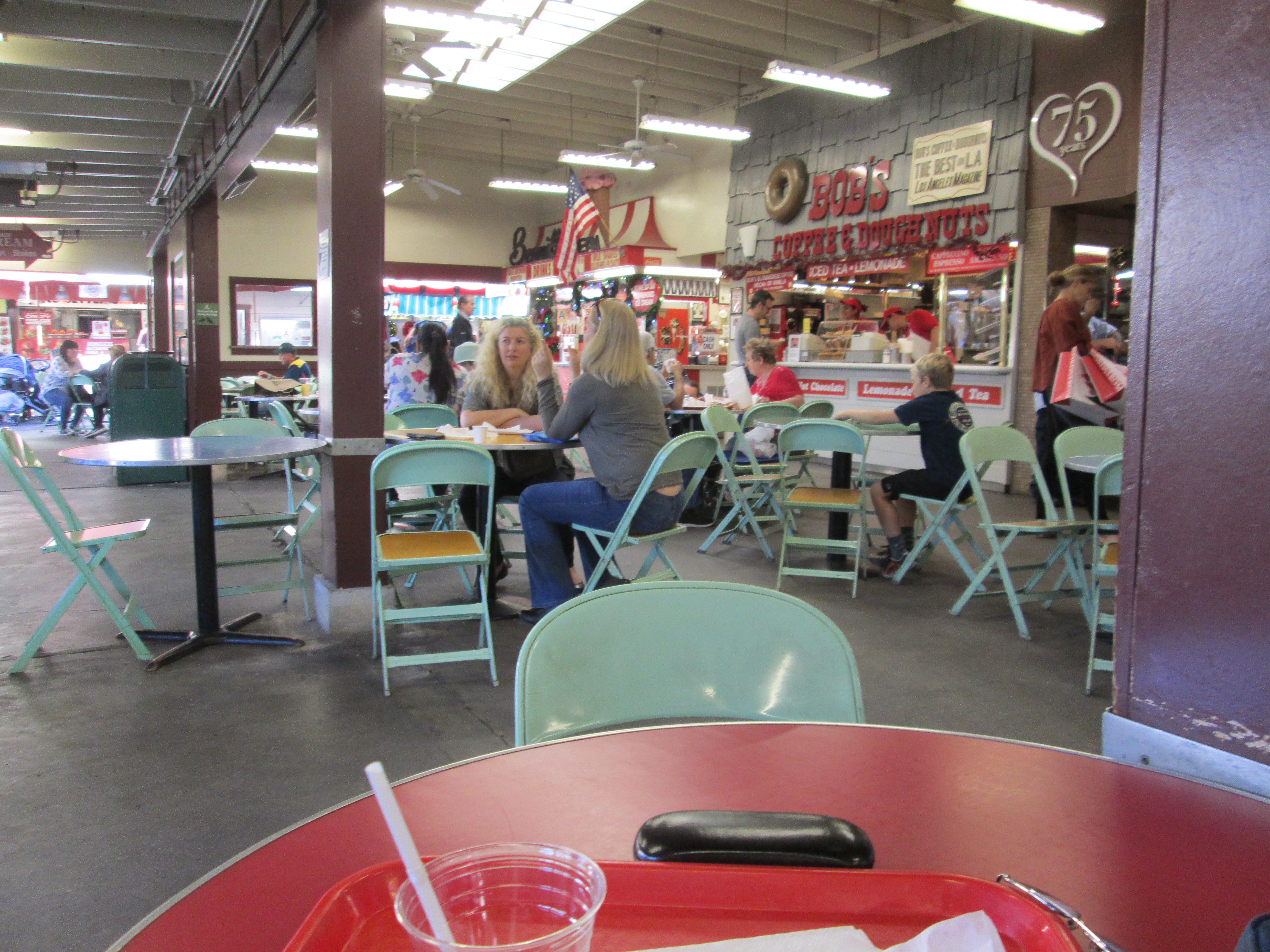
My Reading Station at the Fairfax Farmers Market

I finished reading the book at the Original Farmers Market at 3rd and Fairfax, where I was able to read uninterrupted and break for a tasty lunch. It looks as if I head to the Market around once a week. No matter how hot it may be outside, it always seems cooler in the covered shade over the tables here.


The Book of Chilam Balam of Malibu

Southern California Brush Fire

Ten years ago at approximately this time, I was blogging on the Yahoo-360, which I liked and was saddened to see snuffed out. Around this time in 2007, there were extensive brush fires in Southern California. Here is what I wrote on October 23 of that year.

The brush fires that are devouring Southern California bring to mind another catastrophe: The Mayans, trying to cope with the Spanish invasions and the attendant diseases and persecutions, produced a series of prophetic books called the Books of Chilam Balam, the most famous of which is the Book of Chilam Balam of Chumayel. A copy of the Roys translation is available on the Internet by clicking here.

Here is a brief apocalyptic meditation on the fires and several other disastrous “signs and portents” brought to mind by them in the style of (and incorporating some of the words of) the Book of Chilam Balam of Chumayel:

October 21, 2007 at dawn

When our rulers increased in depravity and stupidity
Following the words of their evangelical swineherds
That which came was a drought, according to their words,
When the hoofs of the animals burned,
When the seashore burned,
A sea of misery.

Then the face of the sun was eaten,
Then the face of the sun was darkened,
Then its face was extinguished.

Smoke covered the land
Darkened the clothes hanging on the line
Bringing an acrid stench to the nostrils
And dissatisfaction to the gorges of men.

They awoke in the morning
Restless
With the lining of their noses crusted with ashes
They took ashes with their coffee
Ashes with their water
Until the smell of burning was all that was.

Far out in space
The crystalline sphere of the gods
The smoke was visible
As that which was once alive and green
Now turned dark brown and black
And acrid.

How long will the gods let this continue?
May they abate their devil winds
And waft clouds heavy with rain
Over the blasted hillsides.

May they restore the beauty that was was there.
May men walk in this beauty
And appreciate it as a gift to be cherished.


Serendipity: How Rat’s Family Got Rich

How to Make the Best of a Bad Lot

This weekend, I read Haruki Murakami’s first novel, Hear the Wind Sing. While it was not quite the level of his more recent work, it had some choice moments. The unnamed narrator has a friend called Rat, who comes from a wealthy family. It was amusing to find out how his family made its fortune:

Rumor had it that Rat’s father had been penniless before the war. On the eve of hostilities, though, he had managed, after much difficulty, to lay his hands on a small chemical factory, where he began producing insect repellent cream. There was considerable doubt as to its effectiveness, but, fortunately for him, the war spread to the South Pacific at that juncture, and the stuff flew off the shelves.

When the war ended, the Rat’s father moved his stock of ointment into warehouses and began marketing a sketchy health tonic; then, toward the end of the Korean War, in an abrupt move, he shifted to household cleaners. Rumor has it that the ingredients were identical in all cases. Not inconceivable.

In other words, the same ointment slathered on the heaped bodies of Japanese soldiers in the jungles of JNew Guinea twenty-five years ago can today be found, with the same trademark, gracing the toilets of the nation as a drain cleaner.

Thus did the Rat’s father join the ranks of the wealthy.


Revisiting the Cold War

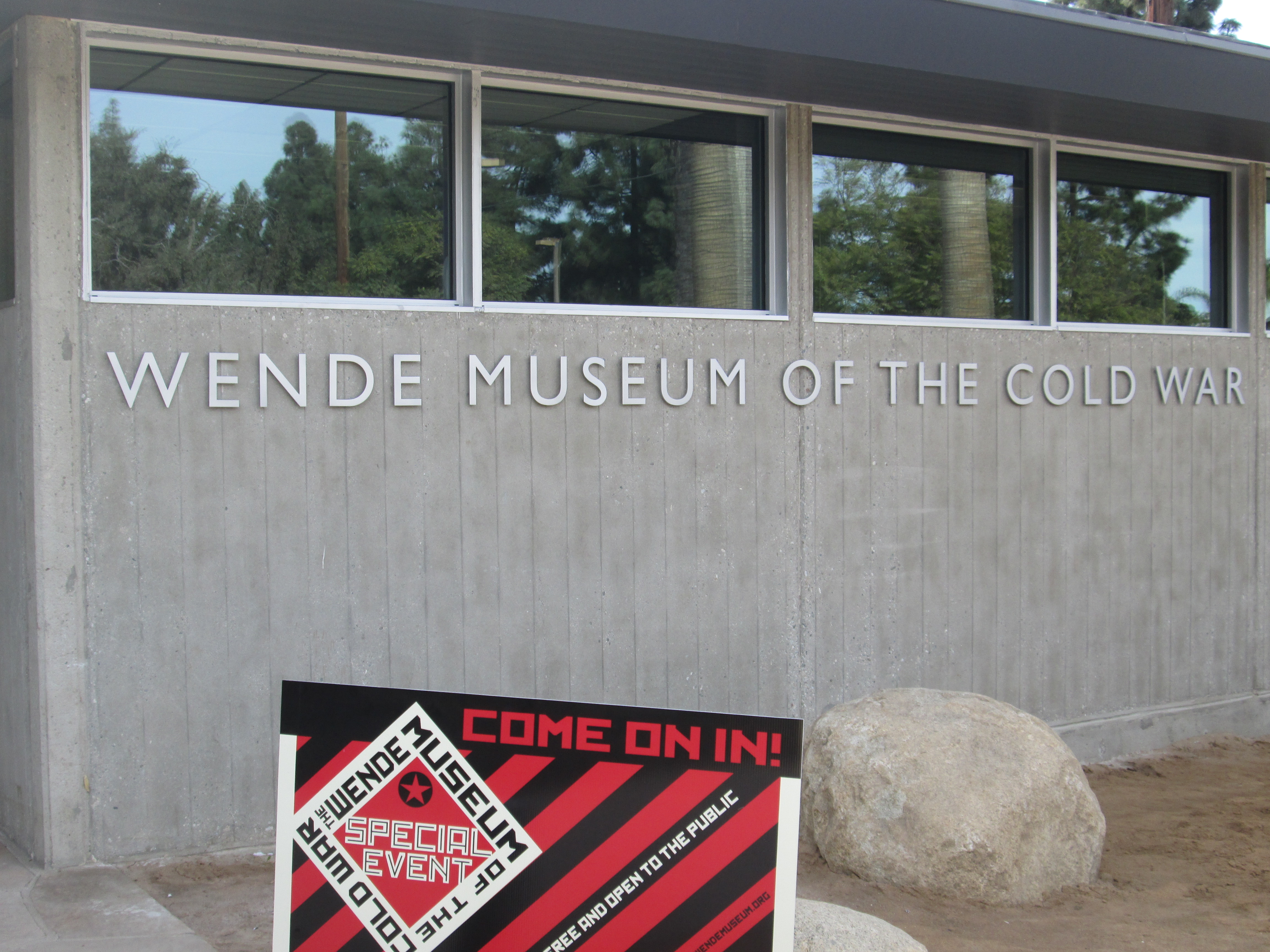
Entrance to the Wende museum in Culver City

Today, Martine and I visited the Wende Museum of the Cold War in Culver City. Located in an old armory building, the museum specialized in the Soviet Union and its satellite nations in the period between the end of the Second World War and the collapse of Communism around 1989.

Although I was not born under Communism, I am an American of mixed Slovak and Hungarian parentage. From my earliest days, I remember my mother putting together packets of clothing to send to our relatives in Hungary. They were packaged in strong white sackcloth, buttressed with rope, and addressed in indelible blue ink.

I had heard of the Wende Museum before. Only within the last few weeks has it moved to its present site on Culver Boulevard just west of Overland. Admission is free, and there is a gift shop.

In 1977 I visited Hungary and then People’s Republic of Czechoslovakia. My parents had flown there separately and met me at Ferihegy Airport in Budapest. We traveled by train to see a festival in Szeged (featuring the opera Aïda), and then went by rail to Kosiče . We were picked up there by my father’s relatives and driven to Prešov-Solivar, where Imre Hrasko and family lived.

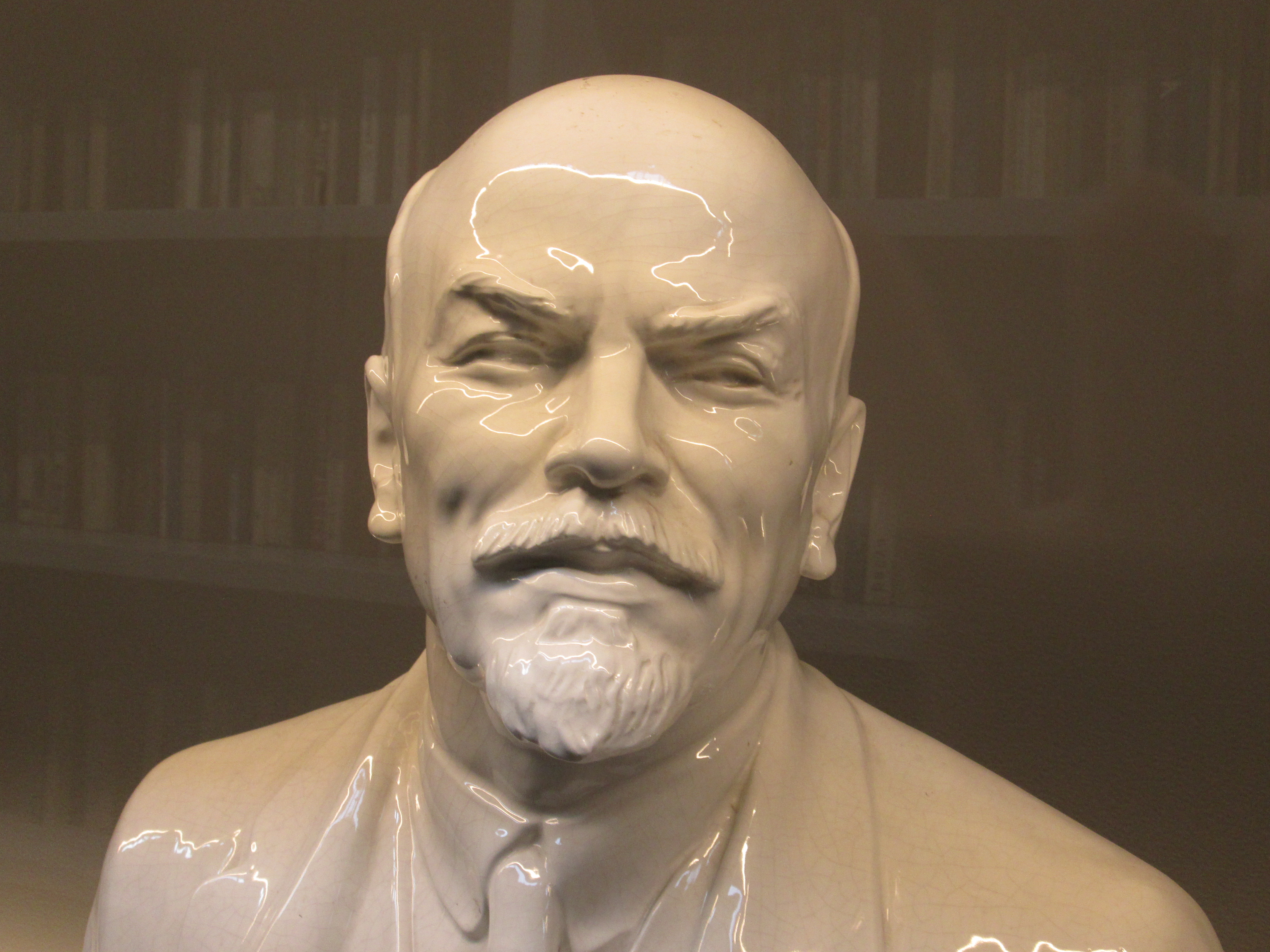
Bust of V. I. Lenin

The Wende Museum consisted of several rooms with Soviet and other Cold War memorabilia, including statuary, photographs, posters, models, toys, electronic equipment, thousands of books, and a few videos. Among the videos was a cute East German cartoon about Santa Claus trying to understand what Sputnik (the Soviet satellite launched in 1957) was because it was on so many childrens’ wish lists. So he goes back to the moon, where the Man in the Moon sends him back to Earth. There, at a scientific institute, he finds his answer and looks at a model of the satellite. There were a number of exhibits relating to Russia’s early accomplishments in space.

Hungarian Farm Girl Operating Tractor

It takes about an hour to visit the museum, and guided tours are available. It was interesting to see how clueless the younger visitors were about the Cold War era. Maybe that’s why Trumpf is president today.


Monetize This!

Don’t Worry: I Have No Intention of Succumbing

At least once a day, I get a spampost asking why I don’t attempt to “monetize” my website and make tons of money. Give me a break! If I give in and allow advertising here, then I am no longer in charge of its contents. The advertisers would be.

These days, whenever I go to a news website like CNN or NBC (Fox was never on my list), I am not only surrounded by ads: I also have to close the ones that pop up in the middle of the screen or encroach from the sides. I hate having to close or minimize all the ads that prevent me from getting at the news. What is worse is that interspersed with the news is so-called “sponsored content,” which is nothing but advertising that attempts to fool you into thinking it’s news instead of mere clickbait.

I hate that! Advertising is becoming so all-pervasive that I have given up on many websites where it is particularly intrusive. When you come here to watch me rant and rave, that’s all you get. No links to what Phoebe Cates looks like now or why you should stop taking Metformin. Then there’s “12 Smart Travel Hacks” or free shipping with some CPAP mask, whatever that is.

So if you’re more interested in some huckster’s false promises than what I provide here, I have a great bridge for sale that might be right up your alley!


Midnight in Iceland

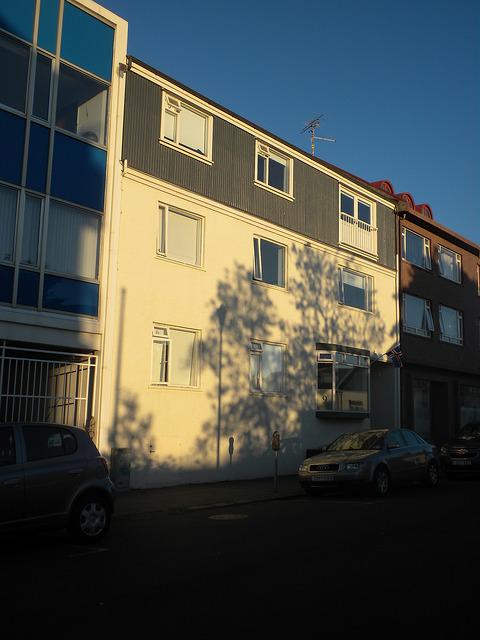
My Room on the Top Floor of the Guesthouse Óðinn at Midnight in June 2013

Now that we are fast approaching the darkest time of the year, my mind turns to my visit to Iceland in June 2013. In that Land of the Midnight Sun, I stayed out until midnight. When I returned to the Guesthouse Óðinn in Reykjavík around midnight, I snapped this picture. I was afraid I wouldn’t be able to sleep with all the light, but fortunately the guesthouse had good blackout curtains (which you can see on the upper left of the third floor in the above photo).

My first day in Reykjavík was a long one. My Icelandair flight from Toronto arrived early in the morning. I had to busy myself for eighteen straight hours before turning in. Otherwise, I would have awakened in the middle of the night—rarin’ to go. That way I managed to minimize the jet lag which otherwise would have bedeviled me. It was a good thing, too, because the next day I had an all day tour of the Golden Circle (Þingvellir, Gullfoss, Geyser, and the geothermal power plant at Hellisheiði on the return to Reykjavík.).