Ganging Aft Agley

I Seem to Have Miscalculated...

I Seem to Have Miscalculated…

A couple of weeks ago, I wrote a post entitled “From Chile Peppers to High Mountain Passes” in which I proposed  flying into El Paso, renting a car, driving in a more or less straight line without having to double back, and delivering the rental car in another city, say Denver or Salt Lake City.

But funny things happen when one doesn’t think things through. Can you imagine all the rental cars from an agency in Peoria disappearing down south and suddenly showing up in Miami or Houston or Chattanooga? How would the agency get the cars back? Would they ship them by rail or UPS or even truck? The cost would be prohibitive.

And the cost was prohibitive. Both Hertz and Enterprise would have charged an additional fee of over $1,500 for delivering the car to another city.

I immediately scrapped the idea and resolved instead to fly in and out of Albuquerque. To avoid doubling back, I would take a series of loops: For instance, I would drive to Chama to take the Cumbres & Tolec Railroad, Durango, Colorado, to take the Durango & Silverton, and return via Gallup and New Mexico Route 53 to see the El Morro National Monument, and on I-40, Acoma Pueblo, or “Sky City” on the way back to home base.

A second loop would take us south of Albuquerque to see Roswell, Capitan, and Alamagordo, with its great space museum.

The best laid plans of mice and men gang aft agley, or something like that.

Maddeningly Fragmentary

Sappho

Sappho

One of the greatest poets of the ancient world was Sappho—the only woman, with a voice unmistakably feminine even though so little remains of her work. And everything that remains appears in Anne Carson’s If Not, Winter (New York: Alfred A Knopf, 2002).

I have read a number of Anne Carson’s translations from the Greek and love all of them, especially the four Euripidean tragedies collected in Grief Lessons. This is a very different book, four hundred pages of mostly white space. Only a single poem has come down to us in its entirety; as for the rest, we have nothing but fragments.

Yet even in those fragments, we have a soft feminine voice, one with occasionally lesbian nuances:

I would rather see her lovely step
and the motion of light on her face
than chariots of Lydians or ranks
of footsoldiers in arms.

In the following fragment, the lacunae are indicated by square brackets, yet the meaning still comes across:

]of desire
]
]for when I look at you
]such a Hermione
]and to yellowhaired Helen I liken you
]
]among mortal women, know this
]from every care
]you could release me
]
]dewy riverbanks
]to last all night long
]  [

And:

]
]you will remember
]for we in our youth
did these things

yes many and beautiful things
]
]
]

Sometimes, all that Anne Carson has to work with in a single word or two, yet even then something comes across.

If Not, Winter is a quick read, but it leaves a strong impression.


Trinity

The First Atomic Bomb Blast at the Trinity Site

The First Atomic Bomb Blast at the Trinity Site

I was born a few months before it all happened: On July 16, 1945, the first atomic bomb was exploded at the north end of the Jornada del Muerto, that desolate extension of the Chihuahan Desert that forms the south central portion of New Mexico. This summer, I will be driving on U.S. 380 just north of the Trinity Site, which is open only two days a year. I’m surprised that it is open even that much given that there is still a lot of radioactivity lingering in the area.

According to Alan Boye in Tales from the Journey of the Dead: Ten Thousand Years on an American Desert (Lincoln: University of Nebraska Press, 2006), some 15,000 people in the vicinity died of cancer from the radioactivity, and some 20,000 people suffered non-fatal forms of cancer.

Trinitite Sample

Trinitite

Much of the area around the blast is covered with a green glass-like mineral called Trinitite, which in many cases still makes Geiger Counters tick, though samples for sale can be found in rock shops around the area.

When J. Robert Oppenheimer was interviewed about the blast, he quoted from the Bhagavad Gita: “Now I am become Death, the destroyer of worlds.” Now that power is in the hands of Donald J. Trump. Doesn’t that make you feel safe?

The OTHER El Camino Real

This Camino Real Was Nowhere Near the Ocean

This Camino Real Was Nowhere Near the Ocean

If you drive north on U.S. 101, you will see scads of quaint mission bell markers identifying it as El Camino Real—and so it was! But it was not the only one. There is another one, every bit as picturesque but far deadlier, through the heart of New Mexico. It is called El Camino Real de Tierra Adentro, “The Royal Road to the Interior Lands.” These interior lands consisted primarily of the city of Santa Fe together with its constellation of pueblos.

Picture New Mexico as being divided into six roughly equal size vertical rectangles, three in the north and three in the south. The south central one is the northern reach of the Chihuahuan Desert, usually referred to as the Jornada del Muerto, the Journey of the Dead. The Chihuahuan Desert proper extends for 1,200 miles south to the Mexican State of Zacatecas. The rightmost two-thirds of the rectangle is occupied by the White Sands Missile Range.

The leftmost one-third of that rectangle includes the Rio Grande River, the El Camino Real de Tierra Adentro, and a lot of desolate, searing nothingness.

The Jornada del Muerto

The Jornada del Muerto

Martine and I will probably intersect the Jornada del Muerto from East to West as we travel along U.S. 380, right past where the first atomic bomb explosion occurred at the now (mostly) closed Trinity Site. We will be leaving Capitan, New Mexico, and heading northwest to Albuquerque, where we will stay for a few days.

I am now reading Alan Boye’s Tales from the Journey of the Dead: Ten Thousand Years of an American Desert (Lincoln: University of Nebraska Press, 2006), which examines the route along the Rio Grande to Mexico throughout history from Clovis and Folsom Man through to the Manhattan Project. In addition, the author describes his own jaunts through the Jornada today in an effort to give a feeling for the fierceness and beauty of the land.

The Book Collectors

Antiquarian Book Shows Are Not for Everybody

Antiquarian Book Shows Are Not for Everybody

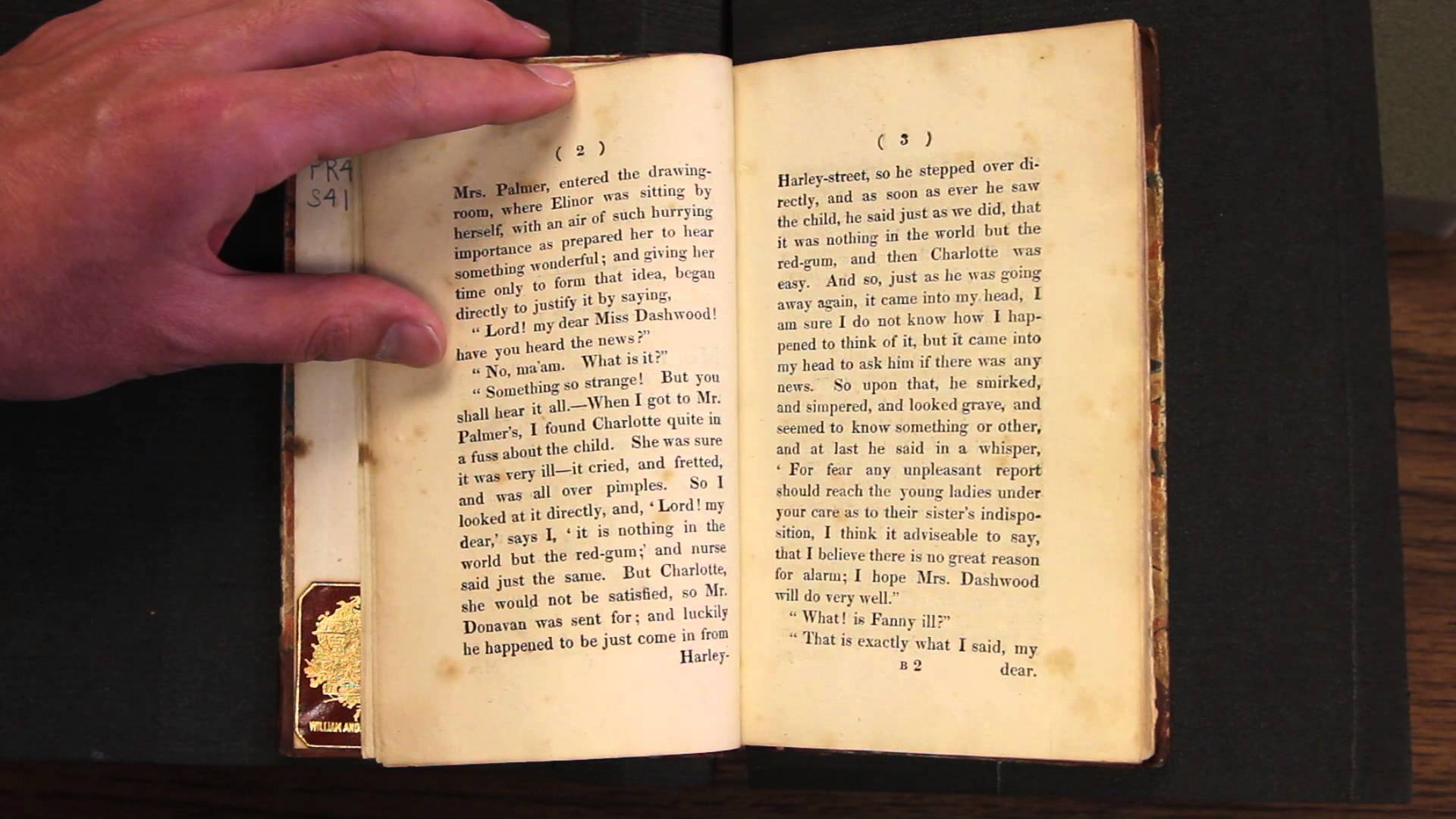
Today, I went to an antiquarian book show. I used to go to them in years past and succeeded in making a number of finds; but now I find the market has priced itself into the stratosphere. There were beautiful centuries-old leatherbound books, immaculate Faulkners and Steinbecks with perfect dust jackets, and prices ranging into the thousands of dollars.

If I owned a Bugatti or Talbot Lago, I would probably not drive it around town lest some uninsured drunken sot would T-bone it. Likewise, if I spent thousands of dollars for first editions, I would not pull the books off the shelf, read them, and underline the significant passages in ball point ink.

There are half a dozen books I have purchased because they looked really good, usually consisting of titles which I already owned in reading copies. I own a signed G. K. Chesterton, for example, that I would never profane by reading. I have some friends who would never read a paperback book, or who pooh-pooh ever reading an e-book. I am not so fastidious. The only time I would bypass an e-book is if I were reading nonfiction that contained useful maps, illustrations, bibliographies, and indexes. I would probably prefer to read Dickens with the Cruickshank illustrations, or Lewis Carroll with the Tenniel illustrations.

By and large, I am a consumer of books. Many of my best titles are ratty, old, and with damaged spines. Some (shudder!) have been underlined by previous owners. Some are sturdy ex-library editions bound in buckram.

I own a few books that would interest an antiquarian book collector, but generally, they wouldn’t waste their time with me.


@unrealDonaldTrumpf

Why Isn’t There Any Bird Crap on This Man’s Shoulder?

Why Isn’t There Any Bird Crap on This Man’s Shoulder?

The following are fake Donald Trumpf tweets from the New Yorker of January 27, 2017:

@realDonaldTrump
Weak Hamlet should stop moaning about past and get on with his life. All talk, no action! King Claudius has my full support.

@realDonaldTrump
Tremendously fat honey thief Winnie-the-Pooh deserves to get stuck in Rabbit’s hole. Not crying for him, believe me, OR low-energy Eeyore.

@realDonaldTrump
Successful businessmen should be left alone by boring ghosts and sad employees. Bob Cratchit is a loser. No enthusiasm!

@realDonaldTrump
Little Miss Muffet doesn’t deserve curds OR whey if she can’t deal with a bug. No strength or stamina and her tuffet is a disgrace.

@realDonaldTrump
Anyone who thinks a good relationship with Mordor is a bad thing is stupid. And crooked Frodo should return ring to rightful owner.

@realDonaldTrump
Wolf well within rights to evict disgusting pigs from below-code structures.

@realDonaldTrump
Overrated king’s horses and men are failed élites. Humpty Dumpty deserves better and will get it after Obamacare repeal.

@realDonaldTrump
Very Little Jack Horner’s biggest accomplishment: putting in thumb, pulling out plum. Sad!

@realDonaldTrump
Stepsisters deserve compensation for loss of employee. Shame on you, prince!

@realDonaldTrump
Better British schools and Hogwarts would fail on its own. Instead, England has disastrous witch problem. I WON’T LET IT HAPPEN HERE!!!

I Have Had Enough

It’s Time To Do Something

It’s Time To Do Something

Many of my friends are still saying they’ll take a wait and see attitude toward Herr Trumpf. Maybe I have a shorter fuse: It’s time for me to enter the political sphere long enough to send him back to the real estate profession where he has performed so abysmally. I would rather he build more stupid Trumpf Towers with gold plumbing fixtures and Trumpf Golf Courses than upend my country and send it reeling into the abyss. He will, of course, go bankrupt again. But that’s okay, so long as he doesn’t bankrupt all of us.

How long before we burn all our allies and enter into unfriendly relations with everyone—except for Dear Putin. Even he will realize that the Trumpf is not something one wishes upon one’s worst enemy.

George Orwell did not write 2017: That’s something our President with his supinely cowardly Congress is in the process of doing. Poor Orwell got out while the going was good. We are not quite so lucky.

Next week I intend to call my Congressman and both of California’s Senators. I know they will secretly sympathize with me, but I would still like to see what they could do. No one could move Mitch McConnell and Paul Ryan—who have supped and continue to sup with infamies.

“A Hundred Windows Opened on All Sides of the Head”

Old Building on Buckeye Road

Old Building on Buckeye Road

This morning, I started reading G. K. Chesterton’s Autobiography, and it set me to thinking. I thought it would be fun to put all my earliest memories in one place, lest I forget. Chesterton had it right:

What was wonderful about childhood is that anything in it was a wonder. It was not merely a world full of miracles; it was a miraculous world. What gives me this shock is almost anything I really recall; not the things I should think most worth recalling. This is where it differs from the other great thrill of the past, all that is connected with first love and the romantic passion; for that, though equally poignant, comes always to a point; and it is narrow like a rapier piercing the heart, whereas the other was more like a hundred windows opened on all sides of the head.

I was born in a house on East 177th Street, a few houses north of Glendale. Because we moved shortly after I was born, all my earliest memories are tied up with 2814 East 120th Street, just off Buckeye Road. We lived on the second floor of a duplex. I remember lying in my crib. One of my first memories was of an argument between my mother and father about money. Both were working, my father at Lees Bradner & Company, my mother at the Cleveland Woolen Mill.

Like most toddlers, I was fairly rambunctious. Mrs. Nebehaj kept shouting from her first floor rooms, “Missus, the ceiling is coming down!”

From a very early age, I was cared for by my great grandmother Lidia and great grandfather Daniel. As Daniel died when I was one, I do not remember him. I was always told he wanted to live long enough for me to buy pipe tobacco for him at the grocery store on Buckeye Road. It was not to be.

My oldest friend was Joyce. Now for the sex: I was fixated on the crook of her knees, which to me was smooth and lovely. There wasn’t too much I could do about it, but I remembered it nonetheless. Once, when I was playing with her, I lost control of my bladder, and the pee ran down my leg. My landlord saw me and asked why I was dripping. I said I stepped in a bucket of water, and it was running down my leg. Was that my first lie?

On Buckeye Road, near East 120th, there was a ramshackle old building that sold furnace pipes and such like. I remember playing in the small yard that fronted the building. There were a number of tree stumps on which I could play with my toy soldiers.

Of course, everybody spoke Hungarian. So did I. It was almost a 100% Hungarian neighborhood, and we didn’t have a television set until 1949. Broadcasting would begin around 4:00 PM with the Kate Smith Hour, followed by the Howdy Doody Show, which I watched religiously.

Once, I remember going with my father to pick up Mom at the Woolen Mill, and there was a big fire in a nearby building.

My life changed when I attended kindergarten beginning in January 1950. Trouble emerged at once when my teacher, Mrs. Idell, refused to understand my Hungarian. My friend András, who was similarly afflicted, and I began kicking her shins. Also, my brother was born in April 1951. It was time to move, and that signaled a new epoch in my life.

Unfinished Business

Accordion Player in Downtown Buenos Aires

Accordion Player in Downtown Buenos Aires

I always say I have unfinished business with the people, places, and things that I love. Take Argentina, for instance. I have been there in 2006, 2011, and 2015. The first time, I broke my shoulder by slipping on the ice in Tierra Del Fuego; the second time (the best), I went with Martine and saw a good chunk of the Patagonia; the third time was mostly just fill-in, with visits to Iguazu Falls and Sar Carlos Bariloche. But I am by no means finished with Argentina, nor Argentina with me.

There is a broad stretch of the South Atlantic I’d love to see between Rio Gallegos and Carmen de Patagones. I would not mind taking long bus rides to God-forsaken ports like Puerto San Julian, Puerto Deseado, Caleta Olivia, Comodoro Rivadavia, and Bahia Blanca. I don’t even care if there aren’t that many notable tourist sights. I could easily put up with some slow time, especially as I would have two Kindle readers with me, and some 3,000 different titles to read. At my side will be my pocket digital rangefinder camera to catch people and places in the process of being something special.

Guanaco in the Buenos Aires Zoo

Guanaco in the Buenos Aires Zoo

Argentina isn’t the only place I’d like to see again. I wouldn’t mind spending more time at the English Bookshop in Quito, Ecuador. And Iceland will continue to be a lifelong love of mine. I only wish I could get Martine to come with me. She has some idea that she would have to dress like an Eskimo amid huge snowdrifts. Far from it! Iceland will be one of the few countries to benefit from global warming. My favorite destinations in Europe are on hold for now, because I suspect that mass immigration will change that continent forever. I also want to see more of the American Southwest, and Martine and I are planning one such trip right now that will take up large swaths of New Mexico, Colorado, and possibly Utah.

As Lao Tzu wrote, “From wonder, into wonder, existence opens.”


The Greatest American Novel You’ve Never Heard Of

Stoner (1965) by John Williams

Stoner (1965) by John Williams

The title of this post comes from Tim Kreider, who used it in a New Yorker article on October 20, 2013.  The book begins slowly:

William Stoner entered the University of Missouri as a freshman in the year 1910, at the age of nineteen. Eight years later, during the height of World War I, he received his Doctor of Philosophy degree and accepted an instructorship at the same University, where he taught until his death in 1956. He did not rise above the rank of assistant professor, and few students remembered him with any sharpness after they had taken his courses. When he died his colleagues made a memorial contribution of a medieval manuscript to the University library.

On the face of it, the novel, Stoner, by John Williams (1922-1994), does not appear to be promising. And yet, to my mind, it is one of the best American novels written after World War II.

Williams gives us a story of a life in academia, where the politics are particularly awful. I myself had wanted to become a professor of film history and criticism, but was so disgusted by the infighting at the Theater Arts Department of UCLA that I fled to the corporate world and concentrated instead on computers.

William Stoner marries a young woman who catches his attention at a party. It does not take more than a month before he discovers that his marriage is a failure. He and his wife Edith have a daughter named Grace, toward whom Edith acts strangely and inconsistently over the years, leading to Grace getting pregnant and moving away from home.
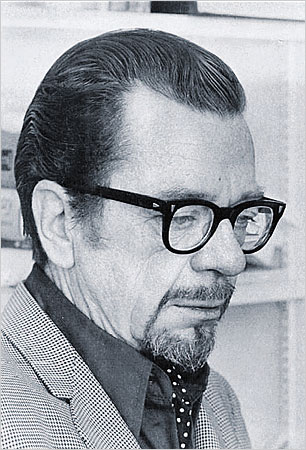
Author John Williams

Author John Williams

The English department at Stoner’s University of Missouri is headed by one Hollis Lomax, who becomes chairman and begins a career-long feud with Stoner after he flunks one of Lomax’s protegées.

In his forties, Professor Stoner enters an affair with a beautiful young colleague, but is pressured by Lomax to either stop it or resign his post.

In the end, Stoner develops cancer and dies.

So what’s the big deal? Several things. First of all, the book is shockingly true to life. Stoner falls into his profession because, originally enrolled as an agriculture major, he falls in love with English literature. Again and again, he lurches from one decision to the next with a shrug, almost, and finds enjoyment where he can—even when there is no consolation from his work or home life. Even as he dies from a cancer that has metastasized throughout his system, he evinces not a moment of fear, but yields to the necessities of his disintegrating body.

Williams’s style is a thing of beauty. As Krieder wrote in his 2003 article:

[Stoner’s] ambition is evident in the apparent humility of its subject: like Updike’s Rabbit tetralogy, it’s to be nothing more or less than the story of a life. And there is something in even those first paragraphs, an un-show-off-y assurance in the prose, like the soft opening notes of a virtuoso or the first casual gestures of a master artist, that tells us we are in the presence not just of a great writer but of something more—someone who knows life, who maybe even understands it. It’s the same thing I sense in reading James Salter: the presence of wisdom. And wisdom is, of course, perennially out of style.

Especially among postwar writers, there is a tendency to tart things up so that the work coruscates with some special grace irrespective of its appropriateness to the subject. Williams comes at you straight and tells you what this man’s life is like.

Williams wrote only three other novels other than Stoner:

  • Nothing But the Night (1948), which is out of print
  • Butcher’s Crossing (1960), a Western, and …
  • Augustus (1972), an epistolary novel about the Roman Emperor Augustus

The latter two are available from New York Review, as is Stoner.