Favorite Films: Stalker (Сталкер, 1979)

Dunes Near the Room That Is the Goal of Stalker

While I was visiting my bother in Palm Desert, we saw Andrei Tarkovsky’s Stalker, a film based on Arkady and Boris Strugatsky’s classic SF novel, Roadside Picnic. He did not like the film, which took 161 minutes to traverse a field and enter a building in search of a room.When one entered the room, one supposedly got all one’s wishes satisfied. Dan was bored by the film’s length, whereas I felt the film zipped by at light speed.

There is something about slow films, such as Carl Dreyer’s Day of Wrath and Ordet, Robert Bresson’s The Trial of Joan of Arc, and Yasujiro Ozu’s Tokyo Monogatari. The main characteristic of these films is a movement of spirit. If you follow this development, the film’s perceived slowness is imaginary.

In Stalker, one cannot just walk across the field and into the room. The interstellar aliens that landed in what is called “The Zone” change things around such that the stalker and the men who hired him to guide them must throw steel nuts bound in rags to check out the path ahead—and under no circumstances must they return the way they came. Several times, they pass a wall of old ceramic tiles, but in each case, the terrain around it is completely different.

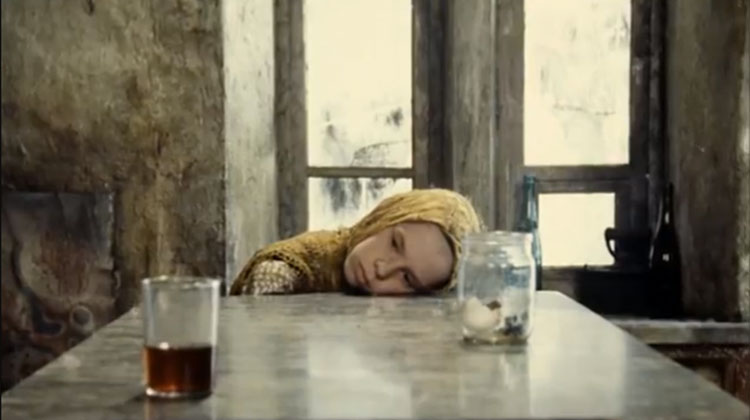
The Stalker’s Daughter, Called “Monkey”

I am not saying you will love the film. I certainly do. But my brother, who shares so many film tastes with me, did not.If you demand fast action, you had best stick with CGI and Marvel Comics adaptations. But if you let yourself be guided by one of the greatest directors who ever lived, and follow the story line carefully, you will become one of Stalker’s fans.

“Elegy for the Forgotten Oldsmobile”

1963 Oldsmobile Cutlass

Here is a poem from Adrian C. Louis, a Lovelock Paiute Indian from Northern Nevada, who wrote a poem entitled “Elegy for the Forgotten Oldsmobile.” This poem had a huge effect on Sherman Alexie, my favorite Indian author, a Spokane from Washington. First of all, here is the poem:

July 4th and all is Hell.
Outside my shuttered breath the streets bubble
with flame-loined kids in designer jeans
looking for people to rape or razor.
A madman covered with running sores
is on the street corner singing:
O beautiful for spacious skies…
This landscape is far too convenient
to be either real or metaphor.
In an alley behind a 7-11
a Black pimp dressed in Harris tweed
preaches fidelity to two pimply whores
whose skin is white though they aren’t quite.
And crosstown in the sane precincts
of Brown University where I added rage
to Cliff Notes and got two degrees
bearded scientists are stringing words
outside the language inside the guts of atoms
and I don’t know why I’ve come back to visit.

O Uncle Adrian! I’m in the reservation of my mind.
Chicken bones in a cardboard casket
meditate upon the linoleum floor.
Outside my flophouse door stewed
and sinister winos snore in a tragic chorus.

The snowstorm t.v. in the lobby’s their mother.
Outside my window on the jumper’s ledge
ice wraiths shiver and coat my last cans of Bud
though this is summer I don’t know why or where
the souls of Indian sinners fly.
Uncle Adrian, you died last week—cirrhosis.
I still have the photo of you in your Lovelock
letterman’s jacket—two white girls on your arms—
first team All-State halfback in ’45, ’46.

But nothing is static. I am in the reservation of
my mind. Embarrassed moths unravel my shorts
thread by thread asserting insectival lust.
I’m a naked locoweed in a city scene.
What are my options? Why am I back in this city?
When I sing of the American night my lungs billow
Camels astride hacking appeals for cessation.
My mother’s zippo inscribed: “Stewart Indian School—1941”
explodes in my hand in elegy to Dresden Antietam
and Wounded Knee and finally I have come to see
this mad fag nation is dying.
Our ancestors’ murderer is finally dying and I guess
I should be happy and dance with the spirit or project
my regret to my long-lost high school honey
but history has carried me to a place
where she has a daughter older than we were
when we first shared flesh.

She is the one who could not marry me
because of the dark-skin ways in my blood.
Love like that needs no elegy but because
of the baked-prick possibility of the flame lakes of Hell
I will give one last supper and sacrament
to the dying beast of need disguised as love
on deathrow inside my ribcage.
I have not forgotten the years of midnight hunger
when I could see how the past had guided me
and I cried and held the pillow, muddled
in the melodrama of the quite immature
but anyway, Uncle Adrian…
Here I am in the reservation of my mind
and silence settles forever
the vacancy of this cheap city room.
In the wine darkness my cigarette coal
tints my face with Geronimo’s rage
and I’m in the dry hills with a Winchester
waiting to shoot the lean, learned fools
who taught me to live-think in English.

Uncle Adrian…
to make a long night story short,
you promised to give me your Oldsmobile in 1962.
How come you didn’t?
I could have had some really good times in high school.

Indian Poet Adrian C. Louis

In an article in the Atlantic, Sherman Alexie wrote about the impact of this poem on his life:

In 1987, I dropped out of Gonzaga and followed a high school girlfriend to Washington State University (it’s called Wazoo). And by complete chance, I enrolled in a poetry workshop that changed my life. On the first day, the teacher, Alex Kuo, gave me an anthology of contemporary Native poetry called Songs from this Earth on Turtle’s Back. There were poems by Adrian C. Louis, a Paiute Indian, and one in particular called “Elegy for the Forgotten Oldsmobile.” If I hadn’t found this poem, I don’t think I ever would have found my way as a writer. I would have been a high school English teacher who coached basketball. My life would have taken a completely different path.

This was the first line of the poem:

            Oh, Uncle Adrian, I’m in the reservation of my mind.

I’d thought about medicine. I’d thought about law. I’d thought about business. But that line made me want to drop everything and be a poet. It was that earth-shaking. I was a reservation Indian. I had no options. Being a writer wasn’t anywhere near the menu. So, it wasn’t a lightning bolt—it was an atomic bomb. I read it and thought, “This is what I want to do.”

Interestingly, that wasn’t the first line of the poem, as you can see from above. But the feeling was genuine, and Alexie ran with it. Next week, when I return from the desert, I want to talk more about Alexie.


The World’s Highest Capital City

La Paz, Bolivia, at Night

If you want to land in a capital city so high up that you will get an immediate nosebleed and tumble headfirst down the steps of the airplane, you would pick La Paz, Bolivia. The average altitude of El Alto, where the airport is located, is 13,615 feet (or 4,150 meters). The city itself is about 2,000 feet lower, about the same altitude of Lhasa, Tibet.

In The Old Patagonian Express, Paul Theroux talks about his accident-proneness at high altitude. Taking some aspirin in his hotel room, he drops the water tumbler into the sink. Trying to pick up the pieces, he cut himself badly and decided to seek medical attention:

But I had not gone two blocks when the new towel I had wrapped around my hand was soaked with blood. It did not hurt, but it looked dreadful. I hid it under my arm so as not to alarm pedestrians. Then the blood dripped on the sidewalk and I thought: God damn. It was deeply embarrassing to be walking through this large gray city with a blood-soaked towel on my hand. I began to wish I had tried the rubber band. I left spatters of blood on the crosswalk, and more spatters on the plaza. I asked directions to the pharmacy and saw, when I looked back, that there was a pool of blood where I had paused, and a horrified Bolivian watching me. I tried not to run: running makes your heart beat faster and you bleed more.

Of course, if Theroux had been trying to cope with the altitude by taking aspirin, his blood was not likely to clot soon. He should have chewed coca leaves with an alkaloid, or drank some mate de coca tea. But then, this was the 1970s, and this was not generally known to gringo travelers.

Bolivia has had a violent political history, with presidents changing office approximately once a year—or even more often. In 1948, some angry rebels yanked President Gualberto Villaroel from the balcony of his palace and proceeded to lynch him from a lamppost in the plaza. Fortunately, the present government is a little more stable


Facing South

Skeletoid Academics?

Dartmouth College was the beginning of many things in my life. One of the most influential was the Reserve Room on the ground floor of Dartmouth’s Baker Library. On three sides was a magnificent sequence of frescoes by José Clemente Orozco (1883-1949) which began with the invasion of Mexico by the Conquistadores and ended up with the mess that Mexico was in during the 1930s. One of the most shocking images was the one above of the skeletoid academics giving birth to a baby skeleton.

These frescoes influenced me so much that I would study or even just hang out in the Reserve Room just to imbibe the atmosphere of Orozco’s powerful political murals. It was no accident that the first vacation I took on my own, nine years after my graduation, was a visit to Mayan ruins in Yucatán. Over the next seventeen years, I was to go to Mexico eight times, spending as much as a month on each visit.

José Clemente Orozco

During those visits, my eyes turned further south. I would have loved to go from Yucatán to Belize and on to the Mayan ruins at Tikal in the Petén region of Guatemala. At that time, however, the man in charge was Efraín Ríos Montt, a murderous dog who was responsible for the massacre, rape, and torture of thousands of indigenous people; and the U.S. State Department did not recommend that Americans vacation in Guatemala during his presidency.

Around then, Paul Theroux published The Old Patagonian Express (1979), about taking trains from Boston as far south in the Americas as one could go. I vowed that I would eventually make it to South America, and I did. Since 2006, I visited Argentina (three times!), Uruguay, Chile, Peru, and Ecuador. An despite Mexico’s continuing problem with narcotraficantes, I would not mind going to Yucatán and Chiapas again.


Time Off in Siberia

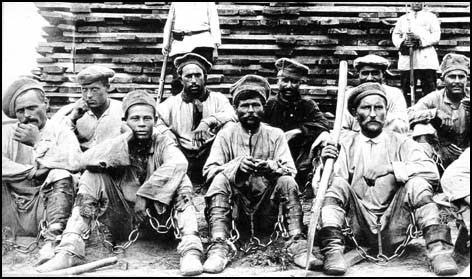
Tsarist Prisoners in Siberia

I have a particular love for Russian prison literature. For the third time, I am reading Fyodor Dostoyevsky’s The House of the Dead. By no means is it anywhere near the greatest of Dostoyevsky’s novels, but the subject has always fascinated me.

After the October Revolution, and especially during Josef Stalin’s reign, the literature of the GULAGs became a standard literary genre. I love Alexander Solzhenitsyn’s massive The GULAG Archipelago as well as One Day in the Life of Ivan Denisovich and The First Circle. Also well worth reading is Varlam Shalamov’s grim Kolyma Tales.

It is a common misconception that Dostoyevsky’s book is not a novel but just a thinly fictionalized account of his own four years in Omsk. At the time he wrote it, he was trying to reestablish his literary reputation after four years in prison and subsequent time with the Siberian Army Corps of the Seventh Line Battalion in Semipalatinsk. He was worried that if he wrote a book that was less than uplifting, he would once again be regarded as a political prisoner and suffer excessive censorship.

While it is anything but pollyanna-ish, The House of the Dead provided a rare look at the Tsar’s prison colonies on the other side of the Ural Mountains.

When It All Began

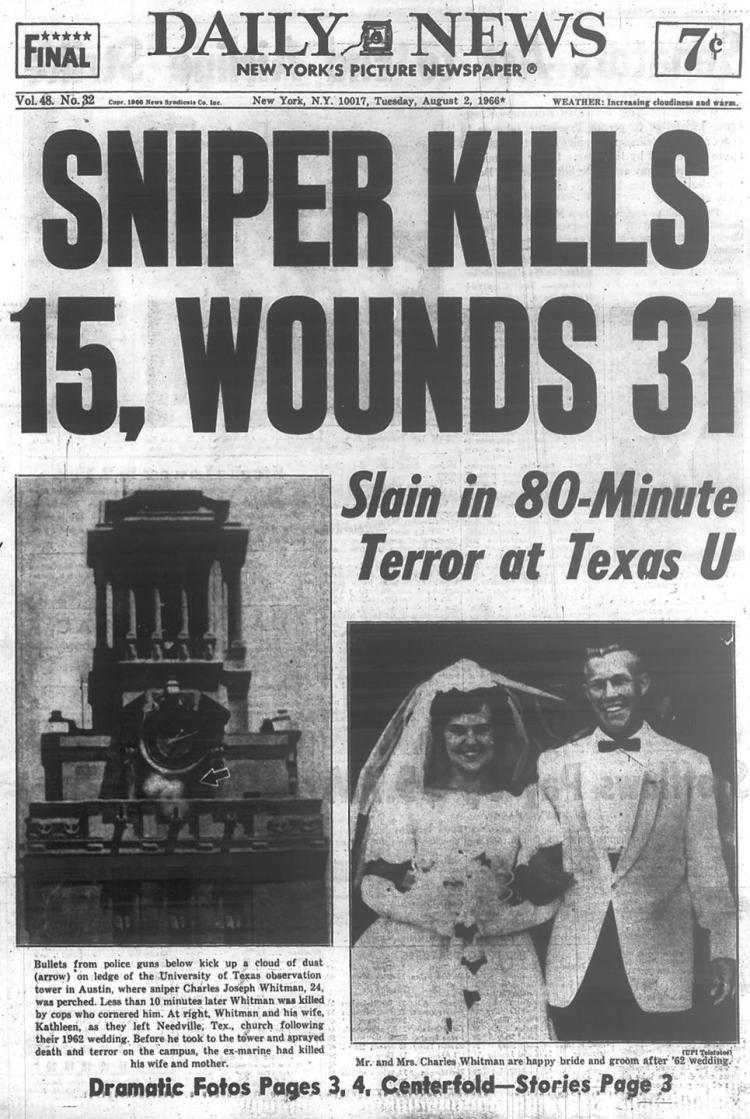
This Is the Earliest Shooter Incident That I Can Remember

August 1, 1966 came during a strange period in my life. Within six weeks, I would be in a coma at Fairview General Hospital in Cleveland while a team of doctors tried to figure out what was wrong with me. My family physician, Michael J. Eymontt did not have access to CAT Scans or MRI, but he was an endocrinologist and figured that something might be going on with my pituitary gland.

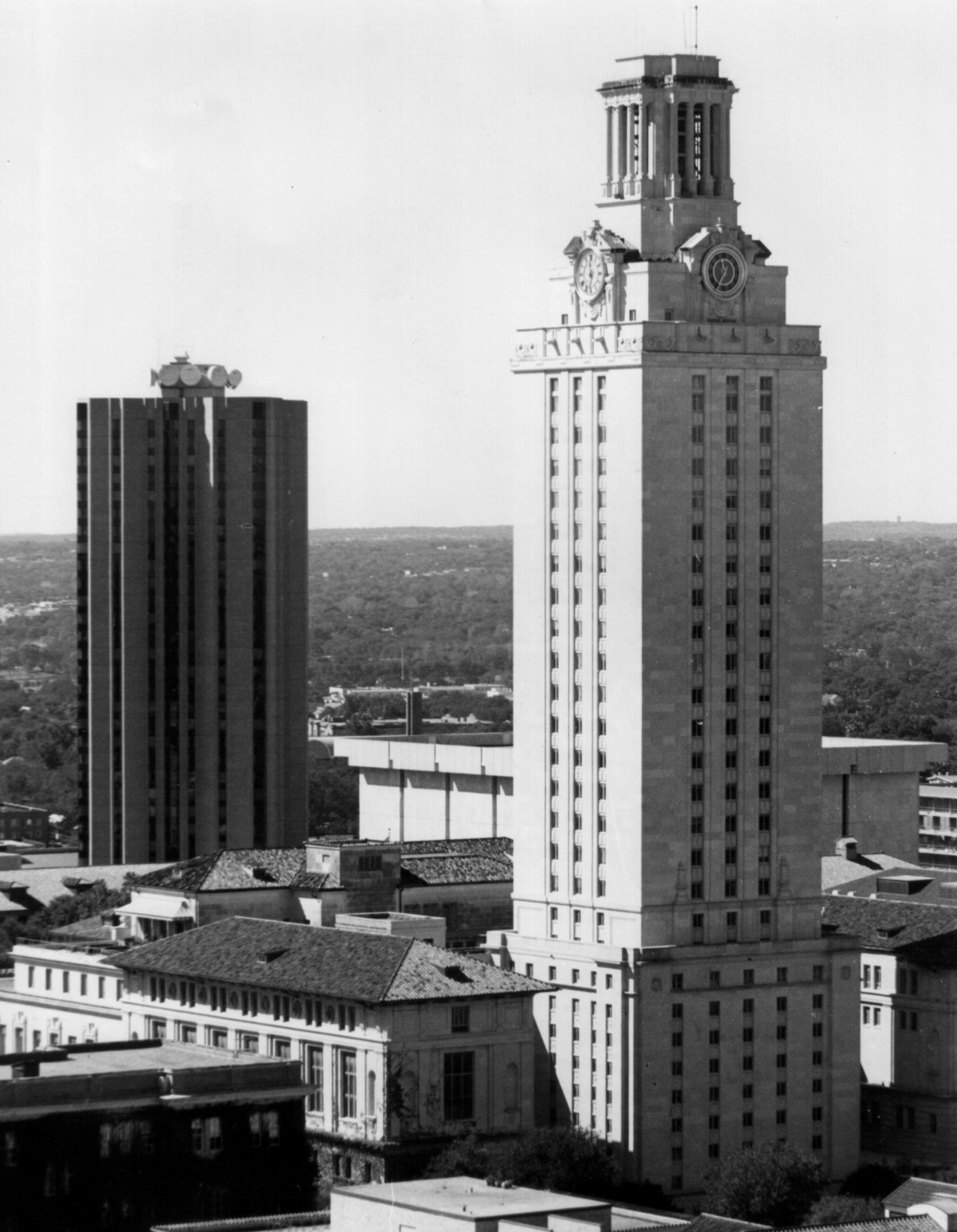
He was right. I read about the Austin, Texas shooting incident in the Cleveland Press and Plain Dealer. Never before had I or my family seen such a gratuitous act of violence toward the innocent. Charles Whitman first killed his mother and his wife, and then took guns to the tower on the University of Texas campus and opened fire at random people who were just going about their business. In an hour and a half, he killed thirteen people and wounded thirty-one. Too bad he didn’t have access to the hi-tech military weaponry that was used in the Las Vegas mélée by Stephen Paddock.

When I was recovering from surgery in the hospital, the news came out that Charles Whitman had had a brain tumor. Okay, so did I, but I didn’t kill anybody. That’s a pretty lame excuse.

The Tower at the University of Texas from Which Charles Whitman Fired His Shots

So now we’ve come full circle with another Texas shooting—one in which half the victims were children, at a church no less!  Between the two incidents, I would have trouble counting how many mentally twisted gun collectors decided to take it out on innocent people. It’s becoming a very popular way for gun freaks to commit murder and suicide at the same time. Thanks to the NRA, there is no danger that Hell will ever be underpopulated with American sickos.

Weekend Getaway

Palm Desert, CA

Next weekend, I will leave town for the weekend and spend some time with my brother in Palm Desert while Martine holds down the fort in L.A. The desert is nice this time of year, and I look forward to spending some time with Dan. I’d like to see the houses he is building and just spend some quality family time. While I am there, I will hold off on posting new blogs.

I need a short respite from my problems with Martine. Things may wind up all right in the long run (I hope). Over the last eight weeks, however, I have been stressed mostly by worrying about what would happen to Martine if she decided to be homeless by choice. In our culture, I see nothing good coming out of that. Even when this country pays lip service to the homeless, that’s about all they can expect. A large percentage of them are violent bums (what the Elizabethans called “sturdy beggars,” who commit all sorts of crimes—especially on the persons of helpless homeless women).

The Flip Side of the Coin

We’re Still Not Back to Normal

One can never take a relationship for granted. Beginning in July, Martine told me she wanted to get out of Los Angeles. And, just by the way, I wasn’t picking up my stuff. Now that she’s back to L.A., it looks as if she was returned under duress. And now I’m a monster who doesn’t pick up after myself.

Now what does this picking up involve? If I move one of her vitamins over two inches to make room for something I have to make room for in the refrigerator and I don’t return it to its original position, I’m not picking up after myself. Yesterday it was a small triangular piece of paper that somehow got out of the garbage can. In other words, it’s infractions of the “Who moved my cheese?” variety of which I am guilty.

Martine after her week in Northern California is depressed and angry, and I am here—available to be blamed. I feel a bit irritated for being the subject of blame when my sins are all of the venial variety. Nobody’s perfect. I just have to maintain my cool and try to edge her into a mental healthcare program for her own good.

Yes, I still love her, but she is clearly not thinking straight. If Martine gets away again, which is highly likely, she has no money. Nobody’s going to give her free housing and then leave her alone. Well, except maybe me. But it’s a delicate matter which can go either way. Keep your fingers crossed for me.

Martine Is Back

Martine in Salem, Massachusetts in 2005

Last night, around 10 PM, I went to the Greyhound Bus Station in L.A.’s Skid Row neighborhood and waited for Martine to arrive from Sacramento. I will not describe all the events of the past few days: It is up to Martine to describe everything that happened. We had been together for about twenty-five years, and Martine was tired of Los Angeles, tired of my West L.A. apartment, and a little tired of me besides. Unfortunately for her, she was unable with her resources to live by herself in Northern California; so she consented to return to me and the mess that is Los Angeles.

We will try again. I like Los Angeles, though for financial reasons, I am unable to live in deluxe accommodations with air conditioning and plumbing that is more reliable than what we have in our 1946-vintage building. One thing I am serious about is getting rid of a few thousand books, though that will take considerable time and energy. The weather has begun to change from torrid Santa Ana Winds to the cooler Fall pattern (though we can still be in for a few hot days).

My heart jumped for joy as I saw Martine step off the Sacramento bus and head toward me. Second chances are rare things, but I am determined.


The Dreams of Dolphins

Dolphins Near Hawaii

Silvina Ocampo is not only the wife of the great Argentinian writer Adolfo Bioy Casares, but she is a world class writer and poet herself. The following poem is called, simply:

Dolphins

Dolphins don’t play in the waves
as people think.
Dolphins fall asleep going down to the ocean floor.
What are they looking for? I don’t know.
When they touch the end of the water
abruptly they awake
and rise again because the sea is very deep
and when they rise, what are they looking for?
I don’t know.
And they see the sky and it makes them sleepy again
and they go back down asleep,
and they touch the ocean floor again
and awaken and rise back up.
Our dreams are like that.