Los Angeles the Hard Way

An Old RTD Bus on Its Route

When I first came to Los Angeles late in 1966, I did not know how to drive. And now I was living in a city in which it is considered to be impossible to get anywhere on public transit. For the next nineteen years, I was to disprove that. It was then that I began to study the city’s public transportation network. At that time, there was no fast rail, no subways—only buses. I lived in or near Santa Monica, so I could take either the Santa Monica Big Blue Buses or the orange RTD buses.

Why hadn’t I learned to drive? In Cleveland, we were too poor; and besides, my father was too impatient to teach me. When he tried, every time I made a mistake, he swatted me, hard. I thought it would be better if I put it off.

And so I did. Then something else came up. One of my family’s medical curses caught up with me in my twenties: high blood pressure. For years, I was taking a medication called Catapres that gave me narcolepsy, especially when I was a passenger in a moving automobile.

Suddenly, in 1985, I was off Catapres. The narcolepsy, having left me, no longer kept me from taking driving lessons at the ripe old age of 40. So I called the Sears-Roebuck driving school, and a patient teacher by the name of Jerry Kellman taught me. I passed my driving test with flying colors. I purchased a 1985 Mitsubishi Montero with automatic transmission (most in that model line were stick shift) and hit the roads.

Although I am on my third car, a 2018 Subaru Forester, I still take the buses (and now the trains, which Los Angeles now has) from time to time to go where I want without having to pay exorbitant parking fees. My trips downtown cost me a total of $1.50 there and back, which compares well to the $20-30 parking fees in cramped lots which would lead to dents in my new car.

So now I’m ambidextrous, to to speak. I can drive or take public transportation.


The Trilogy from Hell?

Samuel Beckett (1906-1989)

I finally finished reading Samuel Beckett’s “trilogy” of novels: Molloy (1955), Malone Dies (1956), and The Unnamable (1958). The years are for the English versions written by Beckett of works originally released in French.

In recommending it to you, I am doing you a favor, or I am doing you no favors, or you are probably wondering about my sanity, which you might well do, as I do myself even on changeable days in the spring. Have I gone too far? Or have I not gone far enough?

It took me many years to read this trilogy, though I only started in 2010. (It took me eight years to read 414 pages? I must be slipping.) I owned the edition below since the 1970s at least.

The Evergreen Black Cat Edition I Read

Molloy wasn’t too bad. At times, it even resembled a novel as I knew it, or thought I knew it:

And if I failed to mention this detail in its proper place, it is because you cannot mention everything in its proper place, you must choose, between the things not worth mentioning and those even less so. For if you set out to mention everything you would never be done, and that’s what counts, to be done, to have done.

Malone Dies are the thoughts of a dying man (who must actually be pretty healthy to remember so many thousands of words in his “condition”):

For I want as little as possible of darkness in his story. A little darkness, in itself, at the time, is nothing. You think no more about it and you go on. But I know what darkness is, it accumulates, thickens, then suddenly bursts and drowns everything.

With The Unnamable, one is on altogether dicier terrain. There are paragraphs that seem to go on for a hundred pages and sentences that go on for two or three pages. Molloy and Malone had actual human existences at some point, but the unnamed character in the final novel, who may once have been called Mahood and who may once have been called The Worm, has one arm and one leg, or no arms and no legs. At one point he has a single lidless unblinking eye, and he seems to have ears and a mouth, or maybe not. There isn’t a lot to hold on to in The Unnamable. Except, of course, the language:

…I don’t feel a mouth on me, I don’t feel the jostle of words in my mouth, and when you say a poem you like, if you happen to like poetry, in the underground, or in bed, for yourself, the words are there, somewhere, without the least sound, I don’t feel that either, words falling, you don’t know where, you don’t know whence, drops of silence through the silence, I don’t feel it, I don’t feel a mouth on me, nor a head, do I feel an ear, frankly now, do I feel an ear, well frankly now I don’t, so much the worse, I don’t feel an ear either, this is awful, make an effort, I must feel something, yes, I feel something, they say I feel something, I don’t know what I feel, tell me what I feel and I’ll tell you who I am…

Now all of that is just a small part of a single sentence near the end of The Unnamable. Can you wrap your head around a hundred and twenty pages of that? I managed to and even loved it. This is a “story” in which nothing happens, in which everything ventured meets its opposite. It’s like a collision of matter with anti-matter. Boom!


Portrait of a Sucker

Scene in the Crafts Market, Otavalo, Ecuador

There is nothing quite like the crafts market of a Latin American city like Chichicastenano, Guatemala; Otavalo, Ecuador; or Cusco, Peru. One wonders down narrow ways awash with color and aglitter with native ingenuity. There are times when I felt bad for not buying far more handicrafts than I could reasonably be expected to carry—especially the textiles. What I do buy is usually small enough to fit into the single bag with which I travel.

I remember the first time I felt this way. I was in San Cristóbal de las Casas in Chiapas, Mexico. It was December 1979, and I was fascinated by the Highland Maya textiles. It was then that a little Chamula girl, no older than eight or nine, sold me a little doll in native costume that she had made herself (or so she said). As she was describing it in her Highland Mayan dialect of which I knew not a single word, and stroking it as if it were something rare and magical, my heart melted and I bought the doll. I still have it on one of my bookshelves, resting against the Latin American literature section.

At some point, I’ll take a picture of it so that you can all see what I sucker I am. I suppose it is better than being heartless.

The Truth Shall Set You Free

Note: I Said “The Truth,” NOT “The Tweet”

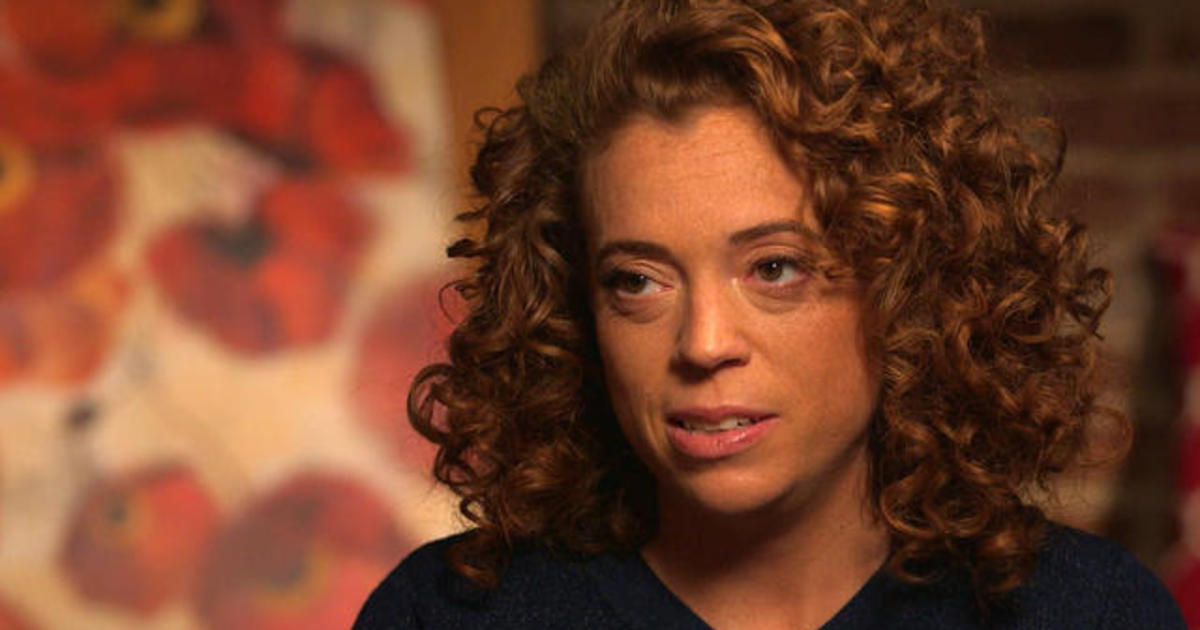
This year’s White House Correspondents’ Dinner featured a young comedienne named Michelle Wolf, of whom I had never heard before her scathing performance. I am told that many were offended. Good!

On one hand, the media has come under attack from Führer Trumpf and his minions for being “fake news.” On the other hand, they have become such a dispirited bunch that they half-heartedly waste space on presidential pronouncements that are lies and trial balloons. If the audience thought Wolf was in bad taste, they haven’t bothered to take a look in the mirror lately. For the most part, they don’t like the Current Occupant any more than I do, but many work for corporations that rather like the idea of the Trumpf presidency.

What Comes from His Midnight Lucubrations? Not News, but Monsters from the Id

Listen, the man is a poor actor. How does one send an actor to Coventry? Simple. One ignores him, or—if that is not possible—disparages him without cease.

Maybe Michelle Wolf is not the world’s funniest comedian. It’s just that she has balls that are mostly lacking in her audience. Perhaps the Capital’s press association should take this occasion to schedule her for next year, too. After all, Trumpf is already on the run. He’s afraid to attend!