“So You Want To Be a Writer”

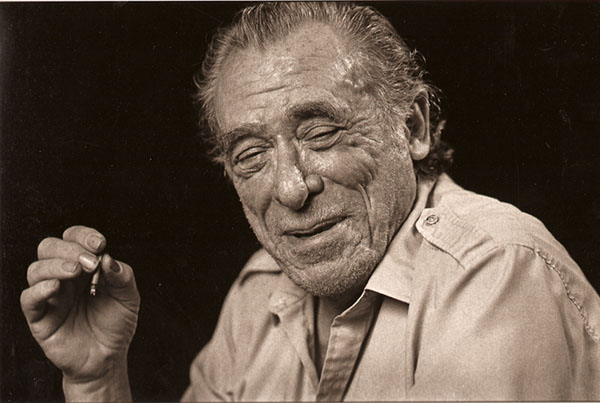
Poet Charles Bukowski (1920-1994)

I know he drank a lot and you probably wouldn’t let your sister go out with him, but the man was a real poet and he had something serious going with the muse. This is one of my favorites among his poems. It’s called “So You Want To Be a Writer.” Good stuff.

if it doesn’t come bursting out of you
in spite of everything,
don’t do it.
unless it comes unasked out of your
heart and your mind and your mouth
and your gut,
don’t do it.
if you have to sit for hours
staring at your computer screen
or hunched over your
typewriter
searching for words,
don’t do it.
if you’re doing it for money or
fame,
don’t do it.
if you’re doing it because you want
women in your bed,
don’t do it.
if you have to sit there and
rewrite it again and again,
don’t do it.
if it’s hard work just thinking about doing it,
don’t do it.
if you’re trying to write like somebody
else,
forget about it.
if you have to wait for it to roar out of
you,
then wait patiently.
if it never does roar out of you,
do something else.

if you first have to read it to your wife
or your girlfriend or your boyfriend
or your parents or to anybody at all,
you’re not ready.

don’t be like so many writers,
don’t be like so many thousands of
people who call themselves writers,
don’t be dull and boring and
pretentious, don’t be consumed with self-
love.
the libraries of the world have
yawned themselves to
sleep
over your kind.
don’t add to that.
don’t do it.
unless it comes out of
your soul like a rocket,
unless being still would
drive you to madness or
suicide or murder,
don’t do it.
unless the sun inside you is
burning your gut,
don’t do it.

when it is truly time,
and if you have been chosen,
it will do it by
itself and it will keep on doing it
until you die or it dies in you.

there is no other way.

and there never was.
 

V.—That Obscure Object of Desire

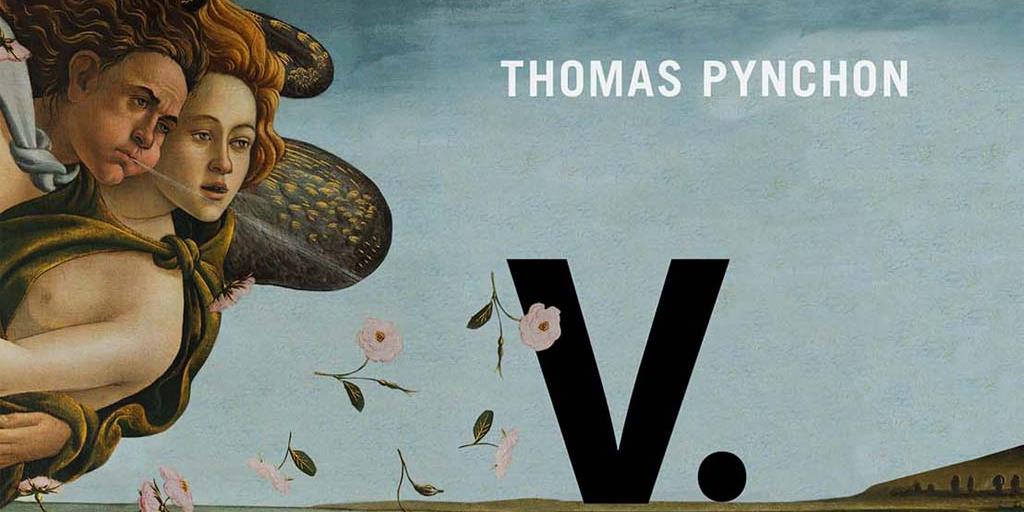
Swedish Book Cover for Thomas Pynchon’s V.

I have just finished reading Thomas Pynchon’s first novel, V. (1963). This is one of those works which is so disturbing to readers who feel they must understand every reference, every symbol, every character. And what if the novel has hundreds of characters, most of them with highly fanciful names like Herbert Stencil or Benny Profane or Rachel Owlglass or Pig Bodine. For good or ill, something happened in the twentieth century that resulted in a great divorce of art from the common everyday experience of reality.

One can find it in James Joyce (Finnegan’s Wake), Samuel Beckett (The Unnamable), Georges Perec (Life: A User’s Manual), William Faulkner (Absalom, Absalom!), and Gertrude Stein (The Making of Americans). And, in fact, all over the place.

Because my academic training is in film history and criticism, I was able to make a connection to one of my favorite directors, the Spaniard Luis Buñuel. In an interview with André Bazin and Jacques Doniol-Valcroze that appeared in Cahiers du Cinéma in June 1954, Buñuel wrote:

For me it is natural to tend to see and to think of a situation from a sadistic rather than from, say, a neorealistic or mystical point of view. I ask myself: What must this character reach for? A revolver? A knife? A chair? In the end, I always choose whichever is most disturbing. That’s all…. [Quoted in Ado Kyrou, Luis Buñuel: An Introduction (New York: Simon & Schuster, 1963)]

Film Director Luis Buñuel (1900-1983)

If one looks at Pynchon’s novel V., one finds a search for a feminine entity referred to as V., presumably because that is the first letter of her name. In the course of the novel, there are dozens of characters who could qualify, and Pynchon is in no hurry to identify which one is right. The candidates include Victoria Wren, Vera Meroving, the goddess Venus, Veronica Manganese, a rat named Veronica in the sewers of New York, Madame Viola, Hedwig Vogelsang, the Blessed Virgin, or ??? Then again, V. could be a place, such as Valetta (Malta), Venezuela, the mysterious Vheissu (never explained), Vesuvius, or the V-Note Jazz Club in Manhattan ???

Thomas Pynchon is not terribly interested in providing closure, but he does know how to suck you in and keep turning those pages until you get to the strange death by waterspout of Sydney Stencil in 1919.


Outliers: Henry Darger

Henry Darger, “Untitled”

Much of 20th century art, particularly abstract expressionism, has taken painting down a rathole. Mark Rothko, Jackson Pollock, Willem de Kooning, Barnett Newman—that whole crew has eschewed images of reality in favor of splotches of color and assorted shapes referring only to themselves.

Yesterday, I read an article in The New York Review of Books by Sanford Schwartz entitled “In Their Own Worlds” (June 7, 2018) which described two art exhibitions featuring folk art and other “outsider” art:

In recent decades, a tale unfolding within the larger story of contemporary art has been our gradually learning more about, and our trying to place, outsider artists. Problems begin at once, with the label. It is a description that many remain ambivalent about, and often believe should be put in quotation marks, to indicate its tentativeness. The situation somewhat echoes the moment, beginning in the 1920s and 1930s, when folk art was being taken out of attics and looked at anew, and commentators were not sure whether that term—or the labels “self-taught,” “naive,” or “primitive,” among others—was the appropriate one or would merely suffice. “Self-taught,” though imprevcise in its way—it has been said, for example, that most of the significant painters of the nineteenth century were essentially self-trained—has remained interchangeable with “folk art” for many commentators.

I have decided to focus on one of the artists mentioned in the article, Henry Joseph Darger Jr (1892-1973).

He Seems to Like Painting Pictures of Little Girls

Darger’s paintings are frequently of little girls, clothed and unclothed, sometimes with penises. In the picture above, the girls, blonde, beribboned, and, for the most part, wearing identical dresses and red socks, are running from the path of an advancing steam locomotive.

More Little Girls, This Time Including Blondes and Brunettes

Many of the Chicago artists are in horizontal scroll format. I guess what I like about Darger’s paintings is that they are so cryptic and surrealistic. One is repeatedly drawn to the images and finding something new in them. Slightly to the left of center of the above painting, for instance, is a witch riding a broom confronting a little blonde girl riding a tricycle.

I hope to find a few more outlier painters whom I like and present their work to you in future posts.


So Long, White America

Is This What We’ve Come To?

In an essay on James Fenimore Cooper appearing in his 1923 Studies in Classical American Literature, British novelist D. H. Lawrence wrote:

But you have there the myth of the essential white American. All the other stuff, the love, the democracy, the floundering into lust, is a sort of by-play. The essential American soul is hard, isolate, stoic, and a killer. It has never yet melted.

I can’t believe that Lawrence got it so right on the money a hundred years ago.

Last year, I gave up on the Democratic Party. This year, I’m giving up on the white race. When I get the 2020 Census form, I will identify myself as being of Other race. The peoples belonging the the Finno-Ugric Language Family—comprising Finns, Hungarians, Estonians, Karelians, Komi, Udmurts, Mari, Mordvins, Khanties, and Mansis—derive ultimately from the Ural Mountains, which straddle the border between Europe and Asia. Rather than count myself in the same race as the a**holes in the above photo, I am now of Finno-Ugric race. I can also called myself Asian. I’ll see how I feel about it later.

But white? Uh-uh!


Serendipity: African Laughter

A Laughing Epidemic Swept Tanzania in 1961

Between 1962 and 1964, there was a laughter epidemic in Tanzania that started in one girls’ school and spread like wildfire around the country. The following is from the How Stuff Works website.

At a small girls’ boarding school in Tanganyika (now Tanzania), three students started to giggle. Starting and stopping abruptly, their fits would last anywhere from a minute or two to several hours. This “laughter” proved contagious — soon other girls were doing the same thing. No one could concentrate on their schoolwork, and restraining the laughing students proved ineffective. Six weeks later, more than half of the school’s middle and high schoolers had caught the laughing bug.

School officials shut the place down. But when they reopened it two months later, the laughing plague immediately restarted and the school was once again shuttered. The laughing epidemic spread to other schools and lasted somewhere between six and 18 months.

So what caused this? “The bad news is, it had nothing to do with humor. There was no merriment. Laughter was one of many symptoms,” said linguist Christian F. Hempelmann, who researched the incident. He noted that the students also had fits of pain, fainting, crying and rashes.

He blamed excessive stress for the uncontrollable giggles. The boarding school where the laughter began was a very strict one. Plus the country had just gained its independence, and people were anxious about the future. With all of the terrorism in the world today, experts say another laughing epidemic wouldn’t be surprising.

Check out this video regarding the incident:


Fish in My Life

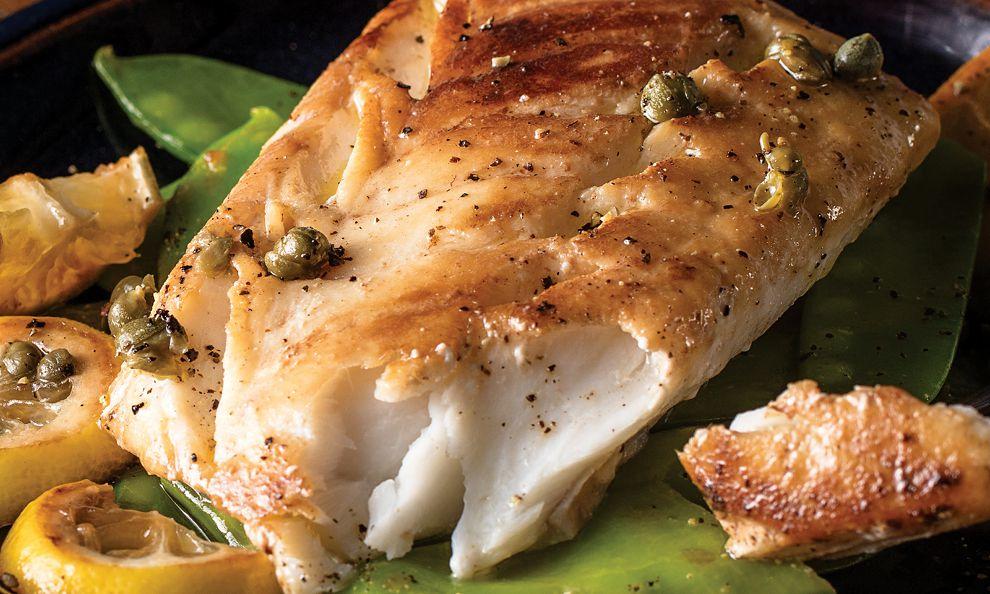
Icelandic Cod, One of My Favorites

Here I am, talking about food again. Today for lunch, Martine and I went to Captain Kidd’s Seafood Restaurant in Redondo Beach for a delicious fish feast. Martine had sautéed Alaskan cod while I had fish tacos.

When I was young, I wouldn’t eat any seafood. Don’t forget: I was raised near Lake Erie, the shallowest of the Great Lakes, which was badly polluted until recently. When I saw fish in their natural element, they were mostly floating in a state of advanced decay on the surface of the lake. The only other place I saw them was at church fish fries. I occasionally attended, under duress, but did not like the fish: I merely nibbled on the French Fries. (That was before I discovered what malt vinegar does to improve fried fish and potatoes.) We never had fish at home.

It was not until I came to California that I began to eat fish. I ascribe this to (1) being distantly removed from family pressures and (2) the influence of my co-workers when I began working in the computer software industry. And from eating cooked fish, it was only a small stutter-step to eating sushi. My sushi-eating reached its peak in the 1980s and 1990s, when it was most fashionable in Southern California. Now I find it too expensive, and I find that really good places with trained Japanese sushi chefs are now few and far between.

I even eat shellfish from time to time, but I find I have a curious allergy to shrimp and lobster caught in warm waters. The symptoms are like a sudden onset of strep throat pain lasting for up to two hours. When I go to cold-water places like Canada and Iceland, I have no trouble with either; and I positively love good lobster.

This past week, I’ve had fresh fish three times. Twice it was in the form of spicy fish fillet in black bean sauce at local Chinese restaurants. The Hong Kong Barbecue on Broadway in Chinatown makes a particularly tasty version.


Food Scraps

What Ever Happened to Good Plain Food?

I open this post by splitting a couple of hairs. First of all, this has nothing to do with Anthony Bourdain’s unfortunate demise. I am not familiar either with his work as chef or his book(s) or his television program. Secondly, I am writing this at Martine’s behest. Anyone who knows me well knows that I like ethnic food best. It is Martine whose digestive system shies away from any attempt at fanciness, which she associates with things like raw onions or strong spices. Going to an unfamiliar restaurant is something she associates with an assault on her Irritable Bowel Syndrome (IBS).

As the cook in our little household, I try my best to prepare simple dishes without too many exotic ingredients but with a good, clean taste. At times, I am tempted to add hot chilis, as I am a notorious chili-head. But I resist the temptation, or my little girl goes hungry. Restaurants are even more difficult: Martine aims for the tried and true places, like Sevan Chicken and Elena’s Greek and Armenian Restaurant in Glendale; All India Cafe, the Rosemary Grill,  and Darya Persian Restaurant in my neighborhood; Label’s Table and Canter’s Deli East of here; and The Main Course in Rancho Park. At each of those places, she will typically order the same dish every time, while I typically skip around the menu. If that one dish doesn’t satisfy, she writes the restaurant off her list as a lost cause.

Several years ago, I wrote a post entitled “Don’t Toque to Me About Chefs!” in which I lambasted the profession for trying too hard to be creative without necessarily serving good food. It almost seems as if many chefs were trying too hard to be original. There used to be a great Hungarian restaurant in the San Fernando Valley called the Hórtobágy owned by a chef called Lászlo. Apparently, the genius in the kitchen at his restaurant was an elderly lady who cooked delicious Hungarian meals that reminded me of my childhood. Then Lászlo opened another restaurant nearby called Maximilian’s at which he was the chef. Every dish was smothered with raw onions. Yeccch!


Two Worlds

Koi in Mulberry Pond, Descanso Gardens

This post originally appeared in November 2008 when I was posting—briefly—on Blog.Com.

I loved this picture I shot at Descanso Gardens a couple of weeks ago. On one hand, the camera is looking at a koi in a shallow pond swimming among the rocks. A scant inch or so above his fins is an entirely different world of air and trees and birds. In one world, you need gills; in the other, either a lung or photosynthesis. Standing by the side of the pond, we can look at the fish. But does the fish look at us? Or are we some distorted image that lies on an irrelevant plane above the surface of the water? Somewhere in that world I am standing with my Nikon Coolpix camera waiting for the right moment to bring both worlds together.

As I look at the koi swimming in Mulberry Pond, I cannot help but think that the patterns they form with respect to one another as they glide by is a form of handwriting employed by the Creator. To communicate with whom? I do not understand this script, though I think it is beautiful in a fluid way. If I could understand it, would I  reach enlightenment? The camera would go back into its case on my belt, and I would reel with a weightless feeling as I was one with everything I saw and felt.

I frequently think that everything around us is a form of writing which we, alas, are too dim to understand. Perhaps, in time….


A Day at Universal Studios

Mohan Gopalakrishnan and Son Aravind by the Hogwarts Express Locomotive

The last two days I have been busy with an old friend visiting Los Angeles from India. I used to work at Urban Decision Systems with Mohan Gopalakrishnan, a brilliant young programmer who went on to work for a number of computing companies in the United States and India. He was accompanied by his 14-year-old son Aravind.

Today, I drove them to Universal Studios in the San Fernando Valley. We did all the usual tourist things: In addition to the Studio Tour, we saw the Special Effects Show and took a wild Jurassic Park Boat Ride. I was surprised that, at this date in June, there were so many thousands of tourists in attendance. Still, it was worth it. We had a lot of fun and managed to catch up on old times.

Mohan repeated his invitation to visit him in Chennai, where he lives, but I have already written a post about my hesitation to visit India. Who knows? Perhaps I might might take him up on his invite at some point, but I would first have to overcome my fears.


LGBTQRSTUVWXYZ

We’ll Have To See About Adding More Colored Stripes

What do minority groups (of any stripe) do to get back at people who give them a hard time? Very simple. They keep changing the officially approved name by which they are to be referred. Needless to say, that doesn’t make for open communication—especially as one is always uncertain if one is using the right term of address. For instance: Negro, Black, African-American. Or: Indian, Amerind, Native American.

For sexual preference, there are any number of mostly pejorative terms. What is Fred Astaire’s The Gay Divorcee really about? Can an American teenager see that film without wincing at its title?

That wince is now a feature of American life. It even extends to Latin America. I once wrote a blog mentioning Peruvian Indians. The next morning, I noticed a comment that the moniker I used is now considered racist and I should call them campesinos. What? Does that mean that all Peruvian farmers are descended from native peoples? That can’t be true, as I know there are Peruvians of Japanese extraction, many of whom are profitably engaged in agriculture. And where do all the Chinese vegetables at Peruvian chifas (Chinese restaurants) come from if not from Chinese farmers living in Peru?

The most ridiculous politically correct minority name by far is LGBTQ. The Q (for Queer) was added later. Why? Who likes the idea of being referred to as a Queer? That’s a term from the bad old days, no?

I predict that sexual minorities will not be successfully integrated into our culture until all these politically correct terms are trashed. Whatever dignity is gained from the term is lost by the unwillingness of the majority culture to engage on that level. And what about that flag with all the colors? It’s like the American flag in the old days when they added not only a new star but a new stripe every time a state joined the union. And besides, how many other colors can we add?