Communing with the Desert

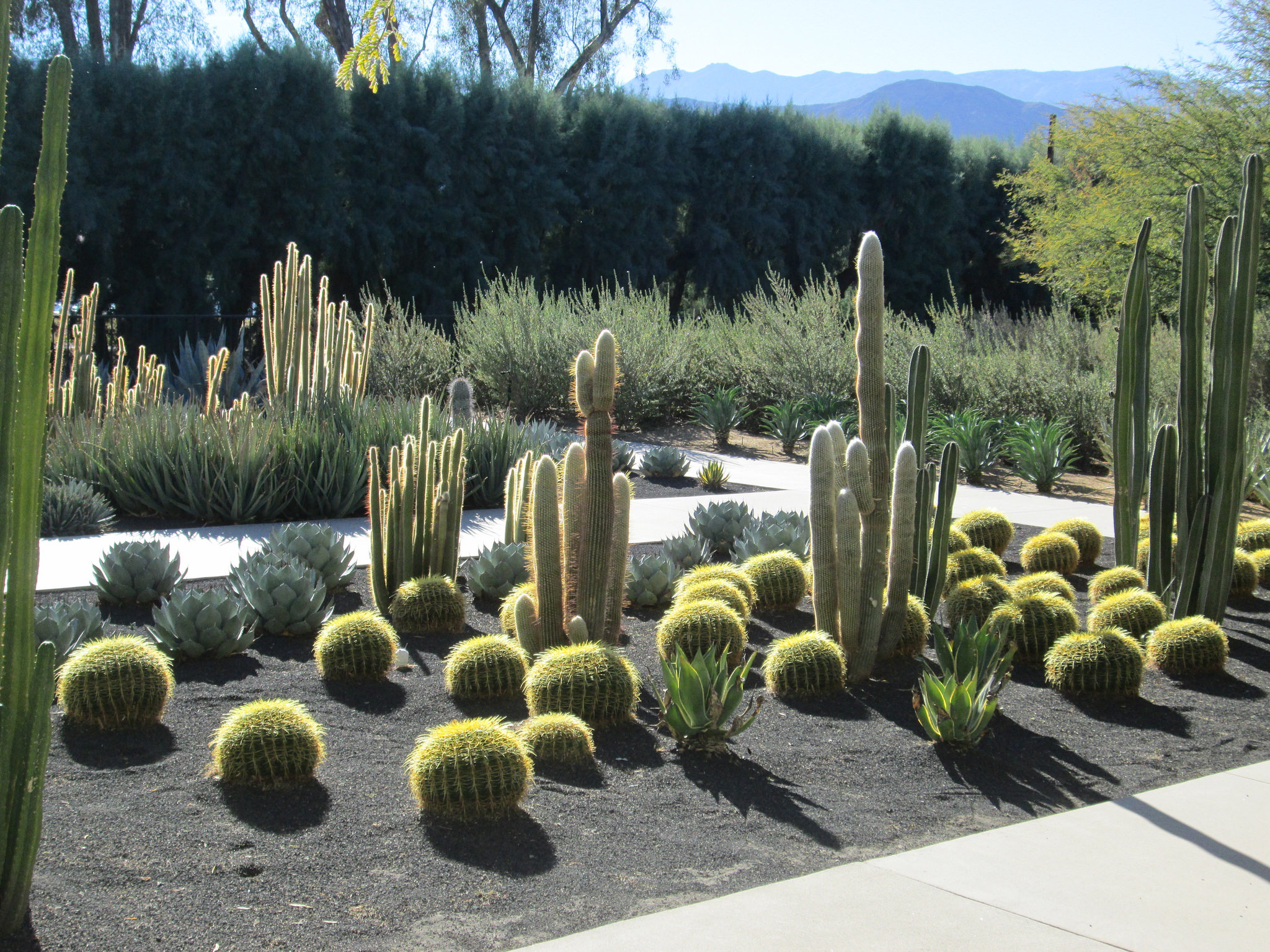
The Cactus Garden at Sunnylands

Tomorrow, I’ll be driving to the Coachella Valley to spend some time with my brother and his family—a mini-reunion of sorts. It’s wonderful that I could go to the desert when the weather is perfect for hiking (highs in the mid-sixties), rather than having to slave away on processing tax returns. (I’ve already filed my tax return a few days ago.)

My next post will be on Monday or Tuesday of next week. See you all then.


Good Time

Dancing the Charleston

On a cruise to India around the Cape of Good Hope, Aldous Huxley laments the behavior of his fellow passengers. The following is from his 1926 collection of essays entitled Jesting Pilate:

Everybody in the ship menaces us with the prospect of a very “good time” in India. A good time means going to the races, playing bridge, drinking cocktails, dancing till four in the morning, and talking about nothing. And meanwhile the beautiful, the incredible world in which we live awaits our exploration, and life is short, and time flows stanchlessly, like blood from a mortal wound. And there is all knowledge, all art. There are men and women, the innumerable living, and, in books, the souls of those dead who deserved to be immortal. Heaven preserve me, in such a world, from having a Good Time! Heaven helps those who help themselves. I shall see to it that my time in India is as bad as I can make it.

I like Aldous Huxley. I admire his questing mind and, with him, deplore those who pretend to be “with it” but who actually are as boring as drying paint.


Things That Are Not News Any More

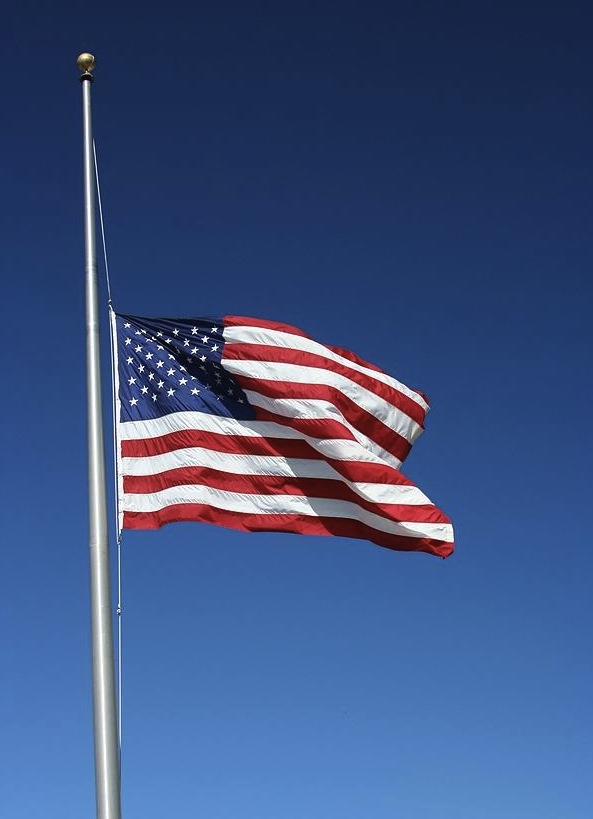
Flag at Half Mast for Depredations by Trumpf and His Minions

The following sources are no longer to be considered as newsworthy:

  • Anything appearing in a tweet, irrespective of from whom.
  • Anything said or tweeted by our current presidente.
  • Anything said by Alex Jones, Rush Limbaugh, Tami Lahren, Sean Hannity, Fox and Friends, Sarah Huckabee Sanders, Bill O’Reilly, Stephen Miller, Kellyanne Conway, and their ilk.
  • Any word that “The Internet” had just punished or shamed somebody, anybody, for what he, she, or it said.
  • Any predictions from any source.
  • Any descriptions of rants from anybody.
  • Any comments from Evangelical sources impinging on politics, or on anything for that matter.
  • Any agonized analyses of mass murderers employing gunfire.
  • Any thoughts or prayers regarding man-made calamities.
  • Any comments to social media posts.


B Traven and the Jungle Novels

British Arrest Photo for Ret Marut (B Traven?)

One of the mysteries of 20th century literature was the identity of B Traven, who is probably best known for having written the novel that the film The Treasure of the Sierra Madre (1947) was based on. In the late 1960s I first ran into the subject from a leftist magazine, probably Ramparts, which in the 1960s speculated that Traven was a German author and anarchist named Ret Marut who fled to Mexico in the early 1920s.

While in Mexico, B Traven wrote a series of novels that dealt with the exploitation of the Indian population by Europeans and Ladinos (Europeanized Mestizos). In addition to The Treasure of the Sierra Madre (1927) and The Bridge in the Jungle (1929), which I think is his masterpiece, he published six Jungle Novels:

  • Government (1931)
  • The Carreta (1931)
  • The March to the Monteria, a.k.a. The March to Caobaland (1933)
  • Trozas (1936)
  • The Rebellion of the Hanged (1936)
  • A General from the Jungle (1940)

To date, I have real all but Trozas, but I am about to remedy that within the next few weeks.

Traven lived in Mexico until his death (at the age of 87?) in 1969.


Serendipity: The Lacandon Apocalypse

The Late Chan K’in Viejo, Lacandonian Chief and Elder, in 1933

I have just begun reading Christopher Shaw’s excellent Sacred Monkey River: A Canoe Trip with the Gods, a book about the river waterways used by the ancient Mayans for trading. The Lacandonians are a very traditional Mayan group that live along the Usumacinta River that forms part of the border between Mexico and Guatemala. In 1992, I saw a Lacandonian selling bows and arrows in front of the Casa del Balam Hotel in Merida, Yucatán. The following passage in Shaw’s book caught my eye:

Kayum, one of Chan K’in’s sons, a painter of naïve but arresting jungle scenes with one-man shows from Barcelona to Seattle to his credit, looked up from his ax work and gently scolded Victor [Perera, author of The Last Lords of Palenque] that he must let go of the world. It is creaking and groaning like an old man, he said. Everything prefigured the imminence of xu’tan, he said, the Lacandon apocalypse. The proper attitude of a hach winik [Lacandonian, “real person”] was to welcome it and the new era of creation it anticipated. He spoke with the deep calm and conviction of a believer. Victor never forgot it, though he never accepted it either, Kayum’s willingness to watch and welcome while a thousand generations of accumulated beauty and uncatalogued nonhuman life got traded for the shortest of gains, or in many cases no gains at all.

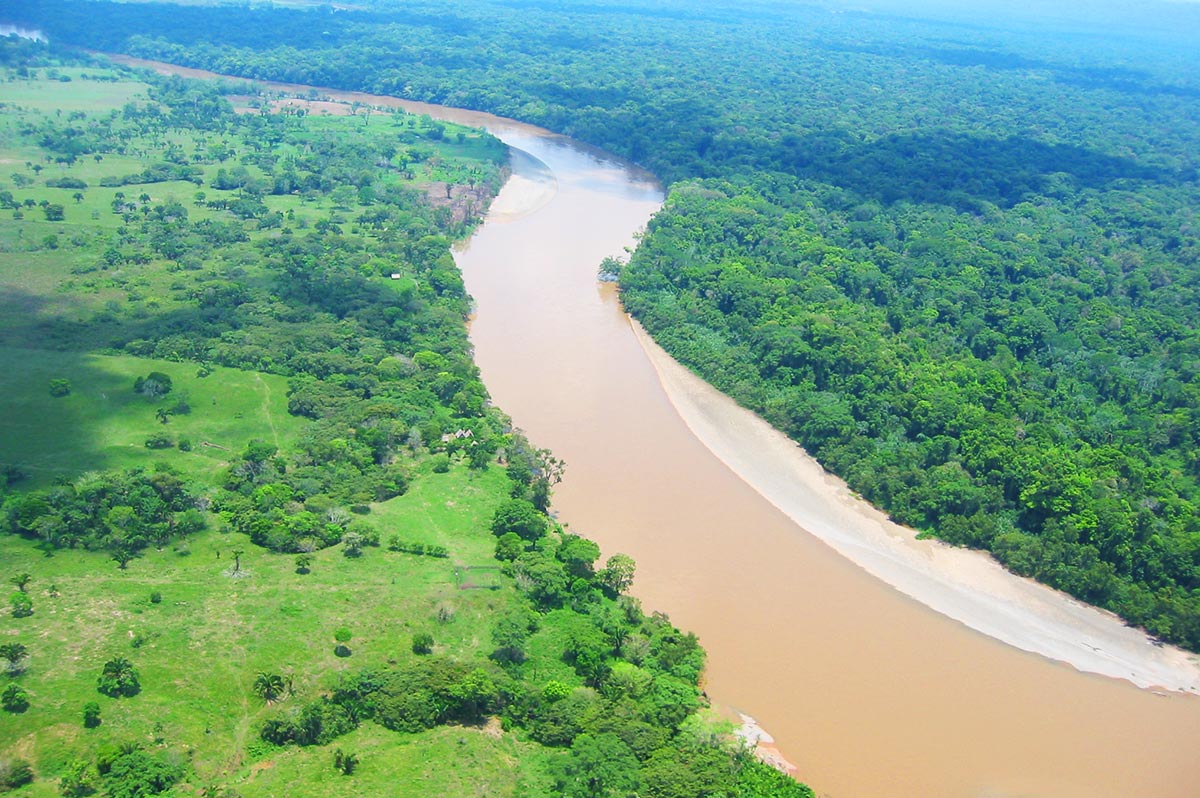
The Usumacinta River Near Piedras Negras


Thoughts + Prayers = 0

Crosses Memorializing Victims of Vegas Shooting

Here we are with yet another mass shooting, and more thoughts and prayers—especially from people who do not intend to do anything about it. Sure, set down those Teddy Bears and lit candles and be photographed hugging other people. Let’s take a look at ourselves in the mirror. We are seen as being barbarous because of the things we allow to go on in our country. Selling automatic weapons to lunatics and children! And merely shaking our heads when those weapons are put to deadly use.

Sometimes, I think the thoughts and prayers of the families of shooting victims are not as strong as the thoughts and prayers of people who are members and fellow travelers of the NRA.


Los Encuentros

Highland Guatemala Town

I picked up a book from the library today by a Fulbright Scholar named Stephen Connely Benz entitled Guatemalan Journey and found the following poem entitled “Los Encuentros” in the front matter. I hope you like it as much as I did:

The phrase book tells me I’m at a crossroads,
I should expect encounters
in the vellum margins of this highway
where buses cough black clouds
and hanging men cry out destinations
I cannot find on the map.
I’ve heard rumors of what lies
ahead, the incidents hidden in hairpin
turns, dire straits for those who seek
passage through gullies, ravines, lava valleys.
The topography of this country,
an explorer said, is like a crumpled page:
palimpsest mountains, parchment plains,
hieroglyphic highlands awaiting interpretation.
Lexicographers take notes on each twisting
nuance in the road, turns of phrase promise
arrival or departure, movement along this text
I’m traveling. I read ahead
through the codex of curves
And straightaways to the congested towns
where babblers hail strangers
in unrelated vocables.
I study the morphemes in a parrot’s squawk,
signals sent up in volcano smoke,
stories revealed in aboriginal textile.
I skim long vistas of calligraphied macadam,
an endless panorama of road signs encoding
a traveler’s tale, a new message
But the phrase book’s no help now,
it all translates the same—
I’m at a crossroads,
expecting encounters, still waiting.

The book itself seems like an excellent introduction to Guatemala. I wonder if he wrote anything else.


The Things in My Pockets

I Accept G.K. Chesterton’s Challenge, Sort Of

It was in an essay entitled “A Piece of Chalk” that appeared in his collection Tremendous Trifles (1909):

Once I planned to write a book of poems entirely about the things in my pockets. But I found it would be too long; and the age of the great epics is past.

As I am not a poet, I will attempt to write an essay, or at least a blog post, about the contents of my pockets.

To begin with, I know it is a fashion among the svelte to wear shirts that have no pockets. (If you have ever seen any pictures of me, you know that “svelte” is not ba word that can be used to describe me.) One pulls one’s head through a hole at the top, and the result is a look that signals that one is in all probability dyspeptic. Fortunately, they haven’t attempted to do the same thing with pants. I suppose that if I had some native bearers, I could afford not to worry about he things I have to carry. But I have no native bearers.

Let’s start with the shirt. I prefer a shirt with two pockets. In the left one is an eyeglass case bearing my reading glasses. Shoved up against it is a Parker Executive ballpoint pen. The other usually contains a pill box for my Metformin HCL, Atorvastatin, Vitamin D3, and Oleuropein.

My pants have four pockets. Let’s start with the front left pocket, which contains my wallet. In my right front pocket are the sets of keys I need for the day’s activities: car keys, house keys, and—if I become employed again—my office keys.

In my back pockets are two handkerchiefs. The left back pocket contains a usually clean hanky used for cleaning the smudges off my eyeglasses. The right back pocket contains what Shakespeare would call my snotrag.

Now that usually is not enough for everything I need. If I step out of the house, I need room for a Ziplock® sandwich bag containing my two types of insulin and a supply of nano-needle nibs. Then, too, I go nowhere without books and/or one of my Kindles. Then, too, one must add bus schedules (on general principle, I do not pay exorbitant parking fees), a floor guide to the Los Angeles Central Library, my cellphone (when I allow myself to be so bothered), and a folded-up plastic bag for carrying books, if necessary. For the items in this paragraph, I use a Magellan travel bag which I see I will have to replace soon if I do not wish to be confused with the homeless.

And that is it. I don’t think it would have made for a good poem. Though, if anyone could do it, it would be G.K. Chesterton.


Not a Fair Exchange

Malaria Mosquito

The New World gave the European conquerors many gifts, including potatoes, tomatoes, chocolate, tobacco, corn, vanilla, chili peppers, bell peppers, pumpkins, avocados, peanuts, cashews, pecans, quinine, wild rice, quinine, squash, and many types of beans. They were richly rewarded with such European gifts as measles, smallpox, and malaria. The mortality rate in Mexico alone was in the millions in the 16th century alone.

Most people do not realize that the malaria mosquito was a stowaway on ships that brought slaves from Africa. Mayan records make no reference to malaria, and many jungle areas in Guatemala, Honduras, and Mexico were inhabited which over the last several hundred years have been abandoned. The Petén region of Guatemala has hundreds of Mayan archeological sites, and more are being discovered each year. Where Mayan cities used to be connected by sacbés, or ceremonial roads, today they are connected by shoulder-deep mud.  Much of the Yucatán Peninsula is now sparsely populated thanks to the devastation wrought by the malaria mosquito.

According to the Institut de Recherche pour le Développement in France:

A large international study recently published in the PNAS by scientists from the UMR Migevec and their partners has shown that P[lasmodium] falciparum crossed the ocean on slave ships which crossed the Atlantic between the 16th and the 19th century, some 500 to 200 years ago. The research team has indeed just demonstrated that the parasite which is now found in America has African origins.

Through a global international scientific collaboration, biologists have collected several hundred samples of infected human blood from 17 countries representing the parasite’s entire distribution area. It is one of the largest sets of P. falciparum genetic data ever collected. The analysis of genetic material extracted from those samples has taught the scientists several things. First of all, the American pathogen is genetically distant from its Asian cousin, thus precluding an Asian origin. It is, however, close to the African parasite.

The IRD further concludes that the culprit were slaves who were brought into the Spanish and Portuguese colonies, partly, ironically, because blacks were more resistant to malaria.

When I go to Guatemala and Honduras later this year, I will spend part of the time in malarial jungles, which means I will be taking chloroquine and traveling with a mosquito net to place over my bed.

I hate mosquitoes, but I would dearly love to see the Mayan ruins, which are now in areas that are sparsely developed. The city of Tikal once had a population of 300,000 during Europe’s Dark Ages. Today, the entire Petén Department has a population under 700,000, mostly around La Libertad, San Luis, and Sayaxché.

Cities That Are Hard To Read

Los Angeles: A City That Is Hard To Read

The New Yorkers are at it again. In the pages of the New York Times, two reporters—Tim Arango and Adam Nagourney—referred to Los Angeles as “A City That Never Quite Came Together.” That reminds me of that old chestnut about Los Angeles being seventy-five communities in search of a city.

From the time I heard I was accepted by the UCLA Motion Picture History and Criticism graduate program, I scoured the Cleveland Public Library for books about Southern California. One of them wrote at great length about mudslides along the Pacific Coast Highway (California Route 1) in Pacific Palisades and Malibu, and posited a fictional type of super-salesman called a “Pro-Cal,” who regarded L.A. as the best of all places—diametrically opposed to the boo-birds from the East who were intent on digging up dirt about the Golden State.

This kind of thinking negatively affected what I thought about L.A. when I first moved here in 1966. All those stucco apartment buildings painted in pastel colors struck me the wrong way. Why couldn’t they use good red brick, like we had in Ohio? Then I endured my first earthquake in 1971 and understood why they used stucco: It was the brick buildings that collapsed. Only in the 1970s that I began to actually like California. The fact that that coincided with the way I felt about myself was no accident.

My friend Lynette—who was born in California—sent me a reference to a Los Angeles Times article published on February 8, 2018  and written by Christopher Hawthorne. In it, he compares L.A. to Houston, Texas:

If I had to put my finger on what unites Houston and Los Angeles, it is a certain elusiveness as urban object. Both cities are opaque and hard to read. What is Houston? Where does it begin and end? Does it have a center? Does it need one? It’s tough to say, even when you’re there — even when you’re looking directly at it.

The same has been said of Los Angeles since its earliest days. Something Carey McWilliams noted about L.A. in 1946 — that it is a place fundamentally ad hoc in spirit, “a gigantic improvisation” — is perhaps even more true of Houston. Before you can pin either city down, you notice that it’s wriggled out of your grasp.

People who are accustomed to making quick sense of the world, to ordering it into neat and sharply defined categories, tend to be flummoxed by both places. And reporters at the New York Times are certainly used to making quick sense of the world. If there’s one reason the paper keeps getting Los Angeles so spectacularly wrong, I think that’s it. Smart, accomplished people don’t like being made to feel out of their depth. Los Angeles makes out-of-town reporters feel out of their depth from their first day here.

This is not a city on a hill, such as can be found in Tuscany. You can’t just take it in at a glance and say, “Yeah, this is Los Angeles, all right!” I like to surprise visitors with forays to ethnic enclaves like Koreatown, Little Tokyo, and East Los Angeles (or “East Los”). Then there are mountains within the county boundaries that are two miles high. The fact that there are mountains here at all is a surprise to most people.

L.A. no longer wriggles out of my grasp. I recognize it as a conglomeration of landscapes, cultures, and even architectures. So don’t think you can spend an afternoon on the Sunset Strip or the Bel Air Hotel and think you’ve scoped out the city: You haven’t even begun.