When You Strip Away the Surface …

Dancers from the Kárpátok Folk Dance Ensemble

… of me, what you will find is a strange sort of Hungarian. Although I have read no studies to this effect, I think that the first language you learn to speak is what determines, at the deepest level, who you are. My first language was an older dialect of the Magyar language from the region just to the southwest of Budapest. Today, when I speak the language—haltingly—Hungarians laugh at my choice of words and horrible grammar. Yet, my ever-so-sophisticated American English is merely an overlay on a base that was set in concrete before I was five. I feel myself to be a kind of Brummagem Hungarian.

Last night, Martine and I attended a Hungarian folk dance program at St. Stephen’s Catholic Church just south of downtown L.A. The dance was put on by the Kárpátok Folk Dance Ensemble, which has just recently celebrated its 50th anniversary. That a city like Los Angeles, which does not have that large a Hungarian population, could support an organization like Kárpátok is an unending surprise to me.

For many of the fifteen-odd dances they performed, I was in tears. There are certain themes in Hungarian music that take me way back to my beginnings. I could not lay my finger on it, but a deep emotional chord is struck deep in my core.

The people in attendance were curious about me. My pronunciation is near perfect, but I might as well be retarded. As for Martine, she doesn’t know a word of Magyar and depended on me for many things I was unable to explain.

Flyer for the “Thousand Faces” Dance Concert We Attended

That didn’t keep up from enjoying the music and dances—and the Hungarian meal that was served afterwards—even though we were both suffering from nasty colds. She might be French, but Martine enjoys these Hungarian events as much as I do, though in a different way. I do believe she prefers Hungarian food to the great cuisine of France, especially where pastries are involved.

 

The Singing Chef and Others

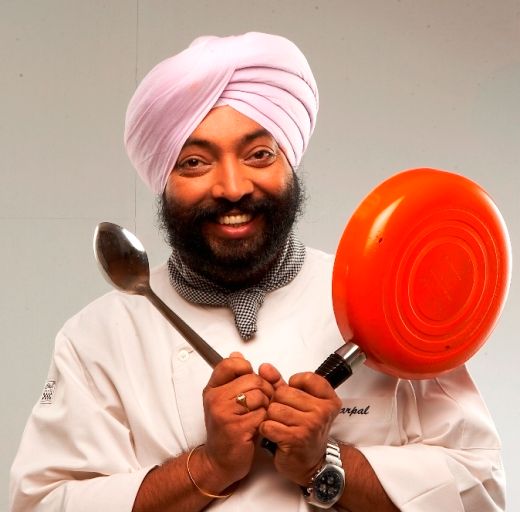
Singing Chef Harpal Singh

Although I still have a shelf of cookbooks, it is unlikely that I will add to it. For my own ventures into cooking, I am increasingly turning to YouTube where I can see the dish being made and what it looks like when it is completed.

As I grow older, I am becoming more interested in vegetarian cuisine. And which is the greatest vegetarian cuisine, but the foods of India. If I am cooking for myself these days, I am more than likely to go for a good curry recipe like one of the following:

Chef Harpal Singh’s Mumbai Mast Tomato Pullao

Chef Harpal Singh is a charming presence who likes to entertain you by singing (or is it singhing?). I have not made this dish yet because Martine prefers me to cook dishes with meat. So I have to wait until she has an episode of irritable bowel syndrome before trying it. (Those episodes last for about a week.)

A Tasty Eggplant and Potato Curry from HowToCookGreatFood.Com

The chef here does not introduce himself by name, but he is a wizard. I have prepared this dish twice and love it. My friend Mona, who is a health nut, thinks I am crazy for liking a dish whose primary ingredients are both members of the deadly nightshade family. Happily, I have not yet succumbed to any sort of nightshade poisoning.

There are other sources, which I may introduce at some later date, such as Chef Odon Hankusz from Budapest. Unfortunately, his instructions are all in Hungarian, but his Gulyás Leves is a dish for the gods!

Talking About Homelessness

Most Discussions About Homelessness Are Too Vague

As an independent (no party) voter, I am dismayed by the way most liberals view the homeless. For one thing, I refuse to take a bleeding heart view of the hobo encampments that are spreading across American cities, particularly in the West. When I think of the homeless, I have three populations in mind, with a lot of overlap among the categories:

  1. People who, for various reasons, are homeless
  2. People who are addicted to various drugs such as alcohol, heroine, cocaine, and crystal meth.
  3. People who are mentally ill.

The Venn Diagram above shows that there are many overlaps. Some of the homeless have some hope and expectation of finding a place to live. These are mostly homeless who are not addicted to drugs or mentally ill. These constitute the majority of homeless who are living in organized shelters.

Wherever drug addiction and mental illness are involved, it is much more difficult to find shelter. These shelters have rules regarding drugs, alcohol, theft, and violence. Many of the bums in Los Angeles would not be likely to live in a shelter, if only because they have no intention of following the rules.

If you have about an hour to spare, I recommend you watch this video by news station KOMO entitled “Seattle is Dying,” which takes a no-holds-barred view of the dire homeless situation in Seattle:


The Book Collector

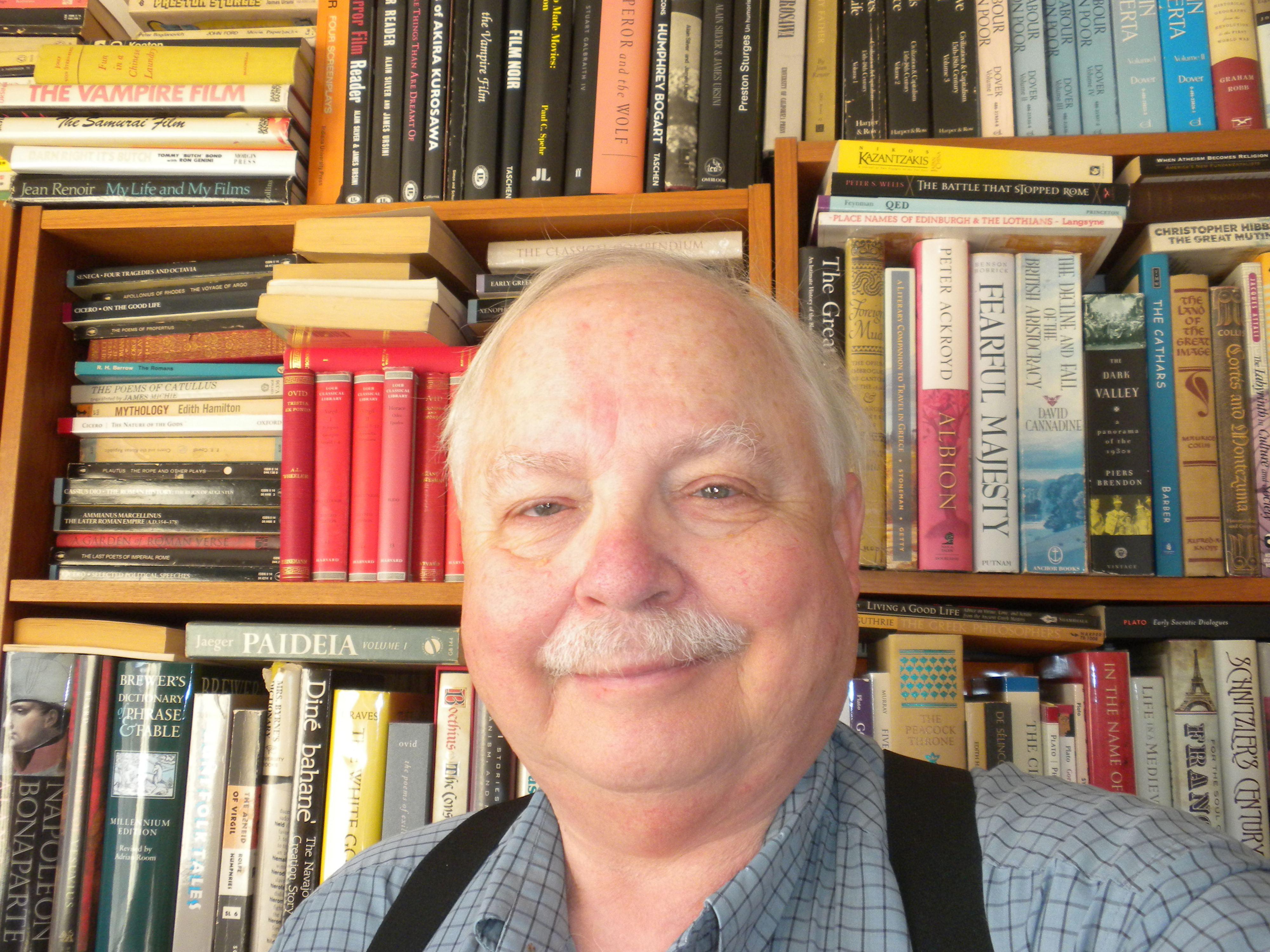
Me in My Library in Palmier Times

Ever since I was very young, I wanted to live surrounded by books. And I did, spending hundreds of dollars a month on books—hardbounds, paperbacks, even e-books. There is a tendency for accumulations to get out of hand. I have known collectors who lived in fear of being crushed under their film collections, movie poster collections, book collections. Collections can grow so out of bounds that they become a kind of illness, related to hoarding. When Martine and I moved from room to room, we had to take prescribed paths, because the floor was piled high with books. It was frequently a bone of contention between us.

Beginning late last year, I started donating books to the Mar Vista Branch of the Los Angeles Public Library. In a twelve-month period, I have given well over a thousand books to the library. Some will be sold by the library at one of their bimonthly sales, some will be sold for a dollar a book at the branch, some (the cheaper ones) will just be given away. Who knows? Perhaps some of them might even be incorporated into he library’s own collection. A lot of them are great titles in prime condition.

If you look at the books behind me in this picture, I would have to say that about 30-40% are no longer in my possession. Twice a week, a put together a box of books for donation, with Martine’s eager cooperation.

Now that I am living on a fixed income, I buy relatively few books, and then only if I intend to read them in the near future. Today, for example, I purchased a nice harbound copy of Paul Theroux’s Sir Vidia’s Shadow, about the author’s decades-long friendship with V. S. Naipaul.

Do I read as much as ever? Of course I do—perhaps even more so. It’s just that I no longer feel I have to own all the books I love. I just have to read them.


A Poem About Travel

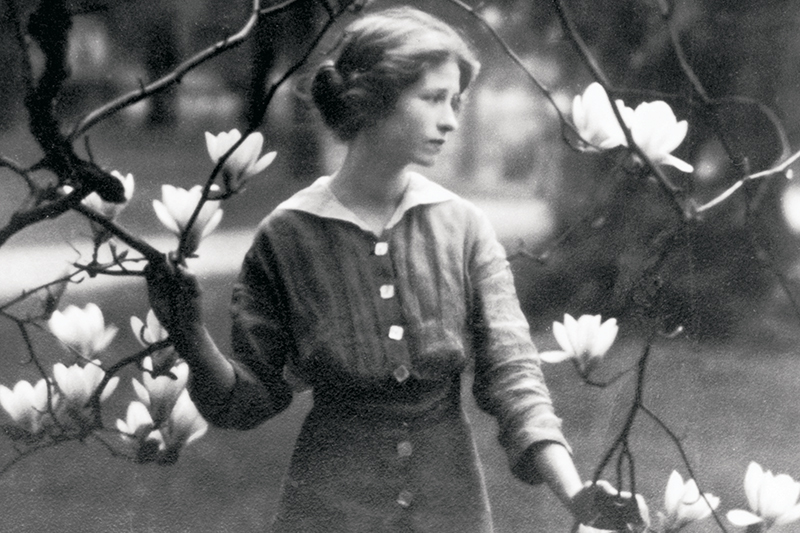
Edna St. Vincent Millay in 1917

As my mind is increasingly turning toward the trip I plan to take to Yucatán and Belize this next winter, I came across this poem by Edna St. Vincent Millay (1892-1950). It is called, simply enough, “Travel”:

Travel

The railroad track is miles away,
And the day is loud with voices speaking,
Yet there isn’t a train goes by all day
But I hear its whistle shrieking.

All night there isn’t a train goes by,
Though the night is still for sleep and dreaming,
But I see its cinders red on the sky,
And hear its engine steaming.

My heart is warm with the friends I make,
And better friends I’ll not be knowing;
Yet there isn’t a train I wouldn’t take,
No matter where it’s going.


With Martine at the Arboretum

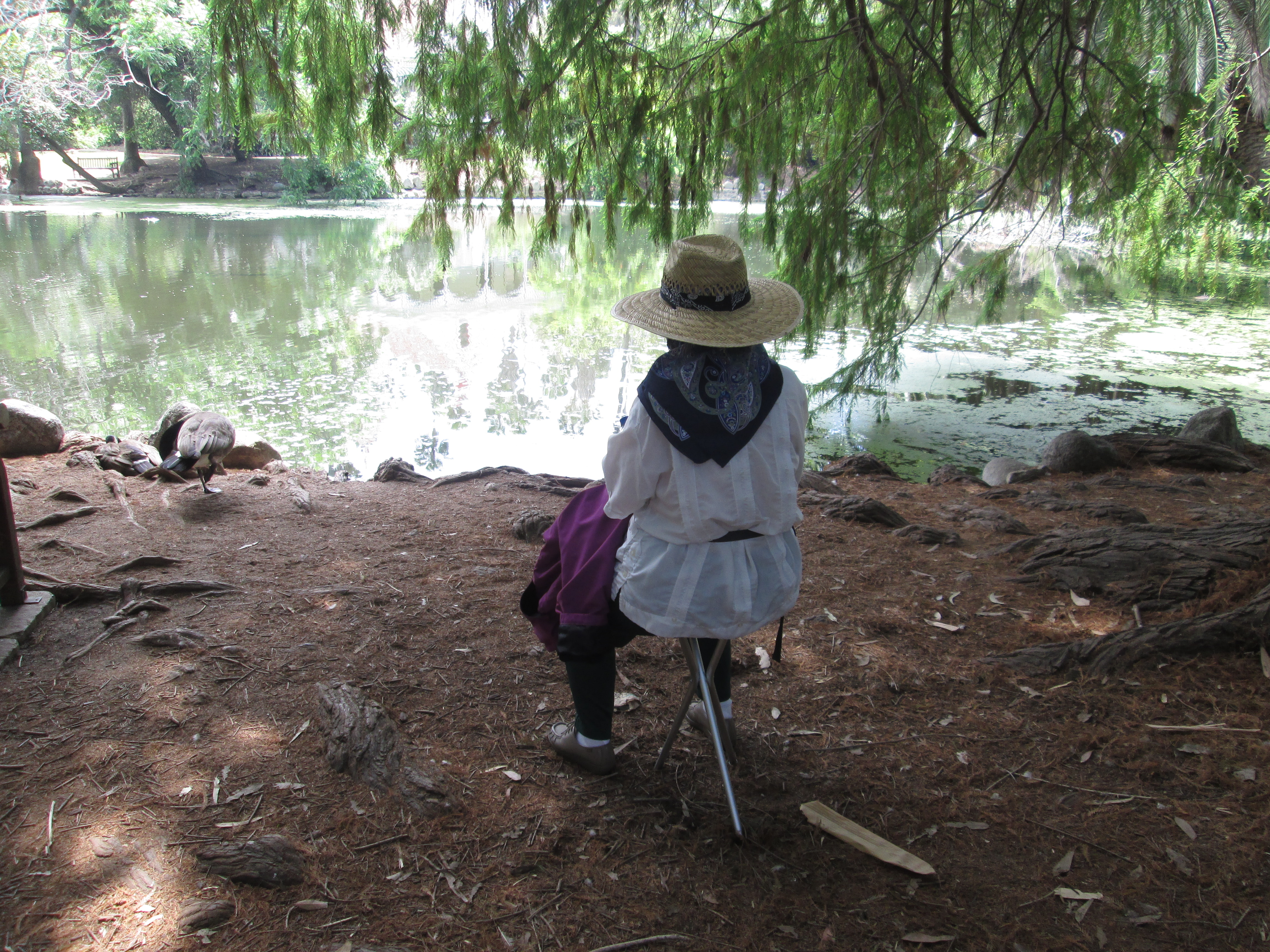
Martine Sitting on the Shore of Baldwin Lake

Yesterday Martine asked me if we could drive to the Los Angeles Arboretum in Arcadia. I was reluctant at first, as it is an hour drive at high speed over several freeways, but I was delighted that Martine actually wanted to go somewhere that was interesting to her. And the botanical gardens of Southern California are favorite destinations for her. She is shown here siting on her tripod cane chair, wearing one of my old guayaberas and a Mexican straw hat, looking at the ducks and geese plying Baldwin Lake.

We would up staying over four hours, much of it with the geese and ducks.

A Mother’s Day Portrait of Mom with Ducklings

Most of the time was spent around the lake and its various inlets. Having seen all the signs about warning not to feed the birds and wild animals, Martine felt she had to explain to the geese why she didn’t bring any food for them. They did not seem to be very put out by the lack of bread crumbs because they were so busy rooting around in the grass for the insects and plants that form much of their diet. Still, it was interesting that she felt so bad about not being able to feed them herself.

The View Across Baldwin Lake at the Queen Anne Cottage

Because we have had a wet winter, Baldwin Lake no longer looked like a large mudhole. It was covered with millions of tiny leaves that had fallen from the surrounding trees (you can see them in the middle photo above).

When she is at a botanical garden, there is no trace of the depression that marred so much of her life in the last year and a half. She no longer wants to escape to another city: She can’t because she has spent her savings on previous abortive trips. Instead, she is taking long walks in our neighborhood, which, probably, is good for her.


Traveling with Mister Thorax

Paul Theroux in 2015

The photograph shows the office of the ultimate travel writer. His first book was The Great Railway Bazaar in 1975. Not coincidentally, that was the first year when the travel bug got me. Its bite was long lasting: I am still suffering from the effects of it. His next travel book was The Old Patagonian Express: By Train Through the Americas (1979). This was the book that set me to thinking about South America, though it was to be almost a quarter century later that I felt I was able to follow in his footsteps.

It was in his 1992 The Happy Isles of Oceania that he was mistakenly called Mr. Thorax by a hotel employee in Australia or New Zealand. I rather like the name.

Below are some of his observations on travel taken from a 2015 Wall Street Journal interview. (Much better, if you can get a copy, is his 2011 book The Tao of Travel.) My own comments on travel are appended in indented text..

I never splurge on: comfort or luxury when I’m traveling alone. I eat in simple restaurants, wandering like a dog rather than taking taxis. Traveling through the Deep South I often stayed at inexpensive chain motels, the ones that serve a free breakfast of weak coffee, Kool Aid and Froot Loops in a Styrofoam bowl.

I’m with Paul—except you won’t find me sharing his breakfast of weak coffee, Kool Aid and Froot Loops.

The difference between travel and tourism: is the difference between walking in the hot sun to meet an angry person who is going to insult me and then tell me his amazing story, and lying in the sun sipping a cool drink and reading, say, “Death in Venice.” The first is more profitable; the second more pleasant. Both are enlightening.

My idea of travel is a combination of the two. During the day, I will be out in the hot sun, ready for anything. At night, I usually read. A lot. Mostly from my Amazon Kindle.

The greatest advantage to being an older traveler: is being invisible, unregarded, ignored. This allows one to eavesdrop and to see much more of a place or a people. There is a detachment, too, in being older: You’re not looking for a new life, not easily tempted. So you see a place clearly. Perfect for writing.

There’s a lot of truth to this. To be in your seventies is to be quite invisible. I would prefer to be totally invisible when confronted by chatty American tourists. (I have been known to answer their questions in Hungarian.)

I am a nightmare to travel with: when I am reporting a book, which is why I always take such trips alone. I seldom think, “Where am I going to eat?” or “Where am I going to sleep?” The true traveler has very little idea of what is coming next.

Here’s where I differ from Paul. Some of the best trips I have taken have been with Martine (Britain, France, Belgium, the Netherlands, Argentina) and my brother Dan (Mexico and Ecuador). I would prefer to travel with someone who is compatible, and I am willing to compromise on destinations providing that I am not absolutely opposed to visiting them.

I never take photographs because: people who take pictures lose their capacity for close observation. Without a camera, you study a thing more carefully and remember it better. Taking a picture is a way of forgetting.

Unlike Paul, I take a lot of pictures, though no selfies and damn few posed pictures in front of famous tourist destinations. I prefer to use my own pictures of the places I visit, though I am not averse to hijacking some off the Internet if I don’t have what I want for my blog postings.


My Aunt Margit

Margit Paris (Died 1977)

My only aunt, Margit, was the sister of the Paris twins, Elek and Emil. Like them, she was born in Prešov-Solivar in what is now the Republic of Slovakia, but at the time was part of the Austro-Hungarian Empire and under Hungarian administration. Like them, she was abandoned by her parents at the end of World War I in the middle of a famine. The three siblings did what they could to survive under difficult conditions. In 1929, they were able to come to the United States and joined their parents in Cleveland.

Although Margit never married, she single-handedly owned and operated May’s Bridal Shop in Garfield Heights, Ohio. She lived in the back of her store, though I believe she spent most weekends with my Uncle Emil in Novelty, Ohio.

I used to enjoy visiting the store, even though I was put to work. Aunt Margit handed me a magnet and had me use it to pick up pins from the fitting room floor, of which there were usually hundreds. When I was done, I sat admiring her calendar. Her insurance company put out an annual calendar that featured color engravings from Currier & Ives. The calendar part didn’t interest me at all, but the budding book collector in me coveted the Currier & Ives engravings. She didn’t know it at the time, but instead of buying me clothes at Christmas time, I would have been happier with one of her old calendars.

A Typical Currier & Ives Color Engraving

When she retired from the bridal shop in the mid 1970s, she bought a house in Florence, South Carolina. It was a bit of a surprise to me, as Margit was always close to her brothers.

When I went with my parents to Hungary and Czechoslovakia in 1977, I flew back from Europe earlier. The news that awaited me after my return was that Aunt Margit had died. I rushed to send a telegram to my Dad in Budapest. They couldn’t get back in time for the funeral, so I decided with my brother Dan to attend the funeral in their place. Afterwards, my Mom told me that Dad was totally broken up by my telegram and was agitated that he couldn’t be there for her. Dan and I figured that would be the case, so we were both happy to honor our aunt with our presence on this sad occasion.

She was a sweet and kindly person all her life, and we all missed her.


Serendipity: The Art of the Deal?

Let’s Not Leave Foreign Policy to Rank Amateurs!

The following is the first paragraph in an article in the April 18, 2019 issue of The New York Review of Books entitled “What Happened in Hanoi?”

Shortly after the success of The Art of the Deal (1987) made Donald Trump a supposed expert on negotiation, he lobbied the George H. W. Bush administration to put him in charge of arms reduction talks with the Soviet Union. The position went instead to Richard Burt, an experienced diplomat and arms control expert. When the two men met at a New York social event, Trump pulled Burt aside to tell him what he would have one—and what Burt should do—to start off the negotiation. Greet the Soviets warmly, he said. Let their delegation get seated and open their papers. Then stand up, put your knuckles on the table, lean over, say “Fuck you,” and walk out of the room.

Burt didn’t follow Trump’s advice, to which which we owe the fact that the world didn’t end in a nuclear holocaust well before the start of the new millennium.

The Muralist

Quetzalcoatl Mural at Dartmouth College’s Baker Library

During the four years I was at Dartmouth College in Hanover, New Hampshire, I spent many hours studying in the reserve room of Baker Library where, between 1932 and 1934, José Clemente Orozco painted a striking series of murals named “The Epic of American Civilization.” One of the images (above) was of the god Quetzalcoatl (or Plumed Serpent) crossing the Gulf of Mexico to Yucatán. It was largely due to Quetzalcoatl’s yellow beard in Aztec iconography that misled Moctezuma to believe that Hernán Cortés was Quetzalcoatl returned to the Aztecs. We all know how that turned out….

Orozco also did other murals at a dining hall at Dartmouth, but they were removed because they were thought to be Communist, and the Patricians in control at Dartmouth were aghast that the Mexican visitor would abuse their hospitality. (A similar thing happened in Los Angelist, where Mexican muralist David Alfaro Siqueiros painted a mural called “América Tropical” that was painted over for similar reasons.)

I love Orozco’s work. At one point, I even journeyed to Guadalajara to see more of his work, such as the image of Miguel Hidalgo below:

Mural by Jose Clemente Orozco featuring Miguel Hidalgo (leader of the Mexican War of Independence), Palacio de Gobierno (Government Palace), in the historic Center of Guadalajara, Jalisco, Mexico

Censorship of a great work of art because one does not believe in the political philosophy espoused by the artist is, to my mind, barbaric. Only in the United States is there a simultaneous attraction/repulsion response to Orozco’s emphatic mural style. Any attempt to paint over his work in Mexico would cause a bloody riot. But then, Mexico does not swing as far to the right as our country does.