Sinking Your Teeth Into Florence

No, Not Florence, Italy: Florence, South Carolina

I was just having a conversation with a friend of mine about dentistry. Depending on where you are, dentistry can take your household finances and turn them into mulch.

For their dental care, my Mother and Father actually ripped off the Peoples’ Republic of Hungary (that’s Magyar Népköztársaság for you fellow Hunkies) by having the Communists pay for their false teeth. I doubt they flashed their American passports, but they got thousands of dollars worth of dental care for bupkis.

One could cross the border into Mexico for inexpensive dental work, but there is no good way of holding the dentist accountable if something happens.

My Aunt Margit moved to Florence SC in the 1970s. When she died in 1977, my parents were in Budapest and couldn’t get back in time for the funeral; so my brother and I went instead. One of the things I discovered while there is that Florence was a major dental center, with some clinics doing dental procedures 24/7.

I don’t know if that’s still the case, but there are scads of dental clinics still in operation—many of which have no problem with giving you a price list in advance of need. I suspect that since dentistry is so competitive in Florence, there must be some good dentists to be found there. Even if they voted for Trump and Lindsey Graham.
Family Plot

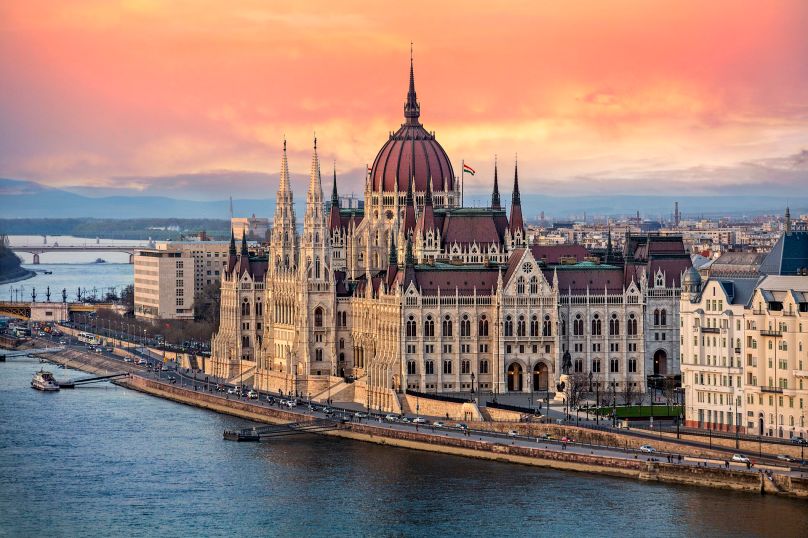
The Hungarian Parliament in Budapest

In my family, there was a plot to marry me off to a nice Hungarian girl who would think nothing of giving up her life with me to take care of my aging parents. They had even settled on a distant cousin of mine, one Ilona Vörös (Helen Red in English), a resident of Újpest who worked for MAV, the Hungarian State Railways.

This all happened in the mid-1970s, when my parents brought Ilona to the U.S. to introduce her to me. Mind you, I had nothing against marriage per se; but something about this whole arrangement set all my warning lights blinking and alarms sounding off.

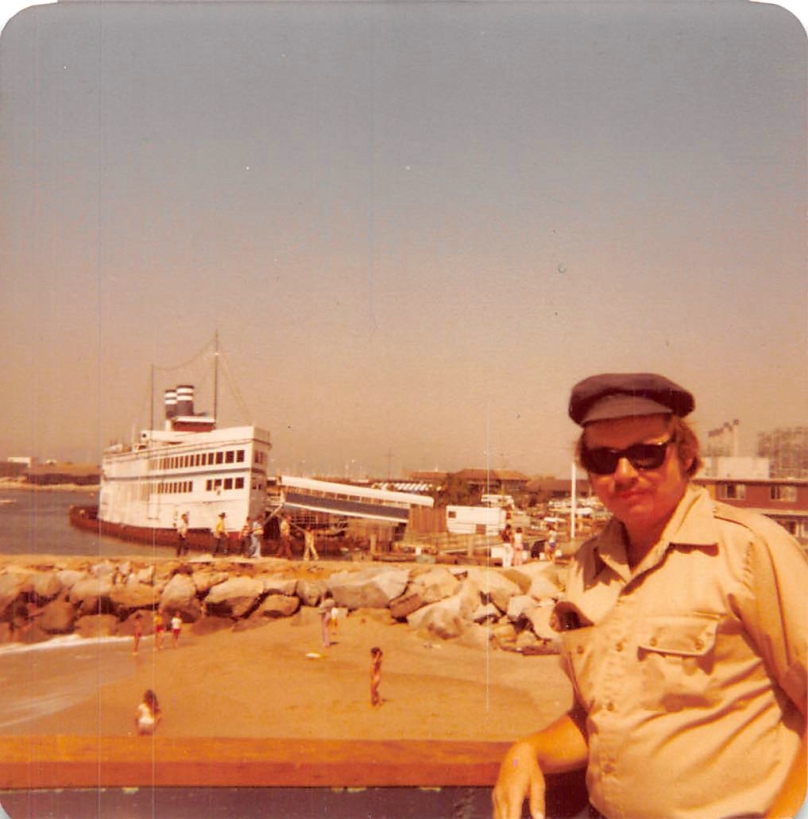
Me in Hungary 1977 on the Shores of Lake Balatón

Why would any self-respecting young woman want to enter into a kind of weird marriage in which would become a slavey to my Mom and Dad, whom I thought were being incredibly naive about the whole thing? When I backed out of the arrangement, my father was furious with me. Why? I had not made any promises to marry Ilona, and then send her to Cleveland to serve as a housekeeper for my parents. I was just going to meet her and see what came of things. (Which was naive on my part, I now see.)

I suspect that what my parents really wanted was for all four of us to live in one household. I had been in Los Angeles for ten years. This was a plot to bring us all together. But I didn’t want to live with my Mom and Dad, as much as I loved them. I rather liked living in California on my own. As for marriage, I preferred to find someone who was not hedged about with all kinds of weird expectations.

Then it came about that Ilona and one of her MAV co-workers had been carrying on a long relationship in Budapest. Then my Mom had words with Ilona’s mother, and within a year or two, Ilona and her family were persona non grata.

Probably just as well.

The Death of Boris Vian

Writer and Jazz Musician Boris Vian (1920-1959)

This is a reprint of a blog I posted on October 1, 2018—with some minor changes. Vian was not only a member of the Oulipo literary movement, but he was a renowned jazz musician.

There is a myth that the French are contemptuous of everything that the United States stands for. They might be now, seeing how how our country has sunk to Stygian depths since November 2016. But there have been many exceptions, consisting of key figures in the arts who have paid homage to American art forms. In the case of Boris Vian (1920-1959), the contributions have been in the form of music (he was a jazz trumpeter who knew Duke Ellington, Hoagie Carmichael, and Miles Davis), literature (detective and Oulipo), and translation (Raymond Chandler and sci-fi writer A. E. Van Vogt). In addition, he was a friend to the existentialist writers of the 1950s.

I have just finished [in 2018] reading Vian’s Mood Indigo, the English title of L’écume des jours. It is an inventive work of the Oulipo school of literature. It starts out as a manic love story and becomes ever more somber and even tragic as the characters come to sad ends. It is reminiscent of works by Raymond Queneau and Georges Perec.

Boris Vian at the Trumpet

Vian died at the age of thirty-nine of a heart attack while watching the credits of a French film adaptation of his novel I Spit On Your Graves [not to be confused with the various rape revenge films released under the name of I Spit on Your Grave without the “s”]. You can see the credit sequence by clicking here. Reportedly, Vian cried out “These guys are supposed to be American? My ass!” and collapsed in his seat. He died en route to the hospital.

He had a point, it looks a lot more French than American. It’s a pity we lost him, because he was a real friend to American literature and music.

The Spiral Road

U.S. Poet Laureate Joy Harjo

Here is another poem by Joy Harjo, a member of the Muscogee Nation (Este Mvskokvlke), belonging to Oce Vpofv (Hickory Ground). Considering all that has happened to her people, she is curiously optimistic “for earth’s grandsons.” And that is the title of her poem.

For Earth’s Grandsons

Stand tall, no matter your height, how dark your skin
Your spirit is all colors within
You are made of the finest woven light
From the iridescent love that formed your mothers, fathers
Your grandparents all the way back on the spiral road—
There is no end to this love
It has formed your bodies
Feeds your bright spirits
And no matter what happens in these times of breaking—
No matter dictators, the heartless, and liars
No matter—you are born of those
Who kept ceremonial embers burning in their hands
All through the miles of relentless exile
Those who sang the path through massacre
All the way to sunrise
You will make it through—

Pictograph at Chaco Canyon Showing the Spiral Road

I liked the way the poem ends with a dash: All this is still happening. I posted another poem by Joy Harjo on October 20 here. Both poems are taken from her recent book An American Sunrise (New York: W.W. Norton, 2019).

Discoveries: Nikkatsu

Nikkatsu Studios Logo

During this hyperextended quarantine, I continue to make interesting discoveries. Late one night, Turner Classic Movies (TCM) put on a double bill of noir films from Nikkatsu Studios.

Nikkatsu? I had heard of Toho, Shochiku, Diaei, and Tohei … but never Nikkatsu. After a quick look at Google, I found that Nikkatsu was actually the oldest studio in Japan, founded all the way back in 1912, three years before D.W. Griffith filmed Birth of a Nation.

I began to look at I Am Waiting (1957), but as the hour was late and I was tired, I reluctantly prepared for sleep.

But then, I discovered that the TCM website has a Watch Now option. When you select Watch Movies, you have available to you virtually all the recently shown films on the channel, including cartoons and shorts. The only requirement is that you subscribe to a service on your TV that carries the TCM channel: There is a login required.

A Scene from A Colt Is My Passport (1967)

I was delighted to find that both I Am Waiting and A Colt Is My Passport were available through the website. Thereupon I watched both films and was delighted that I persevered in searching them out. Not only that, but I bought the Criterion Collection’s Nikkatsu Noir series of five films, which included the above titles but three others that I plan to watch in the weeks to come.

Film noir has traveled from the United States to France (the films of Jean-Pierre Melville), England (the original Get Carter with Michael Caine), and Japan.

L.A. in the Civil War

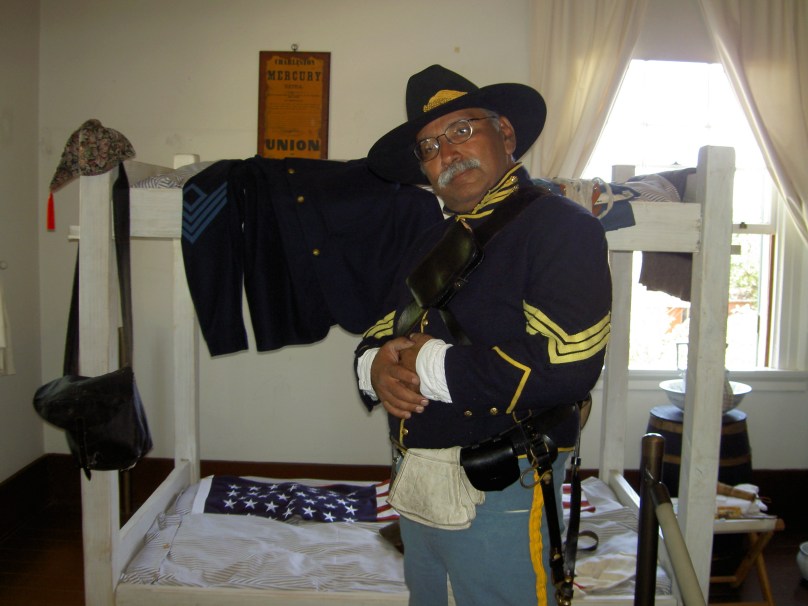
Docent at Wilmington’s Drum Barracks (2008)

Southern California was separated from the main battlefields of the Civil War by thousands of miles, yet it was contested territory. The California State Legislature was a hotbed of secessionism, and there was talk of separating the state into two halves, with the southern half being part of the Confederate States of America.

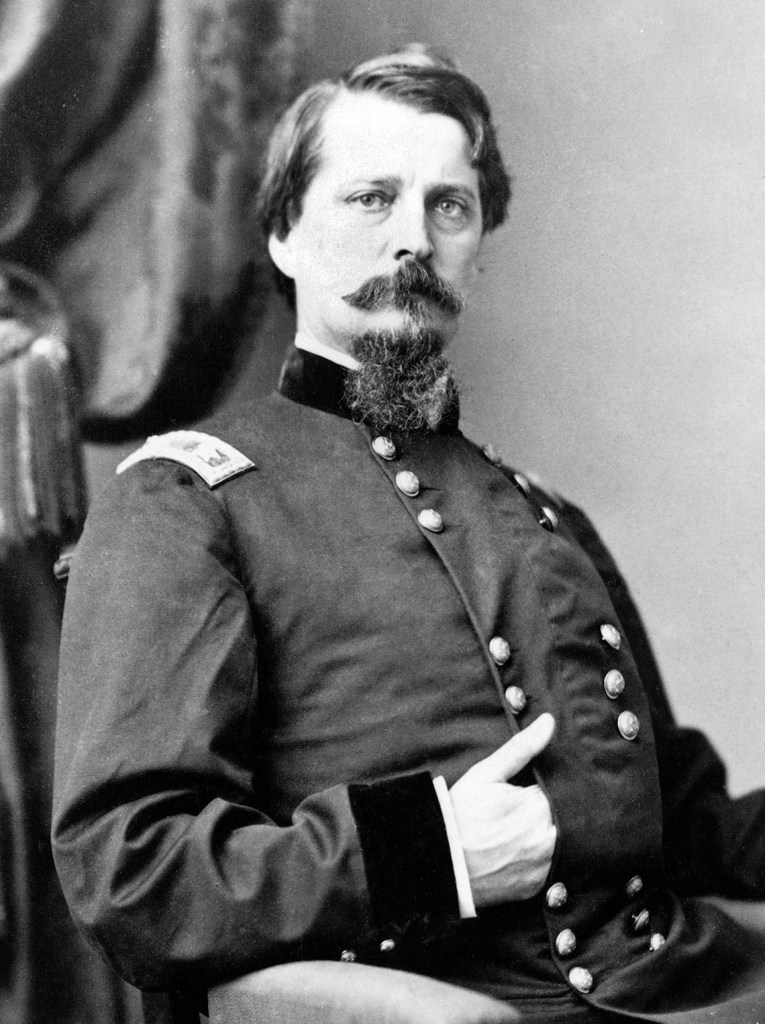
Two military officers stationed in the area became major players in the East: Albert Sidney Johnston becoming a general for the Confederacy, and Winfield Scott Hancock for the Union.

Winfield Scott Hancock, One of the Heroes of Gettysburg

Fortunately for the Union, there was a strong cadre of Yankee sympathizers in town. These included Phineas Banning, responsible for building the Port of Los Angeles; District Attorney Ezra Drown; rancher Jonathan Warner; and publisher Charles Conway.

The only remaining military facility from those days is in Wilmington—the Drum Barracks, just south of Phineas Banning’s palatial estate.

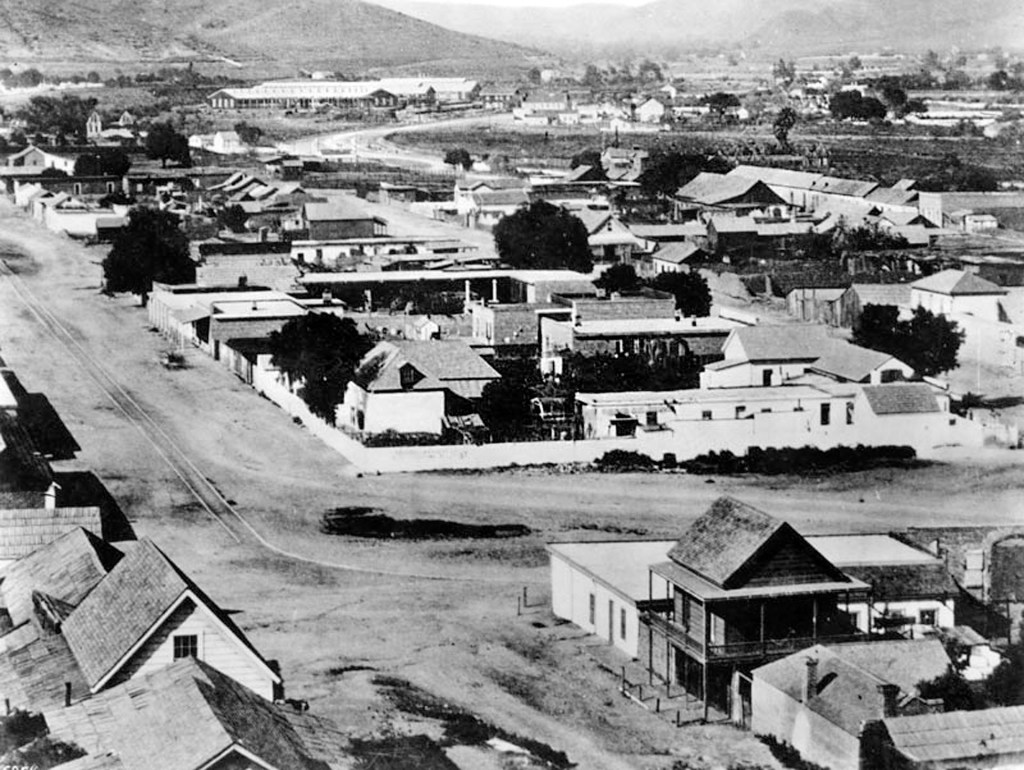
Los Angeles in 1861

If you’d like to read a more detailed account of how L.A. fared during the Civil War, with numerous photos, I recommend you check out this website from TV station KCET, entitled “We Have Been and Are Yet Secessionist”—Los Angeles When the Civil War Began.

Tropical Penguins

Feeding Time for the Humboldt Penguins at the Santa Barbara Zoo

I am looking back to a visit Martine and I made to the Santa Barbara Zoo some ten years ago this month. At the time, penguins interested me more and more. In 2006, I had seen some Magellanic penguins at Isla Pájaros on the Beagle Channel in Argentina’s State of Tierra Del Fuego.

In 2010, I had hopes of talking Martine into coming with me to Argentina in 2011 (which she did) and seeing the penguins at Pájaros and Punta del Tombo in the State of Chubut.

The penguins at the Santa Barbara Zoo are similar to the Magellanic penguins of Argentina, but they inhabit warmer country, namely the coastal regions of Northern Chile (site of the Atacama Desert) and Peru.

Lone Humboldt Penguin

I have always regarded the penguins at the Santa Barbara Zoo as my favorite exhibit. Clumsy on land, the Humboldts swim with speed, fury, and precision. (For that reason, they are much harder to photograph when they’re in the water.)

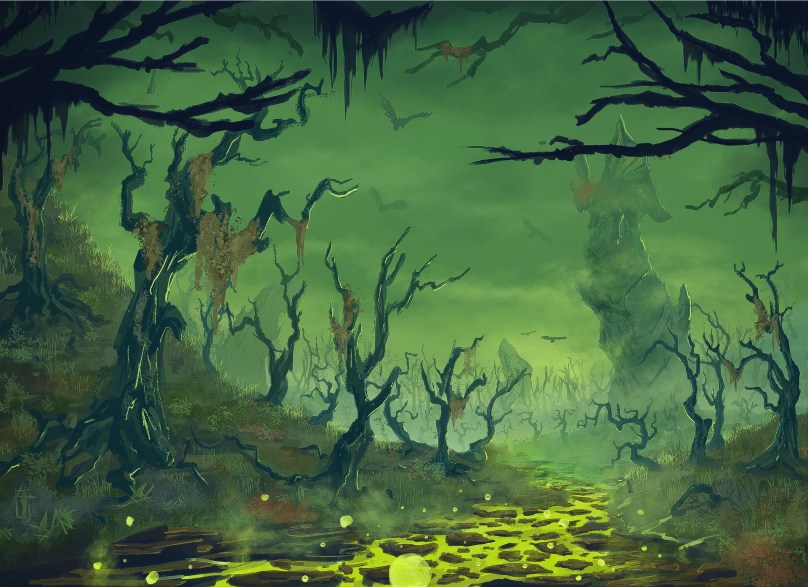
The Swamp of Evil

Swamps in Our Culture Are Places of Evil

One of the grisliest places I ever visited was the Mexican State of Tabasco, where storms upriver caused floods in Villahermosa. From the banks of the Grijalva, my brother and I saw the carcasses of cows and other livestock come floating past in the fast-flowing muddy waters. The humidity easily stood at 100%, if not more.

We have our swampy regions in the States as well. Take Louisiana, for instance, where the Atchafalaya Basin could become the new course of the Mississippi, if it jumps the Army Corps of Engineers dams to the north.

James Lee Burke, Author of the David Robicheaux Novels

I have just finished reading James Lee Burke’s Sunset Limited, in which David Robicheaux of the New Iberia Police confronts evils that are scarcely to be imagined, let alone experienced.

Years ago, a labor leader named Frank Flynn was murdered by being crucified upside-down with a nail gun on the side of an old barn. His children Cisco and Megan are back in the Bayou Teche area, along with some of the nastiest contract killers ever portrayed in literature. But then, as Dave reminds us, “Evil doesn’t have a zip code.”

The gnarliest of them, one Harpo Scruggs, also has a wicked sense of humor:

“You got a lot of brass,” I said to him.

“Not really. Since I don’t think your bunch [the police] could drink piss out of a boot with the instructions printed on the heel,” [Harpo] replied. He unscrewed the cork in the mescal bottle with a squeak and tipped another shot into his glass.

One thing that characterizes a Dave Robicheaux novel is the tendency of its hero, along with his friend Clete Purcel, a former New Orleans police officer, to confront evil head on, with intensity and frequency.

To date, I have read over ten of Burke’s Robicheaux novels with their brooding atmosphere of Cajun eeriness—and I intend to keep going.

A One-Man Renaissance

Francisco Toledo (1940-2019)

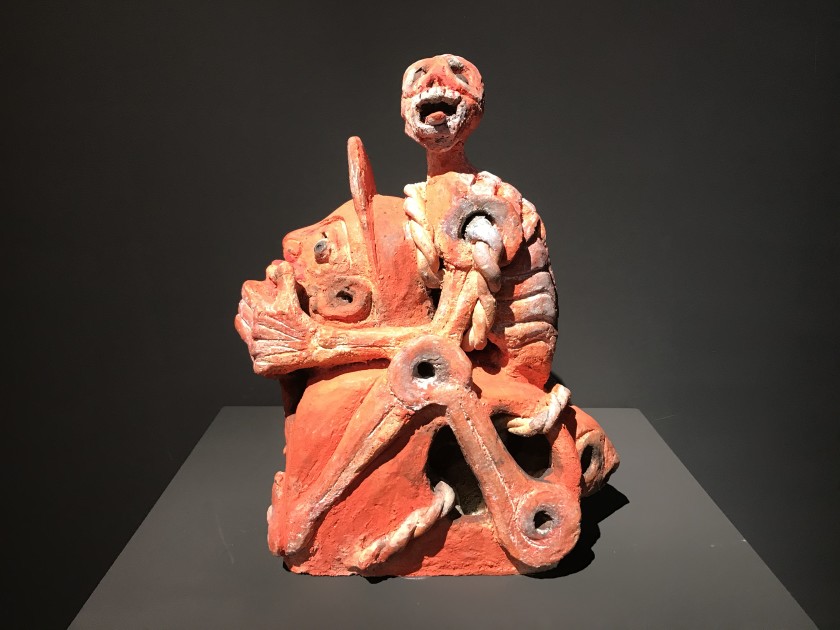
In his book On the Plain of Snakes: A Mexican Journey, Paul Theroux met with Francisco Toledo in Oaxaca shortly before the artist died. I was curious to see images of some of his works because his meeting with Theroux raised my interest.

A Zapotec Indian from Juchitán in the southeast corner of the State of Oaxaca (near the Isthmus of Tehuantepec), Francisco Benjamin López Toledo was a noted painter, sculptor, illustrator, and protestor. When McDonald’s wanted to plant the Golden Arches in the zócalo of Oaxaca, Toledo set up a table offering free tamalitos to passers-by explaining to them the damage that would be done to their culture.

Animal-Headed Woman

When Theroux asked him what he thought of Frida Kahlo, Toledo replied:

I started out hating her. Then later I began to see that she represented something. And outsiders were interested in her. Her life was so complex and painful. So she is something. But there are so many others.

Kahlo is well known to art critics outside of Mexico, along with a handful of other artists such as Orozco, Rivera, Tamayo, and Siqueiro; but Toledo is right that Mexico is fairly crawling with great art. This was brought home to me during my recent trip to Yucatán, when I made a point of visiting art and folk museums.

Illustration: Mythical Creature

To another American visitor, Toledo describes his work:

What I do is a mixture of things, but the pre-Hispanic world has been a source of inspiration. There are certain solutions that are decorative that come from pre-Hispanic art and at the same time there is much primitive art that is refined or simple but also very modern.

They described his work as employing innovative materials, such as sand and amate paper, which was used by pre-Columbian Indians, made with the crushed bark of the amate tree (Ficus insipida, a species of fig).

A Ceramic Sculpture Honoring the Disappeared of Mexico

I hope to present the work of other Mexican artists in posts to come.

The Philosophers

Jean-Paul Sartre and Simone de Beauvoir

Just as the Second World War was ending, there was a philosophical renaissance of sorts that was born in the streets and cafés of Paris. Most associated with it are Jean-Paul Sartre, Albert Camus, and Simone de Beauvoir. Best known for her book The Second Sex, Simone de Beauvoir had written a novel about the French existentialists in 1954 called The Mandarins.

It is a classical roman à clef, in which real people appear under fictional names:

  • Jean-Paul Sartre becomes Robert Dubreuilh
  • Simone de Beauvoir becomes Anne Dubreuilh, Robert’s wife (In real life, Sartre and de Beauvoir were an unmarried couple for over fifty years)
  • Albert Camus becomes Henri Perron
  • American novelist Nelson Algren becomes Lewis Brogan

The book’s characters are deeply involved in leftist political issues without subjecting themselves to control by the Russian Politburo. Yet they find that it was easier to blow up trains and otherwise sabotage the Nazi war machine than to find a path through the messy politics of the Fourth Republic in France, particularly during the postwar political rise of Charles De Gaulle.

The Camus/Perron character struck home with me, because he is the most disaffected of the group after the war ends. As he gets pushed more and more by his friends into the messy politics of the French Republic, he becomes increasingly dispirited. This reflects his relationships with his women and his male friends.

Curiously, although Simone de Beauvoir never married and never had children, she is both married and with a troublesome daughter (Nadine) in The Mandarins. Her relationship with Sartre/Debreuilh is an open marriage, and she carries on a long affair with an American novelist, Nelson Algren/Lewis Brogan, the author of The Man with the Golden Arm.

The Mandarins is one of the best books I have read all year. I rather suspect that I will revisit the French existentialists in my reading during the months to come. Also, I have concluded that de Beauvoir is a badly underrated author considering her importance in a major twentieth century philosophical movement.