Museo Larco

This is the scanned image of my ticket to the Museo Larco in Lima, Peru. It was the first tourist sight I visited in Lima back in 2015—and it was an eye-opener. Founded in 1926, it was dedicated to the northern coastal cultures of Peru, of which there were many. We tend to think, “Peru … Yeah, that’s the Incas.” Except that the Incas were 15th century latecomers, and some of the earlier cultures were more advanced than they were.

Besides the Incas, there were the Moche, the Wari, the Chimu, the Chavin, the Paracas, the Nazca, the Chachapoyas, and many others.
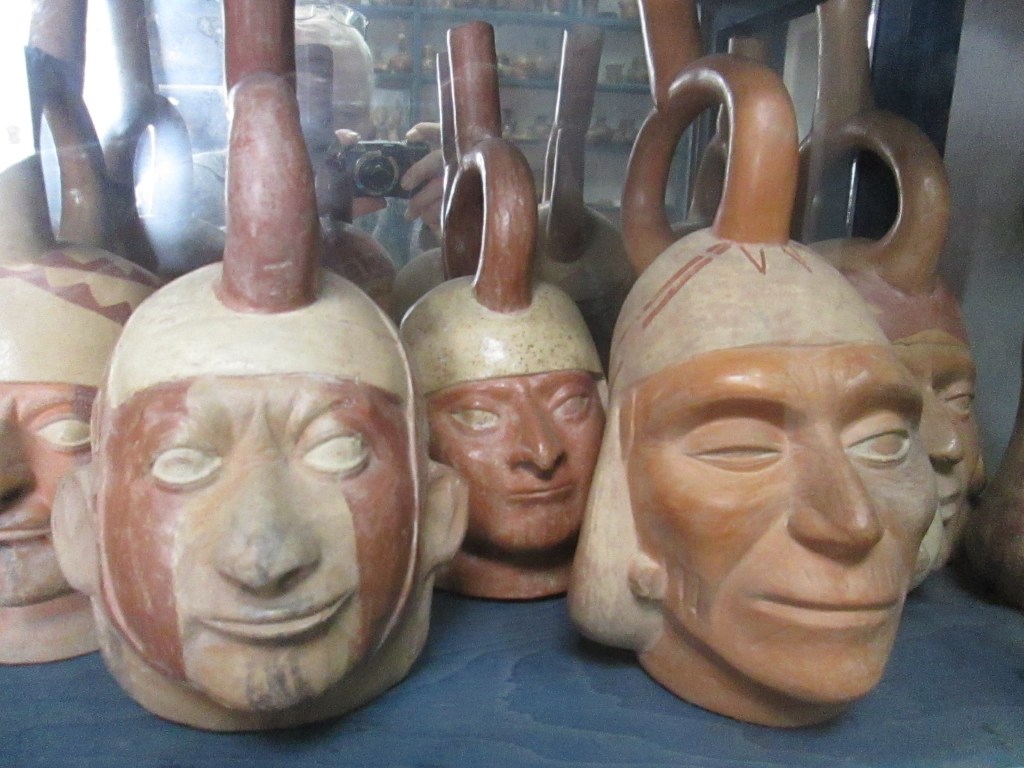
There were scores of these Moche heads at the museum. Like the famous terra cotta warriors at Xian in China, all had distinctive facial features as if they were based on particular individuals.

In addition there were elaborate textiles dating back centuries and still in excellent condition. There were even a few quipus, collections of knotted cords that were used for accounting purposes. None of these peoples appear to have had a written language like the Maya or Aztecs.
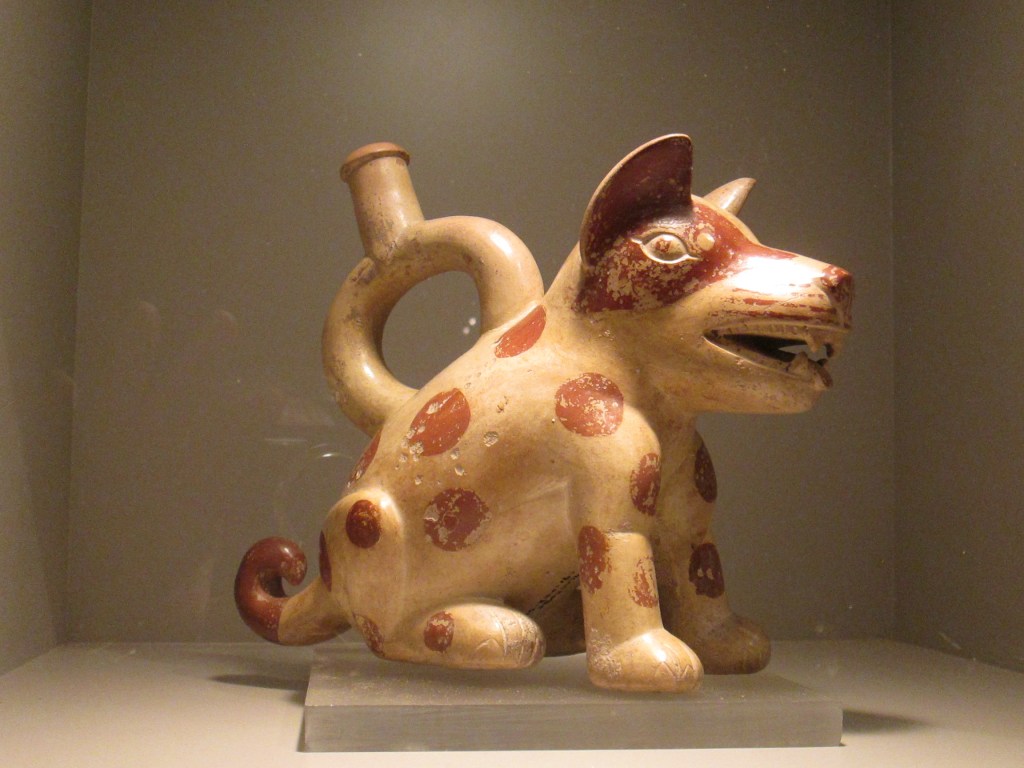
In common with many of the early Mexican cultures, the Moche had cute pottery fashioned in the shape of animals, such as the above dog.

One great thing about many museums in Latin America is that they frequently had adjoining cafés with excellent meals. The Museo Larco was no exception.

If you should find your way to Peru after they horrible Covid infestation, remember that there are a whole lot more to see than just the ruins of Machu Picchu. I could have spent several weeks in Lima without exhausting the list of places I wanted to see, such as the Police Museum in Callao.
Endless Drought

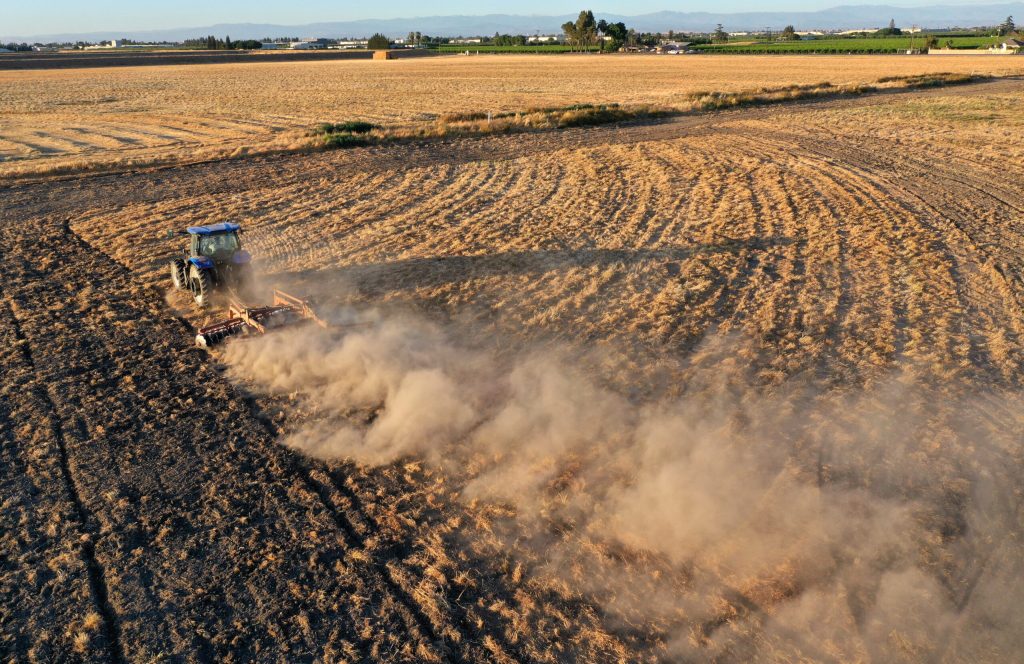
MADERA, CALIFORNIA – MAY 25: In an aerial view, a tractor kicks up dust as it plows a dry field on May 25, 2021 in Madera, California. As California enters an extreme drought emergency, water is starting to become scarce in California’s Central Valley, one of the most productive agricultural regions in the world. Farmers are facing a shortage of water to use on their crops as wells and reservoirs dry up. Some are pulling out water dependent crops, like almonds, or opting to leave acres fallow. (Photo by Justin Sullivan/Getty Images)

In Southern California, we have not seen so much as an inch of rain since last February or March. Oh, we get the occasional “dirty drizzle,” which succeeds only in leaving a layer of dust on our windshields as it dries. Today’s headline in the Los Angeles Times reads “Winter Tale: A ‘No Snow’ State.”

You might not associate California with snow, but the snowpack on the Sierra Nevada Range is the main source of irrigation for California agriculture. If that dries up, large parts of the San Joaquin Valley will no longer be able to reach the 12.8% of U.S. agricultural production that it hitherto enjoyed.

We usually think of water as used primarily for drinking and washing, yet 70% of global fresh water resources is used for irrigation. And also for keeping useless front lawns green.

Something is clearly happening that will make California a less desirable place to live. Late night comics are having a field day talking about our year-round wildfires.

I don’t have any idea what is going to happen. It could be that the rains and snows of yesteryear will return. Or, they may not.

Like Father, Like Son

The illustration above is of Pierre-Auguste Renoir’s La Promenade, painted in 1870, and on display at the Getty Center in Los Angeles. I have always been partial to Renoir’s paintings, particularly when they have these luminous portraits of women. In the painting, the man’s face is in shadow; he is reduced to a polite gesture of leading his lady on. The young woman, on the other hand, lights up the canvas.

What I find truly amazing is that much of the same sensibility was passed on to his son, Jean, who became one of the great motion picture directors. There are times when the viewer feels that the father could have directed the same scene in the same way.

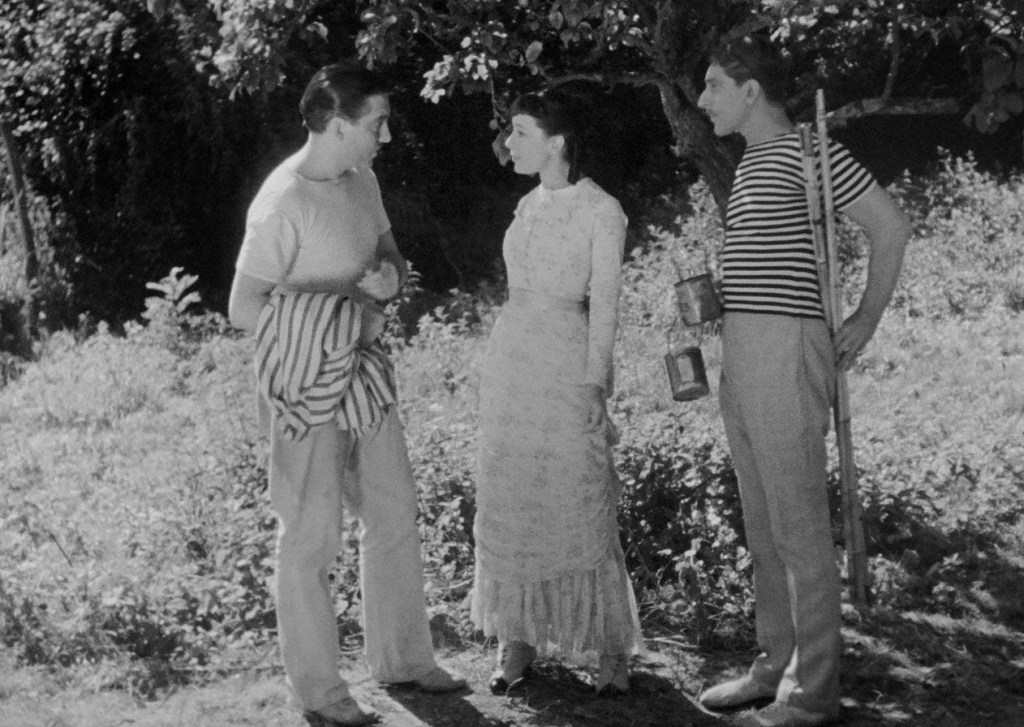
Above is a still from A Day in the Country (1946), which is set in the same period and shows us a picnic in the woods—with the same feeling of the radiance of the female character. Some of the same feeling is in his earlier The Rules of the Game (1939), which is set in the present day. The men in the film all fly around the Marquise de la Chesnaye (played by Nora Gregor) like moths circling a flame.

Of course, Jean Renoir was very conscious of his father’s work, appearing in several of the paintings. He also wrote a beautiful biography of him called Renoir, My Father, which is available in a New York Review edition and is well worth reading.

Samurai Swordplay

A few days ago, I promised to list my favorite Japanese samurai films. Here I present the annotated list in alphabetical order by eight directors, with my favorite samurai film for each director:

  • Hideo Gosha: Goyokin (1969) See also his early Three Outlaw Samurai (1964) and Sword of the Beast (1965).
  • Kazuo Ikehiro: Trail of Traps (1967). My favorite of the Kyoshiro Nemuri films starring Raizo Ichikawa.
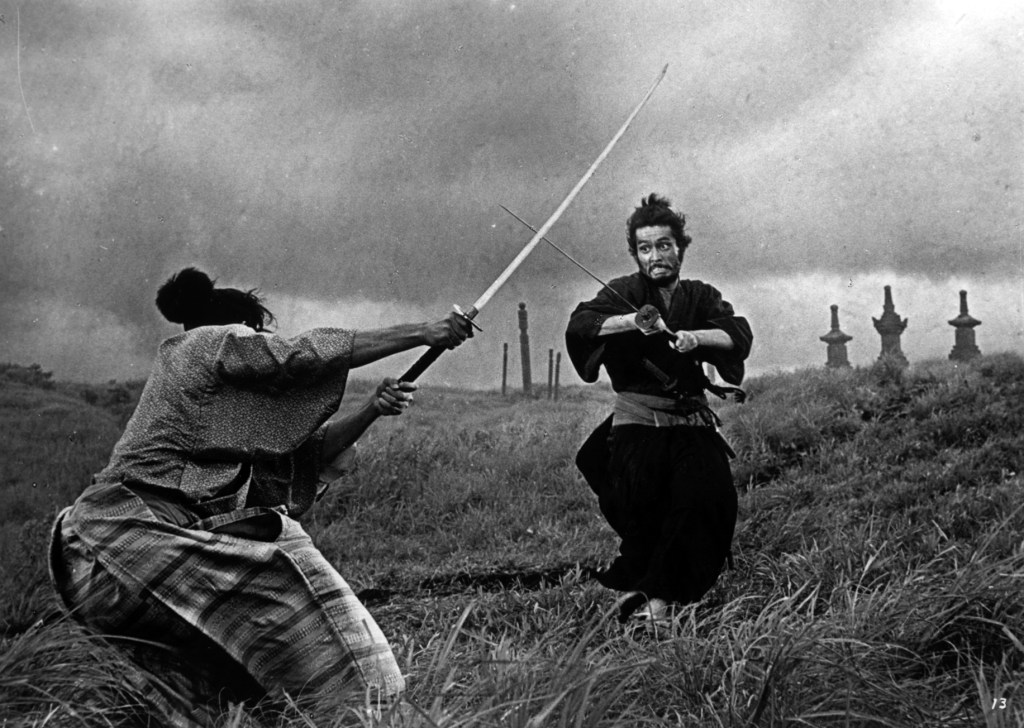
  • Hiroshi Inagaki: Samurai Trilogy, comprising Musashi Miyamoto (1954), The Duel at Ichijoji Temple (1955), and Duel on Ganryu Island (1956).
  • Masaki Kobayashi: Harakiri (1962) starring the great Tatsuya Nakadai.
  • Akira Kurosawa: The Seven Samurai (1954), just one of over a dozen great chambara epics usually starring Toshiro Mifune.
  • Kenji Misumi: Lone Wolf and Cub: Sword of Vengeance (1972). Weird and entertaining.
  • Kihachi Okamoto: Sword of Doom (1965), another great Nakadai role.
  • Kimiyoshi Yasuda: Zatoichi’s Fire Festival (1970), one of a score of films starring Shintaro Katsu as a blind samurai warrior. Very funny.

After the 1970s, the studio system that supported the great Japanese films of the postwar period collapsed because the studios made more money selling their studio space in a real estate bubble than they ever did making movies. There’s a lesson to be learned there.