Borges on Chess

Borges Had a Unique Take on the Game of Kings

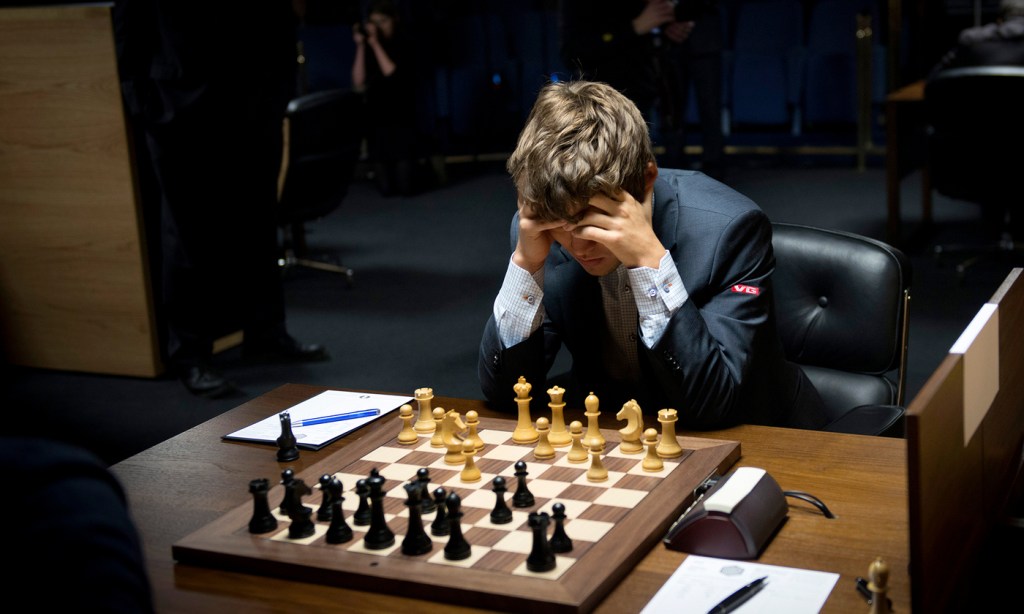
Argentinian poet Jorge Luis Borges (1899-1986) wrote two sonnets entitles “Chess.” This is the second one:

Faint-hearted king, sly bishop, ruthless queen,
straightforward castle, and deceitful pawn—
over the checkered black and white terrain
they seek out and begin their armed campaign.

They do not know it is the player’s hand
that dominates and guides their destiny.
They do not know an adamantine fate
controls their will and lays the battle plan.

The player too is captive of caprice
(the words are Omar’s) on another ground
where black nights alternate with whiter days.

God moves the player, he in turn the piece.
But what god beyond God begins the round
of dust and time and sleep and agonies?

From Jorge Luis Borges, The Sonnets (London: Penguin, 2010).

Grace Under Pressure

Opening Ceremony of the 2020 Tokyo Olympiad—in 2021!

Japan was put in an untenable position by the International Olympic Committee (IOC). At a time when Covid-19 was surging through the island nation, the IOC said the Olympic Games had to go on nonetheless. Of course, we won’t know for a week or two whether Japan will pay the price by putting on the games during an epidemic.

I must say, however, that Japan reacted with competence and grace and managed to put on a memorable event. Even if the stands were mostly empty, these games were an utter delight, even if NBC’s televising was at times ham-fisted and soap-opera-ish.

My favorite events were the team competitions, such as men’s and women’s basketball, women’s indoor and beach volleyball, women’s water polo, and some of track and field events. I didn’t much care for golf, canoeing/kayaking, swimming and diving. Never before have I spent so much time glued to the television set watching sporting events. It was worth it, and I feel bereft now that the Games are over.

New Olympic Events

Get Ready for These New Events in Paris 2024

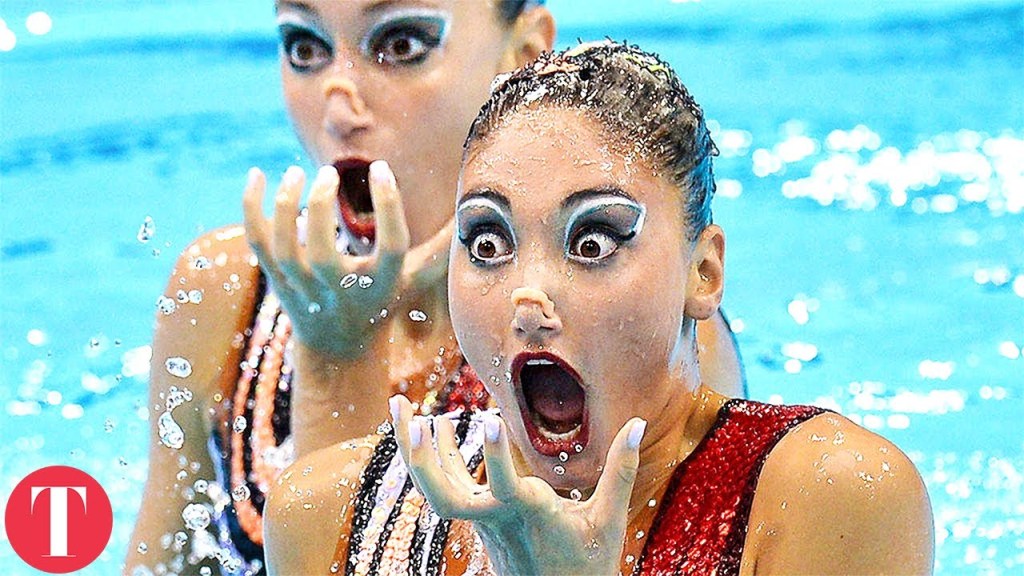
In the above picture, Moldovan women athletes are synchronously showing amazement at a random consonant, in this case the letter “T.” Below, however, are some actual events planned for the next summer Olympics:

  • Team Parcheesi. Expect the Chinese to win gold here.
  • Underwater Track Cycling. Canada and New Zealand are already gearing up for this event.
  • Low-Jump. Exactly what it sounds like: medalists must leave the ground, but only for a few millimeters. The world record is currently held by Burkina Faso at 11.68 mm.
  • Ballroom Balance Beam. Ballroom dancing with a man and a woman as partners atop a balance beam. Both are expected to stick the landing … but exactly where I am not at liberty to say.
  • Dog Walking. Contestants must walk a pack of at least ten dogs and are downgraded for the dogs’ disobedience, toilet, and sniffing stops.
  • Sand Kayaking. How fast can contestants be when they have to paddle on sand dunes of various heights?
  • Dumpster Diving. Exactly what it sounds like. The dumpsters are filled with plastic detritus from the Pacific Garbage Patch, from heights of 10, 20, and 30 meters.
  • Women’s Cubic Beach Volleyball. The same as beach volleyball, but the “ball” is an inflatable cube. What matters most, however, is the skimpiness of the bikinis worn.
  • Blind Man’s Buff. Played on a 10-acre obstacle course.
  • Weight Watchers Watch Party. Judges will look for the most vapid and overweight participants in home watch parties. The U.S. is expected to win the Lead Medal at this event during most Olympics.

On the Longevity of Teeth

I Am About to Lose Another Tooth

Within the last year and a half or so, whenever one of my crowns comes loose, there is some collateral damage that entails either (or both) a root canal and an extraction. I remember that my great grandmother, father, and mother all had false teeth. With my father, the false teeth were problematical, as any pressure on the roof of his mouth led to his ejecting his dentures at high speed across the kitchen table, to the amusement of my brother and myself. (I have inherited the same roof-of-the-mouth sensitivity, which makes me not a comfortable candidate for dentures.)

Now suddenly, I find myself in a similar situation. As my former dentist, Dr. Thomson Sun, said, “Teeth don’t last forever.” I am beginning to find that he is right.

Truth to tell, I have been greatly remiss about oral hygiene. I didn’t brush my teeth after every meal, or even once a day—and as for flossing, fuggedaboutit! I have become more regular about brushing my teeth with an electric toothbrush every evening before going to bed, but there were all those years during which I let plaque accumulate and attack my teeth.

I would love to have implants, but not only are they expensive, I would need special surgery to increase the bone mass of my upper teeth, where all the recent damage has occurred. And for me, it would be even more expensive because I would need to have an anesthesiologist present to make sure I awaken. (This harks back to my lack of a pituitary gland, and therefore no adrenaline.)

So if things continue along the same line, I will have a crystal meth addict’s smile, which is good for frightening small children and young women.

Da Fambly

Athletes’ Families Back Home Rejoicing in Family Member Medal Performances

If you’ve been watching the 2020 (2021?) Tokyo Olympics on TV, you’ve seen it a hundred times. Cut from the proud medalist to his or her family back in the states howling and dancing like a bunch of Yahoos. NBC is using Microsoft Teams software to show the family response to the winners. And the result is usually pretty nauseating.

They are usually packed in large rooms as big as dance halls in groups of several dozen, usually wearing T-shirts or sweatshirts emblazoned with the name of their boy or girl in Tokyo. My usual response is to say to myself, addressing the athletes, “So those are the clowns you’ve managed to give the slip to. Time to stay far away from Podunk: Find a life for yourself away from these people.”

Oh, you can telephone them once every few months, but now it’s time to live your own life.

I imagine that some people get pretty weepy about showing the families of the athletes. My reaction can be summarized in one word: Flee! That’s what I did when I went 600 miles away from home to go to college, and then moved to the opposite side of the country to go to graduate school and begin a life of my own.

All of us eventually have to weaken those family ties in order to live our own lives. I find that the ones who don’t wind up leading stunted, dissatisfied lives. Seeing those T-shirted family mobs on NBC make me glad that I did what I did back in the 1960s. Not that I didn’t love my family, but I didn’t want to live as the college boy who never left home.

Unintended Consequences

Cuban Volleyballers Lidianny Echevarria Benitez and Leila Consuelo Martinez Ortega

I do not think this was the intention of the Olympic organizers, but one thing the 2020 Tokyo Games has done for me is to make me appreciate the beauty of young black women athletes. Especially those competing in 2×2 beach volleyball and the various track and field events.

Frankly, I prefer watching women’s events more than the all-male ones, and I have a sneaking suspicion that I am not alone in this. When the U.S. team shut down the Cuban volleyball team of of Lidy and Leila—who had previously defeated Australia, Russia, Italy, and the Netherlands—I felt saddened. Not that April and Alix on the U.S. team weren’t cuties, but in that department they did not come close to the Cuban women.

U.S. Track & Field’s Dalilah Muhammad

Just to show that I am not unpatriotic in my morose delectation of young black women, I also am partial to such U.S. track stars as Dalilah Muhammad.

Now all these women are impossibly young, but that’s no bar to a dirty old man like myself.

Chicken Enchiladas in Mitla

Mixtec Ruins at Mitla, State of Oaxaca, Mexico

It was January 1980. My brother and I were traveling in an arc across southern Mexico along a route taken by Graham Greene in the 1930s, when he was doing his research for The Power and the Glory, which he described in his travel book The Lawless Roads.

Dan and I flew to Mexico City, transferring there to a flight to Villahermosa, which was the least hermosa (beautiful) city either of us had seen in all of Mexico. From there, we went to Palenque, San Cristóbal de las Casas, Oaxaca, and back to Mexico City via all-night bus.

While we were in Oaxaca, we took a side trip to see the Mixtec ruins at Mitla, which consisted of numerous geometric motifs such as are shown in the above photo. Seeing ruins in the desert makes one hungry and thirsty, so we repaired to a little restaurant within shouting distance of the ruins.

We were the only customers in the place. After a few minutes, a little girl raced out of the kitchen and stopped dead in her tracks, seeing two large and hairy gringos seated at a table. She did a quick U-turn and ran back to the kitchen shouting ¡Mamacíta! Within a couple of minutes, her mother appeared at our table with a notepad asking in Spanish what we wanted. Dan and I both ordered chicken enchiladas, rice, and beans.

There followed a long delay of several minutes which was punctuated with what Dan and I recognized as the death squawk of a chicken whose neck was being wrung. (Our great grandmother, old Hungarian farm woman that she was, liked to buy live poultry and butcher them and pluck their feathers herself.)

In time, about thirty minutes in all, our lunches were served. The chicken which had given its all for us turned out to be old and tough, with a decidedly stringy texture. It had been old, but by God it was fresh! We did our level best to eat as much as we could before thanking the proprietor and her daughter and making our way to the bus terminal.

That was a fun trip which gave us dozens of funny stories to remember for the long years to come.

The Author Foresees His Death

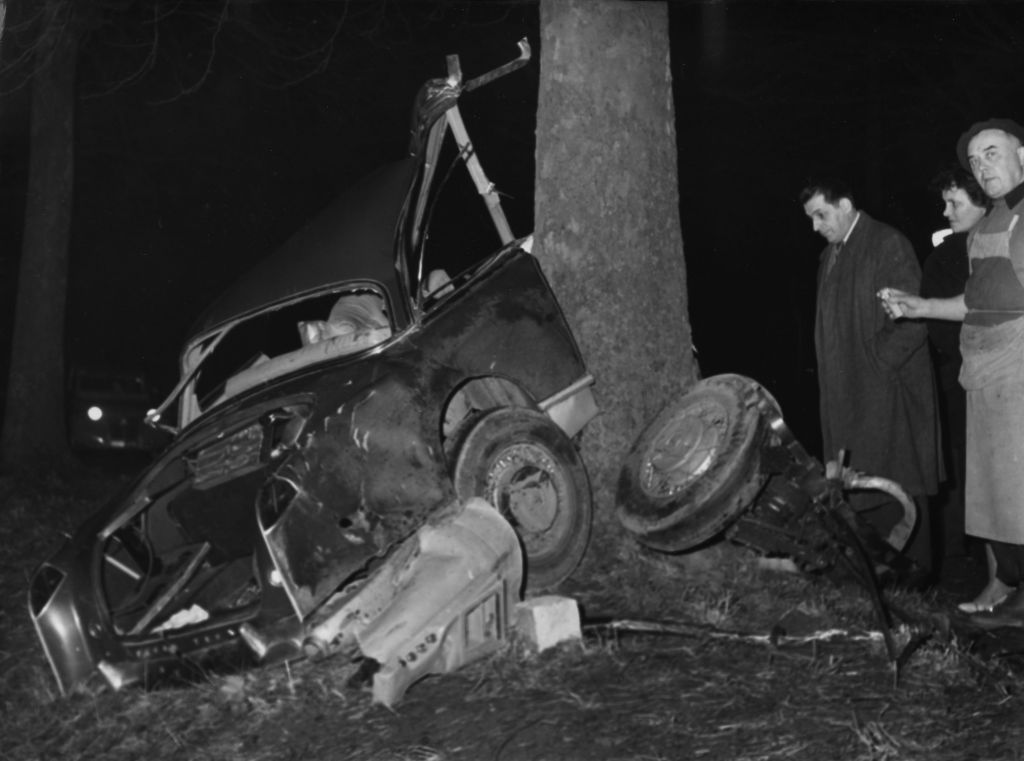
The Car Crash That Killed Albert Camus on January 4, 1960

Months before his death in an auto accident, Albert Camus wrote in his notebook words that prefigured how he was to end his life:

I don’t sleep all night, fall asleep at 3 AM, wake up at 5 AM, eat a lot, and, beneath the rain, take to the road. I don’t leave the steering wheel for eleven hours—nibbling a biscuit from time to time—and the rain doesn’t leave me either until I reach the Drôme where it lets up a bit over the heights of Nyons so that the scent of lavender comes to me, awakens me, and enlivens my heart.

Ryan Bloom, the editor of the last volume of his Notebooks, sets up the scene:

Struggling with his writing, Camus sent a letter to Catherine Sellers in which he wrote: “To work, one must deprive oneself, and die without aid. So let’s die, because I don’t want to live without working….” On December 30 he wrote a line to Maria Casarès regarding his return to Paris, which, had the line been written in one of his novels, would certainly have seemed to stretch believability: “Let’s say [Tuesday] in principle, taking into account surprises on the road….”

And it was on the road, five days after these words were written—January 4, 1960—that the dashboard clock of Michel Gallimard’s 1959 Facel Vega HK 500 stopped ticking at 1:55 PM. The clock lay in a nearby field. Fragments of the wreckage spread almost 500 feet. A tire sat alone on the scarred cement. Drizzle dotted the road. A black leather valise lay in the mud, tossed next to the tree around which the car was wrapped.

And so died one of the greatest minds of the Twentieth Century.

Tokyo Tearjerkers

Olympic Swimmer Caeleb Dressel

I enjoy watching the Olympic competitions. What I do not enjoy is the attempt by NBC to turn the competition into a soap opera. I have watched only a few segments of the competition so far, but I am thoroughly tired with the number of times I have seen Gold Medal winner Caeleb Dressel with tears in his eyes after he won the 100 meter freestyle.

Then, of course, we had to cut to his family back in Florida with some hundred maskless people jumping and hooting for joy. Granted that Caeleb may love his family, but sure don’t, and I get tired of seeing their little super spreader celebration.

What annoys me is that there seems to be a 50:50 ratio between the sports and the soap opera. Are we all such weenies that we have to put up with this schlock?

On Reading Philosophy

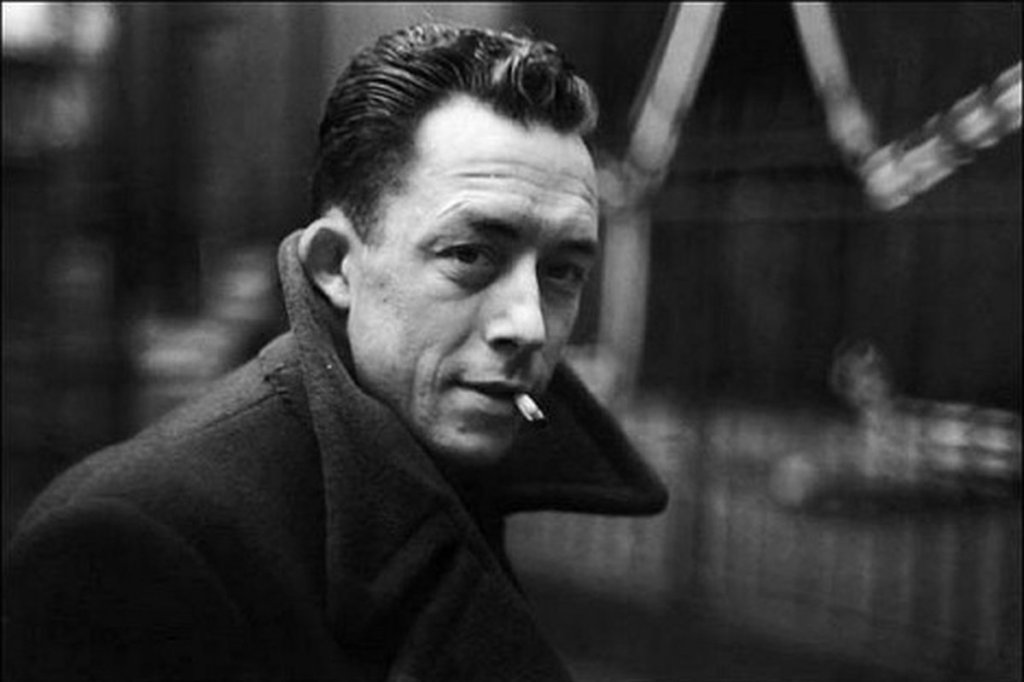
French Existentialist Writer Albert Camus (1913-1960)

Generally speaking, I have the devil’s own time trying to understand what philosophers write. The absolute worst are the German philosophers like Hegel, Heidegger, and Kant. I have difficulty even reading excerpted quotations from these writers—let alone whole paragraphs or chapters!

I have come to the conclusion that to enjoy reading most philosophers one has to be a gamer where language is concerned.

Fortunately, there are exceptions, particularly among the so-called Existentialist philosophers such as Nietzsche, Kierkegaard, Camus and (on occasion) Sartre. I am currently reading Camus’s Notebooks 1951-1959 where I find surprising, gemlike ideas expressed such as the following:

The history of mankind is the history of the myths with which it covers up reality. For two centuries, the disappearance of traditional myths has shook history as death has become without hope. And yet there is no human reality if in the end there is no acceptance of death without hope. It is the acceptance of this limit, without blind resignation, in the tension of all one’s being that coincides with balance.

I await with patience a catastrophe that is slow in coming.

According to Melville, the remora, a fish of the South Seas, swims poorly. That is why their only chance to move forward consists of attaching themselves to the back of a big fish. Then they plunge a kind of tube into the stomach of a shark, where they suck up their nourishment, and propagate without doing anything, living off the hunting and efforts of the beast. These are the Parisian mores.

Give money, or lose it. Never make it fructify, nor seek it, nor crave it.

In love, hold on to what is.

Lope de Vega, five or six times a widower. Today people die less often. The result is that we no longer need to preserve in ourselves a force of rejuvenating love, but, on the contrary, we need to extinguish it in order to elicit another force of infinite adaptation.

Criticism is to the creator what the merchant is to the producer. Thus, the commercial age sees an asphyxiating multiplication of commentators, intermediaries, between the producer and the public. Thus, it is not that we are backing creators today, it is that there are too many commentators who drown the exquisite and elusive fish in their muddy waters.

Ooh, that last one, I think, is aimed at me.

Shortly after great historical crises, one finds oneself as dissatisfied and sick as on the morning following a night of excess. But there is no aspirin for the historical hangover.

Do not curse the West. For me, I cursed it at the time of its splendor. But today, while it succumbs under the weight of its faults and its long past glory, I will not add to its weight…. Do not envy those of the East, the sacrifice of intelligence and of heart to the gods of history. History has no gods, and intelligence, enlightened b7y the heart, is the only god, under a thousand forms, who has ever been saluted in this world.

I think what makes Camus a philosopher for our time is twofold:

  • He was born and raised in Algeria.
  • His experience with the French Resistance during World War Two made him avoid the obscurantism of more supine intellectuals.