Grinchlike … But No Grinch!

I am no Ebenezer Scrooge (post the three spirits), dancing with joy, dispensing gifts, and in general comporting myself around Christmas time with uncomely glee. Today, going to lunch with Martine, I encountered scores of stressed-out drivers in the process of driving in such a way that easily merited a serious car crash. (Also, I encountered far fewer drivers who drove with courtesy and watchfulness.)

Christmas as a religious holiday gets my respect. I myself am unaffiliated with any official religion, but I can understand the significance of the Incarnation for Christians.

It’s Christmas as a secular holiday which is out of whack. You should see the frenzied shoppers trying to fit into the Culver City Costco parking lot around noon. I imagine many had to roam the lot for upwards of an hour before they found a spot. For many, this weekend is the optimal time to get those last-minute gifts.

Well, I’m not shopping for gifts this Christmas, though Martine and I did send out a number of cards—both religious and secular—to our friends and relatives.

What’s wrong about the holiday is the whole secular mythology: Santa, the Xmas tree, stockings by the fireplace, the f—ing “Elf on the Shelf,” Christmas parties, yearly attending the Nutcracker, reindeer antlers on car windows, those stupid Santa hats…. Need I go on? What we have year is a recipe for distress. It’s damn near impossible to have a perfect Christmas with all the trimmings and cancer-like accumulated practices

My Christmas, Chanukah, and Kwanzaa wish for all my readers is simple: Enjoy, but when you begin to stress, PULL BACK! It’s not worth making a nightmare out of the whole thing. Above all, survive in good spirits!

A Cheerful Heart

Franz Joseph Haydn (1732-1809) was probably the most influential musical genius of his time. He befriended the younger Wolfgang Amadeus Mozart (1756-1791)—and outlived him. He also tutored Ludwig van Beethoven (1779-1827). He is considered the Father of the Symphony as well as the Father of the String Quartet.

For much of his incredibly productive career, Haydn was the court musician of the Eszterházy family in Hungary. He composed in all 104 symphonies and 68 string quartets. Today, as I drove to do some grocery shopping, I listened to one of his early symphonies on KUSC-FM and thought to myself that here was an artist who could genuinely not only feel joy but convey it to his listeners. But then, it was Haydn who said, “Since God has given me a cheerful heart, He will forgive me for serving Him cheerfully,”

Some day I would love to get CDs of all of his symphonies: In their totality, they represent one of the most concentrated collections of artistic happiness in the history of the world. If you are feeling down some day, try listening to his work; and you will see what I mean.

Frozen Assets

When one thinks of Southern California, one does not associate it with cold weather. As it turns out—despite all the global warming—in Los Angeles the mercury has dipped into the thirties and forties (roughly 0° to 10° Celsius) overnight.

And that’s when my apartment heater decided to die … three times, no less! Over the last six weeks, Martine and I have been enduring long spells of teeth-chattering cold.

Matters have been complicated by the fact that, because we are grandfathered in at low rent due to the City of Los Angeles’s rent control ordinance, it is to the advantage of the building owners to kick our frozen carcasses into the street so that they could start charging triple the rent to someone who does not mind living across the street from a homeless encampment.

I have hopes that our 75-year-old heater will continue to work, since the weather forecast for the rest of the month seems to be for cold nights throughout. I am sure that my next gas bill will be outrageous.

This time of year is usually pretty cold, but this year since to be the iciest December in decades. Santa Claus should feel right at home.

Irrelevant, You Say?

There is a tendency, especially among the young, to view the past as irrelevant. After all, the ancient Greeks did not have smartphones; Shakespeare and his contemporaries did not have video games; and 18th century gentlemen wore powdered wigs, took snuff, and made a big show of their calves. What can we possibly learn from them?

Part of the problem is the way we teach history in our schools. The denizens of past times are not allowed to speak for themselves. If they did, we would find that they were not so very different from us in what mattered: The differences are mostly superficial.

There is a wonderful website called Laudator Temporis Acti (Praiser of Time Past) in which we can find startling glimpses into the great minds of the past. Here, for instance, is Horace in one of his satires:

Seize the path, comrade, believe me. Since all terrestrial creatures
are fated to mortality, and since there is no
escape from death for either great or small, then, good friend,
while it is permitted, live happily among pleasant surroundings;
and live ever mindful of how brief is your span.

And here is Plutarch discussing the Spartans:

When one of the elderly men said to him in his old age, inasmuch as he saw the good old customs falling into desuetude, and other mischievous practices creeping in, that for this reason everything was getting to be topsy-turvy in Sparta, Agis said humorously, “Things are then but following a logical course if that is what is happening; for when I was a boy, I used to hear from my father that everything was topsy-turvy among them; and my father said that, when he was a boy, his father had said this to him; so nobody ought to be surprised if conditions later are worse than those earlier, but rather to wonder if they grow better or remain approximately the same.”

Lately, I have enjoyed reading the journals of James Boswell, son of the Laird of Auchinleck and author the great biography of his contemporary, Dr. Samuel Johnson. As a young man in his twenties, he carouses his way through London while sucking up to the nobility to get a commission in the King’s guards. Then he goes to Holland to study law and falls in love with a beautiful young heiress named Belle de Zuylen. Like many a millennial, he is frequently depressed and uncertain about how to proceed.

Belle de Zuylen

Then there is that master of wisecracks, Lucian of Samosata (circa 125-180), who scoffs at the gods and in every way looks as if he were about to launch into a Saturday Night Live skit:

They see nothing indecent in sexual intercourse, whether heterosexual or homosexual, and indulge in it quite openly, in full view of everyone. The only exception was Socrates, who was always swearing that his relations with young men were purely Platonic, but nobody believed him for a moment, and Hyacinthus and Narcissus gave first-hand evidence to the contrary.

When I go searching into the minds of men and women who lived in the past, I am constantly realizing that they are my contemporaries in every way except for accidentals that don’t much matter.

The Path to the Milky Way Leads Through Los Angeles

I am completely entranced by the poetry of Joy Harjo, a Muscogee Indian who is also Poet Laureate of the United States. I found the following poem in her collection A Map to the Next World. By the way, Okmulgee is the Oklahoma city that is the center of the Muscogee nation.

The Path to the Milky Way Leads Through Los Angeles

There are strangers above me, below me and all around me and we are all strange in this place of recent invention
This city named for angels appears naked and stripped of anything resembling the shaking of turtle shells, the songs of human voices on a summer night outside Okmulgee.
Yet, it’s perpetually summer here, and beautiful. The shimmer of gods is easier to perceive at sunrise or dusk
when those who remember us here in the illusion of the marketplace
turn toward the changing of the sun and say our names.
We matter to somebody,
We must matter to the strange god who imagines us as we revolve together in the dark sky on the path to the Milky Way,
We can’t easily see that starry road from the perspective of the crossing of boulevards, can’t hear it in the whine of civilization or taste the minerals of planets in hamburgers.
But we can buy a map here of the stars’ homes, dial a tone for dangerous love, choose from several brands of water or a hiss of oxygen for gentle rejuvenation.
Everyone knows you can’t buy love but you can still sell your soul for less than a song to a stranger who will sell it to someone else for a profit
until you’re owned by a company of strangers
in the city of the strange and getting stranger,
I’d rather understand how to sing from a crow
who was never good at singing or much of anything
but finding gold in the trash of humans.
So what are we doing here I ask the crow parading on the ledge of falling that hangs over this precarious city?
Crow just laughs and says wait, wait and see and I am waiting and not seeing anything, not just yet.
But like crow I collect the shine of anything beautiful I can find.

The Alliance

What makes you YOU? Is it a single thing? or an alliance of upwards of 30 trillion things working together? According to an article in the April 2021 issue of Scientific American:

The human body replaces its own cells regularly. Scientists at the Weizmann Institute of Science in Rehovot, Israel, have finally pinned down the speed and extent of this “turnover.” About a third of our body mass is fluid outside of our cells, such as plasma, plus solids, such as the calcium scaffolding of bones. The remaining two thirds is made up of roughly 30 trillion human cells. About 72 percent of those, by mass, are fat and muscle, which last an average of 12 to 50 years, respectively. But we have far more, tiny cells in our blood, which live only three to 120 days, and lining our gut, which typically live less than a week. Those two groups therefore make up the giant majority of the turnover. About 330 billion cells are replaced daily, equivalent to about 1 percent of all our cells. In 80 to 100 days, 30 trillion will have replenished—the equivalent of a new you.

In a strange way, every human being, every animal, every plant is an alliance of micro particles. In my lifetime, I have given birth to and sloughed off untold trillions of tiny pieces of me. Yet I still see myself as a unified being with certain likes and dislikes, certain patterns of thought.

When it comes time for me to die, it’s like Better.Com firing 900 employees on a Zoom call. Except some 30 trillion parts of me would be abruptly cashiered—without benefit of unemployment compensation. I would like to think that my mental processes would continue somehow, but that’s getting into highly disputed territory.

So far my alliance has held together pretty well. The whole coronavirus situation has been like an invasive plant or insect species. Undoubtedly, I have ingested perhaps thousands, perhaps even millions of Covid-19 viruses, but never enough to disturb the majority population of the alliance, which, by the way, itself includes billions of non-threatening viruses of various sorts.

When you look at yourself as an agglomeration of tiny living things, it makes you feel humble. And it makes you laugh at a lot of the things that make people worry.

I feel good about myself because, as of now anyway, my 30 trillion parts are a kind of parliamentary democracy in which all the components still work together, peacefully for the most part.

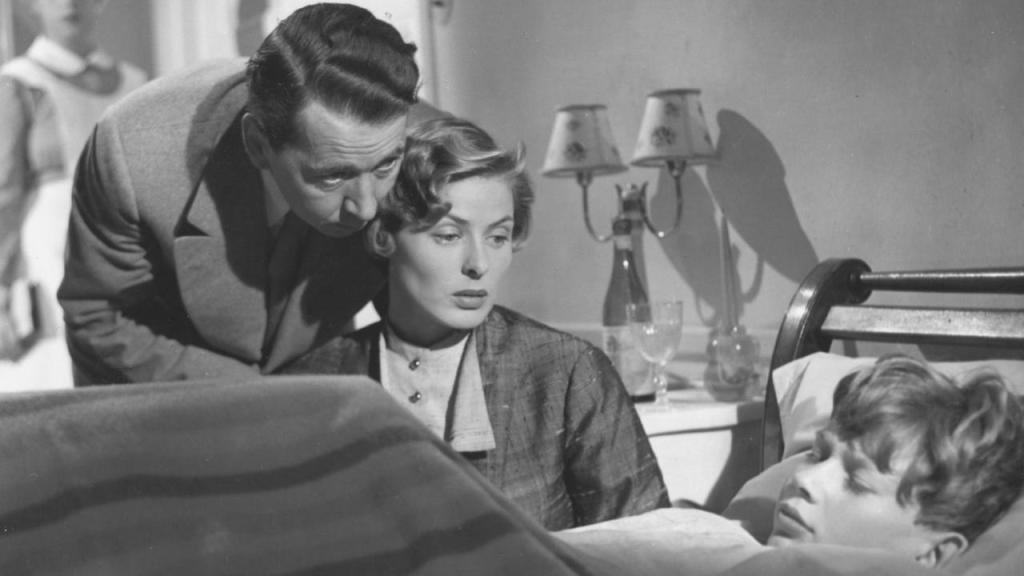
Favorite Films: Europa 51

Of the greatest filmmakers, the one I know the least about is Roberto Rossellini. Today, I had a chance to view his Europa 51 (1952) and found it to be a masterpiece. For some reason, the great postwar Italian films (dubbed Neorealism) have, for some reason, faded from view. Included were films by Federico Fellini, Vittorio De Sica, Luchino Visconti, Giuseppe De Santis, and Roberto Rossellini.

The films I have seen by Rossellini dealt with the fragility of life in Italy as part of the aftermath of the Second World War. And, when you think of it, the problems for Italy really began in the early 1920s with the rise of Fascism and Benito Mussolini. By 1945, it was an exhausted nation.

In Europa 51, the Girards have a sullen twelve-year-old son who, to get attention, falls down a flight of stairs during a party. He seems to be recovering, but suddenly dies from a blood clot. The mother, Irene (Ingrid Bergman) suddenly finds her life at home as totally unfulfilling. With urging from a communist relative, she begins to try to help the miserable slum dwellers of Rome, one of whom is played by Giulietta Masina of La Strada fame.

As her marriage begins to fall apart, she gets committed to a mental institution. Abandoned by her upper middle class family, she is revered by the poor families she has helped.

Whereas in the United States, the postwar period saw growth and prosperity, much of Europe lay in ruins. Beginning with Rome, Open City (1945), Rossellini concentrated on the devastation with some films like Paisan (1946), Germany, Year Zero (1948), and Stromboli (1950). I think these films need to be seen, especially as we have developed a whole basket of myths surrounding World War Two and “The Greatest Generation” and other such rot.

If you were to read Tony Judt’s prizewinning history, Postwar: A History of Europe Since 1945, you would find that he begins with the horrors of the immediate postwar years in Europe. I was born in 1945, and I remember my mother sending packages to our relatives in Hungary, which were under a Stalinist Communist dictator in the early 1950s. When I visited Budapest in 1945, I saw a city that still had the bullet holes of not only the Hungarian Revolution of 1956, but the Nazi siege of the city at the end of the war.

Acedia

If the term is unfamiliar to you, you can substitute the word boredom for it. When I first came to Southern California st the age of twenty-one, I was frequently bored. For one thing, I didn’t drive until a couple decades later. I didn’t even have a television set. I certainly didn’t have a smart phone, as they were not invented yet—for which I am eternally grateful.

If the coronavirus quarantine were to happen in the late 1960s, I would have been in deep trouble. I would have been all alone and sunk deep into acedia, not to mention depression. As it turned out, in 2020 I had a three-part solution to the quarantine:

  1. Do a ton of reading, say something around 15-16 books a month.
  2. View a lot of classic films, mostly on Turner Classic Movies (TCM).
  3. Expand my cooking skills, including more complicated Hungarian dishes.

As a result, the last two years have not been a waste for me. My only regret was that, since the quarantine was global, I could not travel without some risk.

For me, travel is an opportunity for sustained research, including books about my destination and some exposure to the films and music. Not to worry, I am reading at least two travel books a month for when the world opens up to safe travel.

A Hyphenated American

Although I was born in the United States, I prefer to think of myself as a hyphenated American, specifically a Hungarian-American. My native language is Magyar (Hungarian). I did not speak any amount of English until I was six or seven years old. Something happens when you grow up as a bi-lingual person: You find yourself not quite so committed to the land of your birth.

Let me be more direct: I find myself intensely disliking the political and religious beliefs of approximately half of our population, such as the young idiots in the above photo. At present, I am not likely to fly on any American air carriers because most of their passengers are Americans, and I don’t want to be involved in any violence in the air because some yahoo refuses to wear a mask as required by law. I feel safer on a foreign carrier.

When some stranger addresses me in public, I invariably reply to them in Hungarian. The last instance was on a commuter train on which two African-Americans were arguing about Covid-19, and one of them solicited my opinion. I politely told them, in Magyar, that I didn’t (really: wouldn’t) speak their language.

I typically do not celebrate national holidays because I find them more productive of stress than of enjoyment, particularly Christmas, which has evolved into some sort of national potlatch ritual.

Perhaps these responses of mine are the result of a growing lack of faith in my fellow Americans. Particularly white males, though the Republican Party has given us some really monstrous travesties of women.

Does that mean I am withdrawing in any way? Not really. I vote in every election. And I try to remain close to my friends. I’ll stick to being a Hungarian-American, even though the American side of things is going to hell in a hand basket.

A Sack of Cobwebs

Robert Bontine Cunninghame Graham (1852-1936) was a world traveler par excellence, a splendid horseman, a controversial member of Parliament for North West Lanarkshire, and one of a handful of super-great travel writers. I am currently reading his Mogreb-el-Acksa about a trip to the forbidden city of Tarudant in Southern Morocco. He never made it to his destination, but his descriptions of his attempt are world-class literature. The following single long sentence is taken from his Preface to the book.

So I apologise for lack of analysis, neglect to dive into the supposititious motives which influence but ill-attested acts, and mostly for myself for having come before the public with the history of a failure to accomplish what I tried; and having brought together a sack of cobwebs, a pack of gossamers, a bale of thistle-down, dragon-flies’ wings, of Oriental gossip as to byegone facts, of old-world recollections, of new-world practices half understood; lore about horses’ colours, of tales of men who never bother much to think, but chiefly act, carving their lives out, where still space is left in which to carve, and acting thus so inconsiderately whilst there still remain so many stones unbroken, social problems to be solved, and the unpuncturable pneumatic tyre not yet found out.