
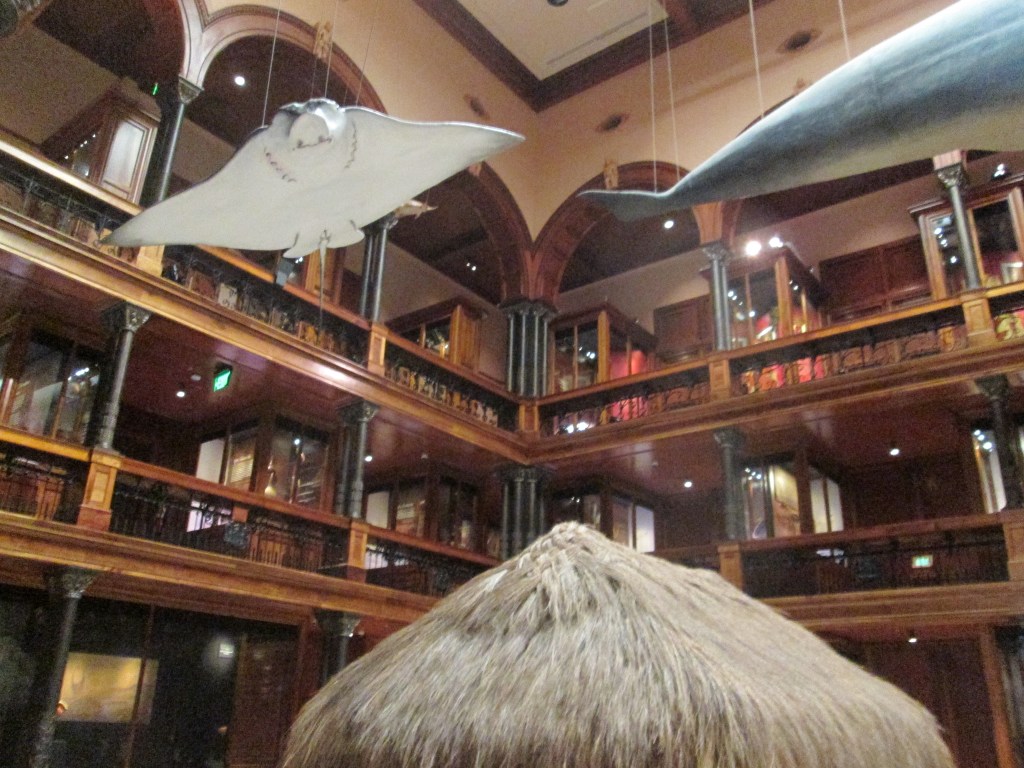
The Bishop Museum

The Bernice Pauahi Bishop Museum in Kalihi

I do not believe that most people traveling to Hawaii care very much for its history and culture. All they really care about is fun on the beach and copious amounts of booze (and coffee: I have seen lines of almost 100 tourists at Waikiki’s International Marketplace waiting for their morning brew from Kona).

Consequently, mention the Bishop Museum to most tourists, and all you’ll get in response is a look of noncomprehension. While we were there, we saw no tourist buses and no tour groups. In fact, there wasn’t even a free handout brochure with a map of the extensive facilities. In fact, I suspect that the Museum is experiencing hard times.

That is a pity because the Bishop Museum is the place to be if you want to understand Hawaii, the land and its people. To that, I would add all of Polynesia. Particularly imposing is the three story Hawaii Hall (illustrated above) with its outstanding exhibits.
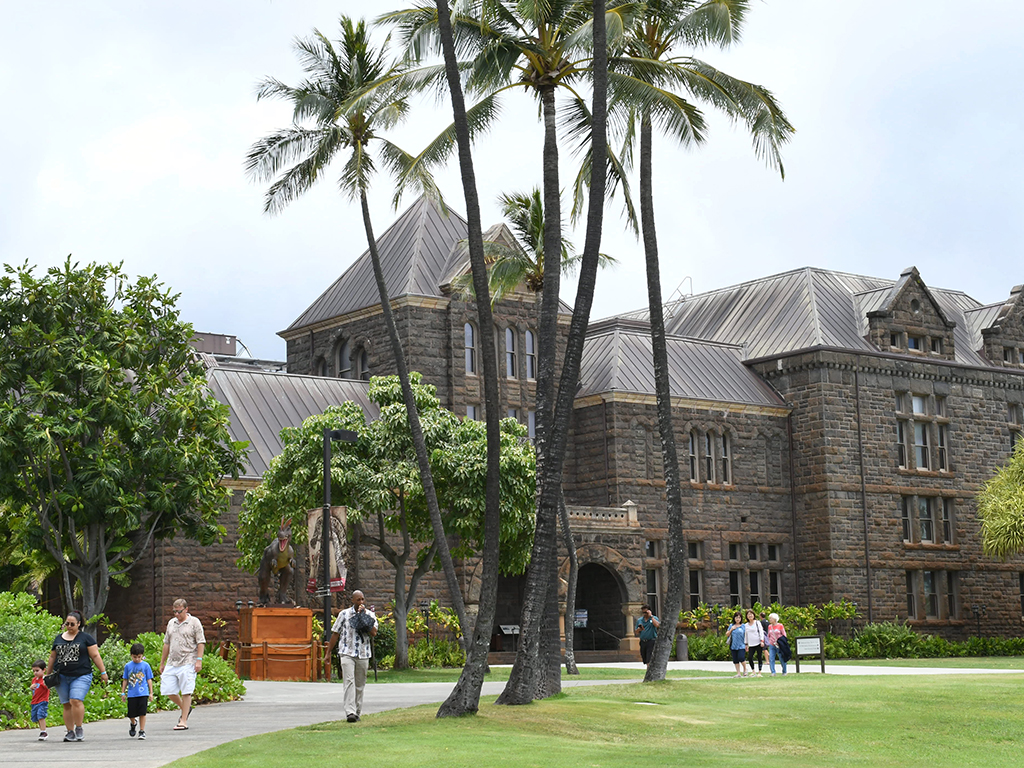
One of the reasons for most tourists not knowing about the Bishop Museum is its 19th century Victorian campus, which make it look (shudder) outdated. And yet, its exhibits are anything but!

I think that if tourists should ever encounter a rainy day on the island, they make a beeline for the Bishop. They will very rapidly get a better idea of where they have landed on that long flight from the mainland. Even on a hot and humid day, such as on the Wednesday we were there, it is a worthy destination.

Martine and the Giant Bunny

Martine and Friend at the Hawaii State Art Museum

There it was, occupying its own gallery and lying on its side. A giant inflated pink and white bunny. We were at the Hawaii State Art Museum, right across the street from the Iolani Palace. Actually, we had come to eat at the museum’s much heralded cafe, Artizen by MW. Unaccountably, it was closed that day.

The museum itself is interesting. The budget for the State of Hawaii sets aside a percentage to be used for promoting the arts. One result is the Hawaii State Art Museum, which doesn’t charge admission. Included in its galleries were works of art protesting state projects such as the construction of the H3 limited access highway from west Honolulu to the windward side of O’ahu. I can just imagine the stink that public sponsorship of protest art would cause in California.

In any case, the giant bunny was friendly, and Martine looked happy to have her picture taken with him.

Taking the Bus

Route #2 Took Us to Most of Our Destinations

As I planned for our trip to Hawaii, I had a bad feeling about the cost of renting and parking a car during our trip. I know that Americans as a rule tend to avoid public transportation like the plague, but Martine and I do not subscribe to that feeling. I figured that it would cost us well over $100 a day to rent a car, especially with liability and collision insurance. Added to that, most hotels charged between $25 and $50 a day to park the car overnight. Then add more bucks for gas and daytime parking. In no time at all, the cost would exceed $1,000.

Martine and I adopted a solution that cost a grand total of $30 for our transportation on O’ahu for the entire vacation!

How was that possible? First of all, both of us are seniors. Secondly, to use a Hawaiian pidgin term, we decided to be akamai (smart) about saving money. On our first day in Honolulu, we took the #2 bus from Waikiki to the Kalihi Transit Center at the end of the line and got two senior HOLO cards. They were ready in a few minutes, and I forked over the $30 in cash. And that was that!

We would simply tap our HOLO card on a special reader as we boarded the the bus and take our seats. The buses were comfortable and air-conditioned. At the Transit center, we had picked up all the schedules we needed, and the rest was pure gravy.

Are you on the mainland now and doing research for a trip? Go to TheBus.Org for schedules and route maps as well as more information on the different kinds of HOLO cards.