Obliscence

The most interesting exhibit I saw yesterday at the Museum of Jurassic Technology in Culver City was about human memory. It honored Geoffrey Sonnabend who, in 1946, wrote a study entitled Obliscence: Theories of Forgetting and the Problem of Matter.

Sonnabend’s thesis was that memory is an illusion. The inevitable outcome of all experience is not remembering, but forgetting:

We, amnesiacs all, condemned to live in an eternally fleeting present, have created the most elaborate of human constructions, memory, to buffer ourselves against the intolerable knowledge of the irreversible passage of time and the irretrievability of its moments and events.

According to a summary by Valentine Worth available in the museum’s gift shop:

Sonnabend did not attempt to deny that the experience of memory existed. However, his entire body of work was predicated on the idea that what we experience as memories are in fact confabulations—artificial constructions of our own design built around sterile particles of retained experience which we attempt to make live again by infusions of imagination, much as the blacks and whites of old photographs are enhanced by the addition of colors or tints in an attempt to add life to a frozen moment.

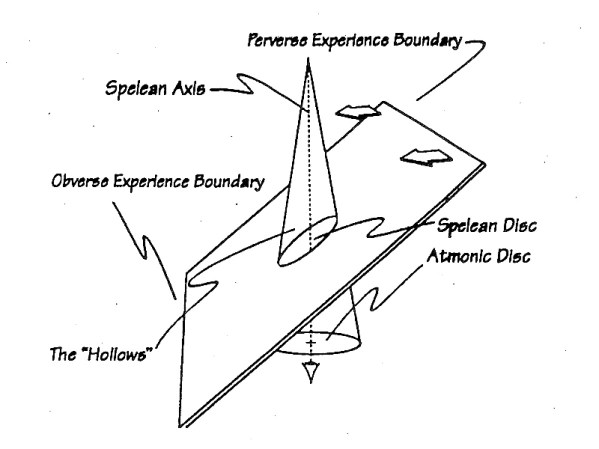
It seems to make sense. I don’t know if I would read all three volumes of Sonnabend’s Obliscence, but I can see how many of my own memories have been encrusted by confabulations just as an old shipwreck is encrusted by layers of calcium carbonate and other concretions. Here is an illustration from his work that shows how complicated it gets:
Visiting the Jurassic

The Museum of Jurassic Technology in Culver City, California

I spent several hours this afternoon visiting a storefront in Culver City, right near the corner of Bagley Avenue and Venice Boulevard, that goes by the name the Museum of Jurassic Technology. Why Jurassic? Does it contain only exhibits relating to the earth between 201 and 145 million years ago? Was there any technology to be found during that period? Were there even any humans extant during that period?

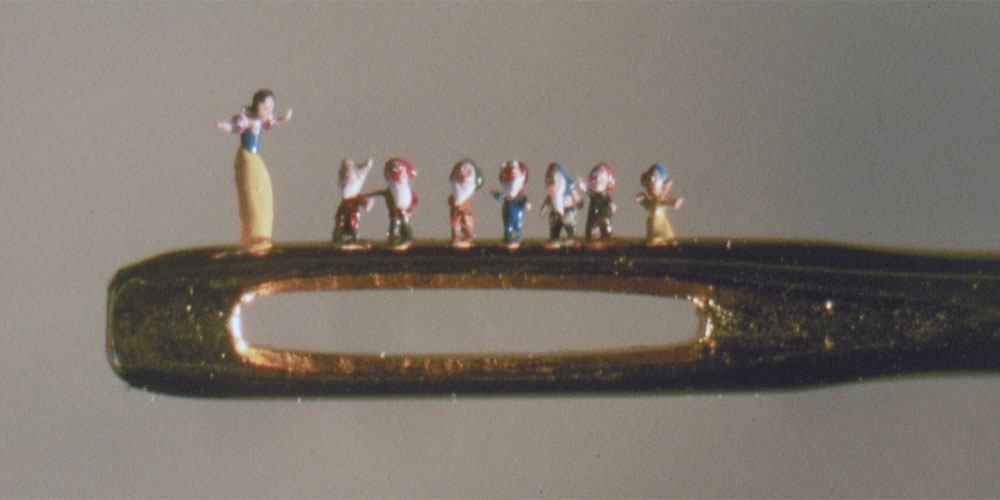
Whatever may be implied by the name, it was a real museum in that it was a collection of wonders, concentrating on smaller exhibits given the size of the property. The St. Patrick’s Day crowd consisted almost exclusively of millennials, who wandered the dark and twisting corridors of the museum peering at such exhibits as miniatures by an Armenian artist named Hagop Sandaldjian, such as this representation of Snow White and the Seven Dwarves atop the horizontal eye of a needle:

There was an unusual collection of objects gathered from various Los Angeles Mobile Home Parks, together with an attempt to account for a philosophy of trailer living as a form of reaction to the expanding universe. The museum website quotes an Estonian historian named Ants Viires on the subject:

[T]ime ravages everything, our person, our experience, our material world. In the end everything will be lost. In the end there is only the darkness. …and despite the apparent fullness and richness of our lives there is, deposited at the core of each of us, a seed of this total loss of this inevitable and ultimate darkness.

Another miniaturist on display is the work of Henry Dalton (1829-1911) consisting of images created from diatoms and the scales of butterfly wings, such as the following:

To view these works, it was necessary to view them through a microscope. There were about eight of them in a row, each pointed at a separate microminiature.

On the second floor of the museum is a little courtyard where tea and cookies are served amid the cooing of doves and the gurgling of a small fountain.

It was a fun place to visit. Not all the exhibits worked, but then that is true pretty much everywhere. I walked out of the museum with a sense of wonderment that was quickly dispelled by the rush hour traffic on Venice Boulevard.

At the Supermarket

Infinite Variety: With/Without Sugar, Salt, Glucose, Etc.

There is nothing like a visit to the supermarket to demonstrate that not all is well with the Republic. It seems that one could buy tomato juice with or without salt or hot chile peppers. Of course, one could buy plain tomato juice, add the salt oneself and even add a few drops of my favorite Marie Sharp’s Chile Habanero sauce. And don’t get me started on milk. If you’re lactose intolerant, you could drink milk made from almonds, oats, soybeans, and (probably) kale. There is so much variety on the supermarket shelves that one is often hard pressed to find what one is looking for.

In case you didn’t know, there are firms which arrange the products on the shelf. Manufacturers pay to be at eye level. If you’re a cheapster selling a basic product, you will be stuck on the lowest shelf, which you cannot examine safely without getting a shopping cart up your backside.

Today, I was looking for a product rarely purchased by most Americans: whole granulation kasha, or buckwheat groats. I like preparing it with egg, onions, and bow-tie noodles as kasha varnishkes, a Jewish dish that Martine and I like. But there were zero varieties of kasha on the shelves, and probably several hundred varieties of rice, mostly not deserving of the shelf space they got.

So, instead, I got a can of clams and some linguine, with which I prepared today and (hopefully) tomorrow. Martine has told me, in no uncertain terms, that she doesn’t want linguine with clams; so she will shift for herself tomorrow. (Today, she finished off he Indian kima dish I prepared on Monday.) That is her prerogative: I remember my youth, when I was the pickiest kid in Cleveland.

Happy Dance

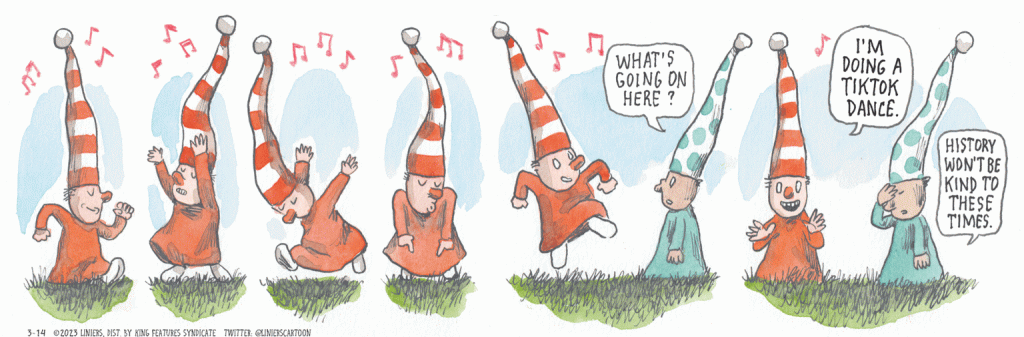
Macanudo Comic Strip for Today

Turn that frown upside-down.

Well, that works, doesn’t it? All you have to do is crack a smile, do a happy dance, and you’re guaranteed to be happy, no?

Okay, I’ll believe that works in the case of Charles Schulz’s Snoopy, but it’s a little different for humans. Happiness is transitory, but unhappiness tends to persist. Of the Four Noble Truths of Buddhism, the first is about suffering:

The First Noble Truth is the idea that everyone suffers and that suffering is part of the world. Buddhists believe in the cycle of samsara, which is the cycle of birth, life, death and rebirth. This means that people will experience suffering many times over. All of the things a person goes through in life cause suffering and they cannot do anything about it. Instead, they have to accept that it is there. People may use temporary solutions to end suffering, such as doing something they enjoy. However, this does not last forever and the suffering can come back when the enjoyment ends. Buddhists want to work to try to stop suffering. However, the first step is to acknowledge that there is suffering – it happens and it exists.

That’s one of the main reasons I get this smirk on my face when someone does a Happy Dance on TV because his trash is being picked up, his or her skin is free from eczema, or it’s Friday and TGIF.

Is that because I am an unhappy person? Not at all. It’s just that putting on a happy face does not mean you are happy. It just means that you are employing magical thinking to avoid acknowledging the reality of suffering in our lives.

If you absolutely must do a Happy Dance, do it like Snoopy: Realize that life is what it is, and your little dance interlude won’t change that.

Celebrating the Oscars—Not!

Tomorrow, I will, as usual, NOT watch the Oscars. That should make it about 50 consecutive years of non-participation in the annual awards show. I have nothing against Host Jimmy Kimmel whose weekday show I occasionally watch. Instead, I find that the Academy of Motion Pictures and I disagree most of the time.

If I were a member of the Academy, what films would I have chosen? Actually, I wrote a series of posts about that very subject about ten years ago:

After 1980, I find there are too few American films to merit my attention. In fact, last year I have seen a grand total of two films in theaters—and one of them was a Roger Corman title from the 1960s. The other film was Bullet Train, which I thought was pretty wretched.

Behind a Mask

Mexican Folk Art at the Museo de Casa Montejo in Mérida, Yucatán

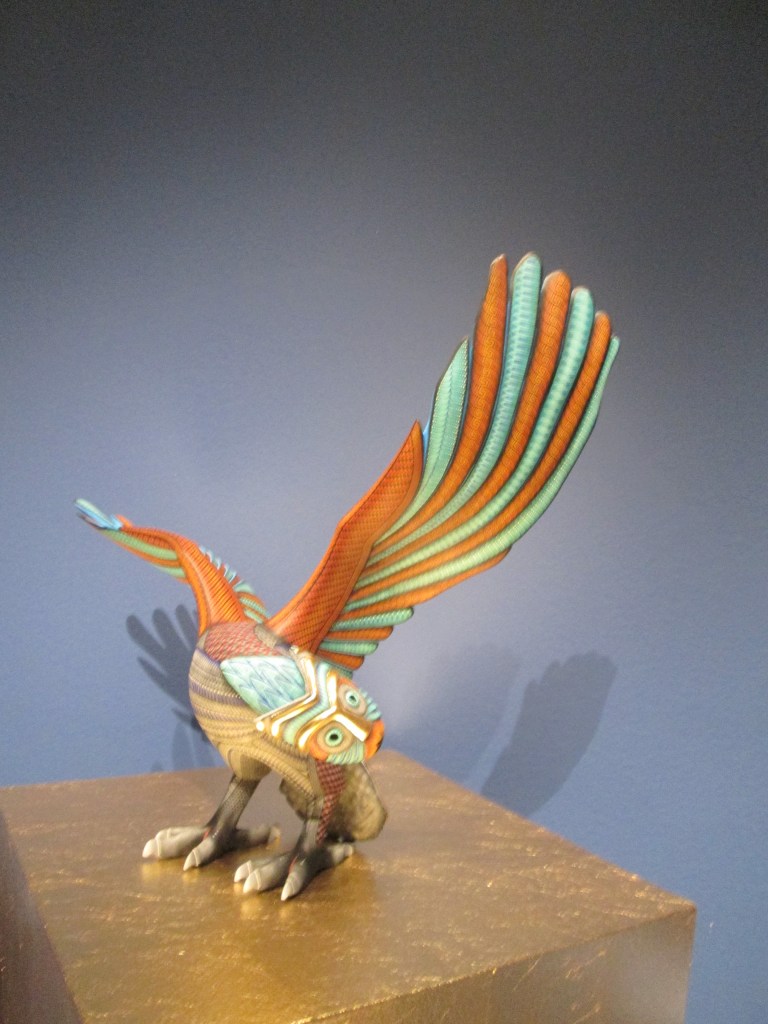
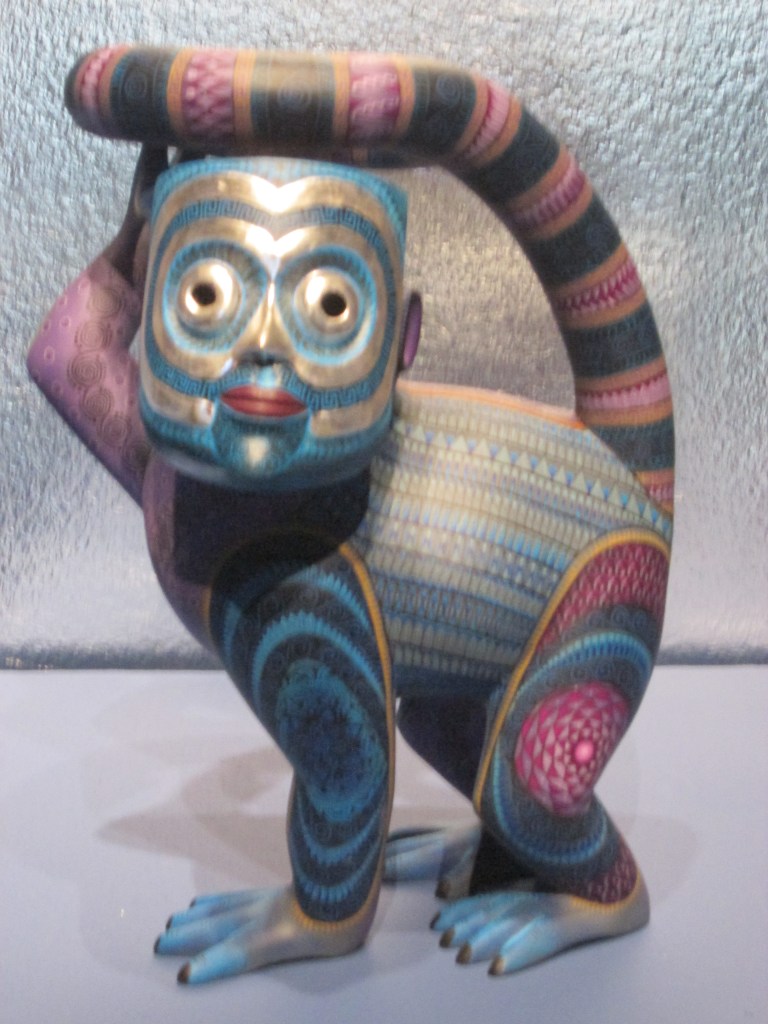
Right on the Zócalo in Mérida is the Casa Montejo, which belonged to the family of conquistadores who conquered Yucatán for Spain. Today, the building is the main local branch of Banamex. Because the bank is a major supporter of traditional Mexican folk art, it maintains a free gallery on the premises. When I visited there in January 2020, there was an exhibit of folk art entitled “Detrás de una Máscara” (“Behind a Mask”) by the husband and wife team of Jacobo and María Ángeles.

Below are some of the exhibits I saw at that show.

Above the main entrance to the gallery is an image of a conquistador crushing the bearded heads of Spain’s enemies. Since the Maya are not known for sporting beards, it does not literally refer to the conquest of the Maya except indirectly. Still, it’s a powerful image:

Conquistador Treading on Heads of the Enemy

Bad Faith, Russian Style

Wagner Group Mercenary in Eastern Ukraine

It looks like there’s plenty of instances of bad faith to go around. We have been hearing that the Wagner Group (Группа Вагнера) has been supplementing the Russian army in the Ukraine with its own conscripts, mostly recruited from Russian convicts serving time for crimes. Vladimir Putin probably figures that when his “Private Military Company” (PMC) gets ripped apart by the Ukrainian army, no one will shed any tears.

In the news today the head of the Wagner Group, Yevgeny Prigozhin, claims he has been “cut off” from ammunition by Putin. In fact, he claims that Putin now refuses to take his phone calls. I guess his force, which once numbered 50,000 fighters, is now considered expendable.

This is a significant development. There has been considerable friction between the Wagner forces and the regular Russian army. Does that mean that Vlady will now risk angering his supporters by sending their sons home in a box? That would not look good for him, even if the Russian man in the street claims to support him—at least in public. But what does that say about what they think of Putin in the privacy of their homes?

Bad Faith

Fox News Commentator Tucker Carlson

As if I didn’t have sufficient reason to loathe and distrust Fox News, it appears that many of the right-leaning commentators on the channel continue to back Trump even though they dislike him. In a story appearing on the CNN website, the following appears:

Carlson “passionately” hates Trump: In a number of private text messages, Carlson was harshly critical of Trump. In one November 2020 exchange, Carlson said Trump’s decision to snub Joe Biden’s inauguration was “so destructive.” Carlson added that Trump‘s post-election behavior was “disgusting” and that he was “trying to look away.” In another text message conversation, two days before the January 6 attack, Carlson said, “We are very, very close to being able to ignore Trump most nights. I truly can’t wait.” Carlson added of Trump, “I hate him passionately.” The Fox host said of the Trump presidency, “That’s the last four years. We’re all pretending we’ve got a lot to show for it, because admitting what a disaster it’s been is too tough to digest. But come on. There isn’t really an upside to Trump.”

And it isn’t just Carlson who has been acting in bad faith by pretending to back the Trump 2020 Election barrage of lies: Other names of Carlson’s colleagues appearing in the Dominion Voting Systems’ suit against Fox News are Sean Hannity, Laura Ingraham, and Rupert Murdoch himself. All are on legal record as disbelieving Trump’s election lies yet appearing to back them night after night on the news.

It takes a special kind of person—one with zero moral compass—to be so dedicated to promoting so diligently false news in which they themselves do not believe.

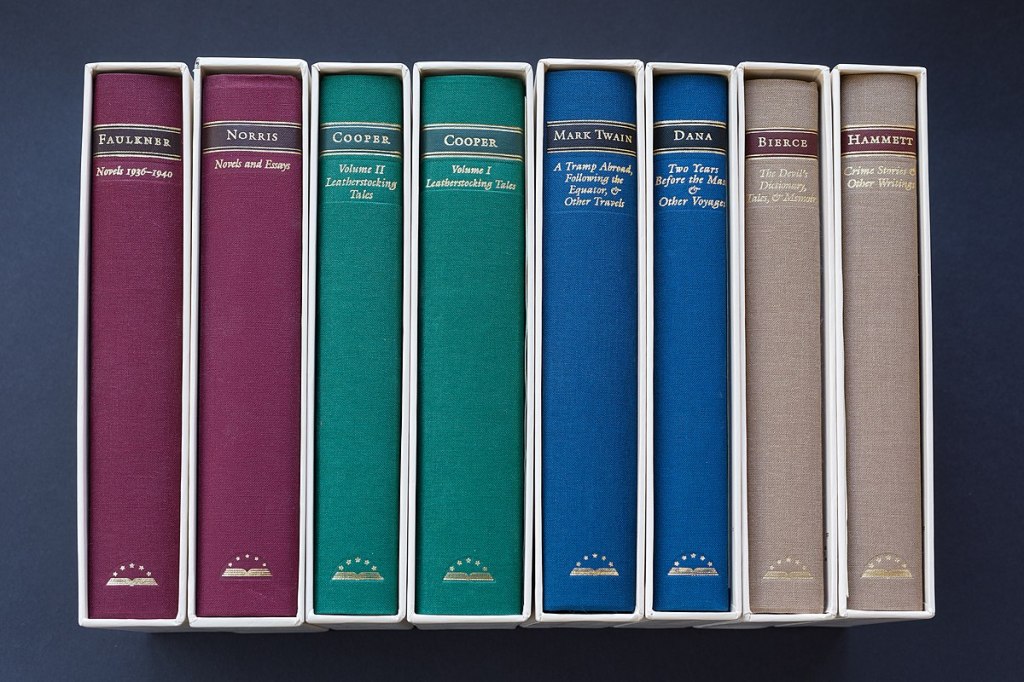
A Home for American Literature

Selected Library of America Volumes

Some forty years ago, I visited my friend Mike Prendergast and saw some intriguing books on his shelf. They were early volumes published by the Library of America. They were slipcased hardbound volumes averaging 800-1000 pages each with authoritative editions of American authors such as Nathaniel Hawthorne, Edgar Allan Poe, Benjamin Franklin, and Herman Melville. The attempt was to do for the United States what the Pléiade editions did for France.

I wasted no time in contacting the L of A, and in no time at all I started receiving all the volumes they published. As the publisher branched out more, I had to cut back considerably. Today, I have more than 200 volumes containing the works of William Faulkner, Mark Twain, Henry James, and scores of other authors.

For a while, I started to look down on American literature and concentrate my reading efforts on European authors. I now realize that was short-sighted, so I started to dig into some of the volumes on my shelves. Among the works I discovered were:

  • Dawn Powell (The Locusts Have No King and Turn, Magic Wheel)
  • Kenneth Fearing (The Big Clock)
  • William Lindsay Gresham (Nightmare Alley)
  • Shirley Jackson (The Haunting of Hill House and We Have Always Lived in the Castle)
  • Jack Kerouac (The Subterraneans)
  • Henry David Thoreau (A Week on the Concord and Merrimack Rivers and The Maine Woods)
  • William Faulkner (Soldier’s Pay, Mosquitoes, and A Fable)
  • Mark Twain (Following the Equator)

One of my long-term projects is reading all the published works of Joan Didion in order, which was made easier by the L of A publishing her novels and essays in two volumes (The 1960s & 1970s and The 1980s & 1990s). I have no doubt that her later works will appear in a volume to be published.

I am also thinking of reading all of Henry James’s shorter works, including some of the novels I have not yet read, such as The Awkward Age and Wings of the Dove.

There are hundreds of treasures to be found in the Library of America. I can only hope to live long enough to do them justice.

Useful Words: Hiraeth

Mount Snowdon in North Wales

I ran across the word in a review in the Times Literary Supplement (TLS). Hiraeth is a Welsh term meaning a longing for something that can’t be recovered. Like, for instance, one’s youth; the ten-year-old ball point pen I lost at the Los Angeles Central Library; my friends who have passed on; my 1997 Nissan Pathfinder that was declared totaled by the insurance company for a damaged passenger door; and my first love.

There is something inexpressibly lyrical about certain terms in the Welsh and Anglo-Saxon languages. The following snippet comes from a lament for Hywel ab Owein, a prince of North Wales:

Since Hywel is gone, who bore battle gladly, by whom we used to stand, we are all avowedly lost, and the host of Heaven is the fairer.

Come what may of wealth from land domain, yet this world is a deceptive dwelling-place; with a spear Hywel the Tall, the hawk of war, was pierced.