It looks like there’s plenty of instances of bad faith to go around. We have been hearing that the Wagner Group (Группа Вагнера) has been supplementing the Russian army in the Ukraine with its own conscripts, mostly recruited from Russian convicts serving time for crimes. Vladimir Putin probably figures that when his “Private Military Company” (PMC) gets ripped apart by the Ukrainian army, no one will shed any tears.
In the news today the head of the Wagner Group, Yevgeny Prigozhin, claims he has been “cut off” from ammunition by Putin. In fact, he claims that Putin now refuses to take his phone calls. I guess his force, which once numbered 50,000 fighters, is now considered expendable.
This is a significant development. There has been considerable friction between the Wagner forces and the regular Russian army. Does that mean that Vlady will now risk angering his supporters by sending their sons home in a box? That would not look good for him, even if the Russian man in the street claims to support him—at least in public. But what does that say about what they think of Putin in the privacy of their homes?
As if I didn’t have sufficient reason to loathe and distrust Fox News, it appears that many of the right-leaning commentators on the channel continue to back Trump even though they dislike him. In a story appearing on the CNN website, the following appears:
Carlson “passionately” hates Trump: In a number of private text messages, Carlson was harshly critical of Trump. In one November 2020 exchange, Carlson said Trump’s decision to snub Joe Biden’s inauguration was “so destructive.” Carlson added that Trump‘s post-election behavior was “disgusting” and that he was “trying to look away.” In another text message conversation, two days before the January 6 attack, Carlson said, “We are very, very close to being able to ignore Trump most nights. I truly can’t wait.” Carlson added of Trump, “I hate him passionately.” The Fox host said of the Trump presidency, “That’s the last four years. We’re all pretending we’ve got a lot to show for it, because admitting what a disaster it’s been is too tough to digest. But come on. There isn’t really an upside to Trump.”
And it isn’t just Carlson who has been acting in bad faith by pretending to back the Trump 2020 Election barrage of lies: Other names of Carlson’s colleagues appearing in the Dominion Voting Systems’ suit against Fox News are Sean Hannity, Laura Ingraham, and Rupert Murdoch himself. All are on legal record as disbelieving Trump’s election lies yet appearing to back them night after night on the news.
It takes a special kind of person—one with zero moral compass—to be so dedicated to promoting so diligently false news in which they themselves do not believe.
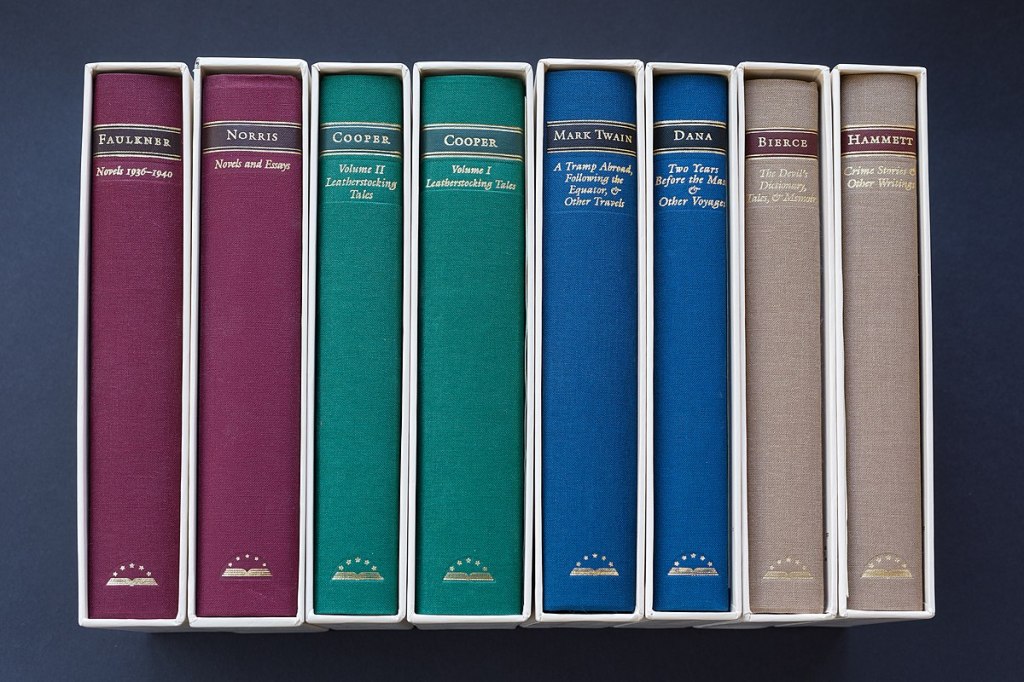
Some forty years ago, I visited my friend Mike Prendergast and saw some intriguing books on his shelf. They were early volumes published by the Library of America. They were slipcased hardbound volumes averaging 800-1000 pages each with authoritative editions of American authors such as Nathaniel Hawthorne, Edgar Allan Poe, Benjamin Franklin, and Herman Melville. The attempt was to do for the United States what the Pléiade editions did for France.
I wasted no time in contacting the L of A, and in no time at all I started receiving all the volumes they published. As the publisher branched out more, I had to cut back considerably. Today, I have more than 200 volumes containing the works of William Faulkner, Mark Twain, Henry James, and scores of other authors.
For a while, I started to look down on American literature and concentrate my reading efforts on European authors. I now realize that was short-sighted, so I started to dig into some of the volumes on my shelves. Among the works I discovered were:
Dawn Powell (The Locusts Have No King and Turn, Magic Wheel)
Kenneth Fearing (The Big Clock)
William Lindsay Gresham (Nightmare Alley)
Shirley Jackson (The Haunting of Hill House and We Have Always Lived in the Castle)
Jack Kerouac (The Subterraneans)
Henry David Thoreau (A Week on the Concord and Merrimack Rivers and The Maine Woods)
William Faulkner (Soldier’s Pay, Mosquitoes, and A Fable)
Mark Twain (Following the Equator)
One of my long-term projects is reading all the published works of Joan Didion in order, which was made easier by the L of A publishing her novels and essays in two volumes (The 1960s & 1970s and The 1980s & 1990s). I have no doubt that her later works will appear in a volume to be published.
I am also thinking of reading all of Henry James’s shorter works, including some of the novels I have not yet read, such as The Awkward Age and Wings of the Dove.
There are hundreds of treasures to be found in the Library of America. I can only hope to live long enough to do them justice.
I ran across the word in a review in the Times Literary Supplement (TLS). Hiraeth is a Welsh term meaning a longing for something that can’t be recovered. Like, for instance, one’s youth; the ten-year-old ball point pen I lost at the Los Angeles Central Library; my friends who have passed on; my 1997 Nissan Pathfinder that was declared totaled by the insurance company for a damaged passenger door; and my first love.
There is something inexpressibly lyrical about certain terms in the Welsh and Anglo-Saxon languages. The following snippet comes from a lament for Hywel ab Owein, a prince of North Wales:
Since Hywel is gone, who bore battle gladly, by whom we used to stand, we are all avowedly lost, and the host of Heaven is the fairer.
Come what may of wealth from land domain, yet this world is a deceptive dwelling-place; with a spear Hywel the Tall, the hawk of war, was pierced.
If you are ever feeling blue, the thing to do is pick up a P. G. Wodehouse novel. Within minutes, you will be in the hands of a master who can turn your frown upside down. I am currently most of the way through his The Girl in Blue. As I found myself laughing at Wodehouse’s mastery of the language, I thought I would share some of the funniest passages from his novels with you in this post.
Looking for a good place to start with Wodehouse’s books? I would recommend any of the Jeeves novels (particularly The Code of the Woosters) or the ones featuring Blandings Castle (such as Full Moon). You can find an extensive bibliography here.
In the meantime, here’s a sample of some of Wodehouse’s most penetrating observations:
A certain critic—for such men, I regret to say, do exist—made the nasty remark about my last novel that it contained ‘all the old Wodehouse characters under different names.’ He has probably by now been eaten by bears, like the children who made mock of the prophet Elisha: but if he still survives he will not be able to make a similar charge against Summer Lightning. With my superior intelligence, I have out-generalled the man this time by putting in all the old Wodehouse characters under the same names. Pretty silly it will make him feel, I rather fancy.
He had just about enough intelligence to open his mouth when he wanted to eat, but certainly no more.
He had the look of one who had drunk the cup of life and found a dead beetle at the bottom.
At the age of eleven or thereabouts women acquire a poise and an ability to handle difficult situations which a man, if he is lucky, manages to achieve somewhere in the later seventies.
“What ho!” I said. “What ho!” said Motty. “What ho! What ho!” “What ho! What ho! What ho!” After that it seemed rather difficult to go on with the conversation.
Freddie experienced the sort of abysmal soul-sadness which afflicts one of Tolstoy’s Russian peasants when, after putting in a heavy day’s work strangling his father, beating his wife, and dropping the baby into the city’s reservoir, he turns to the cupboards, only to find the vodka bottle empty.
I’m not absolutely certain of the facts, but I rather fancy it‘s Shakespeare who says that it‘s always just when a fellow is feeling particularly braced with things in general that Fate sneaks up behind him with the bit of lead piping.
A melancholy-looking man, he had the appearance of one who has searched for the leak in life’s gas-pipe with a lighted candle.
Mike nodded. A sombre nod. The nod Napoleon might have given if somebody had met him in 1812 and said, “So, you’re back from Moscow, eh?”
“Oh, Jeeves,” I said; “about that check suit.” “Yes, sir?” “Is it really a frost?” “A trifle too bizarre, sir, in my opinion.” “But lots of fellows have asked me who my tailor is.” “Doubtless in order to avoid him, sir.” “He’s supposed to be one of the best men in London.” “I am saying nothing against his moral character, sir.”
She looked away. Her attitude seemed to suggest that she had finished with him, and would be obliged if somebody would come and sweep him up.
Love is a delicate plant that needs constant tending and nurturing, and this cannot be done by snorting at the adored object like a gas explosion and calling her friends lice.
Chumps always make the best husbands. When you marry, Sally, grab a chump. Tap his head first, and if it rings solid, don’t hesitate. All the unhappy marriages come from husbands having brains. What good are brains to a man? They only unsettle him.
If any writer alive today has a handle on the future—what it is likely to be—that writer is William Gibson, the author of Neuromancer and the inventor of the term cyberspace. I have just finished reading his book of essays, entitled Distrust That Particular Flavor. In a talk delivered o the Book Expo America in 2010, he wrote:
But I really think [that pundits are] talking about the capital-F Future, which in my lifetime has been a cult, if not a religion. People my age are products of the capital-F Future. The younger you are, the less you are a product of that, If you’re fifteen or so, today, I suspect you inhabit a sort of endless digital Now, a state of atemporality enabled by our increasingly efficient prosthetic memory. I also suspect that you don’t know it, because, as anthropologists tell us, one cannot know one’s own culture.
The Future, capital-F, be it crystalline city on a hill or radioactive postnuclear wasteland, is gone. Ahead of us, there is merely … more stuff. Events. Some tending to the crystalline, some to the wasteland-y. Stuff: the mixed bag of the quotidia.
I think of Gibson’s capital-F Future as being more along the line of the old The Jetsons animated television program or the novels of H. G. Wells or Isaac Asimov. The future presented in those works is more a reflection of their creators’ times, and not our own.
William Gibson
I think that, because of his belief regarding the future, Gibson’s more recent novels have been less science fiction-y. Books such as Zero History are set in what appears, on one hand, to be the present—but instead are set in some not-too-distant future with multiple hooks to our present.
In a number of essays, Gibson examines our strange atemporal present, with fascinating essays on Tokyo (“My Own Private Tokyo”) and Singapore (“Disneyland with the Death Penalty”).
This has been the coldest winter I can remember since I first moved to Southern California in 1966. It has been wet, too—but not quite the wettest. That honor belongs to several winters in the 1970s and early 1980s, and most particularly the winter of 2004-2005.
As I drove to the Original Farmers Market at 3rd and Fairfax, I saw the peaks of the San Gabriel Mountains covered with a heavy mantle of snow. The mercury stood in the low 50s Fahrenheit (or low teens Celsius).
Southern California winters usually consist of periods of cold interspersed with several warm spells, where the temperature can go as high as the 80s and 90s Fahrenheit (or 30s Celsius). For the last few months, however, I have been wearing long-sleeves shirts, a wool vest or sweater, and a windbreaker. In December, my gas bill topped $365.00—a new record!
I feel sorry for tourists who come to L.A. to bask in the sunshine and spend some time tanning at the beach. They will likely encounter icy winds and blowing sand.
The Fastest Checkmate on the Board—By the Black Pieces, No Less!
I first learned how to play chess at the age of nine, thanks to the husband of my mother’s best friend. Ever since then, I was hooked. Central and Eastern Europeans have always had a special affinity for the game. My parents respected my love of the game even when they were annoyed by my being a bookworm: It was considered acceptable to Hungarians to go gaga over the game.
Mind you, I don’t consider myself to be a particularly strong player. My main weakness is my game to too undynamic, frequently bypassing attacking sacrifices and, what is worse, not paying close attention when attacking sacrifices are played against me.
On the other hand, I have taught over thirty people how to play the game. Some of them went on to beat me, the ungrateful pups!
In my retirement, I frequently play six or more games a day against the computers at Chess.Com. Shamefully, I take moves back when I have made an obvious mistake. And I tend to play weaker automated opponents. When I do play human opponents using Chess.Com, I find myself rated as a middling player, verging on (but never quite reaching) advanced status.
It is still possible to love the game when one is just what chess players refer to as a patzer.
Today was a brief respite from a week of heavy rain, so I decided to take a walk. I had read an article in last week’s Los Angeles Times about a new bookstore in Santa Monica. Now typically, my walks involve stopping at a bookstore en route and usually buying one or more books.
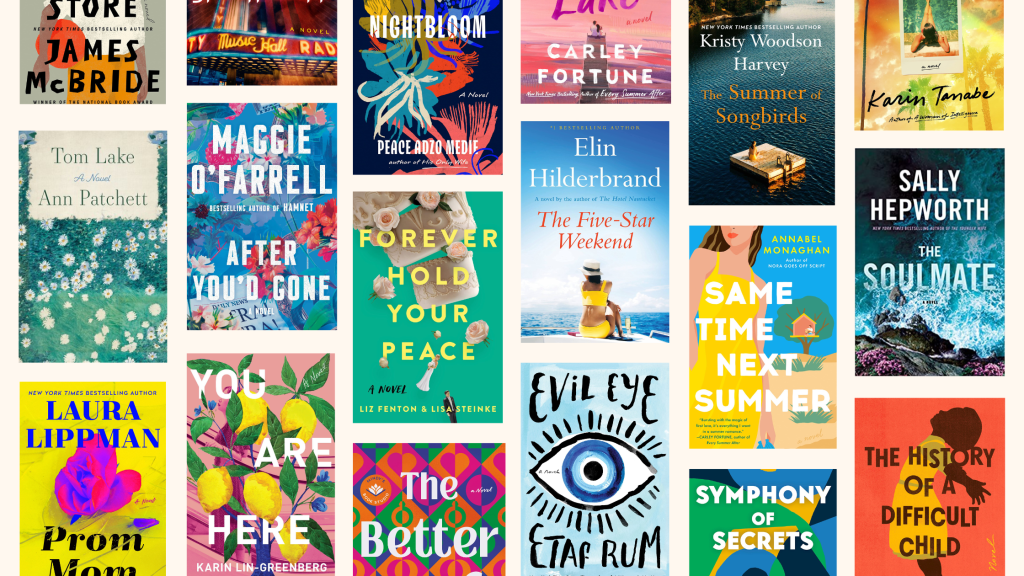
Not today, however. The City of Santa Monica used to have some good bookstores, such as Martindale’s and A Change of Hobbit (dedicated to sci-fi). Now it has what could only be described as a froufrou book shoppe featuring current works of interest to a young upper middle class demographic which is interested only in perpetrating a shallow somewhat feminized lifestyle.
Not My Cup of Tea
Virtually everything on the shelves was published within the last five years. Absent were almost anything that could be described as a classic.
I guess that’s what you get when an influencer opens a bookstore. I myself have never been influenced by a so-called influencer, and I rather doubt that my blog has seriously influenced anyone. My posts are as much of a compulsion as anything else. There isn’t any money being made here, and there are no thousands of readers extracting their credit cards the moment I open my lips.
My short walk on Montana Avenue dissatisfied me so much that I drove down to Marina Del Rey to the nearest Barnes & Noble. There were a lot of the same recently published bumph, but I found a John Le Carré that I didn’t have. As long as there are a sufficient number of kernels of grain among the chaff, I am satisfied.
According to the Baltimore Catechism in which we Catholic schoolkids were drilled in religion class, there are seven types of capital sin. They are:
Pride
Covetousness
Lust
Anger
Gluttony
Envy
Sloth
Conspicuously missing from the list is lying, which seems to me to be the prime sin of the 21st Century. According to the Washington Post, our former president told 30,573 lies during his four years in office. Now we have George Santos (R-NY), who seems unable or unwilling to tell the truth about anything. And it’s not just a Republican vice, though it seems most prevalent in the political world.
I can deal with violations of any of the above mentioned capital sins, but I find myself revulsed by someone who lies to me. None of the seven capital sins affects me as much as lying, which is an offense I feel is directed at me, to deliberately mislead me.






 Tarnmoor
You must be logged in to post a comment.