Bad Brujo

Speaking of Cajamarca …

Although he did as much as possible to hide all information about his origins, Carlos Castaneda, whose books about the sorcery of a Yaqui Indian named Don Juan Matus were best sellers in the 1960s and 1970s, was actually born in Cajamarca, Peru. If I ever went there, I sincerely doubt there will be monuments or museums dedicated to him. Nonetheless, Northern Peru, about which I have been writing posts for the last week, is known for its brujos, or sorcerers.

I am currently re-reading in order of publication the books written by Castaneda. Even though it is generally known that there probably never was a Don Juan Matus, Carlos was in fact a spiritual leader whose work clicked with the American public of that time. And his work is in fact very interesting to me.

Do I care whether Castaneda was telling the literal truth? Not at all. But he was intent on describing a way of power that, in the end, caught him up in its web. I am also reading Amy Wallace’s Sorcerer’s Apprentice: My Life with Carlos Castaneda.

To be sure, Carlos would not have liked this tell-all biography, in which he is surrounded by a cadre of adoring females whom he dominates. But then, in it Carlos tells the tale of his encounter with Alan Watts, another more or less legitimate spiritual leader, who attempted to seduce him—even as Carlos seduced Amy Wallace and probably others.

One can point the way toward the path to be followed, even as one, being human, cannot follow it perfectly. In one of his works, he writes, “If [the warrior’s] spirit is distorted he should simply fix it-purge it, make it perfect-because there is no other task in our entire lives which is more worthwhile…To seek the perfection of the warrior’s spirit is the only task worthy of our temporariness, our manhood.”

Yes, but there is this problem about being human.
Chiclayo and Sipán

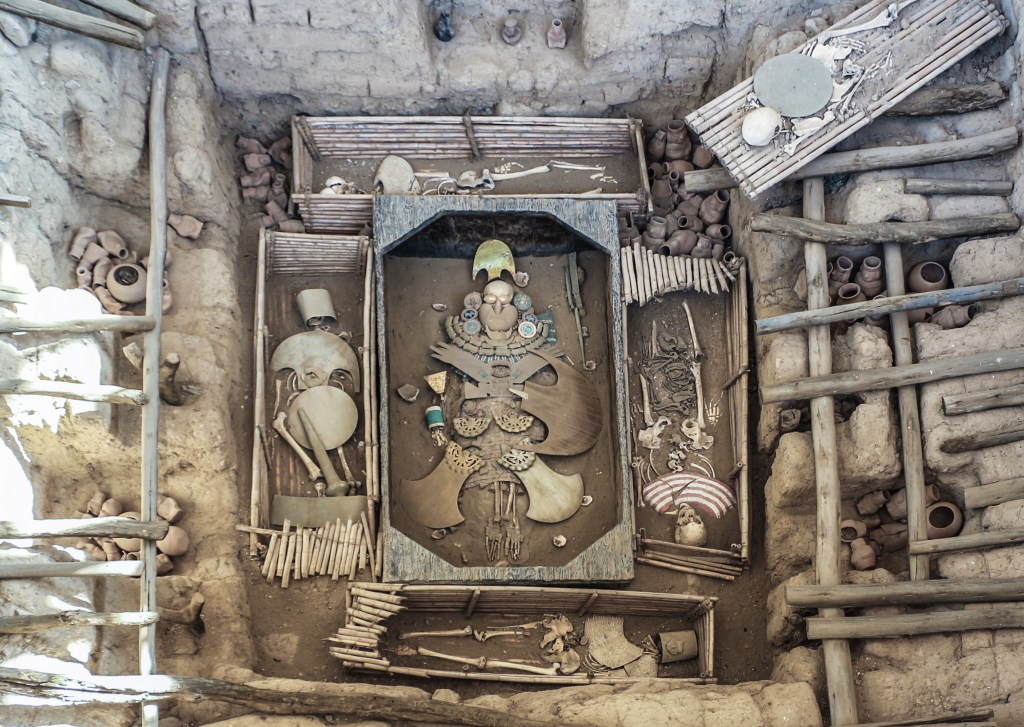
Tomb of the Lord of Sipán

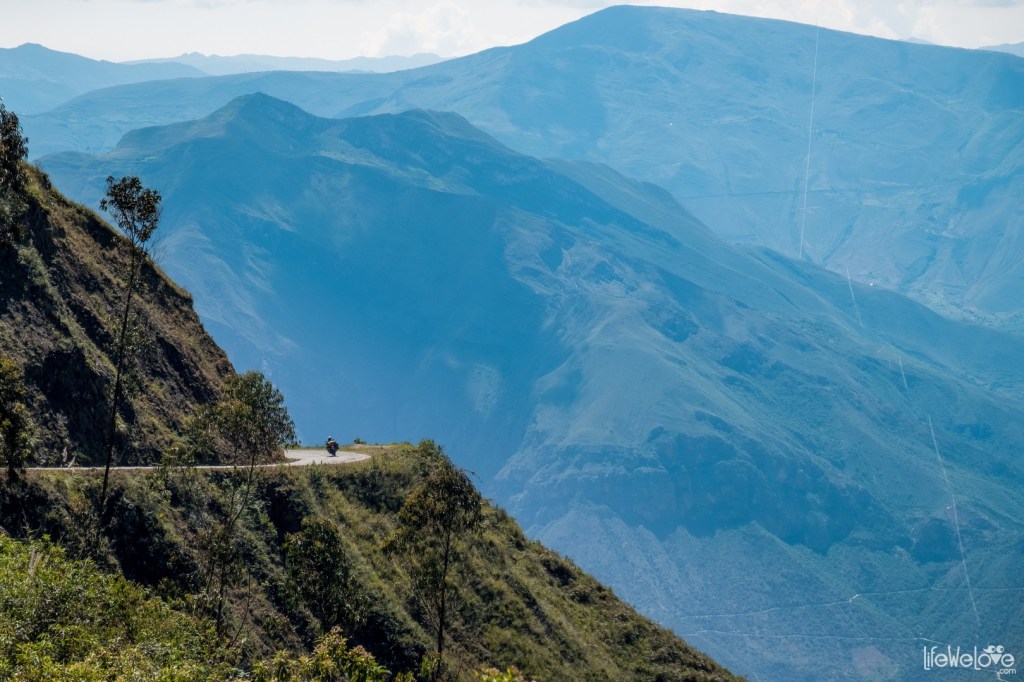
After Chachapoyas, my Northern Peru has one more destination to its farthest point, back to the coast to Chiclayo. The bus ride to Chiclayo is nine hours. Nine easy hours. No two mountain passes at Himalayan-like altitudes to cross on a dicey road hovering at the edge of a precipice like the one between Cajamarca and Chachapoyas.

Also, we are in the land of the Moche, whose lifelike sculptures I have noted in an earlier post. As with Trujillo, there are numerous ruins, particularly those of Sipán, and museums to visit at Lambayeque, Ferreñafe, and Túcume.

And then it will be time to return to Lima. Chiclayo has an airport, but it is not an international one, so I will have to fly out of Lima’s Jorge Chávez Airport. So I could fly to Lima via Avianca or LATAM. Or I could even take a 12-14 hour bus trip arriving in Lima with a burst bladder.

What will I have accomplished with this trip, should I decide to eventually take it? Peru, Guatemala, and Southern Mexico were the homes of great urban civilizations—none of which had managed to invent the wheel. The Maya of Mexico and Central America did, however, develop a form of hieroglyphic writing. The civilizations of Peru did not, but they were nothing short of amazing with all their closely packed mountain civilizations. In the end, there is far, far more to Peru than just the Inca. They were just the final pre-Columbian civilization before the Spanish Conquistadores rode into town and took over.

Kuelap

The Chachapoya Ruins at Kuelap

As with the bus trip from Cajamarca to Chachapoyas, I am not sure I am in good enough physical shape to visit the mountaintop ruins of Kuelap. While the city of Chachapoyas presents no particular challenges, the journey to Kuelap consists of multiple parts:

  1. Bus from Chachapoyas city to the Kuelap Cable Car Station (approximate time: one hour)
  2. Take a private bus to the cable car platform (included in cost of ticket)
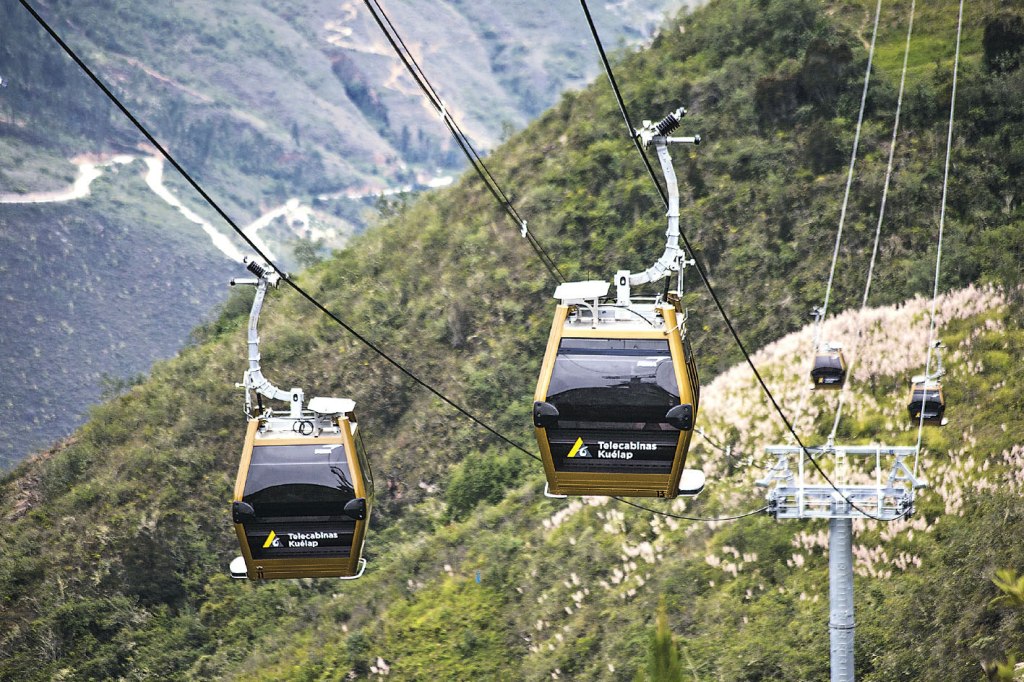
  3. Ride the cable car 4,400 meters (14,435 feet) to the station at the top of the cable car route
  4. Either walk or ride horseback to the entrance to the ruins

i

Two Kuelap Cable Cars Passing Each Other

What is so interesting to justify an arduous all day trip to ma mountaintop ruined city? Although they were conquered by the Incas, the Chachapoyas were an amazing people. These so-called cloud warriors controlled the swath of land around the city of Chachapoyas for a thousand years, until the Inca overcame them. Kuelaps’s “were thought to be great warriors, powerful shamans, and prolific builders who were responsible for one of the most advanced civilizations of Peru’s tropical jungles” (Lonely Planet).

I was hooked when I saw an episode of Lost Cities Revealed with Albert Lin in which the host used a drone and special archeological software to study the extent of Chachapoya civilization that digitally eliminated the foliage cover of the mountains to reveal ancient building sites.

Peru is eager to make Kuelap a popular tourist destination, as Machu Picchu is being worn away by the crush of foreign tourism. This whole itinerary as envisaged by me is a search for alternative destinations, some of which in their own way are as spectacular as Machu Picchu or perhaps even more so.

The Road to Chachapoyas

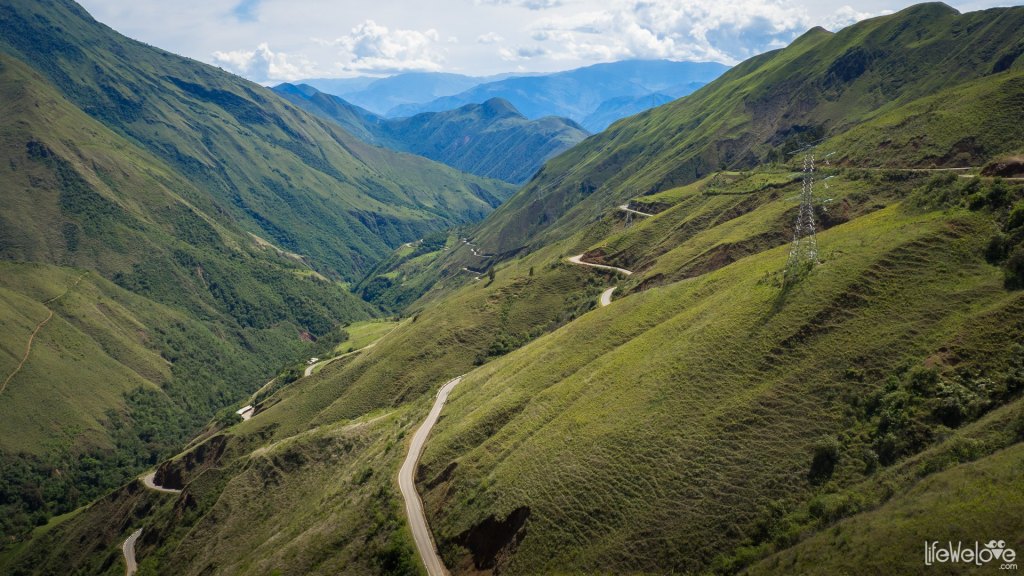
The Road from Cajamarca to Chachapoyas

In my perhaps pipe dream (perhaps actual) plans to visit the pre-Columbian ruins of Northern Peru, the one big question is the side trip to Chachapoyas. The Andes at that point consist of a number of parallel mountain ranges. From Cajamarca (at 2,750 meters or 9,022 feet), one goes over a mountain pass of 3,085 meters (or 10,121 feet) to Balsas before tackling Abra de Barro Negro (“Black Mud Pass”) at 3,678 meters or 12,067 feet. From there, one can see the Rio Marañon, which is a tributary of the Amazon. A quick look at the map for this part of the trip will give you a general idea:

The Wiggly Line of Route 88

An even more specific look at the route:

Yup, It’s the Same Road

From what I understand, Route 88 is paved all or most of the way, but there are frequent floods and landslides during the rainy season, which runs from November to April. There is, I believe, one bus per day along this route from Cajamarca to Chachapoyas at 4 :00 AM using the Virgen del Carmen bus line.

This road is by no means the end of my troubles, as you shall see when the discuss the ruins of Kuelap. In fact, I will probably overnight at Leimebamba on the way, visiting their famous museum. My nerves will be plenty jangled by then, especially if I sit on the left hand side of the bus.

Cajamarca

Back to the World of the Inca: Cajamarca, Peru

On my imaginary Northern Peru trip, I head inland from the coast to Cajamarca, which is 2,750 meters (9,022 feet) above sea level. It was near here at Francisco Pizarro and his Conquistadores captured Atahualpa, the Inca ruler, on November 15, 1532 while he was enjoying himself at the nearby Baños del Inca thermal baths.

At that time the Incas were engaged in a civil war, with Atahualpa ruling the north and Huascar the south. Atahualpa had just defeated Huascar at Cuzco when he decided to take his ill-advised spa treatment. Cajamarca is even today a major gold mining area, so Pizarro imprisoned Atahualpa and held him for ransom. And what was the ransom? A whole roomful of gold from floor to ceiling. Even though the Incas kept their side of the bargain, Pizarro had the Inca leader executed.

The building where Atahualpa was imprisoned still exists, though it is mistakenly called El Cuarto del Rescate (the Ransom Chamber).

From Trujillo, it is a seven hour bus ride to the heights of Cajamarca. From here, I have two choices:

  1. Return to Lima by air (or take a sixteen-hour bus ride).
  2. Take a dangerous bus route to Leimebamba, Chachapoyas, and the ruins of Kuelap, returning by bus to Chiclayo, from which I fly back to Lima.

In my next post, I will discuss this second option.

Next Stop: Trujillo

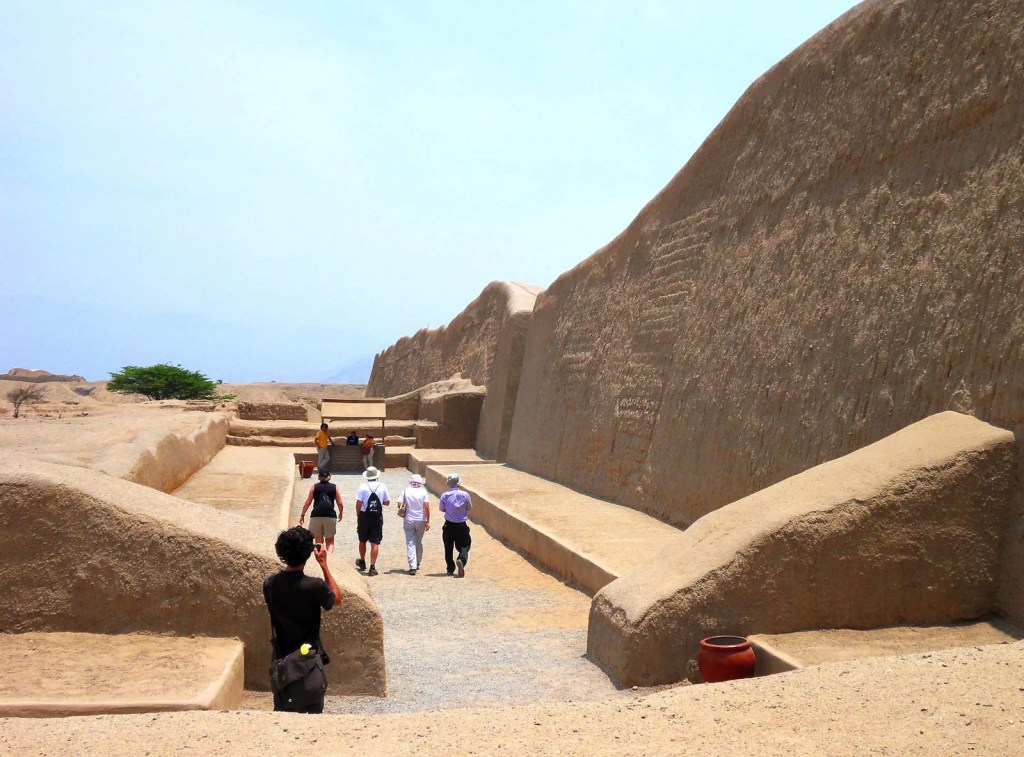
The Citadel at the Chimu Ruins of Chan Chan

I am sketching out here a possible trip to see the non-Inca ruined cities of Northern Peru. Yesterday, I dealt with Huaraz and the ruins of Chavin de Huantar. From Huaraz, it is a seven-hour bus ride back to the Pacific Coast and the colonial city of Trujillo.

Francisco Pizarro founded Trujillo in 1534, naming the city after his birthplace in Spain’s Estremadura. The area had already been inhabited by the Chimu, whose ruined city of Chan Chan covered 20 square kilometers (8 square miles) and was said to be the largest pre-Columbian city in the Americas.

In addition to Chan Chan, there are other nearby archeological sites at Huaca Esmeralda, Huaca Arco Iris, Huaca del Sol, and Huaca de la Luna, to name just a few.

Trujillo would be a good city to base myself in for several days, as there are a number of colonial structures of architectural and historical interest worth seeing. And the restaurants are rumored to be excellent.

Trujillo’s Cathedral and Casa de Urquiaga

The blue structure on the right was where Simon Bolivar had his headquarters in 1824 during his final campaign to liberate Peru from Spanish control. Just east of the Plaza de Armas is the Casa de la Emancipación where Trujillo’s independence from Spanish rule was formally declared in December 1820.

From Trujillo, I would head northeast, back into the mountains, to see Cajamarca and Chachapoyas, which I will describe in my next post.c

Ruin to Ruin

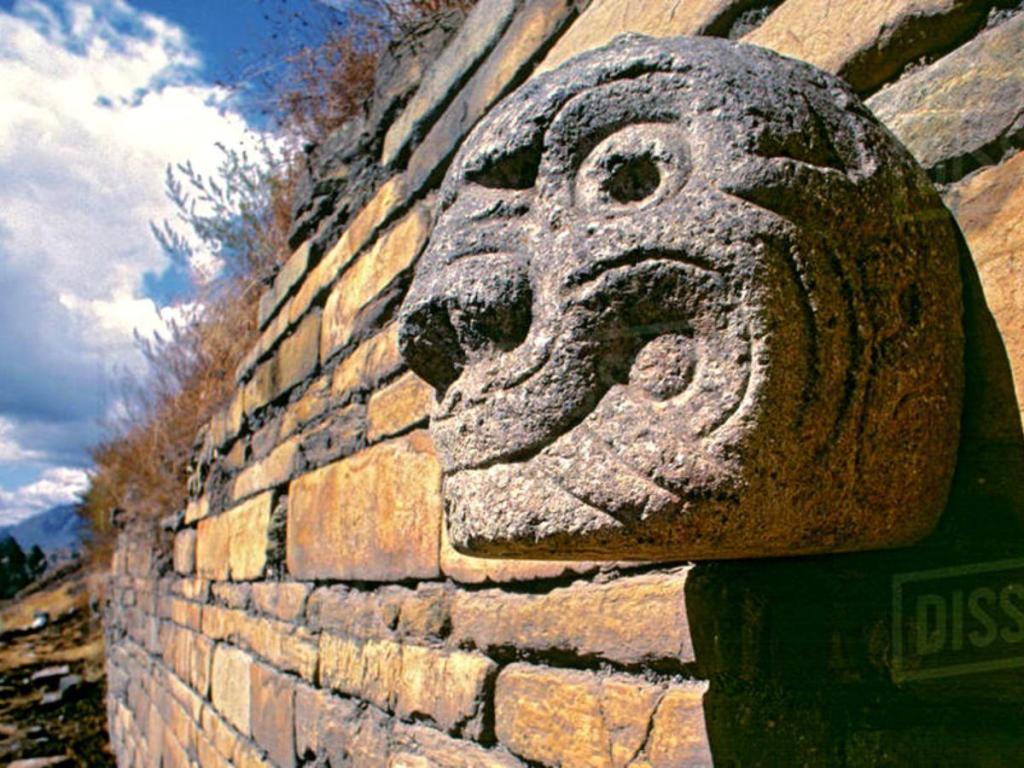
The Chavin Ruins of Chavin de Huantar in Northern Peru

On my dining table is a pile of Lonely Planet and Moon travel guides to countries that I have visited and want to visit again. Since Martine suffers from Irritable Bowel Syndrome, our meals are not too well coordinated, which leaves me going over these guidebooks with a look of wild surmise and planning travel itineraries which may just be pipe dreams. But maybe not!

I have already written about my idea of visiting the pre-Columbian ruins of Northern Peru. The idea is beginning to take shape:

First, I would need to fly to Lima, Peru, and spend several days there visiting museums and old Spanish-built churches—and eating great food, for which Lima is famous.

It’s an eight hour bus ride to Huaraz on high ground in the Andes, which there are called the Cordilleras. It’ll take several days to get accustomed to the 3,091 meter (10,141 feet) elevation. There are plenty of jagged snowy peaks to look at, though at my age I dare not trek.

From Huaraz, it’s a two and a half hour bus ride to Chavin, where the ruins of Chavin de Huantar, a UNESCO World Heritage Site, are situated.

Then I head back to the coast at Trujillo, which is a seven-hour bus ride. Tomorrow, I will write about the many ruined cities in the vicinity of Trujillo.

If You’re Attacked by a Lion …

Poet and Comic Spike Milligan (1918-2002)

Born in British India, Spike Milligan was a comedian, writer, musician, poet, playwright and actor. He is probably best remembered for his role in “The Goon Show,” the British radio program that spawned much of British comedy for decades to come.

Here is a little sample of his work which I hope will make you laugh. He was a very funny man.

The Lion

If you’re attacked by a Lion
Find fresh underpants to try on
Lay on the ground quite still
Pretend you are very ill
Keep like that day after day
Perhaps the lion will go away.

Selfie With Barbie

Yours Truly with Barbie

Who is that skeptical-looking muckenfuss with lovely Barbie? Oh, that’s me. I must have been making that sour face because both Margot Robbie and director Greta Gerwig were unfairly denied Oscars for their part in making what, to my mind, is the best film of 2023. Why should I be surprised? Awards, particularly in show biz, reflect the petty hatreds of professionals. Rarely have I agreed wholeheartedly with the Academy’s choices.

Now that I am on my way with Barbie to the Real World, I’d better check my bright yellow inline roller blades and my rad duds for making the scene on Venice Beach.

I guess I loved Barbie because it was so refreshing to see a purely feminine viewpoint unmarred by crass mansplaining. Mattel actively participated in the film even though its 100& white male Board of Directors in the film is actually pretty evenly split between six men and five women.

Barbie and Ken on Venice Beach

What struck me is that both Barbie and Ken were totally naive and un-selfconscious about their roles. It was like the story of Pinocchio, with both characters striving to become real people, or at least contented to be themselves. I felt for Ken and his attempt to set up the patriarchy in Barbieland, to be renamed Kenland. The Barbies ultimately win, but then the Kens accept their second-string status.

In a way, it was a pity to see the Mojo Dojo Casa House disinfected and returned to Barbie. Some, like Bill Maher, see the film as ultimately a man-hating product. I did not.

Before the Incas

Moche Pottery at Lima’s Museo Larco

As powerful as the Incas were, they were Johnny-Come-Latelies on the Peruvian scene, much as the Aztecs were in Mexico. It was only in the early 15th century that they formed an empire with its capital in Cuzco. Less than a hundred years later, two invaders put an end to the Incas: First there was measles, which spread like wildfire from the Spanish in the Caribbean. Then there were the Spanish conquistadores themselves led by Francisco Pizarro.

The Incas were only the last chapter in the Pre-Columbian world of Peru. Before them came the Huaca Prieta, Chavin, Moche, Sicán, Chimu, Wari, Chachapoyas, Paracas, Tiwanaku, Nazca, and Cajamarca—to name just a few. And that excludes the various peoples of the Peruvian Jungle.

Except for the archeologists, we seem to have forgotten all the peoples who preceded the Inca. Visit Peru, and you will see the ruins of the cities all the Inca predecessors left behind, cities like Pachacamac, Chan Chan, Kuélap, Chavin de Huantar, Huaca Pucllana, Sipán, and Sillustani.

Paracas Culture Funerary Bundle

Although I am getting a bit long in the tooth, I conceived this idea of heading north from Lima to view many of these ancient ruins. It would involve a couple of trips to high ground to visit the ruins around Huaraz and Chachapoyas, including some scary mountain bus rides; but it would prove that there is a good deal more to Peru than Machu Picchu.