Du Fu (aka Tu Fu) was born in AD 712 and died in 770. The following poem is from Kenneth Rexroth’s One Hundred Poems from the Chinese. It is a great favorite of mine.
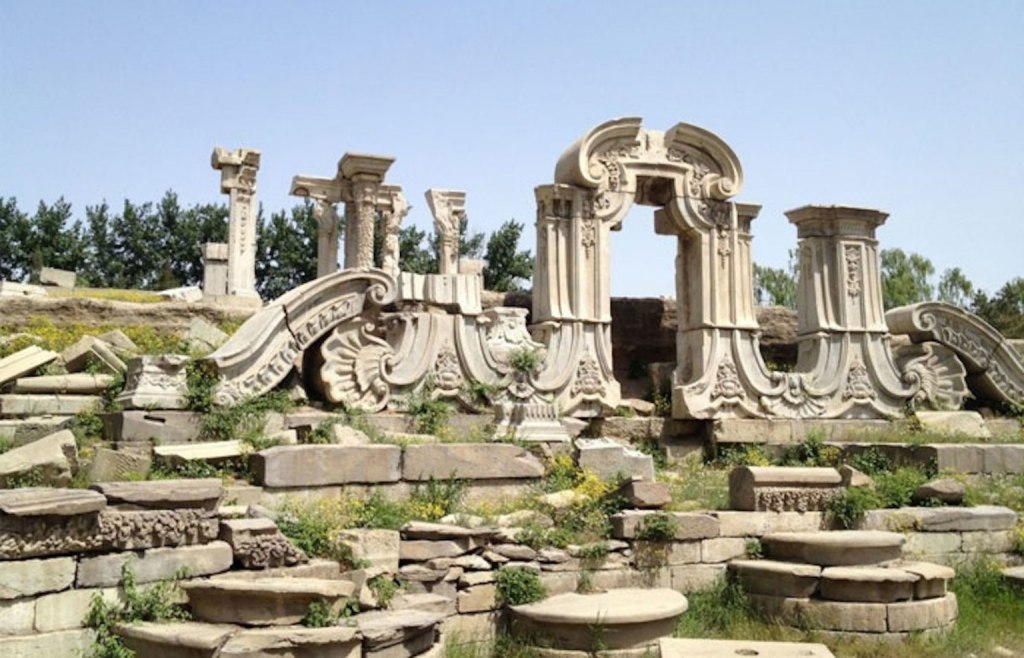
Jade Flower Palace
The stream swirls. The wind moans in The pines. Grey rats scurry over Broken tiles. What prince, long ago, Built this palace, standing in Ruins beside the cliffs? There are Green ghost fires in the black rooms. The shattered pavements are all Washed away. Ten thousand organ Pipes whistle and roar. The storm Scatters the red autumn leaves. His dancing girls are yellow dust. Their painted cheeks have crumbled Away. His gold chariots And courtiers are gone. Only A stone horse is left of his Glory. I sit on the grass and Start a poem, but the pathos of It overcomes me. The future Slips imperceptibly away. Who can say what the years will bring?
I have just read for the third or fourth time William Faulkner’s short novel The Bear—this time in the version used for the author’s Big Woods (1955) collection of hunting stories. All the other times were in the version used for Go Down Moses (1942). Here Sam Fathers talks to Ike McCaslin and Ash about the bear Old Ben.
“He do it every year,” Sam said. “Once: Ash and Boon say he comes up here to run the other little bears away. Tell them to get the hell out of here and stay out until the hunters are gone. Maybe.” The boy no longer heard anything at all, yet still Sam’s head continued to turn gradually and steadily until the back of it was toward him. Then it turned back and looked down at him—the same face, grave, familiar, expressionless until it smiled, the same old man’s eyes from which as he watched there faded slowly a quality darkly and fiercely lambent, passionate and proud. “He dont care no more for bears than he does for dogs or men neither. He come to see who’s here, who’s new in camp this year, whether he can shoot or not, can stay or not. Whether we got the dog yet that can bay and hold him until a man gets there with a gun. Because he’s the head bear. He’s the man.”
The first Olympics I watched to any extent were the 1976 games of the Montreal Summer Olympics. The heroine of those games was the 14-year-old Nadia Comăneci of Romania. She made Olympics history by being the first gymnast to score a perfect 10—and not once, but seven times. That netted her three gold metals, a silver, and a bronze, which she is seen wearing in the above photo.
Nadia started the whole gymnastics mania that has grown up around the Summer Olympics, and that continued with Svetlana Boginskaya, nicknamed “The White Swan of Belarus” in 1988 and 1992, and with Simone Biles today.
What ever happened to Nadia? Actually, she was in the opening day ceremonies of the 2024 Paris Olympiad. Today, she is an American citizen, having hightailed it out of Romania before the fall of the Ceauşescus in 1989.
Today she is 62 years old, being some 48 years removed from the svelte little girl who enchanted all of us way back when.
The term was much discussed during the last Tokyo Olympiad (2021), when U.S. gymnast Simone Biles withdrew from competition after suffering an attack of “the twisties.”
At that time, the BBC discussed the phenomenon:
So what are the “twisties”?
Gymnasts have described the twisties as a kind of mental block.
In some sports a sudden mental block – like the “yips” in golf – may cost you a missed putt, or a lost game.
In gymnastics, it can cause a person to lose their sense of space and dimension as they’re in the air, causing them to lose control of their body and do extra twists or flips that they hadn’t intended. In the worst cases, they can find themselves suddenly unable to land safely.
The twisties can happen to a gymnast even if they’ve done the same manoeuvre for years without problems.
Biles – one of the sport’s all-time greatest athletes – appeared to become disorientated while performing a vault on Tuesday and stumbled as she landed.
It was a moment that struck an instant chord with those who suspected what she might be going through.
I have been watching the U.S. women gymnasts on the balance beam earlier this evening, and the subject came up on an NBC interview with Simone Biles before her routine was televised. Now Simone is a very grounded person with clear perception and first-hand knowledge of the demons that can assail a performer in the spotlight. And, like few other participants in the Olympics, Simone is definitely in the spotlight. All. The. Time.
As it turned out, Simone’s balance beam routine in Paris 2024 was spot on. Afterwards, NBC showed another gymnast in the process of suffering a major case of the twisties. It was Melanie de Jesus Dos Santos of Martinique, who was competing for France.
A stunningly beautiful young woman, Dos Santos is shown muffing spectacularly all the major gymnastic events. In between gaffes, she was almost perfect; but she was in the throes of the twisties.
Whatever we do in life, we can suddenly lose our way. We could drive a chef’s knife into our fingers while chopping onions; or slip and fall in the bathroom while getting out of the tub; or turn the steering wheel the wrong way when backing out of a parking space; or any of a thousand other missteps.
When we are in the twisties, we should do what Simone Biles did: Drop out momentarily from any high performance activities. It’s not cowardice. It’s what we have to do to survive when we momentarily lose our way.
My last name is Paris, although I have not a drop of French blood in my veins. In Hungarian, my last name is Páris, pronounced PAH-reesh. On my father’s Czechoslovakian passport when he emigrated to the United States in 1929 (bad timing), his last name was shown as Parisej. When I asked him about this, he said the dominant Czechs always messed with Slovak last names.
There was a time when I was anti-French. This reached its height in 1976, when my Laker Airlines flight to London first stopped at Paris’s Orly Airport. We were all deplaned and made to go through security by the French police. When one of the officers wanted me to open up the back up my Olympus OM-1 camera and expose the film that was loaded, I refused and remarked rather snootily, “Je ne suis pas Carlos le terroriste!” Somehow, the officer smirked and let me continue without sending me to the guillotine.
Since then, I began to admire France more and more. My girlfriend, Martine, was born in Paris. My favorite novelists (Honoré de Balzac and Marcel Proust) are French. Subsequently, I visited Paris twice with Martine, staying first near Place de Clichy and then on the Left Bank near the Eiffel Tower.
I fell in love with Arthur Rimbaud, Blaise Pascal, Paul Eluard, François Villon, Emile Zola, Albert Camus, Patrick Modiano, Jean-Pierre Manchette, Nicolas Poussin, Antoine Watteau, Claude Lorrain, Auguste Renoir and his cinéaste son Jean, Jean-Luc Godard … Oh, hell, the list goes on damn near forever! In the end, I did a 180.
Public Transit Map of Paris
Now with the opening ceremony of the 2024 Paris Olympics, I am more impressed than ever with the French. In a handful of brilliant images, France reminded us who and what they were, and what they meant to the world.
Whenever I read a French novel, I am never without a copy of Paris Pratique Par Arrondissement in my lap, so I can follow the action street by street, neighborhood by neighborhood. It’s almost as if I considered Paris as more than just another city: It is a city I revere, a world city.
One of the characters in Kurt Vonnegut Jr’s Bluebeard has an interesting take on Henrik Ibsen’s play A Doll’s House, which ends shockingly (for its time) by the wife, Nora Helmer, walking out on her husband. Speaking is Marilee Kemp, with whom the artist Rabo Karabedian, is in love.
Her sense of her lace in the world back in 1933, with the Great Depression going on, revealed itself, I think, in a conversation we had about A Doll’s House, the play by Henrik Ibsen. A new reader’s edition of that play had just come out, with illustrations by Dan Gregory, so we both read it and then discussed it afterwards.
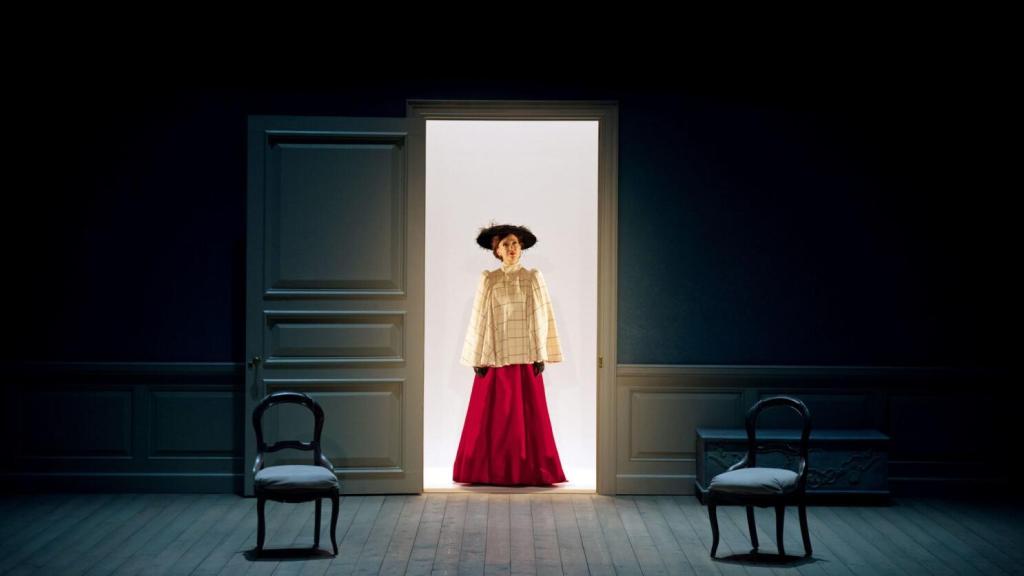
Gregory’s most compelling illustration showed the very end of the play, with the leading character, Nora, going out the front door of her comfortable house, leaving her middle-class husband and children and servants behind, declaring that she had to discover her own identity out in the real world before she could be a strong mother and wife.
. . .
That is how the play ends. Nora isn’t going to allow herself to be patronized for being as uninformed and helpless as a child anymore.
And Marilee said to me, “That’s where the play begins as far as I’m concerned. We never find out how she survived. What kind of job could a woman get back then? Nora didn’t have any skills or education. She didn’t even have money for food and a place to stay.”
. . .
That was precisely Marilee’s situation, too, of course. There was nothing waiting for her outside the door of Gregory’s very comfortable dwelling except hunger and humiliation, no matter how meanly he might treat her.
A few days later, she told me that she had solved the problem. “That ending is a fake!” she said, delighted with herself. “Ibsen just tacked it on so the audience could go home happy. He didn’t have the nerve to tell what really happened, what the whole rest of the play says has to happen.”
“What has to happen?” I said.
“She has to commit suicide,” said Marilee. “And I mean right away—in front of a streetcar or something before the curtain comes down. That’s the play. Nobody’s ever seen it, but that’s the play!”
Me at the Living Desert in the Coachella Valley 2022
There are two types of guys in this world (now where have you heard that before?)—the scruffy and the soshes (pronounced sōsh-es). I am clearly among the scruffy, though you will not find me wearing T-shirts, shorts, or flip-flops in public. Also: No tattoos. I guess that makes me a middling scruffy guy.
I have never been a fashion plate. In fact, I have looked down on guys that were. To me, they were soshes: People who were self-conscious about their appearance and, at the same time looked down on people like me, who just didn’t care.
As a retired senior on a fixed income, I have a clothes budget that approaches zero. Some of my shirts and pants are older than many of my acquaintances.
If I had the money, I would probably wear pants that would fit me better, what with my short legs and pot belly, but I would still avoid anything that would smack of GQ or Country Club. At this point in my life, who am I trying to impress? Do I have any possible future as a chick magnet at age 79? Would I even want to? These are important questions as I age.
Fortunately, I feel comfortable in my own skin, even if that skin at times resembles the lunar surface.
An hour south of the Mexican border is the city of Ensenada, which along with Tijuana and several other locations in Baja California has become a foodie hotbed. And we’re not talking sit-down restaurants with white tablecloths and snooty sommeliers, but food stands where crowds of standees munch on world-class Mexican food. Ensenada is famous for having invented the fish taco and the margarita; and Tijuana is home of the Caesar Salad.
In September, my brother and I will drive to Ensenada for a few days and indulge in some serious street grunting. To get an idea of what that might be like, check out this video from Anthony Bourdain’s “Parts Unknown” show:
The little lady in both the photo and the video is Doña Sabina Bandera, whose stand—““La Guerrerense”—is famous for seafood tostadas. In fact, Bourdain called it the best street food purveyor in the world.
I have long felt that something interesting is going on in the Mexican food scene, especially in those parts of Baja so close to Alta California. It will be fun to have some of the best seafood dishes on the continent, and not have to pay a king’s ransom for the privilege.
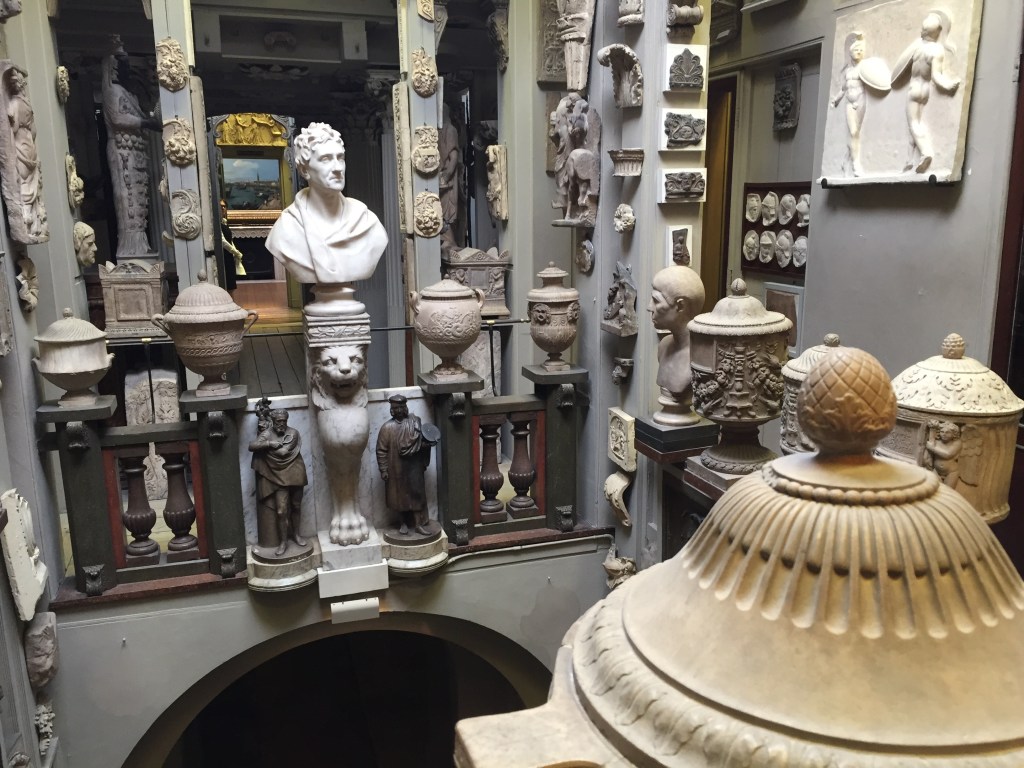
If I were asked to pick my favorite museum, I would have a hard time deciding; but I might very well end up by picking Sir John Soane’s Museum by Lincoln’s Inn Fields in London. Each time I have visited London, I have spent time marveling at the collections represented, whether of Egyptian, Greek, or Roman antiquities or 18th century paintings.
The original Sir John Soane (1753-1837) was the architect who designed the Bank of England, Not the present one, but the old one that was demolished in the 1920s. While I cannot comment on Soane’s skills as an architect, I am nothing short of amazed by Soane the art collector.
Walk through the museum, and it’s as if you were carefully edging your way through an overcrowded attic—except that Soane was no mere hoarder. He is, as it were, at the very pinnacle of a cultivated English artist circa 1800.
Paintings and Sketches Line the Walls from Floor to Ceiling
And I mean English with a vengeance. You would not find anything like this in France. The story of how the museum came to be is archetypally English (quoted from Wikipedia):
The museum was established during Soane’s own lifetime by a private Act of Parliament … in 1833, which took effect on Soane’s death in 1837. The act required that No. 13 [Lincoln’s Inn Fields] be maintained “as nearly as possible” as it was left at the time of Soane’s death, and that has largely been done. The act was necessary because Sir John had a living direct male heir, his son George, with whom he had had a “lifelong feud” due to George’s debts, refusal to engage in a trade, and his marriage, of which Sir John disapproved. He also wrote an “anonymous, defamatory piece for the Sunday papers about Sir John, calling him a cheat, a charlatan and a copyist.”
Oh, you can view the changing of the guards at Buckingham Palace, ride in giant Ferris Wheel in Greenwich, visit the British Museum, but nowhere else could you see the odd genius of a single human being—one who left us a Pisgah view of the 18th century.
Check out the museum’s website if you have a few minutes.
Francisco Pizarro (1478-1541), Conqueror of the Incas
The two great Spanish conquerors of pre-Columbian civilizations could not have been more different from each other. Hernán Cortés was born of lesser Spanish nobility in Medellín, Castile. According to Bernal Díaz del Castillo, who served with him at the conquest of the Aztecs:
He was of good stature and body, well proportioned and stocky, the color of his face was somewhat grey, not very cheerful, and a longer face would have suited him more. His eyes seemed at times loving and at times grave and serious. His beard was black and sparse, as was his hair, which at the time he sported in the same way as his beard. He had a high chest, a well shaped back and was lean with little belly.
He was also fairly well educated, though his parents had despaired of making a lawyer out of him, though he did serve for two years as a notary, which did equip him with a legal background of sorts.
Francisco Pizarro, the conqueror of the Incas of Peru, was actually the second cousin once removed of Cortés, though nowhere near as well educated. In fact, he was illiterate as well as being illegitimate. Moreover, he was such a poor horseman that he confused Atahualpa, the Inca, because he was always on foot.
Where Pizarro’s background shows is that while Cortés wrote at great length to the King of Spain to justify his behavior in New Spain (Mexico and Central;America)., Pizarro never wrote anything. In addition, many of his soldiers were equally illiterate. In fact, when Agustín de Zarate was sent by the King to investigate the Inca conquest, he was forbidden by Francisco de Carvajel, a lieutenant of Gonzalo Pizarro’s, to “record his master’s deeds.” Zarate did it anyhow, but from the safety of His Majesty’s Dutch domains.
Did the difference between the two conquerors have any positive results for the conquered? Not at all. The record of misery for the native peoples of the New World was in both cases marked by death, disease, cruelty, and slavery.








 Tarnmoor
You must be logged in to post a comment.