Perched on Nothing’s Branch

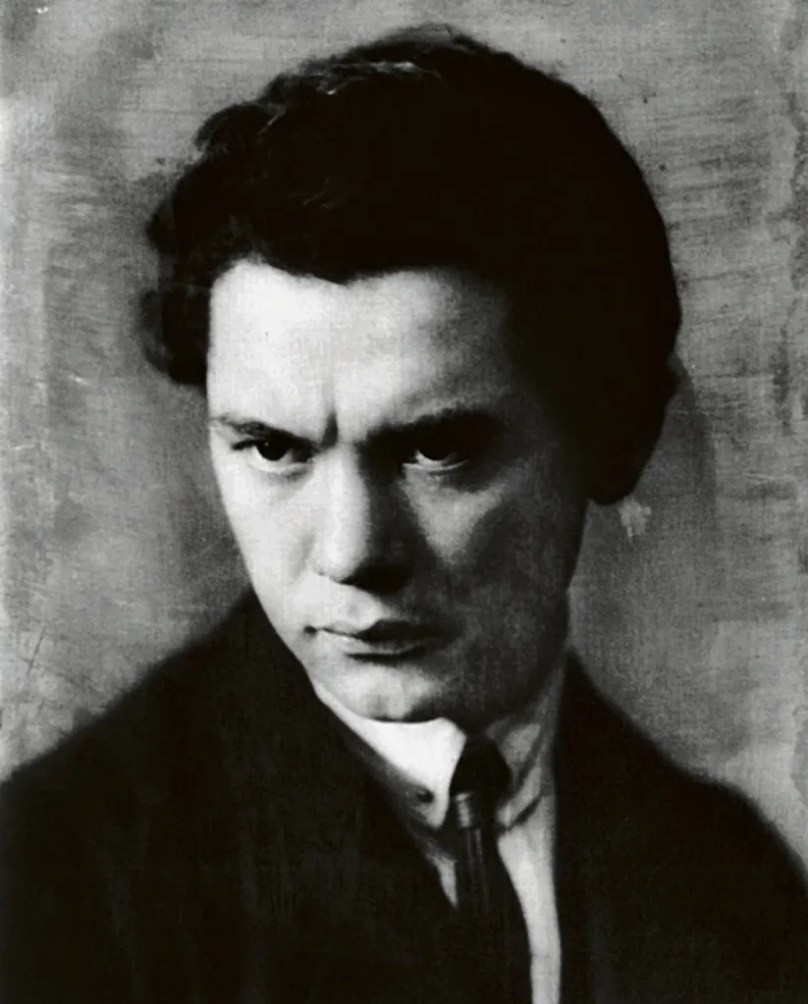
Hungarian Poet Attila József (1905-1937)

The last few days I have been suffering from a summer cold. I know it’s not summer yet, but the temperature has been hot. During that time, I was reading a manically humorous detective novel written in the 1940s and finally quit as I was two-thirds of the way through. What I picked up next was a collection of 40 disturbing poems by a Hungarian poet who committed suicide by throwing himself under a train in 1937.

It’s not that I’m addicted to gloominess, but I am after all a Hungarian myself. So it must be something in the blood. Here is the title poem from the collection I read:

Perched on Nothing’s Branch

I finally arrive
at the sand’s wet edge,
look around, shrug

that I am where I am,
looking at the end. A
silver ax strokes
summer leaves. Playfully.

I am perched solidly
on nothing’s branch.
The small body shivers
to receive heaven.

Iron-colored.

Cool shiny dynamos revolve
in the quiet revolution of stars.
Words barely spark from clenched teeth.

The past tumbles
stonelike through space,
blue time floating off
without a sound. A blade
flashes, my hair—

My mustache is a full
caterpillar droopong
down my numb mouth,
my heart aches, words are cold.
There’s no one out here
to hear—

London

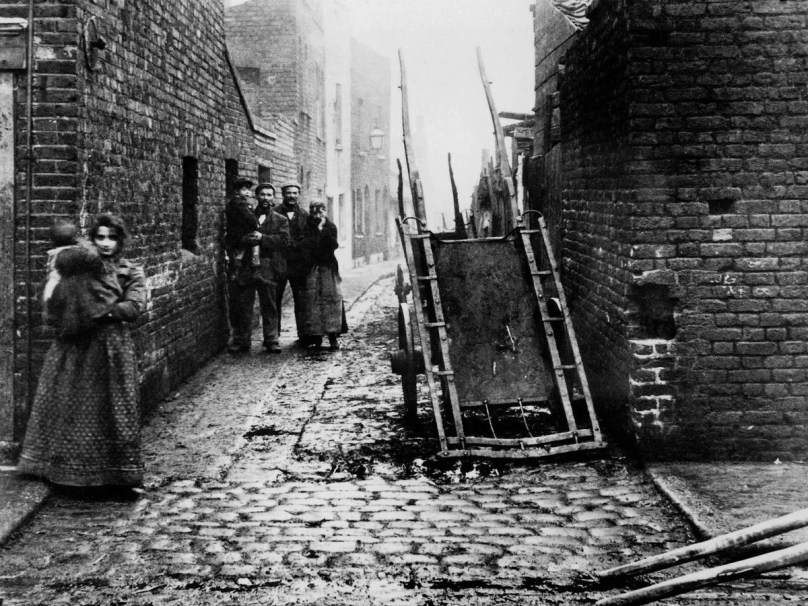
A London Slum

I was rereading some of William Blake’s Songs of Experience this evening and shuddered at the poem entitled, simply, “London”:

London

I wander thro’ each charter’d street
Near where the charter’d Thames does flow,
And mark in every face I meet
Marks of weakness, marks of woe.

In every cry of every Man,
In every Infant’s cry of fear,
In every voice, in every ban,
The mind-forg’d manacles I hear.

How the Chimney-sweeper’s cry
Every black’ning Church appalls,
And the hapless Soldier°s sigh
Runs in blood down Palace walls.

But most thro’ midnight streets I hear
How the youthful Harlot’s curse
Blasts the newborn Infant’s tear,
And blights with plagues the Marriage hearse.

How strong is that phrase “mind-forg’d manacles”! How descriptive of a particularly American form of suffering in the Age of Trump!

Better Read Than Dead

I know it has been a week and a half since the tents for the 2025 Los Angeles Times Book Festival were folded up and stored until next year. But a few thoughts have been running through my mind that I wanted to air.

Admittedly, the Festival was a boon for people who love to read. I did not, however, feel that the tens of thousands of people who thronged the fair were necessarily book lovers. Probably there were more people there who wanted their offspring to become book lovers just so long as they themselves did not have to crack open a volume.

What made me feel this way? Perhaps I saw too many people thronging the booths that offered trashy genres such as romance, “cozy” mysteries, and dungeons & dragons type fantasy. The big local bookstores were well represented, but they were so crowded that I couldn’t get close to them. The only exception was Small World Books on the Venice Boardwalk: They were not super-crowded because they dealt mainly in poetry.

As in previous sears, I found the Small World Books Poetry Stage the most comfortable venue in the festival. There was a different poetry reading every twenty minutes, and many of them were top notch. Even some of the poets who weren’t that good were wonderful performers of their poems.

I attended both days of the festival. On the first day, I was appalled by the long lines and high prices at the high-toned food trucks scattered throughout the grounds, so I stepped outside the festival and patronized the Mexican and Central American food vendors by the campus gate. On the next day, I discovered the restaurants outside the grounds of the festival at the University Village, where Martine and I got a tasty lunch without having to wait an hour and were able to sit comfortably at one of the outside picnic tables.

Magyar for a Day

Dancers from the Karpátok Hungarian Folk Ensemble

Around the beginning of May, I look forward to the Grace Hungarian Reformed Church’s Annual Hungarian Family Festival. It’s also one of Martine’s favorite events because of the food, the entertainment, and the friendliness of the people in attendance.

I don’t get too many opportunities to participate in any event as a Hungarian. I still remember much of the language, and the Hungarian parishioners seem to understand my somewhat ungrammatical Magyar. The pronunciation is okay, but my vocabulary has gaps you could drive a regiment of Hussars through.

Martine loves stuffed cabbage, and the church does a fair job cooking it up. But most noteworthy are the baked goods (Sütemények), particularly the Hungarian cheesecake (crémes) that tends to sell out in microseconds after being brought out out from the church kitchen.

Also wonderful is the folk dancing by the Karpátok Hungarian Folk Ensemble, which is celebrating its 60th anniversary in Los Angeles. When the Covid-19 lockdown hit, the last public event we attended was a Karpátok concert. We are happy that they are as active as ever and are considering a program of events featuring their music and dancing.

To the Ends of the Earth

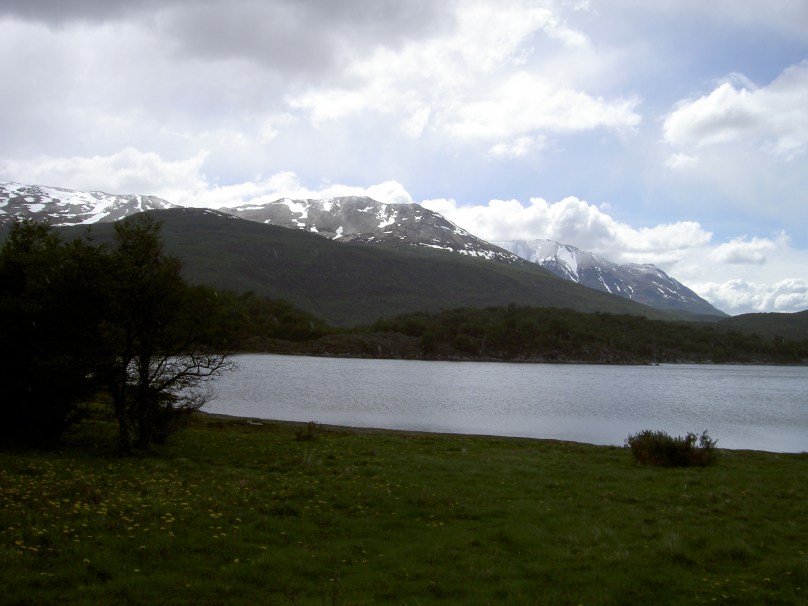
Tierra del Fuego National Park

Twice I have been to the southernmost city on Earth—Ushuaia in the State of Tierra del Fuego. The first time was in 2006, when I broke my shoulder on the high curb when crossing Magallanes at Rivadavia. The second time was when I visited with Martine in 2011.

Actually, there is one populated town south of Ushuaia, but it is maintained by Chile mostly as a naval base and has a much smaller population.

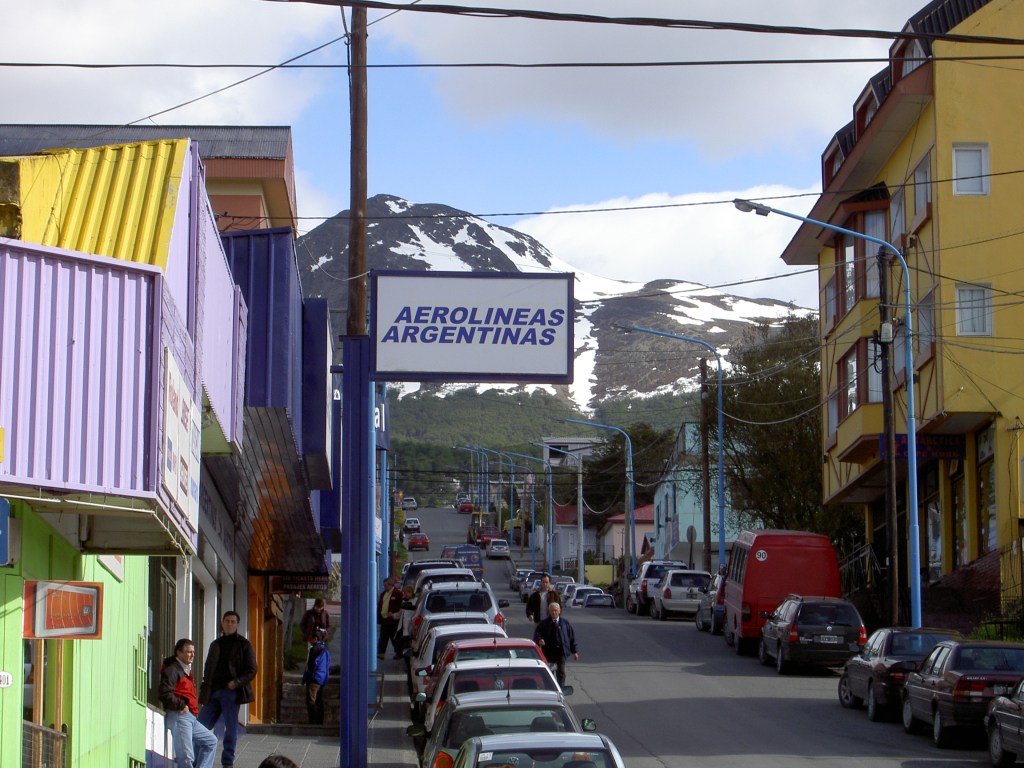
On Rivadavia in Ushuaia Looking North

Ushuaia pretty march marks the southern end of the Andes, which are only a couple thousand feet (610 meters) in altitude, though they are still covered in snow. It can get mighty cold at that latitude, which is only about 600 miles (966 kilometers) across the Drake Channel from Antarctica.

I wouldn’t mind going back to Tierra del Fuego and maybe seeing Punta Arenas and Puerto Williams in Chile. By the way, Puerto Williams is the only town south of Ushuaia—just across the Beagle Channel.

What is there to do in Ushuaia? There are several impressive museums, one of which was formerly a prison. There is Estancia Harberton, which settled by the Bridges family and is written about at length in E. Lucas Bridges’s The Uttermost Part of the Earth, a travel classic. Then there are the Magellanic Penguins on nearby Isla Pajaros; and there is Tierra del Fuego National Park, which ends at the border with Chile.

This Too Shall Pass

Poet Kim Addonizio

Another poet whose work I enjoyed at the Los Angeles Times Book Festival was Oakland poet Kim Addonizio. I remember attending one of her readings back when the L.A. Times Festival was held at UCLA. The following poem is from her collection entitled Exit Opera:

This Too Shall Pass

was no consolation to the woman
whose husband was strung out on opioids.

Gone to a better place: useless and suspect intel
for the couple at their daughter’s funeral

though there are better places to be
than a freezing church in February, standing

before a casket with a princess motif.
Some moments can’t be eased

and it’s no good offering clichés like stale
meat to a tiger with a taste for human suffering.

When I hear the word miracle I want to throw up
on a platter of deviled eggs. Everything happens

for a reason: more good tidings someone will try
to trepan your skull to insert. When fire

inhales your house, you don’t care what the haiku says
about seeing the rising moon. You want

an avalanche to bury you. You want to lie down
under a slab of snow, dumb as a jarred

sideshow embryo. What a circus.
The tents dismantled, the train moving on,

always moving, starting slow and gaining speed,
taking you where you never wanted to go.

The Night the Man with the Watermelon Died

The following is from Jack Kerouac’s Doctor Sax, about his youth in Lowell, Massachusetts. Here he describes a sobering scene in his typical jazzy style:

A man carrying a watermelon passed us, he wore a hat, a suit in a warm summer night; he was just on the boards of the bridge, refreshed, maybe from a long walk up slummy swilly Moody and its rantankling saloons with swinging doors, mopped his brow, or came up through Little Canada or Cheever or Aiken, rewarded by the bridge of eve and sighs of stone—the great massive charge of the ever stationary ever yearning cataracts and ghosts, this is his reward after a long dull hot dumb walk to the river thru houses—he strides on across the bridge—We stroll on behind him talking about the mysteries of life (inspired we were by moon and river), I remember I was so happy—something in the alchemy of the summernight, Ah Midsummer Night’s Dream, John a Dreams, the clink of clock on rock in river, roar—old gloor-merrimac figalitating down the mark all spread—I was happy too in the intensity of something we were talking about, something that was giving me joy.

Suddenly the man fell, we heard a great thump of his watermelon on wood planks and saw him fallen—Another man was there, also mysterious, but without watermelon, who bent to him quickly and solicitously as by assent and nod in the heavens and when I got there I saw the watermelon man staring at the waves below with shining eyes (‘Il’s meurt, he’s dying,’ my mother’s saying) and I see him breathing hard, feeble-bodied, the man holding him gravely watching him die, I’m completely terrified and yet I feel the profound pull and turn to see what he is staring at so deadly-earnest with his froth stiffness—I look down with him and there is the moon on shiny froth and rocks, there is the long eternity we have been seeking.