


Simply put: Books, Old Movies, Cooking, and (when I could afford it) Travel.
Home » 2025 (Page 30)
Yearly Archives: 2025
Two Auto Museums Bite the Dust

Martine Sitting in a Classic Corvette
I was dismayed to find that two superb auto museums closed down in 2024. In both cases, the museums grew out of personal car collections. When the museum founders passed on to that garage in the sky, both museums started to run into hard times.
The first was the Mullin Automotive Museum in Oxnard with its Bugattis and Art Deco paintings and furniture which closed in February 2024.
Hitting closer to home was the closure in October of the Zimmerman Automobile Driving Museum in El Segundo. There was a time when we visited the museum every few weeks. Martine loved it because they concentrated on American cars and because they allowed visitors to sit behind the wheel. She was particularly fond of a classic Corvette illustrated above.
There is an excellent article in Hemmings.Com about the Zimmerman Museum’s frantic attempts to raise cash after Stanley Zimmerman died in 2020. The article contains some excellent photos of the museum’s holdings.
Museums based on private collections have a high mortality rate. They are like restaurants, which, especially after the Covid-19 lockdown, are dropping like flies.
Superstitious


For some reason, I generally dislike coming back the same way I arrived at my destination. I wonder if I will feel tugged to do that when Martine and I go on a road trip to Tucson next month.
“This Disorganized Room”
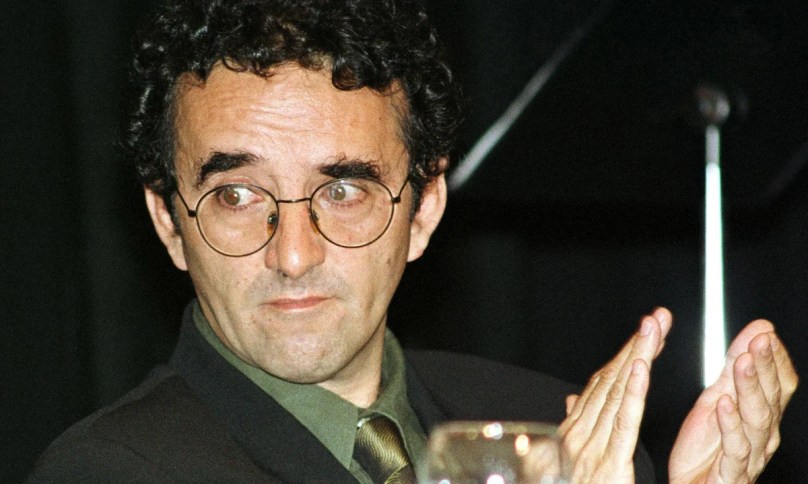
Chilean Writer and Poet Roberto Bolaño (1953-2003)
It’s a pity that Roberto died so young! Only fifty years of age! Over the last ten years he has brought so much enjoyment to me with his novels, stories, and poems. Here is one of his poems of which I am particularly fond:
The Memory of Lisa
The memory of Lisa descends again
through night’s hole.
A rope, a beam of light
and there it is:
the ideal Mexican village.
Amidst the barbarity, Lisa’s smile,
Lisa’s frozen film,
Lisa’s fridge with the door open
sprinkling a little light on
this disorganized room that I,
now pushing forty,
call Mexico, call Mexico City,
call Roberto Bolaño looking for a pay phone
amidst chaos and beauty
to call his one and only true love.
Century


What, you made it after all! Who would’ve guessed it? Certainly not me.
An Upcoming Road Trip?

Saguaro Cacti Near Tucson
Martine has generally not been interested in travel. Lately, however, she mentioned the possibility of two Southwest road trips: One up U.S. 395 and other to Tucson, Arizona. Years ago, Martine had fond memories of a visit to an aunt who lived in Tucson.
I, myself, have never been to Tucson or even Phoenix. My knowledge of Arizona is mostly the area north of I-40 along the Kingman-Williams-Flagstaff-Winslow axis.
Today, I took my car in for its 39,000-mile service so that if we went to Tucson in March or early April, I would not be forced to make any last-minute decisions. Since I am also due to visit my brother in Palm Desert in two weeks, I will try to talk Martine into coming with me. It seems that the Coachella Valley is on the AAA preferred route to Tucson, and it would be killing two birds with one stone.
I will write more about the upcoming trip after I do a bit more research.
Daily writing prompt
What is your middle name? Does it carry any special meaning/significance?


My middle name is Alex, which is my father’s first name. Originally, because he was born in what is now Slovakia, it was Elek. In the U.S., he was Alex James Paris. I am James Alex Paris.
Sidewalk Contamination
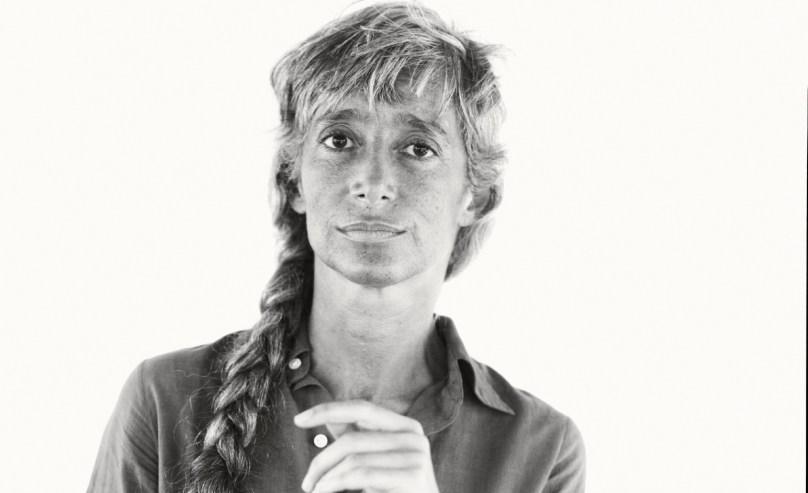
Author Renata Adler (Born 1938)
The following paragraph was pretty much self-contained in Renata Adler’s Speedboat, which consists of hundreds of similar paragraphs, some of which are loosely linked.
Kate was walking along Forty-second Street from the subway station. She saw a tall, young, scholarly-looking man obviously about to say something to her. “Excuse me,” he said at last. He said he was from the Stanford urban-contaminations study. Kate said nothing. “Sidewalks,” he went on, frowning slightly. “Sidewalk contamination.” He said they were working on the right shoes of pedestrians. He wondered whether he might take a slide from hers? Kate nodded. She felt a flash of unease the moment she leaned against a wall and raised her foot to take the shoe off. He was already on the sidewalk, quietly licking the sole. No passerby took any notice. In another moment, he had stood up and walked away.
My Own Nationality

A Different Kind of Hungarian
As I get older, I am increasingly unwilling to interact with strangers. Chatting with people I do not know is just something I would rather not do any more. I don’t even like sharing an elevator. The absolute worst is having to interact with American tourists when I am traveling abroad.
And yet I remember helping a group of French tourists in Iceland get guesthouse accommodation in Höfn, Iceland, when they couldn’t find any locals who understood them.
The difference was they didn’t have any expectations of help, whereas many or most American travelers, on the contrary, would. It is at that point that I reply to their question(s) very politely in my off rural Hungarian dialect from the 1930s. I could be telling them in Hungarian to get stuffed, but I actually try to answer them politely in my native language.
There is always the danger that the person accosting me knows the Magyar language. That actually happened to me once in Vancouver’s Chinatown, when the beggar asking for spare change recognized what I was saying and answered me back in Hungarian. I immediately melted and gave him a five dollar bill. He actually invited me for coffee, but I was on my way to a movie screening and didn’t want to be late. Else I would have obliged him.
I am not that way, of course, with my friends and acquaintances. Or even with waiters or cashiers. It’s just that I have a phobia of dealing with demands placed on me by strangers. That even includes the unsmiling visage that I characteristically assume—all to avoid having to deal with the public at large.
The Real Thing
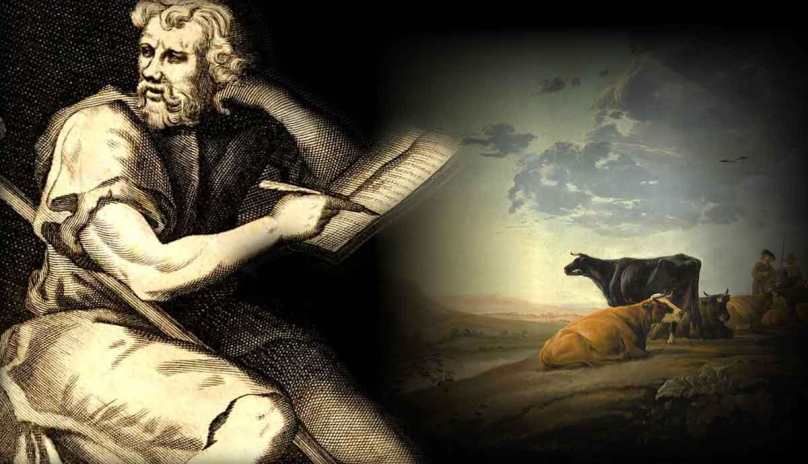
Roman Slave Turned Philosopher Epictetus
In my previous post, I mentioned three Roman Stoic philosophers. One of them was Epictetus (50-135 AD). Here are the opening paragraphs to his most famous work, The Enchiridion:
There are things which are within our power, and there are things which are beyond our power. Within our power are opinion, aim, desire, aversion, and, in one word, whatever affairs are our own. Beyond our power are body, property, reputation, office, and, in one word, whatever are not properly our own affairs.
Now the things within our power are by nature free, unrestricted, unhindered; but those beyond our power are weak, dependent, restricted, alien. Remember, then, that if you attribute freedom to things by nature dependent and take what belongs to others for your own, you will be hindered, you will lament, you will be disturbed, you will find fault both with gods and men. But if you take for your own only that which is your own and view what belongs to others just as it really is, then no one will ever compel you, no one will restrict you; you will find fault with no one, you will accuse no one, you will do nothing against your will; no one will hurt you, you will not have an enemy, nor will you suffer any harm.
Aiming, therefore, at such great things, remember that you must not allow yourself any inclination, however slight, toward the attainment of the others; but that you must entirely quit some of them, and for the present postpone the rest. But if you would have these, and possess power and wealth likewise, you may miss the latter in seeking the former; and you will certainly fail of that by which alone happiness and freedom are procured.
Seek at once, therefore, to be able to say to every unpleasing semblance, “You are but a semblance and by no means the real thing.” And then examine it by those rules which you have; and first and chiefly by this: whether it concerns the things which are within our own power or those which are not; and if it concerns anything beyond our power, be prepared to say that it is nothing to you.
 Tarnmoor
You must be logged in to post a comment.