“Sonora Wind”

Wind-Blown Sand Near Keeler, CA

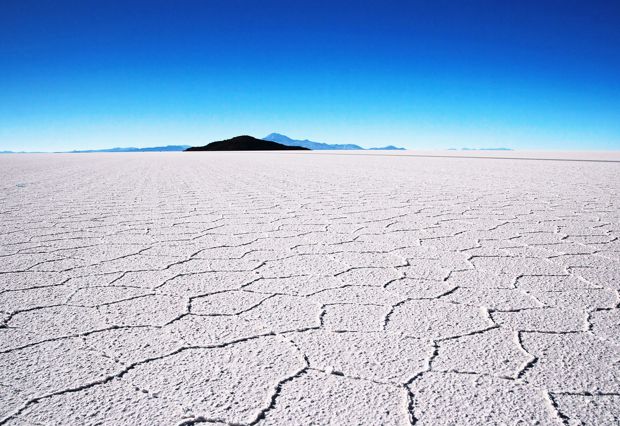
It’s the end of the week, and I feel like a poem. I have this slim Everyman volume entitled Poems of the American West , selected and edited by Robert Mezey. The poem entitled “Sonora Wind,” written by Arizona poet Richard Shelton, also described those horrible Santa Ana winds that sweep through Los Angeles from the vastness of the desert.

Sonora Wind

Nobody can stop this dry wind,
this disaster of a wind. Nobody
can heal it, soothe it, send it on.
It remains. Has it nowhere else
to go? Has it been forbidden
to return to where it came from?

It is driving us mad with the sound
of a wound torn open again
and again. It can bend us down
as it bends the greasewood.
It can desiccate our minds.

It screams at us with the voice
of a raging mute who has no words
to tell his pain. When we begin
to scream in return, it rips
the words from our mouths,
replacing them with sand, the taste
of all the evil ever done to us
by those who died before we could
tell them how much we hated them.

W. H. Auden’s “Good Angel”

Hannay, Lynton; Professor W. P. Ker (1855-1923)

Extending from the reign of Queen Victoria to the aftermath of World War II, Britain produced a bumper crop of great literary scholars and essayists. I have already written about F. L. Lucas (1894-1967). I am currently exploring the work of W. P. Ker, short for William Paton Ker. It was poet W. H. Auden who, in The Dyer’s Hand, penned this tribute to the Scottish scholar:

[w]hat good angel lured me into Blackwell’s [Oxford Bookstore] one afternoon and, from such a wilderness of volumes, picked out for me the essays of W. P. Ker? No other critic whom I have subsequently read could have granted me the same vision of a kind of literary All Souls Night in which the dead, the living and the unborn writers of every age and tongue were seen as engaged upon a common, noble and civilizing task. No other could have so instantaneously aroused in me a fascination with prosody, which I have never lost.

I have been reading Volume I Ker’s Collected Essays, which one of the literature librarians at the Los Angeles Central Library entrusted me to take out, though it belongs to the Reference Collection. I read with interest until, suddenly, beginning with Page 109, I hate pay dirt. No doubt the name of Horace Walpole probably doesn’t mean much to most people, unless they suffered through the gothic The Castle of Otranto in college English. Instead, Ker concentrates on Walpole’s letters. Here he describes the country around Chamonix in the Alpes in a letter to his friend Paget Toynbee on September 18, 1739:

But the road, West, the road! winding round a prodigious mountain, and surrounded with others, all shagged with hanging woods, obscured with pines, or lost in clouds. Below, a torrent breaking through cliffs, and tumbling through fragments of rocks! Sheets of cascades forcing their silver speed down channeled precipices, and hastening into the roughened river at the bottom. Now and then and old footbridge, with a broken rail, a leaning cross, a cottage or the ruin of an hermitage. This sounds too bombastic and too romantic to one who has not seen it, too cold for one that has. If I could send you my letter post between two lovely tempests that echoed each other’s wrath, you might have some idea of this noble roaring scene, as you were reading it.

There are almost no collections of literary letters being written now, because there are no letters. There are scads of e-mails, tweets, text messages—few of which will be (or deserve to be) saved. Ker himself explains why such letters are valuable:

There is an interest in reading a series of letters like this which is not found even in personal memoirs. It may be a childish idea, but somehow in reading letters one seems to be nearer to the reality than in reading any other history. The phantoms of the past rise there less pale and shadowy than in common history, they come nearer to us, the colours deepen, the voices are more distinct. Letters like those of Cicero are not a record of the time; they are the life itself, the very accents of the time. He does not write any more to Atticus or to his brother: he writes to us: he tells us how Caesar came to stay with him, how they talked at dinner, how they spoke, Caesar spoke.

I wasted no time in buying Volume I of Horace Walpole’s collected letters (only 99 cents on Kindle). And I will, of course, finish reading Ker’s Collected Essays.

Ker’s Excellent The Dark Ages (1904)

This is not the first work of Ker’s that I have read. I own an old Mentor paperback edition of his The Dark Ages, and I have read portions of his Epic and Romance (1908), which is still available through Dover Publications.

Its Own Culture

The Zia, Symbol of New Mexico

Not too many states can be said to have their own culture. I, for one, couldn’t say anything about the state in which I was born—Ohio—except that it’s mostly featureless with some rolling hills. And as for distinguishing it from Michigan, Indiana, or Pennsylvania, forget about it! Even California doesn’t quite have its own culture: It has several of them coexisting within its 164,000 square miles. But New Mexico is a different story altogether. Its capital, Santa Fe, was settled in 1610 and is the highest state capital in the U.S.

When I used to visit New Mexico in the 1980s (with Chaco Canyon my main destination), I was told by residents never to refer to the Hispanic people as Mexicans, but as Spanish. They claim descent not from the people south of the Rio Grande so much as from the conquistadores who quelled them. Their cuisine resembles Mexican food only in certain dishes, most of their cuisine being unique to the region.

Now, as I prepare for my trip there next month, I am beginning to discover it has its own literature. Both Rudolfo Anaya’s Bless Me, Ultima and John Nichols’s The Milagro Beanfield War (and no, I never saw the movie) are set in the northeastern part of the state among the rural Spanish population. I am reading the latter book now, and find it marvelously entertaining, as in this passage about the local sheriff and his wife:

The one real fight Bernabé and Carolina had had in their life together occurred because of the saints. It had been an abnormally dry year (every other year in Milagro was an abnormally dry year, alternating with all those abnormally wet years), and so one day, during the Death of the Fruit ree blossoms time, Carolina carried their San Isidro out into the back field asking it to rain on their cucumbers. Well, sure enough, it raines all right, then the rain turned to snow, and the snow turned into a blizzard, so Carolina ran outside with their Santo Niño de Atocha, begging him to queer the blizzard before the cucumbers and the fruit trees were destroyed, and so the blizzard stopped and it began to rain again and the rain froze and tree branches fell down onto everything, and some cows Bernabé had up in the canyon froze to death. Whereupon suddenly, gnashing his teeth so hard little pieces of porcelain literally spewed from his mouth, the sheriff jumped up and grabbed an armload of her saints and threw them into the holocaust. Carolina shrieked, plunged into the storm, retrieved her precious little statues, and cried for three days.

I have been laughing since I started reading The Milagro Beanfield War and look forward to four more days of guffawing.

My Periodicals

The New York Review of Books (Semi-Monthly)

There are four periodicals to which I subscribe which I actually read. They are, in descending order of importance to me:

  • The New York Review of Books, a semimonthly on politics with book and art reviews.
  • The New Yorker, a weekly that has seen better days, but still publishes at least one or two great essays a month.
  • Gilbert, the monthly publication of the American Chesterton Society.
  • Chess Life, a monthly which I scan and about which I entertain a pipe dream of being able to read with the attention it deserves.

The one that is probably least familiar to most readers is Gilbert. Each issue has a couple of rare essays by G. K. Chesterton and other articles on Catholicism and distributism, Chesterton’s pet economic policy that is described at length in several of his books.

A Recent Issue of Chess Life Featuring U.S. Grandmaster Hikaru Nakamura

I’ve always had this dream of being able to take the time to analyze grandmaster-level chess games intelligently. It takes intense work, and if in public, one is likely to be interrupted by someone who wants to play chess with you. (I would prefer to avoid playing chess with strangers—too much ego involved!)  I don’t actually want to be able to play chess well as much as I want to develop better analytical skills. At my age, I don’t think I can become a much better chess player than I already am, but it is fun to see the decision-making skills of people like Hikaru Nakamura. It’s actually more of an aesthetic impulse on my part.

I also have a library of books with annotated chess games by the great masters. Whether I will ever be able to spend any time doing this remains to be seen. Some people go for golf or fishing. Fior me, it’s chess.

Why Fix When You Could Demolish?

Wiping the Architectural Slate Clean in Salt Lake City

Los Angeles is particularly intent on demolishing its architectural history. And it’s so wasteful when there are so many interesting old building about. I know that many old buildings are not quite earthquake-proof, but they could be made so without driving ugly bolts through them visible from the outside. A classic example is a building in West Los Angeles at the southeast corner of Santa Monica Blvd and Butler. Its rear has a beautiful old mural showing the aftermath of California falling into the ocean “after the next big one.” Unfortunately, the owners of the building have dozens of ugly bolts sticking out of the mural (see below).

Mural Entitled “The Isle of California” with Earthquake Bolts Destroying the Image

This is a typical tendency in California. We know how to build, but we don’t know how to preserve. Instead, we prefer to wipe the architectural slate clean and build something inadequate, with the specious reasoning that we could always ’doze it and start over again in a few years. It’s all part of a larger tend in which we throw up new buildings, but have no interest in maintaining old ones. I for one would love to see the mural above touched up with the bolt heads either covered or removed.

We are not just talking about buildings. Our freeways were so lovely when I moved to Southern California in 1966. Then they started getting rattier and rattier, with ugly potholes. When CalTrans started using concrete to re-pave several freeways, what we got stuck with is an ugly patchwork of variously colored concrete patches interspersed with asphalt, the whole thing looking like a crazy quilt with enough transitional bumps to send your wheels in unwanted directions.

Then, too, are our fast trains that have to go twenty miles per hour because the tracks in many urban areas cannot take higher speeds.

It’s time to consider such things as repair, maintenance, and refurbishment when we look to evaluate our structures and transportation.

The Past Recaptured?

Hungarian Stuffed Cabbage with Rye Bread and Sour Cream

I do not have anything to say about Proust in this posting. Maybe I should have called it “You Can’t Go Home Again” or some such title. My earliest memories are about being raised in a Hungarian household in Cleveland by loving parents. I could not, would not ever repudiate that part of me; and I keep going in search of experiences that, like Proust’s madeleine bring back the happy memories of my childhood.

There used to be some good Hungarian restaurants in Los Angeles; but, as big a city as this is, there do not appear to be any at this time. So Martine and I show up at the local Hungarian Reformed Churches for their festivals. I go to recover my memories, and Martine goes because (although she is French) she loves Hungarian food more than any other.

Despite a rare May rain shower, we went to the Majális festival at the Grace Hungarian Reformed Church in Reseda. We have been going here for almost ten years. Even within that short time, we have seen the parishioner base age as the old Hungarians die off and the younger ones spread out to the four winds. Still, the food is excellent. Their stuffed cabbage is superb, and their baked goods are world class.

The Grace Hungarian Reformed Church as It Looked Several Years Ago

Their pastor is still Zsolt Jakabffy, who keeps soldiering away at maintaining a parish amid the rapidly changing demographics of the San Fernando Valley.

Wait a minute! What’s a Catholic boy like me doing hanging out at a Protestant church? It all goes back to when my Catholic father and my Protestant Reformatus mother made before their children were born. Any boys would be brought up as Catholic; any girls, as Protestant. Just my mother’s luck that she gave birth to two sons.

So, yes, I have no compunction looking for God wherever He is invoked.


Seen From Above

Poet and Naturalist Loren Eiseley (1907-1977)

It is a well-known fact that there are probably half a dozen writers that you have been urging your friends to read … with no success. My own personal failure in this regard is with the works of Loren Eiseley. Perhaps as a scientist, he is a little too out of date; but the fact that he is also a poet makes everything I have read by him almost numinous. Here, for example, is a poem called “The Condor”:

The Condor

The great bird moves its feathers on the air
like fingers playing on an instrument,
the instrument of wind; it climbs and scarcely moves
while steady thermals push
its giant wings still higher till it soars
beyond my sight completely, though it peers
through strange red eyes
upon my face below.
Its kind is dying from the earth; its wings
create a foolish envy among men.
Its shadow knew the mammoth and he passed,
floated above the sabertooth, now gone,
saw the first spearmen on the bison’s track,
banked sharply, went its way alone.
Its eyes are larger than its searching brain;
the creature sees like a satellite,
but exists within
an ice-world now dead. This bird cannot
understand rifles, multiply its eggs,
one hidden on a cliff face all it has.
Its shadow is now passing from the earth
just as the mammoth’s shadow at high noon.
Something has gone with each of them, the sky
is out of balance with the tipping poles.
No huge, tusked beast is marching with the ice,
no aerial shadow tracks the passing years.
Only below the haze grows deeper still,
only the buildings edge up through the murk.
Planes fly, and sometimes crash, but no black wing will write
the end of man, as man’s end should be written
by all the condor wings beneath high heaven.

I have seen Andean condors in Peru at Colca Canyon. They were rising and falling in the thermals hundreds of feet at a time.

Unutterably Alien

Arkady (1925-1991) and Boris (1933-2012) Strugatsky, the World’s Greatest Sci-Fi Writers

There is something about these two Russian brothers: They wrote the simply most incredible science fiction novels. I am thinking particularly of Roadside Picnic (Пикник на обочине), writen in 1972. At some time in the past, parts of Earth were visited by one or more bands of interstellar travelers. They left their mark on the places they have stayed—in strange, unaccountable ways. Nowhere is there a description of the visitors: no one alive has ever seen them. But the laws of matter and energy don’t seem to work there any more.

The novel was turned into a film by fellow Russian Andrei Tarkovsky in 1979. The film was called Stalker, and it was one of the greatest films produced anywhere in that decade. The film so influenced Geoff Dyer that he wrote a book in 2012 called Zona about his memories of the movie.

Scene from Tarkovsky’s Stalker

This is some powerful stuff. Those two brothers had some freaky visions that could so influence so many follow-on works. I am currently reading one of their earlier works, Space Apprentice (Стажеры) (1962). It’s not quite the level of Roadside Picnic, but it is fascinating.

While we’re on the subject of Eastern European sci-fi writers, I thought I’d put in a word for Poland’s Stanisław Lem , author of Eden (1959). In that novel, the earthling explorers go to a strange new world, where they are ignored. The protagonists can make nothing whatsoever of the local inhabitants.

Walking Into History

The Original House of the Seven Gables

I have been looking back at some of my older digital pictures. The first vacation I took with a digital camera was to Massachusetts, New Hampshire, Vermont, and a little piece of Maine in the fall of 2005. Although I had been there before, none of my destinations struck me the way Salem did. Not only for its history of witchcraft, though there was plenty there. Not only for its literary history, what with Nathaniel Hawthorne’s Customs House and the actual House of the Seven Gables. And not only for its Federalist architecture, what with whole streets with houses built before 1800. Probably what struck me about Salem was the density of its historical sights, almost as if I were in parts of London or Paris.

There was no doubt about it: Salem, Massachusetts, played an outsize role in American history.  Its ships ranged the seas to China, as shown in the Peabody Essex Museum. In fact, I found it to be better than Boston for its highly concentrated slice of early American history.

Federalist Era House in Salem

Only a short train ride from Boston, I found Salem to be a better place to base oneself than Boston. And a whole lot less crowded! There seems to be several hundred colleges in the Boston area, and the students always seemed to be using the same public transit that Martine and I were.

The Original Farmer’s Market

Mickey Jacobs of The Bread Bin (Closed in 2008)

Today, I went to the original Farmer’s Market at 3rd and Fairfax with my 88-year-old neighbor Luis. We had lunch at Moishe’s, which has delicious lamb shish-kabobs. I could not help remembering that some of my first digital pictures were taken at the Market with my old Kodak in July 2006. Hunting up my photo library on Flickr, I saw the above picture of Mickey Jacobs, proprietor of the Bread Bin. This was Martine’s favorite stop the times we went there: She loved to see me talk in Hungarian to Mickey, who had some delicious pastries. Unfortunately, Mickey sold his business two years later; and his replacement was not quite up to snuff.

Still, the original Farmer’s Market is a great place to go. Even on a Wednesday, it was full of tourists, looking for good food, fresh meats and produce, and souvenirs. They also used to have a bookstore and even antiques, but they are no more. What there are are a lot of good places to eat and relatively few vacancies. With all that foot traffic, if you open a decent place, you are bound to have a successful business.

Cherries at the Farmer’s Market

It’s still too early for cherries by a few weeks, but it won’t be long now. The above picture was taken in July 2008, at the height of their season.

I plan to visit the Farmer’s Market as much as once a week to have a good lunch and to hole up with a good book for a few hours. I know a place on the second floor where I can eat and read without getting trampled by all the foot traffic.