


I am a published author on the use of census demographic data in site location analysis, but that was a long time ago.
Home » Articles posted by Tarnmoor (Page 27)
Author Archives: Tarnmoor
Orozco at Dartmouth
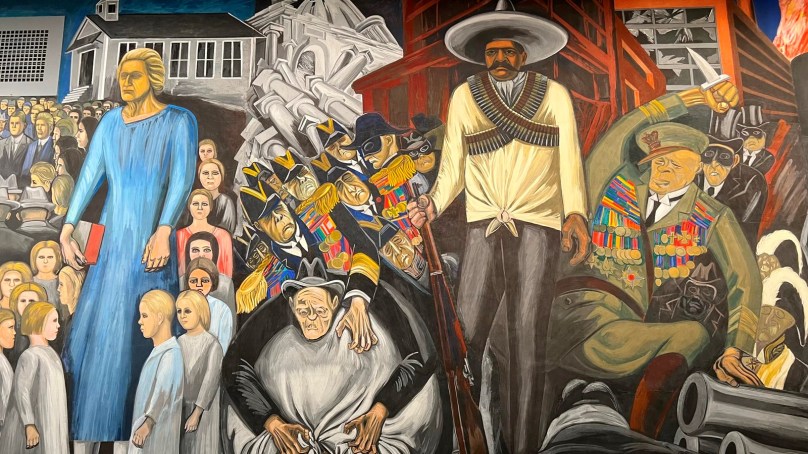
Panel of Orozco’s Epic of American Civilization
One of the things I most loved about my years at Dartmouth College was studying in the Baker Library’s Reserve Room, as it was then called. The Mexican artist José Clemente Orozco (1883-1949). Between 1932 and 1934, he painted a series of murals entitled “The Epic of American Civilization” in the college’s Baker Library.
There is a detailed discussion of Orozco’s mural put out by Dartmouth’s Hood Museum describing all the panels.
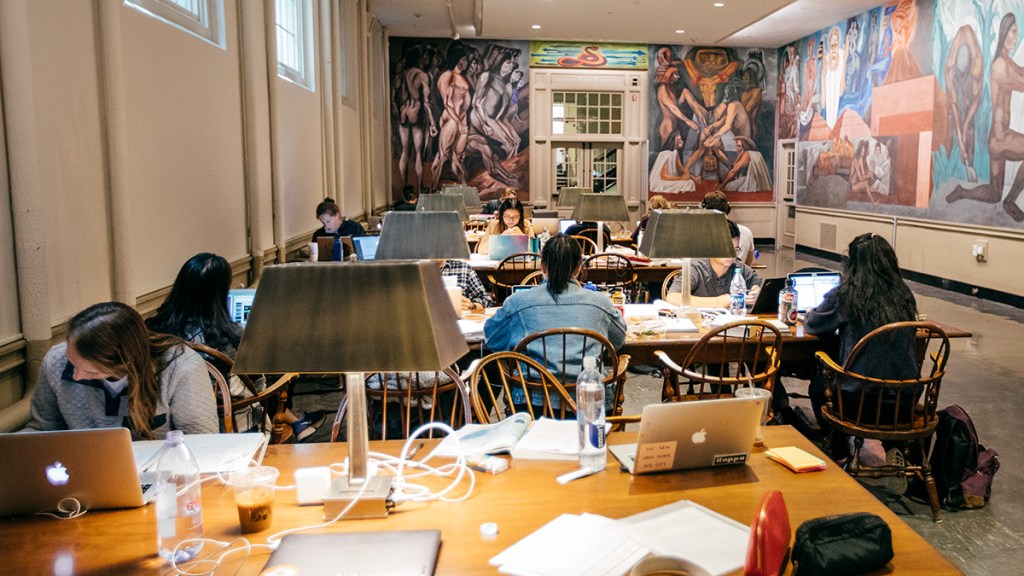
The Reserve Room
Sometimes I think it is those murals which first got me interested in going to Mexico. Nine years after I graduated, I finally made it to Yucatán and visited the ruins at Uxmal, Chichén Itzá, Mayapan, and Kabah during a two-week trip in November 1975.
Until I saw Orozco’s work, Mexico and the Pre-Columbian civilizations of the Americas just weren’t on my radar. Afterwards, they became a major preoccupation.

Quetzalcoatl in a Panel of the Orozco Murals
Little did I know in my college years that my interest in the murals would eventually lead me not only to Mexico, but also Argentina, Guatemala, Honduras, Uruguay, Chile, Peru, and Ecuador.
Incident at Retiro
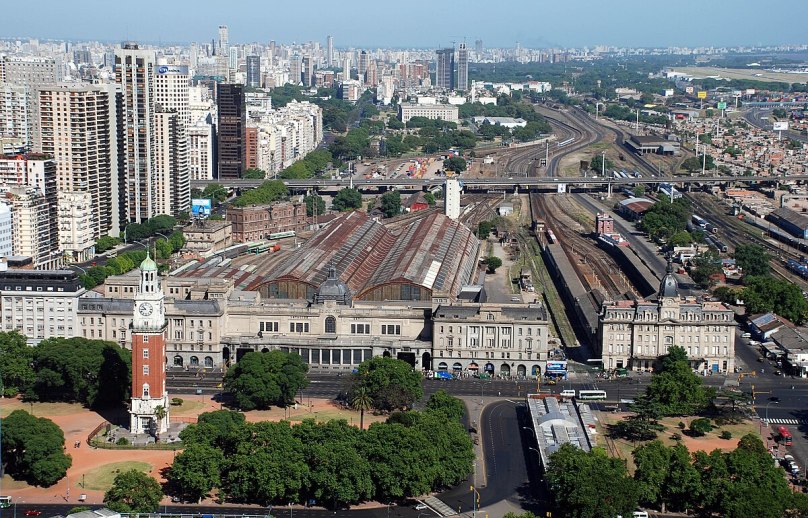
The Retiro Train Station in Buenos Aires
It was November 2015. I had just returned by train from Tigre where I had explored the delta of the Rio Paraná on a boat. That evening, I wanted to take a night bus to Puerto Iguazú to see the famous waterfalls. First I had to get a bus ticket, then take a cab back to my hotel in Recoleta and pick up my luggage, which was being held for me at the desk.
The main Buenos Aires bus station is a couple hundred yards’ walk to the north of the train station, just to the right (not shown) of the train station shown above.
As I walked along the crowded walkway to the bus station, I smelled an odorous mix of steak sauce and mustard that was squirted onto my back by a young couple that was following me. They were exceedingly polite as they applied paper towels to the mess and offered to accompany me to a location on the left where I would be cleaned up.
Cleaned out was more like it. I was familiar with this pickpocket trick. As I was carrying several thousand Argentinean pesos on my person, as well as several hundred dollars cash, I immediately went to my right and hailed one of the numerous cabs that had just dropped someone off at the bus and train stations. I jumped into the cab and asked them to drive me to my hotel in Recoleta.
The cab driver was not happy to be dealing with a rider who made his cab smell weird. Still, he drove me and I gave him a generous tip to clean the steak sauce/mustard smell from the back seat.
I picked up my bags and took another cab—this time directly to Retiro Bus Station, avoiding the walkway between it and the train station. I bought my ticket to Iguazú and got on the bus, still reeking. When, after a good night sleep, I got to my destination, I talked my hotel into laundering my still-smelly clothes.
It was an interesting experience.
Restaurant Confidential
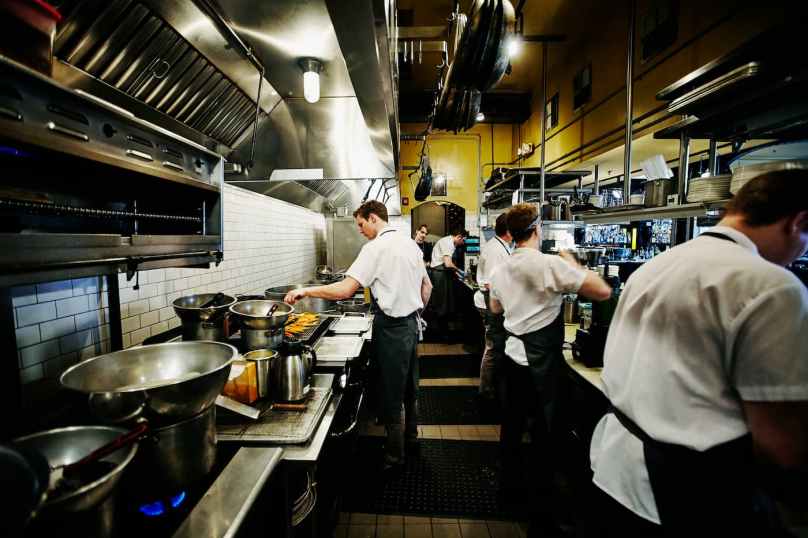
Restaurant Kitchen
Shortly after we survived the Covid-19 onslaught, I noticed that many of my favorite restaurants were shutting their doors. There was Papa Cristo’s Greek restaurant at Pico and Normandie near downtown L.A.; the Original Pantry at 9th and Figueroa, which was closed only a single day over the last century but is no more; and Jerry’s Deli, once a thriving chain.
Come to think of it, I am always surprised that restaurant stay open. I cannot imagine a less rewarding job than being the owner, manager, or supervising chef at a restaurant. The hours are long, your hands get scarred and burnt; you don’t make much money; and there are stringent health and sanitation requirements.
I have been reading Anthony Bourdain’s book Kitchen Confidential, which tells of one chef’s experiences in the New York and Provincetown, MA restaurant scenes. At one point, he writes:
To want to own a restaurant can be a strange and terrible affliction. What causes such a destructive urge in so many otherwise sensible people? Why would anyone who has worked hard, saved money, often been successful in other fields, want to pump their hard-earned cah down a hole that statistically at least will almost surely prove dry? Why venture into an industry with enormous fixed expenses (rent, electricity, gas, water, linen, maintenance, insurance, license fees, trash removal, etc.), with a notoriously transient and unstable workforce, and highly perishable inventory of assets?
Especially with the current occupant of the White House, who has it in for kitchen and agricultural workers, who traditionally tend to be illegal immigrants. As the owner of hotel restaurants at his glitzy Trump properties, who is going to work in his restaurant kitchens? Then, too, all this uncertainty over tariffs is going to hit hard at food items that are typically imported, such as winter fruits, avocados, and seafood. But then, we are entering a period of seat-of-the-pants decisions made without weighing the consequences.
Perhaps all that will be left are the “factory” restaurants like McDonalds and Burger King. That would certainly slash my restaurant expenses.
Worry


I try not to worry about the future because worry tears you down over time. There are things happening to this country that concern me, but I have no intention of succumbing to worry. That goes against my instinct for survival.
The Alabama Hills
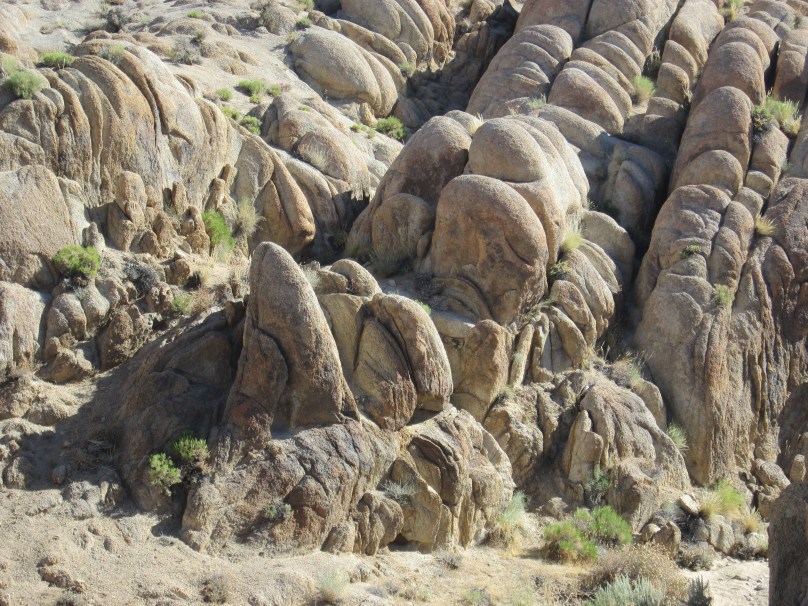
Hundreds of Hollywood Films Were Shot in the Alabama Hills
If you take California 14 from Los Angeles through the Antelope Valley to the end, you will find yourself on U.S. 395 near China Lake and Ridgecrest. In another hour or so, you will pass the turn-off for Death Valley in Olancha and soon afterwards the little town of Lone Pine.
Just west of Lone Pine, along the road that takes you to the Whitney Portal, are the Alabama Hills, which if you have seen as many films as I have, may be surprisingly familiar to you. That is because literally hundreds of scenes in Hollywood films were shot there, Here is a short list:
- Gladiator (2000)
- Django Unchained (2012)
- Tremors (1990)
- The Great Race (1965)
- Bad Day at Black Rock (1955)
- How the West Was Won (1962)
- Gunga Din (1939)
- Around the World in 80 Days (1956)
- The Ox Bow Incident (1942)
- High Sierra (1941)
- Greed (1924)
- Ride Lonesome (1959)
- Three Godfathers (1948)
- Samson and Delilah (1949)

If you should find yourself driving up that lonely Eastern Sierra highway, you might want to spend an hour or two taking the Alabama Hills loop road and seeing the sights. You can find out more if you should eat breakfast or lunch at the Alabama Hills Cafe in Lone Pine, probably the best eatery for a radius of a hundred miles.
Also highly recommended is the town’s Museum of Western Film History, which memorializes the Westerns shot in the Alabama Hills area.
Surgery


I have had surgery three times in my life. The major one was removal of my pituitary gland, which was eaten up by a benign tumor. Then I had my left hip replaced with a titanium joint due to severe osteoarthritis. Finally, I had cataract surgery in both eyes. All three procedures markedly improved my life. (It helped that I was very picky about my doctors.)
To Treasure Island

N. C. Wyeth Illustration of Blind Pew
Argentinian poet Jorge Luis Borges was a big admirer of Robert Louis Stevenson (as am I). The above illustration of the old pirate Blind Pew by N. C. Wyeth was for a 1911 edition of Stevenson’s Treasure Island. Here is a poem by Borges on the subject of the character who dominates the first chapter of the book:
Blind Pew
Far from the sea and from the lovely war
(For so love praises most what has been lost),
This blind, foot-weary pirate would exhaust
Road after English road or sodden moor.
Barked at by every dog from every farm,
Laughingstock of the young boys of the village,
He slept a poor sleep, trying to keep warm
And freezing in the black dust of the ditches.
But in the end, on far-off golden beaches,
A buried treasure would be his, he knew;
This softened some the hardness of his path.
You are like him—on other golden beaches
Your incorruptible treasure waits for you:
Immense and formless and essential death.
Breakfast


The day starts with a leisurely breakfast, including Indian black tea with honey and a squeeze of lime. Absolutely essential.
My Libraries
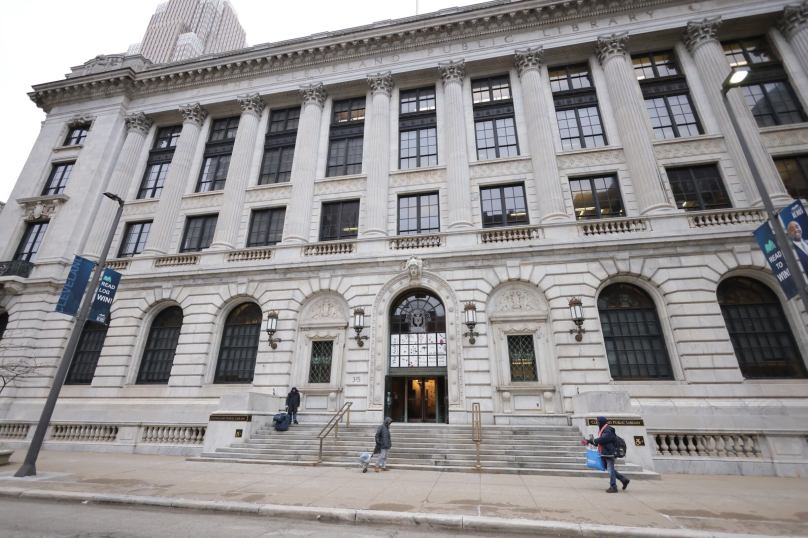
The Main Branch of the Cleveland Public Library Downtown
Books and libraries have always played an important part in my life.
When I was a toddler, my mother took me to the branch of the Cleveland Public Library on East 109th Street (now Martin Luther King Drive). Not that I could read, but I could indicate based on the illustrations the books I would be most interested in. She would check them out and read them to me in Hungarian, probably embroidering a bit. The one book I remember from that period was Dr. Seuss’s The King’s Stilts, which I now have in my collection.
In 1951, after my brother Dan was born, we moved to the Lee-Harvard Area on the East Side of Cleveland. For many years, I went to the Lee-Harvard branch which was located on Lee Road, first north of Harvard, and then south of it. The head librarian was a fellow Hungarian, Mr. Matyi, who played the oboe in the Cleveland Philharmonic Orchestra.
During my college years at Dartmouth, I spent many hours at Baker Library, which was modeled after Independence Hall in Philadelphia. What I loved most about it were the frescoes in the reserve room that were painted in the 1930s by José Clemente Orozco.

Once I moved to Los Angeles, I spent some time at the UCLA University Library, but I liked going to the main branch of the Santa Monica Public Library—which satisfied me until an opportunity opened up with the construction of the E (for Expo) Line of the Metro Rail. Driving and parking downtown was always a major pain. But now I was able to whiz downtown for 35 cents in three quarters of an hour.
I am now hooked on the Central Branch of the Los Angeles Public Library. Not only because of the library’s holdings, but various events sponsored by the library, especially the guided Thursday mindful meditation sessions.
The one library I forgot to mention is my own personal library of some 6,000 volumes, which I am slowly trying to thin by donations.
 Tarnmoor
You must be logged in to post a comment.