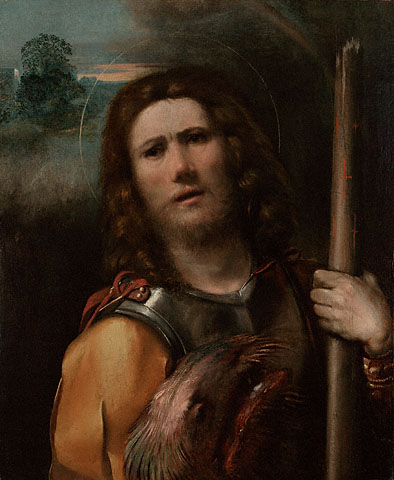
“Air and Light and Space and Time”

Charles Bukowski

Charles Bukowski

“–you know, I’ve either had a family, a job,something has always been in the
way
but now
I’ve sold my house, I’ve found this
place, a large studio, you should see the space and
the light.
for the first time in my life I’m going to have
a place and the time to
create.”

no baby, if you’re going to create
you’re going to create whether you work
16 hours a day in a coal mine
or
you’re going to create in a small room with 3 children
while you’re on
welfare,
you’re going to create with part of your mind and your body blown
away,
you’re going to create blind
crippled
demented,
you’re going to create with a cat crawling up your
back while
the whole city trembles in earthquake, bombardment,
flood and fire.

baby, air and light and time and space
have nothing to do with it
and don’t create anything
except maybe a longer life to find
new excuses
for.

© Charles Bukowski, Black Sparrow Press

For a graphic version, click here.

Economic Austerity: Who Stands to Benefit?

There’s a Reason Why Republicans Are So Behind This

There’s a Reason Why Republicans Are So Behind This

There is an excellent article by Paul Krugman in the June 6 issue of The New York Review of Books entitled “How the Case for Austerity Has Crumbled.” Paul Ryan and other apologists for economic austerity in the U.S. have been using two studies to bolster their case: Carmen Reinhart and Kenneth Rogoff’s “Growth in a Time of Debt” and a 2009 analysis by the Italian economists Alberto Alesina and Silvia Ardagna. It appears now that both studies are discredited as a result of miscalculations and wild assumptions.

That, however, does not prevent Republicans from pushing austerity measures in Congress irrespective of the reasoning. Their motivation is simply that, once again, they are shilling for the rich:

It’s also worth noting that while economic policy since the financial crisis looks like a dismal failure by most measures, it hasn’t been so bad for the wealthy. Profits have recovered strongly even as unprecedented long-term unemployment persists; stock indices on both sides of the Atlantic have rebounded to pre-crisis highs even as median income languishes. It might be too much to say that those in the top 1 percent actually benefit from a continuing depression, but they certainly aren’t feeling much pain, and that probably has something to do with policymakers’ willingness to stay the austerity course.

There is a widespread attempt to make economics into a “morality play” to make the pain of austerity seem necessary to account for the wretched excesses of the boom times. Krugman recalls how Andrew Mellon advised Herbert Hoover to let the Great Depression run its course so as to “purge the rottenness from the system.”

But where does this rottenness come from? Certainly not from the lower classes who are just trying to survive in tough times. Granted that thousands of people bought into mortgages they couldn’t really afford, but who packaged these mortgages for sale to them and to dim investors who were not in on the joke?

In little Iceland, bankers who made the loans which in 2008 precipitated the country’s financial crash were sentenced to prison terms for fraud. Did we do as much? Why have we exonerated greedy bankers for causing this whole mess?

There is a price to be paid for the U.S.’s financial woes, and I believe that eventually we will turn to prosecuting some of the guilty parties. But, as usual, the most guilty parties will not only get off scot-free: They will have, in the long run, gained from their crimes.


Boo-Birds and Soreheads

Alexander Stephens, Vice President of the Confederate States of America

Alexander Stephens, Vice President of the Confederate States of America

In the past, I have been critical of what I sneeringly referred to as the Confederate States of America. Now, as I am slowly working my way through the second volume of Shelby Foote’s magnificent The Civil War: A Narrative, I realize that further distinctions need to be made.

On the Southern side were such admirable and talented men as Jefferson Davis and Robert E. Lee, and such great generals as Thomas “Stonewall” Jackson and Nathan Bedford Forrest (though the latter, as founder of the Ku Klux Klan, was not terribly admirable).

Where I was mistaken is that certain political partisans, such as the Tea Partiers, have more in common with the people who were like a saddle sore to Davis and Lee. The diminutive Alexander Stephens, Davis’s Vice President, got so disgruntled by the politics of Richmond that he just moved back to his home state of Georgia and stayed there. The Confederate paper dollar plummeted in value, eventually sinking to one-twelfth the value of a gold dollar. As Foote writes:

[T]here were many behind the southern lines who disagreed with [Davis]; who were also for peace, but only on Union terms. Some had lost heart as a result of the recent reverses [at Gettysburg and Vicksburg], while other had had no heart for the war in the first place. The latter formed a hard core of resistance around which the former gathered in numbers that increased with every Federal success. It was these men Davis had in mind when, after referring to “threats of alienation” and “preparation for organized opposition.”

I cannot help but think that the Limbaughs and Hannities of our time would also have fought against their government at Richmond. There is a certain strain of sorehead or boo-bird that is incompatible with any leader who is actually trying to accomplish something even halfway laudable—even if we were to assume that States’ Rights was a laudable goal (which I myself do not).

After Gettysburg, Lee asked Davis to be relievbed of his command.  Davis responded with a heartfelt letter that made the Army of Northern Virginia take back his resignation:

RICHMOND, VA., August 11, 1863.

GENERAL R. E. LEE,

Commanding Army of Northern Virginia.

GENERAL : Yours of the 8th instant has been received. I am glad that you concur so entirely with me as to the wants of our country in this trying hour, and am happy to add that, after the first depression consequent upon our disasters in the West, indications have appeared that our people will exhibit that fortitude which we agree in believing is alone needful to secure ultimate success.

It well became Sidney Johnston, when overwhelmed by a senseless clamor, to admit the rule that success is the test of merit, and yet there is nothing which I have found to require a greater effort of patience than to bear the criticisms of the ignorant, who pronounce everything a failure which does not equal their expectations or desires, and can see no good result which is not in the line of their own imaginings. I admit the propriety of your conclusions, that an officer who loses the confidence of his troops should have his position changed, whatever may be his ability; but when I read the sentence, I was not at all prepared for the application you were about to make. Expressions of discontent in the public journals furnish but little evidence of the sentiment of an army. I wish it were otherwise, even though all the abuse of my self should be accepted as the results of honest observation.

Were you capable of stooping to it, you could easily surround yourself with those who would fill the press with your laudations and seek to exalt you for what you have not done, rather than detract from the achievements which will make you and your army the subject of history, and object of the world’s admiration for generations to come.

I am truly sorry to know that you still feel the effects of the illness you suffered last spring, and can readily understand the embarrassments you experience in using the eyes of others, having been so much accustomed to make your own reconnoissances. Practice will, however, do much to relieve that embarrassment, and the minute knowledge of the country which you have acquired will render you less dependent for topographical information.

But suppose, my dear friend, that I were to admit, with all their implications, the points which you present, where am I to find that new commander who is to possess the greater ability which you believe to be required ? I do not doubt the readiness with which you would give way to one who could accomplish all that you have wished, and you will do me the justice to believe that, if Providence should kindly offer such a person for our use, I would not hesitate to avail of his services.

My sight is not sufficiently penetrating to discover such hidden merit, if it exists, and I have but used to you the language of sober earnestness, when I have impressed upon you the propriety of avoiding all unnecessary exposure to danger, because I felt your country could not bear to lose you. To ask me to substitute you by someone in my judgment more fit to command, or who would possess more of the confidence of the army, or of reflecting men in the country, is to demand an impossibility.

It only remains for me to hope that you will take all possible care of yourself, that your health and strength may be entirely restored, and that the Lord will preserve you for the important duties devolved upon you in the struggle of our suffering country for the independence of which we have engaged in war to maintain.

As ever, very respectfully and truly,

(Signed) JEFFERSON DAVIS.

I take back my words about the Confederates States of America. Even in the South, there were Archangels, and there were also malignant spirits.

Slowing Down Your Racing Mind

Twisting and Turning at Night?

Twisting and Turning at Night?

Last night I went to sleep quickly enough, but I awoke around 1 am worrying about, of all things, a spreadsheet I was working on to reconcile UBS brokerage statements with the General Ledger based on them. One brokerage account in particular was a mess, with the broker going wild buying and selling bits and pieces of stock and mutual funds to the point of wretched excess.

I have learned, however, that it is not possible to solve problems by worrying about them. Sometimes my mind at night goes racing around and around until I come up with endless permutations, but no solutions. I am not saying that you can’t solve problems in your sleep, but if a solution arises, it always arises suddenly.

So what I do to stop my mind from racing is to get up and watch some television—the only time I ever watch it—until I find something that engages my interest and stops me from thinking about work. It usually takes about thirty minutes before I’m ready to hit the sack again, usually successfully.

Sure enough, I produced the spreadsheet this morning with no particular difficulties. The account was indeed messed up, but now we have something to use to correct it.

Everyone has his or her own solution to this,  but I also find that taking some melatonin half an hour before bedtime also helps keep me deep in the arms of Morpheus.


Petting a Lizard

Pepperdine College Main Campus in Malibu

Pepperdine University Main Campus in Malibu

The Pepperdine University campus in Malibu is, to my mind, one of the prettiest in Southern California. It is scattered across several foothills of the Santa Monica Mountains and boasts a spectacular view of the Pacific Ocean.

It was a warm Sunday in August, so Martine and I decided to take a walk across the up-and-down campus. A ring road surrounds it, and it takes about an hour and a half to navigate it.

During our walk, Martine managed a feat that astonished me. She snuck up on one of the little lizards that are scattered through the area and actually managed to pet it for a second or two before it realized what was happening, whereupon it fled into the underbrush in abject terror. Having gotten away with this feat once, Martine tried it on all the other lizards we encountered, but to no avail. The word must have traveled fast.

deeratpepperdine

Deer on the Pepperdine Campus

Then, as we left, we drove around the ring road looking for deer, which we can usually see in abundance around sunset. Of course, it was hours to go until sunset, so we saw nothing.

But we had a  nice walk and an interesting talk about old time TV.. Martine is a bit of an expert on television series in the 1950s, 1960s, and 1970s. She has a collection of autographed 8 x 10 photographs of many of the stars which she got from attending the old Hollywood Collectors’ Show in the San Fernando Valley, mostly in the 1990s and through the late 2000s, when many of the celebs were still alive.

A Grim Secret

Union General Ulysses S. Grant

Union General Ulysses S. Grant

Ulysses S. Grant was an altogether unprepossessing man. He didn’t have the swagger or gravitas of such Union generals as McDowell, Pope, McClellan, Burnside, Hooker, or Meade; but on the other hand, he was not a coward, a poltroon, or pathologically cautious either. His successes were due not only to his pertinacity, but to a grim secret that he knew and made use of as head of the Army of the Potomac.

Yes, the South had the more dashing generals, but they were on the wrong side when it came to the numbers. You see, the North had a larger population of eligible males to sacrifice to death, disability, and capture than the South. The South had, for all practical purposes, 100% conscription. At the end of the war, there were still at least 2 million eligible men who hadn’t worn the blue uniform. Take a look at this website by the Civil War Trust or charts and tables on Civil War casualties.

This Chart Says It All

This Chart Says It All

The other factor was that Grant never ran. At the end of the battle, he was still there and still game for more bloodshed—not for the sake of shedding blood, but for the sake of ultimate victory.

I have been reading the second volume of Shelby Foote’s The Civil War: A Narrative. Even with his Confederate sympathies, Foote could appreciate Grant’s grand strategy at Vicksburg. If the North won Vicksburg, the whole Trans-Mississippi South would be lost. The problem was: How to get at it. The most obvious way was to invade Mississippi and take it from the rear. Unfortunately, that failed; and in any case the area was controlled by the South’s most ingenious and fierce commander of cavalry, Nathan Bedford Forrest. (After the war, Forrest was one of the founders of the Ku Klux Klan.)

Grant was not afraid to fail, and he failed a total of seven or eight times before he found a way of marshaling his army and navy forces to effect a landing on the eastern side of the Father of Waters, well out of the way of Forrest’s cavalry. He made straight for Jackson, Mississippi, where he wrecked the railroad lines that supplied the Confederates at Vicksburg. Along the way back toward Vicksburg, he fought two battles at Champion Hill and the Big Black River. Then and only then did he directly besiege Vicksburg. From then on, it was pretty much a matter of starving the rebels until they surrendered early in July.

It was right around then that the North won its decisive victory at Gettysburg.

It wasn’t long before Lincoln concluded that, in Grant, he had a general who could outfight Lee’s Army of Northern Virginia. That is exactly what he proceeded to do in what has come to be known as his Overland Campaign. It didn’t matter how many men he lost jat battles such as the Wilderness, the North Anna, Spotsylvania Court House, and Cold Harbor just so long as he didn’t fall back after each battle, as the Army of the Potomac was wont to do. He not only did not fall back: He pushed Lee’s forces step by step closer to the final showdown in front of Richmond. And by then, it was all over.

Too bad that Grant made such a terrible President. He was a smart man, and a great military leader, but none of us are perfect.


Fading from View

At Vatnajökull

At Vatnajökull

I have been back in Southern California for three weeks, and only now am I no longer dreaming about Iceland. It is time to get on with the rest of my life. From time to time, I will return with a post about Iceland, but it is no longer occupying the front and center position of my life. (Of course, I would dearly love to return and spend some more time in the Northeast of the island.)

In the above photo, I am standing at the tongue of Heinabergsjökull, one of the extensions of the gigantic Vatnajökull icecap, the third largest in the world after Antarctica and Greenland.

At the same time that Iceland is starting to fade from view, so is Vatnajökull itself. Over the last eighty years, the glacier has pulled back from the edge of the sea for several miles and shows signs of a further retreat. In the 1930s, if I were standing in the same position, there would be perhaps a hundred meters of ice below me (or above me).

What I hope will never fade from view are my memories: Iceland occupies a special place in my heart—along with Patagonia, the American Southwest, Yucatán, and the islands off the coast of Scotland. Visiting those places has, to a large extent, made me the person I am today. I went from being a little kid whose family was too poor to take him anywhere to a grown-up who has developed an insatiable itch for travel.

Who knows what the next few years will bring? My gaze is still skipping around the globe, looking for places that might interest me. And I hope that Martine can accompany me, because her presence and her sense of wonder make everything better.


“6-2-6, You’re Wild and Free!”

The SGV’s Fung Brothers

The SGV’s Fung Brothers

I must be going out of my mind: I am about to recommend for your consideration an Asian-American rap duo which calls itself the Fung Brothers from the SGV—that’s San Gabriel Valley to you libtards. The SGV is where L.A.’s Chinese-American community is centered, in communities like Monterey Park, San Gabriel, San Marino, Rowland Heights, Rosemead, Temple City, and a dozen other places.

Where does 6-2-6 come from? That’s the Area Code of much of the SGV, and is used much like Beverly Hills 90210 for that hoity-toity place west of West Hollywood.

I recommend you visit YouTube first of all, to see their song and dance video about their neighborhood, and then their website, which you can find here. (Beware, however, their website reset my cursor to chains, but restored it when I restarted the system.)

This is a part of Los Angeles I love visiting when I want authentic Chinese food, such as when I wrote this blog earlier in the week.

The New Meaning of Treason

Edward Snowden

Edward Snowden

On one of his last days in office as President of the United States in 1961, Dwight D. Eisenhower warned us against what he called “the military-industrial complex”:

In the councils of government, we must guard against the acquisition of unwarranted influence, whether sought or unsought, by the military-industrial complex. The potential for the disastrous rise of misplaced power exists and will persist.

We must never let the weight of this combination endanger our liberties or democratic processes. We should take nothing for granted. Only an alert and knowledgeable citizenry can compel the proper meshing of the huge industrial and military machinery of defense with our peaceful methods and goals, so that security and liberty may prosper together.

Akin to, and largely responsible for the sweeping changes in our industrial-military posture, has been the technological revolution during recent decades.

In this revolution, research has become central; it also becomes more formalized, complex, and costly. A steadily increasing share is conducted for, by, or at the direction of, the Federal government.

Today, the solitary inventor, tinkering in his shop, has been overshadowed by task forces of scientists in laboratories and testing fields. In the same fashion, the free university, historically the fountainhead of free ideas and scientific discovery, has experienced a revolution in the conduct of research. Partly because of the huge costs involved, a government contract becomes virtually a substitute for intellectual curiosity. For every old blackboard there are now hundreds of new electronic computers.

Well, we didn’t follow his advice, and so now the military-industrial complex pretty much rules this country. As you can see from the headlines, the United States is involved in all kinds of activities that make us the global bad guys, from the NSA spying on the phone calls of U.S. citizens to drones at home and abroad.

Private Bradley Manning

Private Bradley Manning

A new kind of “traitor” has sprung up—not a traitor to the nation, but a traitor to the military-industrial complex and what it is doing to make us feel as if we were no longer “the city on the hill,” but rather pirates cavorting on the Dry Tortugas. Private Bradley Manning and Edward Snowden are now threatened with dire penalties for the crime of letting us in on what our government is doing.

In my book, that makes them heroes. And I think it will not be long before the rest of the country comes around to my way of thinking. It may take years, even decades, for that to happen; but I think in tomorrow’s history books, they will not be discussed under the same heading as Benedict Arnold or Edward Everett Hale’s Philip Nolan, “The Man Without a Country.”

Left Whingers

Between the Devil and the Deep Blues

Between the Devil and the Deep Blues

If you’ve been reading this column for a while, you know that I am hostile to the ideals, such as they are, of the American Right. Does that mean that I am comfortable with the Brie and Chablis crowd of whining, whingeing Progressives?

By no means! Every day I cringe at the political e-mails I receive from various Democratic operatives soliciting funds and great gobs of my time as a volunteer. (To what—snarl at voters?) And if I don’t give generously, it’ll all be my fault what happens were the Right Whingers to take control and turn this into a Totalitarian Taliban Theocracy.

On one hand, there is outrage and whingeing; and, on the other, outrage and whingeing. I guess it all depends whether one feels more at home with Pentecostals or Agnostics, whether one prefers NASCAR or Grand Opera, whether one listens to the likes of Rush Limbaugh or Stephanie Miller.

Well, I’ll take neither, thank you. Life is difficult enough without all those pre-packaged ideologies to which one has to subscribe. And if you think that makes me wishy-washy, I’ll be happy to disabuse youse!