Dog Halloween

Fireworks Galore, But Does Anyone Care What They’re Celebrating?

As I write this blog, I hear the spluttering of fireworks near and far. What I do not hear is the barking of dogs. No doubt they are cowering under beds and couches while their super-sensitive ears are assailed by the endless sound of explosions.

I used to attend fireworks shows, until I used to dislike parking miles away and joining a large crowd of people for a show that lasted all of fifteen or twenty minutes. Hell, I even set off some illegally purchased firecrackers myself—and I still have all ten fingers and toes! Eventually, I just decided that here was another holiday which didn’t really mean much to anybody.

Which holidays have any meaning any more?

  • Halloween, because it’s still fun and everyone likes candy
  • Thanksgiving, so you discover who in your family is demented enough to vote for Trump
  • Christmas, so you can spend $$$ on what you don’t need and your friends and relatives don’t want

Independence Day has become a kind of Dog Halloween. It results in scaring your dogs and cats half to death. At least, Roxie, the little lapdog downstairs, hasn’t barked once today. It would be too much to hope that her silence will continue, as she still, after more than a year, regards me as little more than a bindlestiff.

Comprachicos

Conrad Veidt in Paul Leni’s Film The Man Who Laughs (1928)

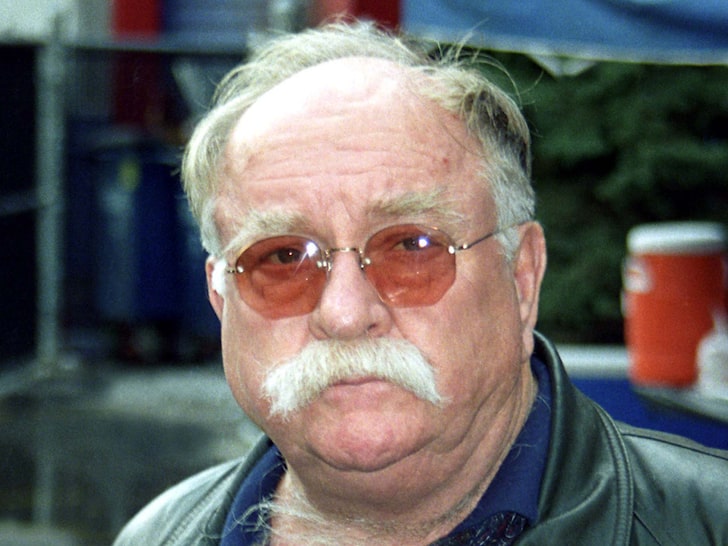
It all started in the elevator to the Trader Joe parking lot. Two odd women first commented that I looked like the actor Wilford Brimley, and then asked me why I didn’t smile. That set me off: I don’t particularly like to go around with a smile on my face, and I don’t think much of people who do. Were these frustrated dental assistants to go around accosting strangers for not airing their teeth?

Then I thought of one reason I didn’t like being all smiley. I remembered Victor Hugo’s novel The Man Who Laughs (1869), which was turned into a 1928 silent film by Paul Leni starring Conrad Veidt, better known as Major Strasser “of the Third Reich” in the film Casablanca (1942).

Well, anyway, the novel and film were about people called comprachicos who, as children, were mutilated to look pathetic so that their handlers can could use them for begging:

The Comprachicos, or Comprapequefios, were a hideous and nondescript association of wanderers, famous in the 17th century, forgotten in the 18th, unheard of in the 19th. They traded in children, buying and selling them, but not stealing them. They made of these children monsters. The populace must needs laugh, and kings too. The montebank is wanted in the street, the jester at the Louvre; the one is called a clown, the other a fool. By the artificial production of teratological cases the Comprachicos developed a science and practiced an art. They kneaded the features, stunted growth, and fashioned hunchbacks and dwarfs; the court fool was their specialty.

The Conrad Veidt character in the film was a child who was kidnapped and had a permanent smile carved on his face, which made him look pathetic. And that’s what comes to mind when people tell me to smile. I just don’t care to oblige them.

Wilford Brimley (1934-2020)

By the way, I look almost exactly like Wilford Brimley, except that his mustache was a little bigger than mine. Of course, I would prefer that strangers think I am a dead ringer for Brad Pitt, Robert Redford, Warren Beatty, or some other dolicocephalic heartthrob. But then, so it goes.

Jains: The Most Gentle People

Detail, Pilgrimage to a Jain Shrine c. 1850

Compared to the Jains of India, the Quakers and other pietists seem positively warlike. I am currently reading William Dalrymple’s Nine Lives: In Search of the Sacred in Modern India (2009). In it, a Jain adept describes her initiation:

[W]e were led back onto the stage, and told our new names. I was no longer Rekha; for the first time in my life I was addressed as Prasannamati Mataji…. Then we were both lectured by our guruji. He told us clearly what was expected of us: never again to use a vehicle [to avoid crushing insects], to take food only once a day, not to use Western medicine, to abstain from emotion, never to hurt any living creature. He told us we must not react to attacks, must not beg, must not cry, must not complain, must not demand, must not feel superiority, must learn not to be disturbed by illusory things. He told us we must be the lions that kill the elephant of sexual desire. He told us we must cultivate a revulsion for the world, and a deep desire for release and salvation. And he told us all the different kinds of difficulties we should be prepared to bear: hunger, thirst, cold, heat, mosquitoes. He warned us that none of this would be easy.

As they would walk along, Jains would sweep a peacock feather fan in front of them lest they inadvertently took the life of any creature, regardless how small. During the wet monsoon season, they stayed indoors because the omnipresent puddles were teeming with microscopic life.

Dalrymple’s source, a Jain nun called Prasannamati, blamed herself for being closely attached for twenty years to another Jain nun until the latter died of tuberculosis and malaria. Toward the end, the friend gradually cut down on her intake of food until she in effect died of starvation. Although she was only 38 years old and still healthy, Prasannamati was in the beginning stages of the same kind of starvation suicide, called sallekhana.

As Prasannamati said to her questioner, “Sallekhana is the aim of all Jain [monks or nuns]. First you give up your home, then your possessions. Finally you give up your body.”

“The City”

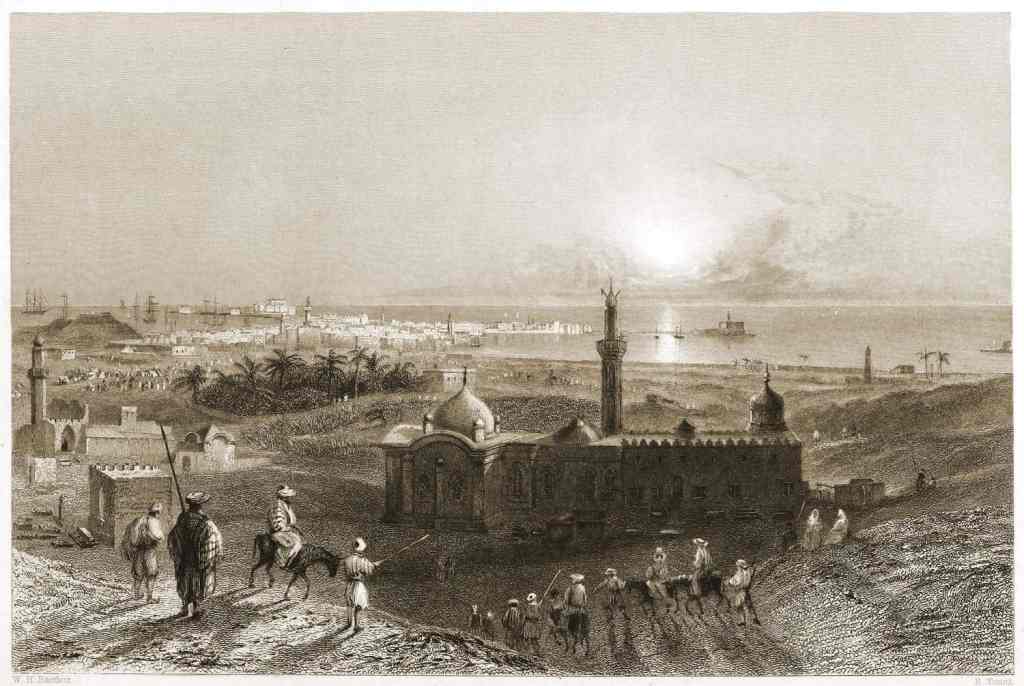
Alexandria, Egypt in the 19th Century

Every once in a while, when I’m feeling restless, I think of the poet of Alexandria, Egypt: Constantine P.Cavafy (1863-1933). I first learned about him from reading Lawrence Durrell’s The Alexandria Quartet, where he is referred to as “the poet of the city.” Appropriately, here is one of his best poems, which is called, simply:

The City

You said: “I’ll go to another country, go to another shore,
find another city better than this one.
Whatever I try to do is fated to turn out wrong
And my heart lies buried like something dead.
How long can I let my mind moulder in this place?
Wherever I turn, wherever I look,
I see the black ruins of my life, here,
where I’ve spent so many years, wasted them, destroyed them totally.”

You won’t find a new country, won’t find another shore.
This city will always pursue you.
You’ll walk the same streets, grow old
in the same neighborhoods, turn gray in these same houses.
You’ll always end up in this city. Don’t hope for things elsewhere:
there’s no ship for you, there’s no road.
Now that you’ve wasted your life here, in this small corner,
you’ve destroyed it everywhere in the world.

On Being a Slave to Technology

Something happened to me as I approached retirement age. I mean besides getting old. What I mean is that I began to feel highly critical about several technologies that were beginning to assume a dominant position in our society.

Touch Screen

Although I use an Amazon Kindle to read several books a month, I do not like the imprecision of touch screen interfaces—especially when I have to enter data without a large-sized keyboard. I do not have fingers that measure five millimeters across, so an onscreen keyboard is as difficult for me as using tweezers to move an anvil.

Smartphones

In addition to my dislike of touch screen interfaces, I find smartphones irritating in the extreme. I have a flip cellphone, but I don’t carry it around with me everywhere I go. For one thing, I will not answer the phone while driving, as I wish to continue living and operating an unwrecked car. My cellphone is for outcalling only, except by prior arrangement. Most of the time, it is powered off and sits comfortably on my computer desk.

The other thing is that I already have to carry around a number of things in my pockets:

  • An eyeglass case with reading glasses
  • A ballpoint pen
  • My wallet
  • My keys
  • Change for parking meters
  • Selected medications, including insulin for diabetes

E-Scooters

Why was this ever invented? I have already seen a half dozen nasty accidents involving e-scooters. And besides, I’ve always thought people looked silly operating them.

Artificial Intelligence (AI)

I know that we are living in a world where artificial intelligence is regarded as the coming thing. In my opinion, AI is a way of sacrificing truth for convenience. Please accept my assurance that I do not use AI in producing my blog posts. We have enough half truths and lies all around us without my adding any more to the mix.

GPS

Here I admit I’m on shaky ground. I do not have any GPS device in my car because I do not like to be distracted while driving. Also, I am still a bit skeptical about their accuracy, particularly while traveling in foreign countries. I suppose that for people who don’t know where they’re going, GPS can be a blessing of sorts.

The nice thing about being my age is that I can pick and choose which technologies to adopt. I do not have to turn myself into a rabid fanboy because Apple or some other tech giant is releasing a new product. I believe it was Alexander Pope who wrote the following couplet:

Be not the first by which the new are tried
Nor yet the last to lay the old aside.

“You Have To Swing”

Jack Kerouac (1922-1969)

Jack Kerouac is not best known for his poetry, but his can be fun to read, such as this short lament:

Woman

A woman is beautiful
but
you have to swing
and swing and swing
and swing like
a handkerchief in the
wind

Survival Mechanism

My father was a semi-professional athlete both in Czechoslovakia and in Cleveland, where he played in the 1930s in a nationality-based soccer league. As his firstborn, I was something of a disappointment to him. I was a bit of a shrimp, later ballooning into a short tubby boy with a broad spectrum of allergies. Plus, around the age of ten, I started getting severe frontal headaches almost daily that were constantly misdiagnosed by the physicians we saw. (It turned out to be a pituitary tumor, which was successfully operated on after I graduated from college.)

What unpromising material!

When my brother was born, my father must have breathed a sigh of relief. Dan was tall and an athlete in my father’s mold.

Where did that leave me?

Thanks to my mother’s genius for story-telling—what with dark forests and witches and princesses—I turned to books as soon as I learned to read. There was a period of adjustment of several years during which I had to switch from being an American kid who spoke only Hungarian to an English-speaker. Those dark forests and witches and princesses, luckily, could also be found in books, together with a lot of other interesting stuff.

Although I always had friends, I was left out of school sports because I was frankly somewhat sickly. That turned out to be all right in the end, as my friends were interested in the same sort of things that I was. With Richard Nelson, who was an astronomy freak, I collaborated in writing an illustrated hand-printed study of our solar system and galaxy. Richard later became a meteorologist. Then there was James Anthony, who became a gynecologist.

While I was physically weak, books made me strong in every other way. I never became a famous author or a college professor, but I held down some interesting jobs that help finance my love of books. And I always read a lot. Even today, as I approach my ninth decade, I read anywhere from twelve to sixteen books a month.

What started out as a survival mechanism has brought happiness to my life. I have no children (because I no longer have a pituitary gland), but my retirement years have been mostly contented.

I know that there will be bad times to come as Martine and I age, but I retain a mostly sunny view of life. And in an election year in which Donald Trump is running, that’s a major accomplishment.

My Cities: Edinburgh

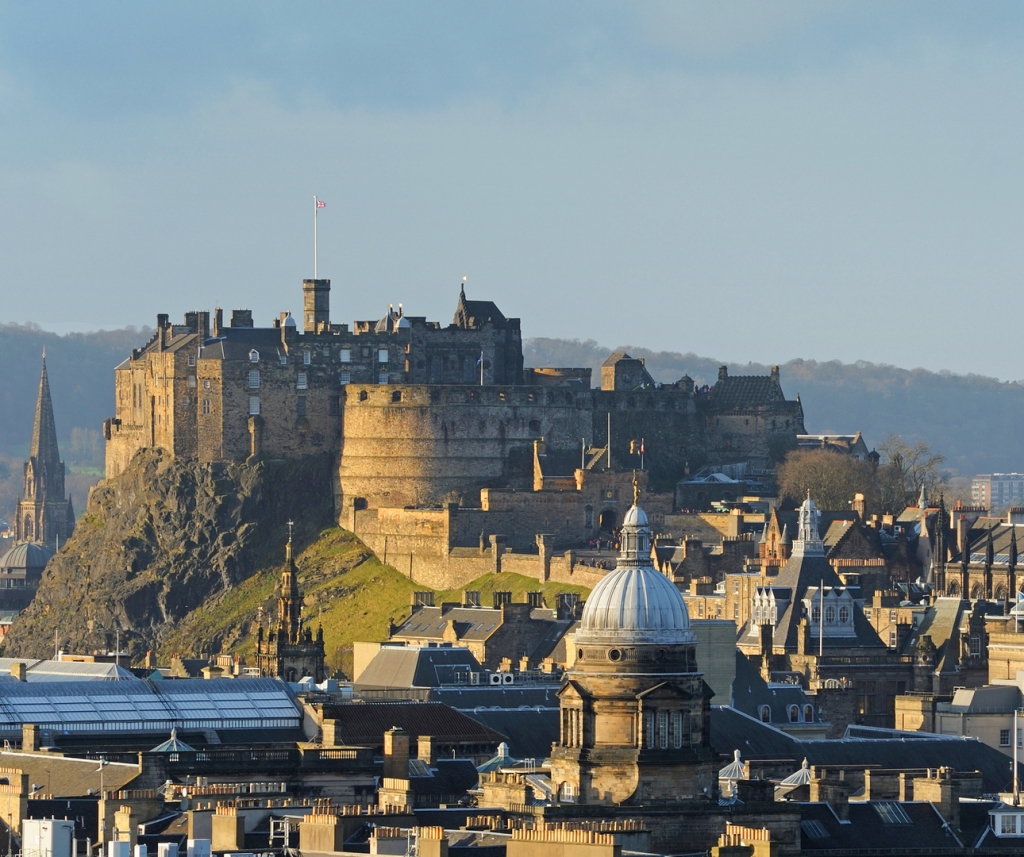
Edinburgh Castle Cityscape, Scotland, UK

The most incredible street in the British Isles has to be the Edinburgh’s Royal Mile. At one end, it is anchored by the looming hulk of Edinburgh Castle and, at the other, by the Royal Palace of Holyroodhouse. In between lies the whole pageant of Scottish history.

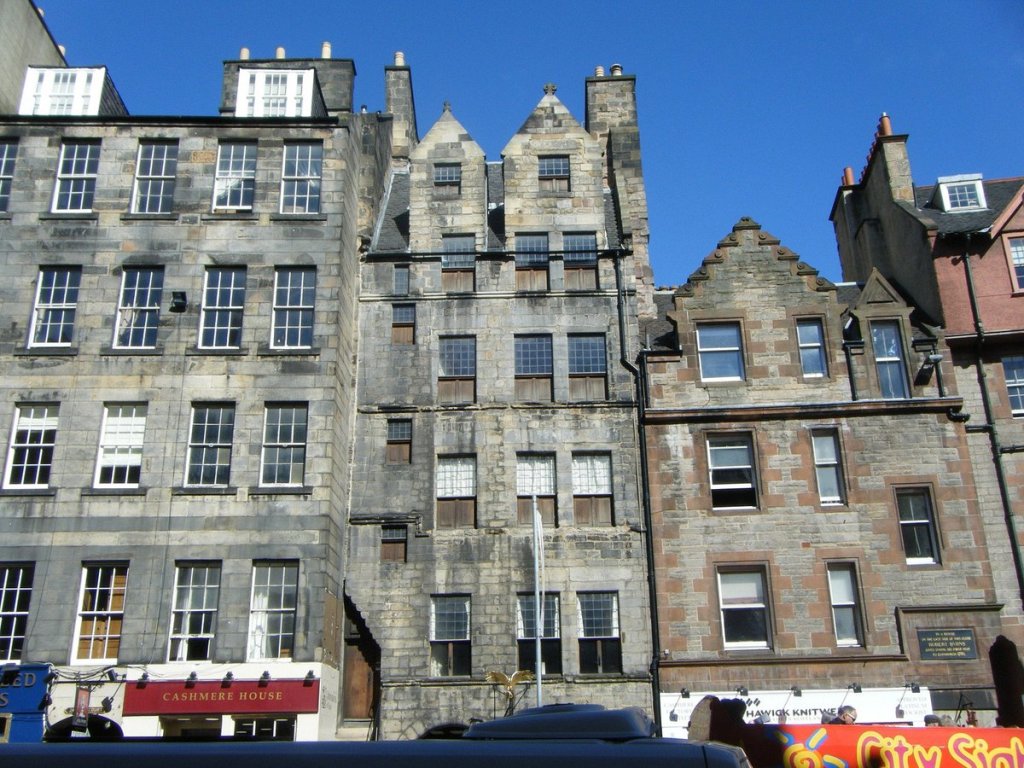
Along the way are St. Giles Cathedral, the High Kirk of Scotland; the tolbooth, or prison, described in Sir Walter Scott’s The Heart of Midlothian (1818); and the house of John Knox. Short dead-end streets known as wynds contain Europe’s first high-rises.

Gladstone’s Land, an Early High Rise Building

England, Wales, and Scotland are all rich in history; but in Scotland there is a particular awareness of history that permeates the culture and literature of the Scots. You find it in the works of Robert Louis Stevenson and the historical novels of Nigel Tranter. You can hardly step out of your hotel without finding yourself in the middle of it.

I’ve been to Edinburgh four times in all dating from 1976, the first two times alone, the second two times with Martine. If I had the money, I would dearly love to go again. There is something about reading one of Scott’s Waverly novels while eating a steaming bowl of cullen skink. And yes, I actually like a plate of haggis and neeps (mashed turnips), probably because haggis tastes like Hungarian liver sausage, or hurka.

“He Neuer Makes His Walke Outright”

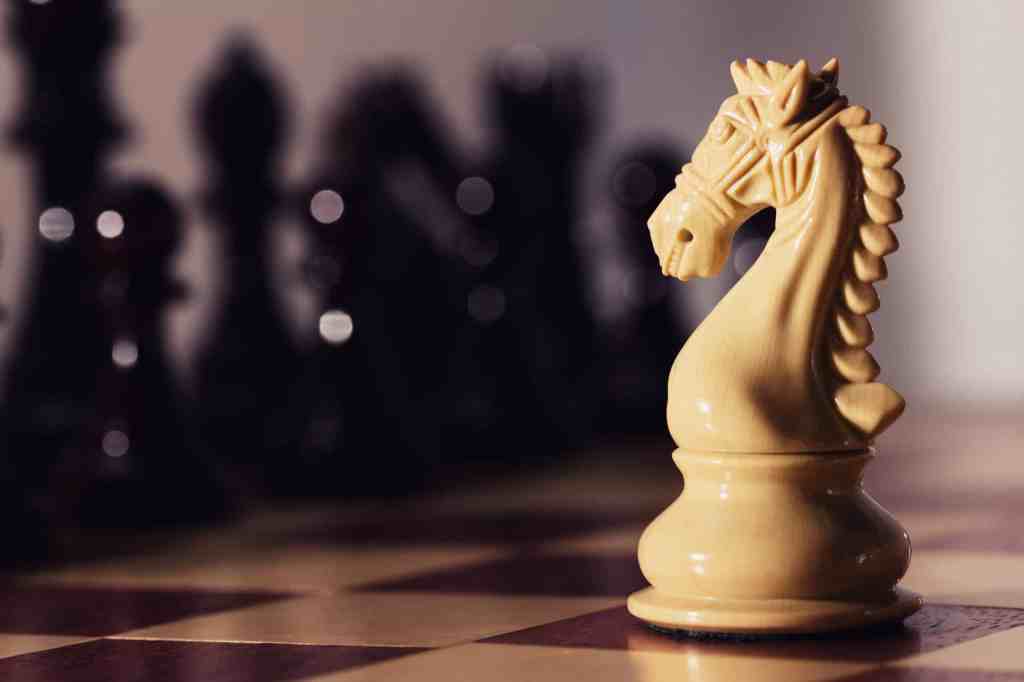
The Knight in Chess

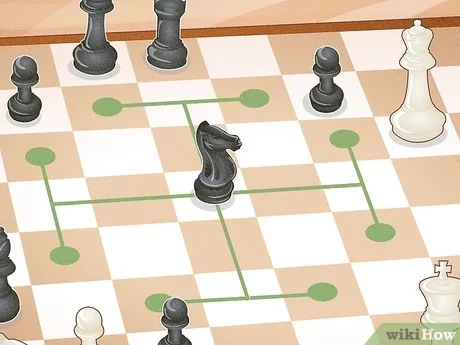
Of all the pieces on the chessboard, the most ancient is that queer duck, the knight. He is the only piece that can jump over other pieces—on his side or the enemy’s—to make a move or capture. His move can only be described as a four-square “L,” starting with one square left, right, up, or down—and then one square diagonally away from the starting point of the move. Or, look at the following illustration:

Possible Knight Moves

Just note that there could be other pieces on any of the squares that are “jumped over” and an enemy piece on the final square on which the knight lands. These are shown with green dots in the above illustration.

The following description of the knight in chess comes from Nicholas Breton’s The Chesse Play (1593):

The Knight is knowledge how to fight
against his Princes enimies,
He neuer makes his walke outright,
But leaps and skips, in wilie wise,
To take by sleight a traitrous foe,
Might slilie seek their ouerthrowe.

Over ther last several months, I have spent some time studying chess problems at Chess.Com. What I find particularly interesting is that, if the knight is in the vicinity, there is a good chance that the key move will be made by him, either checking the king or being sacrificed to allow for checkmates or winning piece grabs.

Tit for Tat

Cumulus Clouds Over Los Angeles

In terms of the calendar, summer began on Thursday; but in terms of the actual weather, it began today with high humidity (76%), relatively high temperatures (around 80° Fahrenheit or 27° Celsius), and a parade of majestic cumulus clouds.

If I were to identify the “microseason” we are entering, I would say it is Mexican Monsoon Season, where we are the recipient of the northern edges of Mexico’s summer monsoons.

That’s a fair trade, I suppose, because the united States begins sending in late autumn its nortes, or “northers,” which wreak serious havoc along the Gulf Coast of Mexico. In November 1992, I have memories of two nasty northers which led to extensive flooding in both Campeche and Mérida. I remember wading to the Campeche bus station in knee-deep water to buy tickets for the next morning’s ADO first class bus to Mérida.

When the next morning dawned, I was surprised to see that most of the flooding had subsided considerably.