The Archbishop’s Garden

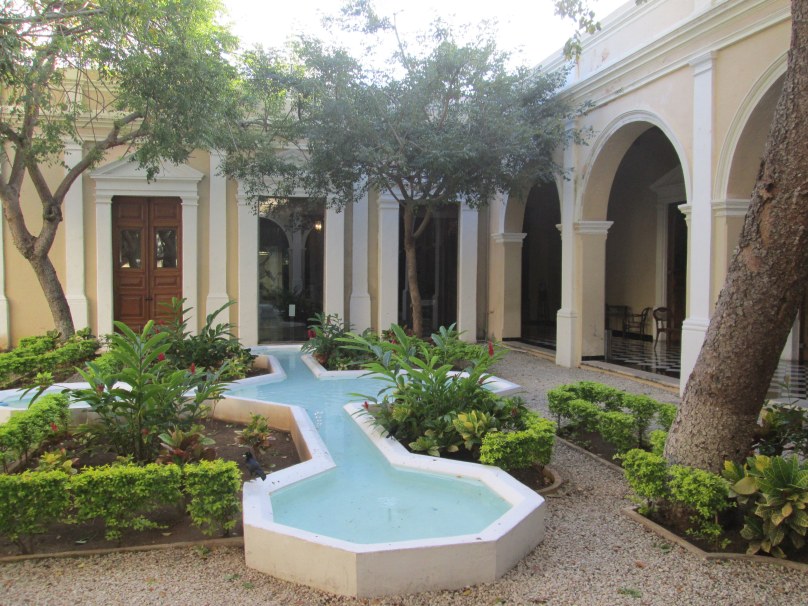
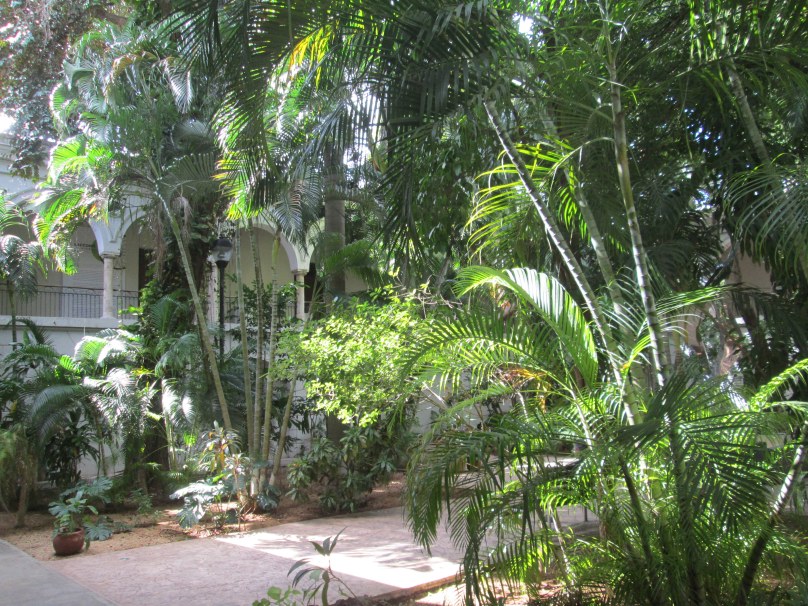
The Archbishop’s Enclosed Garden in Mérida, Yucatán

Do you ever really use your front lawn? There you are, in full view of wandering passersby and the occasional hobo. You feel self-conscious and even slightly stupid—unless you are doing yard work.

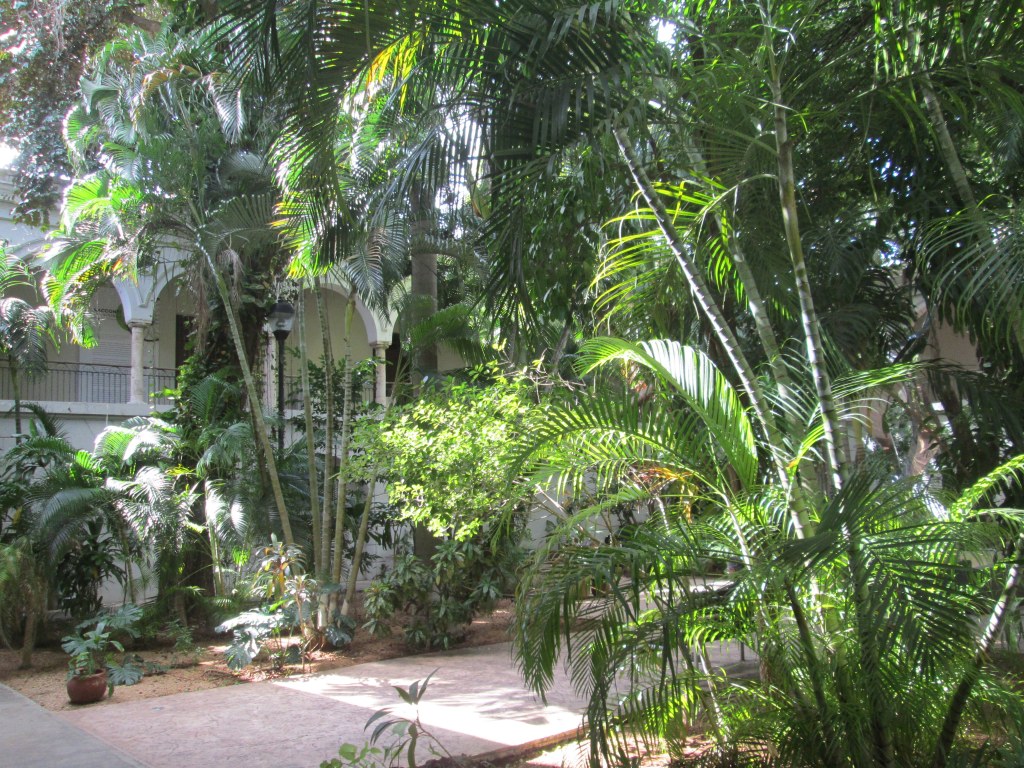
Take a look at the above courtyard, which is surrounded on all sides by the Mérida, Yucatán archbishop’s palace. It was a hot, humid day; yet the garden was cool with comfortable benches in the shade. I took advantage of the benches before seeing the rest of the art museum that the archbishop’s palace has been turned into.

I love the Mexican houses that have no setback from the street, instead enclosing a private courtyard that is in actuality the heart of the house. Of course, there are laws that prevent such a thing in the United States. Hence all those front lawns that are thirsty for water and fertilizer and are never used for the pleasure of the family within.

Granted, the archbishop had the means to have something special built for him; but I have seen scores of small gardens in more modest Mexican houses, including many of the small hotels at which I have stayed. In many cases, they are used as bars or simple restaurants.

Sometimes I think that the water shortages in California and other desert states could be alleviated simply by getting rid of those front lawns that attempt to imitate an English country house. California is not England, nor is it the Eastern U.S.
An Embarrassment of Riches

Is This the Attic of Western Civilization?

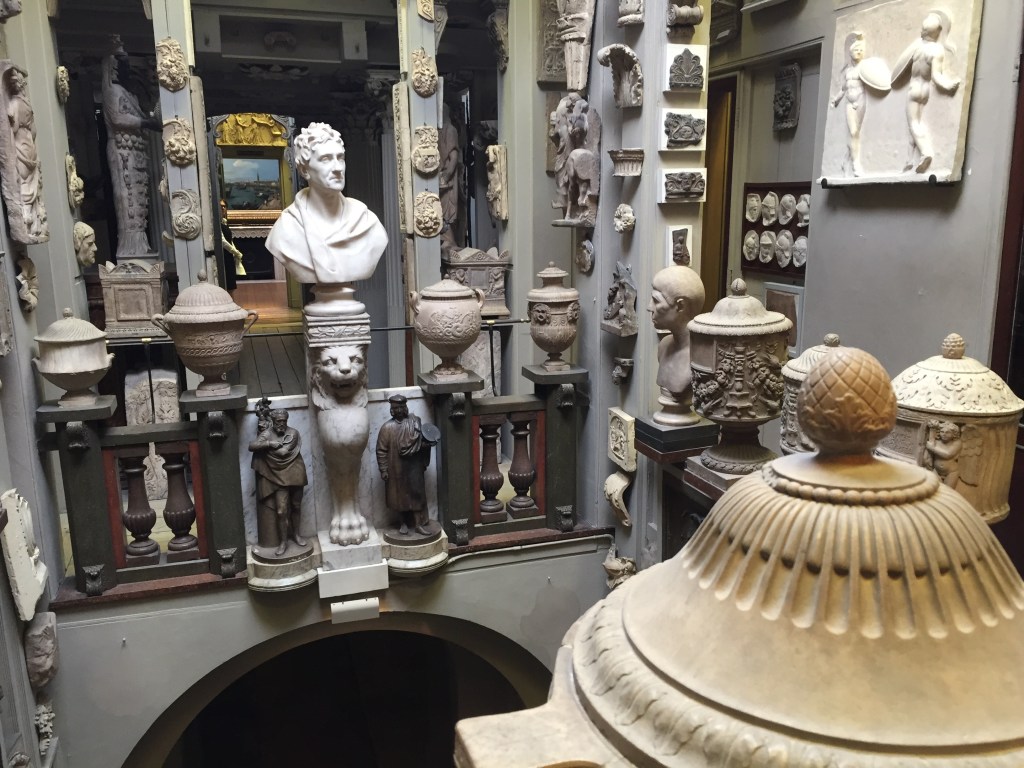
If I were asked to pick my favorite museum, I would have a hard time deciding; but I might very well end up by picking Sir John Soane’s Museum by Lincoln’s Inn Fields in London. Each time I have visited London, I have spent time marveling at the collections represented, whether of Egyptian, Greek, or Roman antiquities or 18th century paintings.

The original Sir John Soane (1753-1837) was the architect who designed the Bank of England, Not the present one, but the old one that was demolished in the 1920s. While I cannot comment on Soane’s skills as an architect, I am nothing short of amazed by Soane the art collector.

Walk through the museum, and it’s as if you were carefully edging your way through an overcrowded attic—except that Soane was no mere hoarder. He is, as it were, at the very pinnacle of a cultivated English artist circa 1800.

Paintings and Sketches Line the Walls from Floor to Ceiling

And I mean English with a vengeance. You would not find anything like this in France. The story of how the museum came to be is archetypally English (quoted from Wikipedia):

The museum was established during Soane’s own lifetime by a private Act of Parliament … in 1833, which took effect on Soane’s death in 1837. The act required that No. 13 [Lincoln’s Inn Fields] be maintained “as nearly as possible” as it was left at the time of Soane’s death, and that has largely been done. The act was necessary because Sir John had a living direct male heir, his son George, with whom he had had a “lifelong feud” due to George’s debts, refusal to engage in a trade, and his marriage, of which Sir John disapproved. He also wrote an “anonymous, defamatory piece for the Sunday papers about Sir John, calling him a cheat, a charlatan and a copyist.”

Oh, you can view the changing of the guards at Buckingham Palace, ride in giant Ferris Wheel in Greenwich, visit the British Museum, but nowhere else could you see the odd genius of a single human being—one who left us a Pisgah view of the 18th century.

Check out the museum’s website if you have a few minutes.

An Architectural Marvel

The Getty Center in Los Angeles

In general, I am not a big fan of contemporary architecture. I get tired of giant rectangles constructed of steel and glass. Ever since it opened its doors in 1997, I have come to love the Getty Center. (I also love the Getty Villa in Malibu, but I’ll save that for another time.)

Architect Richard Meier spent thirteen years designing the center, with the kind of attention to detail used to site ancient Egyptian or Meso-American temples. For instance, some of the buildings on the campus are oriented north/south. Others parallel the line of the I-405 freeway, which is 22.5° degrees off the north/south axis—which is exactly one-half of 90° and one-fourth of 180°.

The buildings are faced with blocks of travertine from Italy or aluminum tiles, both of which are 30 inches square (or 76.2 centimeters). Below is a close-up of one of the highly textured travertine walls:

Travertine Blocks Forming Getty Center Outer Wall

When I open the front door of my apartment in the morning to pick up my copy of the Los Angeles Times, I can actually see the Getty Center atop its hill some 4.5 miles (7.24 kilometers) as the crow flies. For more info about the Center’s design, click here.

The Perfect House

Courtyard of the Casa Montejo in Mérida, Yucatán

When most Americans think of the ideal house, they always see it as set back from an immaculately manicured front lawn. Perhaps owing to my hatred of mowing lawns, I much prefer the Mexican house, which presents a blank face to the street—no windows, one regular-sized door—and with a delightful courtyard which can’t be seen from the street.

I cannot for the life of me see myself doing anything on a front lawn other than working my butt off. But a courtyard, that is a different matter altogether. I could set out a chair and read there, or talk to my friends, or even have breakfast.

Courtyard of the Former Archbishop’s Palace in Mérida

In Latin America, you can live in a beautiful house—as seen from the inside—and not have to worry about what the neighbors think. When I think of sliding glass doors opening onto decks, I wonder if most American houses are secure from theft and home invasions.

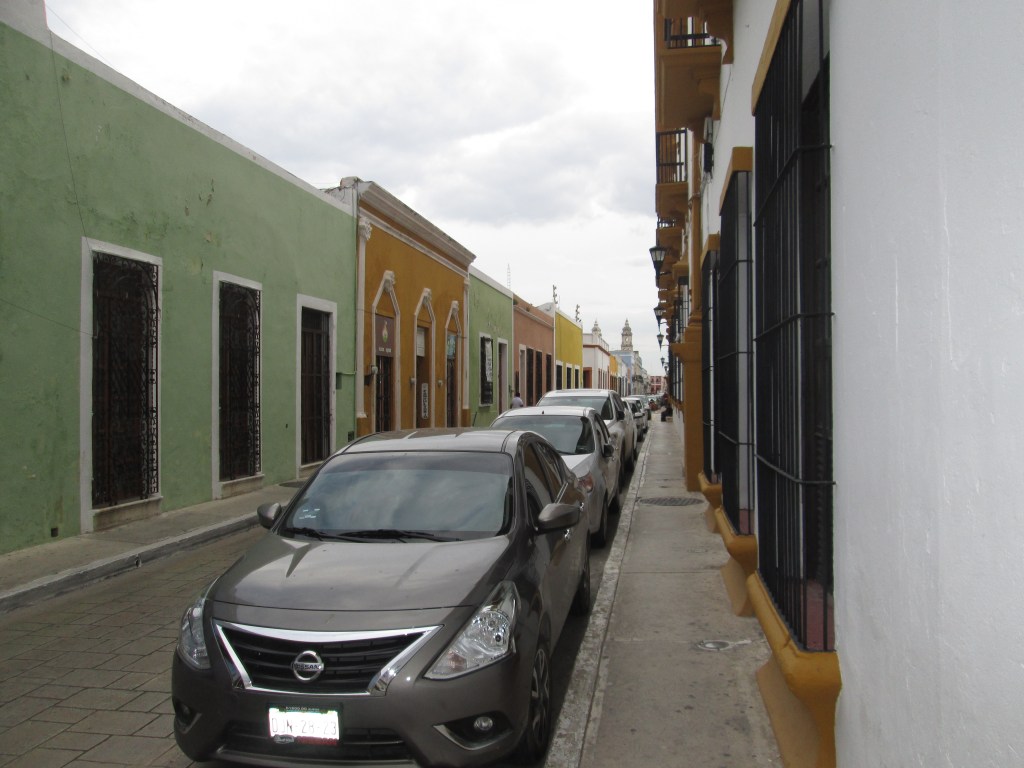
Street in Campeche: No Front Lawns Here

Above is a typical street in the center of Campeche. Some of the buildings are businesses; other, homes of the well-to-do. There isn’t much zoning in effect.

Truth to tell, unless I win the lottery, I cannot see myself as owning a house. And if I could somehow afford one, my idea of the perfect house would come into conflict with zoning regulations and local customs. I will probably continue to live in an apartment, where I don’t bother my head about perfection in any sense of the word.

Magical Architecture: Mesa Verde

It’s Like a Miniature City Cut Inside a Cliff

As a kid, I got a lot of my inspirations from Carl Barks’s Uncle Scrooge Comics. One episode that particularly got me going was entitled “The Seven Cities of Gold,” about a city of cliff dwellings made of gold that the Spanish conquistadores had somehow overlooked. It was called Cibola.

After the city was accidentally destroyed by Huey, Dewey, and Louie, I vowed to find it—and I did. It was at Mesa Verde National Park near Cortez, Colorado. Here are a few images from the comic:

Uncle Scrooge Finds the Seven Cities of Cibola

If you ever get a chance to visit Mesa Verde, be sure to visit the Cliff Palace ruins. You can actually climb down to see them with a ranger (that is, when the coronavirus infestation finally dies down). Martine and I saw them some years ago, though Martine was troubled with altitude sickness. The elevation there is between 7,000 and 8,500 feet (2133 to 2591 meters).

Anasazi Ruins at Cliff Palace, Mesa Verde National Park

Life must have been difficult for the Cliff Palace dwellers, as they had to haul water in using ladders. The ruins were deserted around the same time that many other Anasazi ruins, such as Chaco Canyon, were abandoned.

What happened to the inhabitants? As I wrote earlier regarding Chaco, I am sure their descendants are the Pueblo Indians of Arizona and New Mexico.

Magical Architecture: Santa Catalina (Arequipa)

A Warren of Narrow Pedestrian Walkways

Surprisingly, the most magical places I visited in Peru were not the world-famous Inca ruins at Machu Picchu or other places, but rather the Spanish churches and convents. After all, the Inca had no writing, so while their ruins showed an incredible knowledge of masonry that could withstand severe earthquakes, there was little that aroused my imagination.

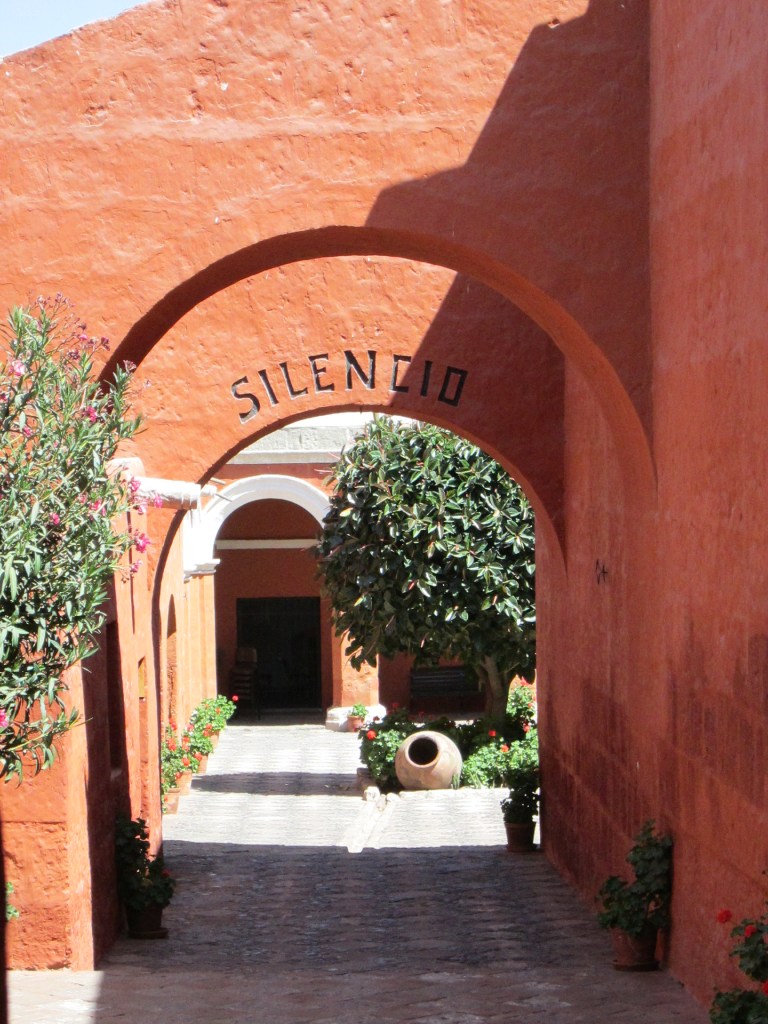
A place that did, however, was the giant convent of Santa Catalina in Arequipa. It occupied something like a whole square mile that was walled off from the city that surrounded it and had a warren of narrow pedestrian walkways.

It Was, After All, a Convent

I spent an entire day, from morning to late afternoon, wandering around the grounds of Santa Catalina, with its monastic cells, courtyards, kitchens, chapels, and even a strange room where the faces of nuns who had died were painted on canvases and displayed.

At Times, It Was Almost Like Modern Art

As Christianity begins its slow fade in the Western World, I begin to look upon religious monuments of the past as being every bit as interesting as that of ancient civilizations. In Peru, I loved visiting the old churches, convents, and museums of ecclesiastic art. I must have attended a dozen masses, just because they took place while I visited.

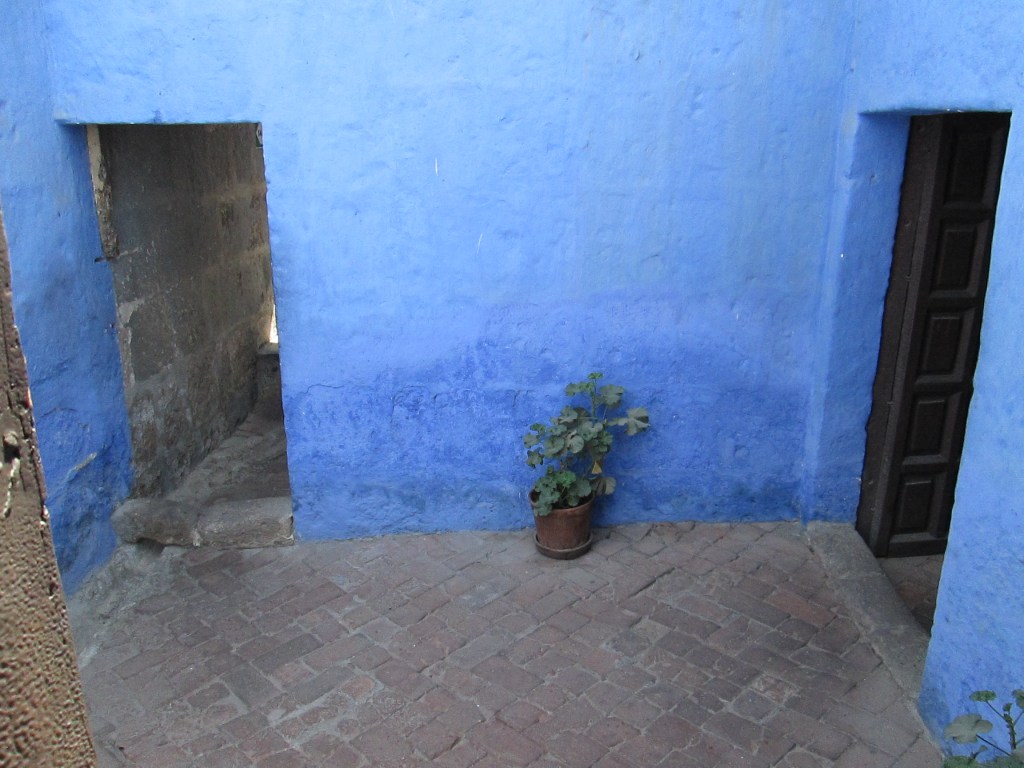
The Walls Were All Either Blue or Dark Orange

I took dozens of photos which I could have shown here, because Santa Catalina mesmerized me. If you should happen to go to Peru, you will probably wind up in Cusco and Machu Picchu, but for your health, it is better to go first to a place where you will not be so afflicted by the dread soroche (altitude sickness). Arequipa, at 7,660 feet (2,335 meters) is a good place to prepare yourself.

And not just because of Santa Catalina!