The Decline and Fall of the American Meal

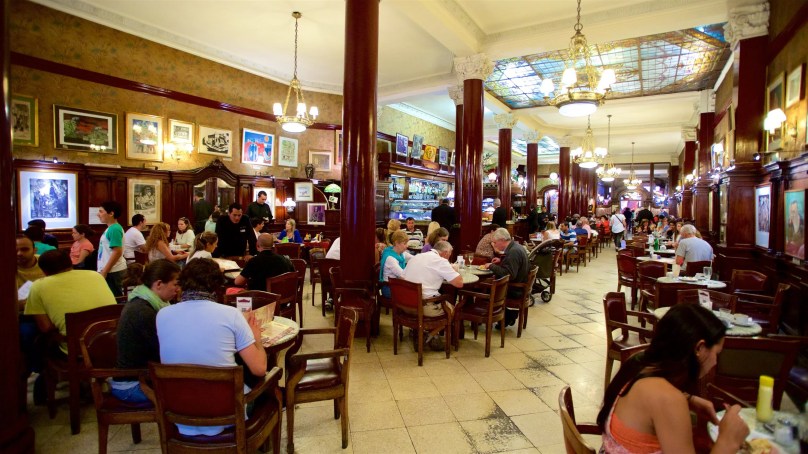
Last night, Martine and I had dinner at a restaurant in Glendale that we have loved for twenty-five years. As soon as we walked in, we noticed some ominous signs. The waitstaff were all young, they were wearing bright new T-shirts imprinted with the name of the restaurant, and there was a brand new illuminated sign. Most seriously, the old owner was not there.

For the first time ever, both Martine and I left the restaurant feeling slightly ill. I almost didn’t make it back to my parked car. And it was lucky that there was a large Mobil gas station at the corner of Brand and Chevy Chase in Glendale, where I was able to dispose of some of the intestinal irritants.

Mind you, I can understand why restaurants are dropping like flies. It is no fun to own or work at a restaurant, especially after the Covid-19 lockdowns. And increasingly, there is more microwaving than cooking taking place in the kitchen—by people who don’t know much about food safety.

Not only in restaurants, but across the board the quality of the American meal has declined precipitously. Even supermarkets are moving away from serving customers who do their own cooking. Recently, I have had problems finding basic food items such as barley or peanut oil. What there is no lack of are frozen meals that taste like cardboard and various “helper” mixes for people afraid to make anything from scratch.

Increasingly, the foods that people eat at home or in restaurants are deficient in nutrition and flavor.

One thing that particularly bothers me is the disappearance of ethnic restaurants as the next generation takes charge. When I first came to Los Angeles, there were loads of great Italian, French, Hungarian, Greek, and other ethnic restaurants. And there were even good cheeseburgers that didn’t look like a 300-pound guy named Rufus sat on them.

Potato and Spinach Curry

Vegetarian Potato and Spinach Curry

After cooking a bland mushy dish for Martine—at her request—I had a sudden urge to make something hot and spicy. A simple and tasty vegetarian dish is a potato and spinach curry. Here are my cooking instructions:

  1. Pour several tablespoons of sunflower oil into a cooking pot and light a medium fire under it.
  2. Add about 2 tablespoons of black mustard seeds when the oil gets hot.
  3. Add the same amount of cumin seeds (jira).
  4. After about a minute, add 2 peeled russet potatoes cut into 3/4 inch cubes. Stir frequently to avoid ticking to the pot.
  5. Add approx 1 tablespoon each of turmeric, ground cumin, ground coriander, and powdered chile pepper.
  6. Add salt to taste.
  7. While cooking potatoes, soak 1 bunch of spinach leaves in a large bowl, shake off any dirt, and chop and add to the potatoes after spices added..
  8. If you like your curry fiery, chop up and add a serrano chile.
  9. Cover and cook until potatoes sufficiently cooked.
  10. Serve with plain yogurt to cut the hotness of the chiles.

A Bowl of Pho

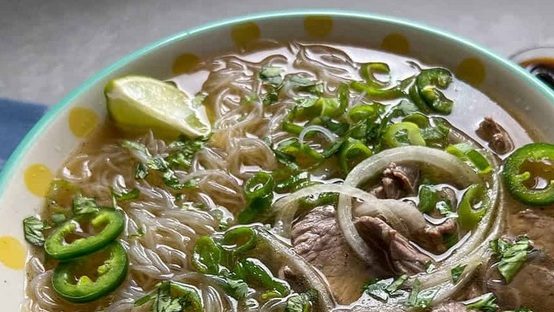
This afternoon’s Mindful Meditation session ended at one p.m., so I made my way to 505 Spring Street for a bowl of Vietnamese soup at Downtown Los Angeles Pho. I was hungry, and lately I craved the filet mignon pho with extra jalapeño pepper slices. To this I added some Sriracha hot sauce and some hot chile oil. Finally, I added just a small dash of soy sauce.

With my chopsticks, I picked up a slice of jalapeño, a piece of filet mignon, and some rice noodles and shoveled it into my mouth. Oh, it was s-o-o-o-o-o good!

I was not always a chile head. Growing up in Cleveland, I could not believe the spiciness when my mother cooked lecsó, a kind of hot pepper ratatouille much beloved by Hungarians. Even my father wouldn’t touch it, and I certainly wouldn’t.

Coming to Los Angeles changed me in many ways, especially when it came to food. In Cleveland, I hated fish; in L.A., I loved sushi. In Cleveland, I preferred my food bland; in L.A., I went way past jalapeño to habanero.

Does all that hot stuff bother me? Nope. In fact, I find each chopstick portion a delight. When people I know of the bland food persuasion are surprised by my food tastes, I tell them that chile peppers are a vegetable, and what do they have against vegetables?

Potato Eggplant Curry

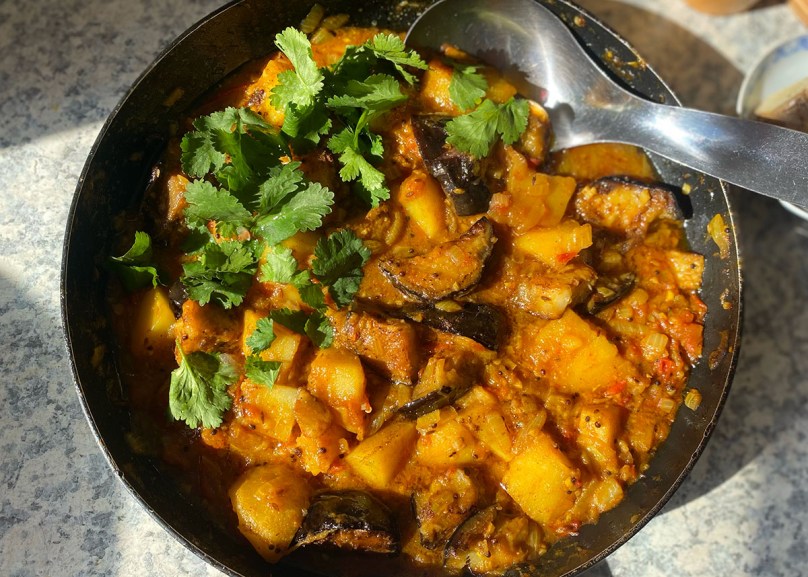
This recipe came to me through the “How to Cook Great” site on YouTube. Click here for an instructive video that produces almost exactly what I will describe in this post. The following recipe will make 4-5 servings of a delicious vegan curry.

For some of the ingredients, you will need to shop at an Indian grocery—especially if you want the dish to taste authentic. These ingredients are marked in the text by IND in square brackets: [IND].

I typically use a largish nonstick pot that has a cover for the final stage of cooking.

On to the recipe:

  1. Put several tablespoons of sunflower seed oil in the pot and turn to heat to moderate high.
  2. When the oil is hot, add a several tablespoons of black mustard seeds [IND] and cumin seed (also known as jeera) [IND] and watch the seeds pop. Stir for up to a minute.
  3. Take two largish russet potatoes, peel them, and cut into pieces slightly smaller than 1 cubic inch. Stir for several minutes.
  4. Add a large dollop of garlic ginger paste [IND] and stir in.
  5. Add salt to taste,
  6. Slice one medium size red onion and stir into the mix. Stir for a couple of minutes.
  7. Add the following three spices, approximately one heaping tablespoon of each: (a) haldi turmeric [IND], (b) cumin, and (c) (if desired) a hot chile powder. For the chile powder, you can substitute Hungarian paprika if you can’t handle the heat. Stir.
  8. Dice into pieces a medium to large eggplant and add to the mix. Continue stirring.
  9. If you like spicy food, mice one jalapeño or two serrano chile peppers.
  10. Cut up four or five small tomatoes and add to the pot. Stir.
  11. Turn down the heat to medium low, cover the pot, and cook for ten to twenty minutes.
  12. Chop a handful of cilantro and add before serving.

Tojásleves

The Plaza Mayor in Cuenca, Ecuador

My brother and I were in Cuenca, Ecuador. In a few days, he had to leave to honor a work commitment, while I was to stay behind for another week. On the Plaza Mayor in Cuenca, Dan and I made an interesting discovery. There was a café that served a perfectly authentic Hungarian tojásleves, or egg soup.

When we checked for any Magyar influence in the kitchen, we were met with looks of confusion and consternation. What reminded us so much of our mother’s beloved egg soup was actually a local dish.

Sometimes, one can travel halfway across the world only to find something that reminds one of home. Not always. More often than not, one makes strange new discoveries.

This time, after a couple weeks in Ecuador, Dan and I had a taste that sent us back to our childhood in Cleveland. Here is a copy of the original Hungarian recipe. Only, Mom would add some sour cream in ours.

Down the Hatch

Flame-Roasted Hatch Chiles

Hatch chiles are in season!

That is one of my most favorite things about summer. I love the taste of roasted Hatch chiles. Unfortunately, when I roast them on the flame of my gas range, Martine and my neighbors complain of the sharp (but utterly delicious) smell.

Yesterday, I bought a bag of Hatch chiles, intending to roast them in the oven. Following the instructions of a website which shall remain nameless, I roasted them at 550 degrees (288° Celsius) for about 15 minutes a side. I was told that after being locked in a plastic bag for 5-10 minutes, the blistered outer skin could be easily removed with my bare hands.

Hah! Instead, they went all to pieces, with the blistered skin not properly separating from the chile pepper itself. I wound up throwing the whole batch out.

So I decided to buy chiles that has been roasted and stripped of their skin. It cost a bundle, but I like to use roasted chiles in much of my cooking, such as in my Spanish Rice, with scrambled eggs, and so on. I could keep a supply in my freezer for up to six months.

I truly love Hatch chile peppers, so I could hardly wait until I pick them up on Saturday, August 16, at my local Bristol Farms market.

Restaurant Confidential

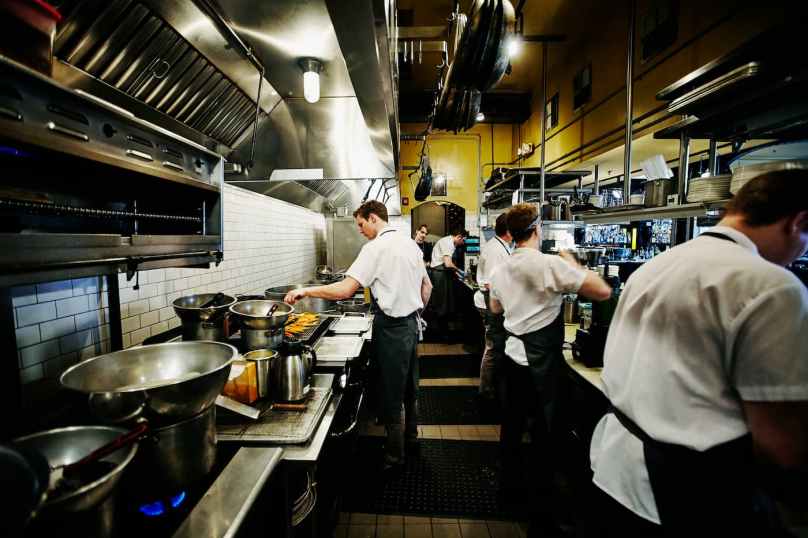
Restaurant Kitchen

Shortly after we survived the Covid-19 onslaught, I noticed that many of my favorite restaurants were shutting their doors. There was Papa Cristo’s Greek restaurant at Pico and Normandie near downtown L.A.; the Original Pantry at 9th and Figueroa, which was closed only a single day over the last century but is no more; and Jerry’s Deli, once a thriving chain.

Come to think of it, I am always surprised that restaurant stay open. I cannot imagine a less rewarding job than being the owner, manager, or supervising chef at a restaurant. The hours are long, your hands get scarred and burnt; you don’t make much money; and there are stringent health and sanitation requirements.

I have been reading Anthony Bourdain’s book Kitchen Confidential, which tells of one chef’s experiences in the New York and Provincetown, MA restaurant scenes. At one point, he writes:

To want to own a restaurant can be a strange and terrible affliction. What causes such a destructive urge in so many otherwise sensible people? Why would anyone who has worked hard, saved money, often been successful in other fields, want to pump their hard-earned cah down a hole that statistically at least will almost surely prove dry? Why venture into an industry with enormous fixed expenses (rent, electricity, gas, water, linen, maintenance, insurance, license fees, trash removal, etc.), with a notoriously transient and unstable workforce, and highly perishable inventory of assets?

Especially with the current occupant of the White House, who has it in for kitchen and agricultural workers, who traditionally tend to be illegal immigrants. As the owner of hotel restaurants at his glitzy Trump properties, who is going to work in his restaurant kitchens? Then, too, all this uncertainty over tariffs is going to hit hard at food items that are typically imported, such as winter fruits, avocados, and seafood. But then, we are entering a period of seat-of-the-pants decisions made without weighing the consequences.

Perhaps all that will be left are the “factory” restaurants like McDonalds and Burger King. That would certainly slash my restaurant expenses.

Don’t Toque to Me About Chefs!

Making a $45.00 Tower of Exotic Foodstuffs

The following is a repost from December 20, 2014.

The problem with American restaurants is that there are too many chefs and not enough cooks. Ever since the Food Network went on the air, people started paying too much attention to people with large white toques who like to mess around with food, forming little towers of quinoa with raspberry sauce and maybe a small amount of meat or fish. The less the foods appear to go together, the more renown the chef is likely to earn for his or her daring.

It’s become an epidemic. The tutsi-fruitsie is king. The ice tea is contaminated with passion fruit or other petrochemical waste. Side dishes avoid the usual rice or potatoes and provide instead broccolini with mashed yeast and ground Murano glass and Galena lead pellets.

Whenever I see some Culinary Institute of America (CIA) chef wearing a towering white toque, I know I’m in for a pretentious soaking. On the other hand, when I see what Hungarians call a szakács or szakácsnő (cook, masculine or feminine gender respectively), I know I am likely to have an excellent meal. There must be no toque or other sartorial trimmings. I want a good, honest cook who knows how to prepare food. And no little towers!

As for the Food Network, I hope they switch over to running “Antiques Roadshow” or “Pawn Stars.” Or maybe they can talk about Kim Kardashian or some other celebrity twinkie. They certainly have not done anything to improve the quality of food in this country.

Beautiful Soup

When the weather turns cold and it starts to get dark early, I like to cook a nice big pot of soup. It makes me think of Lewis Carroll’s song from Alice’s Adventures in Wonderland:

BEAUTIFUL Soup, so rich and green,
Waiting in a hot tureen!
Who for such dainties would not stoop?
Soup of the evening, beautiful Soup!

Beau- ootiful Soo-oop!
Soo- oop of the e- e- evening,
Beautiful, beautiful Soup!

Beautiful Soup! Who cares for fish,
Game, or any other dish?
Who would not give all else for two
Pennyworth only of Beautiful Soup?
Pennyworth only of beautiful Soup?

Beau- ootiful Soo-oop!
Soo- oop of the e- e- evening,
Beautiful, beauti- FUL SOUP!

But then, Lewis Carroll is talking about turtle soup, and that’s not something I would care to cook, even if it is a Mock Turtle.

Martine used to love my soups, but recently she decided that soup makes her think of being ill. When she gets one of her spells of irritable bowel syndrome, she lives on Progresso’s Chicken with Wild Rice soup and Gatorade.

Needless to say, my home-made concoctions in no way resemble canned soup, even premium canned soup like Progresso.

My most recent creation was a Minestrone with chicken stock, Great Northern Beans (canned), carrots, potatoes, tomatoes, fennel, onions, garlic, and macaroni. Unfortunately, it had one small jalapeño chile pepper who was a good deal higher on the Scovill scale than by rights it should have been. It was almost as hot as a habanero chile.

The soup was still good: It’s just that I had to water it down some so as not to burn my gullet.

The Sun King

Jean-Loup Bitterlin of El Rey Sol with My Brother Dan

One final word about our trip to Ensenada, by way of a coda. We were amazed to find on Lopez Mateos a high quality French restaurant, that despite the fact that Ensenada has no shortage of good food. We were staying around the corner at the hotel affiliated with the Restaurant El Rey Sol, namely the Posada el Rey Sol. (The name refers to Louis XIV, France’s Le Roi Soleil, or Sun King.)

Dan and I were spending our last night in Baja, and we were all glorious tacoed out; so we decided to try for a nice French meal. It was a whole lot better than nice; in fact, it was outstanding. We started out with an appetizer of beef carpaccio, which was accompanied by an amuse-bouche that resembled a French bruschetta with cheese and a delightfully creamy sopa de verduras (vegetable soup).

As his main course, Dan ordered the Chicken Cordon Bleu, and I had the Linguine Neptuno (with assorted super-fresh mariscos). With it, Dan tried a glass of Guadalupe Valley Nebbiolo red wine, while, ever the proletarian, I had a Dos Equis (XX) beer.

A Plaque Outside the Restaurant Honoring Its 50th Anniversary

A meal like this in the United States would run at least a couple hundred dollars. We wound up paying around $70.00 in pesos. The sad thing is that the equivalent meal in the States would not necessarily be as tasty or fresh as what we had.

All I can say after the best meal I’ve had in several years, Vive la France—en Mexique!