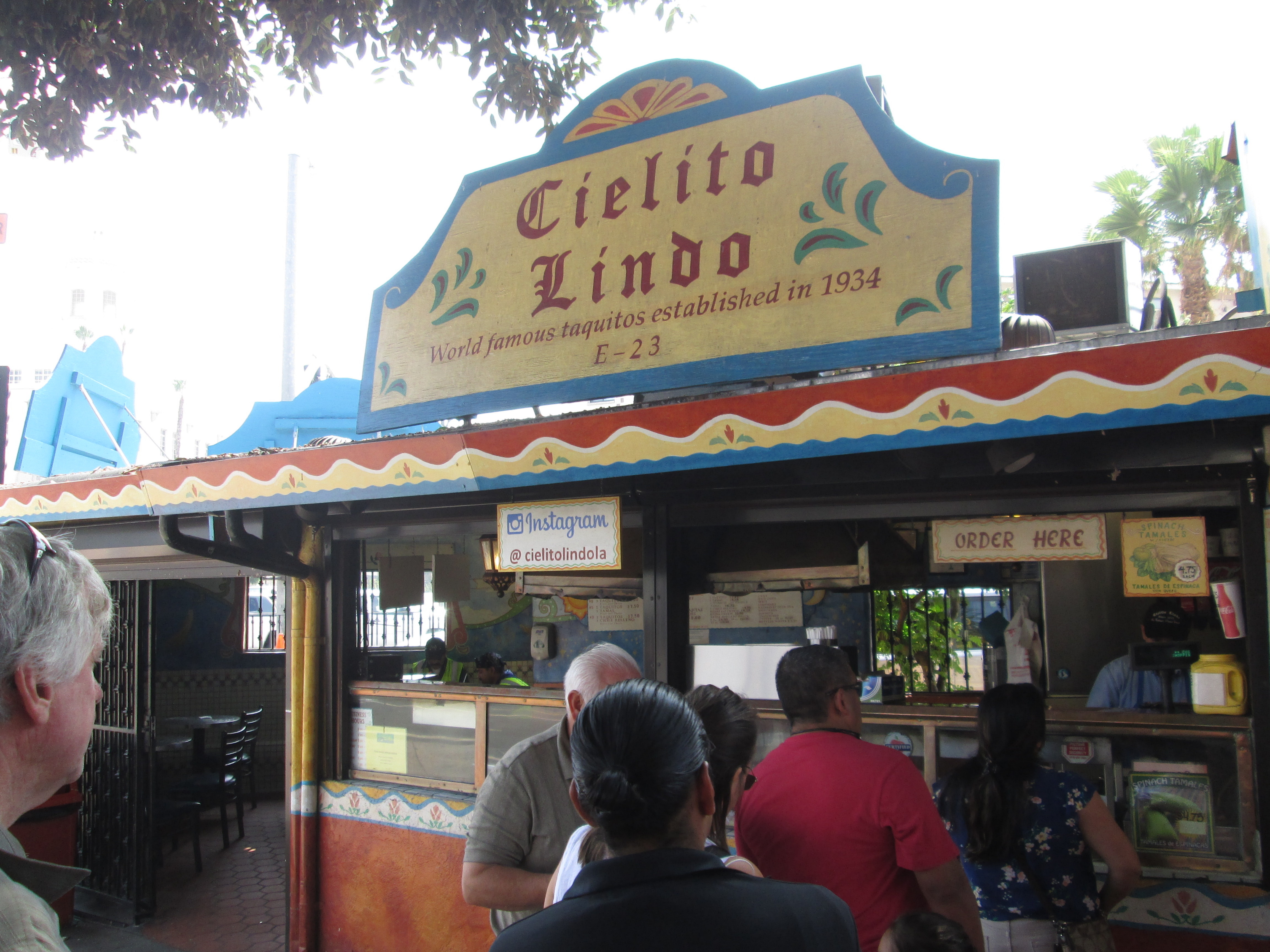
Eating Tacos Hunched Over

Tres Tacos

Tres Tacos

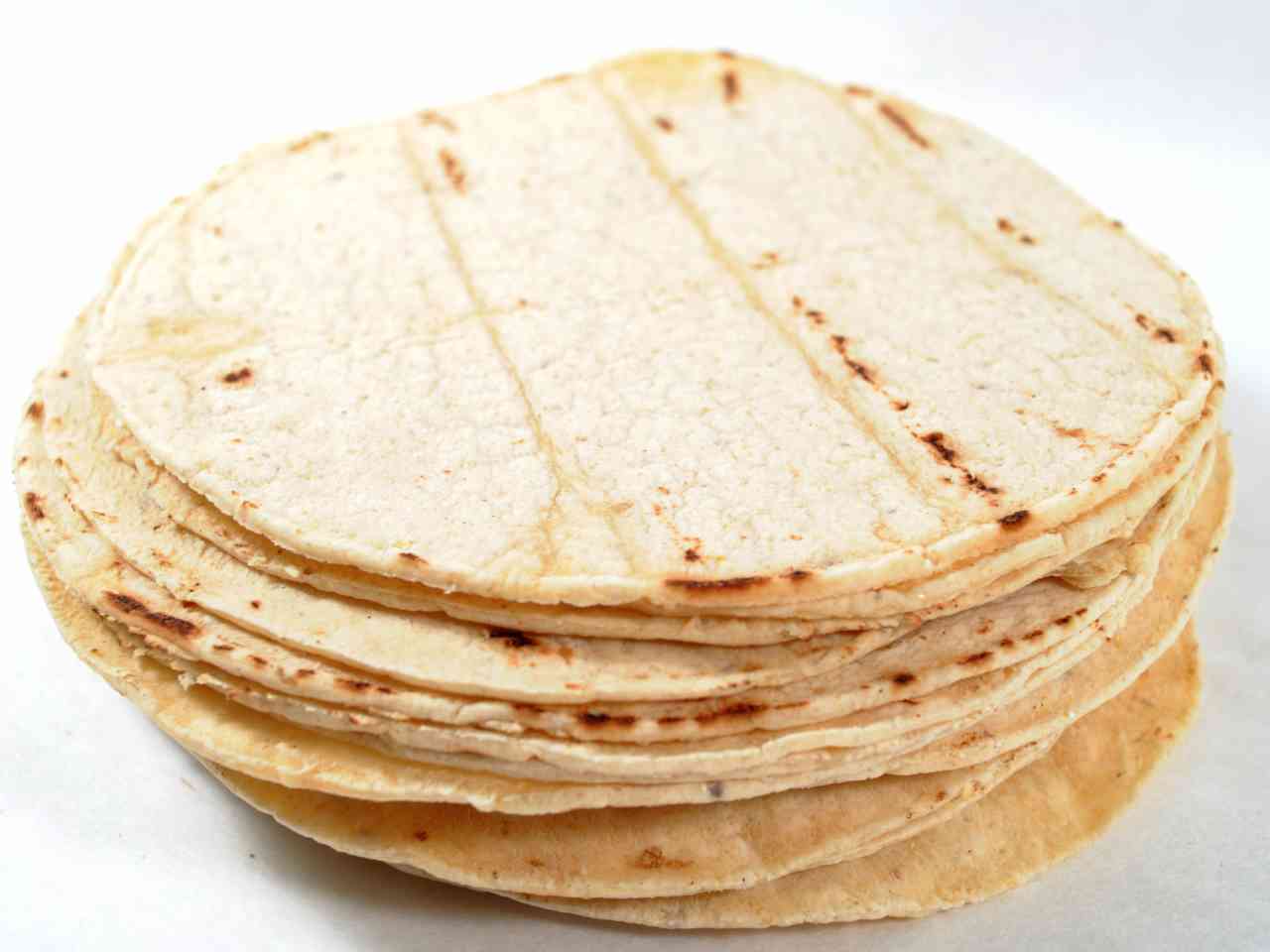
I walked to the Promenade in Santa Monica this morning. While there, I bought two Patrick Modiano novels and had lunch at the Lotería Grill. Of late i have become partial to a couple of soft tacos for lunch, wrapped in corn tortillas.

Naturally, I leaned over my plate, having learned that if I didn’t, there would be a pattern of food stains on my shirtfront resembling a blurry Mexican flag. It didn’t help that my pot belly pushed my shirt well into harm’s way.

There is an art to eating tacos. One has to pinch across the top so that the contents are held in while eating. It helps if the corn tortillas are relatively small so as to limit the possible damage.

According to the Popol Vuh, the great repository of myths of the Mayans, man was created from maize.  At first, the gods made four men who:

…were good people, handsome, with looks of the male kind. Thoughts came into existence and they gazed; their vision came all at once. Perfectly they saw, perfectly they knew everything under the sky, around in the sky, on the earth, everything was seen without any obstruction…As they looked, their knowledge became intense. Their sight passed through trees, through rocks, through lakes, through seas, through mountains, through plains.

The tacos didn’t quite do that for me, but they were good. I always appreciate food that is spicy hot, that bites back when I bite into it. And Mexican food that is authentic does that for me.


Berezina in a Dish

My Least Favorite Hungarian Food

My Least Favorite Hungarian Food

Whenever my mother made it, I always ran out of the house and stayed away until the smell dissipated. What made things difficult is that she always made kocsonya (pronounced KOH-chone-yah) in the winter. As my Uncle Emil used to say, he couldn’t eat any unless there was snow on the ground. I did him one better: I couldn’t eat kocsonya if there was any in the Western Hemisphere.

I’ve always said that a serving of the noxious stuff reminded me of a frozen river with mangled human and animal remains—very like the Berezina River in Belarus where Napoleon lost thousands of his remaining forces after retreating from Moscow.

Apparently there’s a Russian equivalent. In a short story entitled “Aspic,” Tatyana Tolstoya describes cooking up a batch very like the recipe I’m describing:

Now it’s boiling, raging. Now the surface is coated with gray, dirty ripples: all that’s bad, all that’s weighty, all that’s fearful, all that suffered, darted, and tried to break loose, oinked and mooed, couldn’t understand, resisted, and gasped for breath—all of it turns to muck. All the pain and death are gone, congealed into repugnant fluffy felt. Finito. Placidity, forgiveness.

Kind of makes vegetarianism attractive, no? And that’s about all I could say without retching….


On Eating Leaves

Some People’s Idea of a Meal

Some People’s Idea of a Meal

Sometimes I feel as if the entire medical profession is ganging up on me to eat salads with or without chicken. To begin with, I am no lover of chicken or turkey, though I like to use their stock in cooking soups.

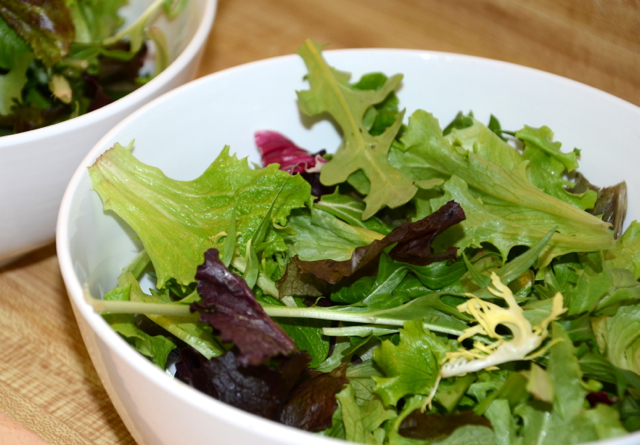
But I draw the line at what the typical American considers a salad: a bunch of leaves with some goopy dressing. My complaint is not with raw vegetables. In hot weather I make good salads with red and green peppers, celery, onions, garlic, and even a few leaves of red leaf or butter lettuce mixed in. Salads consisting of nothing but leaves, as in “field greens,” I usually leave on my plate untouched. Without a decent crunch, salads come across as limp weeds with no character.

Now certain Middle Eastern salads are more to my liking, such as Shirazi or Israeli salads, with diced tomatoes and cucumbers—and no raw greens. Even Greek salads have some crunch, along with some tasty feta cheese for flavor. But American salads, well ….

I know that “they’re good for you”—but so is a lot of other unpalatable stuff. When I eat, I don’t like to feel that I am grazing in a meadow. (I suspect that most people who eat those all-leaf salads are doing it to make room for rich pastries or chocolates afterwards, when out of sight of one’s friends.)

Do I eat enough vegetables? Yes, indeed! All my dishes include a good mix of veggies. Especially my soups, which usually contain Swiss chard or kale mixed with stock in my blender.


Dreams of Soon Tofu

Cold Weather? Time for Soup!

Cold Weather? Time for Soup!

Today, Martine and I went to lunch at Galbi King. With the onset of cold weather in L.A., I felt like having some hot soup. And what can be hotter than extra spicy soon tofu? What is soon tofu? Here’s what one food writer on Chowhound.Com wrote:

Soon means “soft” in Korean, in this usage. So “soon tofu” is soft tofu. It’s quivery soft, like custard, but flavored with a savory broth filled with any number of good things from beef, to seafood, to pork. It’s just like the tofu in tofu fa, if you’ve ever had that.

At BCD and most other soft tofu joints in L.A. and OC [Orange County], the soft tofu comes bubbling in a stone crock to your table.

When the hot stone crock comes to your table, you break a raw egg in it—and prepare for a culinary paradise. I also spoon in some steamed rice to cool the fire. Mine was served with pork and was as spicy as the restaurant was willing to risk. As it happens, I am a certified chili-head, so I had no difficulty with the fiery broth. (Unless you too are one, don’t try this at home, Kids!)

Please note that not all Korean restaurants can make good soon tofu. I went to one Korean-owned place in the Patronato district of Santiago, Chile, and had a bowl that was sadly deficient in flavor. Even in Los Angeles, there are good Korean restaurants, and bad Korean restaurants.


Ilex paraguariensis

Traditional Yerba Mate Tea Popular in South America

Traditional Yerba Mate Tea Popular in South America

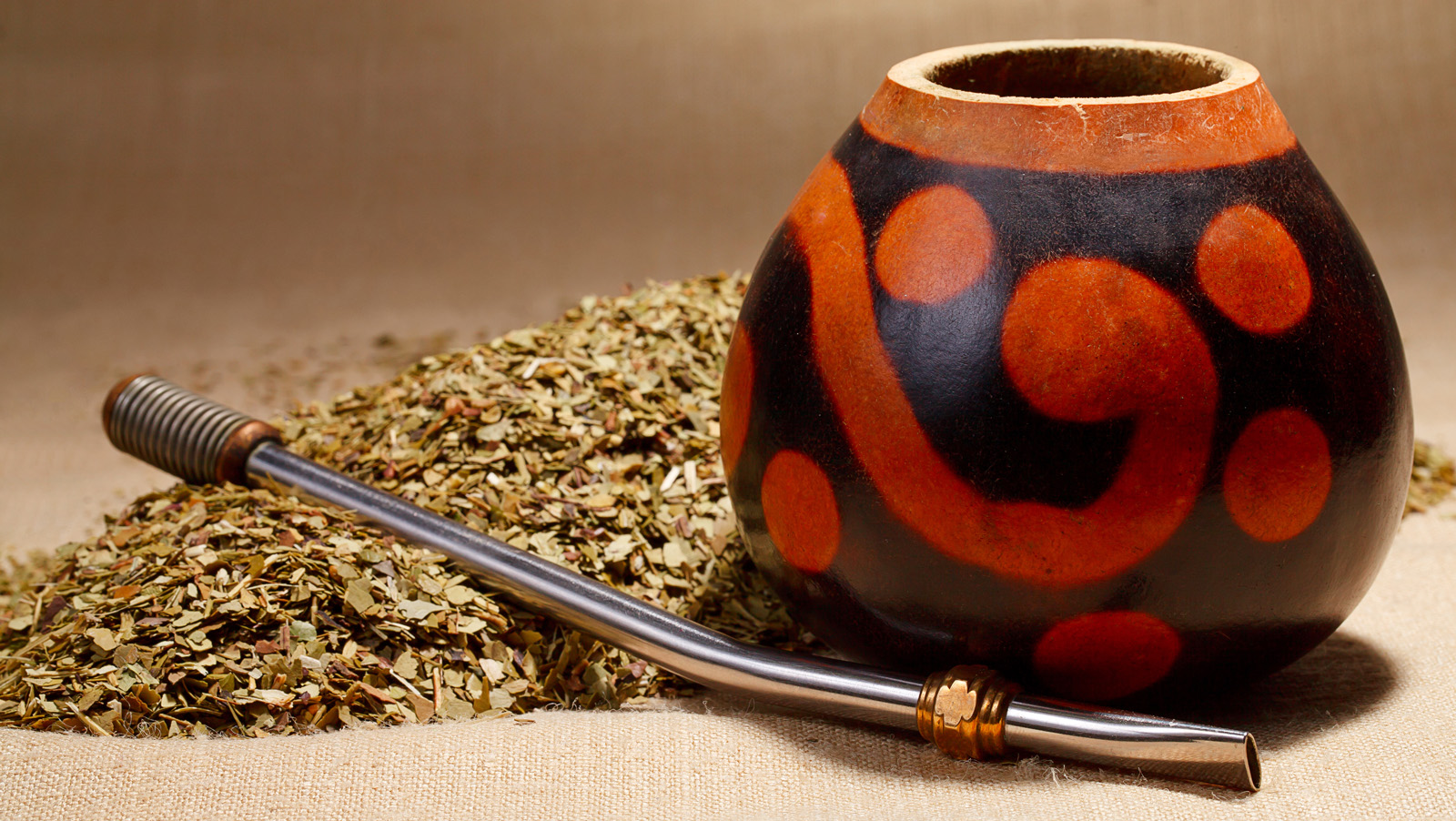
When cooler weather returns to Southern California, in about twenty years or so, I will resume my habit of drinking yerba mate tea. In the meantime, I will enjoy Robert Southey’s poem “Introductory to South America Yerba Mate.” I was pleasantly surprised to see a 19th century British poet conversant with the Ilex paraguariensis, or yerba mate.

Introductory to South America
Yerba Mate
Robert Southey (1774–1843)

(From A Tale of Paraguay)

AMID those marshy woodlands far and wide
Which spread beyond the soaring vulture’s eye,
There grew on Empalado’s southern side
Groves of that tree whose leaves adust supply     [scorched
The Spaniards with their daily luxury;
A beverage whose salubrious use obtains
Through many a land of mines and slavery,
Even over all La Plata’s sea-like plains,
And Chili’s mountain realm, and proud Peru’s domains.

But better for the injured Indian race
Had woods of manchineel the land o’erspread:
Yea, in that tree so blest by Nature’s grace
A direr curse had they inherited,
Than if the Upas there had reared its head
And sent its baleful scions all around,
Blasting where’er its effluent force was shed,
In air and water, and the infected ground,
All things wherein the breath or sap of life is found.

The poor Guaranies dreamt of no such ill,    [Paraguayan natives
When for themselves in miserable hour,
The virtues of that leaf, with pure good-will,
They taught their unsuspected visitor,
New in the land as yet. They learnt his power
Too soon, which law nor conscience could restrain,
A fearless but inhuman conqueror,
Heart-hardened by the accursed lust of gain,
O fatal thirst of gold! O foul reproach for Spain!

For gold and silver had the Spaniards sought,
Exploring Paraguay with desperate pains,
Their way through forests axe in hand they wrought;
Drenched from above by unremitting rains
They waded over inundated plains,
Forward by hope of plunder still allured;
So they might one day count their golden gains,
They cared not at what cost of sin procured,
All dangers they defied, all sufferings they endured.

Barren alike of glory and of gold
That region proved to them; nor would the soil
Unto their unindustrious hands unfold
Harvests, the fruit of peace,—and wine and oil,
The treasures that repay contented toil
With health and weal; treasures that with them bring
No guilt for priest and penance to assoil,
Nor with their venom arm the awakened sting
Of conscience at that hour when life is vanishing.

But keen of eye in their pursuit of gain
The conquerors looked for lucre in this tree:
An annual harvest there might they attain,
Without the cost of annual industry.
’T was but to gather in what there grew free
And share Potosi’s wealth. Nor thence alone.
But gold in glad exchange they soon should see
From all that once the Incas called their own,
Or where the Zippa’s power or Zaque’s laws were known.

For this, in fact though not in name a slave,
The Indian from his family was torn;
And droves on droves were sent to find a grave
In woods and swamps, by toil severe outworn,
No friend at hand to succor or to mourn,
In death unpitied, as in life unblest.
O miserable race, to slavery born!
Yet when we look beyond this world’s unrest,
More miserable then the oppressors than the opprest.

A Hungarian Peasant Dish

Hungarian Káposztas Tészta, or Cabbage Noodles

Hungarian Káposztas Tészta, or Cabbage Noodles

One of my favorite dishes as a child was Hungarian Káposztas Tészta, or Cabbage Noodles, which was both cheap and good. The recipe below is taken from 2009 posting to Blog.Com describing the way I prepared it for a Hungarian Meet-Up Group potluck:

Take one head of cabbage, grate it as finely as possible. Deposit it into a large mixing bowl and salt liberally. Then cover it with a clean dish towel and come back a half hour later. You will find that the salt draws the water out of the cabbage. Pick up handfuls of the cabbage, squeeze the salt water out of it over the sink, and place in a colander. Then squeeze it hard again.

Now it’s time to get a large saucepan and melt some unsalted butter in it and add an equal amount of olive oil. (The old Hungarians used bacon fat, but butter and vegetable oil is just as good and better for you.) Sauté the cabbage and keep stirring for upwards of an hour, until the cabbage starts to get a little brown around the edges. Don’t leave the cabbage to burn: You have to attend to it fairly closely.

Around this time, start boiling water for egg noodles. My mother used to make her own, cutting them into three-quarter-inch squares that were perfect. But prepackaged noodles are almost as good. Drain the cooked noodles and add to the cabbage. I used my Chinese iron wok to mix the two together. While turning the mix around, I added salt and freshly ground pepper to taste.

Simple and good.

The Loose Juice Caboose

Why Do We Tend to Go Overboard with Beverages?

Why Do We Tend to Go Overboard with Beverages?

During my lunch hour, I visited the Westwood farmer’s market. What struck me funny was that the vendors of juices outnumbered the vendors of fruit and vegetables. Are so many people convinced that juices are the way to go that they tend to ignore whole fruits and vegetables.

The key word is “whole.” You know, of course, that the “whole” fruit or vegetable is more nutritious than the juice made from it. As a diabetic, I am very conscious that the process of making juice concentrates the sugars and usually leaves out the fiber. According to Harvard’s School of Public Health:

Fiber is a type of carbohydrate that the body can’t digest. Though most carbohydrates are broken down into sugar molecules, fiber cannot be broken down into sugar molecules, and instead it passes through the body undigested. Fiber helps regulate the body’s use of sugars, helping to keep hunger and blood sugar in check.

And since diabetes is probably one of the fastest growing diseases in America, we should re-evaluate our preference for juices. As for myself, I usually go for water, unsweetened iced tea, or mineral water. Tonight, I’m taking home three beautiful white peaches—and no juice.


The Cook

I Do All the Cooking at Home

I Do All the Cooking at Home

At some point during the 1960s, I discovered that eating out at restaurants all the time was going to:

  1. Eat into my finances
  2. Deprive me of the fruits and vegetables I needed to survive and
  3. Make me tired of eating out all the time

I knew what good food was because I was raised on my Mom’s Hungarian home cooking, supplemented by my great grandmother Lidia’s special dishes. But I made the mistake of never learning from them, though I did help my Mom from time to time, mostly stirring the pot so the food would not burn.

My first experiments were pretty bad: They usually had too many spices (more or less randomly chosen) and relied excessively on rice and pasta as the carbohydrate base. Also I used way too much ground beef, for which I now substitute lean ground turkey.

When Martine came to live with me in the early 1990s, I also had to learn to cook to please her. This is not easy. Martine cannot eat spicy food, and there are too many ingredients that she flat-out doesn’t like. Also, as she suffers from recurring bouts of irritable bowel syndrome, I have to be able to turn on a dime and cook something especially bland at a moment’s notice. This week, for example, despite the heat and humidity, I made a pot of vegetable soup.

Tonight, I plan to cook Ree Drummond’s spaghetti with artichoke hearts and tomatoes. I like her recipes because they are well conceived, simple, and lavishly illustrated. Her cooking column is called “The Pioneer Woman.” I haven’t found a clinker yet in the lot.

Why do I do all the cooking? Well, for one thing, Martine is notably maladroit at cooking; and her mother prepared the most vile dishes I have ever eaten. (Her vegetables were greasy!) Secondly, I like to cook. It makes me feel good about myself. Every once in a while I experiment with a new recipe that I have to throw out, but essentially I have a fairly decent repertoire of healthy dishes that I can rely on to see us through.

I’ve cooked the spaghetti with artichoke hearts and tomatoes two or three times before with good results. I just have to make sure the tomatoes are chopped up fine because big pieces of tomato are one of Martine’s bête noires.

Juice Wondering …

Are They Really As Healthy As People Think?

Are They Really As Healthy As People Think?

Omigosh, that photo caption is almost pure clickbait! The point I am trying to make is that fruit juices are one of those categories of foods that are almost universally thought to be good for you.

Except for one thing: They concentrate their one ingredient which is not so good for you, namely sugar, and throw out the fiber that your body needs far more. This goes back to that mantra of “quick energy” that used to be claimed for most sugary beverages going back to the 1960s.

To the youth of America, fiber is not only boring but decided unsexy. It seems to be associated exclusively with the old people’s bowel movements. Actually more important is that the fiber keeps the pancreas from being bombarded by an excess of sugar. According to Harvard’s T.H. Chan School of Public Health, they act to form complex carbohydrates:

These carbohydrates have more complex chemical structures, with three or more sugars linked together (known as oligosaccharides and polysaccharides).  Many complex carbohydrate foods contain fiber, vitamins and minerals, and they take longer to digest – which means they have less of an immediate impact on blood sugar, causing it to rise more slowly.

At a time when a whole generation seems to be headed into the maws of Type II Diabetes, it’s probably a good idea to minimize the impact of sugar on one’s diet—regardless of the promise of “quick energy.” So drink water, coffee, or tea instead.


All-American Glop

Burger Heaven, American Style

Burger Heaven, American Style

One of the advantages of my having a Hungarian upbringing is that it allows me to cast a critical eye on what most Americans would consider good eating. Take, for example, the hamburger. One starts with a plain piece of ground meat, chars it, and adds an inch or two of cheese, lettuce, tomatoes, onions (either raw or caramelized), mayonnaise, ketchup, mushrooms, and God knows what. The result is a concoction that will likely contribute more to staining your shirtfront than satisfying your hunger.

Hungarians prefer to season the meat itself rather than topping it off with a salad. My mother used to mince (not chop!) onions, garlic, and parsley and work it gently in with the ground beef (which itself could be mixed with bits of ground pork or veal). Take a look, for example, at this recipe for fasirt, a kind of Magyar fried hamburger. Whether fried or charbroiled, the Hungarian hamburger would usually be served between two pieces of rye bread, cheese optional. It had flavor. And if we wanted vegetables, they would be there on the plate, fresh from our garden, rather than piled high over the meat patty.

The same goes for meatballs. If you get matballs and spaghetti in an Italian-American restaurant, the meatballs will usually be plain meat. Our late landlady made her meatballs the Old Country way, buy adding seasonings to the meat before cooking it.

It’s a simple technique, perhaps a little time-consuming, but it tastes ever so much better than the plain unadorned ground meat.