Acres and Acres of Carbs

Most Supermarkets Are—To Me Anyhow—Carb-filled Minefields

Most Supermarkets Are—To Me Anyhow—Carb-Filled Minefields

Under my new way of life, after I learned that my pancreas was in the process of giving up the ghost, mealtimes are fraught with danger. This morning was all right: I ate a can of smoked trout from Trader Joe’s and a few stoned wheat crackers. I made it through lunch all right, too: A tasty spicy calamari salad at a local Thai restaurant. Tonight, Martine and I will eat some of my ham and lima bean casserole, which has not proven too destructive, along with, perhaps, some cherries and a white peach. As for my beverages, it’s always unsweetened hot or iced tea.

But God, how I miss the carbohydrates! There are times I would sell my soul for some white rice, potatoes, noodles, bread, or candy. As for pizza, it is a thing of the past, a fond memory of times gone by.

I wish I had something to replace rice. My doctor says that barley has too many carbs (though it has an acceptable glycemic index). In tonight’s casserole, the lima beans are filling in for the carbs, though again my endocrinologist says they have too high a carb count, but an acceptable glycemic index. Perhaps I could serve Styrofoam pellets with meat and vegetables?

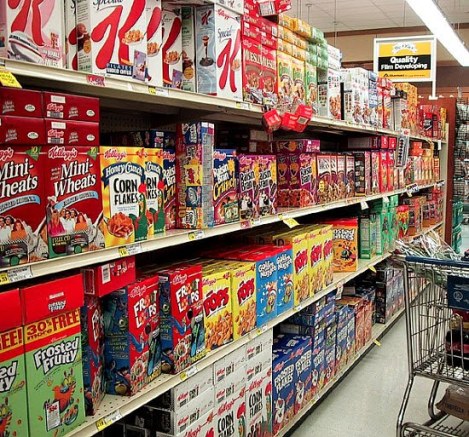
Going to the supermarket is like crossing a dangerous border. Whole aisles of the market are loaded with stuff I can’t eat. I never realized before that our whole culture is based on carbohydrates, that Americans eat vast amounts of the stuff. Some of them become grossly obese, some of them develop diabetes sooner than they normally would otherwise.

Tonight I will go to the market, mostly for tomatoes (they’re OK) and sweet peppers and other stuff I can munch upon without sending my sugar levels into the red zone.

It used to be that my doctor told me that if I lost weight, I might overcome my diabetes. But how does one lose weight when one has to take Prednisone, a known appetite-enhancer, just in order to survive? Oh, I can lose weight all right; but I would have to be in a concentration camp.

But I have free will to choose anything I want at the market. Perhaps some tasty noodles, some sugar-laden breakfast cereal (like 99% of them) or a fruit smoothie. But no, I will try to be good. I lost both of my parents to Type II Diabetes. I want to survive, even at the cost of jettisoning virtually everything I like to eat and concentrating on salads, fish, fruits, vegetables, and tea.

If you see a sad guy in the supermarket line with a pile of stuff that’s good for you, it may well be me.


Opson and Situs

Seafood Mosaic from Pompeii

Seafood Mosaic from Pompeii

In 1997 classical scholar James Davidson published a fascinating little book about the ancient Greeks entitled Courtesans and Fishcakes. Discussing the eating habits of the ancient Athenians, Davidson makes a distinction between opson (ὄψον) and situs (σίτος).

Opson refers to what we would call meat entrées, particularly when they bare seafood. Beef and lamb were more associated with religious sacrifices, during which the meat was shared with participants and attendants at the sacrifice. But fish was the meat of choice at symposia such as the ones described so vividly by Plato and Xenophon.

Certain guests at a Greek symposium were known for what is called opsophagi, or “opson eaters.” It was considered rude for guests to ignore the situs, usually consisting of what we would call the side dish. (In our culture, it would include potatoes, rice, and bread; for the Greeks, wheat or barley was the usual side dish.)

One interest side to diabetes is that it is affected primarily by the dishes the Greeks would consider to be a part of situs (though barley is a special exception). People with Type II Diabetes, such as myself, have to concentrate on the opson, supplementing it with vegetables and fruit.

You can now consider me an opsophagos, though I wouldn’t call it to my face.


A Nice Surprise

I Kept It a Surprise Until the Last Minute

I Kept It a Surprise Until the Last Minute

Martine has had a rough time of it ever since the New Year. It seems more and more likely that she is suffering from fibromyalgia, which is not only painful but exhausting, inasmuch as it robs her of a full night’s sleep. This coming week, she has an appointment with a local rheumatologist to prescribe a course of treatment for her pain and sleeplessness.

Because she has not only felt bad, but felt guilty because she felt she “was a burden to me” in her present condition, I planned to surprise her. There is nothing that Martine likes more than chicken. So I discussed the options with my friends at work, and they recommended Mrs. Knotts Chicken Dinner Restaurant in Buena Park, which has been serving fried chicken dinners since 1934, and doing it the old-fashioned way with all the traditional trimmings.

It was not until we were a mile away from our destination that Martine remembered my recommending Mrs. Knotts to her a couple of months ago. Now that tax season is over, I had to time to drive 68 miles round trip for lunch.

I, myself, am not a chickenholic like my little girl, but I had a great spicy chicken salad in which the meat was clearly superior. So even with my diabetes regiment, I felt that I did well. Uh, I did, however, eat a couple of biscuits. (So kill me!)

The Knotts Berry Farm Amusement Park is adjacent to the restaurant, but neither of us felt like being shaken and jarred into insensibility. That was for the mobs of teenagers waiting in line to get in.

It was a long drive, but the surprise was worth it; and we both had a good time.


I Go on the Gulag Diet

Thanks, But No Thanks!

Thanks, But No Thanks!

Today, the doctor threw the book at me. My pancreas has become less able to process carbohydrates. The result: I will have to take even more insulin—two different types, even! And more seriously, I must root out and avoid carbohydrates to the maximum extent possible. I’ll be the person you see with a sour expression on his face discontentedly picking at a salad, moving the lettuce from side to side until I can stomach raising the fork to my mouth.

Effective today, I must reject all offers of food from friends. I may reach into my pocket and eat two or three peanuts when nobody’s looking my way.

What can I eat on the new Gulag Diet? Boots and belts are generally okay, but I must avoid all the carbs that lurk in the bootlaces and stitching.

Eventually, I will make some accommodation to what my doctor assures me is a dire need; but in the meantime, don’t expect me to jump for joy.


Yerba Mate

Mate and Bombilla

Mate and Bombilla

This has been an unusually cold winter for Southern California, so I have been drinking more hot tea for my own comfort. In the mornings, I drink only Indian black teas, such as Darjeeling, Ceylon, and Assam—but at night, I have switched over to yerba mate (in Argentinian Spanish, pronounced SHARE-pah mah-TAY).

This is a direct result of my two trips to Argentina, where drinking yerba mate is an obsession. In fact, throughout both Argentina and Uruguay, people travel with the “fixings” for a serving of the tea, which they share with friends and fellow travelers. These fixings consist of the dry tea itself, a thermos filled with hot water, a mate gourd (mine, shown above, was purchased in Colonia Sacramento, Uruguay), and a bombilla, or metal straw, for sucking in the tea without getting a mouthful of the leaves. Shown below is a vending machine at the Buenos Aires Zoo for refilling thermoses:

Vending Machine at the Buenos Aires Zoo for Refilling Thermos Bottles

Vending Machine at the Buenos Aires Zoo for Refilling Thermos Bottles

Many people do not like the taste of yerba mate. Martine, for example, has tasted it but doesn’t care for it. I liked it from the start. Every day while in South America, I had a version of it called mate cocido at breakfast time: This is nothing more than yerba mate in tea bags.

At night, I switch between mate cocido and the loose yerba mate served in my Uruguayan gourd.

There are many health claims made for yerba mate, but I drink it because I like the flavor and because it makes me feel good, especially on a cold night.

In case you’re wondering about the specks on my mate gourd in the photo above, they are nothing more than small bits of yerba mate that bubble over when I fill the mate gourd with hot (but not boiling) water. They dry almost instantly and are most visible on the metal rim of the gourd.


The Soup Diaries: Making Substitutions

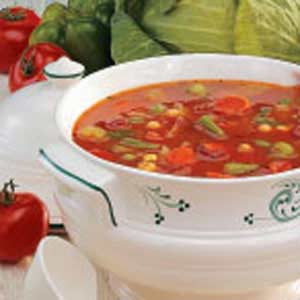
Hearty Vegetable Soup

Hearty Vegetable Soup

It has been colder in Los Angeles the last few days than during any time in the previous twenty-three years. It has been a struggle for our farmers (particularly in the strawberry fields of Ventura County)  to save their crops from the ravages of frost. Whenever the weather gets cold, the thought of soup is never far from my mind, so I got on Google and went to work looking for a good vegetable soup recipe. Here is the one I found.

The above link contains the full recipe. What I thought would be interesting would be to present just the list of ingredients, annotated by how I diverged using substitutions, additions, and omissions:

  • 8 medium carrots, sliced –  I only had two large carrots
  • 2 large onions, chopped – Instead, I chopped up the white ends of two leeks
  • 4 celery ribs, chopped – I only had three small celery ribs.
  • 1 large green pepper, seeded and chopped – I used one and a half
  • 1 tablespoon olive oil
  • 1 garlic clove, minced
  • 4 cups water
  • 1 can (28 ounces) diced tomatoes, undrained – I used a 28 ounce can of crushed tomatoes instead, which I prefer
  • 2 cups V8 juice – I just don’t think V8 juice tastes that good, so I skipped this altogether
  • 2 cups chopped cabbage
  • 2 cups frozen cut green beans
  • 2 cups frozen peas
  • 1 cup frozen corn
  • 1 can (15 ounces) garbanzo beans or chickpeas, rinsed and drained – Why drain it? I just dumped the can into the mix
  • 2 teaspoons chicken bouillon granules – I had some extra chicken stock, so I used about two or three cups of it
  • 1-1/2 teaspoons dried parsley flakes
  • 1 teaspoon salt – I deliberately omitted this
  • 1 teaspoon dried marjoram
  • 1 teaspoon dried thyme
  • 1 bay leaf
  • 1/2 teaspoon dried basil
  • 1/4 teaspoon pepper
  • My addition: A half cup of my favorite Middle Eastern soup mix, made up of small particles of barley, lentils, split peas, alphabet noodles, and a few other things
  • My addition: Hungarian paprika, because it’s always good

The result is absolutely delicious, even though I didn’t add the Swiss chard (run through the blender with some of the soup liquid) which I usually do when I cook soup. There just wasn’t enough room in the stock pot.

Even then, I had enough to give a small pot of the soup to my 80-year-old neighbor to help see him through the cold snap.

Foodies

Thirty-Something Foodies Grazing

Thirty-Something Foodies Grazing

Foodies are to dining what indie films are to movies. They represent a dilettantism gone ape. It’s very like those guys who hog the self-serving soda dispenser mixing Dr. Pepper with Mountain Dew and Raspberry Ice Tea in hopes of coming up with the magical beverage that tastes just right—as if they were some kind of gonzo new-age alchemists.

I work in Westwood, which adjoins the southern boundary of the UCLA campus. In the last year, a number of decent restaurants have shuttered their doors forever and been replaced by restaurants appealing to Foodies.

What are Foodies? They are essentially amateurs who concentrate on consuming, preparing, analyzing, and (endlessly) chatting about food. You can find them on the boards of Chowhound.Com making fine distinctions about tacos, hot dogs, Asian noodles, pastrami, and any number of other esoteric food-based subjects. In Los Angeles, many are aficionados of various catering trucks that tweet their next parked locations to their customers. Now, there is even one restaurant in Westwood (TLT Food) that started out as a catering truck operation.

Characterizing Foodie-oriented restaurants is a certain cluelessness regarding what most people who are not 30-Somethings like. For instance, as a diabetic, I scrupulously avoid sugared drinks. One nearby Foodie restaurant called Fundamental is typical of the genre, with unusual concoctions that you have to be of a certain age to like. If, like me, you are a diabetic, fuggeddaboutit!

I used to rely on Foodie chatter to find new restaurants: Now I can only assume that the websites will send me to some 30-Something dive where the hamburgers are loaded with mango chutney, the hot dogs topped with aioli, and the French fries laden with celeriac root and vindaloo paste. Almost always, sugar is added to make the incongruous mix more palatable to the young.

It’s not that I’m against any kind of food experimentation: It’s just that experimentation for its own sake rarely produces a tasty meal. It gets more complicated when I go out with Martine, who refuses to eat at restaurants that have incongruous foods on their menu, even when they are among other plainer and more traditional foods. For this reason, she refuses to eat at California Pizza Kitchen, even though she would probably like their thin-crust Sicilian pizza.


Phoenix dactylifera

Deglet Noor Dates

Deglet Noor Dates

During the relatively fruitless months that stretch between October and February (when the first fresh strawberries become available) is a good time to appreciate the fruit of the date palm, or Phoenix dactylifera.

Approximately 95% of the dates sold in the United States are grown in California’s Coachella Valley near Indio. While we were in the Palm Springs area, Martine and I spent the afternoon preceding Christmas Eve visiting two date gardens, the Oasis Date Gardens in Thermal and the Shields Date Gardens in Indio.

There are a number of different varieties of dates, ranging from the large and hypersweet Medjools to the Deglet Noors (my favorites), Zahidis, Barhis, and Khadrawies, to name just a few. When one buys relatively recently harvested dates in the Coachella Valley, they tend to be more moist. Supermarket dates just don’t cut it. Sometimes I will buy dates from our local farmer’s market in Santa Monica, because the dealer there drives in all the way from Mecca near the Salton Sea.

Below is a photo I took at the Shields Date Gardens:

Date Palms at Indio’s Shields Date Gardens

Date Palms at Indio’s Shields Date Gardens

Note the ladders dangling from the top of some of the trees. During the harvest, they are joined to other ladders so that the dates could be hand-picked. There is, insofar as I know, no mechanization possible that would maintain the quality of the crop. The trees are relatively bare now: As October approaches, the bunches of dates are covered with a cone-shaped paper wrap to prevent rain and predators from damaging the crop.

Most Americans tend to be relatively unfamiliar with dates, which comes as something of a surprise to me because they are sweet, loaded with vitamins and minerals, and relatively inexpensive. But then, I have been buying them from the Coachella Valley for over forty years.


The Soup Diaries: Jazzing Up Ramen Noodles

DSCN3272

Some Ingredients for a Perfect Ramen

This week it happened again. On Monday afternoon, I felt that premonitory tickling of the throat that means only one thing: Another bout with a cold or the flu. Fortunately, this time it turned out to be a cold.

The first thing I did when I got home was to ask Martine if it was all right if I made some soup for myself, as she had some leftovers in the refrigerator. I started up mincing or slicing up some carrots, serrano chiles, celery, and even a small potato and started it boiling furiously in three cups of water. I could have chosen other vegetables, such as cabbage, peas, spinach, onions, but I thought four veggie ingredients was sufficient.

It takes about twenty minutes of a furious boil before I add the broken-up ramen noodles, usually Chicken or Oriental flavor. (I like it but have no idea what makes it Oriental.) I stir the concoction for approximately three minutes before emptying the little flavor packet into the soup. Then I serve the ramen with two important ingredients, illustrated above:

  • Sesame oil, usually just a dash or two. Gives a really good flavor.
  • A Japanese chile powder mix called either Shichimi Togarashi (shown above) or Nanami Togarashi. Both add a little extra hotness (good for a cold) with the taste of black roasted sesame seeds.

IThe result is delicious, and a whole lot more nutritious than ramen on its own. What I’ve described here is enough for two people, but Martine will have none of my fire-eating ways, so I ate it all myself. It burned a little going down, but I felt it did me a world of good.

Soup Wisdom

Sadaf Soup Mix, One of the Indispensable Ingredients

Soup Wisdom is the name of a little book by Frieda Arkin that was produced by Consumer Reports back in 1980. It is one of the two sources of what I know about making soup. It is the lesser source: The main one is my mother, Sophie Paris, to whom this blog posting is dedicated. For the duration of my childhood and well into my adult years, my mother taught me that soup can make for a great meal. Just recognizing what a great soup can do for you is half the battle: The rest, like sex, consists of experimenting with a willing partner.

Here I will attempt to give away my secrets to making a delicious soup. Some of what I say will be general, some specific.

Take Your Time. Soups are better when you take several hours to make them. Once the mixture is boiling, lower the heat and slowly add the ingredients one by one.

Using Your Blender. A mistake that many neophytes make is to make the soup too thin. There are several ways to avoid that. The Hungarian method is by making a rántás, or roue, using butter; minced onion, garlic, and parsley; Hungarian (not Spanish) paprika; and a couple tablespoons of general purpose flour.

What I usually do is, as the soup nears completion, ladle some of the mixture—liquids and solids together—into my blender and add a chopped-up bunch of Swiss Chard, which gives the broth a wonderful flavor along with the thicker texture. If you don’t have Swiss Chard, some other greens could be substituted—but note that the Chard is a really great flavor booster!

“Soup Mix.” Living as I do in an area where there are numerous Persian, Armenian, and Middle Eastern markets, what I always do is buy some “soup mix,” which consists of small pieces of green and yellow split peas, pearl barley, rice, and alphabet macaroni. I add this to the soup as soon as the liquid begins to boil and let it basically cook down to form a nice and very healthy background flavor and texture. I am partial to the brands put out by Sadaf and Springfield Foods.

Soupercharging Your Soup. If you have more time than I have, you might want to make your own beef, chicken, or vegetable broth to use as the base of your soup. Here’s where I cheat a little: I buy some soup broth of the desired variety from Trader Joe’s or my local supermarket. This week, I made a vegetarian minestrone using Swanson’s canned vegetable broth, which was quite good. I love the Trader Joe chicken broths, of which there are a couple of varieties.

Salt at the End. Some ingredients tend to get a little tough if you salt the soup too early. Since Martine doesn’t like salt very much, I don’t add any salt until the soup is served.

I know I said at the outset to take your time, but one of these days, I’ll post a blog about what I do to cheap ramen mixes to make them tastier and healthier without taking more than 5-10 minutes of my time.