Yesterday, I took the bus to the Getty Villa rather than pay the $20 parking fee. The museum had several exhibits about the civilizations of ancient Persia. The above gypsum relief is typical of the art of the Palace of Ashurbanipal in Assyrian Nineveh.
I have always been interested in ancient Persia. It’s not a subject typically taught to American students. The impression I came away with is that virtually all the art is in glorification of the existing monarchy. Comparing it to the literature and art of ancient Greece, I find that in the latter there is more in it for the people. I will always remember the philosophical dialogues of Plato, the tragedies of Sophocles and Euripides, and Greek statuary.
As for ancient Persia, I am reminded of these lines from Rudyard Kipling’s “Recessional”:
 Far-called, our navies melt away;
   On dune and headland sinks the fire:
Lo, all our pomp of yesterday
   Is one with Nineveh and Tyre!
Judge of the Nations, spare us yet,
Lest we forget—lest we forget!
When nothing is left of an ancient civilization is the dusty memory of its regal pomp, there is not much for succeeding generations to hold on to. Still, I plan to learn more about the Assyrians and the Persians that followed in their wake. Greece and Rome spent centuries fighting the Persian menace; and today we are only endangering ourselves when we fail to understand other civilizations.
One day after writing about the Yugoslav Wars of the 1990s, I came on a short, pithy, and intuitive summary written by John Le Carré in his last novel, Silverview (2021):
Six tiny nations squabbling over Big Daddy Tito’s Will. All fighting for God, all wanting to be top dog, and nobody to like.
In case you missed that lovely era, Josip Broz “Big Daddy” Tito was the leader of Yugoslavia from the end of World War Two to his death in 1980.
Doesn’t he look remarkably like Field Marshal Hermann Goering?
Soldiers of People’s Liberation Army (PLA) march in formation during the military parade marking the 70th founding anniversary of People’s Republic of China, on its National Day in Beijing, China October 1, 2019. REUTERS/Thomas Peter
It is fashionable in the United States to overestimate the Chinese as an international aggressor. Since its involvement in Korea some seventy years ago, China’s Peoples’ Liberation Army (PLA) has not acquitted itself particularly well:
In 1962, there was a border dispute with India which did not involve air or naval forces, in which the three PLA regiments occupied an area in the Himalayas known as Aksai Chin.
In 1967, China attempted to invade Sikkim, just east of Nepal, but were driven back by Indian troops.
In 1979, China invaded North Viet Nam (which was allied with Russia) and lost heavily to battle-hardened Viet troops under Võ Nguyên Giáp.
Recently, China has occupied various uninhabited rocks in the South China Sea, which are in danger of being inundated by tsunamis common in the area due to volcanic activity.
It has been much more common for the PLA to be involved in the suppression of minority populations in south and western China.
So although the PLA on paper is powerful, it has no real history of success in battle. Although I am not in favor of pooh-poohing them as a threat, I think we tend to go too far in the opposite direction.
I must admit, however, that the PLA wins hands down on the parade ground.
There is a tendency, especially among the young, to view the past as irrelevant. After all, the ancient Greeks did not have smartphones; Shakespeare and his contemporaries did not have video games; and 18th century gentlemen wore powdered wigs, took snuff, and made a big show of their calves. What can we possibly learn from them?
Part of the problem is the way we teach history in our schools. The denizens of past times are not allowed to speak for themselves. If they did, we would find that they were not so very different from us in what mattered: The differences are mostly superficial.
There is a wonderful website called Laudator Temporis Acti (Praiser of Time Past) in which we can find startling glimpses into the great minds of the past. Here, for instance, is Horace in one of his satires:
Seize the path, comrade, believe me. Since all terrestrial creatures
are fated to mortality, and since there is no
escape from death for either great or small, then, good friend,
while it is permitted, live happily among pleasant surroundings;
and live ever mindful of how brief is your span.
And here is Plutarch discussing the Spartans:
When one of the elderly men said to him in his old age, inasmuch as he saw the good old customs falling into desuetude, and other mischievous practices creeping in, that for this reason everything was getting to be topsy-turvy in Sparta, Agis said humorously, “Things are then but following a logical course if that is what is happening; for when I was a boy, I used to hear from my father that everything was topsy-turvy among them; and my father said that, when he was a boy, his father had said this to him; so nobody ought to be surprised if conditions later are worse than those earlier, but rather to wonder if they grow better or remain approximately the same.”
Lately, I have enjoyed reading the journals of James Boswell, son of the Laird of Auchinleck and author the great biography of his contemporary, Dr. Samuel Johnson. As a young man in his twenties, he carouses his way through London while sucking up to the nobility to get a commission in the King’s guards. Then he goes to Holland to study law and falls in love with a beautiful young heiress named Belle de Zuylen. Like many a millennial, he is frequently depressed and uncertain about how to proceed.
Belle de Zuylen
Then there is that master of wisecracks, Lucian of Samosata (circa 125-180), who scoffs at the gods and in every way looks as if he were about to launch into a Saturday Night Live skit:
They see nothing indecent in sexual intercourse, whether heterosexual or homosexual, and indulge in it quite openly, in full view of everyone. The only exception was Socrates, who was always swearing that his relations with young men were purely Platonic, but nobody believed him for a moment, and Hyacinthus and Narcissus gave first-hand evidence to the contrary.
When I go searching into the minds of men and women who lived in the past, I am constantly realizing that they are my contemporaries in every way except for accidentals that don’t much matter.
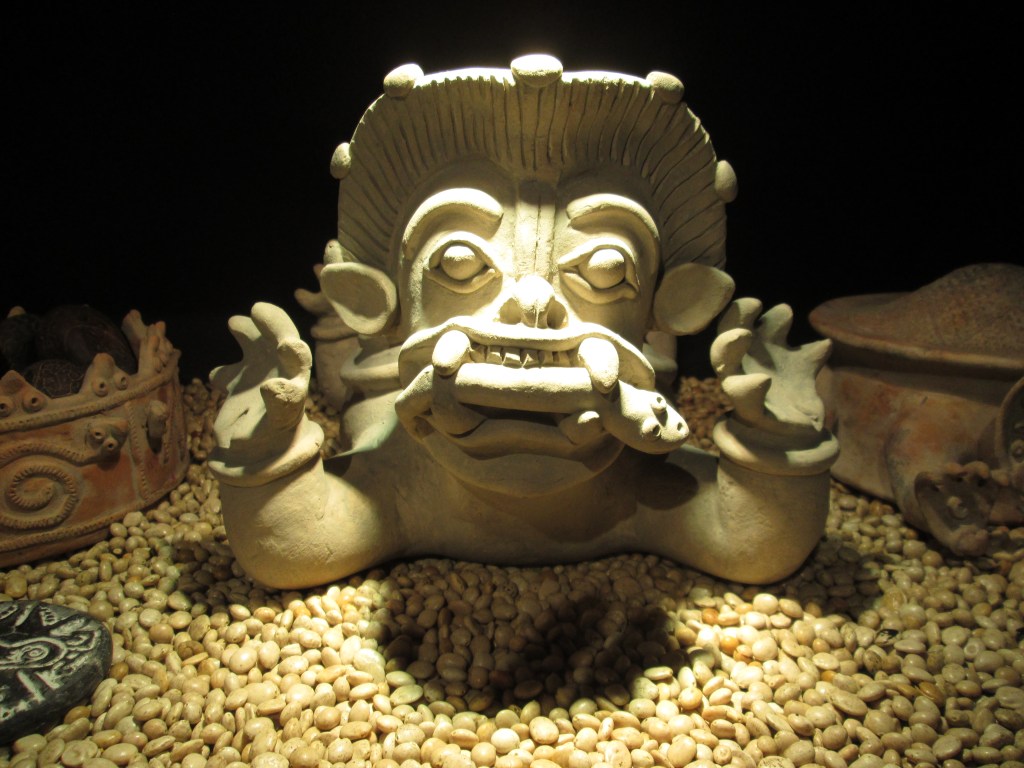
ancient The photo above is of a contemporary figurine of a Pre-Columbian idol on display in Quito’s Museo Mindalae. Although I doubt there was much trade between the ancient peoples of Ecuador and the Olmecs, Maya, and Aztecs of Mexico, there are clearly similarities in their religious iconography.
Before I began my travels to Latin America in 1975, I was puzzled by the images I saw of deities and demons from the more civilized portions of Meso-America. There were many similarities. But once one crossed the Rio Grande and visited where the Anasazi lived, the imagery is altogether different. And when I traveled in Argentina, Uruguay, and Chile, I saw precious little suggesting an advanced ancient civilization (though, in all honesty, I never visited the Northwest of Argentina, which was part of the Inca empire).
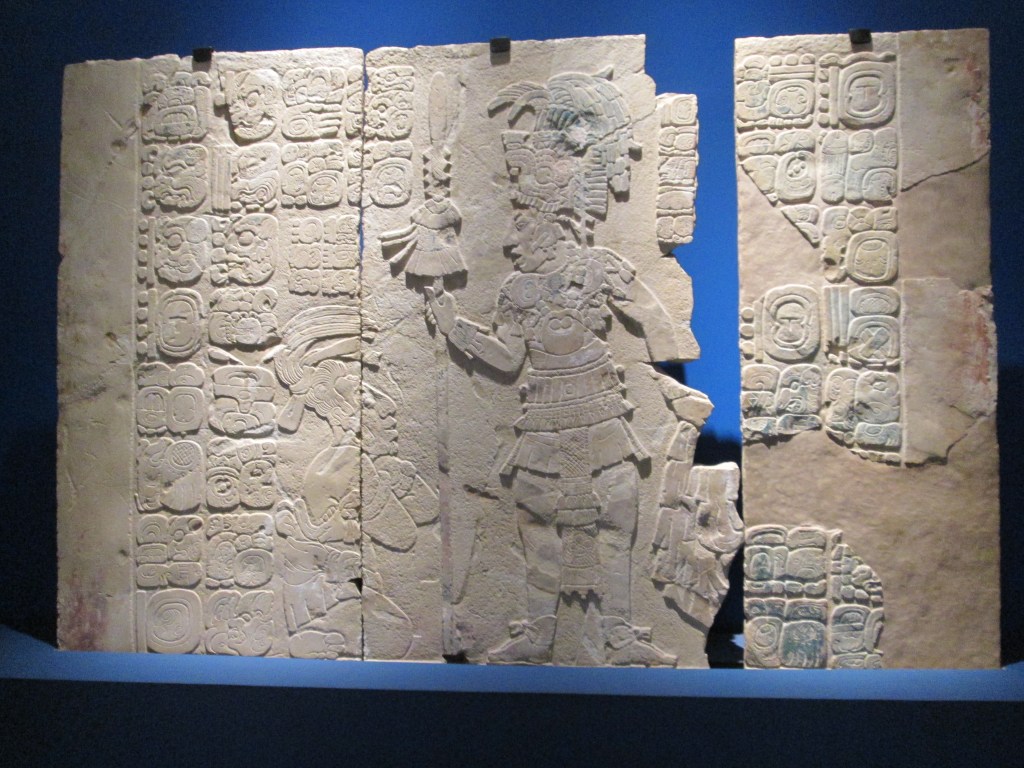
Now look at the depiction of one of the Mayan Priest Kings of Yucatán from the Mérida Museum of Anthropology:
Note the elaborate headdress and the warlike demeanor. Do not expect mercy from either of these rigidly powerful figures. I remember a conversation that took place at a symposium at UCLA decades ago between two archeologists, Michael Coe and Nigel Davies, about whether they would prefer to be in captivity to the Mayans or the Aztecs. Both agreed that, although the Aztecs were an empire and the Mayans were a group of city states, they both feared being prisoners of the Maya.
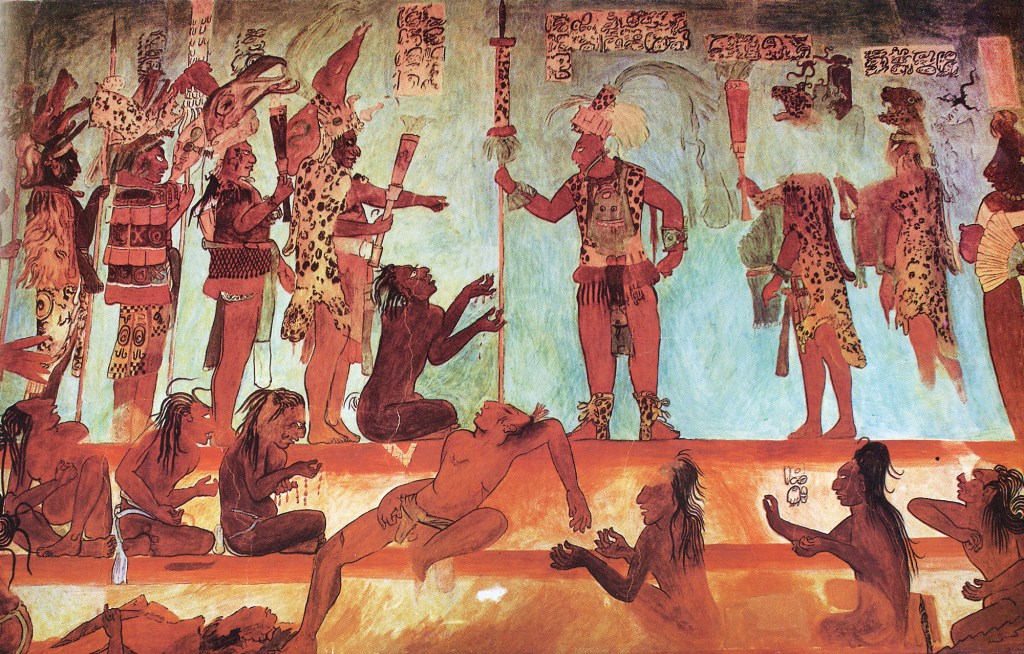
Why? Take a look at this fresco from the ruins at Bonampak in Chiapas:
Here you see the victorious Maya of Bonampak with their prisoners captured in a war with another city state. The scene is described in the Sixth Edition of Robert J. Sharer’s The Ancient Maya:
The aftermath is presented on the north wall. Here the full-frontal figure holding his jaguar-pelted spear, again probably Chan Muwan, accompanied by his warrior allies and entourage, along with two women at the far right, stands on the summit of a platform to preside over the captives taken in the battle. The chief captive sits at Chan Muwan’s feet, while the rest of the unfortunate prisoners are displayed on the six steps of the platform, where they are tortured and bled from their fingernails, held and guarded by more victorious warriors. These are the captives that will be sacrificed; one sprawled figure may already be dead, and the severed head of another has already been placed on the steps.
What all these Meso-American peoples had in common was highly organized and ritualistic warfare. Reading the history of many of these city states based on commemorative stelae, paintings, and other media, one clearly gets the feeling that life for the common people was anything but fun.
Vikings: They Did a Lot More Than Loot and Pillage
They were the bad boys of early Medieval Europe. From the pulpits of all of Europe and even farther came the prayer “A furore Normannorum libera nos, Domine”—“From the fury of the Norsemen, O Lord deliver us.” Sailing out of Scandinavia, they occupied large parts of Britain, Ireland, France (surely you’ve heard of Normandy), Ukraine, Russia, and Italy. They formed an elite regiment in Constantinople, where they were called the Varangian Guard.
They just happened to be the first Europeans to set foot in the Americas some half a millennium before Columbus sailed the ocean blue. They had a settlement at L’Anse aux Meadows in Newfoundland, which they abandoned only after constant warfare with the Skrælings (Indians).
We call them Vikings, but for them the word was a verb, not a noun. Most of the dread Norsemen raiders were farmers who would “go viking” when their short growing season was over. They were, in effect, part time terrorists.
Also, they just happened to create a great literature in the sagas, particularly those created in Iceland in the 13th century. They included such works as:
Njúls Saga,, the greatest of them all, about revenge that gets out of hand
Egils Saga, about the bard Egil Skallagrímsson
Laxdæla Saga, with its female heroine Guðrun
Eyrbiggja Saga, with its berserkers (yes, they actually existed)
Grettirs Saga, about a famous outlaw warrior
These were probably the best works of literature to come out of Europe in the period in which they were written. They are all available in excellent translations from Penguin Books.
Incidentally, as a French woman of Norman heritage, my Martine is herself a Viking.
We Celebrate Our Independence by Playing at Terrorism
As I write these words, the air is full of explosions. Dogs and cats are whimpering as they hide under beds, tortured by their pet-loving owners who celebrate our independence with backyard barbecues and playing at being terrorists. I’m not sure that many Americans are giving any attention to the Declaration of Independence from King George III.
Ultimately we got our independence, but mainly because of help from France. You can read all you want about American history and not find a word about George Washington ever winning a battle. France helped us at a horrible cost to the French monarchy: their assistance bankrupted the treasury and was a major contributor to the French Revolution, which began shortly after we won our independence. Louis XVI and Marie Antoinette paid for helping us by being publicly beheaded in Paris’s Place de Grève.
Ingrates that we are, we tend to downplay the French role in winning our freedom. When the British under Cornwallis were tied up at Yorktown, it was because Admiral François Joseph Paul, Comte de Grasse, Marquis of Grasse-Tilly was backing up the Continental Army led by Washington and Lafayette.
Don’t think I’m feasting on escargots, Coquilles Saint-Jacques, and Pouilly-Fuissé because of this. I’m not celebrating at all, especially as it sounds like my street is being bombed.
California has given birth to many beautiful myths. Unfortunately, they frequently have little bearing on the actual history of the Golden State. For instance, the twenty-one Franciscan missions founded by Father Junipero Serra—who has been canonized a saint by Pope Francis in 2015—are among the most peaceful places I have ever visited. Yet they were little more than rural concentration camps in which thousands of Californian Indians found their way to early graves.
If you look at a map of the mission location, you will find that they are all strung out like so many pearls along the Camino Réal closely following the coastline. Indians who dwelt close to the coast were rounded up and assigned as peons to the various missions, where they were worked to death. During the heyday of the missions from 1769 to 1834, some 53,600 adult Indians were baptized, and 37,000 were buried.
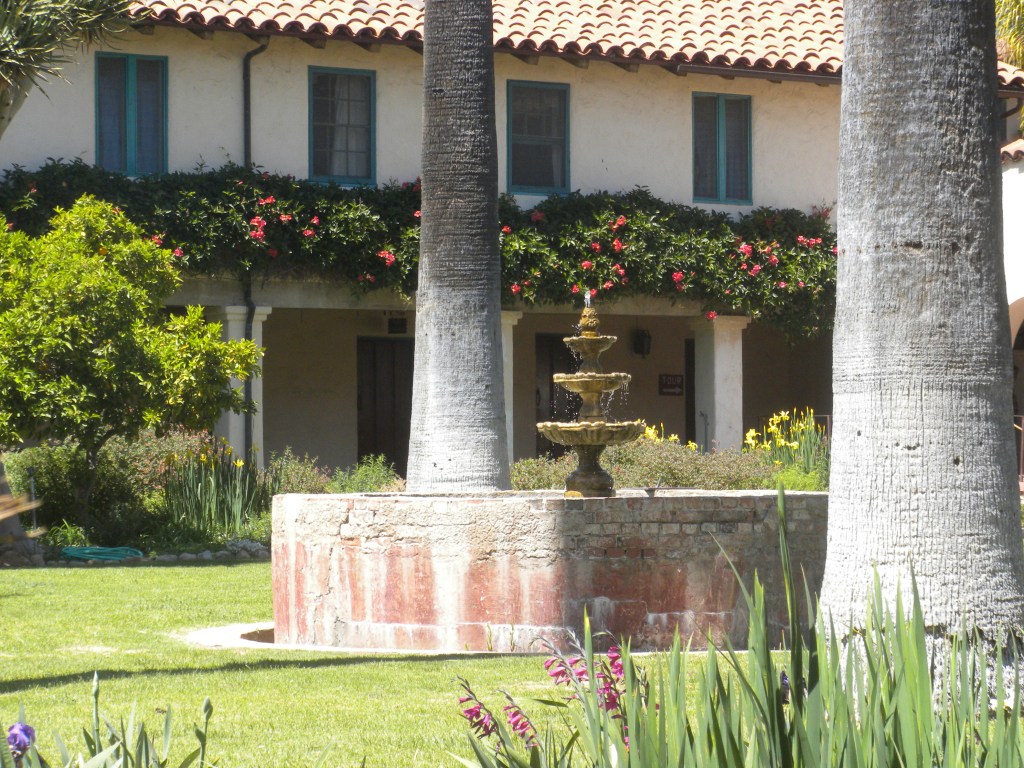
The Graveyard of the Santa Barbara Mission
Visiting the Santa Barbara and Santa Ynez missions, I was stunned to find that the postage-stamp-sized cemeteries adjoining the missions held 3,936 and 1,227 bodies respectively. Why is this? The Indians attached to the missions (they were not allowed to leave) were essentially overworked and underfed. When they lived in the missions, the Indians lived in permanent adobe structures that were infested with fleas. Young Indian maidens were treated as nuns and confined to barracks in which the rooms were 50 feet long by 21 feet wide with bunks ranged around the walls. A single high window provided the only ventilation, while the center of the room was an improvised sewer or latrine.
According to Carey McWilliams in Southern California Country: An Island on the Land:
To understand what conversion meant to the Indian, it should be remembered that the process of Missionization necessitated a sudden transition from the settled, customary existence of the Indian in a small rancheria or village to the almost urban conditions that prevailed in the larger Mission establishments. The change … must have come as a deep mental shock to the Indian.
As much as I respect much of Catholic teaching from my long education in religious elementary and high schools, I cannot condone many practices of the past, such as the Inquisition and the treatment of native peoples in the missions.
I have just finished reading Laura Dassow Walls’s Henry David Thoreau: A Life. As I have mentioned before, I don’t usually like biographies, because if you admire the person who is the subject of them, you are devastated when he or she dies in the last chapter. Sitting in my little library, I was devastated when the American I most loved and admired succumbed to consumption at the age of forty-four.
Everyone knows a little about Thoreau, most of it wrong. When I first read the book, I was told by friends that when he moved to his cabin by the shores of Walden Pond, Thoreau “cheated.” What kind of a hermit was he when he spent a lot of time in Concord with his friends. The answer is: He was no kind of a hermit. The first chapter of Walden, or Life in the Woods is entitled “Economy,” not some eremitical mumbo-jumbo.
Long after he returned to his house in Concord, Thoreau lived an active life giving speeches, writing thousands of pages of notes on nature, fulminating against slavery (his house was a station on the Underground Railroad), and supporting John Brown and his followers even after Brown was executed for his raid on Harper’s Ferry. He had read and understood Charles Darwin’s The Origin of Species, even while thousands of Americans condemned it as heretical.
I love the above photograph of Thoreau, which also is on the dust jacket of Laura Walls’s biography. Look at those piercing blue eyes. The scraggly beard was to warm his neck to protect him from the ravages of consumption.
This biography is nothing less than spectacular. I was saddened to come to the end of it.
Why do I admire Thoreau so much? I can only say that he was one of the most observant people who ever lived, easily on a par with John Muir and Charles Darwin. It was Thoreau’s notion of land set aside from human occupation as “commons” which led, via Muir, to the creation of the National Park System. Also, I regard Walden as a great book in a century that included such luminaries as Hawthorne, Melville, and Whitman.
Now I’m going to have to read some more Thoreau. Lucky me!
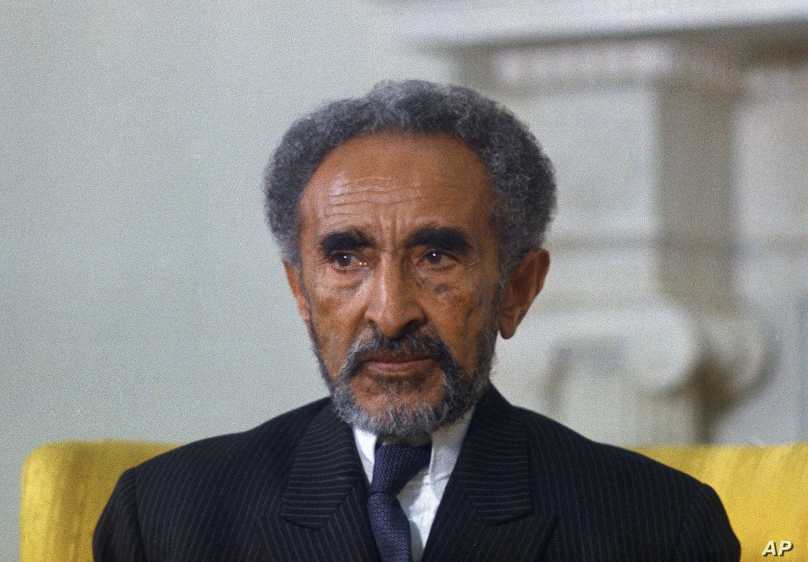
The Emperor Haile Selassie of Ethiopia, the Lion of Judah
He was short and somewhat frail, yet Haile Selassie managed to reign as Emperor of Ethiopia for some 44 years, from 1930 to 1974, when his government was toppled by a revolution. Although his book about Selassie, entitled The Emperor, has come under fire for certain inaccuracies, Ryszard Kapuściński leaves us an unforgettable portrait which is probably mostly true. Take, for instance, the following excerpt:
His Majesty spent the hour between nine and ten in the morning handing out assignments in the Audience Hall, and thus this time was called the Hour of Assignments. The Emperor would enter the Hall, where a row of waiting dignitaries, nominated for assignment, bowed humbly. His Majesty would take his place on the throne, and when he had seated himself I would slide a pillow under his feet. This had to be done like lightning so as not to leave Our Distinguished Monarch’s legs hanging in the air for even a moment. We all know that His Highness was of small stature. At the same time, the dignity of the Imperial Office required that he be elevated above his subjects, even in a strictly physical sense. Thus the Imperial thrones had long legs and high seats, especially those left by Emperor Menelik, an exceptionally tall man. Therefore a contradiction arose between the necessity of a high throne and the figure of His Venerable Majesty, a contradiction most sensitive and troublesome precisely in the region of the legs, since it is difficult to imagine that an appropriate dignity can be maintained by a person whose legs are dangling in the air like those of a small child. The pillow solved this delicate and all-important conundrum.
I was His Most Virtuous Highness’s pillow bearer for twenty-six years. I accompanied His Majesty on travels all around the world, and to tell the truth—I say it with pride—His Majesty could not go anywhere without me, since his dignity required that he always take his place on a throne, and he could not sit on a throne without a pillow, and I was the pillow bearer. I had mastered the special protocol of this specialty, and even possessed an extremely useful, expert knowledge: the height of various thrones. This allowed me quickly to choose a pillow of just the right size, so that a shocking ill fit, allowing a gap to appear between the pillow and the Emperor’s shoes, would not occur. I had fifty-two pillows of various sizes, thicknesses, materials, and colors. I personally monitored their storage, constantly, so that fleas—the plague of our country—would not breed there, since the consequences of any such oversight could lead to a very unpleasant scandal.








 Tarnmoor
You must be logged in to post a comment.