The Lomita Railroad Museum

The Lomita Railroad Museum

One does not expect to see a railroad museum on a residential suburban street, yet there it was. Plus it was not built at the site of an old station or railroad yard. The station building is a built-from-scratch replica of the station in Wakefield, Massachusetts. It was built on 250th Street because that’s where Irene Lewis lived. The Lomita Railroad Museum is her creation, in memory of her late husband Martin, and it is a tribute to the love that the Lewises had for railroading.

Today was a prototypical June gloom day, so Martine paged through our copy of Passport 2 History: Your Guide to 83 Historic Sites in 9 Counties of Central and Southern California, an occasionally revised booklet that has resulted in a number of fun day trips for the two of us.

In addition to the station building with its numerous exhibits, there is a 1902 Southern Pacific steam locomotive with tender and a 1910 Union Pacific caboose. On adjoining properties, there is a Santa Fe caboose, a 1923 Union Oil tank car, and a 1913 outside-braced wood box car.

Martine with Locomotive Exhibit (Notice the Engineer’s Hat)

It’s always fun to see a real labor of love come to life the way the Lomita Railroad Museum has. Los Angeles is full of little corners where some person’s dream has resulted in a fun place to visit and be informed.

Especially now that the Los Angeles to San Francisco High Speed Railroad is in doubt because of funding woes, railroading is becoming more and more a thing of the past. Although they seem to be thriving in Europe and parts of Asia, the railroads in North America have given way to trucks (for freight) and buses (for passengers).

I will never forget the awe I felt as a cub scout waiting for a passenger train to take members of my “den” to distant Ashtabula, Ohio. As the giant steam locomotive pulled up to the station, I felt a frisson of terror at such power as we were enveloped in steam.


Why No Children?

Southern California Schoolgirls

Yesterday, as I was sitting in an armchair in the literature department of the L.A. Central Library when a group of Mexican school children—all holding hands—trooped by with their teacher. For a moment, I had a good feeling about the future. Los Angeles has thousands of attractive school children of all races, ethnicities, and creeds. That is one of the things that makes me love my town. As Kurt Vonnegut wrote in Cat’s Cradle:

Nice, nice, very nice
So many people in the same device.

So then why do I have no children? It all goes back to my childhood during which, for a period of ten years, I had a pituitary brain tumor without knowing it. When I graduated from college in 1966, I looked like an eleven-year-old, as my growth hormone, along with all my other hormones, was not functioning. As you may recall, the pituitary gland, which lies midway between the ears and under the brain, is the master gland. All my other glands were fine, except that they were not given any orders from the pituitary to produce any hormones, so they didn’t, at all.

It was not until I was well into my sixties that my endocrinologist said, “You know, you can now have children if you want.” I had lived my entire adult life with the sure knowledge that I could not have children, and I live with my girlfriend, who most certainly does not want to bear or raise children. For some forty plus years, that worked out fine for me. Dr. Sladek’s offhand comment just reminded me how old I was.

Please allow me to cringe as the following five words make their appearance: “But you can always adopt!” I have never been interested in adopting, though some of my friends have gone in for this with mostly good results. What I wanted, though, were children that were my true biological descendants. At times, I have been abrupt with people who suggested this, answering them, “I am not interested in raising other people’s mistakes.”

That is an awful thing to say, I know. But I feel that adoption was never for me.

So do I not like kids? Far from it. I have accustomed myself to thinking of myself as the last of my line. Those were just the cards I was dealt in this life.


The Book Collector

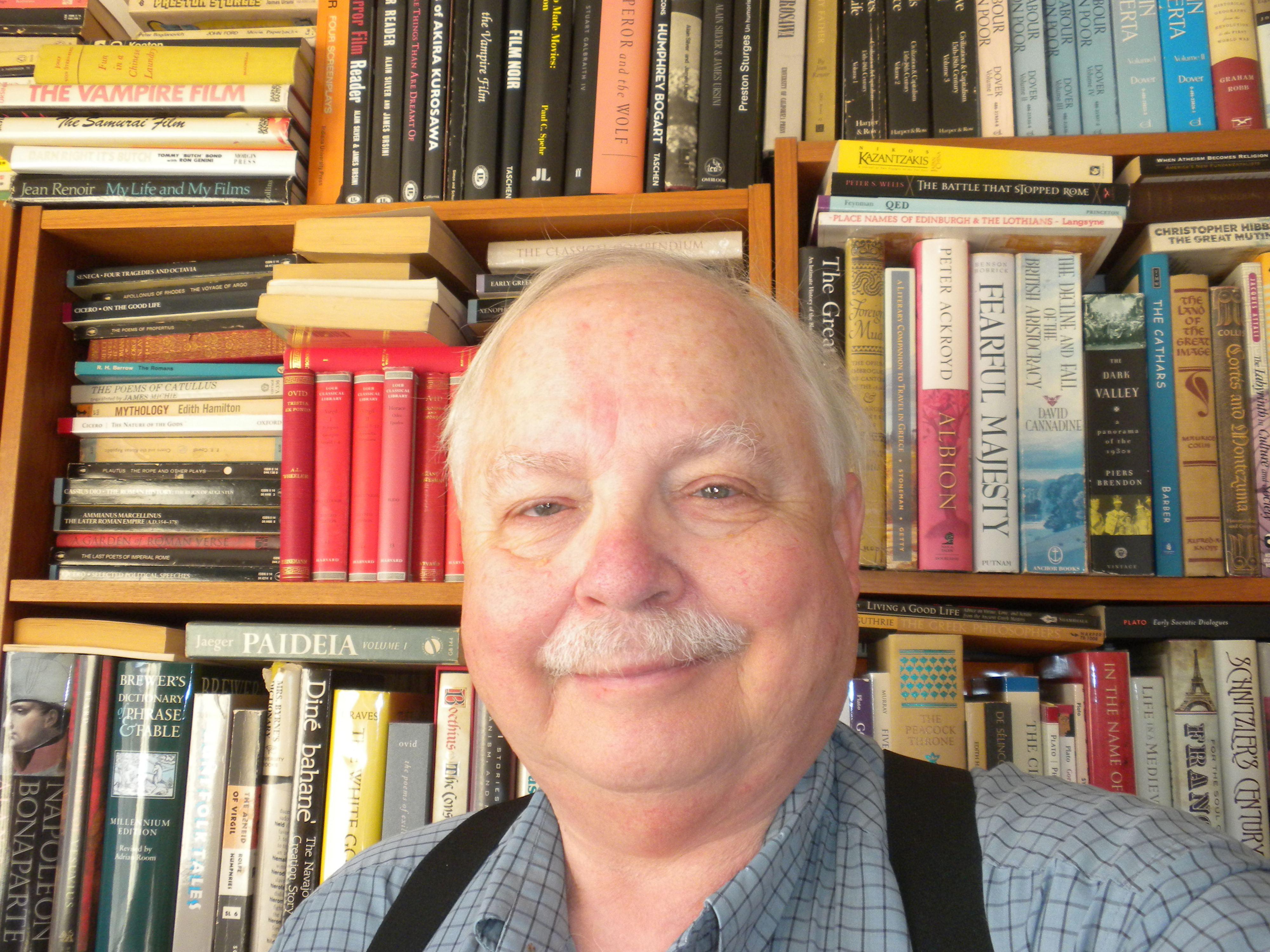
Me in My Library in Palmier Times

Ever since I was very young, I wanted to live surrounded by books. And I did, spending hundreds of dollars a month on books—hardbounds, paperbacks, even e-books. There is a tendency for accumulations to get out of hand. I have known collectors who lived in fear of being crushed under their film collections, movie poster collections, book collections. Collections can grow so out of bounds that they become a kind of illness, related to hoarding. When Martine and I moved from room to room, we had to take prescribed paths, because the floor was piled high with books. It was frequently a bone of contention between us.

Beginning late last year, I started donating books to the Mar Vista Branch of the Los Angeles Public Library. In a twelve-month period, I have given well over a thousand books to the library. Some will be sold by the library at one of their bimonthly sales, some will be sold for a dollar a book at the branch, some (the cheaper ones) will just be given away. Who knows? Perhaps some of them might even be incorporated into he library’s own collection. A lot of them are great titles in prime condition.

If you look at the books behind me in this picture, I would have to say that about 30-40% are no longer in my possession. Twice a week, a put together a box of books for donation, with Martine’s eager cooperation.

Now that I am living on a fixed income, I buy relatively few books, and then only if I intend to read them in the near future. Today, for example, I purchased a nice harbound copy of Paul Theroux’s Sir Vidia’s Shadow, about the author’s decades-long friendship with V. S. Naipaul.

Do I read as much as ever? Of course I do—perhaps even more so. It’s just that I no longer feel I have to own all the books I love. I just have to read them.


My Aunt Margit

Margit Paris (Died 1977)

My only aunt, Margit, was the sister of the Paris twins, Elek and Emil. Like them, she was born in Prešov-Solivar in what is now the Republic of Slovakia, but at the time was part of the Austro-Hungarian Empire and under Hungarian administration. Like them, she was abandoned by her parents at the end of World War I in the middle of a famine. The three siblings did what they could to survive under difficult conditions. In 1929, they were able to come to the United States and joined their parents in Cleveland.

Although Margit never married, she single-handedly owned and operated May’s Bridal Shop in Garfield Heights, Ohio. She lived in the back of her store, though I believe she spent most weekends with my Uncle Emil in Novelty, Ohio.

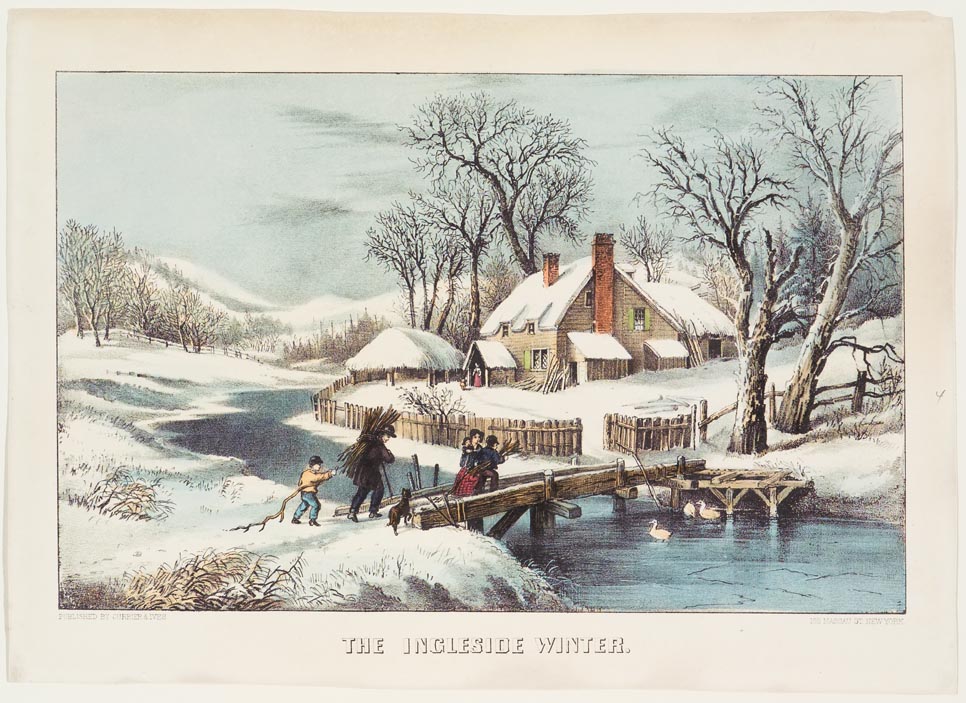
I used to enjoy visiting the store, even though I was put to work. Aunt Margit handed me a magnet and had me use it to pick up pins from the fitting room floor, of which there were usually hundreds. When I was done, I sat admiring her calendar. Her insurance company put out an annual calendar that featured color engravings from Currier & Ives. The calendar part didn’t interest me at all, but the budding book collector in me coveted the Currier & Ives engravings. She didn’t know it at the time, but instead of buying me clothes at Christmas time, I would have been happier with one of her old calendars.

A Typical Currier & Ives Color Engraving

When she retired from the bridal shop in the mid 1970s, she bought a house in Florence, South Carolina. It was a bit of a surprise to me, as Margit was always close to her brothers.

When I went with my parents to Hungary and Czechoslovakia in 1977, I flew back from Europe earlier. The news that awaited me after my return was that Aunt Margit had died. I rushed to send a telegram to my Dad in Budapest. They couldn’t get back in time for the funeral, so I decided with my brother Dan to attend the funeral in their place. Afterwards, my Mom told me that Dad was totally broken up by my telegram and was agitated that he couldn’t be there for her. Dan and I figured that would be the case, so we were both happy to honor our aunt with our presence on this sad occasion.

She was a sweet and kindly person all her life, and we all missed her.


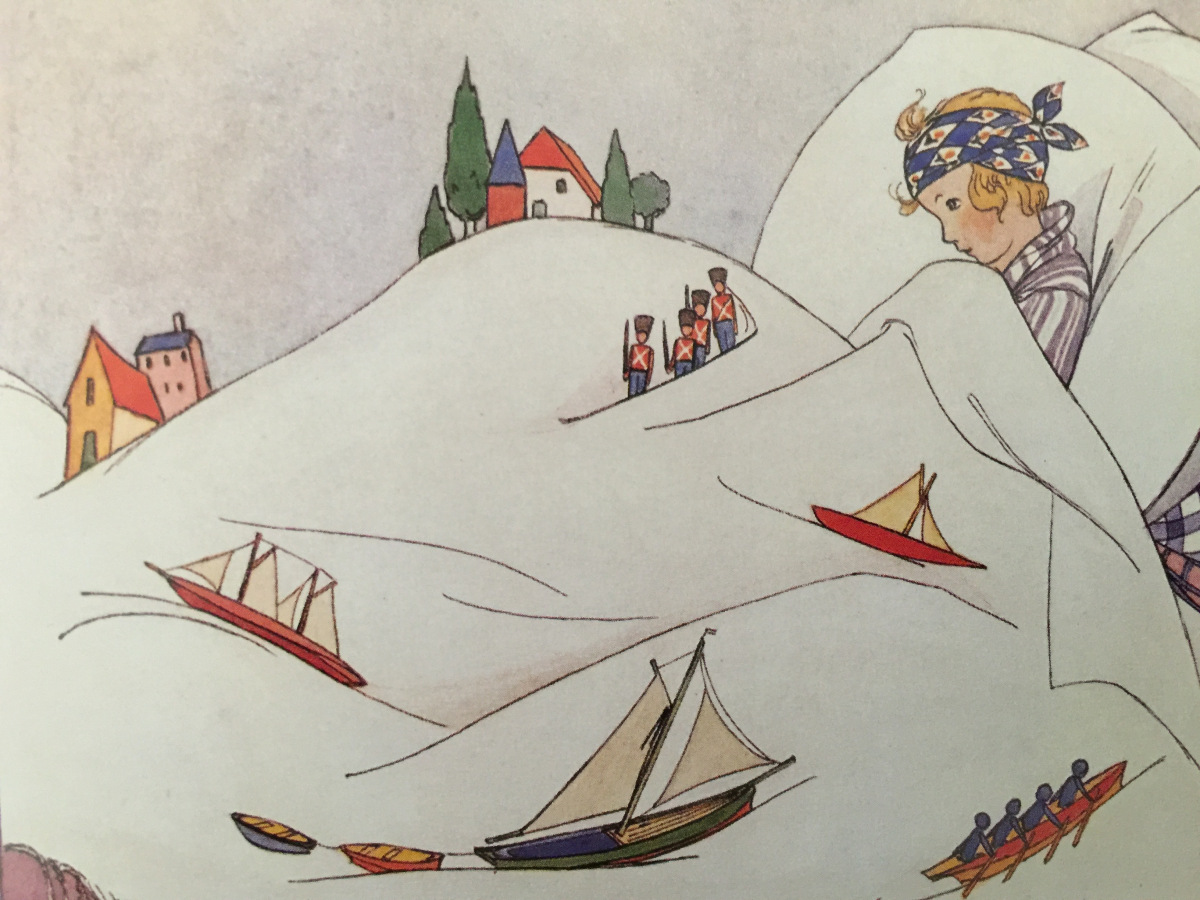
“The Land of Counterpane”

I Remember This Illustration from My Childhood

The first poem I remember was “The Land of Counterpane” from Robert Louis Stevenson’ A Child’s Garden of Verses. I was in grade school and sick with some childhood disease. While Mom and Dad were off at work, and I was being cared for by my great-grandmother Lidia Toth, I was allowed to lie in their bed. Mom had gotten be a library book with this poem in it—and with the above illustration. I don’t know which impressed me more, the words of the poem or the illustration. In any case, the memory has stuck with me through the years. Here’s the words of the poem:

When I was sick and lay a-bed,
I had two pillows at my head,
And all my toys beside me lay,
To keep me happy all the day.

And sometimes for an hour or so
I watched my leaden soldiers go,
With different uniforms and drills,
Among the bed-clothes, through the hills;

And sometimes sent my ships in fleets
All up and down among the sheets;
Or brought my trees and houses out,
And planted cities all about.

I was the giant great and still
That sits upon the pillow-hill,
And sees before him, dale and plain,
The pleasant land of counterpane.

Now, many years later, I am rediscovering RLS, especially his last years in the South Pacific. I wonder if, somehow, my memory over the great gulf of years, has anything to do with my wanting to go back to Stevenson and reacquaint myself with his work. In any case, that’s what I’m doing … and I am enjoying every moment of it.


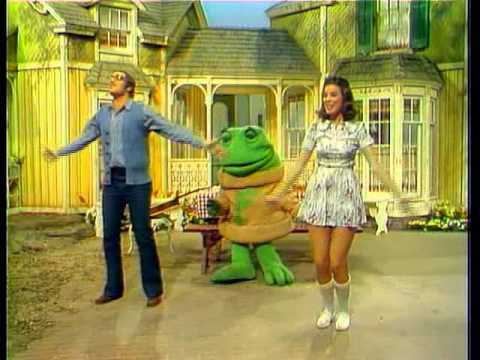
New Zoo Revue … Coming Right at You!

A Weird Memory from the 1970s

Early in the 1970s, I was working on my master’s thesis for the UCLA Film Department. It was going to be about how animated films echoed our culture’s collective unconscious. This was before DVDs and cheap VHS tapes, so I had to see animated films whenever I could. At that time, there was a Bugs Bunny show every morning at 7:30, which I studiously watched, taking copious notes about Bugs, the Roadrunner, Pepe le Pew, Tweety, Sylvester, and the whole gang. Before Bugs Bunny came on the air, there was a young children’s show called The New Zoo Revue.

I was entranced by what I saw of the show, and I fell in love with Emily Peden (shown on the right above), who played Emmy Jo. Here is a link to a couple minutes from their show:

Why did I suddenly think of this show? Yesterday, Martine and I drove to Santa Barbara and visited the Santa Barbara Zoo, which—along with the Living Desert in Palm Desert—is one of my favorite small zoos. I guess I’ll have to write about it some other time, when I can stop thinking about Emmy Jo’s lovely legs. So strange to have the 1970s sneak up on me that way!

My Early Career

Yes, That’s Me at the Age of 18 Months

Now that you’ve seen me without a stitch of clothing on, and facing you with the situation, I thought I’d bring you up to date about the second home of my young life. When I was only a little over a year old, my Mom, Dad, and I moved to Lake Worth, Florida. As I was much too young at the time, I have no memory of my first trip to the Land of Sunshine. My Dad worked for the city, which is a southern suburb of West Palm Beach, and my Mom had her hands full with the above illustrated hedonist.

Unfortunately, my father did not have the best of times in Florida. His job was to remove the bodies of dead and rotting alligators. Now Dad had a tricksy stomach, so instead of job satisfaction, he was mostly involved in projectile vomiting at the time. The move to Florida was declared a failure, so Dad insisted that the family relocate to the Hungarian neighborhood of Cleveland, on the East Side’s Buckeye Road. Which is what we did.

My third home was the second floor of a duplex at 2814 East 120th Street. I was able to put down some roots there, as we were to remain there until 1951, after my brother Dan was born. Since I didn’t know a word of English, Mom and Dad figured we should relocate to the suburbs, a few miles east of Buckeye Road. It was time for me to learn English and become a red-blooded American. Which I proceeded to do, with such dispatch that after three more years, I was no longer regarded as a problematical retard with a funny accent.

BTW: My Mom adored the above picture. She showed it to all my girlfriends….


Seven Years in Siberia

My Grandfather’s Obituary in the Cleveland Papers

The story of the Czechoslovak Legion was one of amazing heroism and almost unbelievable feats. I had always heard that my father’s father was a member of this fighting force and was captured and served time in Siberia. Today, going through some old papers, I received confirmation from his obituary in a Cleveland newspaper.

In World War I, the Czechoslovak Legion fought on the side of the forces arrayed against Germany, in hopes that after the war, their efforts would result in a free Czechoslovakia. The unit to which Emil Paris Sr belonged did its fighting in Russia. When the Bolshevik Revolution occurred late in 1917, they fought for the Whites against the Red Army. As the Germans invaded the Ukraine, they found escape through Europe blocked and elected to fight their way across Siberia along the line of the Trans-Siberian Railroad to Vladivostok, from where they would find ships back to Europe.

Men from the Czechoslovak Legion in Vladivostok

Emil didn’t quite make it. He was captured by the Red Army and interned in Siberia for seven years, before he was released. During that time, my father Alex, my Uncle Emil Jr, and my Aunt Margit were on their own in the Tatra Mountains of Slovakia in the middle of the postwar famine, just trying to survive.

I have a few memories of my grandfather and his wife before he died some time before my brother’s birth in 1951. I remember his funeral, and I remember visiting him before Irma died in 1947. During that visit, I was given a toy boat. It must have been one of my earliest memories. I was two years old at the time.

Czech Stamp Honoring a Battle Won by the Legion

My grandfather might have been heroic, but he was famed for being a mean man who once sued his son, my father, over a five dollar debt.

I am one of the three grandchildren referred to in the obituary, the others being Emil Jr’s children Emil and Peggy. My brother was to join that company in April 1951.

My First Trip Ever

My Mom and Me at Niagara Falls Circa 1950

Some time before my brother was born in April 1951, my Mom, Dad and I went for a couple of days to Niagara Falls, which is just a few hours from Cleveland. This was before the Interstate Highway System made such trips routine. At the time, my Dad had a 1949 Mercury Coupé which had precious little room behind the front seat. I must have sat on my mother’s lap in those pre-seatbelt days.

I remember taking a ride on the Maid of the Mist of that era and getting splashed by the falls as we approached them. As I recall, the above picture was shot at a park opposite the falls on the Canadian side.

Yes, this was my first foreign jaunt, at the tender age of five or six. During all my years in Cleveland, the only trips we ever took were to:

  • Niagara Falls
  • Detroit to visit one of my mother’s distant relatives (and that included a visit to the Henry Ford Museum and Greenfield Village)
  • Schoenbrunn, Ohio—the first pioneer settlement in the state
  • A flight one summer, at the age of fourteen, to West Palm Beach, Florida where we stayed in nearby Lake Worth

As my horizons broadened from my extensive reading, not only of books but of maps and atlases, I felt increasingly claustrophobic living all year round in my home town. So when it came time to choose a college, my preference was for out of town, even though I did apply to Western Reserve University (now Case Western Reserve) if all my preferences rejected me. My preferred choices: Harvard, Yale, Dartmouth, and Bowdoin College in Brunswick, Maine. Harvard kept losing my transcript. Yale accepted me without a scholarship; and Dartmouth and Bowdoin both offered full scholarships.


A Budding Artist

My Oldest Surviving Kid Drawing

The notation at the top right was written by my Mom in Hungarian: “Jimmy drew this 1949 March.” I was a little over four years old at the time. I had not yet entered school only to find that I was a retard who couldn’t speak English. (Of course, now I would prefer to think I was smart because I could speak a foreign language.) In fact, this ratty little pencil drawing is probably the oldest thing I have, and the only thing dating from my early years in the Hungarian neighborhood on Buckeye Road.

At the time, Mom liked to take me to the library on East 116th Street and pick a book to read to me. As the children’s books were all in English, she would pick something with nice illustrations and make up her own stories in Hungarian to fit the pictures, more or less. I have fond memories of that library. Was it perhaps because there was a great doughnut shop next door?

I just checked a map. Not only is the library no longer there; but Harvey Rice Elementary School, where I had my traumatic introduction to the American educational system, is likewise gone. They seem to have been replaced by healthcare facilities, which makes sense as St. Luke’s Medical Center is nearby. That’s where I was taken a year later because my parents thought I was too skinny. The doctors there told my parents, “Don’t worry: He’ll wind up eating you out of house and home.”

My memories of life at 2814 East 120th Street were for the most part good ones. I had good friends, like András and Joycey—Hungarians like me. We had not yet been introduced to television: That was to come a year later. And it was probably television that taught me English as much as anything else. I remember the TV station started broadcasting around 4 PM with the Kate Smith Hour, followed at 5 PM by the Howdy Doody Show, which I dearly loved.