My Early Career

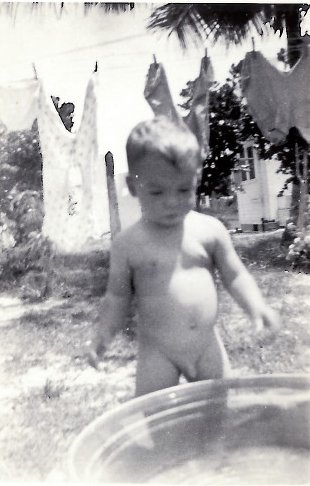
Yes, That’s Me at the Age of 18 Months

Now that you’ve seen me without a stitch of clothing on, and facing you with the situation, I thought I’d bring you up to date about the second home of my young life. When I was only a little over a year old, my Mom, Dad, and I moved to Lake Worth, Florida. As I was much too young at the time, I have no memory of my first trip to the Land of Sunshine. My Dad worked for the city, which is a southern suburb of West Palm Beach, and my Mom had her hands full with the above illustrated hedonist.

Unfortunately, my father did not have the best of times in Florida. His job was to remove the bodies of dead and rotting alligators. Now Dad had a tricksy stomach, so instead of job satisfaction, he was mostly involved in projectile vomiting at the time. The move to Florida was declared a failure, so Dad insisted that the family relocate to the Hungarian neighborhood of Cleveland, on the East Side’s Buckeye Road. Which is what we did.

My third home was the second floor of a duplex at 2814 East 120th Street. I was able to put down some roots there, as we were to remain there until 1951, after my brother Dan was born. Since I didn’t know a word of English, Mom and Dad figured we should relocate to the suburbs, a few miles east of Buckeye Road. It was time for me to learn English and become a red-blooded American. Which I proceeded to do, with such dispatch that after three more years, I was no longer regarded as a problematical retard with a funny accent.

BTW: My Mom adored the above picture. She showed it to all my girlfriends….


Seven Years in Siberia

My Grandfather’s Obituary in the Cleveland Papers

The story of the Czechoslovak Legion was one of amazing heroism and almost unbelievable feats. I had always heard that my father’s father was a member of this fighting force and was captured and served time in Siberia. Today, going through some old papers, I received confirmation from his obituary in a Cleveland newspaper.

In World War I, the Czechoslovak Legion fought on the side of the forces arrayed against Germany, in hopes that after the war, their efforts would result in a free Czechoslovakia. The unit to which Emil Paris Sr belonged did its fighting in Russia. When the Bolshevik Revolution occurred late in 1917, they fought for the Whites against the Red Army. As the Germans invaded the Ukraine, they found escape through Europe blocked and elected to fight their way across Siberia along the line of the Trans-Siberian Railroad to Vladivostok, from where they would find ships back to Europe.

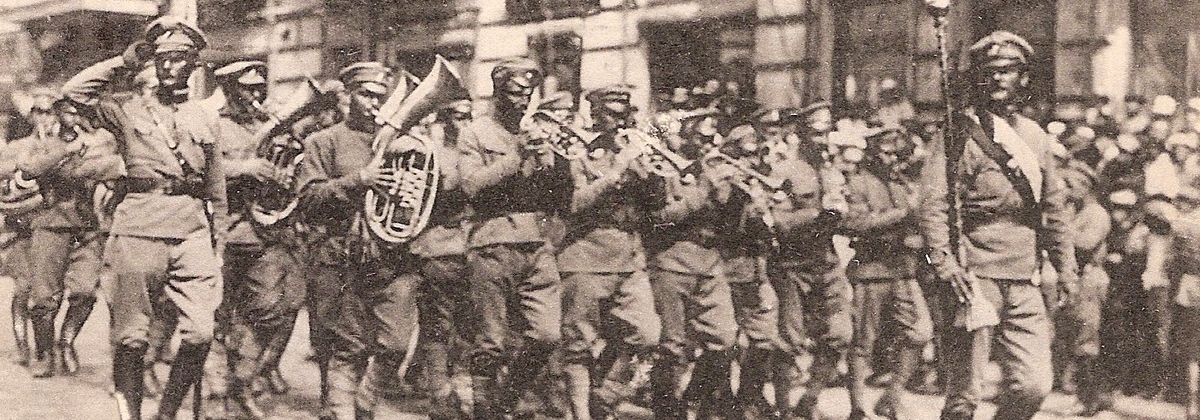
Men from the Czechoslovak Legion in Vladivostok

Emil didn’t quite make it. He was captured by the Red Army and interned in Siberia for seven years, before he was released. During that time, my father Alex, my Uncle Emil Jr, and my Aunt Margit were on their own in the Tatra Mountains of Slovakia in the middle of the postwar famine, just trying to survive.

I have a few memories of my grandfather and his wife before he died some time before my brother’s birth in 1951. I remember his funeral, and I remember visiting him before Irma died in 1947. During that visit, I was given a toy boat. It must have been one of my earliest memories. I was two years old at the time.

Czech Stamp Honoring a Battle Won by the Legion

My grandfather might have been heroic, but he was famed for being a mean man who once sued his son, my father, over a five dollar debt.

I am one of the three grandchildren referred to in the obituary, the others being Emil Jr’s children Emil and Peggy. My brother was to join that company in April 1951.

My First Trip Ever

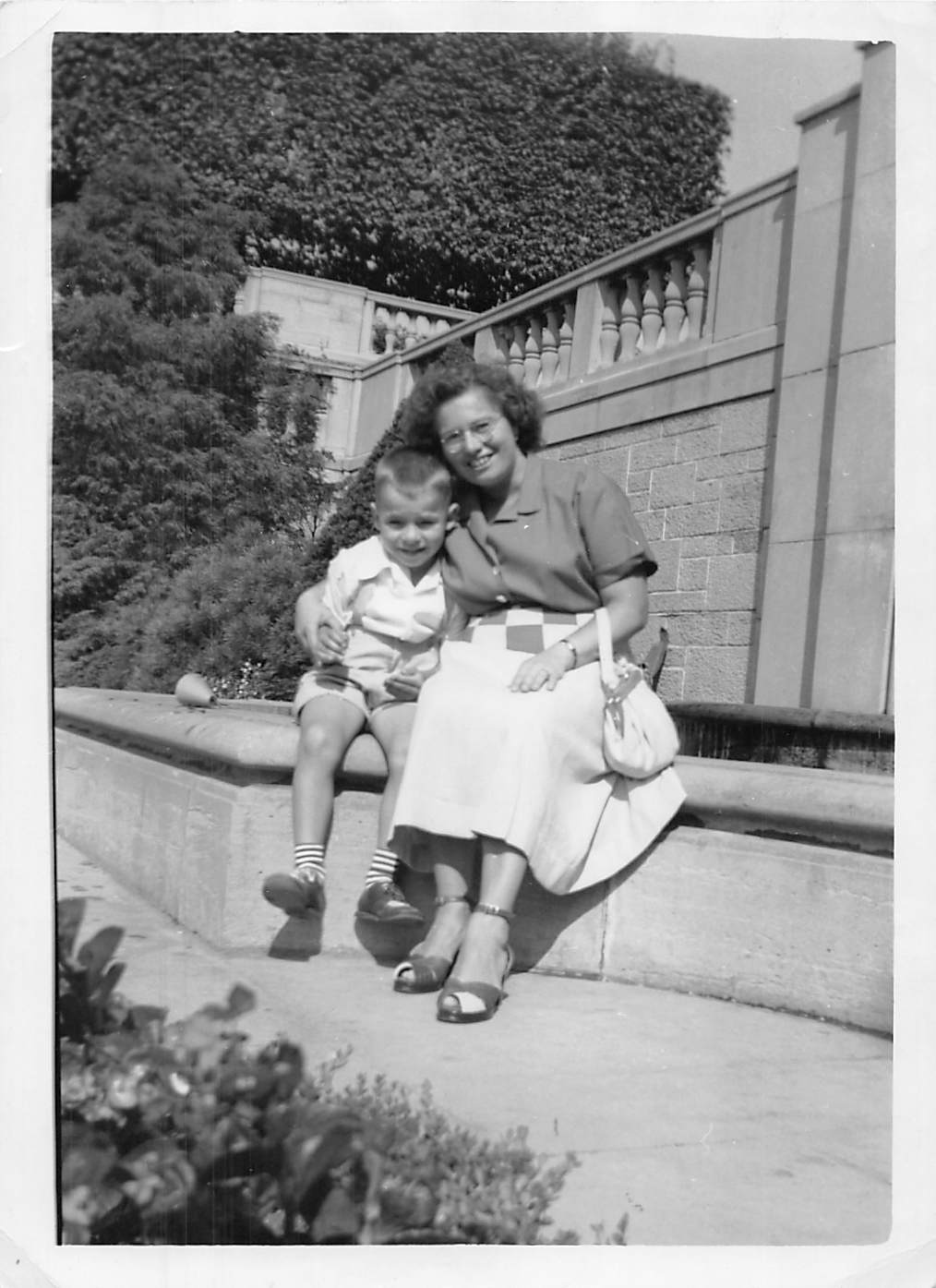
My Mom and Me at Niagara Falls Circa 1950

Some time before my brother was born in April 1951, my Mom, Dad and I went for a couple of days to Niagara Falls, which is just a few hours from Cleveland. This was before the Interstate Highway System made such trips routine. At the time, my Dad had a 1949 Mercury Coupé which had precious little room behind the front seat. I must have sat on my mother’s lap in those pre-seatbelt days.

I remember taking a ride on the Maid of the Mist of that era and getting splashed by the falls as we approached them. As I recall, the above picture was shot at a park opposite the falls on the Canadian side.

Yes, this was my first foreign jaunt, at the tender age of five or six. During all my years in Cleveland, the only trips we ever took were to:

  • Niagara Falls
  • Detroit to visit one of my mother’s distant relatives (and that included a visit to the Henry Ford Museum and Greenfield Village)
  • Schoenbrunn, Ohio—the first pioneer settlement in the state
  • A flight one summer, at the age of fourteen, to West Palm Beach, Florida where we stayed in nearby Lake Worth

As my horizons broadened from my extensive reading, not only of books but of maps and atlases, I felt increasingly claustrophobic living all year round in my home town. So when it came time to choose a college, my preference was for out of town, even though I did apply to Western Reserve University (now Case Western Reserve) if all my preferences rejected me. My preferred choices: Harvard, Yale, Dartmouth, and Bowdoin College in Brunswick, Maine. Harvard kept losing my transcript. Yale accepted me without a scholarship; and Dartmouth and Bowdoin both offered full scholarships.


A Budding Artist

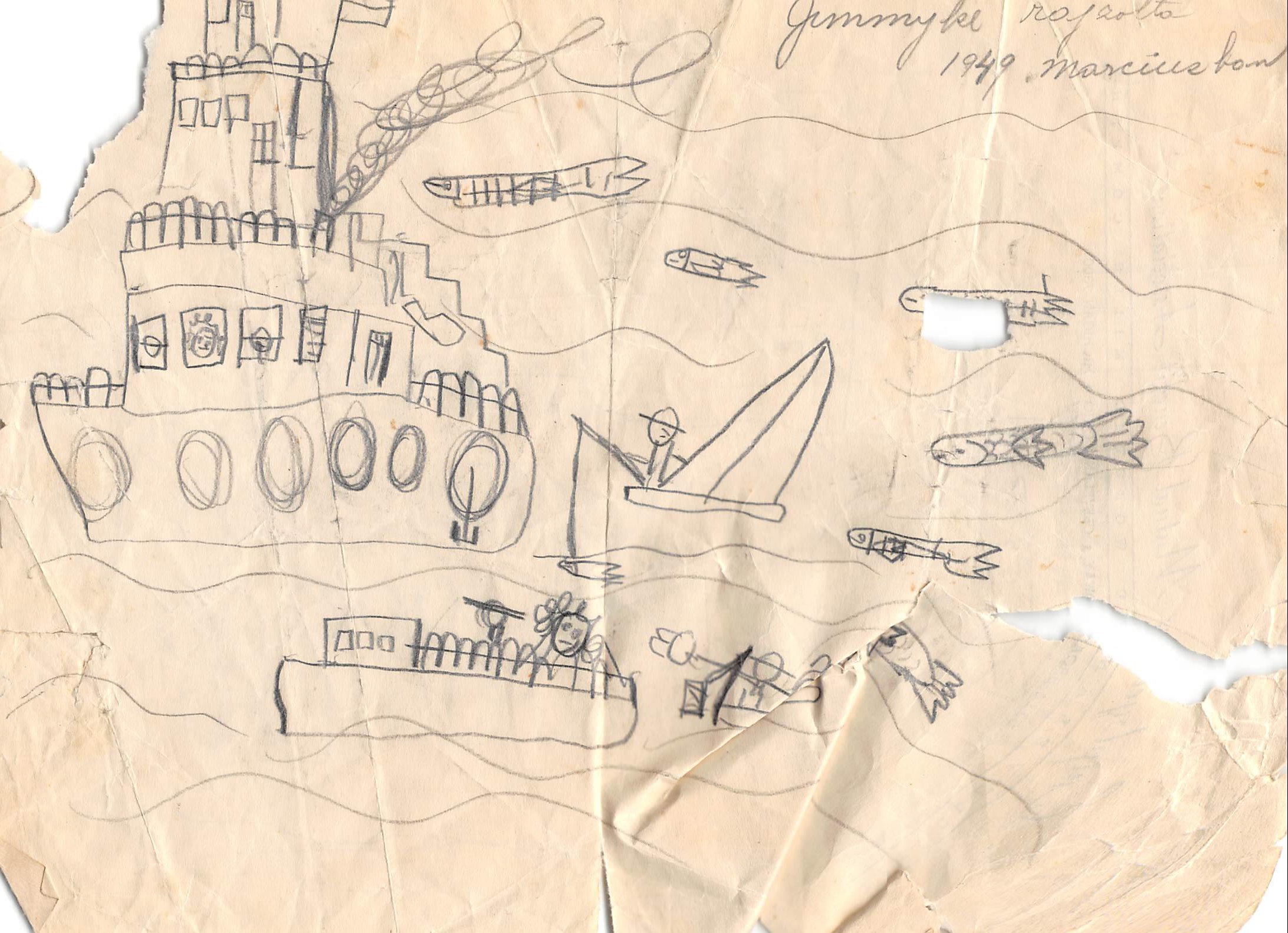
My Oldest Surviving Kid Drawing

The notation at the top right was written by my Mom in Hungarian: “Jimmy drew this 1949 March.” I was a little over four years old at the time. I had not yet entered school only to find that I was a retard who couldn’t speak English. (Of course, now I would prefer to think I was smart because I could speak a foreign language.) In fact, this ratty little pencil drawing is probably the oldest thing I have, and the only thing dating from my early years in the Hungarian neighborhood on Buckeye Road.

At the time, Mom liked to take me to the library on East 116th Street and pick a book to read to me. As the children’s books were all in English, she would pick something with nice illustrations and make up her own stories in Hungarian to fit the pictures, more or less. I have fond memories of that library. Was it perhaps because there was a great doughnut shop next door?

I just checked a map. Not only is the library no longer there; but Harvey Rice Elementary School, where I had my traumatic introduction to the American educational system, is likewise gone. They seem to have been replaced by healthcare facilities, which makes sense as St. Luke’s Medical Center is nearby. That’s where I was taken a year later because my parents thought I was too skinny. The doctors there told my parents, “Don’t worry: He’ll wind up eating you out of house and home.”

My memories of life at 2814 East 120th Street were for the most part good ones. I had good friends, like András and Joycey—Hungarians like me. We had not yet been introduced to television: That was to come a year later. And it was probably television that taught me English as much as anything else. I remember the TV station started broadcasting around 4 PM with the Kate Smith Hour, followed at 5 PM by the Howdy Doody Show, which I dearly loved.


Ancient History

My Sixth Grade Class at St. Henry School in Cleveland 1956

This evening I came across this picture of my Sixth Grade class at St. Henry School. Mrs. Joyce, our teacher, stands in the third row at the left. I can identify only three of my classmates—all boys. (By this time, my Fourth Grade sweetheart, Laura Sowinski, was no longer in my class.) The really tall kid in the last row center is my good friend Fred Nickel, with whom I used to play chess and devise explosives made from match heads. Two persons to the left of him is Anthony Braidic, not my friend but I just remember his face. The same goes for James Oliver, who is the boy in the third row three persons in from Mrs. Joyce.

And where am I? You’ll find me at the far right in the second row.

By the sixth grade, I was already a star pupil. It took me several years to overcome my Hungarian upbringing and become more conversant with the English language. In the second grade, Sister Francis Martin used to pull my ears and call me “cabbagehead.” I had finally gotten past the vegetable world.

The Cross of St. Henry Church, Behind Which Stood My School


Over the sixty-three intervening years, I have lost touch with all my Sixth Grade classmates. It seems a pity, because I spent a lot of time with these kids and had some good times. It is likely that the pituitary tumor that was finally operated on in September 1966 was already causing me excruciating frontal headaches. Being a little kid, I didn’t know how bad off I was.
 

Geographies: Real

A More Recent Edition of This Invaluable City Atlas Than Mine

This is one of two posts by an inveterate map freak. I will start with real geographies that inspired some of my more fantastic fictional ones. I have read two novels this month which inspired me to dig up my copy of Paris Pratique Par Arrondissement Édition 2005. The first was Cara Black’s Murder in Clichy; and the second, Georges Simenon’s masterful Maigret and the Bum.

Ever since I was a grade school boy, I loved maps and atlases. It became even more pronounced when, at the same time, I collected stamps from such strange corners of the world as Tannu Touva, Bechuanaland, Liechtenstein, and Nejd. Naturally, I had to know where these geographic entities were, their principal cities, and some knowledge of their economies (if any).

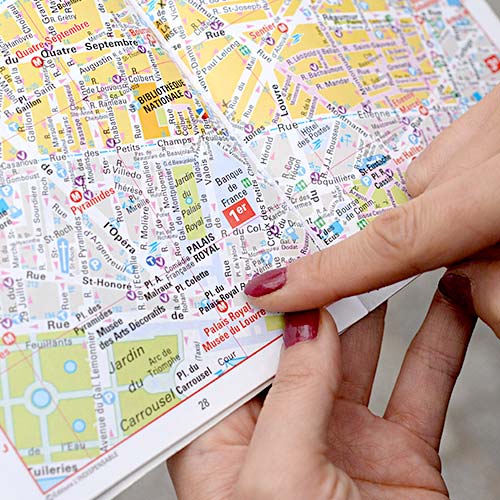
No, I Don’t Wear Nail Polish

The best city street atlas I have ever seen is the abovementioned Paris Pratique Par Arrondissement. Each of the twenty arrondissements (districts) of the city gets either two facing pages, or, if required, two sets of two facing pages. In addition, there are maps of the metro, the RER (suburban rail routes), major bus lines, the Bois de Boulogne, the Bois de Vincennes, and La Défense. Throughout, it is organized so logically that I cannot imagine using any other map to follow the action in novels set in the City of Lights.

Absent from this handy atlas are the suburban banlieus which tourists are not likely to visit unless they are in the market for recreational drugs or a bit of the old ultra-violence. Unlike American cities, which tend to be hollowed-out at their core and liveable only in the outlying suburbs, Paris reserves the center for historical buildings and the wealthy, while the areas beyond the peripheral highway are strictly for slumming.


Draining … Drained

I Felt Hurled Back into Childhood

When I was a child, I suffered intensely from allergies. My nose was frequently blocked, so that I had to breathe through my mouth, making me feel as if I had ingested a bucket of fine sand. My mother would boil up a big pot of water and add salt to it. She had me cover my head with a towel and bend forward to inhale the salty steam. Not that it did me any good.

For decades now, I have not had the experience of having my nasal air passages totally blocked … until this last week. I got a cold which in itself was not that bad, but as soon as I climbed into bed, my nasal passages shut down a la my youth. My doctor recommended something akin to my mother’s remedy: Shoot distilled water up my nose that contains powdered salt with sodium bicarbonate. This actually works, and I am finally able to sleep in bed again.

My cold was not that bad, but the long recovery is a pain. It seems as if I fill endless handkerchiefs with mucus that has the gluey texture of rubber cement. At the same time my cold began, my eyes started to water and itch again. I have spent the better part of a week draining in various ways—and that has tired me out big time. I attribute this illness to a cold snap that has hit Southern California right after I returned from Guatemala. It seems that the temperature has not climbed up to 70º Fahrenheit (21º Celsius) since the start of the month.

Eventually the temperature will rise and I will have drained out the last cubic centimeter of mucus as well as whatever is discharging from my eyes. Until that time I will just have to be patient.


A Gift from Our Father

Look Closely Lest You Be Fooled

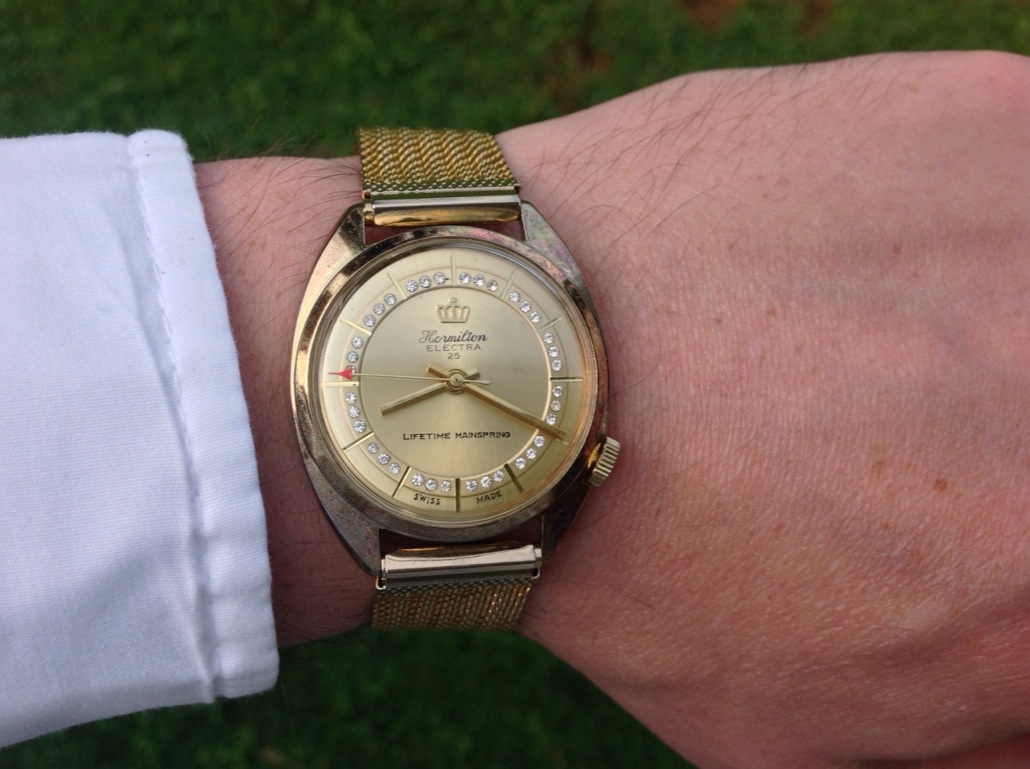
This happened years ago while my brother and I were still in Cleveland. Our Dad had gone shopping at the West Side Market for various Hungarian provisions and came back with gifts for us. He had been approached by a street vendor who sold him two “hot” watches that had “fallen off a truck,” a Bulova and a Hamilton. Dan and I looked at the watches and laughed. The Bulova was actually a Bolivia; and the Hamilton, a Hormilton. I still have the Bolivia, which ceased working decades ago. It appears that the watch vendor had made a profit on the deal.

Although our father felt like a fool for buying counterfeit watches with a one-jewel movement that may function for upwards of two weeks, I cannot recall thye incident without once again feeling affection and a sense of loss. Alex Paris died in 1985 at the age of 74—which, coincidentally, is my present age. I think of him frequently and cannot look in a mirror without seeing his face looking back at me. I have been told I look more like my mother, but there is still a lot of Alex in me as well.

For an interesting old Popular Science article on counterfeit watches written back around the time my father found his bargain, click here.


GRUBERG: The Papa Bach Story 2

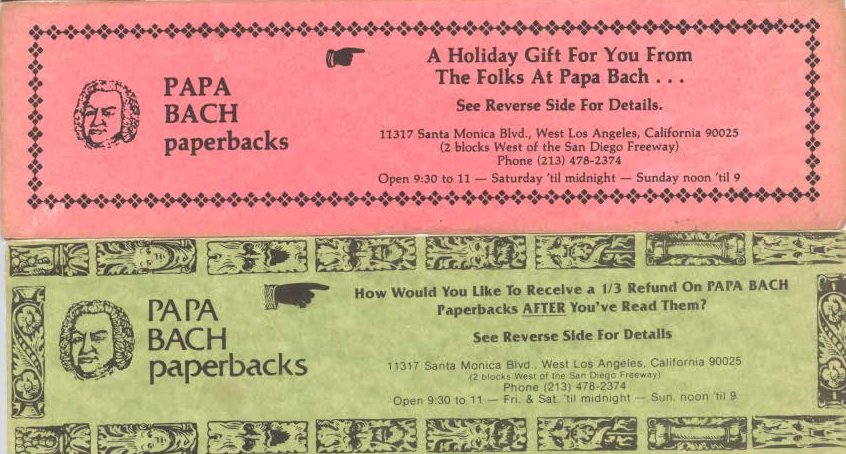
Bookmarks from the Reincarnation of Papa Bach

When Ted and Eva Riedel left Los Angeles in the mid 1970s, the bookstore was taken over by a “poet” named John Harris. I use the quotes around the word poet because I have found nothing on the Internet either by or about him that was not written by his friend, fellow poet William Mohr. It was around this time that I stopped hanging out at Papa Bach’s Bookstore. I missed Ted and Eva, and I had my doubts about the new management. This was mostly because I noticed that the stock on sale started to thin out: I no longer found it a good source for the material I was seeking.

Still, in its second incarnation, Papa Bach had some influence. In his book Literary L.A., Lionel Rolfe writes:

Papa Bach was significant, I think, because it was the closest thing Los Angeles ever had to a City Lights bookstore and publisher Lawrence Ferlinghetti. I’m not sure that Harris himself would have thought he was on that level, for the synergy of Ferlinghetti and San Francisco are a peculiar and special chemistry. But John Harris was a good if not great poet, and his Papa Bach was a bookstore, a cultural center, a publisher and an important link between many things. Harris made no bones about it; he had burned out.

Papa Bach was to limp along for another ten years or so, but the heart of it as a bookstore was no longer there. I was not and still am not interested in Harris’s poetry events or publications: It was the merchandise that had drawn me. Once the bookshelves started showing lots of blank space between isolated books, I knew that the end was in sight.

For a while, the building occupied by Papa Bach’s became “The Writer’s Computer Store,” which I assumed was a shill for Apple software products. Then the building was torn down and replaced by an Enterprise Rent-a-Car agency.


GRUBERG: The Papa Bach Story 1

Original (1960s) Bookmark from Papa Bach Books

It was early 1967: I was still exploring my new Los Angeles home on foot and by bus. (It was to be almost twenty years before I began to drive.) On the north side of Santa Monica Boulevard, just west of Sawtelle, sat a big bookstore with a sign that said Papa Bach Paperbacks. Even at that early juncture, I was a bookstore aficionado of long standing, a habitué of Schroeder’s on Public Square in Cleveland and the Dartmouth College Bookstore in Hanover, New Hampshire.

I still have the books I bought that day: It was a two-volume set, the Vintage Turgenev comprising seven of the Russian author’s novels: Smoke, Fathers and Sons, First Love (in Volume 1), On the Eve, Rudin, A Quiet Spot, and Diary of a Superfluous Man (in Volume 2). The two books cost $1.65 and $1.95 respectively.

It wasn’t long before I moved to an apartment near Mississippi and Sawtelle, just four or five blocks south of Papa Bach’s. For the six months or so that I lived there, I had to catch the bus to UCLA across the street from the bookstore. In addition, there was a nifty used bookstore called West L.A. Books just across Sawtelle. During that time, I stopped in at Papa Bach’s at least four times a week, each time coming out with one or more purchases. I was in hog heaven.

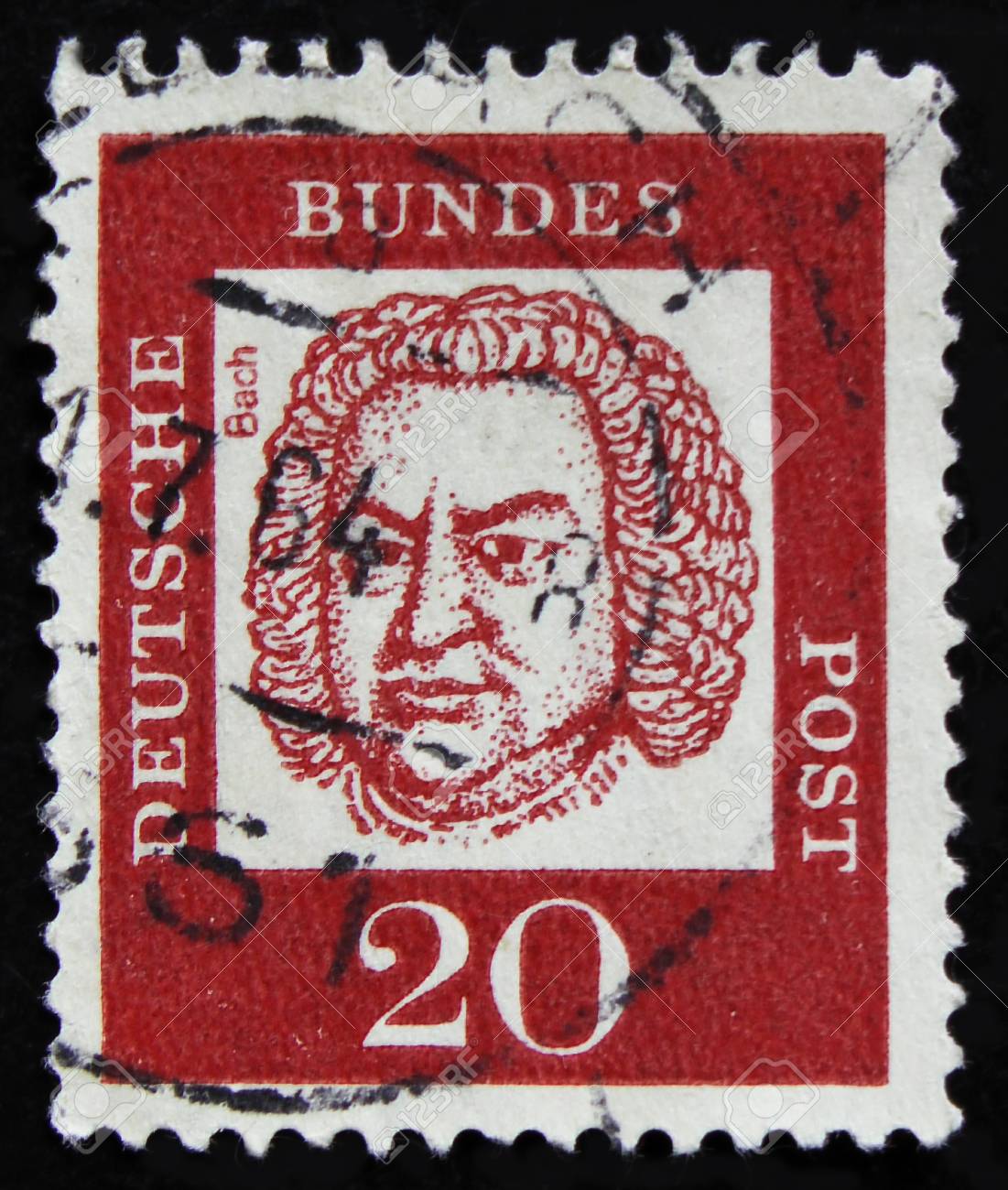
The Picture of Bach That Was on the Logo came from a German Stamp

I got to know the original owners, Ted and Eva Riedel, and spent hours talking books with them. They had a quote contest in which, if you guessed the book it came from, you got a copy of the book. The first quote, if I remember rightly, was from Thomas Hardy’s Far from the Madding Crowd. Not only was I the all-time winner, but I volunteered to letter the quotes myself with a Magic Marker on a roll of paper that was displayed near the cash register.

Alas, Paradise does not last forever. In the early 1970s, Ted and Eva sold the bookstore and moved to Jackson Hole, Wyoming. Ted told me that he planned to start a Papa Bach Bookstore there, but I have found no evidence that that ever happened. I even checked out the Jackson Hole phonebook when I was there in 2008, but found no listing for Papa Bach or the Riedels. I liked them, so I can only hope that things went all right for them.

Tomorrow, I will describe the bookstore under its new owners.

BTW, the GRUBERG on the bookmark is a mnemonic for their phone number at that time, namely 478-2374.