Heart’s Desire

My Father’s Side of the Family Around 1918

My Father’s Side of the Family Around 1918

When I visited my brother a week and a half ago, he brought out two boxes of old pictures and papers relating to my past—except it was his past, too. From left to right, the pictures are of:

  • My Uncle Emil (twin of Alex)
  • “Mama” or my paternal grandmother Margit
  • Margitka, my Aunt Margit
  • Stará (Old) M., clearly a member of the family, possibly the same as my Father’s kindly Aunt Valera
  • My Father, various called Ellek, Elek, or Alex (twin of Emil)

Shortly after this picture was taken, Grandma Margit and her husband Emil Sr. abandoned their children in Prešov-Solivar while they went off to the United States. Little Emil, Elek, and Margitka were cared for by Valera. My father tells me stories of picking mushrooms in the Tatra Mountains and hunting for frog legs to feed his brother, sister, and aunt. All three children made it to Cleveland some ten years later.

As a result of fending for himself in the mountains of Slovakia during the postwar famine, my father always had an insatiable craving for meat. When he came to America, he and his brother indulged in that craving—and that’s what killed them. Sometimes it’s best NOT to have your heart’s desire.

I visited Czechoslovakia with my parents in 1977 and met Valera. She was the only Slovak in the family who could still speak Hungarian, so I was able to communicate with her. I would like to think she was the pleasant looking Stará M. in the above photo.


Selfie Sunday

This Baby Smiles for Selfies

This Baby Smiles for Selfies

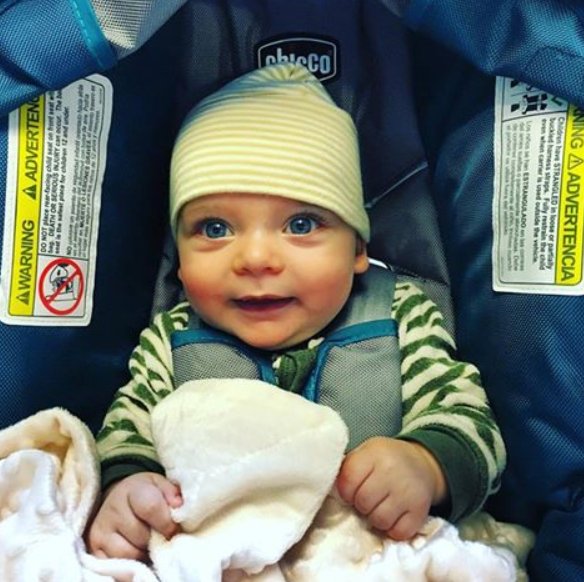
Visiting my family in Palm Desert, I was amazed by my niece Hilary’s little four-month-old baby. His name is Oliver Moorman, and whenever his dad Joseph (at the left in all the pictures above) takes a selfie which includes him, little Ollie cracks a delightful smile.

The other persons are, clockwise from the upper left:

  • My brother Dan
  • Martine
  • Hilary
  • My nephew Dan
  • Me
  • Just Joe and Ollie
  • My sister-in-law Lori
  • My niece Jen (in the center picture)

Even though Joe, Hilary, and Ollie arrived from Seattle with colds, it was amazing to see the baby stage such a quick recovery.

It has been a couple of decades since I’ve handled an infant, and I have to say the experience is magical. Oh, he did occasionally squirm and fret, but in every case it was like a small cloud scudding across the sun. Just wait a second or two, and the sun comes out again bright as ever.

All of us were entranced with little Ollie. May he live long and prosper—and always be happy!


Seeing the Latest Paris

The Area Around Palm Springs

The Area Around Palm Springs

I’ll be taking a four-day weekend beginning tomorrow to visit my brother, nieces, and nephew in the Palm Springs area. Most particularly I’ll be meeting young Oliver Moorman (pictured below), who is the latest addition to the Paris family. Names don’t matter: It’s the blood that counts.

Oliver Moorman

Oliver Moorman

The little lad is the son of my niece Hilary and her husband Joseph Moorman, who live in West Seattle. In addition, Jennifer and Daniel will be driving from San Diego and L.A. respectively to join in the festivities.

My next posting will probably be on Monday or Tuesday of next week.


Feeling the Onset of Christmas

Angel at the Grier Musser Museum

Elf at the Grier Musser Museum

On Sunday, Martine and I went to view the extensive Christmas collections at the Grier Musser Museum near downtown Los Angeles. Ray and Susan Tejada have displays dating back to the 19th Century—and as recent as this year, including hundreds of fascinating Victorian and turn of the century Christmas cards.

There aren’t too many things that we do that are Christmassy. For one thing, we never have a Christmas tree. (You can blame me for having somewhere between 6,000 and 8,000 books.)  When we visit my brother next week, we may view a holiday light display at the Living Desert Museum in Palm Desert.

We always used to visit the Department of Water and Power’s Holiday Light Festival, but budgetary constraints closed that down in 2009. We also regularly attended the Christmas Concert put on by the Torrance Civil Chorale, but Concert Master David Burks retired after the Spring concert; and we incorrectly assumed that the organization would undergo extensive rebuilding.


A Martian at the Love-In

Poster for One of Bill Graham’s Presentations at the Fillmore

Poster for One of Bill Graham’s Presentations at the Fillmore

Yes, I went through the Sixties—and a wild time it was! That is, for some people. By the time I reached the (chemically-induced) age of puberty, around the age of 23, I felt badly out of place. And I would have even if I were not in swinging Los Angeles in 1967. I had just come off the operating table for a pituitary tumor in September 1966 and was still beginning to imagine life without daily severe frontal headaches pressing on my optic nerve.

Girls were pretty much out of the question. As for drugs, I was newly on hydrocortisone, thyroid, and testosterone (and still am, and will be for my whole life); and I didn’t want to see how LSD, psylocybin, and other psychedelic compounds would act on me. Also, within a few months after my arrival in L.A., I was told I had aseptic necrosis of the left hip and had to be on crutches for two years. Hence, I felt like a Martian surrounded by people who were intent on having a wildly good time.

I have never gone to a rock concert. I couldn’t even drive until 1985 because I was on a blood pressure medication (Catapres) that made me narcoleptic. On car rides, I fell asleep within minutes.

Rock Impresario Bill Graham

Rock Impresario Bill Graham

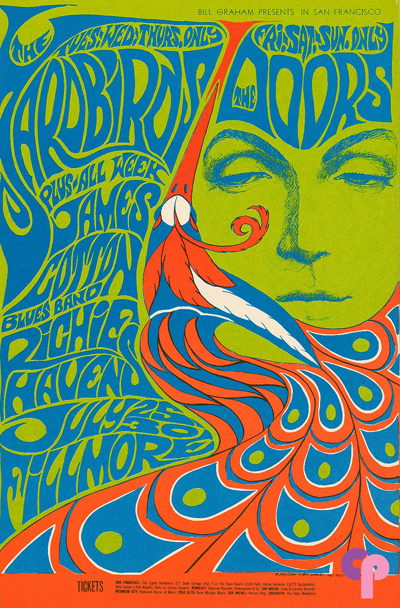
Today, Martine and I went to the Skirball Museum and saw their special exhibit on Bill Graham and the Rock & Roll Revolution. It was a revelation to me of all the things I had missed. Until this afternoon, I had no idea of the role that Graham played in sponsoring rock concerts over a quarter of a century until he died in a helicopter crash in a storm at the age of 60.

I eventually outgrew my Martian isolation. As a young woman, Martine was more familiar than I was with the big rock bands, as she listened to them all on her radio when she was growing up in New Jersey. In the 1980s, I began to catch up with the music—though in another fifteen years, I rejected all pop music in favor of classical music by dead guys in powdered wigs.

But, no matter, I was reminded of my early days in Los Angeles. I would wait until Fridays, when the L.A. Free Press was distributed. There I read about all the love-ins, the psychedelic power of oven-roasted banana skins (“bananadine”), with ads for all the head shops and local concerts. I was never much of a hippy, but it was a yeasty time. It was fun remembering it.

The Doofus Factor

Three Male Teenagers Looking at Mobile Phone --- Image by © Ole Graf/Corbis

Three Male Teenagers Looking at Mobile Phone — Image by © Ole Graf/Corbis

For over twenty years, I worked as a specialist in census demographics. One of the most surprising things I learned during that time is that, whereas there are 26 boys born for every 25 girls, by the age of twenty-one, girls outnumber the boys. Why is that? The answer is very simple: There are a number of factors that disproportionately increase the mortality of teenage boys.

An article in the August 31, 2015 issue of The New Yorker entitled “The Terrible Teens” by Elizabeth Kolbert treats young men and women the same, but she does not account for the gender factor. Still, what she says is interesting:

Teen-agers are, as a rule, extremely healthy—healthier than younger children. But their death rate is much higher. The mortality rate for Americans between fifteen and nineteen years old is nearly twice what it is for those between the ages of one and four, and more than three times as high as for those ages five to fourteen. The leading cause of death among adolescents today is accidents; this is known as “the accident hump.”

Fortunately for them, girls are less likely to make stupid mistakes that end of killing them than boys are.

We tend to remember most vividly the experiences we had during those teen years, even if they were dumb. It has something to do with our pleasure centers being more intense at that point than later in life. In today’s news, for example, we hear of one of UK Prime Minister David Cameron’s youthful stunts, namely putting his penis into the mouth of a dead pig while a student at Oxford. At least, he survived. But what about those teens who, upon getting extremely drunk, drive around town with a bunch of similarly affected teens and wind up in a gruesome wreck?

Kolbert continues:

Many recent innovations—cars, Ecstasy, iPhones, S.U.V.s, thirty racks [cases of beer], semi-automatic weapons—exacerbate the mismatch between teen-agers’ brains and their environment. Adolescents today face temptations that teens of earlier eras, not to mention primates or rodents, couldn’t have dreamed of. In a sense, they live in a world in which all the water bottles are spiked.

Sometimes I think the reason I survived is that I spent my entire adolescence suffering from a pituitary tumor that isolated me from more normal teens. By the time I was operated on at the age of twenty-one, I was mostly out of danger from the doofus factor.


Dreaming of Proust

Alfred George Stevens’s “Portrait of Sarah Bernhardt” (1885)

Alfred George Stevens’s “Portrait of Sarah Bernhardt” (1885)

When you’re a hopeless intellectual like me, you, too, will have dreams that smack of literary criticism. This one is from last Saturday night. Despite the hot, humid weather we’re having in Los Angeles, I had just begun re-reading the second volume of Proust’s In Search of Lost Time, in the David Grieve translation called In the Shadow of Young Girls in Flower. (That title alone gives rise to dreams of a sort.)

Marcel has finally won the right to go to the theater to see the great actress La Berma (thought to be Sarah Bernhardt) as Racine’s Phèdre, albeit chaperoned by his grandmother. Feeling he is about to be exposed at long last to the holy grail, Marcel awaits the magical moment. It comes, but, alas, the lad is disappointed. Although he claps and cheers madly with the audience, Marcel feels that the actress did not live up to her hype.

That’s where my dream begins. I am thinking: Well, now, the entire heptology is full of disappointments: In the first volume Swann is cruelly deceived by his love, Odette de Crécy … but marries her anyhow. Marcel idealizes the ancient nobility of the Oriane, Duchesse de Guermantes, but gives us ample opportunities throughout the series to see how trivial her decorous life has become. As for Palamède, Baron de Charlus, he is given to affairs with lower class young men and, in the final volume, ends up being flagellated by one of them in a male bawdy house. Albertine does wind up in a relationship with Marcel, but he agonizes constantly that she is bi-sexual. Besides, she dies young.

Again and again, it almost seems as if Proust’s grand theme is either “You can’t always get what you want” or “Nothing is as good as it seems at first.”

And that’s where my dream left off. In the end, though, I rejected my dream interpretation. Marcel’s inner life is so vivid and intense that all the disappointments still make it all worthwhile. If that negativity were the only thing I got from reading Proust, why would I be reading the seven volumes for a third time? (Er, aside from THAT, I mean).

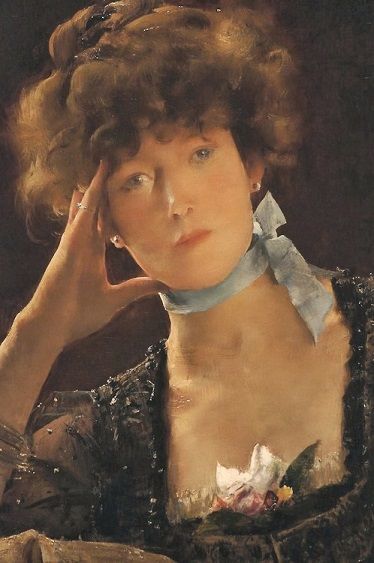
Incidentally, the original Stevens portrait of Sarah Bernhardt (above) is at the Hammer Museum in Westwood, near my place of work.


Me and the Rainbow

John Dorr (1944-1993)

John Dorr (1944-1993)

I am not quite sure how to word this post, but I’ll give it a try anyhow: It’s about my dealings with gay males from high school days to the present. At this point, I’m not sure of my conclusions, or even if there is one. I guess, ultimately, I am dealing with an alternate form of behavior that, while viewed by many as being on the fringes, is becoming more acceptable as time goes on. While I am not among their number, I have occasionally been influenced by them.

In high school, the drum major of our marching band at Chanel High School was Ernie Horvath. A brilliant dancer, he went on to Broadway, changing his name to Lawrence Horvath. One day, he came in and showed me what he called his “fag shoes.” At the age of sixteen, I didn’t know what he was talking about. I understand he succumbed to AIDS.

At Dartmouth College, I remember one gay couple that was being demonstrative about their affections. They were chased across the campus by a bunch of fraternity types. I didn’t join the chase and don’t know how it ended.

UCLA film school brought me into an environment which was much more varied. One of my fellow grad students in the film department was John Dorr, a brilliant film scholar with whom I enjoyed conversing. At the time, I was somewhat dismissive of silent films, except for the great comedians, but John convinced me that they were great in a different way and were worth a second look. In the end, I agreed with him.

During the school strike after the Kent State shootings in 1968, we were putting together a schedule of “relevant” film screenings. John’s contribution was that we should show The Revolt of Mamie Stover. I still crack up when recalling that one with some of my old film friends.

Around this time, I went into group therapy. Among the participants were male and female gays. What I was there for was the feeling that my medical history made me feel isolated, like a Martian. I still looked like a teenager at the age of twenty-five and wondered whether any woman, ever, could take me seriously. What I found out was that, far from being a Martian, I was very much an Earthling. This was an important lesson for me: Irrespective of sexual leanings, isolation and fear of rejection were more universal than I suspected.

I dropped out of the film program in 1972 and went into computer programing. In the meantime, John Dorr went on to have a brilliant career, founding EZ Films and exploring the potential of video as an art medium. At this point we were not in touch, but I was greatly saddened to hear of his death from AIDS in 1993.

My one negative gay encounter was with my landlord Tony F. For many years, I was against gay marriage because I did not want to see Tony married to one of his typical rough-trade ex-con boyfriends and be subjected to their bullying and panhandling. He was actually considering turning our apartment building into a halfway house. But then he died—of AIDS and multiple other causes, mostly relating to negligence—about three years ago.

As I thought, there really is no conclusion. There’s good, there’s bad, and there’s indifferent. Just like the rest of life.


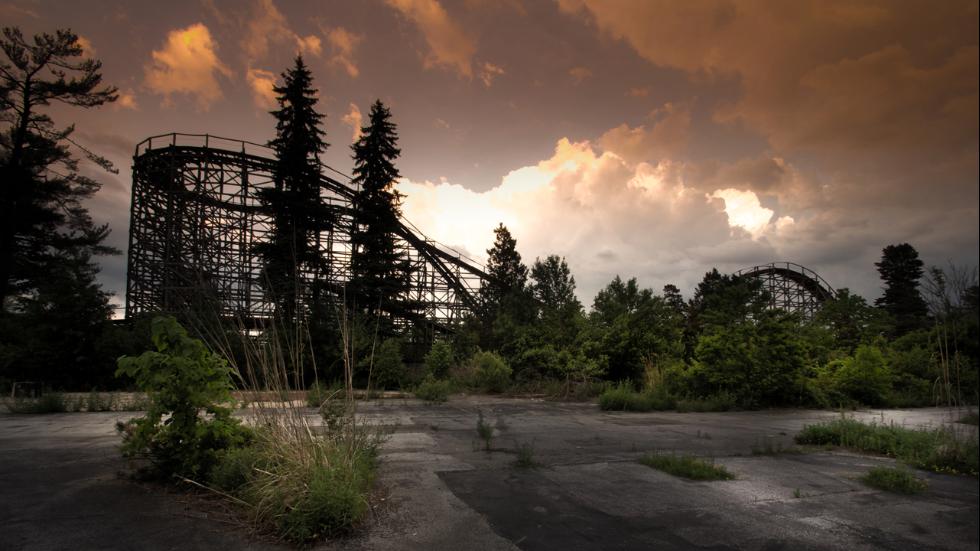
In Remembrance of Amusements Past

The Abandoned Amusement Park of My Youth

Geauga Lake: The Abandoned Amusement Park of My Youth

There are few things so pathetic as an abandoned amusement park. When I was a kid in Cleveland, I remember going at least once every summer to Geauga (pronounced JAW-gah) Lake in Aurora, Ohio. My father’s union, MESA Local 17, frequently held its summer picnics there. My brother and I always had a ball.

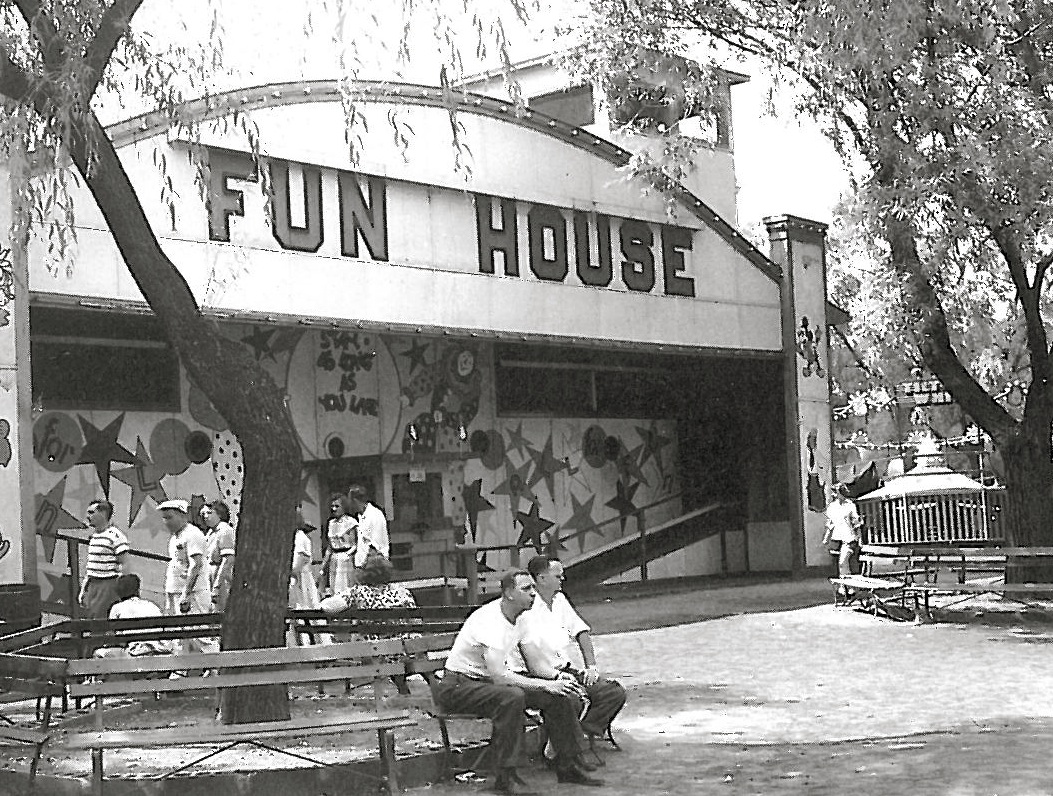
The park had a great fun house, complete with naughty mechanical peep shows that had nekkid ladies for a penny, and you could crank the cards to turn over at whatever speed. By the entrance, one had to maneuver a tricky labyrinth. There was a carney employee stationed by a button that released a jet of air to blow women’s dresses up above their heads. (I guess that wouldn’t go over too well now.) Also there was a giant rolling wooden barrel that one tried to traverse without falling on one’s heinie.

The Fun House at Geauga Lake

The Fun House at Geauga Lake

What my parents liked was the big open launch that circled the lake, creating a breeze that refreshed the passengers in the humid Ohio air. There was a roller coaster and a lot of fast rides that I was too chicken to try. (It was enough just to battle the car sickness en route.)  No, I mostly hung out at the fun house, or I would pick a nice shady spot to read—ever the bookworm. I even remember one summer in high school reading J. E. Neale’s Queen Elizabeth I to pass the time after I became sated with my crude fun house pleasures. I still have the volume on my shelf.

As I grow older, I see parts of my past being annihilated by the passage of time. Geauga Lake was founded in 1887 and finally closed down in 2007. I guess 120 years was not a bad run. Hell, I wish I could last as long!


At the Hotel in the Desert

It Was Another of My Strange Dreams

It Was Another of My Strange Dreams

Don’t expect this to make any sense: It was another of my strange dreams. I was trudging with a friend across the sands of a desert when we came up on a hotel surrounded on all sides by sand dunes.

Naturally, the first thing we looked for was the check-in counter, but we couldn’t seem to find it. There were rooms, restaurants, pools, and lounges scattered almost randomly. We wandered down endless corridors, passing restaurants with sumptuous-looking fare. But we felt we had to check in first.

Like almost all of my dreams, it was well short of being a nightmare because of the dreamlike acquiescence with which we accepted the illogical design of the hotel. At any time, we could have asked someone where the front desk was located, but that possibility didn’t enter our heads.

As I write this, it strikes me that our wanderings through this hotel are a lot like life. We have to check out before we ever figure out where to check in.