The Hands of Hegarty

In Those Days, There were No MRIs or CAT Scans

In Those Days, There were No MRIs or CAT Scans

One of the most galling things about the Internet is that I can’t find any pictures of the people—other than my immediate family, of course—who had the greatest influence on my life. Two Catholic priests who taught me English in the 9th and 10th grades at Chanel High School in Bedford, Ohio, have little or no Internet presence. I am referring to the Rev. Gerard R. Hageman SM and the Rev. Raymond E. Healy SM. (The SM refers to Society of Mary, Marist rather than Marianist.)

Next are the two doctors who saved my life in 1966 when I was in a coma at Fairview General Hospital in Cleveland. If you want some background on my strange medical history, check out this posting I wrote a year ago under the bland title of More Personal History.

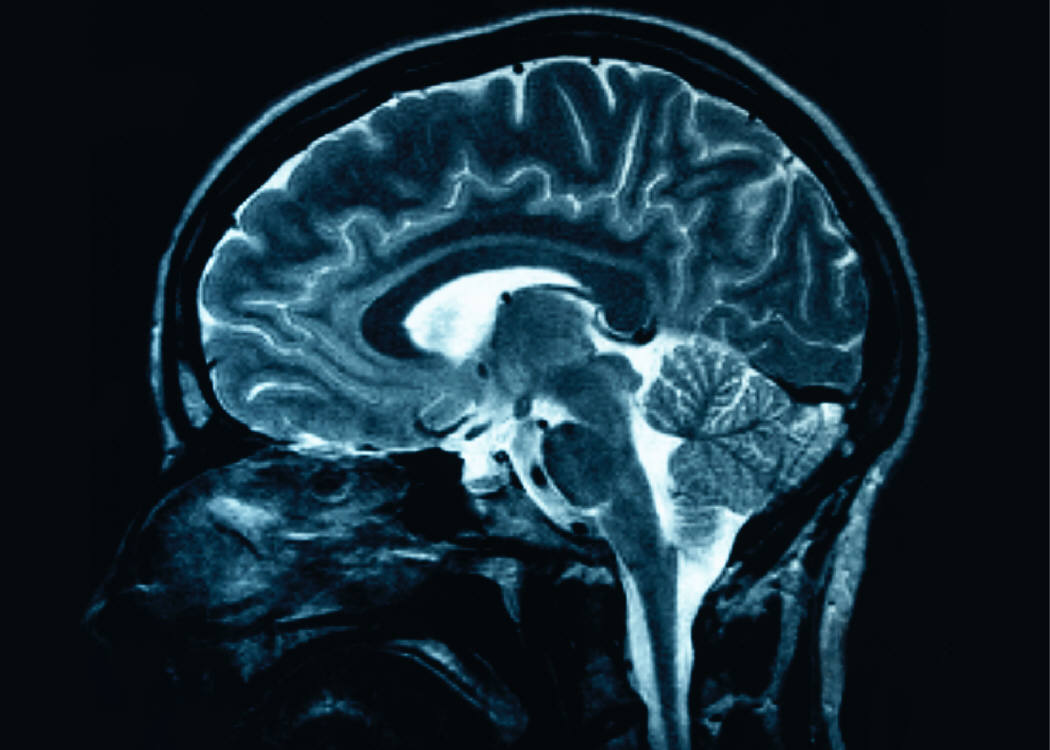
My family doctor just happened to be an endocrinologist: Michael J. Eymontt MD. In those days, there were no MRIs or CAT Scans. All that doctors had to detect a brain tumor was the very imperfect X-Ray. Fortunately, Eymontt guessed I had a pituitary tumor.

Nowadays, a pituitary tumor, or chromophobe adenoma, is no big thing. They operate through the nostrils or the roof of the mouth. Back then, they had to disconnect part of my brain tissue and go in from the top. The pituitary gland is located directly in the center of the head. The chances that I would wind up dead or paralyzed or at least blind were overwhelming.

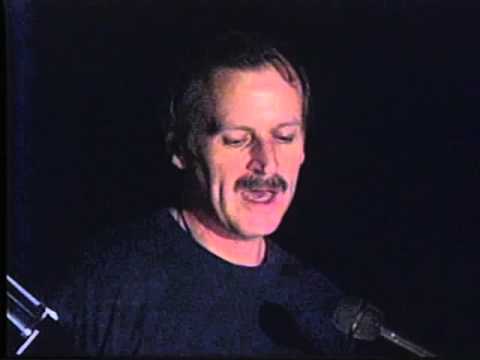
That’s where my neurosurgeon, William M. Hegarty MD came in. On that September morning in 1966, he had a very good day. And I had a very good day. He went in where angels feared to tread and sucked out the tumor (which was benign, like almost all pituitary tumors). When I came to and asked him how big it was, he smiled and said about as big as a grapefruit.

I know that Fathers Hageman and Healy have passed on, as has Dr. Eymontt. But I wonder if Hegarty is still alive. I would like to thank him for letting me have an interesting life. I keep searching on Google….

Caught Between the Warring Twins

Elek, Margit, and Emil Paris

Emil, Margit, and Elek Paris

I originally posted this on Multiply.Com in January 2011:

It’s been a while since I revisited my past. This time, I’m going back into the period before my birth. The above picture was taken at some point in the 1930s and shows the Paris twins, Elek (Alex) and Emil, and their sister Margit.

Can I tell which one of the men is my father? Probably, it is the one on the right, because my father Elek was always better tanned and more athletic but not so well dressed as Emil. Even later in life, I sometimes had to wait for them to start talking before I recognized them, because they had very distinctive voices.

Elek and Emil could never live far apart from each other. When Emil bought a condominium in Hollywood, Florida, my Dad followed—in the same Carriage Hills condo complex. My father died in October 1985; and Emil died a few months later, of pretty much the same combination of diabetes and heart failure. At my Dad’s funeral, Emil was visibly shaken, as if his world had been taken away from him.

All their lives, the two twins competed through their children. Dad had the two sons, my brother Dan and myself; Uncle Emil had a son and daughter, Emil Jr. and Peggy. At times, the competition got bitter, especially when my cousins faltered in school and in their personal lives. Dan and I, however, always liked our cousins and regretted any bad blood between the brothers. They were just that way.

Margit was a different case: She never married. I don’t even know whether she dated very much or even wanted to marry eventually. Some years after this photo was taken, she opened May’s Bridal Shop in Garfield Heights, Ohio, and lived on the premises spending her time sewing bridal gowns. My job when visiting there was to pick up fallen pins with a magnet. I would also look with admiration at all her old calendars with Currier & Ives illustrations.

I don’t remember when Margit (whom we called Nana) closed the shop and retired to Florence, South Carolina, but I think it was in the early 1970s. She didn’t last very long because, shortly after I returned from Hungary in 1977, I got a call that Margit had died suddenly. The timing was unfortunate, as my parents were still in Hungary visiting. So I notified my brother Dan and the two of us attended the funeral—after sending a telegram to Dad in Hungary. He was very broken-up that he couldn’t make the funeral in time, but was grateful that Dan and I went.

Whatever the competitiveness between the frequently warring twins, I always felt that my Uncle, my cousins, and my Aunt loved us for what we were. Although Margit was closer to her brother Emil than to Elek, that never impacted on the next generation. I did feel, however, that my Dad had never said certain unkind things about my cousins that I wish he hadn’t. Cousin Emil Junior was always good-hearted and frequently protected me from neighborhood bullies when I was a little shrimp of a kid; and Cousin Peggy was, I always thought, incredibly cute.

A life is always strange when one looks at it all of a piece. I cannot help but feel that I have grossly oversimplified the complex web of interrelationships that existed among us. The important thing is that I accepted the few bad things because they were more than made up for with kindness and love. Elek, Emil, and Margit now exist inside of me; and all the conflicts have been resolved.

With the Terries and the Firmies

Carl Barks Painting of Uncle Scrooge

Carl Barks Painting of Uncle Scrooge

As a kid who loved to read, where do you suppose I found my most interesting stories? The answer is simple: I was a devout reader of Walt Disney’s Uncle Scrooge Comics, created by the redoubtable artist Carl Barks who created the character and illustrated so many great Scrooge and Donald Duck cartoons.

Another big fan of Barks’s work was George Lucas, who frequently borrowed incidents from the Scrooge archive, such as the rolling rock in Indiana Jones and the Raiders of the Lost Ark. And it is said that the musical Mackenna’s Gold was largely based on the “Seven Cities of Gold” episode.

Perhaps my favorite of them all was Barks’s explanation of how earthquakes happen. One day, when all the money from Uncle Scrooge’s huge money vault disappears underground (a plot device he used often), the tycoon travels with Donald and his three nephews, Huey, Dewey, and Louie, to discover the cause.

The Boys Discover What Really Causes Earthquakes

The Boys Discover What Really Causes Earthquakes

The episode entitled “The Land Beneath the Ground” speculates that under the earth are two types of apodal (legless) creatures that, together, cause the shaking and rolling characteristics of temblors. They are called “Terries” and “Firmies” respectively. Fortunately, Huey, Dewey, and Louie find the answers to all their problems in their voluminous Junior Woodchucks Handbook and save the day, and their uncle’s treasure.

I should get a copy of that for my library!

Tarnmoor’s ABCs: UCLA

Royce Hall on the Campus of the University of California at Los Angeles

Royce Hall on the Campus of the University of California at Los Angeles

All the blog posts in this series are based on Czeslaw Milosz’s book Milosz’s ABC’s. There, in the form of a brief and alphabetically-ordered personal encyclopedia, was the story of the life of a Nobel Prize winning poet, of the people, places, and things that meant the most to him.

My own ABCs consist of places I have loved (Iceland, Patagonia, Quebec, Scotland), things I feared (Earthquakes), writers I have admired (Chesterton, Balzac, Proust, and Borges); locales associated with my past life (Cleveland and Dartmouth College), people who have influenced me (John F. Kennedy), foods I love (Olives and Tea), and things I love to do (Automobiles and Books). This blog entry is my own humble attempt to imitate a writer whom I have read on and off for thirty years without having sated my curiosity. Consequently, over the weeks to come, you will see a number of postings under the heading “Tarnmoor’s ABCs” that will attempt to do for my life what Milosz accomplished for his. To see my other entries under this category, hit the tag below marked “ABCs”. I don’t guarantee that I will use up all 26 letters of the alphabet, but I’ll do my best. The fact that I made it as far as the letter  “U” is a major surprise to me.

I came out to California at the tail end of December 1966 to attend graduate school at UCLA. My original intention was to become a Professor of Film History and Criticism. Well, I didn’t. Instead I ran into dirty politics as personified by one Professor Howard Suber who waged a kind of dirty war on those of his students who loved film. Out of an inborn cussedness, he made it difficult to sign up for classes; and he appointed himself chairman of my thesis committee over my personal choice of the late Bob Epstein. I knew at once that my chances of a Masters degree based on a study of the Westerns of John Ford was a goner.

It was around this time that Governor Ronald Reagan began making deep cuts in the budget of California’s universities. Seeing the handwriting on the wall, I made a sidestep into computer programming at System Development Corporation in Santa Monica, which led, by a commodius vicus of recirculation, into my present profession in accounting.

My quandary was that I loved film, but was not willing to immolate myself for he sake of principle. I kept my hand in film, writing articles and chapters of books even after I was out of the program. I even wrote a humorous article for the UCLA Daily Bruin entitled “Confessions of an Ex-Filmfreak: Or, Slow Death 24 Times a Second.”

My apartment is a scant three miles from the UCLA campus, which I still visit from time to time for various cultural events. It’s always interesting to look back at the decisions that led me to where I am today.

Do I have any regrets? Not really.


A Bird with a Broken Wing

I’m Healing, but Slowly

I’m Healing, but Slowly

Today marks the third week since I fell in the street opposite my house and broke my left shoulder. The fracture is healing nicely, but ever so slowly.

The worst of it is at night when I am in bed. The joint throbs in pain all night, with my arm frequently falling asleep. Last night, I slept all of three hours; and I was unable to nap this afternoon. During the day, I get along all right and do not have to wear my sling. (I wear it on the bus, however, to warn other passengers to steer clear of my shoulder.)

On Thursday, the orthopedic surgeon seemed pleased with my recovery. He hinted that there would be a breakthrough in the next few days. I’m still waiting for it. In the meantime, I’m taking Advil for the pain, which seems no worse than the Hydrocodone I had been taking, and is probably a good deal safer.

This fracture has been far worse than the one I had in 2006 on my right shoulder: That one entailed a slightly cracked humerus. This one is fractured along several planes.

Eventually, this, too, shall pass. In the meantime I wish all of you a Happy Easter!

I’m B-a-a-a-c-k!

I’m on the Mend!

I’m on the Mend!

I hope these knitted bones tell you something. Okay, I still can’t drive, and my left arm is still in a sling; but I can buckle and unbuckle my seat belt, put on my socks as well as all my other clothing (though I still can’t tie my shoes). On Thursday of this week, I get a new set of X-Rays at Santa Monica UCLA Hospital and —hopefully—the go ahead for the next steps forward, including losing the sling, starting physical therapy, and maybe even driving.

For the last two weeks I have taken the bus to and from work. At first, I was afraid that I would fall and injure myself even more severely. The good news is that UCLA has been closed for spring break, but that ends soon; and I hate to rely on the good will of strangers for a seat near an exit.

More good news: My computer is fixed! My friend Mike came by yesterday and installed the new UPS (uninterrupted power supply) unit and fired up my machine.

I’m beginning to feel something like a human being again.


A Matched Set

Yechhhh! I Did It Again!

Yechhhh! I Did It Again!

I went halfway around the world in 2006 to break my right shoulder by slipping on the ice in Ushuaia in Argentina’s Tierra Del Fuego. Last night, I did it again—this time to my left shoulder—right across the street from where I live in West Los Angeles. Last week, the city had scraped off the surface asphalt from the street in order to lay down a fresh layer, eventually. Unfortunately, the street surface was wildly uneven, and it was dark. While returning from a Persian restaurant across the street with my friends Bob and Suzanne, I stepped off the curb all right but missed the second step-down. My body twisted and I fell down hard on the street.

Fortunately, my head did not make contact either with the street or a nearby parked car, but my left knee and right hand got bruised. Suzanne, who is a nurse, immediately suggested I go to emergency; and they kindly drove me to the ER at Santa Monica UCLA Hospital.

Tomorrow morning, I will have to make an appointment with an orthopedist. Although my left shoulder is disrupted in several different directions and I may require surgery, the pain level is tolerable. I won’t be able to drive for a few weeks. Actually, my bruised knee bothers me more than the shoulder; and I’ll have to have that looked at as well. (In the ER, as Suzanne explained it, my shoulder trauma prevented my knee pain from throbbing .)

So it goes.


In Memory of Emil

Where My Uncle and Cousin Emil Worked: The Metal Craft Spinning Company

Where My Uncle and Cousin Emil Worked: The Metal Craft Spinning Company

For two years, 2008 and 2009, I posted all my blogs at Blog.Com. When suddenly it started to go bad around the end of that period, I moved to Multiply.Com for a while, which also went bad. Anyhow, here is a blog I wrote about my cousin, Emil Zoltan Paris:

I wish I had a photograph of my Cousin Emil. Perhaps I do—and when I find it I will post it—but I could not lay my hands on it on short notice. Emil Zoltan Paris Jr., to give his full name, was my father’s twin brother Emil Zoltan Paris Sr.’s only son. Between those formative years in my life during the early 1950s, he lived only a block away on East 177th Street.

He was a couple years older than I was, and he was anti-intellectual to a high degree, but he was fiercely loyal and goodhearted. As a little kid, I was frequently picked on by the neighborhood bullies—unless Emil was around. He was tall and big, the type that became a defensive tackle in high school (and in fact, that’s just what he was at West Geauga High). Whenever he caught someone who was picking on me, Emil just sat on him and whacked away until blood squirted or sounds of apology were reluctantly tendered.

Once, when he walked into our living room while I was reading Tom Sawyer, Emil picked up the book and slammed it to the floor, saying “There! That’s what I think of books!” Even at John Adams Junior High School, Emil was not known for his learning or sensitivity. But we liked him for his good heart and his steadfast friendship. Not, however, for his humor. Once he asked me if I could use the word Rotterdam in a sentence. When I hesitated, he grinned and said, “I gave my sister some candy and I hope it’ll rotterdam teeth out.”

Emil married a woman named Lois from Detroit, but it didn’t turn out well. She left him for another woman, who happened to be African-American.

I lost touch with Emil went I went to college and, from there, moved out to California. Then, I heard from my mother that he was living in Lake Havasu City, AZ, just across the Colorado River. Twice, on my road trips through Arizona, I detoured to Lake Havasu and visited him, once with my mother along. He was running a limo service there. We kept in touch now and then.

After a few years there, he moved back to Cleveland to be with his aging mother. It was difficult to tell who was more ill, because Emil was showing symptoms of advanced Type 2 Diabetes. Toward the end, he lost his vision. Then he passed away about sixteen years ago, leaving his two grown-up sons, Greg and Doug, with whom I am not in touch.

I miss not having Emil around to talk about old times. Those included the years he worked for his father’s company, the Metal-Craft Spinning Company in the Flats of Cleveland (see photo above).  The building in which Uncle Emil’s factory was located has now been subdivided into luxury lofts. I used to drop in with my father ostensibly to talk to my uncle, my cousin, and Mr. Prosser, my uncle’s partner. Actually, I was probably just as interested then in the nudie pinup calendars scattered throughout. For lunch, we would walk over to the old Flatiron Café and have some delicious sandwiches. It is still there, but it’s become yuppified and now calls itself an Irish Pub. Those gruff Slavic faces at the tables of the old greasy spoon are all gone.

Dragged Kicking and Screaming into the 21st Century

A Brave New World

A Brave New World

It used to be that, in fiction, the story was king—partly, I think, because God was in His Heaven and all was right with the world. A few things have happened since then: two World Wars, terrorism on a global scale, Charles Darwin, contraception, quantum mechanics, the Internet, and the Atomic Bomb. Mind you, I still love the great storytellers, men like Isaac Bashevis Singer, Nikolai Leskov (see illustration below), Charles Dickens, J.R.R. Tolkien, the authors of the Icelandic sagas, and John Steinbeck. But the world has changed, or at least is in the process of changing, and the only people who still stick with the fundamentalist view of society are the United States (particularly in the Bible Belt) and the Middle East (with the Jihadists).

Slowly, I have been dragged kicking and screaming into the postmodernist 21st century. In 1999, Martine and I walked right by the Picasso Museum in Paris without expressing any interest in its contents. I still actively dislike Mark Rothko, Jackson Pollock, Willem de Kooning, and most abstract expressionists. As for much of current architecture, I curl my lips in disgust. As for music, I tend to be pretty conservative, especially as I listen to most music while reading. Perhaps, for the time being, I am interested only in the literary impact of postmodernism. As for the other art forms, perhaps later….

Russian Stamps Honoring Nikolai Leskov, One of the Great Storytellers

Russian Stamps Honoring Nikolai Leskov, One of the Great Storytellers

What started me down this path is my clear enjoyment at reading such authors as César Aira, Geoff Dyer, Juan José Saer, and Samuel Beckett. Christopher L.C.E. Witcombe has attempted to define the postmodern artist:

The post-modern artist is reflective in that he/she is self-aware and consciously involved in a process of thinking about him/herself and society in a deconstructive manner, “damasking” [i.e., weaving with elaborate design] pretentions [sic], becoming aware of his/her cultural self in history, and accelerating the process of self-consciousness.

In an interesting Chinese blog by Xiaoqing Liu, two characteristics of postmodernism include “a tendency in contemporary culture characterized by the problem of objective truth and inherent suspicion towards global cultural narrative or meta-narrative” and the principle that “the perceiving subject cannot be taken out of the equation.”

One result is that postmodern literature can be painfully difficult to read. There is little respect for straight chronology. Sometimes, as in Geoff Dyer’s The Search, surrealism suddenly intrudes and plays havoc with the susceptibilities of more traditionally-oriented readers.

Still, there are rewards. The Godlike narrator is gone, and time and place are twisted out of shape. One interesting result is that reading becomes an activity similar to crime detection; and that’s partly why postmodernism has certain affinities with the mystery genre.

The painting at the top is by the British postmodern painter Francis Berry and is entitled “Tonic Moment: Search.”


Of Mustard and Hot Dogs

This Won a Rebuke for Me from the Hot Dog Vendor

This Won a Rebuke for Me from the Hot Dog Vendor

When I was a grade school student at Saint Henry in Cleveland, I started getting straight A’s after fourth grade. At that time, the Cleveland Press had a program to reward kids like me by giving straight A students seven pairs of baseball tickets for Indians games during the summer. Most of them were for weekday daytime games, so I usually wound up going by myself or with one of my friends.

I remember the first time I ordered a hot dog at Cleveland Municipal Stadium. The vendor immediately smeared the dog with mustard, and I blanched. “Could I have one without mustard, please?” I begged. The vendor was plainly irritated. “Kid,” he told me. “There must’ve been something wrong about the way you was raised.”

Well, I certainly had a weak stomach; and, for some reason, I had a particular antipathy to mustard.

Around then, I made an abortive attempt to get into the Boy Scouts. I say abortive because I knew I could never advance to First Class because (1) I did not know how to swim at that time and (2) I had problems memorizing the Morse Code. But I did spend a weekend at Hiram House Camp with the Scouts.

It was not one of the high points of my youth. The weather was cold, so we had the fireplace going all night; and no one knew how to operate the flue. Consequently, we were gagging from the smoke all night. Then—horrors—the next day at lunchtime I had to help wash the dishes, which were liberally slathered with mustard.

Shortly after then, I dropped out of scouting.