
Fifth Graders Against Communism

Back in Fifth Grade, We Knew All About the Red Menace

Back in Fifth Grade, We Knew All About the Red Menace

When I was a grade school student at St. Henry’s in Cleveland, we received a weekly newsletter reporting on the news of the world. Most particularly, we learned how the Communists who had recently taken over Eastern Europe were persecuting Catholics and suppressing the God-given rights of the people. At no time were we ever told that Hungary and several other of the Russian satellites fought on the German side in World War Two. And now the communists were threatening us! Several times a year, we had to do drills instructing us what to do in case of a nuclear attack. If you don’t already know, this 1951 video will explain it all to you:
 

(Those school desks were marvelous at protecting students from radiation and falling debris.)

At home, several times a year my mother put together bundles of used clothing she got from church sales to send to our friends and relatives in Hungary. After she’d accumulated about twenty or thirty pounds, she would wrap them in sturdy white cloth and write the address directly on the cloth with indelible ink. Then off it would go. With luck, the jackbooted thugs that worked for the Budapest Post Office would let selected items be delivered to the addressees. The rest, of course, was a perquisite for Communist Party apparatchiks.

Things came to a head during the Hungarian Revolution in 1956. When, after a few days of freedom, the Russian tanks rolled into Hungary and re-established Soviet rule, our family was appalled. Naturally we did what we could to help some of the refugees that made it across the line before the axe fell. (As it turned out, they were not nice people. How could that be? After all, they were Hungarians.)

And Now America Was Threatened, Too

And Now America Was Threatened, Too


Somehow, we made it through those dangerous years. We listened to the Civil Defense alarms that sounded a test on Fridays at noon. And we tuned in to Conelrad at 640 and 1240 on our radio dial. There was so much else, too, bad we licked Communism in the end. Or did we?
Take Your Pet Everywhere

This Is Going Too Far!

This Is Going Too Far!

Before I write another word, I want you to know that I am against this trend. I think there is an implied threat of legal action if one’s beloved oochie-woochie poochie is denied admittance anywhere. It’s a nasty trick to play on someone who is probably earning minimum wage and is afraid of repercussions if he or she is responsible for making a bad decision.

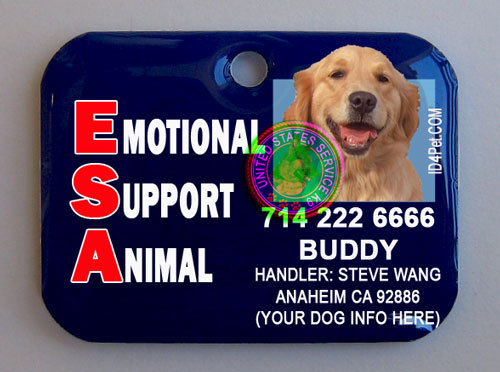
In the October 20, 2014 issue of The New Yorker, there is an article by Patricia Marx entitled “Pets Allowed.” It discusses the trend of people who have applied for an emotional support permit for their animal. We are not talking about legitimate service animals, such as seeing-eye dogs, but of a quasi-legal form of “permitting” pet owners to take their animals wherever they go. Your “permit” comes with a letter attesting to your emotional need to be always close to your pet. The article contains one such letter:

To Whom It May Concern:
RE: Patricia Marx
Ms. Marx has been evaluated for and diagnosed with a mental health disorder as defined in the DSM-5. Her psychological condition affects daily life activities, ability to cope, and maintenance of psychological stability. It can also influence her physical status.

Ms. Marx has a turtle that provides significant emotional support, and ameliorates the severity of symptoms that affect her daily ability to fulfill her responsibilities and goals. Without the companionship, support, and care-taking activities [?!] of her turtle, her mental health and daily living activities are compromised. In my opinion, it is a necessary component of treatment to foster improved psychological adjustment, support functional living activities [?!], her well being, productivity in work and home responsibilities, and amelioration of the severity of psychological issues she experiences in some specific situations to have an Emotional Support Animal (ESA).

She has registered her pet with the Emotional Support Animal Registration of America [sounds real, don’t it?]. This letter further supports her pet as an ESA, which entitles her to the rights and benefits legitimized by the Fair Housing Act and the Rehabilitation Act of 1973. It allows exceptions to housing, and transportation services that otherwise would limit her from being able to be accompanied by her emotional support animal.

You can buy cloth ESA badges from Amazon.Com. Does the buyer have to provide proof? Nope. Are you interested in getting into this scam for yourself? Just click here or here. You might have to fill out a questionnaire, mail a check, but you will not find yourself in front of a real psychiatrist diagnosing your actual mental health condition.

This brings me to one of the more squirrely elements of our culture of fear. We know we must not discriminate against the disabled, whose rights are indeed protected by law, but mental health is a big gap in our healthcare system—one you can drive an eighteen-wheeler through. There exists in general a thriving industry aiding people who want to take advantage of the rights of the disabled without themselves being disabled. You can see the disability stickers on cars driven by perfectly healthy young people who just happen to prefer close-in parking spaces.

What bothers me about the whole ESA thing falls neatly into three categories:

  1. Landlords will rent apartments to tenants with an ESA, regardless how phony, and even if there is a no pets policy. Martine and I are currently being victimized by one such dog who barks and whines for hours on end because her owner has decided to dispense with her “care-giving” services for an evening.
  2. If the trend gets even more out of hand, people will refuse service animals, which are in fact legitimate and certified.
  3. People’s pets can cause inconvenience to others, such as when an airline had to call in a hazmat team to clean up a particularly noisome pile of dog do left in the aisle of a flight.


The Man Who Wanted to Change the World

Aldous Huxley Pictured on Cover of One of My Books

Aldous Huxley Pictured on Cover of One of My Books

When I was a young man in my twenties and thirties, I regarded Aldous Huxley as one of my gurus. I read his novels and essays and treasured quotes from him, such as “I wanted to change the world. But I found that the only thing one can be sure of changing is oneself.” Then there was this one: “A child-like man is not a man whose development has been arrested; on the contrary, he is a man who has given himself a chance of continuing to develop long after most adults have muffled themselves in the cocoon of middle-aged habit and convention.”

In time, I found that Huxley was a very good novelist and an even better essayist. But he was a human being like all of us and, as much as he tried, turned out not to be the universal guru. One of the fun things about going back and re-reading his works is encountering my young self when I was most vulnerable: after my brain surgery in 1966 and in the twenty years that followed.

Last night, I finished reading Huxley’s short novel The Genius and the Goddess, about a young man, himself a scientist, who joins the household of a Nobel prizewinner, as I described in my Goodreads.Com review:

John Rivers is a young scientist who idolizes Nobel-Prize-winning scientist Dr. Henry Maartens, and jumps at the chance to not only work with him, but to join his household, including his Goddess-like wife Katy and children Tim and Ruth. Rivers puts Katy on a pedestal, but circumstances bring her to his bed when Maartens is ailing and the children are staying with a relative. Alternately crushed and ecstatic, Rivers finally comes out of his funk; and circumstances take an odd turn, leaving him to wonder at this early encounter late in his life.

I concluded my review:

I will continue to read Huxley and like him, but he is no longer the guru I once thought of him as being when I myself was equally torn and conflicted about love, wondering whether it would ever “happen” to me. It did, and continues to do so; but the experience is much more complex and mixed than I would ever have predicted.

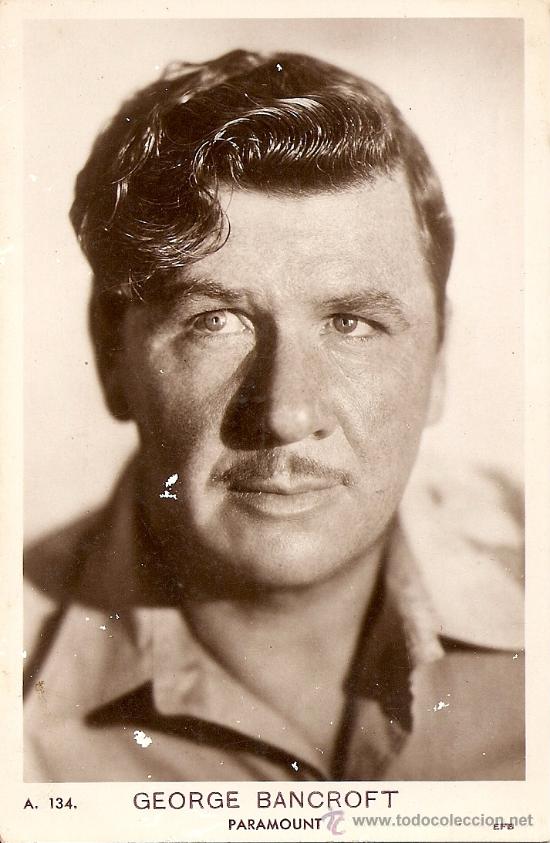
On an entirely different note, I noticed a strange “separated at birth” coincidence based on the photo above. In it, Huxley looks almost exactly like George Bancroft, who played Marshal Curly Wilcox in John Ford’s masterpiece Stagecoach (1939):

George Bancroft

George Bancroft

The only difference is that Huxley was a bit thinner, but the faces are amazingly close.

Happy Halloween!

It’s the Most Boo-tiful Time of the Year!

It’s the Most Boo-tiful Time of the Year!

I know that all of you are either getting ready for some serious cosplay or stockpiling candy for the ravenous hordes preparing to descend onto your doorstep. Be sure to read some scary books (see my post entitled Thirteen More Horrors for a reading list) and see some scary movies (see my post entitled Thirteen Horrors for a list of my faves from last year).

“Are You Comfortable in Bed?”

I’m More Comfortable Than HE Is, As I Don’t Sleep on Rocks

I’m More Comfortable Than HE Is, As I Don’t Sleep on Rocks

In my last batch of spam e-mail, I got one entitled “Are You Comfortable in Bed?” As my answer is yes, I did not see fit to open the e-mail, which probably sold vigara [sic] or cialas [sic] or something like that. Thankfully, I am not suffering from electoral dysfunction. Which is to say, I usually vote Democratic.

Getting eight hours of sleep a night is important to me. That is challenged by my massive intake of iced Baruti Assam tea this time of year, but I usually manage to sink back into sleep quickly after draining my lizard. Occasionally Martine and I make like buzz saws, but curiously it doesn’t bother us much. I actually feel reassured that Martine is asleep next to me; and she graciously refrains from kicking me when I start sawing wood.

Every once in a while, I have a difficult time dropping off to sleep because my mind is racing in an infinite loop. I find that the only way to deal with that is to get up and either a bit of a TV movie (the only time I watch TV) or read a book. That somehow closes the infinite loop and allows me to doze. The one thing that does not work in that case is to twist and turn for hours. Better not to even try!

I am appalled when I hear of people getting by on five or fewer hours a night. Sometimes Martine can’t sleep because of her back pain. Frequently she wakes at five in the morning and twists and turns until morning light (or later).

We have an extra firm mattress which helps Martine somewhat. And our living room sofa is similarly firm. These things help (and they don’t bother me at all), but I would be happier if Martine’s back pain abated to the point that she could accompany me on my travels. It’s a lot more fun having her with me.

Post Hoc Ergo Propter Hoc

A Particularly Persistent Superstition

A Particularly Persistent Superstition

If you’ve never heard this Latin phrase before, you might want to remember it. It describes a logical fallacy which, translated into plain English, is “after that, therefore because of that.”

Let me give you an example. You are a little boy who, for the first time in his life, kisses a girl the in school playground. That same day, your teacher decides to land hard on you—even though she does not know about the kissing incident—and makes you sit in the corner all afternoon with a dunce hat on your head while the whole class taunts you. Using a very common form of magical thinking, you blame the punishment on the kiss, even though it is totally unrelated. Because the punishment came after the kiss, you assume it is because of the kiss. Result: you think that girls must not be kissed, or else terrible things will happen.

In September 1966, to give an example from my own life, I had a terrible headache. I was during my summer vacation just a few days away from starting graduate school in film at UCLA. I managed to cook a hot dog for myself as well as a can of corn. On the hot dog, I smeared some ketchup. Within an hour, the headache became unbearable. I managed to crawl into bed, but the pain kept ramping up. I realized I had to contact my parents and tell them that something was wrong. It took me over an hour to crawl to the kitchen phone, blacking out from the pain several times in the process. Finally, I managed to get my mother at work. Having told her what was happening, I collapsed on the kitchen floor.

And Then There Was the Canned Corn

And Then There Was the Canned Corn

The next thing I knew, I was in the emergency room at Fairview General Hospital in Cleveland being asked questions by physicians. Within minutes, I fell into a deep coma. Somehow, my doctor figured it was a pituitary tumor; and, when I came to after having been wrapped in ice to keep my temperature down, I was operated on. I might add the operation was a glittering success.

However, gone from my diet were hot dogs, ketchup, and canned corn. The one time I had that lunch, terrible things happened. It is only forty-eight years later that I can now eat those three items—though not together. And I put mustard on my hot dogs now instead of ketchup.

In a smaller way, I still see the same logical fallacy at work in my life. The last time I ate at the Yamadaya Restaurant, I suffered what looked to be (but wasn’t) a stroke: It was a transient ischemic attack (TIA). Only today was I brave enough to go back. Somehow, at the back of my mind, I still fear something bad will happen to me today. And I didn’t even get to kiss a girl this time!


My Brother Sets Me Straight

Now I Know What I’m Going to See There!

Now I Know What I’m Going to See There in Peru!

Last night, my brother left the following comment on my status on reading Nigel Davies’s book The Incas on Facebook: “How about The Dinky Incas”? That set me back for a minute. Who in blue blazes were the Dinky Incas? Well, there was only one way to find out: I Googled it. Then it all came back to me. There was an animated television series around 1959-1960 called “Clutch Cargo,” starring a ruggedly good-looking hero with an enormous jaw named Clutch Cargo who flew to strange locales with a small freckle-faced boy named Spinner and a dachshund named Paddlefoot. They engaged in the type of exotic adventures I recall from reading Carl Barks’s Uncle Scrooge comic books.

By the time my brother was of an age to enjoy the limited animation adventures of “Clutch Cargo,” I was already a teenager who was much too sophisticated for that type of stuff. Dan, on the other hand, was eight or nine years old and watched every episode.

Now You, Too, Can Follow Their Adventures

Now You, Too, Can Follow Their Adventures

The series on the “Dinky Incas” was about a missing archaeologist who was on a dig in Peru which resembled, more than anything else, a Mayan pyramid in the jungle. (The real Incas didn’t build pyramids and they preferred the higher-elevation altiplano to the jungles of the Amazon.) Clutch, Spinner, and Paddlefoot run into two unsavory characters who try to do away with them, because, of course, they’re after all the gold and jewels. But Clutch and his sidekicks take care of them right quick, as you can see for yourself if you have twenty minutes to watch the whole series, which is available by clicking here.

Sweating at Pepperdine

The Malibu Campus of Pepperdine University

The Malibu Campus of Pepperdine University

Because I forgot to bring my camera today, I’m using one of my old Minolta pictures of the Pepperdine University Campus in Malibu. Martine likes to walk around the hilly campus, and it’s great exercise. Today, however, we’ve been hit by the northern edge of another Mexican monsoon. The result was incredibly muggy and sweaty weather that felt like Florida this time of year. At several points during the walk, I just wanted to lie down on the grass and take a nap … but we pressed on.

As California is in the middle of a heinous drought, the campus looks much browner today than the above photo. Usually, we would see several groups of deer wandering between the buildings and feeding on the grasses. Today, we saw only two of them from a distance.

It’s strange to consider that (1) we are in a drought, but (2) we can’t just wring all the moisture out of the air so that it drains into the ground.

It will be a month or two before get the really dry Santa Ana winds that make the skin around our fingernails peel painfully. By then, I will be in Peru, high in the Andes, trying to keep from freezing my butt off.


3989 East 176th Street

Where I Lived 1948-1964

Where I Lived 1948-1964

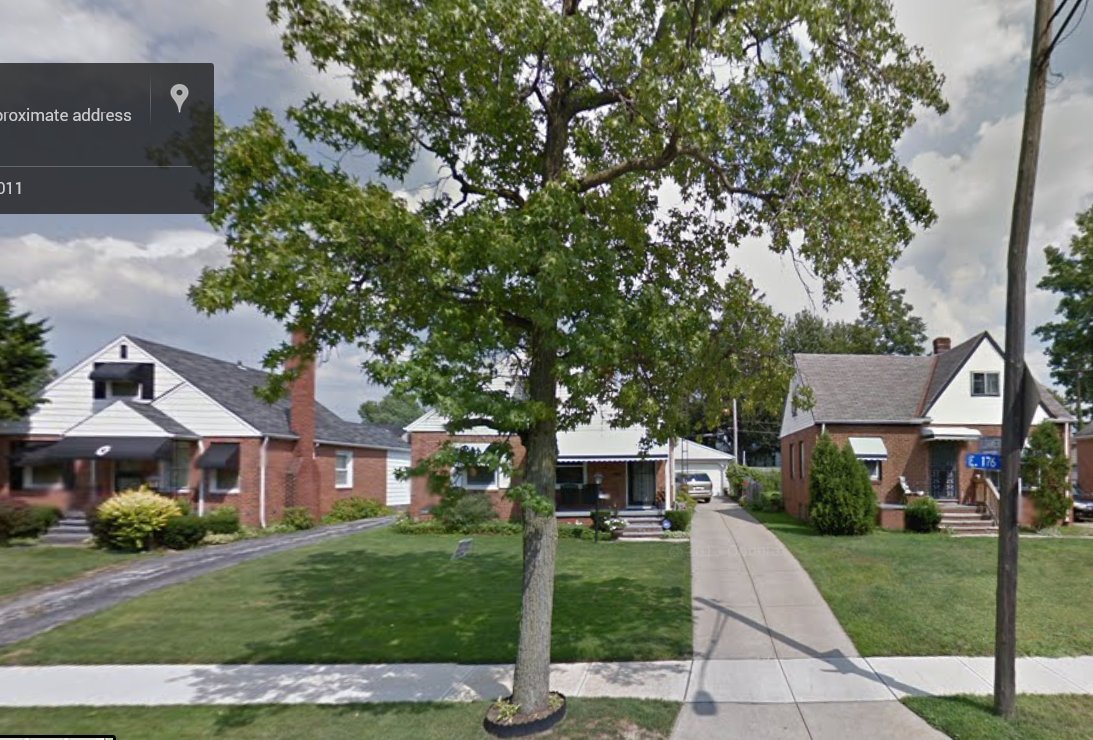
When I looked up my old street address on Google, I was also given the opportunity to get a photographic view of the house where I spent most of my childhood up to fifty years ago. The house in the middle fronts on where Eldamere runs into East 176th Street. On the left side of us lived the Smiths; on the right, the Fordosis, our “enemies.” The photograph makes the front yards look much bigger than they were by about a quarter. The tree hides the window to my second story attic room, where I spent much of my time doing my homework and reading.

We were just a few houses in from Harvard Avenue, where Charley Fontana’s corner grocery store was located. Once, when I was little, William Boyd, the star of the Hopalong Cassidy television series, stopped at Fontana’s and was mobbed by little kids, one of whom was me. He handed out embossed plastic commemorative coins stamped with the name Hopalong Cassidy.

About half a mile left on Harvard was Saint Henry’s Church and School, where I attended grades two through eight. (Don’t tell anyone this, but, to my eternal shame, I never finished first grade.) Then I spent four years at Chanel High School in Bedford, which was renamed St. Peter Chanel before it blinked out of existence last year.

It was a pretty nice neighborhood when we moved there in the late 1940s. Because most of the houses were pretty new back then, the streets were barren. Now they are flanked by large trees that were just getting started when we moved to Parma Heights. By then I was at Dartmouth College and was way too sophisticated to care.

What made us move out was a real estate practice known as blockbusting. The early 1960s were a time of racial tension. When real estate salesmen paraded potential black buyers to neighborhood houses, the existing residents—including my family—panicked and sold out. We thought the neighborhood would become an evil slum like the Hough District just east of downtown. It never did: The new owners apparently were just as intent on making it a nice place to live as the Hungarians and Poles who left the area.

When I returned in 1998 to look around with my brother, we were pleasantly surprised.


Hot Dog Stick

The Original on the Boardwalk in Santa Monica

The Original on the Boardwalk in Santa Monica

We got together with our friends Bill and Kathy Korn today and did something a little bit different. Bill had been visiting restaurants featured on the late Huell Howser’s television programs and decided he wanted to try the Original Hot Dog on a Stick restaurant on the Santa Monica Boardwalk, just a few steps from the Santa Monica Pier. The above picture shows the restaurant, which somehow never had the connective words “on a” painted on its sign that is now part of the company name. So it was to the original stand dating back to 1946 to which we repaired to dine on a delicious hot dog stick.

Martine was not particularly enthralled with having to sit on a wall that was liberally decorated with dried bird droppings, and even less having to maneuver through the massive crowds on the pier; but she put up with it. Bill and Kathy are from a part of Los Angeles where going outdoors in July is, to say the very least, uncomfortable. Just to get an idea of the crowds, see the picture below:

Crowds on the Beach North of the Santa Monica Pier

Crowds on the Beach North of the Santa Monica Pier

Curiously, we had some rain this afternoon. Not only did we have rain, but also a rare lightning strike that killed one twenty-year-old male and injured several other people. By the time we went, about an hour and a half later, the storm, such as it was, had moved eastward.

Speaking of Hot Dog on a Stick, I remember visiting the Pier one Sunday morning in 2009 and wandering into the middle of several hundred young men and (mostly) women dressed in the standard uniform for a corporate meeting:

Hot Dog on a Stick Meeting 2006

Hot Dog on a Stick Meeting 2006