Another Tax Season Over and Done With

You Won’t Find Me on the Side of Late Filers

You Won’t Find Me on the Side of Late Filers

I hope that this will be the last tax season I have to live through. It was by far the worst, mostly because of the same clients who—every year—wait until the last minute to get their information to us. I would probably lose a lot of these people by attaching late charges of 100% for all information submitted after, say, March 25. But my boss doesn’t want to get rid of these deadbeats, so the last few days are always a horror.

Perhaps it’s getting time for me to retire. Part of the problem is that the firm’s president thinks I’m an accountant. I’m not: I’m just a very good specialist on accounting software—not on tax law per se. I don’t get to go to the continuing education classes, and I am totally ignorant on how to prepare returns for trusts, corporations, foundations, partnerships, and estates. And yet I am consulted as if I knew about tax law for all those entities.


Howdy Doody and Harvey Rice

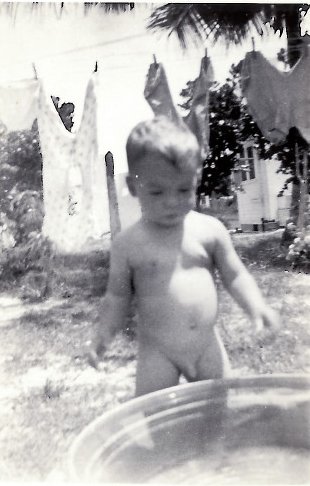
Me on a Tricycle Ca. 1950

Me on a Tricycle Circa 1950

That’s me on a tricycle, sometime around 1950. We were living at 2814 East 120th Street off Buckeye Road in Cleveland. The whole place was filthy with Hungarians. There were so many, in fact, that I did not know the English language existed until two things happened: First, we got a television set late in 1949, and I started watching the Howdy Doody show at 5 pm every day, just after Kate Smith closed her show by singing “When the Moon Comes Over the Mountain.” (It took me a while to understand what Howdy and Buffalo Bob Smith were saying.)

Secondly, I started kindergarten at Harvey Rice School on East 116th Street in January of 1950. My parents thought that, living as we did in a Hungarian neighborhood, the public school teachers would speak Hungarian. Nothing doing! Mrs. Idell sent me home with a note pinned to my shirt that asked, “What language is this child speaking?” As if she didn’t know!

That last factor decided my Mom that we had to leave our little Hungarian womb on the East Side and move to the suburbs. Gone forever would be the Reverend Csutoros and the First Hungarian Reformed Church; the Regent and Moreland movie theaters; Kardos’s Butcher Shop with its delicious Hungarian sausages; the College Inn, where my Dad would take me for French Fries; and the Boulevard Lanes where my Dad bowled and I kept score.

It was a cohesive little world, but my parents ate the apple from the Tree of Knowledge when they decided to raise me as a Hungarian. You know what? I’m grateful that they did. I made my adjustment to English (and I’m still making it), but my heart belongs to the Magyar Puszta.

.

My Lack of Civic Spirit

The L.A. Marathon Is Good Mainly for Screwing Up L.SA. Traffic

The L.A. Marathon Is Good Mainly for Screwing Up L.A. Traffic

Every year around this time, the Los Angeles Marathon is run; and, every year, it’s run on a Sunday morning and afternoon during the most brutal part of tax season. Those of us who have to go to work on this day are frequently re-routed in a way that makes us feel tired before we even get to work.

Here is the problem in a nutshell: I live south of the usual L.A. Marathon route, and I work north of the route. That means I have to take the freeway to work … But wait, CalTrans is still working on the exit I have to take. So I would have to go miles out of my way to get to and from work.

The other option is Wilshire Boulevard. Fortunately, the boys and girls in their floppy shorts go under the road through the Veterans’ Administration campus on Bonsall. That works fine in the morning, but in the afternoon, for the return trip, all the left turn lanes are a mile long. So I had to take Veteran Drive to Montana to Sepulveda and take a right on Wilshire. That was a five-mile detour.

If it were me to re-route the Marathon, I would have them run straight up the San Gabriel Mountains. That’ll show how much heart they have!


The Thirty Plus Years’ Quest

Saverio Mercadante (1795-1870)

Saverio Mercadante (1795-1870)

It was over a third of a century ago. I was preparing to go to work at Urban Decision Systems and listening to a classical music station on the radio, probably KUSC-FM. Suddenly, a piece of music came on called “Variations on a Theme on Stabat Mater by Rossini” by the Neapolitan composer Saverio Mercadante.

I have been looking for that piece of music at record stores (when there used to be such things), eBay, even iTunes—without a shred of luck. Then today I just happened to Google “Mercadante Rossini Stabat Mater” and got two hits on YouTube. Needless to say, I played both clips. One was an Italian recording entitled Sinfonia Sopri i Motivi dello Stabat Mater de Rossini, and the other was a recording conducted by Claudio Scimone with the L’Orchèstre National de l’Opéra de Monte Carlo and entitled Sinfonia sur des thèmes du Stabat Mater du célèbre Rossini (1843).

The musical phrase I loved came in at around the 7:50-minute mark on both recordings and lasted for a little over a minute.

It was nice, but it didn’t impress me as much as it did back in the 1970s or 1980s. Perhaps what I heard on the radio was a better recording. I just don’t know. Or perhaps my taste in music has changed. I am no longer like Swann and Odette de Crécy at the Verdurins oohing and aahing over that little phrase of Vinteuil’s.

What amazed me is that so many things that were impossible to find just twenty years ago can now be Googled and brought up in mere seconds. Technology is wonderful. Sometimes.


William of Lugos

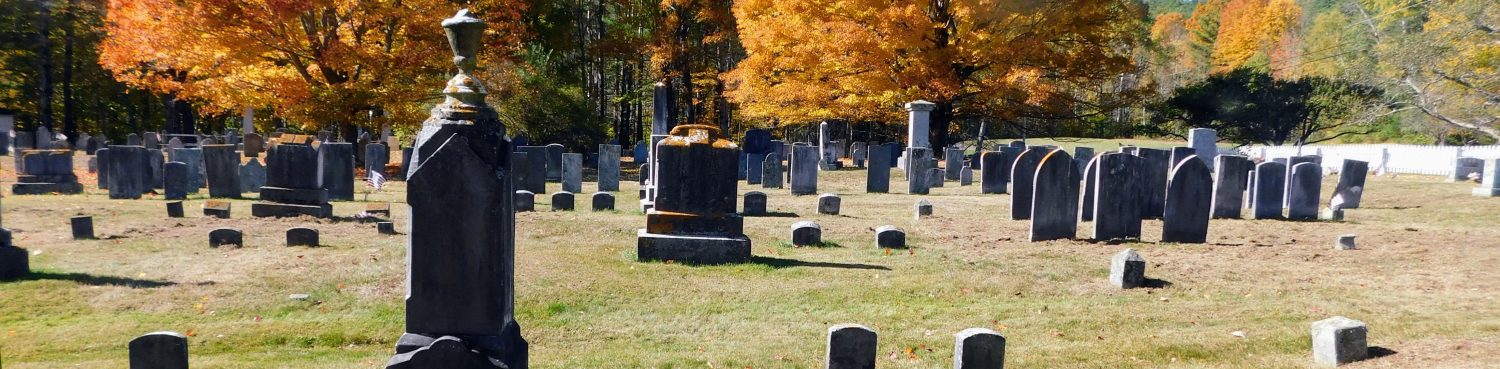
BelaLugosiHeadstone

Headstone of Bela Lugosi at Holy Cross Cemetery in Culver City

His real name was Béla Ferenc Dezsö Blaskó, but that didn’t sound cool enough for the title role in Universal Pictures’ new film Dracula (1931). Béla, or William as it’s translated into English, was born in Lugos in then Austro-Hungarian Empire. Now it is known as Lugoj and is located in Rumania. And, just so you know, in Transylvania, near Timisoara, known by the Hungarians as Temesvár. So Béla Lugosi is none other than William of Lugos.

By the way, his name is really pronounced BAY-lah LOO-gauche-ee, with the accent on the first syllable of first and last name.

Martine has always loved Lugosi’s acting. In fact, on her favorite sweater, she wears a metal pin of a 32¢ stamp issued in his honor, as shown below:

1997 USPS Stamp Commemorating Famous Monsters of Hollywood

1997 USPS Stamp Commemorating Famous Film Monsters of Hollywood

Martine has a set of DVDs for Lugosi’s films; and when we visit Holy Cross Cemetery, we always check out his grave on a hillside near a grotto.

It always surprises me how many famous people don’t have any flowers or other marks of family or fan affection by their graves. Note, however, that there is a little votive candle by the bottom right of Béla’s headstone.

Support Your Local Bookseller

Alpine Village, Central Europe at the Edge of the Desert

Alpine Village, Central Europe at the Edge of the Desert

Today I got off early from tax work, so I suggested to Martine that we go to Captain Kidd’s Fish Market in Redondo Beach for a seafood lunch, followed by a visit to Alpine Village in nearby Torrance. At Alpine Village is not only an excellent European food market with great meats, but an excellent used bookstore that goes under the names of Collectible Books and Michael Weinstein, Bookseller.

Since tax season will get only worse as April 15 approaches, my food preparation will now eschew the fanciful and time-consuming. This next week, we will have knockwurst or German wieners with Brussels Sprouts, cauliflower, or other steamed vegetables. Perhaps the week after, it will be Hungarian Gyulai kólbasz sausage sautéed with onions, potatoes, and paprika—a dish my mother frequently cooked for us back in Cleveland when she was pressed for time.

I was a little disingenuous with Martine because I didn’t mention until later that I also wanted to visit the little used bookstore at Alpine Village, various called Collectible Books and Michael R. Weinstein, Bookseller. There I purchased three items:

  • R. R. Palmer’s Twelve Who Ruled: The Year of the Terror in the French Revolution. I had read this before, but made the mistake of selling it when I wanted to re-read it.
  • Percy Bysshe Shelley’s Selected Poems in a compact hardbound Oxford World Classics edition, suitable for travel.
  • A lovely Lakeside Press edition of William S. Hart’s My Life East and West, the autobiography of the silent cowboy star whose house in Newhall we visit two or three times a year. It is now a museum administered by the Los Angeles Museum of Natural History.

Not a bad haul for thirty bucks. I know, I know: I have too many books. But reading great books is what puts the light in my eyes. Martine knows that, so she forgives me my little vice.

A Tarheel in the Big Apple

Joseph Mitchell (1908-1996)

Joseph Mitchell (1908-1996)

In America, fiction writers get all the love. Because I know I can never write good fiction, I have a particular appreciation of nonfiction writers, particularly essayists. And one of my favorites was Joseph Mitchell, who came up from North Carolina to become a writer for The New Yorker, and stayed for most of his life.

Today, while I was munching on some curried vegetables at lunchtime, I read an unfinished article by Mitchell in the February 11 and 18 issue of The New Yorker about the author’s peregrinations through the five boroughs of the big city looking for architectural oddities. Entitled “Street Life,” it begins with interesting architectural features and ends up looking at church services at Catholic and other Christian churches (including various Eastern Orthodox), synagogues, and mosques:

I used to feel very much at home in New York City. I wasn’t born here, I wasn’t a native, but I might have well have been: I belonged here. Several years ago, however, I began to be oppressed by a feeling that New York City had gone past me and that I didn’t belong here anymore. I sometimes went on from that to a feeling that I had never belonged here, and that could be especially painful. At first, these feelings were vague and sporadic, but they gradually became more definite and quite frequent. Ever since I came to New York City, I have been going back to North Carolina for a visit once or twice a year, and now I began going back more often and staying longer. At one point, after a visit of a month and a half, I had about made up my mind to stay down there for good, and then I began to be oppressed by a feeling that things had gone past me in North Carolina also, and that I didn’t belong down there anymore, either. I began to feel painfully out of place wherever I was. When I was in New York City, I was often homesick for North Carolina; when I was in North Carolina, I was often homesick for New York City.

I know that feeling. Things have gone past me in Los Angeles, too, but I suspect that the reason is that my age cohort has passed into a gray area (referring mostly to the color of our facial hair). In no way am homesick for Cleveland, the land of my youth. All that remains of Cleveland for me is buried in several scattered cemeteries in Cleveland and in Pembroke Pines, Florida. My great-grandmother, my mother, my father, my uncle and my aunt. I have been away from there now for more than forty years.

The last time I was there was for my mother’s funeral in 1998. My brother Dan and I drove around the areas where we played as children. What surprised us the most was that our barren post World War Two suburban development in the Lee-Harvard area was now covered with large, stately trees. Even my old High School, St. Peter Chanel in Bedford, is shuttering its doors this year.

Getting back to Joseph Mitchell, I find, reading him, that I become nostalgic for places I have never seen, experiences I have never lived through. That is the mark of a great writer: He can make you feel that you are experiencing these places and events through his eyes.

Some day, if you want a good read, you might want to try one of his books:

  • My Ears Are Bent (1938)
  • McSorley’s Wonderful Saloon (1943)
  • Old Mr. Flood (1948)
  • The Bottom of the Harbor (1959)—My favorite.
  • Joe Gould’s Secret (1965)

I hope that The New Yorker can dig up some more of his old stories. His complete oeuvre is rather small, but it is choice.

The drawing of Joseph Mitchell shown here is by Nick Sung.

What Day Is It Today?

This Is a Trick Question ... So Beware!

This Is a Trick Question … So Beware!

If your answer was “Presidents’ Day,” you are only partially correct. Unofficially, that’s what the holiday is called, but according to the National Archives, it’s Washington’s Birthday. There is even an explanatory footnote:

This holiday is designated as “Washington’s Birthday.” Though other institutions such as state and local governments and private businesses may use other names, it is Federal policy to always refer to holidays by the names designated in the law.

If your answer was, “Monday, February 18,” you are an unspeakable literalist. But you are also correct.

Of course, my answer is, “Another damned working day in tax season.” For people in the accounting profession, there are no holidays between New Years and the end of tax season.


Sunday Morning Walk

Along Broadway in Santa Monica

Along Broadway in Santa Monica

This morning I got up early and prepared to take a walk into downtown Santa Monica. My ultimate destination was a Barnes & Noble Bookstore about three miles from where I live. It was a sunny, cool morning, with the temperature predicted to top out at 64° Fahrenheit (approximately 18° Celsius).

The stretch along Broadway between Centinela Avenue and 26th Street is particularly attractive, with lush plantings of palm trees, cacti, and other decorative flora. The photograph above is looking north on Yale Street as I headed west along Broadway.

At Barnes & Noble, I picked up a book about Iceland. I am trying hard to talk Martine into coming to Iceland with me this summer. Back in 2001, I went alone. I resolved at that time that I wanted to return with Martine: She would love the puffins, the waterfalls (seemingly thousands of them), the glaciers, and the volcanoes. It is a truly strange landscape, and a largely treeless one.

There is an Icelandic joke that runs: What do you do if you’re lost in an Icelandic forest? The answer: Stand up. Because of the strong winds, few trees are very tall. Whole forests, such as the extensive one at Asbyrgi, near Húsavik, look as if it were miniaturized.

I have my work cut out for me. Martine is still suffering from back and shoulder pains, which I am beginning to think are symptoms of fibromyalgia. On one hand, the activity would do her good (she has a tendency to be a couch potato). On the other, I cannot survive the rigors of a tax season without planning for an escape, and Iceland strikes me as a good one.


The Wrong Type of Book-Lover

old books1

Some People Just Like to Read Books, Not Snool Over Them

Yesterday, I visited the antiquarian book fair held at the Santa Monica Civic Auditorium. I had visited book fairs in the past, and actually found some good buys—most notably a four-volume edition of the works of Sir Thomas Browne—but I found that most of the books exhibited were not my cup of tea. Well, this time it was even worse.

It seemed that the median price of the books on sale was around $650, and virtually all the books were:

  • Signed first editions of famous 20th century authors
  • Lavishly illustrated oversize books filled with old engravings
  • Leather-bound books like the ones in the photograph above
  • Seemingly endless books about the Old West

I got the impression that the book fair was primarily for those whose notion of a book does not go beyond the dust jacket, the binding, the front endpapers, and the page showing the edition and printing. That impression was confirmed when I heard some of these people talking to the dealers in the kind of pseudo-cultivated tone adopted by the very wealthy who wish to impress others with knowledge they don’t have. For one thing, they don’t actually read books!

The upshot was that I didn’t buy anything there, though I spent $10 for parking and $5 for admission. Right afterwards, I drove to a real bookstore, Sam Johnson Books in Mar Vista, where I had difficulty choosing what to buy. I finally settled on an interesting-looking book by Adam Sisman entitled The Friendship: Wordsworth and Coleridge. I had previously read Sisman’s book on James Boswell and loved it.