Writer of Epitaphs

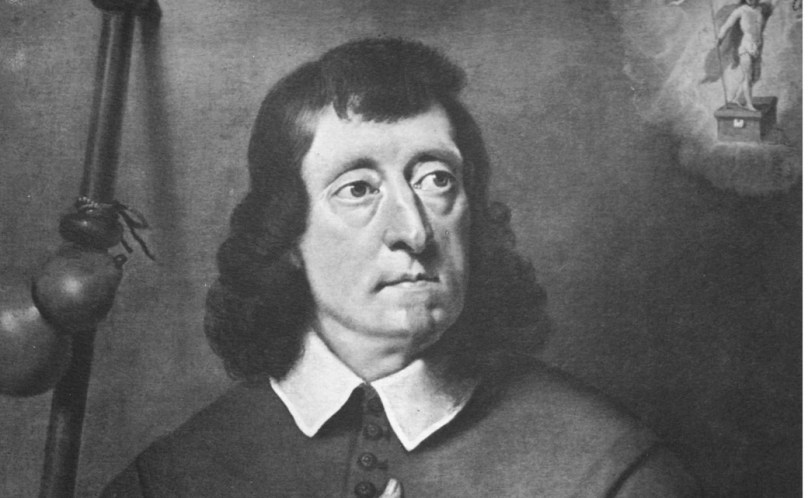
Poet Edgar Lee Masters (1868-1950)

He lived a long life, yet he was famous for writing epitaphs, which he published in two books: The Spoon River Anthology (1915) and The New Spoon River (1924). Curiously, his own epitaph was just as poetic:

Good friends, let’s to the fields …
After a little walk, and by your pardon,
I think I’ll sleep. There is no sweeter thing,
Nor fate more blessed than to sleep.

I am a dream out of a blessed sleep –
Let’s walk, and hear the lark.

“Bleak Shore”

Edna St. Vincent Millay (1892-1950)

I’m starting the New Year by quoting a poem from Edna St. Vincent Millay:

Sonnet IV-X

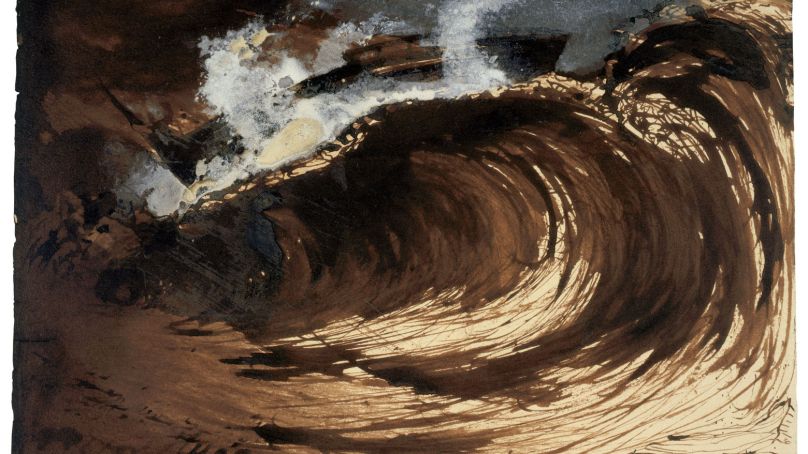
I shall go back again to the bleak shore
And build a little shanty on the sand
In such a way that the extremest band
Of brittle seaweed shall escape my door
But by a yard or two; and nevermore
Shall I return to take you by the hand.
I shall be gone to what I understand,
And happier than I ever was before.
The love that stood a moment in your eyes,
The words that lay a moment on your tongue,
Are one with all that in a moment dies,
A little under-said and over-sung.
But I shall find the sullen rocks and skies
Unchanged from what they were when I was young.

I know it’s sad, but it is at the same time beautiful.

“Winter: A Dirge”

Scottish Poet Robert Burns (1759-1796)

His poems are written in a difficult-to-read Scottish Lowland dialect, but somehow the intensity shines through. Here the poet expresses his disdain for the horrors of a Scottish winter, ending with a comic proposal to the deity.

Winter: A Dirge

The wintry west extends his blast,
And hail and rain does blaw;
Or, the stormy north sends driving forth
The blinding sleet and snaw:
While tumbling brown, the burn comes down,
And roars frae bank to brae;
And bird and beast in covert rest,
And pass the heartless day.

The sweeping blast, the sky o’ercast,
The joyless winter-day,
Let others fear, to me more dear
Than all the pride of May:
The tempest’s howl, it soothes my soul,
My griefs it seems to join;
The leafless trees my fancy please,
Their fate resembles mine!

Thou Pow’r Supreme, whose mighty scheme
These woes of mine fulfil,
Here, firm, I rest, they must be best,
Because they are Thy will!
Then all I want (O, do Thou grant
This one request of mine!)
Since to enjoy Thou dost deny,
Assist me to resign.

Walking in Beauty

Ship Rock Near Farmington, New Mexico

In the spirit of the Christmas season, I am posting a Navajo Blessing Ceremony prayer called “Walking in Beauty.” I have always found it to be beautiful and inspiring.

In beauty I walk
With beauty before me I walk
With beauty behind me I walk
With beauty above me I walk
With beauty around me I walk
It has become beauty again


Hózhóogo naasháa dooShitsijí’ hózhóogo naasháa dooShikéédéé hózhóogo naasháa dooShideigi hózhóogo naasháa dooT’áá altso shinaagóó hózhóogo naasháa dooHózhó náhásdlíí’Hózhó náhásdlíí’Hózhó náhásdlíí’Hózhó náhásdlíí’


Today I will walk out, today everything negative will leave me
I will be as I was before, I will have a cool breeze over my body.
I will have a light body, I will be happy forever, nothing will hinder me.
I walk with beauty before me. I walk with beauty behind me.
I walk with beauty below me. I walk with beauty above me.
I walk with beauty around me. My words will be beautiful.


In beauty all day long may I walk.

Through the returning seasons, may I walk.
On the trail marked with pollen may I walk.
With dew about my feet, may I walk.
With beauty before me may I walk.
With beauty behind me may I walk.
With beauty below me may I walk.
With beauty above me may I walk.
With beauty all around me may I walk.
In old age wandering on a trail of beauty, lively, may I walk.
In old age wandering on a trail of beauty, living again, may I walk.
My words will be beautiful…

“Man Hands On Misery to Man”

British Poet Philip Larkin (1922-1986)

It is appropriate to post this poem after learning of the death of Rob Reiner and his wife at the hands of their son Nicholas. You might say it’s about the flip side of a happy family:

This Be the Verse

They fuck you up, your mum and dad.   
    They may not mean to, but they do.
They fill you with the faults they had
    And add some extra, just for you.

But they were fucked up in their turn
    By fools in old-style hats and coats,   
Who half the time were soppy-stern
    And half at one another’s throats.

Man hands on misery to man.
    It deepens like a coastal shelf.
Get out as early as you can,
    And don’t have any kids yourself.

Remember

Former Poet Laureate of the United States Joy Harjo

This is the ninth time in the last five years that I have posted a poem by Joy Harjo, a Muscogee Creek Indian poet who was once Poet Laureate of the U.S. According to Joy’s notes regarding the poem:

I hadn’t been writing long when I wrote this poem. I believe I was still a student at the University of New Mexico. My first few poems were published in the Thunderbird, the student literary magazine. My voice found itself, then rooted itself in the Sandia Mountains, the Rio Grande River, in the sunrises and sunsets of the Southwest. My voice found a place to eat and drink after traveling through worlds and walking through time, a place to replicate the sense of those worlds in words. That’s when I began writing poetry, real poetry, after those first few published poems. Those first attempts were my calling out for poetry to find me.

Remember

Remember the sky you were born under,
know each of the star’s stories.
Remember the moon, know who she is.
Remember the sun’s birth at dawn, that is the
strongest point of time. Remember sundown
and the giving away to night.
Remember your birth, how your mother struggled
to give you form and breath. You are evidence of
her life, and her mother’s, and hers.
Remember your father. He is your life, also.
Remember the earth whose skin you are:
red earth, black earth, yellow earth, white earth
brown earth, we are earth.
Remember the plants, trees, animal life who all have their
tribes, their families, their histories, too. Talk to them,
listen to them. They are alive poems.
Remember the wind. Remember her voice. She knows the
origin of this universe.
Remember you are all people and all people
are you.
Remember you are this universe and this
universe is you.
Remember all is in motion, is growing, is you.
Remember language comes from this.
Remember the dance language is, that life is.
Remember.

Recovering from Illness

Mother and Daughter by the Sickbed of a Child by Diederik Franciscus Jamin

The above sketch from Amsterdam’s Rijks Museum pretty much describes how I spent most of this week. Something I ate on Tuesday violently disagreed with me, so in addition to the usual messy food poisoning symptoms, I was totally prostrated. Picture Martine at my side feeding me endless glasses of water to avoid dehydration along with hydrocortisone to make up for my body’s inability to produce adrenaline. Without the hydrocortisone, I was likely to die.

To avoid concentrating on the messy details, I would like to present a poem by Robert Louis Stevenson I remember from when I was a boy of ten sleeping in my parents’ bed while I was sick and they were at work. Half the time, my great-grandmother was around to feed me. It presents a very vivid picture of illness seen from the point of view of a child.

The Land of Counterpane

When I was sick and lay a-bed,
I had two pillows at my head,
And all my toys beside me lay,
To keep me happy all the day.

And sometimes for an hour or so
I watched my leaden soldiers go,
With different uniforms and drills,
Among the bed-clothes, through the hills;

And sometimes sent my ships in fleets
All up and down among the sheets;
Or brought my trees and houses out,
And planted cities all about.

I was the giant great and still
That sits upon the pillow-hill,
And sees before him, dale and plain,
The pleasant land of counterpane.

“Filament, Filament, Filament”

Every time I read a poem by Walt Whitman (1819-1892), I kick myself for not being more familiar with his work. Therefore I resolve to read his collection Leaves of Grass in the coming year. The following short poem is one of my favorites:

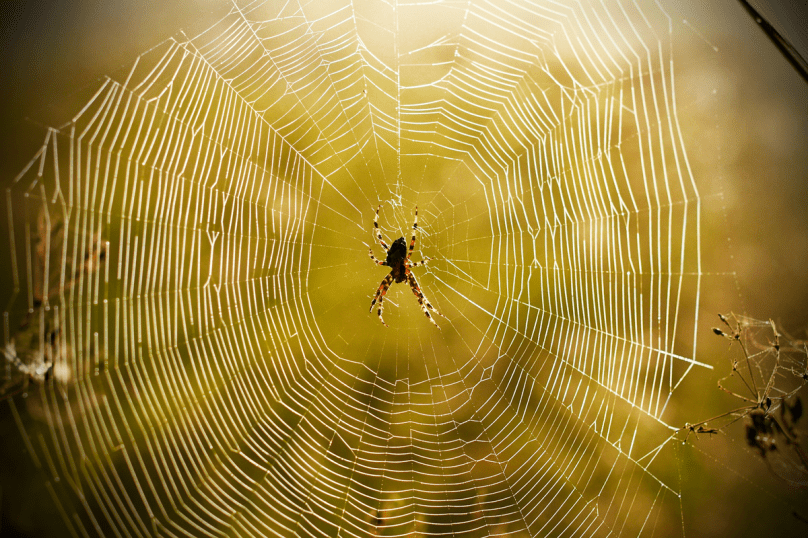
A Noiseless Patient Spider

A noiseless patient spider,
I mark’d where on a little promontory it stood isolated,
Mark’d how to explore the vacant, vast surrounding,
It launched forth filament, filament, filament, out of itself.
Ever unreeling them, ever tirelessly speeding them.

And you O my soul where you stand,
Surrounded, detatched, in measureless oceans of space,
Ceaselessly musing, venturing, throwing, seeking the spheres to connect them.
Till the bridge you will need be form’d, till the ductile anchor hold,
Till the gossamer thread you fling catch somewhere, O my soul.

“Come On, Tough Guy”

I had never read any of Sherman Alexie’s poems before, Wedged in between the short stories in his collection War Games were a number of poems, the most interesting of which is this one at the start of the book:

The Limited

I saw a man swerve his car
And try to hit a stray dog,
But the quick mutt dodged
Between two parked cars

And made his escape.
God, I thought, did I just see
What I think I saw?
At the next red light,

I pulled up beside the man
And stared hard at him.
He knew that’d I seen
His murder attempt,

But he didn’t care.
He smiled and yelled loud
Enough for me to hear him
Through our closed windows:

“Don’t give me that face
Unless you’re going to do
Something about it.
Come on tough guy,

What are you going to do?”
I didn’t do anything
I turned right on the green
He turned left against traffic.

I don’t know what happened
To that man or the dog,
But I drove home
And wrote this poem.

Why do poets think
They can change the world?
The only life I can save
Is my own.

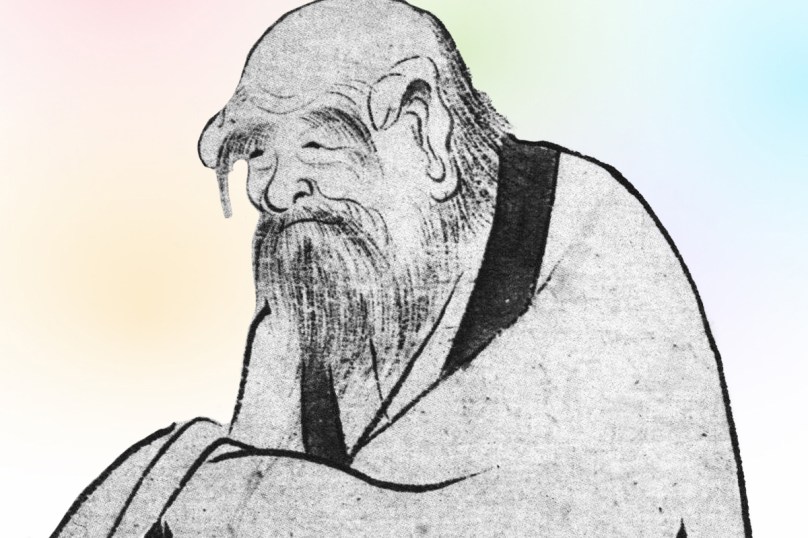
Chuang Tzu and the Butterfly

The two greatest poets of T’ang China were Tu Fu (712-770 CE) and Li Po (701-762 CE). The following poem by Li Po is one of the most profound he ever wrote. The Chuang Tzu (4th century BCE) referred to was the Taoist philosopher and follower of Lao Tzu. Forget all this detail: The following poem speaks for itself.

Chuang Tzu and the Butterfly

Chuang Tzu in dream became a butterfly,
And the butterfly became Chuang Tzu at waking.
Which was the real—the butterfly or the man ?
Who can tell the end of the endless changes of things?
The water that flows into the depth of the distant sea
Returns anon to the shallows of a transparent stream.
The man, raising melons outside the green gate of the city,
Was once the Prince of the East Hill.
So must rank and riches vanish.
You know it, still you toil and toil,—what for?