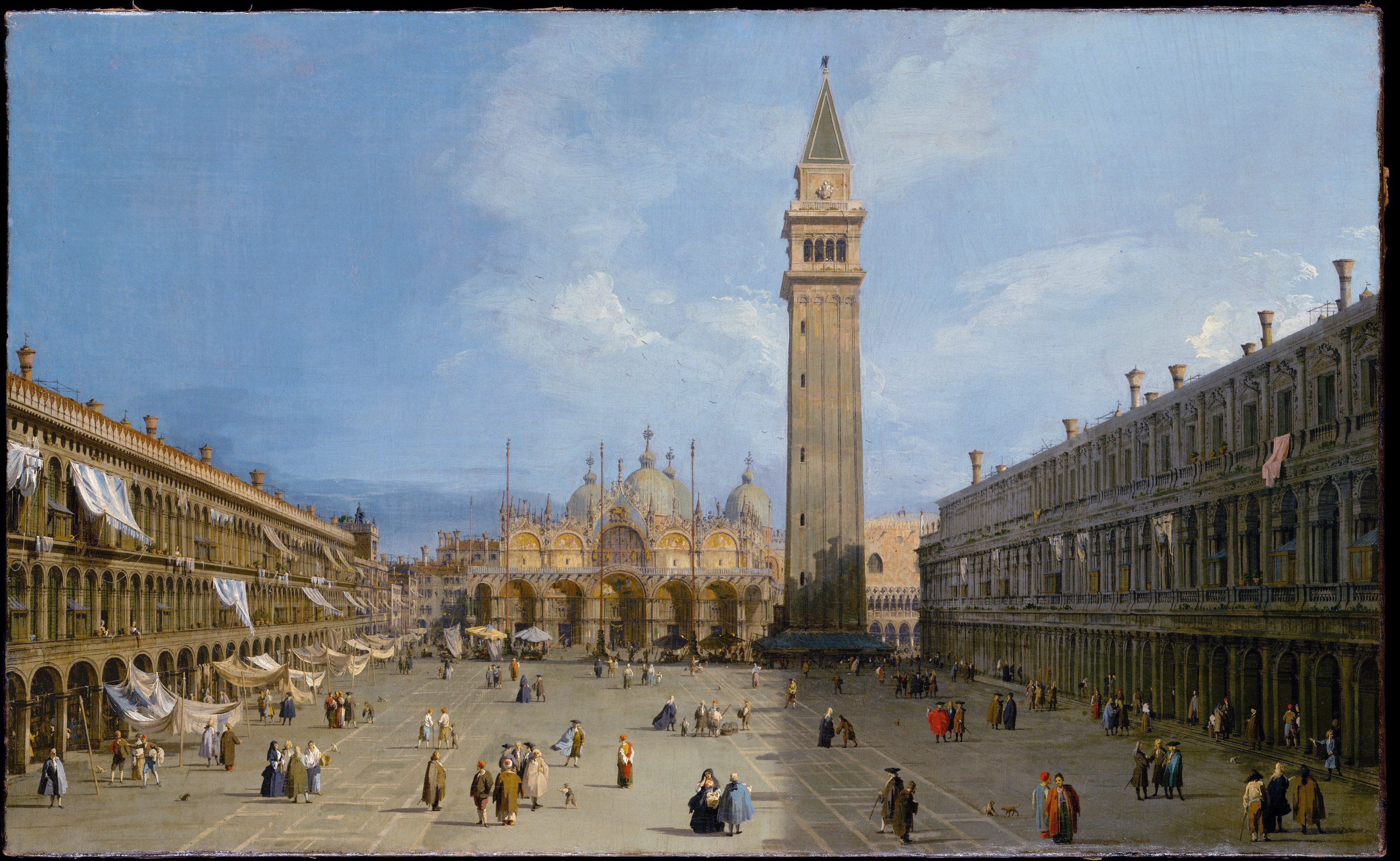
In Ignatievo Forest

Russian Forest Scene

Today I have made the acquaintance of a major Russian poet named Arseny Tarkovsky. If that last name is more than a little familiar to you, it is because his son Andrei Tarkovsky is one of the greatest postwar Russian filmmakers. Curiously, Arseny’s first published collection came out in 1962, when the poet was 55 years old; and his son Andrei made him famous by quoting his poems in his films Mirror (1974) and Stalker (1979). (And Stalker is one of my favorite films—ever!)

The following poem, “Ignatievo Forest” was written in 1935. According to the notes in the collection I am reading, it deals with the difficult relationship with the poet’s first wife, Maria Ivanovna Vishnyakova (1907-1979), mother of Andrei, whom he divorced in 1937.

Ignatievo Forest

The last leaves in self-immolation
burn and rise to sky. The whole forest here
lives and breathes the same irritation
we lived and breathed in our last year.

In your tear-blurred eyes the path’s a mirror
as the gloomy flood-plain mirrors the shrubs.
Don’t fuss, do not disturb, don’t touch
or threaten the wood’s wet quiet. Here,

the old life breathes. Just listen:
in damp grass, slimy mushrooms appear.
Slugs gnaw their way to the core,
though a damp itch still tingles the skin.

You’ve known how love is like a threat:
when I come back, you’ll wish you were dead.
The sky shivers in reply, holds a maple like a rose.
Let it burn hotter—till it almost reaches our eyes.

The collection I am reading is called I Burned at the Feast. The book is overdue at the L.A. Central Library, and I cannot endure the thought of returning it until I am finished with it, even though it will cost me a few bucks.

A Poem About Travel

Edna St. Vincent Millay in 1917

As my mind is increasingly turning toward the trip I plan to take to Yucatán and Belize this next winter, I came across this poem by Edna St. Vincent Millay (1892-1950). It is called, simply enough, “Travel”:

Travel

The railroad track is miles away,
And the day is loud with voices speaking,
Yet there isn’t a train goes by all day
But I hear its whistle shrieking.

All night there isn’t a train goes by,
Though the night is still for sleep and dreaming,
But I see its cinders red on the sky,
And hear its engine steaming.

My heart is warm with the friends I make,
And better friends I’ll not be knowing;
Yet there isn’t a train I wouldn’t take,
No matter where it’s going.


Sparta Falls and Rises at Thermopylae

Spartan Warrior at Thermopylae

Ever since I first read Lawrence Durrell’s Justine many years ago, I have been in love with the poems of Constantine Cavafy (1863-1933), a Greek poet resident in Alexandria, Egypt. Here is one of his most famous early poems:

Thermopylae

Honour to those who in the life they lead
define and guard a Thermopylae.
Never betraying what is right,
consistent and just in all they do,
but showing pity also, and compassion;
generous when they’re rich, and when they’re poor,
still generous in small ways,
still helping as much as they can;
always speaking the truth,
yet without hating those who lie.

And even more honour is due to them
when they foresee (as many do foresee)
that Ephialtes will turn up in the end,
that the Medes will break through after all.

And who is Ephialtes? According to the History of Herodotus, he is a Greek who betrayed his homeland to the Persians by showing them a trail by which they could surprise Leonidas and his 300 Spartans. He expected to be rewarded by his new masters, but that fell apart when they lost the Battle of Salamis.

“The Land of Counterpane”

I Remember This Illustration from My Childhood

The first poem I remember was “The Land of Counterpane” from Robert Louis Stevenson’ A Child’s Garden of Verses. I was in grade school and sick with some childhood disease. While Mom and Dad were off at work, and I was being cared for by my great-grandmother Lidia Toth, I was allowed to lie in their bed. Mom had gotten be a library book with this poem in it—and with the above illustration. I don’t know which impressed me more, the words of the poem or the illustration. In any case, the memory has stuck with me through the years. Here’s the words of the poem:

When I was sick and lay a-bed,
I had two pillows at my head,
And all my toys beside me lay,
To keep me happy all the day.

And sometimes for an hour or so
I watched my leaden soldiers go,
With different uniforms and drills,
Among the bed-clothes, through the hills;

And sometimes sent my ships in fleets
All up and down among the sheets;
Or brought my trees and houses out,
And planted cities all about.

I was the giant great and still
That sits upon the pillow-hill,
And sees before him, dale and plain,
The pleasant land of counterpane.

Now, many years later, I am rediscovering RLS, especially his last years in the South Pacific. I wonder if, somehow, my memory over the great gulf of years, has anything to do with my wanting to go back to Stevenson and reacquaint myself with his work. In any case, that’s what I’m doing … and I am enjoying every moment of it.


“Tell It Slant”

Poet Marsha de la O

It was my day at the Los Angeles Times Festival of Books. Yesterday, I went with Martine and two friends: All my time was spent in coordinating when and where we should meet, eat, and greet. At such a large, centrifugal event, people tend to separate going to different locations based on their various interests. So today I returned—but this time all by my lonesome. It was an altogether different experience. I bought several books, and for sheer enjoyment attended two poetry readings at the Festival’s Poetry Stage, sponsored by Small World Books on Venice Beach.

My favorite of he two readings I attended was by a Ventura County poet named Marsha de la O. With her husband Phil Taggart, she published a poetry journal called Askew. Under the masthead, she quotes a line from Emily Dickinson, “Tell the Truth But Tell It Slant,” based on the title of the following poem:

Tell all the truth but tell it slant —
Success in Circuit lies
Too bright for our infirm Delight
The Truth’s superb surprise
As Lightning to the Children eased
With explanation kind
The Truth must dazzle gradually
Or every man be blind —

Marsha de la O read from her latest collection, Every Ravening Thing, published by the University of Pittsburgh Press. In the cool of the morning, it was nice hearing powerful verse in the dappled light of the Poetry Stage. The audience wasn’t as big as some of the sessions of more “general interest”: The people who were there were there because they wanted to be, and because they loved feeling those frissons caused by the magic of poetry.

Marsha de la O’s Latest Collection of Poems

Following is one of the four poems de la O read this morning:

Space-time Tsunami

If most of the universe is dark energy,
why should we be any different?

Pick a wave, any wave—it’s just energy in motion,
shock, or plasma, or the wide ocean shrugging
its shoulders when space becomes time
and ‘time is not the root of our problem’.

The good ship Charon’s anchored offshore, laden
with otter pelts—soft gold they call it.
Our tsunami strikes during the Napoleonic wars,
but what’s California to Napoleon
that he should weep for her otters?   Nothing.

I had a friend who raked her fingers through my hair, gathered
a hank in a great knot, Hey, Strange Attractor, she used to say,

my binary star, my pristine, my flammable—how we orbited,
each to each.
I had a friend who convened the dead. When we spoke,
water seemed to leave the beach—the sea scrolling backwards and her,
strolling right out onto newborn land—that reckless.

Hey ferryman, come on over here, ferry, ferry, ferryman …

We now exist as thirteen egrets in the canopy of a tree
so far from water that at first they look like
paper lanterns
to the observer who has no place to stand

and still I walk through the great hall of swallows swirling
like Valkyries, like volute, like alley oop,

we do not speak, I’ll trail after for a hundred years.


“Wind, Water, Stone”

A Poem for a Very Windy Day

As the lights are going out in parts of Los Angeles because of high winds, I am reminded of a poem by the Mexican Nobel-prize-winning poet Octavio Paz (1914-1998) entitled “Wind, Water, Stone.”

Wind, Water, Stone
By Octavio Paz
Translated by Eliot Weinberger

for Roger Caillois

Water hollows stone,
wind scatters water,
stone stops the wind.
Water, wind, stone.

Wind carves stone,
stone’s a cup of water,
water escapes and is wind.
Stone, wind, water.

Wind sings in its whirling,
water murmurs going by,
unmoving stone keeps still.
Wind, water, stone.

Each is another and no other:
crossing and vanishing
through their empty names:
water, stone, wind.

The poem makes me think of the game of Paper, Stone, and Scissors. I love the final stanza which brings the three elements together into a satisfying whole.

Calaveras

One of Posada’s Calaveras: Street Cleaners

John Webster was a Jacobean dramatist known for the grimness of his plays. According to the first stanzas of a poem by T. S. Eliot called “Whispers of Immortality”:

Webster was much possessed by death
And saw the skull beneath the skin;
And breastless creatures under ground
Leaned backward with a lipless grin.

Daffodil bulbs instead of balls
Stared from the sockets of the eyes!
He knew that thought clings round dead limbs
Tightening its lusts and luxuries.

Donne, I suppose, was such another
Who found no substitute for sense,
To seize and clutch and penetrate;
Expert beyond experience,

He knew the anguish of the marrow
The ague of the skeleton;
No contact possible to flesh
Allayed the fever of the bone.

I cannot think of these lines without think of José Guadalupe Posada (1852-1913), who is famous for his depictions of cavorting skeletons.

Posada’s “The Day of the Dead”

As I am thinking once again of going to Mexico this next winter, I am thinking of the country’s great artists, including José Clemente Orozco, Diego Rivera and Frida Kahlo, David Siqueiros, and Rufino Tamayo, to name just a few. And Posada belongs on that list, though perhaps in a more minor key.

Unlike most Americans, the people of Mexico do not sweep the idea of death under a carpet. In fact, November 2, called All Souls Day in the Catholic Church, is the Dia de los Muertos, the Day of the Dead, throughout Mexico. Families visit their dead in the cemeteries with a picnic lunch and with all their children in tow. I remember a long intercity bus ride back in the 1980s on this day on which most of the passengers were joyfully looking forward to their Day of the Dead festivities. The children had white sugar calaveras, or skulls, which are a special treat available throughout the country.

This feeling about death goes back to the Maya and the Aztecs, who fought wars just to get prisoners to serve as sacrificial victims, whose hearts were cut out still steaming from their bodies with an obsidian knife and dedicated to the gods.

The Centenary of a Hungarian Poet’s Death

Hungarian Poet Endre Ady (1877-1919)

It was a hundred years ago that Endre Ady died of syphilis in Budapest. Like most Hungarian poets, he is virtually unknown in the West. I present here two of his shorter works.

Who Come from Far Away

We are the men who are always late,
we are the men who come from far away.
Our walk is always weary and sad,
we are the men who are always late.
We do not even know how to die in peace.
When the face of distant death appears,
our souls splash into a tam tam of flame.
We do not even know how to die in peace.
We are the men who are always late.
We are never on time with our success,
our dreams, our heaven, or our embrace.
We are the men who are always late.

Also very Hungarian in its bitterness is “The Magyar Messiah.” Hungary was on one of the two invasion paths into Europe from the East. (The other is Poland.) Likewise, it was convenient for invasion from the West, say, from Germany.

The Magyar Messiah

More bitter is our weeping,
different the griefs that try us.
A thousand times Messiahs
are the Magyar Messiahs.
A thousand times they perish,
unblest their crucifixion,
for vain was their affliction,
oh, vain was their affliction.


“Calm in Their Diminishing”?

A Scene from the Series “Life After People”

This poem from the late Tony Hoagland (1953-2018) presupposes the earth in transition from human domination. It appeared in the November 5, 2018 issue of The New Yorker. I wonder how much this kind of thinking is related to a feeling that our noble experiment has failed under a storm of red MAGA hats.

Peaceful Transition

The wind comes down from the northwest, cold in September,
and flips over the neighbor’s trash receptacles.

The Halifax newspaper says that mansions are falling into the sea.
Storms are rising in the dark Pacific.

Pollution has infiltrated the food chain down to the jellyfish level.
The book I am reading is called “The End of the Ascent of Man.”

It says the time of human dominion is done,
but I am hoping it will be a peaceful transition.

It is one thing to think of buffalo on Divisadero Street,
of the Golden gate Bridge overgrown in a tangle of vine.

It is another to open the door of your own house to the waves.
I am hoping the humans will be calm in their diminishing.

That the forests grow back with patience, not rage;
I am hoping the flocks of geese increase their number only gradually.

Let it be like an amnesia we don’t even notice;
the hills forgetting the name of our kind. Then the sky.

Let the fish rearrange their green governments
as the rain spatters slant on their roof.

It is important that we expire.
It is a kind of work we have begun in order to complete.

Today out of he north the cold wind comes down,
and I go out to see

the neighbor’s trash bins have toppled in the drive
I see the unpicked grapes have turned to small sweet raisins on their vine.

I see the wren has found a way to make its little nest
inside the cactus thorn.


“Too Blue”

This Poem Is the Essence of the Blues

I have been paging through Kevin Young’s Everyman collection of Blues Poems and came across this one by Landston Hughes. Mind you: It’s not the way I’m feeling right now, but it is a beautiful statement of what the blues can feel like when it lurches into your life. It’s called “Too Blue”:

I got those sad old weary blues.
I don’t know where to turn.
I don’t know where to go.
Nobody cares about you
When you sink so low.

What shall I do?
What shall I say?
Shall I take a gun
And put myself away?

I wonder if
One bullet would do?
As hard as my head is,
It would probably take two.

But I ain’t got
Neither bullet nor gun—
And I’m too blue
To look for one.