You will hear everlastingly, in all discussions about newspapers, companies, aristocracies, or party politics, this argument that the rich man cannot be bribed. The fact is, of course, that the rich man is bribed; he has been bribed already. That is why he is a rich man. The whole case for Christianity is that a man who is dependent upon the luxuries of this life is a corrupt man, spiritually corrupt, politically corrupt, financially corrupt. There is one thing that Christ and all the Christian saints have said with a sort of savage monotony. They have said simply that to be rich is to be in peculiar danger of moral wreck. It is not demonstrably un-Christian to kill the rich as violators of definable justice. It is not demonstrably un-Christian to crown the rich as convenient rulers of society. It is not certainly un-Christian to rebel against the rich or to submit to the rich. But it is quite certainly un-Christian to trust the rich, to regard the rich as more morally safe than the poor. A Christian may consistently say, “I respect that man’s rank, although he takes bribes.” But a Christian cannot say, as all modern men are saying at lunch and breakfast, “a man of that rank would not take bribes.” For it is a part of Christian dogma that any man in any rank may take bribes.—G. K. Chesterton, Orthodoxy
Home » politics (Page 25)
Category Archives: politics
Oh, No, Another Bill Nye Debate?!
Today, my blog is written by Juan Cole. I thought it was really funny, so here it is in its entirety:
David Gregory’s Meet the Press today hosted a debate between Bill Nye the Science Guy and Texas Rep. Louie Gohmert (R-TX) on whether gravity is just a theory.
“Sure,” Gohmert said, “things fall down all the time. But that doesn’t mean gravity is a law. Look at the Leaning Tower of Pisa. It’s still there after hundreds of years. Things don’t always fall down.”
Nye pointed out that Isaac Newton discovered the law of gravity in the 17th century and it is settled science.
Gohmert challenged Nye’s certainty. “The cultists who tout science always speak as though we know for sure that scientific discoveries are true. Gravity has only been theorized for a couple hundred years. It’s too early to tell. How much money do they want us to waste on suspension bridges and other expensive technology aimed at keeping things from falling down, on the basis of a theory?”
Nye tore off his bow-tie and began chewing on it in frustration.
“Wasn’t it an apple that hit Newton on the head?” Gohmert asked. “Well, I’ve read the Bible and I know that an apple was used to tempt Eve. Maybe the Serpent was just tempting Newton with a secular humanist theory.”
Nye said, “What?”
“Besides,” Gohmert went on, “we all saw that movie ‘Gravity.’ Obviously there’s no gravity in outer space. So if the theory doesn’t work everywhere, there must be something wrong with it.”
“The law of gravity says,” Nye replied, “that ‘any two bodies in the universe attract each other with a force that is directly proportional to the product of their masses and inversely proportional to the square of the distance between them.’ Gravity works in deep outer space, it is just that bodies there are distant from the earth. And in ‘Gravity’ they were just falling around the earth, in the grip of its gravity.”
Moderator David Gregory smirked. “That’s a lot of verbiage there, Bill. If you can’t explain something clearly, maybe it’s because there’s something wrong with the theory.”
Gohmert angrily interrupted Gregory. “Besides, we all know that Muslims believe in gravity. That should make you suspicious of it, right there.”
Nye turned to Gregory. “How can you call yourself a journalist? This is a carnival with a bearded lady exhibit!”
Gregory shrugged. “Next you’ll be saying Glenn Greenwald is a journalist. I am not an activist. I don’t know whether gravity is universal. I let both sides tell their story.”
“That’s not a ‘side’! He’s just mouthing nonsense! It doesn’t even make any sense.”
Gohmert pounded the table. “This whole gravity thing is just a way for scientists to get taxpayers’ hard-won money away from them. NASA wouldn’t get all that funding for rocket fuel if people realized that ‘gravity’ is just a theory.”
Gregory turned to the camera and smiled. “There you have it, folks. Next week on ‘Meet the Press:’ A quarter of Americans think the sun goes around the earth. Could they be right? To explain, we’ll be joined by a homeless man who says he is possessed by the spirit of the ancient astronomer Ptolemy.”
Don’t Fall For His Poor Old Blind Man Act
It is easy to be fooled by Jorge Luis Borges (1899-1986). He spent the last couple decades of his life giving out interviews, some of them book-length. The damned thing of it all is that he was a devious interview subject. He would insist that he was apolitical:
I am not politically minded. I am aesthetically minded, philosophically perhaps. I don’t belong to any party. In fact, I disbelieve in politics and in nations. I disbelieve also in richness, in poverty. Those things are illusions. But I believe in my own destiny as a good or bad or indifferent writer.
Yes, but, at the same time he irked one Swedish literary critic that he single-handedly prevented Borges from receiving the Nobel Prize in Literature because, at one time, he accepted an honor from Chile’s dictator General Pinochet Ugarte. Also, he so burned up Juan Peron that he derisively appointed the Argentinean to be the poultry inspector for Buenos Aires.
In an article for the L.A. Review of Books that was reprinted by Salon.Com, Filipina writer Gina Apostol has an interesting perspective on Borges, who, as you may or may not know, is one of my favorite authors:
As a writer from the colonized world, I find Borges’s work almost intolerably revealing, as if spoken directly to the political debates that beset my country. Borges’s postcolonial critique and analysis in his ficciones are obscured by his philosophical sleights of hand, startling plots, and narrative wizardry, but though buried, his critique is powerful. In particular, I am struck by his logic of the inverse. His use of doppelgangers (sometimes triplegangers) and mirrors and refractions and texts within texts — spies that become victims, heroes that are villains, detectives caught in textual traps of their own making, translators who disappear in puffs of smoke in someone else’s writer’s block — in Borges’s stories, these astonishing mutations force us to see reality from new perspectives, force us to question our own encrusted preconceptions. While questions of ontology and Berkeleyan illusion and all those philosophical games beloved of Borges are paramount, the constant revisiting of the problems of fictionality and textuality in these stories have profound echoes for the postcolonial citizen, bedeviled by and grappling with questions of identity and nation, questions seething always under our every day, our working hours, our forms of art.
What I find interesting is that Borges himself claims he is an unreliable interviewee. He instructs his interviewers to doubt everything he says. Because he was an old blind man, we tended too often to give him the benefit of the doubt, when he was very artfully putting us on.
Because he lived through so many dictatorships, such as those of Peron and the juntas of the 1930s and 1970s, Borges has learned to be what Eastern Europeans used to call an aesopic writer. According to Dr. Gerd Reifahrt:
One possibility is for [authors] to seek refuge in the realm of the Aesopic. Aesop is said to have written fables in the sixth Century B.C. to veil his opinions, and writers 26 centuries later continue to use and develop his method. In symbolic and coded terms, they write fairy tales and fables, and employ myths and elements of folklore. New forms of discourse emerged, where political realities and social truths were referred to in symbolic and coded terms rather than explicitly mentioned, and where, concurrently, these realities and truths were re-framed and re-contextualized. Protest and subversion found a new voice.
So all those tricks with mirrors and identity that Jorge Luis Borges employs represent a sophisticated method of confronting what some dire realities were for Argentinians in the not too distant past. Apostol writes, “Borges’s writing was always, to some degree, a creative form of reading, and many of his best fictions were meditations on the condition of fictionality: reviews of invented books, stories whose central presences were not people but texts.” Behind the invented lay the unvarnished reality, which he confronted indirectly.
Not To Be Trusted
Oh what a mighty fall has television news suffered! We are decades away from the “good” news programs from the likes of Walter Cronkite, Huntley/Brinkley, Eric Sevareid, Peter Jennings, and others. That’s when the news was the news, and not just a subsidiary of a corporate egomaniac who wants his own opinions reflected in the stories that are presented. Faux News is the classic example of news that is so colored by Rupert Murdoch and his hand puppet Roger Ailes that it is all but useless if someone wants something other than right-wing nut-job agitprop.
Today, anyone who wants to know what is truly happening must avoid most television and radio news media like the plague. I still rely somewhat on National Public Radio (NPR), but even they are being chipped away at by the forces of GOP/Tea. To get my news, I use a variety of sources, including some left-leaning ones which, in their own way, are not always trustworthy (as for example RawStory.Com). TruthDig.Com is pretty good, especially in the articles by Chris Hedges, but I think their views are too progressive for me.
I am indebted to Jackhole’s Realm for the Megyn Kelly picture above.
The Waxman Goeth
He may not be much to look at, but Henry Arnold Waxman has been my congressional representative since 1975 and one of the few members of the House of Representatives whom I would NOT grind into dog food to feed to rabid dogs. Eschewing the limelight, he has been an exemplary hard worker dedicated to passing legislation that actually helped people. Because of the demographic make-up of California’s 33rd district, I don’t expect we’ll be seeing him replaced by some tea party type who aims to collect $174,000 a year to sabotage everything near and dear to the voters who elected him, her, or it.
Probably best known for his contributions to health and environmental issues, Waxman will be sorely missed by people who care.
Over the last four years, the House of Representatives has been justly reviled for the white trash that has taken over, using the Congress as a bully pulpit to make stupid statements, such as the recent campaign by Darrell Issa (R-CA) to gut the U.S. Postal Service. I still think most Republican Congressman should be made to don orange jumpsuits and be hauled off to Guantanamo. Now that Waxman, won’t be there, the IQ of Congress has dropped by several whole percentage points.
The Bogeymen
Under no circumstances am I a follower of the infamous Koch brothers and their right-wing causes. On the other hand, I feel the Democratic fund raisers are too busy targeting these misguided nut jobs rather than changing the voters’ minds with a good political program and real accomplishments. The following is an e-mail I received this morning from the Democratic Senatorial Campaign Committee (DSCC), virtually identical to about eight hundred other e-mails I’ve received over the last year:
James — With just 72 hours until the FEC deadline, we’d usually write to tell you how incredibly close we are to hitting our goal. Bad news: That simply isn’t the case.
Because of the Koch brothers’ UNPRECEDENTED early spending, we just dramatically boosted our fundraising targets for 2014. Right now, we still have a $300,000 hole in our January budget. If you can’t fill it, the Republicans can open a massive lead in the neck-and-neck battle for the Senate.
If we fall short this early — when MSNBC already projects the Republicans are favored to take the Senate — we simply won’t be able to respond to the Kochs and karl Rove, which will doom our chances to protect Democrats who are under attack. Will you step up and renew your DSCC membership for 2014 before the deadline on Friday?
So unless I personally go head to head with a couple of multi-millionaires in the political contribution department, Karl Rove and the Koch brothers will prevail because—as we all know—what it takes to win an election is money for otiose advertisements on television. Of course, everybody votes based on the candidate’s advertising budget alone. I’m supposed to step up and take it on the chin for the team. The Spineless Team. The Circular Firing Squad Team.
To be sure, I want Democratic candidates to win; but I will not be contributing hundreds of dollars for an off-year Congressional race. I have better uses for my money than making a bunch of big corporations that own television stations even richer. And all because Karl Rove and the Koch brothers don’t think the way I do.
Has the Khmer Rouge Taken Over Congress?
The news from Congress is so very strange these days that I am beginning to think that they have been taken over by some extreme guerrilla faction such as the Khmer Rouge or the Sendero Luminoso (Shining Path). The Senate is about to host a three- or four-day pajama party—all night long!—just so they the GOP can express their snit about Harry Reid invoking the “nuclear option” on their right to filibuster Obama’s nominees. As for the House of Representatives, Speaker John Boehner is now aiming daggers at special interest groups that want him to oppose the budget deal put together by Paul Ryan in the House and Senator Patty Murray … even before the details have been released.
Why does it seem that the news from Congress is always bad? The legislative branch of government seems to be permanently broken.
But how does one fix it? Get Mitch McConnell a new burnished turtle shell? Get Boehner a better grade of liquor? Or more handsome and complaisant pages for the Southern senators? What about changing the cooking oil used to make Freedom Fries? (It’s been the same old stuff since Ike was President.) Softer toilet paper for the Congressional stalls? Something’s just gotta give.
One cannot run a government in which two of the three branches of government (yes, I’m including the Supreme Court) are dysfunctional. As Lincoln said:
A house divided against itself cannot stand. I believe this government cannot endure, permanently, half slave and half free. I do not expect the Union to be dissolved — I do not expect the house to fall — but I do expect it will cease to be divided. It will become all one thing or all the other. Either the opponents of slavery will arrest the further spread of it, and place it where the public mind shall rest in the belief that it is in the course of ultimate extinction; or its advocates will push it forward, till it shall become lawful in all the States, old as well as new — North as well as South.
We don’t have slavery any more, just a lot of snarky behind-the-scenes racism. Maybe Lincoln was right: One way or the other, Congress will cease to be so divided. But before that happens, we’ll all need some industrial-strength antacids,
A Do-Nothing Congress, Circa 1890
Ours is not the only do-nothing Congress. Things were even worse around 1890 when Thomas B. Reed of Maine was Speaker of the House for the Republican majority. He had a lot more to contend with than semi-illiterate white senior citizens with teabags dangling from their tricorn hats: Back then, members of the House would loll around in their seats reading newspapers or filling their spittoons.
To avoid having to do anything, they had their own equivalent of the filibuster, which, as you know, is a Senate thing. They would ask for a quorum call. According to the Constitution, a predetermined minimum number of representatives had to be present for the business of the House to be conducted. But what if, when his name was called, a Representative didn’t answer. At the time, the Speaker just marked him absent, even though he was clearly visible fifty feet away doing a crossword puzzle. This practice was referred to as the “disappearing quorum.” Then, as now, a minority could stop the House cold.
What Reed did to break the quorum was very simple. According to National Public Radio, which interviewed James Grant on the publication of his biography of Reed (cover illustrated above):
Reed decided to take action. He was a master parliamentarian, Grant says, able to play the rulebook almost like an instrument. And he changed history with just 17 words: “The Chair directs the Clerk to record the following names of members present and refusing to vote.”
“That was it,” Grant says. “Those seventeen words were the invitation to perfect pandemonium,” as the minority Democrats realized their disappearing quorum tactic wouldn’t work anymore — and that the majority party would now be able to start expanding the size and scope of government. The changes meant business could be done more efficiently, so more and more business began to be done.
Back then, to be a Republican was a good thing. Why? Because the “Solid South” was 100% Democrat. After Reagan’s presidency in the 1980s, the Confederate states switched their allegiance to the Republican party and decided to apply a wrecking ball to it, which they proceeded to do.
Heisenberg at Dealey Plaza
After the rain of the day before, November 22, 1963 dawned bright with nary a cloud in the sky. It was a fateful day for America, as John F. Kennedy was about to take a bullet in the neck from a known or perhaps an unknown assassin. In the footage of the event, not only from Zapruder but from a whole pack of bystanders, there is a single man in the crowd holding aloft an umbrella. The so-called “Umbrella Man” has become one of the mysteries of that day. So mysterious that documentary filmmaker Errol Morris made a fascinating six-minute film on the subject which you can see by clicking below:
It is worth seeing this video, because, in my opinion, it is about one of the great mysteries of life. Author John Updike foresaw this when the wrote the following lines in The New Yorker in December 1967:
We wonder whether a genuine mystery is being concealed here or whether any similar scrutiny of a minute section of time and space would yield similar strangenesses—gaps, inconsistencies, warps, and bubbles in the surface of circumstance. Perhaps, as with the elements of matter, investigation passes a threshold of common sense and enters a sub-atomic realm where laws are mocked, where persons have the life-span of beta particles and the transparency of neutrinos, and where a rough kind of averaging out must substitute for absolute truth. The truth about those seconds in Dallas is especially elusive; the search for it seems to demonstrate how perilously empiricism verges on magic.
Errol Morris and his interviewee, Josiah “Tink” Thompson, understood this implicitly when they made the film. They even found the mysterious umbrella man and talked to him. It turns out his umbrella was a silent protest against John F. Kennedy’s father, Joseph, who was U.S. Ambassador at the Court of St. James in England. It seems the umbrella man thought him a Nazi appeaser. But that didn’t keep the rumor mills from spinning on.
Today there are a number of assertions believed by a great number of people that Barack Obama was a Muslim born in Kenya and who attended a madrassa in Indonesia, that the Second Amendment allows Americans to carry high powered military rifles, that Jesus taught us that people of the LGBT persuasion should be persecuted, and that abortion-mad Chinese feast on human fetuses.
Even when proofs and evidence are produced, people will still hold on to their beliefs. They have been told these things by people whom they trust, and who are you to shake their world?
Pundits for the Feeble-Minded
I am weary of expending my energy reacting to people who say stupid things in public for the purpose of self-aggrandizement, either in the form of fame or money. This has become an age of talking heads who flood the media in order to appeal to the feeble-minded, the left behind, the village idiots. Here, in alphabetical order by last name, are sixteen chronic offenders:
- Michele Bachmann, Congressman (R-Minnesota). If you can stand to look at her gorgon eyes without turning to stone, you are a better man than I am, Gunga Din.
- Glenn Beck, Pundit. The rodeo clown of the right wing.
- Patrick Buchanan, Pundit. Occasionally lucid, usually not.
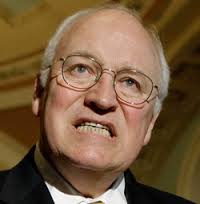
- Dick Cheney, Former Vice President. Mean and scary. One of the Beasts of the Apocalypse.
- Ann Coulter, Pundit. So vicious that she gets in the way of her own message. May be a transsexual.
- Ted Cruz (and his father Rafael Cruz), Senator (R-Texas). Deceptively smooth rightist ideologue.
- Newt Gingrich, Former Speaker of the House (R-Georgia). Smart enough to know better, but wants the right wing to win to protect his own shaky legacy.
- Louis Gohmert, Congressman (R-Texas). His crazy quotes liven many press stories.
- Sean Hannity, Fox News Pundit. Smarmy and fascistic.
- Wayne La Pierre, NRA Spokesman. Wants to arm everybody. A shill for the arms industry.
- Rush Limbaugh, Pundit. If you do the opposite of what he advocates, you’ll probably be okay.
- Bill O’Reilly, Fox News Pundit. Showers with falafel.
- Sarah Palin, Ex-Governor (R-Alaska) and Pundit. The only pundit I know who may be more stupid than her followers.
- Rand Paul, Senator (R-Kentucky). What happens when you mate a libertarian with a Brillo Pad ®?
- Pat Robertson, Televangelist. Probably can be forgiven for his advanced age, during which he has surprisingly not been struck by lightning once for his pronouncements.
- Antonin Scalia, Associate Justice U.S. Supreme Court. If there’s something evil that a judge can say, it’ll be Scalia saying it.
Let me quote Shakespeare’s Hamlet: “Let the doors be shut upon him that he may play the fool nowhere but in’s own house.”


You must be logged in to post a comment.