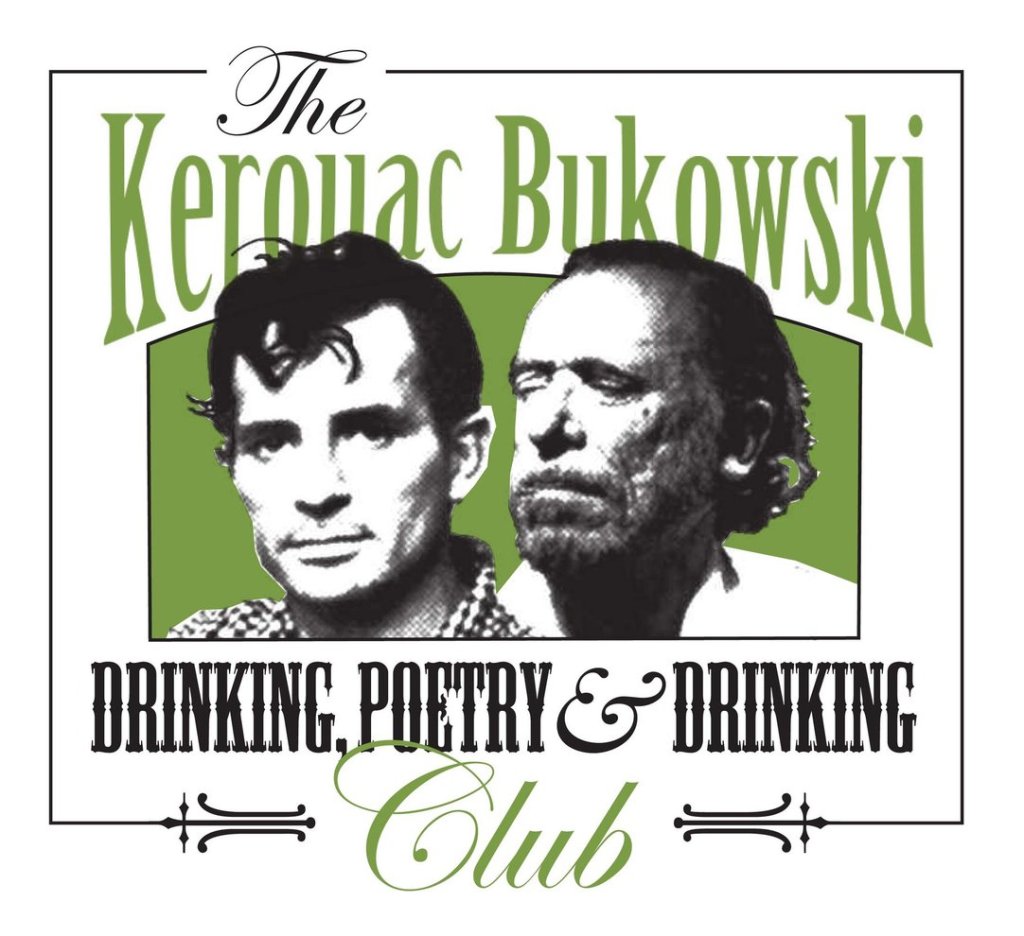
I encountered the following paragraph in Jean-François Duval’s Bukowski and the Beats: A Commentary on the Bet Generation:
It was Jack’[Kerouac’s] matinee idol looks that irritated Hank [Bukowski]. “He was even better looking than Marlon Brando,” Joyce Johnson, one of his girlfriends, said of him. As a good-looking rodeo rider and actor, Jack was too handsome to be “real,” authentic in the Bukowskian perspective (which was ever tinged with humor). Jack was lacking in ugliness that, according to Bukowski, allows a truer contact with the reality of the world more than beauty; ugliness is a safe conduct for hell and, as such, is infinitely closer to the truth. In fact, beauty is not even real to Buk’s eyes, beauty doesn’t make sense at all. As he said to [his friend] Sean Penn, “There is no such thing as beauty … it’s kind of a mirage of generalizations.” In Buk’s opinion, Kerouac seemed like a cheap Roy Rogers whose work gets lost in a swirl of glitter and illusions where the word “wonderful” crops up every three sentences. Jack went wrong in trying to go with “heart’s songs” and the illusions attached: hope of salvation on the road, faith in an idealized America, poetically fantasized, escape into an uncertain mysticism, oscillating between Buddhism and Catholicism. This was not Buk’s cup of tea at all.
Whoever ordered the tombstone for poet and counterpuncher Charles Bukowski knew what he (or she) was about. There is a two-word epitaph: “Don’t Try.” Below it is a silhouette drawing of a boxer with his gloves raised.
The poet’s grave is at Green Hills Memorial Park in San Pedro which I have passed scores of times 0on visits to my friend Peter who lives a couple miles further south. Maybe next town, I’ll stop by and pay my last respects.
On Bukowski.Net, there is an explanation by Bukowski’s wife Linda which sheds some light on he meant:
See those big volumes of books? [Points to bookshelf] They’re called Who’s Who In America. It’s everybody, artists, scientists, whatever. So he was in there and they asked him to do a little thing about the books he’s written and duh, duh, duh. At the very end they say, ‘Is there anything you want to say?’, you know, ‘What is your philosophy of life?’, and some people would write a huge long thing. A dissertation, and some people would just go on and on. And Hank just put, “Don’t try.”
I am reminded of Portuguese writer Fernando Pessoa in The Book of Disquiet, who sees life as a roadside inn where we all have to stay until the coach from the abyss pulls up:
Night will fall on us all and the coach will pull up. I enjoy the breeze I’m given and the soul I was given to enjoy it with, and I no longer question or seek. If what I write in the book of travellers can, when read by others at some future date, also entertain them on their journey, then fine. If they don’t read it, or are not entertained, that’s fine too.
In the days to come, I plan several more posts about Bukowski and what he means to me.
I am beginning to realize that what I admire most about the essays of Joan Didion is that they do not take a stand. They present both A and Not-A, B and Not-B, and C and Not-C. Take, for instance, the title essay in The White Album. There is a constant feeling of dread, yet Joan never takes the easy way out. Here, for example, she writes about Huey Newton of the Black Panthers:
I am telling you neither that Huey Newton killed John Frey nor that Huey Newton did not kill John Frey, for in the context of revolutionary politics Huey Newtons guilt or innocence was irrelevant. I am telling you only How Huey Newton happened to be in the Alameda County Jail, and why rallies were held in his name, demonstrations organized whenever he appeared in court.
There is also a description of a 1968 recording session by The Doors at which Jim Morrison was not initially present. When he arrived wearing his tight black vinyl pants, the scene was a discombobulated one:
The curious aspect of Morrison’s arrival was this: no one acknowledged it. Robby Krieger continued working out a guitar passage. John Densmore tuned his drums. Manzarek sat at the control console and twirled a corkscrew and let a girl rub his shoulders. The girl did not look at Morrison, although he was in her direct line of sight. An hour or so passed, and still no one had spoken to Morrison.
Didion does not say that Morrison was an inconsiderate dick: She presents the scene and lets you draw your own conclusions. Particularly revealing is a quote from a psychiatric evaluation of Didion in Santa Monica after she reported “an attack of vertigo, nausea, and a feeling that she was going to pass out.” The evaluation concluded:
Patient’s thematic productions on the Thematic Apperception Test emphasize her fundamentally pessimistic, fatalistic, and depressive view of the world around her. It is as though she feels deeply that all human effort is foredoomed to failure, a conviction which seems to push her further into a dependent, passive withdrawal. In her view she lives in a world of people moved by strange, conflicted, poorly comprehended, and, above all, devious motivations which commit them inevitably to conflict and failure….
In her place, we might all be tempted to put our thumbs on the scale, to introduce our own prejudices and draw a conclusion which may be no closer to the truth, but mainly revealing of our own misperceptions. I do find it odd that she would quote a lengthy psychiatric diagnosis of her sense of dread near the beginning of the essay, or anywhere within it for that matter.
Paul Theroux’s novel Under the Wave at Waimea (2021) looks at life through the eyes of an aging champion surfer whose life takes a turn for the worse after he runs over a drunk, homeless cyclist near his home on the North Shore of O’ahu.
Theroux describes his hero, Joe Sharkey:
Sharkey surfed every day, and every day tried something new—a turn, a cutback, swiveling on the face of a wave as though carving his signature on it, writing on water. It was not practice or preparation; it was a way of spending the day, easing the passage of time; a way of living his life, because he made the moves his own.
With the help of his girlfriend, Olivia, Joe seeks to change his luck by trying to find out more about his victim, whose body is still identified at the morgue in Honolulu. The result is a spiritual journey to understand his life and the life of the people affected by the accident.
I have always thought of surfing as a lightweight activity. In his book, Theroux manages to interweave Joe Sharkey’s life on the waves with an almost metaphysical understanding of what it all means:
Nothing was certain. Every wave had a hidden contour and something like a mystical muscle in it that could trip you: every succeeding wave had the capacity to hold you down and suffocate you to death. The world was a wave, a wave was pitiless.
With Under the Wave at Waimea, Paul Theroux has attained a level of mastery in the art of fiction that I long suspected he had the potential for, but have not hitherto seen in print—though he came close on occasion.
I am happy to give my highest recommendation to his Under the Wave at Waimea, certainly the best current American novel I have read since 2000.
Among my friends, I am known for the obscurity of my reading choices. In fact, I even split with one of my old friends because he thought most of my reading was not sufficiently dogmatic in a Marxist sense. Of course, he read about eight books a year, while I typically read somewhere between 150 and 160. Call me ugly, call me fat, call me vicious even—but don’t attack my reading choices.
Here are seven authors whose work I have read this year who are relatively unknown even to more literate readers, but they are all excellent writers. And several of them have won the Nobel Prize for Literature.
Ivo Andrić (1892-1975). Bosnian Serb.1921-1996) Nobel Prize. Most famous work: The Bridge on the Drina.
Nicolas Bouvier (1929-1998). Swiss. Travel writer. Most famous work: The Way of the World.
George Mackay Brown (1921-1996). Scottish from the Orkneys. Poet and fiction writer. Most famous work: Collected Poetry.
Patricia Highsmith (1921-1995). American. Mysteries. Most famous work: Strangers on a Train.
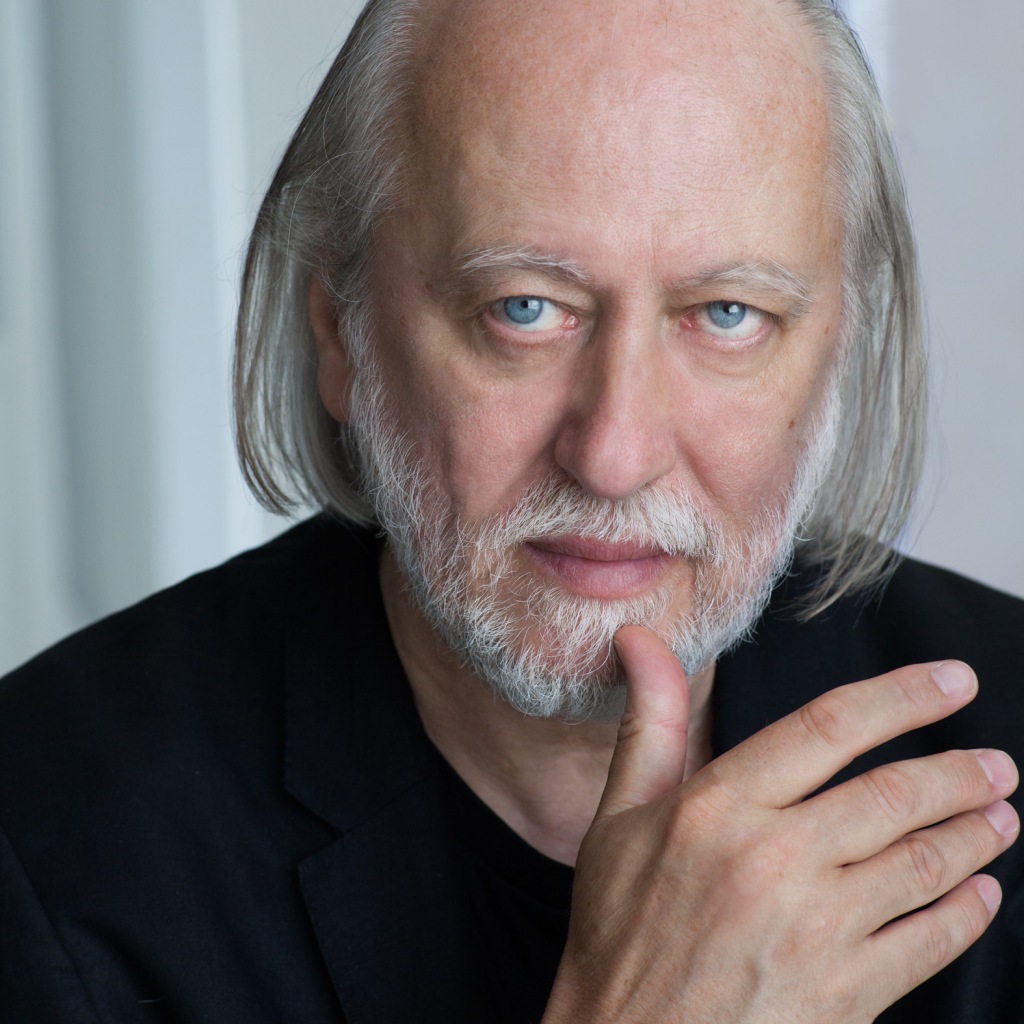
Lászlo Krasznahorkai (1954-Present). Hungarian. Novelist. Most famous work: The Melancholy of Resistance.
Patrick Modiano (1945-Present). French. Novelist. Nobel Prize. Most famous work: Pedigree.
Derek Walcott (1930-2017). Caribbean. Poet. Nobel Prize. Most famous work: Omeros.
If you recognize two or more of the above writers, you have my congratulations. I have read multiple works of five of the above. I plan to read more by Bouvier and Walcott in the coming six months.
The William Wallace Monument in Stirling, Scotland
Within walking distance of the great fortified mountain that is Stirling Castle sits a monument to William Wallace, Scotland’s great hero and self-taught military genius. It was at Stirling Bridge in 1297 that William Wallace led a force of around 5,500 men, with only 300 cavalry, against 9,000 men, with 2,000 cavalry led by Hugh Cressingham for Edward Longshanks, King of England.
It was Wallace’s unique skill that he knew how to read a battlefield and make the land help him win. It was only when he was forced to fight a typical large scale battle at Falkirk in 1298 that he lost. After that, things went downhill for the Scot, who was betrayed to Edward and executed in 1305 without an actual trial.
Wallace was the son of a knight, who was knighted by Robert the Bruce only after Stirling Bridge. As such, he was looked down upon by the Scottish nobility, many of whom were more comfortable speaking in Norman French than either English or Gaelic. What the nobles were after was not freedom for Scotland, but more power and more wealth for their families. Relative commoners like Wallace didn’t count.
I have just finished reading Nigel Tranter’s historical novel The Wallace, which was likely more accurate than the considerable mythmaking evident in the film Braveheart. I have visited the Wallace monument twice on my travels and was impressed for the monument’s rare tribute to a person not of noble blood—unthinkable in the Middle Ages.
Talk about history: Scotland has had it. Think about how much mythmaking occurred when the Confederacy surrendered at Appomattox Courthouse. Well, Scotland was put through the mill by Perfidious Albion (England) for upwards of a thousand years—and they’re still chafing under the collar.
I am currently reading Nigel Tranter’s The Wallace about William Wallace’s revolt against English rule under Edward Longshanks (alias Edward I Plantagenet). It brings Mel Gibson’s film Braveheart (1995), though it is a much more detailed work about Wallace’s battles at Stirling Bridge (1297) and Falkirk (1298). We get to see in greater detail the treacherousness of the Scottish nobles, who were mostly in it for themselves.
Nigel Tranter (1909-2007)
Over his long career, Nigel Tranter wrote prolifically—not only the historical novels for which he is famous, but a five-volume history of the fortified house (read: castle) in Scotland, children’s books, novels set in the present day, and even Westerns. There is very little of the vast pageant of Scottish history that Tranter did nottouch upon, from St. Columba and Kenneth MacAlpine and MacBeth to the present day.
To date, I have read about a score of his novels, hardly making a dent in his total opus. And not a single one of his books has been a stinker. I regard him as one of the best writers of historical novels who ever lived, and also the most vivid describer of battles throughout history. His description of Wallace’s victory at Stirling Bridge is so vivid that I didn’t feel that I needed a map to follow the action.
She was a gorgeous Texan from Fort Worth who just happened to be perhaps the best woman mystery novelist of all time. Graham Greene called her “The Poet of Apprehension.” Her novels and stories were unusually dark, beginning with her first novel, Strangers on a Train (1950), which was turned into a film by Alfred Hitchcock. Patricia Highsmith (1921-1995) was depressed and preferred relationships with women. Eventually, the depression dragged her down and destroyed her good looks.
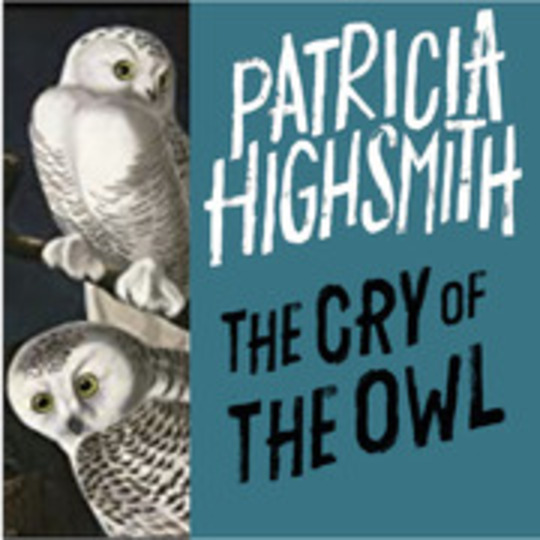
I have just finished reading her novel The Cry of the Owl (1962), one of her darkest novels. Robert, her hero, is a strange kind of asexual Peeping Tom who falls for a young woman by watching her prepare salads and entertain her boyfriend Greg. Things begin to develop dangerously when Jenny, the young woman, ends her relationship with Greg and begins to fall for Robert. There follow two murders, several attempted murders, a suicide, some incredibly sloppy police work, and encounters with the neighbors from hell.
When Greg teams up with Robert’s ex-wife Nickie, they both decide to make life difficult for Robert in every way possible, up to beating him up, wounding him, or killing him.
By the time I finished reading the novel about an hour ago, I began to understand that relationships can go bad at warp speed.
In addition to The Cry of the Owl, I have read the following Highsmith novels and collections, each of which I loved:
The Talented Mr. Ripley (1955)
A Game for the Living (1958)
A Suspension of Mercy (1965) – Released in the U.S. as The Story Teller
A Dog’s Ransom (1972)
Little Tales of Misogyny (1975)
The Black House (1981)
Fortunately, Highsmith was a fairly prolific writer, and I have only just begun to scratch the surface of her work.
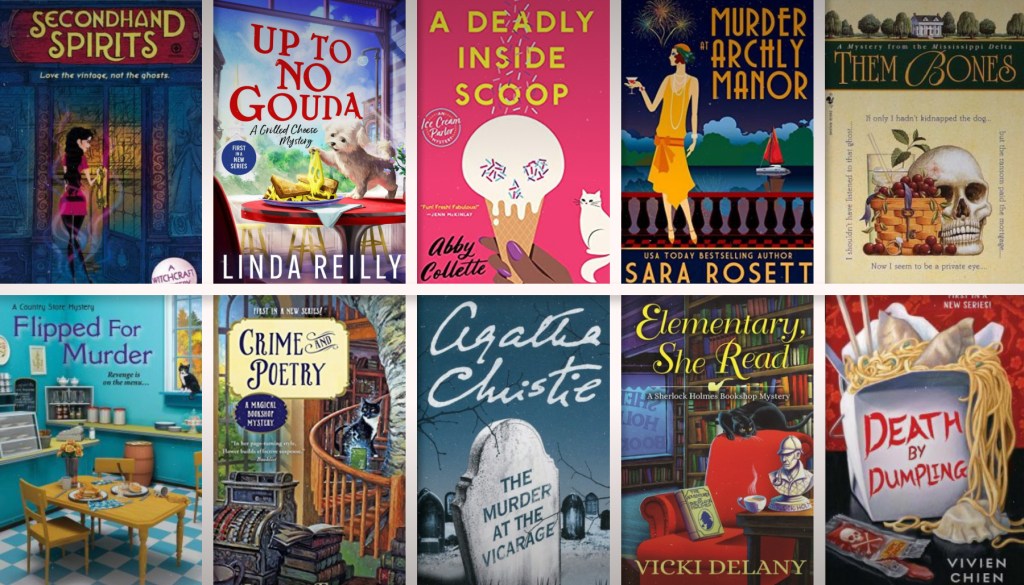
On my occasional visits to the few bookstores that remain, I have become conscious that some dealers have split mysteries into two categories:
The traditional hard police procedurals and noir works
“Cozy mysteries”
What? If they find a cadaver in a “cozy mystery,” does it not smell? Does it look nice rather than ghastly? One thing for sure, it tends to be either British or it imitates British mysteries. I am not implying that all British mysteries are “cozy,” because they aren’t. Take the works of Ian Rankin and P. D. James—which are anything but “cozy.”
I suspect that the sub-genre is meant to appeal mostly to women readers who like tales emphasizing ratiocination (as Poe called it) rather than being exposed to any form of unpleasantness. (Curiously, Dorothy Sayers’s excellent The Unpleasantness at the Bellona Club verges on “cozy” at times.)
Unpleasantness doesn’t bother me. I just finished reading Charles Willeford’s The Way We Die Now with its bloody murder of two Floridian backwoods baddies, and I found it rather soothing in a strange way.
Avoiding all unpleasantness, however, would bother me. I have always felt that whatever we most studiously avoid winds up biting us in the ass.
The following is one of the short short stories from Barry Gifford’s Sad Stories of the Death of Kings. It was one of the best stories in the book, and I thought at once of sharing it with you. The first paragraph is a scene from the movie Lost Horizon.
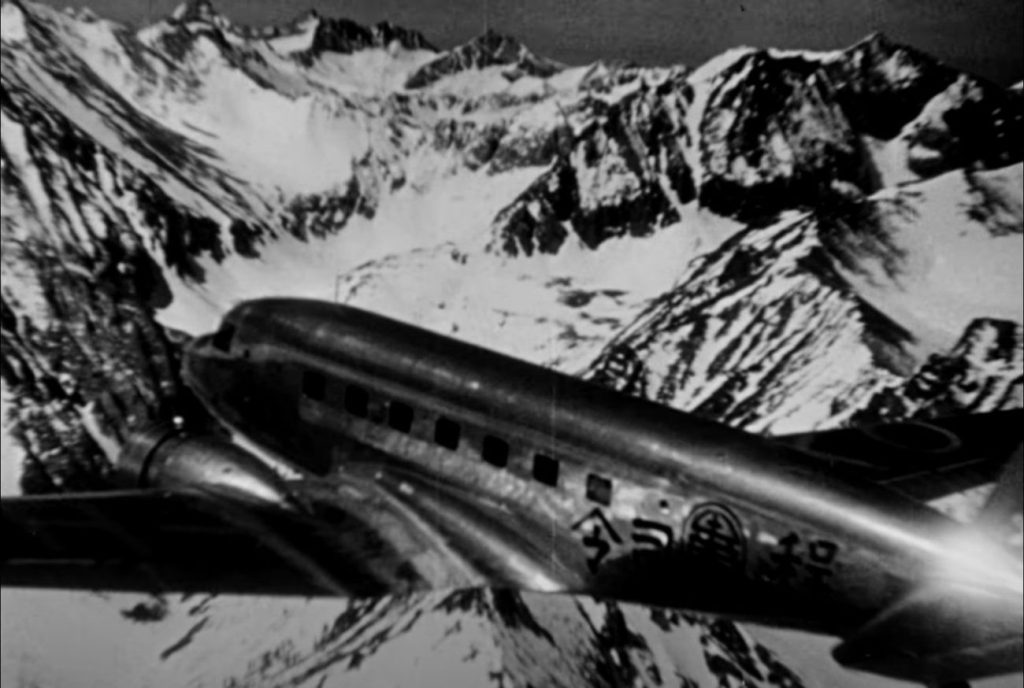
The little plane was barely visible through dense night fog as it sat on the ground. Then the engine turned over and the single propeller started to rotate, scattering mist as the plane nudged forward, feeling its way toward the runway. Chinese soldiers suddenly burst out of the airport terminal and began firing their rifles furiously in an attempt to prevent the plane from taking off. Tiny lights from the aircraft’s cabin winked weakly from within its whitish shroud while the plane taxied, desperately attempting to gather speed sufficient for takeoff. The soldiers stood confused, firing blindly and futilely until the aircraft lifted into blackness and escape.
Roy fell asleep after watching this opening scene of the film Lost Horizon. He liked to watch old movies late at night and in the early morning hours, even though he had to be up by 7:00 a.m. in order to be at school by eight. On this particular night, Roy dreamed about four boys his age, fourteen, in Africa, who discover a large crocodile bound by rope to a board hidden in bushes, abandoned by the side of a dusty dirt road. A stout stick was placed vertically in the crocodile’s mouth between its upper and lower jaws in order to keep the mouth open as widely as possible and prevent its jaws from snapping shut.
The crocodile could not move or bite, so the boys decided to drag it by the tail end of the board to a nearby river and release it. As they approached the river’s edge, it began raining hard and the ground suddenly became mushy and very slippery. To free the crocodile, they placed the board so that the croc’s head faced the river. One of the boys tore a long, sinewy vine from a plant and cautiously wound it around the stick. Another boy had a knife and prepared to cut the rope. The other two boys kept a safe distance. The boy with the knife sliced the rope in two at the same time the other boy tugged forcefully at one end of the vine, pulling out the stick. The crocodile did not immediately move or close its enormous mouth. The boys stood well away from it, watching. After a few moments, the crocodile hissed loudly and slowly slithered off the board and wobbled to the water’s edge, slid into the dark river and disappeared from view. The boys ran off as the downpour continued.
When Roy woke up, it was a few minutes before seven. He turned off the alarm before it could ring and thought both about the plane fleeing Chungking and the African boys rescuing the crocodile. What was the difference, he wondered, between waking life and dream life? Which, if any, was more valid or real? Roy could not make a clear distinction between the two. He decided then that both were of equal value, two-thirds of human consciousness, the third part being imagination. The last plane from Chungking took off with Roy aboard, bound for the land of dreams. What happened there only he could imagine.





 Tarnmoor
You must be logged in to post a comment.