Arts & Crafts

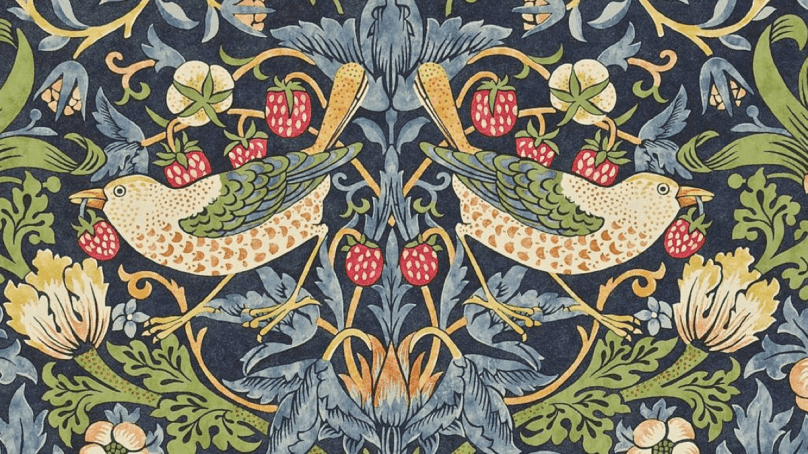
This evening, I was watching a local newscast on television that made an interesting observation. It regarded arts and crafts as a single thing. It showed young people busily at work in San Pedro at an old army base creating what I see as crafts only. Many of the objects created were interesting. Some were pseudo-random pieces of garbage. Nothing approached the status of what I consider to be art.

It’s like putting an article in Cosmopolitan or a wood carving of an American Indian at the same level as a poem by Emily Dickinson or a novel by Honoré de Balzac or a painting by Rembrandt.

Mind you, crafts are great for making children and teens busy and keeping them out of trouble. They’re great for adult hobbyists who want to create something with their own hands. But they are not an acceptable substitute for high art.

What is happening throughout America is an unwillingness to engage with high art because it is “difficult.” People seem to be less willing to read James Joyce or study a painting by David Hockney or a poem by John Donne. And the older the art is, the more that people shy away from it.

In my own life, I try to engage with difficult art. Why? Because it is more rewarding. I just finished reading a postmodern novel by Hungarian writer László Krasznahorkai, who won the Nobel Prize for Literature in 2025. In his early book The Melancholy of Resistance (1989), each chapter is a single paragraph. The point of view changes with each chapter, and the work is set in a Hungary around the time of the fall of the Communist regime, during which many writers anticipated mass social disruptions.

Each month, I attempt to read at least one difficult book to keep my hand in the game. Also, I love visiting the Getty Center and allowing myself to be challenged by the art on display. It’s worth all the trouble.
Ever-Spreading Chaos

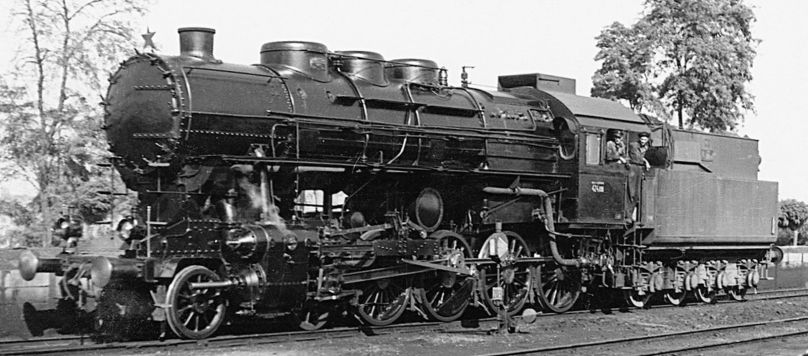
Hungarian State Railways (MÁV) 4-2-4 Steam Locomotive

In Lászlo Krasznahorkai’s great 1989 novel The Melancholy of Resistance, a scheduled train that never shows up throws waiting passengers into a tizzy. A Hungarian novelist, Krasznahorkai is the winner of the Nobel Prize for Literature (2025), the International Booker Prize, and numerous other international literary accolades. Here is a selection from the first page of George Szirtés’s excellent translation of the novel.

To tell the truth, none of this really surprised anyone any more since rail travel, like everything else, was subject to the prevailing conditions: all normal expectations went by the board and one’s daily habits were disrupted by a sense of ever-spreading all-consuming chaos which rendered the future unpredictable, the past unrecallable and ordinary life so haphazard that people simply assumed that whatever could be imagined might come to pass, that if there were only one door in a building it would no longer open, that wheat would grow head downwards into the earth not out of it, and that, since one could only note the symptoms of disintegration, the reasons for it remaining unfathomable and inconceivable, there was nothing anyone could do except to get a tenacious grip on anything that was still tangible; which is precisely what people at the village station continued to do when, in hope of taking possession of the essentially limited seating to which they were entitled*, they stormed the carriage doors, which being frozen up proved very difficult to open.

  • Earlier in the paragraph: “[T]he only two serviceable old wooden-seated coaches maintained for just such an ‘emergency’ were coupled to an obsolete and unreliable 424, used only as a last resort.”

Have You Read These 7 Authors?

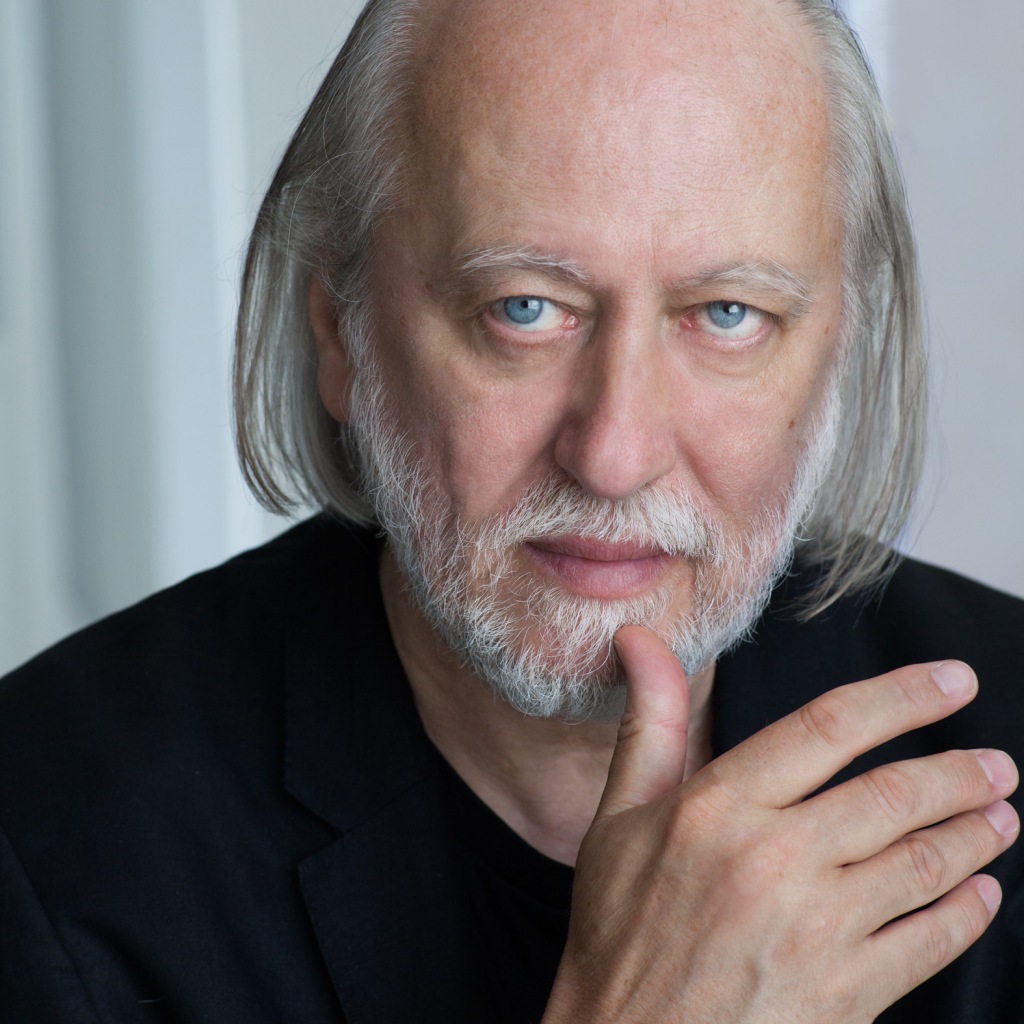
Lászlo Krasznahorkai (1954-Present)

Among my friends, I am known for the obscurity of my reading choices. In fact, I even split with one of my old friends because he thought most of my reading was not sufficiently dogmatic in a Marxist sense. Of course, he read about eight books a year, while I typically read somewhere between 150 and 160. Call me ugly, call me fat, call me vicious even—but don’t attack my reading choices.

Here are seven authors whose work I have read this year who are relatively unknown even to more literate readers, but they are all excellent writers. And several of them have won the Nobel Prize for Literature.

  • Ivo Andrić (1892-1975). Bosnian Serb.1921-1996) Nobel Prize. Most famous work: The Bridge on the Drina.
  • Nicolas Bouvier (1929-1998). Swiss. Travel writer. Most famous work: The Way of the World.
  • George Mackay Brown (1921-1996). Scottish from the Orkneys. Poet and fiction writer. Most famous work: Collected Poetry.
  • Patricia Highsmith (1921-1995). American. Mysteries. Most famous work: Strangers on a Train.
  • Lászlo Krasznahorkai (1954-Present). Hungarian. Novelist. Most famous work: The Melancholy of Resistance.
  • Patrick Modiano (1945-Present). French. Novelist. Nobel Prize. Most famous work: Pedigree.
  • Derek Walcott (1930-2017). Caribbean. Poet. Nobel Prize. Most famous work: Omeros.

If you recognize two or more of the above writers, you have my congratulations. I have read multiple works of five of the above. I plan to read more by Bouvier and Walcott in the coming six months.