Life Is Different for Him

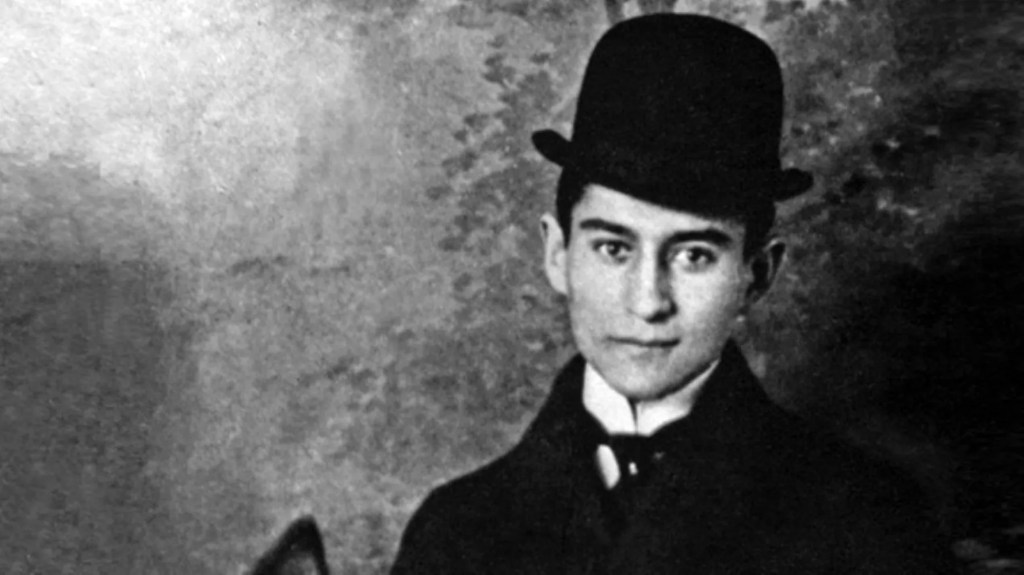
The woman in the above photograph is Milena Jesenská, with whom Franz Kafka carried on a torrid correspondence in 1920. Although she was a married woman (albeit unhappily), Kafka was strongly drawn to her. The relationship, such as it was, petered out when Milena did not want to run away from her marriage. Milena herself was a writer, and in a letter to Max Brod written in August 1920, provides a riveting description of Kafka. She was to live on for another twenty years, dying in 1944 in Ravensbrück Concentration Camp.

Life for him is something entirely different than for all other human beings; in particular, things like money, the stock market, currency exchange, a typewriter are utterly mystical to him (and they really are, too; just not for the rest of us), they are the strangest riddles to him, and his approach to them is completely different than our own. Can his office work be considered the customary performance of a service? Any official position, including his own, is something very puzzling to him, very admirable, like a locomotive is for a small child. He doesn’t understand the simplest things in the world. Were you ever in a post office with him? After he composes a telegram and picks out whatever little counter he likes best, shaking his head, he then drifts from one counter to another, without the slightest idea to what end or why, until he finally stumbles on the right one, and when he pays and receives change, he counts it and discovers one krone too many, and so gives one back to the girl behind the counter. Then he walks away slowly, counts once again, and in the middle of descending the last staircase he realizes that the missing krone belonged to him after all. So there you stand next to him, at a loss, while he shifts his weight from one foot to the other, wondering what to do. Going back is difficult; upstairs there’s a crowd of people pushing and shoving. “So just let it go,” I say. He looks at me completely horrified. How can you let it go? Not that he’s sorry about the krone. But it’s not good. There’s one krone missing. How can you forget about something like that? He spoke about it for a long time, and was very dissatisfied with me.
And this repeated itself with different variations in every shop, in every restaurant, in front of every beggar. Once he gave a beggar a two-krone piece and wanted one back. She said she didn’t have anything. We stood there for a good two minutes, thinking about how to deal with the matter. Then it occurred to him that he could leave the two krone. But no sooner had he taken a few steps when he started getting very cross. Of course this same man would be eager and extremely happy to give me twenty thousand krone with no questions asked. On the other hand, if I were to ask him for twenty thousand and one krone and we had to change money somewhere and didn’t know where, he would seriously consider what to do with the one krone I hadn’t been allotted. His anxiety in the face of money is almost the same as his anxiety in the face of women. Or his fear of things official. Once I telegraphed him, phoned him, wrote him, begged him in God’s name to come see me for a day. I really needed it at the time. I cursed him to high heaven. He didn’t sleep for nights, tormented himself, wrote letters full of self-destruction, but he did not come. Why? He couldn’t ask for leave. He was unable to ask the director, the same director he admires in the depths of his soul (seriously!) for being able to type so quickly—he wasn’t able to tell the director he was going to see me. And as for saying something else—another horrified letter—how could he? Lie? Lie to the director? Impossible…..

No, this world is and remains a riddle to him.

It is a pity that Milena’s letters to Kafka no longer exist. Because she was still uncertain about divorcing her husband, when Franz died in 1924, she had her letters destroyed so that they would not provide incriminating evidence. In her own way, she was a major Czech literary figure.

Embattled Young Victorian Women

There is something so fragile about young Victorian women. Partially, this was because they could not really own property: If they were married, their husbands had full control. According to Bartleby.Com:

The property rights of women during most of the nineteenth century were dependent upon their marital status. Once women married, their property rights were governed by English common law, which required that the property women took into a marriage, or acquired subsequently, be legally absorbed by their husbands. Furthermore, married women could not make wills or dispose of any property without their husbands’ consent. Marital separation, whether initiated by the husband or wife, usually left the women economically destitute, as the law offered them no rights to marital property.

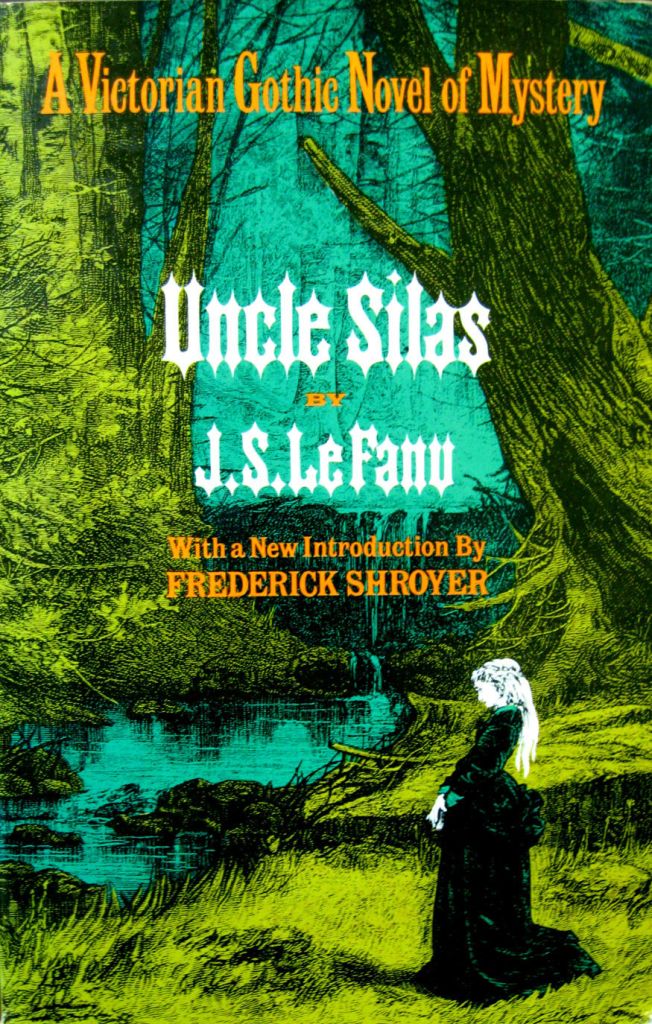
I have just finished reading J. Sheridan Le Fanu’s Uncle Silas: A Tale of Bartram-Haugh (1864), a brooding mystery about a young English heiress named Maud Ruthyn who is hemmed in by the incompetence of her guardians and the villainy of people trusted by their guardians who strive to take advantage of her.

Looking back on English novels of the Victorian era, I find many novels on this theme. Think of Jane Eyre, Bleak House, The Mysteries of Udolpho, and Agney Grey. It made me realize that it took a long time for society to protect the rights of women. Even today, many existing societies fail in this regard.

In those novels, the only prospect young women could look forward to other than marriage with a loving and rich husband is a dead-end job as a governess, seamstress, laundress, or some other poorly paying “-ess.”

Thou Foster-Child of Silence and Slow Time

Irish Writer J. Sheridan LeFanu (1814-1873)

He is probably most famous for his ghost stories. His Carmilla (1872) was a Lesbian vampire tale that inspired Bram Stoker’s Dracula and was turned into a Roger Vadim film called Blood and Roses (1960). His stories were an unusual mixture of horror, mystery, and historical fiction. After putting it off for decades, I am finally reading his Uncle Silas: A Tale of Bartram-Haugh (1864) and am enjoying immensely.

The title of this post comes from John Keats’s “Ode on a Grecian Urn”:

Thou still unravish'd bride of quietness,
       Thou foster-child of silence and slow time,
Sylvan historian, who canst thus express
       A flowery tale more sweetly than our rhyme:
What leaf-fring'd legend haunts about thy shape
       Of deities or mortals, or of both,
               In Tempe or the dales of Arcady?
       What men or gods are these? What maidens loth?
What mad pursuit? What struggle to escape?
               What pipes and timbrels? What wild ecstasy?

There is something eminently satisfying about reading a long nineteenth century novel. It calls for reserves of patience, but rewards with insights similar to those of the Grecian urn about which Keats writes. That is particularly true of novels from the British Isles, where the prose at times approaches the realm of poetry:

See how a sleepy child will put off the inevitable departure for bed. The little creature’s eyes blink and stare, and it needs constant jogging to prevent his nodding off into the slumber which nature craves. His waking is a pain; he is quite worn out, and peevish, and stupid, and yet he implores a respite, and deprecates repose, and vows he is not sleepy, even to the moment when his mother takes him in her arms, and carries him, in a sweet slumber, to the nursery. So it is with us old children of earth and the great sleep of death, and nature our kind mother. Just so reluctantly we part with consciousness, the picture is, even to the last, so interesting; the bird in the hand, though sick and moulting, so inestimably better than all the brilliant tenants of the bush. We sit up, yawning, and blinking, and stupid, the whole scene swimming before us, and the stories and music humming off into the sound of distant winds and waters. It is not time yet; we are not fatigued; we are good for another hour still, and so protesting against bed, we falter and drop into the dreamless sleep which nature assigns to fatigue and satiety.

I am presently 70% of the way through Uncle Silas and look forward to finishing the book tomorrow, come hell or high water. If you are interested in exploring LeFanu’s work, the following editions were issued by Dover Publications and may still be found from used book dealers (I recommend http://www.abebooks.com):

  • Best Ghost Stories of J. S. LeFanu
  • Green Tea and Other Ghost Stories
  • Ghost Stories and Mysteries
  • Wylder’s Hand
  • Uncle Silas: A Tale of Bartram-Haugh
  • The Wyvern Mystery

It is my opinion that LeFanu is a sadly neglected writer who, over time, will come into his own.

English Lit—East

Many people are unaware of the fact that some of the best English literature of the last hundred years or so comes from India. The subcontinent has some 22 officially recognized languages and dialects spoken within its borders. Most people know about Hindi, but what about Assamese, Bengali, Bodo, Dogri, Gujarati, Kannada, Kashmiri, Konkani, Maithili, Malayalam, Marathi, Meitel, Nepali, Odia, Punjabi, Sanskrit, Santali, Sindhi, Tamil, Telugu, and Urdu? Actually, what binds all the various peoples of India together is, believe it or not, the English language, a holdover from British colonial days.

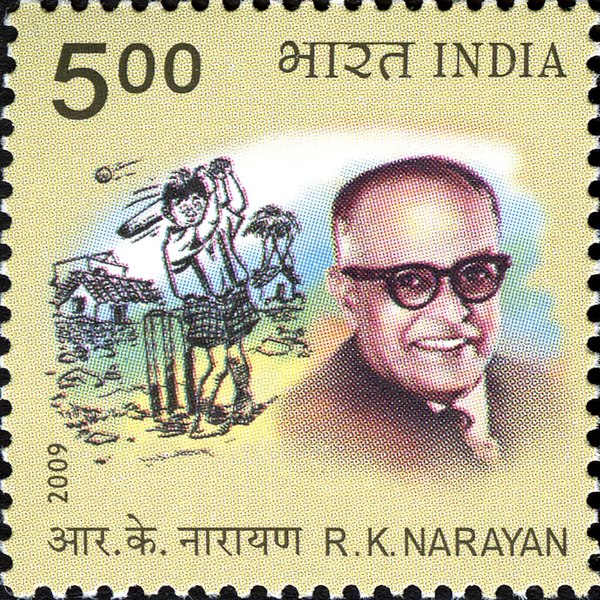
In this post, I will mention two writers whom I have read over the years with great pleasure. First, there is Rasipuram Krishnaswami Iyer Narayanaswami, better known as R K Narayan (1906-2001).

Narayan was brought to the attention of the English-speaking world by none other than Graham Greene. Like William Faulkner with his Yoknapatawpha County, Narayan created a fictional town in Tamil Nadhu called Malgudi and wrote numerous novels and short stories about the people who live there. My favorites among his novels are Swami and Friends (1935), The Financial Expert (1952), The Guide (1958), The Man-Eater of Malgudi (1961), and The Vendor of Sweets (1967).

Another excellent Indian writer writing in English is Anita Desai (born 1937), who currently teaches at MIT in Cambridge, Massachusetts.

Several times, Desai has been shortlisted for the Booker Prize. Among my favorites of her novels are Clear Light of Day (1980), Baumgartner’s Bombay (1988), Fasting Feasting (1999), and The Artist of Disappearance (2011).

There are others I can name, but I have not read as many works by them as I have from Narayan and Desai. If you are interested in the many worlds of India, I heartily recommend that you give them a try.

A Warning to Urbanites

William S. Burroughs (1914-1997)

Writing in 1959, the Old Junkie had a vision of Trump’s America. The following passages are from William S. Burroughs’s Naked Lunch:

The Old Court House is located in the town of Pigeon Hole outside the urban zone. The inhabitants of this town and the surrounding area of swamps and heavy timber are people of such great stupidity and such barbarous practices that the Administration has seen fit to quarantine them in a reservation surrounded by a radioactive wall of iron bricks. In retaliation the citizens of Pigeon Hole plaster their town with signs: “Urbanite Don’t Let The Sun Set On You Here,” an unnecessary injunction, since nothing but urgent business would take any urbanite to Pigeon Hole.

Americans have a special horror of giving up control, of letting things happen in their own way without interference. They would like to jump down in their stomachs and digest the food and shovel the shit out.

Bounced Czech

Czech Writer Bohumil Hrabal (1914-1997)

Typically, it takes me a while to really get warmed up to what I consider a great author. For Bohumil Hrabal, I read a couple of short story collections (Mr Kafka and Other Tales from the Time of the Cult and Dancing Lessons for the Advanced in Age) before I read two novels that blew me away: I Served the King of England and now The Little Town Where Time Stood Still.

Now I myself am ¼ Czech, though I never met my Czech grandfather; so I am very comfortable with the world portrayed by Eastern European fiction. In The Little Town Where Time Stood Still, there is a long scene about butchering pork that recalls my childhood in a Hungarian neighborhood in Cleveland. The scene is almost a threnody to the rich Czech and Hungarian pork-based cuisines.

In fact, the book is a lament for Eastern European small-town life which was largely destroyed by Communism. For this, Hrabal suffered years of censorship. It was only with the Velvet Revolution that brought Jaroslav Hašek into power that he really came into his own.

I cannot read his books without emotion: As a cultural Hungarian, I find tears forming in my eyes when Hrabal reminds me of my own origins or such things as the worship of Emperor Franz Joseph I (or Ferenc Jozsef, as we called him in Magyar).

In the months to come, I plan to read as much of Hrabal as I can find in English translation. Although I am part Czech, I cannot speak the language.

Space Aliens

Space Aliens at the Roswell, NM, UFO Museum

Let’s face it: Real space aliens—if they exist and they probably do—are probably nothing like this. We have gotten used to these skinny attenuated bipedal creatures who look vaguely humanoid. Life can take many possible forms, especially on planets that are significantly different from Earth.

I have just finished reading a book by Stanisław Lem called The Invincible. I have long thought that the best sci-fi comes from Eastern Europe, particularly Poland and Russia. In the West, we tend to think too much along the same lines; but novels from writers like Lem and the Strugatsky brothers give us a whiff of the alien that is not necessarily tied down to traditional forms.

My Edition of Lem’s The Invincible

For another look at what might be out there, I strongly recommend you read Boris and Arkady Strugatsky’s Roadside Picnic, and see the great film that was based on it: Andrei Tarkovsky’s Stalker (1982).

Sci-fi that tries to imagine the really alien can be a little frightening, but it can be great!

Vikings

Vikings: They Did a Lot More Than Loot and Pillage

They were the bad boys of early Medieval Europe. From the pulpits of all of Europe and even farther came the prayer “A furore Normannorum libera nos, Domine”—“From the fury of the Norsemen, O Lord deliver us.” Sailing out of Scandinavia, they occupied large parts of Britain, Ireland, France (surely you’ve heard of Normandy), Ukraine, Russia, and Italy. They formed an elite regiment in Constantinople, where they were called the Varangian Guard.

They just happened to be the first Europeans to set foot in the Americas some half a millennium before Columbus sailed the ocean blue. They had a settlement at L’Anse aux Meadows in Newfoundland, which they abandoned only after constant warfare with the Skrælings (Indians).

We call them Vikings, but for them the word was a verb, not a noun. Most of the dread Norsemen raiders were farmers who would “go viking” when their short growing season was over. They were, in effect, part time terrorists.

Also, they just happened to create a great literature in the sagas, particularly those created in Iceland in the 13th century. They included such works as:

  • Njúls Saga,, the greatest of them all, about revenge that gets out of hand
  • Egils Saga, about the bard Egil Skallagrímsson
  • Laxdæla Saga, with its female heroine Guðrun
  • Eyrbiggja Saga, with its berserkers (yes, they actually existed)
  • Grettirs Saga, about a famous outlaw warrior

These were probably the best works of literature to come out of Europe in the period in which they were written. They are all available in excellent translations from Penguin Books.

Incidentally, as a French woman of Norman heritage, my Martine is herself a Viking.

Two Englishmen in 1930s Mexico

Mexican Family ca 1930

Two writers who influenced my travels in Mexico are Aldous Huxley, who wrote Beyond the Mexique Bay in 1934, and Graham Greene, who wrote The Lawless Roads in 1939. Both writers were there during a rough time. The Mexican Revolution was theoretically over in 1920, but there were not only widespread disturbances, but there were not, as there are today, a safe system of intercity roads. Plus Huxley spent most of his book on his travels in Guatemala and Honduras.

Greene’s book was my guide to a trip my brother and I took to Mexico in 1979. We flew to Mexico City and transferred to a flight to Villahermosa, which at the time impressed me as the armpit of the republic. Greene then then made his way to the Maya ruins at Palenque. From there to San Cristóbal de las Casas was lengthy journey over the Sierra Madre on muleback. For Dan and me, it was an all-day journey by second class bus during which we passed a bus from the same company (Lacandonia) that had run off the road and encountered an army inspection just outside of Ocosingo. From there we visited Oaxaca and rode an all-night bus back to the Mexico City airport.

Old Penguin Cover for The Lawless Roads

Greene had considerably worse experiences during his trip over forty years earlier. In the middle of his journey, he broke his glasses:

Just short of our destination a sudden blast of wind caught my helmet and the noise of cracking cardboard as I saved it scared the mule. It took fright and in the short furious gallop which followed I lost my only glasses. I mention this because strained eyes may have been one cause for my growing depression, the almost pathological hatred I began to feel for Mexico. Indeed, when I try to think back to those days, they lie under the entrancing light of chance encounters, small endurances, unfamiliarity, and I cannot remember why at the time they seemed so grim and hopeless.

Why the author went to Mexico with a single pair of glasses is a mystery to me. Fortunately, I never felt any pathological hatred for Mexico, based on the many subsequent journeys I took there.

The Edition of Huxley’s Book That I Own

I have also been to most of the places that Aldous Huxley described in Beyond the Mexique Bay during my trip to Guatemala and Honduras in 2019. Unlike Greene who saw only the Maya ruins at Palenque, Huxley traveled to Copán in Honduras and Quirigua in Guatemala.

Like Greene, Huxley also had a problem with the people of Central America. At one point, he lets it all hang out: “Frankly, try how I may, I cannot very much like primitive people. They make me feel uncomfortable. ‘La bêtise n’est pas mon fort.’” The French expression could be translated thus: Stupidity isn’t my strong point.

These two civilized and (perhaps) sticky Englishmen did manage to write interesting books which engaged my interest through multiple readings over a period of more than four decades.

Now why would you want to read books written almost a century ago when there are more current books on the subject? My answer is a simple one: The best recent books were written with a knowledge of what went before. And when it comes to Mexico, one could easily go back to the books of John Lloyd Stephens written in the 1840s. (In fact, I will do just that in a follow-up post.)

The Author Foresees His Death

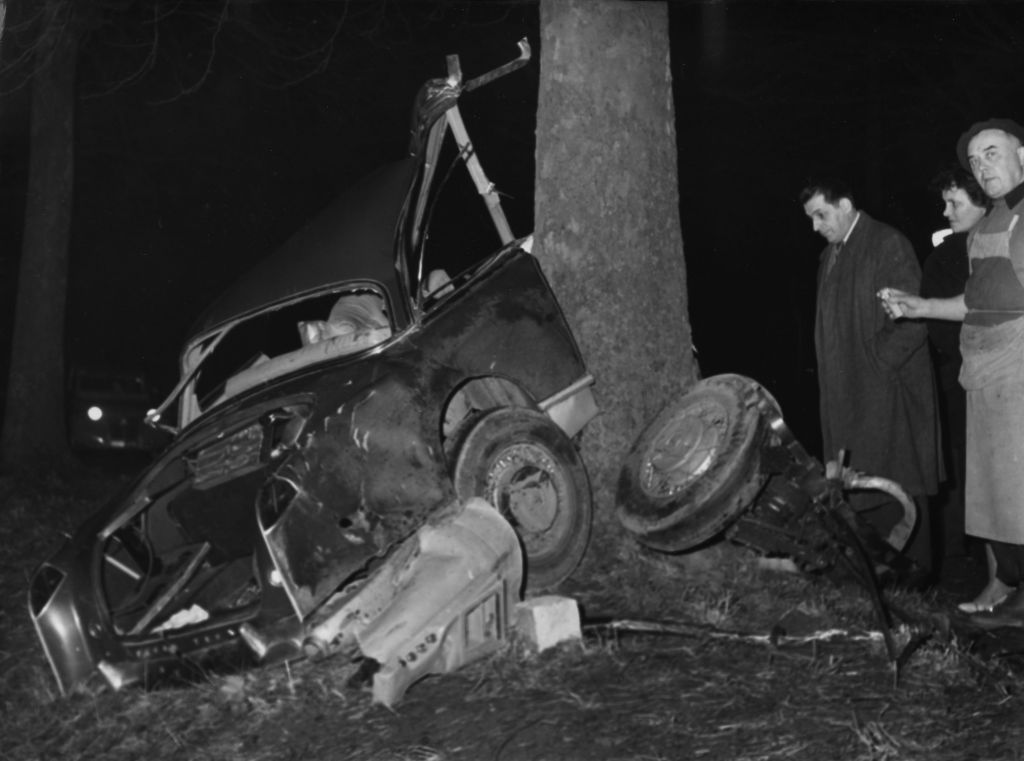
The Car Crash That Killed Albert Camus on January 4, 1960

Months before his death in an auto accident, Albert Camus wrote in his notebook words that prefigured how he was to end his life:

I don’t sleep all night, fall asleep at 3 AM, wake up at 5 AM, eat a lot, and, beneath the rain, take to the road. I don’t leave the steering wheel for eleven hours—nibbling a biscuit from time to time—and the rain doesn’t leave me either until I reach the Drôme where it lets up a bit over the heights of Nyons so that the scent of lavender comes to me, awakens me, and enlivens my heart.

Ryan Bloom, the editor of the last volume of his Notebooks, sets up the scene:

Struggling with his writing, Camus sent a letter to Catherine Sellers in which he wrote: “To work, one must deprive oneself, and die without aid. So let’s die, because I don’t want to live without working….” On December 30 he wrote a line to Maria Casarès regarding his return to Paris, which, had the line been written in one of his novels, would certainly have seemed to stretch believability: “Let’s say [Tuesday] in principle, taking into account surprises on the road….”

And it was on the road, five days after these words were written—January 4, 1960—that the dashboard clock of Michel Gallimard’s 1959 Facel Vega HK 500 stopped ticking at 1:55 PM. The clock lay in a nearby field. Fragments of the wreckage spread almost 500 feet. A tire sat alone on the scarred cement. Drizzle dotted the road. A black leather valise lay in the mud, tossed next to the tree around which the car was wrapped.

And so died one of the greatest minds of the Twentieth Century.