Anglo Saxon Attitudes

Originally, the Phrase Comes from Through the Looking Glass

Originally, the Phrase Comes from Through the Looking Glass

The following scrap of dialogue appears in Lewis Carroll’s Through the Looking Glass:

All this was lost on Alice, who was still looking intently along the road, shading her eyes with one hand. ‘I see somebody now!’ she exclaimed at last. ‘But he’s coming very slowly—and what curious attitudes he goes into!’ (For the messenger kept skipping up and down, and wriggling like an eel, as he came along, with his great hands spread out like fans on each side.)

‘Not at all,’ said the King. ‘He’s an Anglo-Saxon Messenger—and those are Anglo-Saxon attitudes. He only does them when he’s happy. His name is Haigha.’ (He pronounced it so as to rhyme with ‘mayor.’)

Angus Wilson wrote a famous satirical novel by the name of Anglo-Saxon Attitudes back in 1956, but I am going to put a slightly different spin on the phrase. I am somewhat surprised that most Americans only read books originally written in English. My late friend Norman Witty was one such: The only exception was for some books written in French, and then he would only read them in French.

There is an Italian phrase—“traddutore, traditore”—whose meaning is that translators are all traitors. I don’t believe that. Some translators are notoriously inept, but they usually get hammered in the reviews. I remember one such translator of Proust’s Within a Budding Grove, the second volume of his In Search of Lost Time, which was translated by James Grieve into In the Shadow of Young Girls in Flower. A reviewer for the Times Literary Supplement suggested that one go back to C. K. Scott-Moncrieff’s somewhat prissy rendering which is nearing its centenary.

In my time, I have read many archaic translations, such as Constance Garnett’s of the novels of Dostoyevsky, Ellen Marriage’s of Balzac’s The Human Comedy, and even the dreadful Peter Anthony Motteux translation of Cervantes, which dates back to 1712. It didn’t matter that much. Even a bad translation will help one to appreciate the greatness of Dostoyevsky, Balzac, Cervantes—or anyone else for that matter. There are probably some old chestnuts around that are truly terrible, such as the Portuguese-English phrasebook that Mark Twain published because of its frequent howlers.

Now what I mean by Anglo Saxon Attitudes is a kind of linguistic provincialism, that eschews works from other countries because they were not written in English. I will grant you that English and American literature are remarkably wide, but so is that of other countries. My life would have been relatively impoverished if I had not read the works of Jorge Luis Borges, Euripides, the Icelandic sagas, Gyula Krúdy (a fellow Hungarian), Orhan Pamuk, Mo Yan, Kobo Abe, Stanislaw Lem, Boris and Arkady Strugatsky, Honoré de Balzac, Jorge Amado, or Fernando Pessoa. I suspect that approximately half the books I read were translated from other languages. So I didn’t get the same from them as a native speaker of the original languages, but I venture I got at least 75%, and that 75% has meant—literally—the world to me.
Tarnmoor’s ABCs: G. K. Chesterton

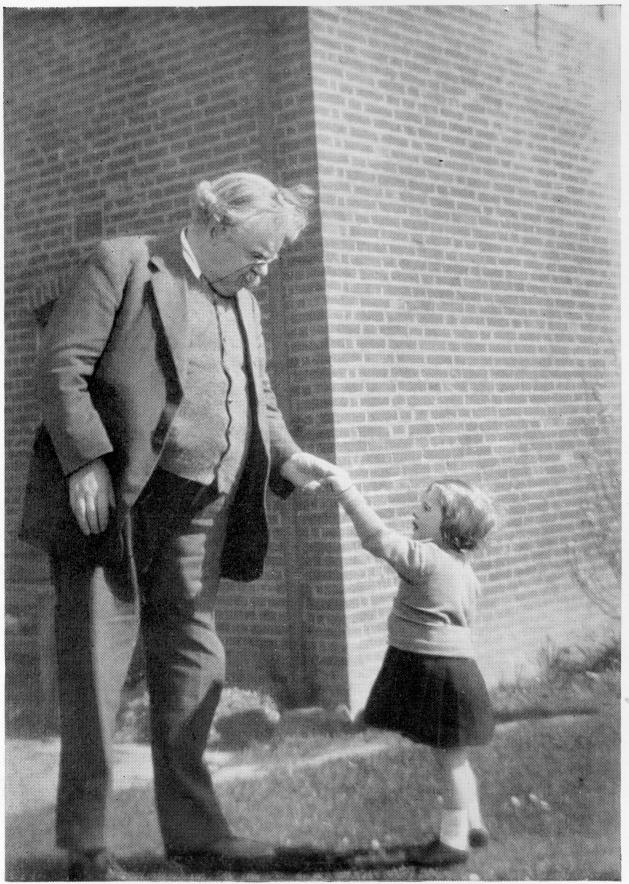
Chesterton with Admirer

Chesterton with Admirer

I was so very impressed by Czeslaw Milosz’s book Milosz’s ABC’s. There, in the form of a brief and alphabetically-ordered personal encyclopedia, was the story of the life of a Nobel Prize winning poet, of the people, places, and things that meant the most to him. Because his origins were so far away (Lithuania and Poland) and so long ago (1920s and 1930s), there were relatively few entries that resonated personally with me. Except it was sad to see so many fascinating people who, unknown today, died during the war under unknown circumstances.

This blog entry is my own humble attempt to imitate a writer whom I have read on and off for thirty years without having sated my curiosity. Consequently, over the next few months, you will see a number of postings under the heading “Tarnmoor’s ABCs” that will attempt to do for my life what Milosz accomplished for his. I don’t guarantee that I will use up all 26 letters of the alphabet, but I’ll do my best. Today, we’re at the letter “G”:

This is my first ABC entry about the writers who have most influenced me. Interestingly, I discovered all of them right around the same time, just after 1970. Gilbert Keith Chesterton (1874-1936) is the only one of them who might very well be declared a saint of the Catholic Church during my lifetime—or not. Roman Catholic Bishop Peter Doyle of Northampton, England, has ordered an examination into the life of the author, which is the usual first step on the road to beatification and, eventually, canonization. Feeling is strong both for and against his sainthood, some alleging that he was anti-Semitic, though I have never seen any evidence to that effect.

GKC was incredibly prolific, writing journalism, fiction, essays, poetry, plays, biography, and political and religious works. I started by reading his essays (mostly published as journalism), then moved on to his fiction, and in the end reading as much of everything as I could find. He is probably one of the most quotable writers of the Twentieth Century. The following is from my favorite of his novels, The Man Who Was Thursday:

He knew that each one of these men stood at the extreme end, so to speak, of some wild road of reasoning. He could only fancy, as in some old-world fable, that if a man went westward to the end of the world he would find something—say a tree—that was more or less than a tree, a tree possessed by a spirit; and that if he went east to the end of the world he would find something else that was not wholly itself—a tower, perhaps, of which the very shape was wicked. So these figures seemed to stand up, violent and unaccountable, against an ultimate horizon, visions from the verge.

And again:

Syme had for a flash the sensation that the cosmos had turned exactly upside down, that all trees were growing downwards and that all stars were under his feet. Then came slowly the opposite conviction. For the last twenty-four hours the cosmos had really been upside down, but now the capsized universe had come right side up again.

Following is a poem called “A Ballad of Abbreviations,” making fun of how Americans replace simple Anglo-Saxon terms with clumsier circumlocutions:

A Ballad of Abbreviations

The American’s a hustler, for he says so,
And surely the American must know.
He will prove to you with figures why it pays so
Beginning with his boyhood long ago.
When the slow-maturing anecdote is ripest,
He’ll dictate it like a Board of Trade Report,
And because he has no time to call a typist,
He calls her a Stenographer for short.

He is never known to loiter or malinger,
He rushes, for he knows he has ‘a date’ ;
He is always on the spot and full of ginger,
Which is why he is invariably late.
When he guesses that it’s getting even later,
His vocabulary’s vehement and swift,
And he yells for what he calls the Elevator,
A slang abbreviation for a lift.

Then nothing can be nattier or nicer
For those who like a light and rapid style.
Than to trifle with a work of Mr Dreiser
As it comes along in waggons by the mile.
He has taught us what a swift selective art meant
By description of his dinners and all that,
And his dwelling, which he says is an Apartment,
Because he cannot stop to say a flat.

We may whisper of his wild precipitation,
That it’s speed in rather longer than a span,
But there really is a definite occasion
When he does not use the longest word he can.
When he substitutes, I freely make admission,
One shorter and much easier to spell ;
If you ask him what he thinks of Prohibition,
He may tell you quite succinctly it is Hell.

You can find many of Chesterton’s best works available for free from Gutenberg.Com or for cheap from E-Book vendors.

I Would Like to Have Been Him, Part 2

Patrick Lee Fermor (1915-2011)

Sir Patrick Leigh Fermor (1915-2011)

A long time ago—certainly before I moved my blog to WordPress—I wrote about Sir Richard Francis Burton, how I would like to have lived his life.(I’ll look it up for you and re-post it sometime in the next week or two.) The other person whom I admire so much that I would like to have been him is Sir Patrick Michael Leigh Fermor. Both were knighted; both were world travelers; both had superb intellects; and both were superb writers.

At the age of eighteen, Fermor decided to walk the length of Europe, starting from Holland and ending up in Constantinople. Most of his trip was covered by two volumes he wrote years after the fact: A Time of Gifts (1977), covering from Holland to the Hungarian Border, and Between the Woods and the Water (1986), covering Hungary and Romania. When he died in 2011 at the ripe old age of 96, he will still working on the third volume. I was heartbroken at the loss, feeling I would never find out how his trip ended.

Thanks to his good friends Artemis Cooper and Colin Thubron—himself no mean travel writer—the third volume has finally come out. It bears the title The Broken Road: From the Iron Gates to Mount Athos (2013). Fortunately, enough of the text is pure Fermor, which is quite a complement. Take this passage, for example, describing Romanian Orthodox art:

I was fascinated, and slightly obsessed, by these voivodes and boyars as they appeared in frescoes on the walls of the monasteries they were always piously founding — crowned and bearded figures holding up a miniature painted facsimile of the church itself, with their princesses upholding its other corner, each with a line of brocaded, kneeling sons and daughters receding in hierarchical pyramids behind them. Still more fascinating, later portraits,hanging in the houses of their descendants—some by unknown local artists who travelled through the principalities early in the nineteenth century—showed great boyars of the princely divans, men who bore phenomenal titles, most of them of Byzantine origin, some of them Slav: Great Bans of Craiova, Domnitzas, Bayzadeas, Grant Logothetes, hospodars, swordbearers and cupbearers, all dressed in amazing robes with enormous globular headdresses or high fur hats with diamond-clasped plumes, festooned with necklaces, and jewel-crusted dagger hilts.

What a whiff of Eastern Christianity is in this passage from pages 183-184! It is typical of Fermor’s obscurely beautiful lists that can pop up anywhere in the text.

As if his travel and writing were not enough, Paddy Fermor was a legitimate war hero. During the Nazi occupation of Crete, as a member of the Special Operations Executive (SOE), he helped organize the Greek resistance and carried off the German commandant, General Heinrich Kreipe, over several mountain ranges to a waiting British submarine. At one point, the captive Kreipe was so impressed by the scenery, that he quoted some lines by Horace in Latin. Fermor finished the quote, also in Latin, at which the astonished Kreipe could only mutter, “Ah, so!” Fermor commented that both he and Kreipe had “drunk at the same fountains” of learning.

Other books by Fermor include the following titles which I have read:

  • The Violins of Saint-Jacques (1953)
  • A Time to Keep Silence (1957)
  • Mani: Travels in the Southern Peloponnese (1958)
  • Roumeli: Travels in Northern Greece (1966)
  • Three Letters from the Andes (1991)

All are travel books except the first, which is a novel. The only book of his I have not yet read is The Traveller’s Tree (1950), about his sojourn in the Caribbean. Also well worth reading is his wartime colleague W. Stanley Moss’s Ill Met by Moonlight: The Abduction of General Kreipe (1950). Most of Fermor’s books are available in attractive paperback editions from the New York Review of Books.

Odette

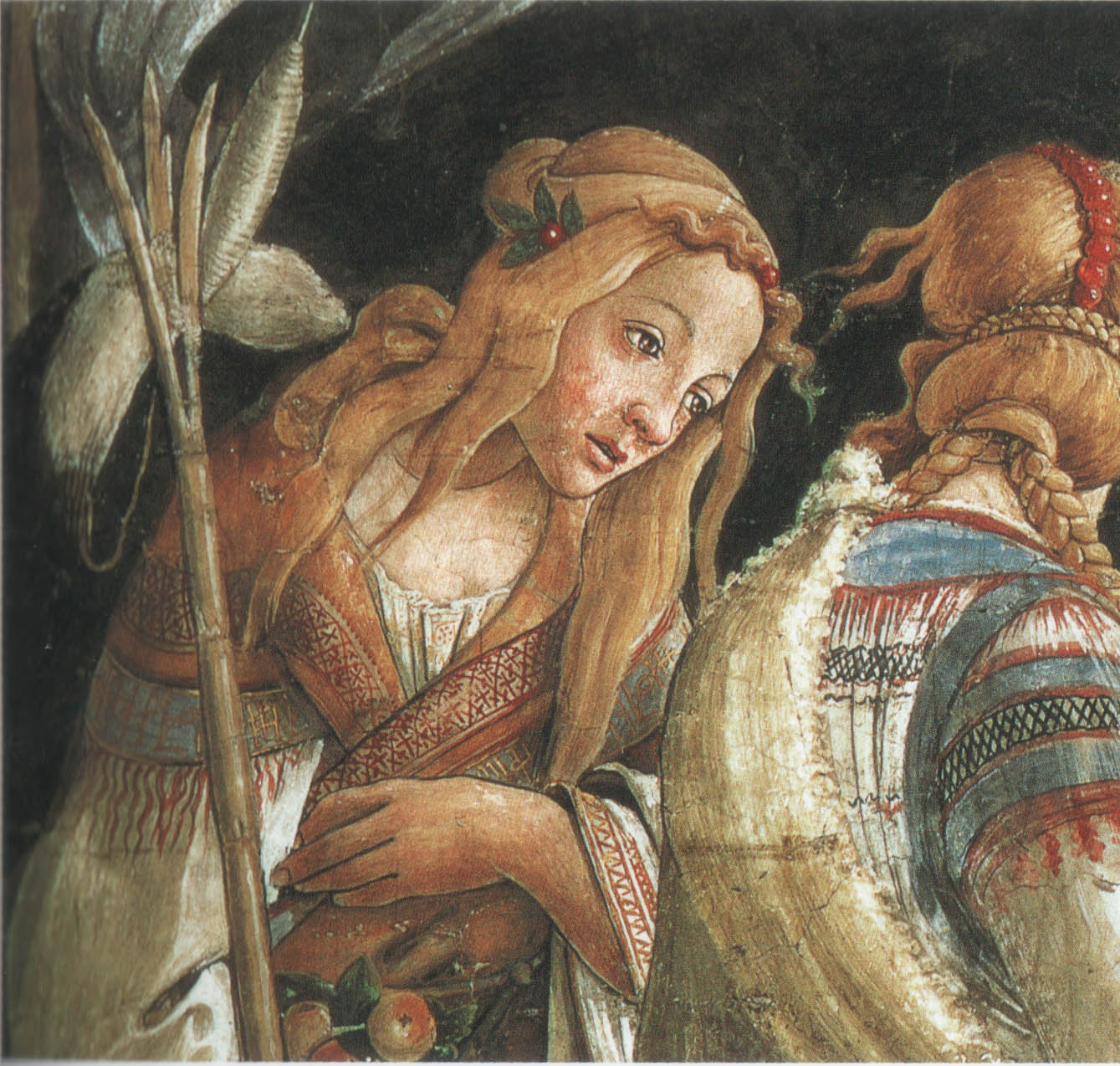
Detail of Zipporah from Botticelli’s The Trials of Moses

Detail of Zipporah from Botticelli’s The Trials of Moses

Shown above is a detail from Sandro Botticelli’s painting “The Trials of Moses” depicting Jethro’s daughter Zipporah. It is this image which Marcel Proust used to describe the love of Charles Swann’s life, Odette de Crécy. It was a mammoth undertaking, especially as Proust was gay: He constantly had to translate heterosexual behavior through a homosexual template, which was more familiar to him. (In later volumes, Marcel’s lover Albertine was thus “translated” from his Italian chauffeur, Alfred Agostinelli.) As difficult as it seems to do this, Proust succeeded so well that Swann’s Way is perhaps the greatest work in literature about disappointment in love.

Swann was not immediately taken with Odette:

[S]he had seemed to Swann not without beauty, certainly, but of a type of beauty that that left him indifferent, that aroused no desire in him, even caused him a sort of physical repulsion, one of those women such as everyone has his own, different for each, who are the opposite of the kind our senses crave. Her profile was too pronounced for his taste, her skin too delicate, her cheekbones too prominent, her figures too pinched. Her eyes were lovely, but so large they bent under their own mass, exhausted the rest of her face, and always gave her a look of being in ill health or ill humor.

A few pages later, we see what Swann (and by extension Proust) was doing in crystallizing his feelings toward this young woman::

He placed on his worktable, as if it were a photograph of Odette, a reproduction of Jethro’s daughter. He admired the large eyes, the delicate face, which allowed one to imagine the imperfect skin, the marvelous curls of the hair along the tired cheeks, and adapting what he had found aesthetically beautiful up to then to the idea of a living woman, he translated it into physical attractions which he rejoiced to find united in a creature whom he could possess. The vague feeling of sympathy that draws us toward a masterpiece as we look at it became, now that he knew the fleshly original of Jethro’s daughter, a desire that henceforth compensated for the desire that Odette’s body had not at first inspired in him. When he looked at that Botticelli for a long time, he would think of his own Botticelli, whom he found even more beautiful, and bringing the photograph of Zipporah close to him, he would believe he was clasping Odette against his heart.

Alas, Odette is openly unfaithful to Swann and drives him crazy with envy as the Comte de Forcheville moves in on his woman, while their friends at the Verdurins’ salon conspire against him. In the process, Swann’s life becomes bitter; and he no longer derives any joy from the things that hitherto had sustained him, his friends, his art, and high society. In the end, Swann admits to himself: “To think that I wasted years of my life, that I wanted to die, that I felt my deepest love, for a woman who did not appeal to me, who was not my type!”

Of course, that didn’t keep him from marrying her. But that is another story.

“A Half-Open Door”

Pieter de Hooch’s The Mother

Pieter de Hooch’s The Mother

In Marcel Proust’s Swann’s Way, Charles Swann uses his knowledge of art and music to convince himself that the love of his life is Odette de Crécy. First, he discovers a musical phrase by the composer Vinteuil which Odette also loves. Then there is the matter of the paintings. Listening to Vinteuil, his mind wanders to the work of a Dutch painter:

He would begin with the sustained violin tremolos that are heard alone for a few measures, occupying the entire foreground, then all of a sudden they seemed to move away and, as in those paintings by Pieter de Hooch, which assume greater depth because of the narrow frame of a half-open door, away in the distance, in a different color, in the velvet of an interposed light, the little phrase would appear, dancing, pastoral, interpolated, episodic, belonging to another world. It rippled past, simple and immortal, distributing here and there the gifts of its grace, with the same ineffable smile….

From my own past, I know well that one makes use of bogus comparisons to crystallize one’s growing love for a young woman. I remember one whose facial expression kept bringing the Latin word claritas to mind. It turned out that, like Swann, I was deceiving myself with someone whose motivations were anything but clear. But, such is life.

I am fascinated by Proust’s references to art and would like to recommend Eric Karpeles’s excellent book, Paintings in Proust, to anyone venturing into In Search of Lost Time.

Half Life

How Do I Survive the Rigors of Tax Season?

How Do I Survive the Rigors of Tax Season?

This is not my favorite time of the year. I have to work longer hours in a more stressful atmosphere, and I no longer have the weekends during which to unwind. My life becomes what I refer to as a “half life”—not to be confused with a radioactive isotope.

I still have dinner with Martine every evening, though the dishes I prepare (yes, I am the cook, even at this time of year) are usually simpler. After we eat, however, I disappear into my library and read until it’s time for bed, usually around 10:30 pm. At this time, however, I am more careful about the books I read: I insist on works that absorb and enthrall me. Right now, I am reading Lydia Davis’s masterful translation of Marcel Proust’s Swann’s Way, here called The Way by Swann’s. At my side is a useful volume showing all the many paintings mentioned by Proust: Paintings in Proust by Eric Karpeles.

The above painting, Vermeer’s “A View of Delft,” plays a major part in The Captive, the fifth volume in Proust’s In Search of Lost Time. I present it here in its entirety:

The circumstances of his [the writer Bergotte’s] death were as follows. A fairly mild attack of uraemia had led to his being ordered to rest. But, an art critic having written somewhere that in Vermeer’s View of Delft (lent by the Gallery at The Hague for an exhibition of Dutch painting), a picture which he adored and imagined that he knew by heart, a little patch of yellow wall (which he could not remember) was so well painted that it was, if one looked at it by itself, like some priceless specimen of Chinese art, of a beauty that was sufficient in itself, Bergotte ate a few potatoes, left the house, and went to the exhibition. At the first few steps he had to climb, he was overcome by an attack of dizziness. He walked past several pictures and was struck by the aridity and pointlessness of such an artificial kind of art, which was greatly inferior to the sunshine of a windswept Venetian palazzo, or of an ordinary house by the sea. At last he came to the Vermeer which he remembered as more striking, more different from anything else he knew, but in which, thanks to the critic’s article, he noticed for the first time some small figures in blue, that the sand was pink, and, finally, the precious substance of the tiny patch of yellow wall. His dizziness increased; he fixed his gaze, like a child upon a yellow butterfly that it wants to catch, on the precious patch of wall. “That’s how I ought to have written,” he said. “My last books are too dry, I ought to have gone over them with a few layers of colour, made my language precious in itself, like this little patch of yellow wall.” Meanwhile he was not unconscious of the gravity of his condition. In a celestial pair of scales there appeared to him, weighing down one of the pans, his own life, while the other contained the little patch of wall so beautifully painted in yellow. He felt that he had rashly sacrificed the former for the latter. “All the same,” he said to himself, “I shouldn’t like to be the headline news of this exhibition for the evening papers.”

He repeated to himself: “Little patch of yellow wall, with a sloping roof, little patch of yellow wall.” Meanwhile he sank down on to a circular settee whereupon he suddenly ceased to think that his life was in jeopardy and, reverting to his natural optimism, told himself: “It’s nothing, merely a touch of indigestion from those potatoes, which were undercooked.” A fresh attack struck him down; he rolled from the settee to the floor, as visitors and attendants came hurrying to his assistance. He was dead. Dead for ever? Who can say? Certainly, experiments in spiritualism offer us no more proof than the dogmas of religion that the soul survives death. All that we can say is that everything is arranged in this life as though we entered it carrying a burden of obligations contracted in a former life; there is no reason inherent in the conditions of life on this earth that can make us consider ourselves obliged to do good, to be kind and thoughtful, even to be polite, nor for an atheist artist to consider himself obliged to begin over again a score of times a piece of work the admiration aroused by which will matter little to his worm-eaten body, like the patch of yellow wall painted with so much skill and refinement by the artist destined to be for ever unknown and barely identified under the name Vermeer. All these obligations, which have no sanction in our present life, seem to belong to a different world, a world based on kindness, scrupulousness, self-sacrifice, a world entirely different from this one and which we leave in order to be born on this earth, before perhaps returning there to live once again beneath the sway of those unknown laws which we obeyed because we bore their precepts in our hearts, not knowing whose hand had traced them there—those laws to which every profound work of the intellect brings us nearer and which are invisible only—if then!—to fools. So that the idea that Bergotte was not dead for ever is by no means improbable.

They buried him, but all through that night of mourning, in the lighted shop-windows, his books, arranged three by three, kept vigil like angels with outspread wings and seemed, for him who was no more, the symbol of his resurrection.

There have been many scholarly analyses of the little patch of yellow wall mentioned in The Captive, such as the one to be found by clicking here and scrolling down halfway.

The past translations by C. K. Scott-Moncrieff are still widely available, but they suffer from a stiffness and even prissiness that does not encourage new readers. I have many literate friends who have been so put off by the beginning of Swann’s Way that they laid the book aside and deprived themselves of the payoff to be found by sticking it out.

How I intend to survive the rest of this tax season—the most difficult part—is by holding fast to what moves me the most in literature. And Proust is very near the top.

“The Best Solitary Company in the World”

I Mean the Book

I Mean the Book

Here is the best solitary company in the world, and in this particular chiefly excelling any other, that in my study I am sure to converse with none but wise men; but abroad it is impossible for me to avoid the society of fools. What an advantage have I, by this good fellowship, that, besides the help which I receive from hence, in reference to my life after this life, I can enjoy the life of so many ages before I lived! — that I can be acquainted with the passages of three or four thousand years ago, as if they were the weekly occurrences! Here, without travelling so far as Endor, I can call up the ablest spirits of those times, the learnedest philosophers, the wisest counsellors, the greatest generals, and make them serviceable to me. I can make bold with the best jewels they have in their treasury, with the same freedom that the Israelites borrowed of the Egyptians, and, without suspicion of felony, make use of them as mine own. I can here, without trespassing, go into their vineyards and not only eat my fill of their grapes for my pleasure, but put up as much as I will in my vessel, and store it up for my profit and advantage.—William Waller, Divine Meditations: Meditation Upon the Contentment I Have in My Books and Study

Conversation in the Cathedral

Truly a Big-Ass Novel, But Worth Every Minute Spent Reading It

Truly a Big-Ass Novel, But Worth Every Minute Spent Reading It

Even though I have so little time to myself this time of year, I still tend to pick at least one gigantic and challenging book to read each month. Last month, it was Tony Judt’s Postwar: A History of Europe Since 1945. Next month, it will be my third re-reading of Marcel Proust’s Swann’s Way. This month, it was Mario Vargas Llosa’s Conversation in the Cathedral, probably the greatest novel to come from Peru.

Conversation in the Cathedral cuts through a broad swath of Peruvian society during the dictatorship of Manuel A. Odria (1948-1956), from the corrupt Zavala family, which is tied in to Odria, and Don Cayo Bermudez, the dictator’s enforcer, to the chauffeurs, Odriista strongarms, mistresses, and whores who are all in on the take. The major characters are Santiago Zavala, nicknamed Zavalita, and Ambrosio Pardo. The first is the eldest scion of the Zavalas; the second, a black former chauffeur for Zavalita’s father and also for the infamous Cayo Bermudez, Odria’s security chief. Ostensibly, the “conversation” of the title is between Zavalita and Ambrosio, who have just met at the dog pound where the latter now works. It takes place at bar called the Cathedral.

For the first third of the novel, numerous conversations between several of the characters are interleaved—conversations taking place at different times and in different places. Then Vargas Llosa continues in a more conventional vein picking up various threads of the story. Every once in a while, however, threads of the main conversation between Zavalita and Ambrosio reappear.

Estranged from his wealthy family after a flirtation with communism as a student, Zavalita breaks free and becomes a reporter for The Crónica, a Lima daily newspaper, where he gets involved with murders, stories about lottery winners, and other lowlife minutiae, to the disgust of his family. He gets married to a nurse who his mother claims is little better than a maid.

In the end we see numerous stories of blighted ambitions and hopes arising from the heavy hand of President Odria and his enforcers—all taking place over a period of approximately a decade.

If Vargas Llosa never wrote another word in his life, I think that Conversation in the Cathedral was sufficient in its scope and excellence to qualify him for the Nobel Prize in Literature, which he eventually won in 2010, over forty years after he wrote this novel.


Books To Be Buried With

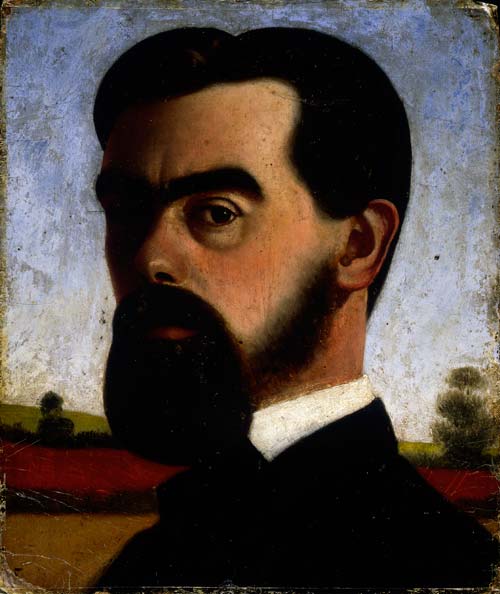
Samuel Butler

Samuel Butler

I see they packed the volume of Shakespeare that he had near him when he died in a little tin box and buried it with him. If they had to bury it they should have either not packed it at all, or, at the least, in a box of silver-gilt. But his friends should have taken it out of the bed when they saw the end was near. It was not necessary to emphasize the fact that the ruling passion for posing was strong with him in death. If I am reading, say, Ally Sloper’s Half Holiday up to my last conscious hours, I trust my friends will take it out and put it in the waste-paper basket when they see I have no further use for it. If, however, they insist on burying it with me, say in an an old sardine-box, let them do it at their own risk, and may God remember it against them in that day.—Samuel Butler, Notebooks

Against Speed Reading

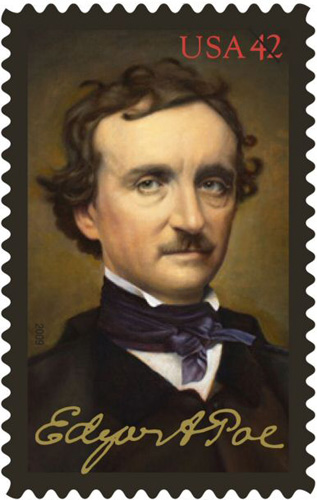
PICEdgar-Allan-Poe-stamp(1)I have seen many computations respecting the greatest amount of erudition attainable by an individual in his life-time; but these computations are falsely based, and fall infinitely beneath the truth. It is true that, in general, we retain, we remember to available purpose, scarcely one-hundredth part of what we read; yet there are minds which not only retain all receipts, but keep them at compound interest forever. Again:—were every man supposed to read out, he could read, of course, very little, even in half a century; for, in such case, each individual word must be dwelt upon in some degree. But, in reading to ourselves, at the ordinary rate of what is called “light reading,” we scarcely touch one word in ten. And, even physically considered, knowledge breeds knowledge, as gold gold; for he who reads really much, finds his capacity to read increase in geometrical ratio. The helluo librorum [“glutton of books”] will but glance at the page which detains the ordinary reader some minutes; and the difference in the absolute reading (its uses considered), will be in favor of the helluo, who will have winnowed the matter of which the tyro mumbled both the seeds and the chaff. A deep-rooted and strictly continuous habit of reading will, with certain classes of intellect, result in an instinctive and seemingly magnetic appreciation of a thing written; and now the student reads by pages just as other men by words. Long years to come, with a careful analysis of the mental process, may even render this species of appreciation a common thing. It may be taught in the schools of our descendants of the tenth or twentieth generation. It may become the method of the mob of the eleventh or twenty-first. And should these matters come to pass—as they will—there will be in them no more legitimate cause for wonder than there is, to-day, in the marvel that, syllable by syllable, men comprehend what, letter by letter, I now trace upon this page.—Edgar Allan Poe, Marginalia