An Enchantment

Charlemagne

Late in life the emperor Charlemagne fell in love with a German girl. The barons at his court were extremely worried when they saw that the sovereign, wholly taken up with his amorous passion and unmindful of his regal dignity, was neglecting the affairs of state. When the girl suddenly died, the courtiers were greatly relieved—but not for long, because Charlemagne’s love did not die with her. The emperor had the embalmed carried to his bedchamber, where he refused to be parted from it. The Archbishop Turpin, alarmed by this macabre passion, suspected an enchantment and insisted on examining the corpse. Hidden under the dead girl’s tongue he found a ring with a precious stone set in it. As soon as the ring was in Turpin’s hands, Charlemagne fell in love with the archbishop and hurriedly had the girl buried. In order to escape the embarrassing situation, Turpin flung the ring into Lake Constance. Charlemagne thereupon fell in love with the lake and would not leave its shores.—Italo Calvino, Six Memos for the Next Millennium, quoting Barbey d’Aurevilly.

“A Naked Stranger”

David Lindsay’s VOYAGE TO ARCTURUS

The sea tempted him. He made up his mind to bathe, and at once walked toward the shore. The instant he stepped outside the shadow line of the forest trees, the blinding rays of the sun beat down on him so savagely that for a few minutes he felt sick and his head swam. He trod quickly across the sands. The orange-coloured parts were nearly hot enough to roast food, he judged, but the violet parts were like fire itself. He stepped on a patch in ignorance, and immediately jumped high into the air with a startled yell.

The sea was voluptuously warm. It would not bear his weight, so he determined to try swimming. First of all he stripped off his skin garment, washed it thoroughly with sand and water, and laid it in the sun to dry. Then he scrubbed himself as well as he could and washed out his beard and hair. After that, he waded in a long way, until the water reached his breast, and took to swimming—avoiding the spouts as far as possible He found it no pastime. The water was everywhere of unequal density. In some places he could swim, in others he could barely save himself from drowning, in others again he could not force himself beneath the surface at all. There were no outward signs to show what the water ahead held in store for him. The whole business was most dangerous.

He came out, feeling clean and invigorated. For a time he walked up and down the sands, drying himself in the hot sunshine and looking around him. He was a naked stranger in a huge, foreign, mystical world, and whichever way he turned, unknown and threatening forces were glaring at him. The gigantic, white, withering Branchspell, the awful, body-changing Alppain, the beautiful, deadly, treacherous sea, the dark and eerie Swaylone’s Island, the spirit-crushing forest out of which he had just escaped—to all these mighty powers, surrounding him on every side, what resources had he, a feeble, ignorant traveller to oppose, from a tiny planet on the other side of space, to avoid being utterly destroyed?… Then he smiled to himself. “I’ve already been here two days, and still I survive. I have luck—and with that one can balance the universe. But what is luck—a verbal expression, or a thing?”—David Lindsay, A Voyage to Arcturus


Under Brinkie’s Brae

Alfred Street in Stromness

I have been to Stromness in Orkney twice, once in 1976 and again in 1998. It is a strange little town with narrow winding streets—and, oh yes, a great poet and storyteller who lived here until his death in 1996. I am talking about George Mackay Brown (b. 1921), whose work I have been reading since I met him outside the town’s bookstore in 1976 while clutching a copy of his poem collection, Fishermen with Ploughs.

Tongue-tied, I asked him whether he was George Mackay Brown, knowing full well that he was, as his likeness was familiar to me. He smiled and said, “I cannot deny it.” If my heart were not in my throat, I would have invited him out for a pint. As it was, I showed him my book, being even too shy to ask for his autograph. We went our separate ways.

What I hope to accomplish here in my blogging here on WordPress is what Brown accomplished in a weekly column he wrote for The Orcadian, a newspaper published in Kirkwall, some fifteen miles eastward. Just to give you an idea of the flavor of his work, here is one of his essays entitled “Place names”:

I was sitting idly in the sun the other afternoon when seemingly out of the blue, the words “Orkney Islands” came into my mind. A waste of syllables, really: since Orkney itself means Orc islands. The fault is what is called, I think, tautology. (Whether “Orc” means whale, or seal, or boar, I leave to the experts to decide.)

That’s not the only tautology in our list of place names. “Houton Head”—the Hout part itself signifies headland (like Howth promontory outside Dublin).

Another misnomer is Brough of Birsay. Possibly the whole parish derives its name from the tidal island where there was originally a keep or fortification of some kind.

The very south end of Stromness is called the Point of Ness; which is to say, “the point of the point,” Ness meaning a piece of land thrusting into the sea: in this case, into the tiderace of Hoy Sound. That is why Stromness is called what it is. Living in the town itself, this is not so obvious. But coming down the Scorradale Road into Orphir, there it lies, a thrust of hard land into the wide strong waters. (Maybe the Norseman who gave Stromness its name was looking west one day from the Orphir foothills.)

Brown’s little essay goes on and names other places in the archipelago, ending with “Hrossey,” the island of the horse, which was the original name of what is today called the Orkney “mainland,” though it is by no means a mainland, but just the largest of the isles off the north end of Caithness.

I have just finished the second volume of Brown’s columns for The Orcadian, called Under Brinkie’s Brae, after the hillside overlooking the east end of Stromness. The pieces were charming and often quite lyrical, full of northern Scots words such as “haar,” “peedie,” “noust,” “Hogmanay” (that’s New Years), “clapshot” (mashed “tatties” and “neeps” with a liberal infusion of butter).

To get to Orkney, you have to take the slow train from Inverness to Thurso, and thence via a short bus ride to Scrabster, where the roll-on roll-off ferry St. Ola will transport you past the Old Man of Hoy to Stromness. There you will find an austere land almost entirely devoid of trees (the wind is so fierce). On Orkney, you will never be far from the sea, and you will never be far from George Mackay Brown, the poet of Hamnavoe (the old Norse name for Stromness).

Follow the Bouncing Ball

Argentinean Author César Aira

Most traditional literature is somewhat like a series of nested matryoshka dolls: You come back out the way you go in. In the process, all unresolved issues are neatly resolved (one hopes), and one has experienced a real 19th century experience.

Well, that doesn’t seem to be happening any more, except perhaps in some whodunits. It certainly isn’t happening in the slim novels of César Aira, an Argentinean from Coronel Pringles who writes the way a Roomba vacuum cleaner robot cleans: He just moves in a straight line until he encounters a barrier that sends him off in another direction.

In Varamo, we are in the city of Colón in Panama some 20 years after the Panama Canal was built. Varamo is the name of a Chinese-Panamanian who works for one of the government ministries in Colón. The story begins when, as his pay, he is handed 200 counterfeit pesos which he at once recognizes and is afraid to cash. He walks to the cafe one evening and witnesses an accident in which one of the government ministers is severely injured. That makes him late to the cafe, where he runs into three pirate publishers who urge him to write a book, which Varamo gladly does. It turns out to become a Central American poetry classic: The Song of the Virgin Boy.

Along the way, he encounters other adventures, but this will do for now. In the last paragraph, Aira gives a kind of apologia for his own highly individualistic writing style:

The result was Varamo’s famous poem, except that it was less a result in itself than a way of transforming what had preceded it into a result. It produced a kind of automatism or mutual fatality, by which cause and effect changed places and became the same story. Far from diminishing the poem’s initial vigor, this circle intensifies it. Which is, in fact, what always happens. If a work is dazzlingly innovative and opens up unexplored paths, the merit is not to be found in the work itself, but in its transformative effect on the historical moment that engendered it. Novelty makes its causes new, giving birth to them retrospectively. If historical time makes us live in the new, a story that attempts to account for the origin of a work of art, that is, a work of innovation, ceases to be a story; it’s a new reality, and yet a part of reality as it has always been for everyone. Those who don’t believe me can go and see for themselves.

Now there’s a manifesto! Aira’s “new reality” has, with me, fallen on receptive ears. I have read every Aira book that I could get my hands on. They are all relatively short, but always succeed in defying any attempt at speed-reading. This Argentinean knows how to throw curve balls that bounce all over the place. Following their trajectory across space and time is not only great fun, but also profound, in a weird way.

Photo Credit: The above picture—a favorite of mine—comes from the Buenos Aires BAFICI website (dedicated to independent filmmakers).

Series Business

On one hand, people are not reading as much as they used to. On the other hand, the one part of the publishing business that’s still booming is the Young Adult (YA) series market, as best exemplified by the Harry Potter novels, Stephenie Meyer’s Twilight series, and now The Hunger Games.

Without passing judgment, I think overall it’s a good trend, as it indicates that books do indeed have a future. Some of these series are good (I read all the Potter novels as they came out), and some are probably dreck. (But remember, I’m not naming names here.)

Even among adults, it appears that mysteries, romances, and science-fiction series tend to predominate. Certainly that’s the case for Kindle e-books. Currently on the Kindle best seller list are such series as Fifty Shades, the Hunger Games, Penryn & the End of Days, Bone Secrets, the Century Trilogy, the Inn BoonsBoro Trilogy, Books of Bayern, Songs of Ice and Fire, and Elemental Mysteries.

Now I have been partial to a number of series, most particularly:

  • Bernard Cornwell’s Sharpe Books and Saxon Series
  • The Inspector Dalgliesh novels of P. D. James
  • The George Smiley novels of John Le Carré
  • The Aubrey/Maturin novels of Patrick O’Brian
  • Dorothy Sayers’ Lord Peter Wimsey stories
  • P. G Wodehouse’s Jeeves novels and stories
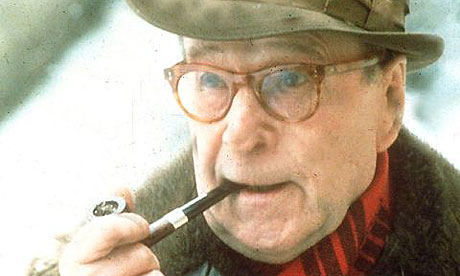
  • Georges Simenon’s Inspector Maigret novels and stories

… and the list goes on—in fact for quite a while—because I guess I’m just as susceptible as YA readers to the power of sequels. When I’ve finished a challenging BAB (that’s technical for Big-Ass Book), I feel like relaxing with something that’s not too challenging and very like something else of the same sort that I’ve read and liked. For instance I’ve just finished seven days of Anatoly Rybakov’s novel Fear, about Stalin’s purges of the late 1930s—to the tune of 686 pages. Before I cut out on my trip, I’m going to want to read something that doesn’t send me dragging through any concentration camps or NKVD interrogation sessions.

Isn’t that funny? I started writing this post with the idea of lambasting Stephenie Meyer and her ilk, but I would have to point the finger of blame at myself for occasionally indulging in light reading. (Not that I avoid books of substance, but rather that I enjoy variety as much as anybody.)

I suppose that if I read nothing but Stephenie Meyer and Harry Potter, I would deserve a sneer from a literary snob such as I picture myself to be. Oh, well, let he who is without sin cast the first stone!