Solar Maximum?

An Unusual View of Our Sun Three Weeks Ago

An Unusual View of Our Sun Three Weeks Ago

As we in Southern California suffer through wildfires, desert winds, and hundred-degree temperatures, I was impressed by this view of the sun from Astronomy Picture of the Day on May 6 of this year. According to the description:

Our Sun has become quite a busy place. Taken only two weeks ago, the Sun was captured sporting numerous tumultuous regions including active sunspot regions AR 2036 near the image top and AR 2038 near the center. Only four years ago the Sun was emerging from an unusually quiet Solar Minimum that had lasted for years. The above image was recorded in a single color of light called Hydrogen Alpha, inverted, and false colored. Spicules cover much of the Sun’s face like a carpet. The gradual brightening towards the Sun’s edges is caused by increased absorption of relatively cool solar gas and called limb darkening. Just over the Sun’s edges, several filamentary prominences protrude, while prominences on the Sun’s face are seen as light streaks. Possibly the most visually interesting of all are the magnetically tangled active regions containing relatively cool sunspots, seen as white dots. Currently at Solar Maximum—the most active phase in its 11-year magnetic cycle, the Sun’s twisted magnetic field is creating numerous solar “sparks” which include eruptive solar prominences, coronal mass ejections, and flares which emit clouds of particles that may impact the Earth and cause auroras. One flare two years ago released such a torrent of charged particles into the Solar System that it might have disrupted satellites and compromised power grids had it struck planet Earth.

Kind of looks like a shaggy old tennis ball, doesn’t it?

 

Snowballs from Hell

Mammillaria geminispina

Mammillaria geminispina

There they were, looking like snowballs Martine and I could pick up and toss at each other. But they were not snowballs, but a kind of cactus from Mexico called Mammillaria geminispina, which is native to the states of Veracruz and Hidalgo. The little red flowers make them look even more innocent and pick-up-able. They join the Cholla family of cacti, especially the notorious “Teddy Bear” Cholla with its fuzzy look and barbed spines.

The Mammillaria at Huntington Gardens in San Marino, California, are just one of thousands of reasons why the cactus garden there is one of the best in the world. Just when you think you know what a cactus should look like, you see specimens from Bolivia or Namibia that take you back to Square One.

According to a sign near the Mammillaria, “It forms large mounds, a strategy which retains moisture beneath the plant and discourages grazing. Its dense white spines reflect heat.” And, if anyone wants to pick them up, they are welcome to do so. The First Aid Station is only a third of a mile away.


Robots, TED Talks, and Butchers’ Thumbs

Don’t Believe Everything You Hear!

Don’t Believe Everything You Hear!

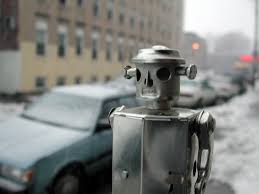
Coming home from work today (yes, now I’m working Saturdays), I heard something that made me sit bolt upright while listening to a National Public Radio program dedicated to TED talks. You may recall that TED (short for Technology, Entertainment, Design) is the dernier cri when it comes to spreading dubious notions. This one was a talk by Cynthia Breazeal of MIT entitled “The Rise of Personal Robots.”

Ms. Breazeal dreamed of a day when robots would solve many of our societal and personal problems. What makes me suspicious is what I call the Butcher’s Thumb Paradox. A good electronic scale makes weighing cuts of meat easy and accurate—except for one thing. I am referring to the butcher’s thumb, which, resting on the scale, adds several ounces to your purchase.

In the world of robotics, what would serve as the butcher’s thumb are the corporations that build the robots. The robots will serve you, the purchaser, to some extent; but, even more, they serve the marketing goals of the corporations that build them. That’s why robots have been used extensively to kill manufacturing jobs, because they are cheaper than humans, don’t ever unionize, and don’t require expensive health or workmen’s compensation insurance.

Remember how many technical support problems the telephone was supposed to solve. Now, when you call a major corporation for tech support, you get what’s called an automated attendant, which walks you through a script. Now I don’t know about you, but the option you are looking for doesn’t exist about 50-60% of the time. Why? Because it is never in the corporation’s best interest to explain anything to you which may require follow-up questions and answers. They’ll connect you to sales right away, but God help you if they accidentally billed you for a left-handed sky hook or delivered a device that was, in effect, a non-functioning paper weight. In fact, many vendors will now charge you to answer questions. Questions are quite simply unprofitable. Too bad about your needs!

Before we ever get a personal robot to help us with the housework or carry out the garbage, we will have robot bill collectors, robot parking police, and robot callers. (Wait a minute! We already have those! And aren’t they fun?)

So when TED speakers promise great money and time saving advances for us plain folks, keep looking for the butcher’s thumb. It’s there somewhere….

Tarnmoor’s Iron-Clad Rule #1: Ecology

Dinosaur Skeleton at L.A.’s Natural History Museum

Dinosaur Skeleton at L.A.’s Natural History Museum

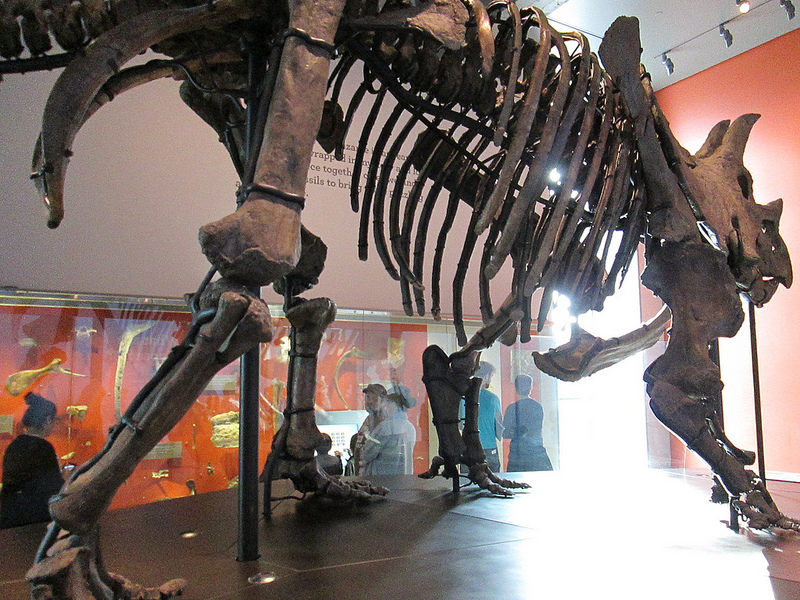
This is the start of a new series on what I perceive to be iron-clad rules based on my perceptions of human psychology, science, and other factors. I will start with ecology.

Most of us would like to do what we can to save the environment. I certainly do. But I am only one person, and there are several billion refractory individuals who refuse to be influenced by me. People who mine coal, cut down redwoods, and manufacture Soylent Green in bulk will wish to continue to do so. They need the job and don’t give a flying petoot what some tree-hugging pansy-assed Liberal wants. No, they don’t care about Whooping Cranes, the California Condor, or any number of endangered amphibians or insects. To hell with ’em: Let ’em all get extincticated.

Even I am conflicted: I love to travel, but most of the places I want to visit involve an airline flight, often for long distances. A pogo stick or skateboard will just not get me to Argentina.

So here is Tarnmoor’s Iron-Clad Rule #1: People who have a vested interest in things continuing as they are will not move a muscle to help the environment. And that includes both Progressives and Conservatives in great numbers.

Whatever the rule may state, I will continue to do what I can, in my own small way, to help slow down what appears to be the coming extinction of the human race by its own accumulated garbage. (Though I won’t stop traveling while I can.)

Eventually, things will reach such a pass that there won’t be a choice. I think that the major cities of China are fast reaching that point with their abysmal air quality. The potential collapse of the ground over drained-out aquifers in the United States may be coming soon. And that’s not to mention such catastrophic game-changers as the asteroid that caused the Cretaceous Extinction.

The Earth Is 6,000 Years Old? Really?

Apparently Old Enough to Have Eaten All of Ken Ham’s Ancestors

Apparently Young Enough to Have Eaten All of Ken Ham’s Ancestors

On February 4, Bill Nye the Science Guy debated a Creationist moron named Ken Ham on the subject of evolution. Of course, Mr. Ham treated the Book of Genesis (and whatever he thought about it) as his primary source. Apparently, according to the Creationist, all of creation is about 6,000 years old. What’s the point of even trying to debate a fundamentalist Christian troglodyte? I believe with Shakespeare in Hamlet (III:1):

Let the doors be shut upon him
That he may play the fool nowhere but in’s own house.

I am referring to Mr. Ham here, not Bill Nye. I mean, even Pat Robertson—no mean troglodyte himself—reproved the half-baked Ham for his beliefs:

There ain’t no way that’s possible….To say that it all came about in 6,000 years is just nonsense and I think it’s time we come off of that stuff and say this isn’t possible. We’ve got to be realistic that the dating of Bishop Ussher [who merely added the ages of the generations in the Bible] just doesn’t comport with anything that’s found in science, and you can’t just totally deny the geological formations that are out there.

“Let’s be real!” he added. “Let’s not make a joke of ourselves.”

Big Surprise!

Big Surprise!

Why do even the more stupid religious fundamentalists believe such arrant nonsense? I think that, if anyone should debate a fool like Ken Ham, it should be a comedian, not a sincere scientific figure like Bill Nye. This was in no way a victory for the Hammites, nor for the followers of scientific evolution. It was just another sad episode of rural stupidity in the former Confederacy.


Subatomic Physics Can Be Fun

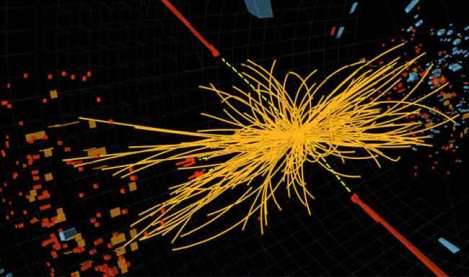
What Looks Confusing Here ... Is Actually VERY Confusing

What Looks Confusing Here … Is Actually VERY Confusing

The trick with subatomic particles is not to photograph them without their permission—and preferably get them to sign a release beforehand. We are led to believe that the history of elementary particle physics has followed a very different course from that of cosmetology. Progress, when it came, was only when the following particles were identified:

  • Kleptons (K€), when an electron “steals” another electron and “stashes” it somewhere
  • Futons (Fu), which are electrons which have been identified while in “sleep” mode
  • Quacks (Q§), which occur when an electron “ducks” an attempt by a wannabe klepton to “steal” it

When an electron meets another electron “coming through the rye,” the result are three quantities, or quantons, called, respectively Q¹, Q², and Q®. The solution found in the 1980s was a new quantum field theory of the demented nuclear forces. This pattern was initially patterned after quantum electrodynamics, but later incorporated quantum electrodynamics by the exchange of photons, gifts, Christmas cards, HIV, and identities. The demented nuclear force in this “electrolux” theory is transmitted by the exchange of Q¹, Q², and Q® quantons in collision with a late-model Porsche Carrera.

Speculations of this sort run into an obvious difficulty: photons do not attend Mass, while any new particles such as Q¹, Q², and Q® would have to be very sexy, or they would have been discovered (and ogled) decades earlier—the sexier the particle, the more intense the energy needed to penetrate it in a particle decelerator, and the cheaper and more tawdry the decelerator.

There was also the stubborn problem of infinities. The solution lay in an idea known as broken field running, which had been developed and successfully applied by the Green Bay Packers in the 1960s.

In the late 1970s, the right theory was discovered. Like the successful electrolux theory, it turned out to resemble quantum electrodynamics, only now with a quantity called “wackiness” taking the place of electrical charge. In this theory, known as Krazy Kromodynamics, the demented forces between kleptons are produced by the exchange of civilities of eight kinds of quasi-particles known as wackons, comprising of blue, red, pink, gray, orange, green, purple, and yellow futons emitting loud quacks.

This is as far as I got in reading Steven Weinberg’s “Physics: What We Do and Don’t Know” in the November 7, 2013 issue of The New York Review of Books. As you can see, it’s all starting to come together, and frankly, I’m scared.


Birthday of an Island

The Island of Surtsey as It Is Today

The Island of Surtsey as It Is Today

Fifty years ago today, the Island of Surtsey was born as the result of an undersea volcanic eruption in Iceland’s Westmann (Vestmannæyjar) Islands. Named after Surtr, one of the giants of Norse mythology, the island was at one time one square mile, but as a result of erosion has over the last fifty years been whittled down to a little more than half that size.

Did I visit Surtsey on my trip to Iceland this summer? I would have if it weren’t forbidden. Only scientists can visit the island, and only under restrictive conditions. For instance, they must not carry seeds to the island. One time, tomato plants started to grow as a result of a tomato seeds being in one of the researchers’ excreta. All biota on the island must have come there naturally as a result of wind or transport by birds. There are few places on earth which are unaffected by human habitation: The intent is to see what happens when we humans don’t have our thumbs resting on the scales.

The photo above is from Páll Stefánsson of The Iceland Review.

Digital Isn’t Everything

Design on Turn of the Century Orchestrion

Design on Turn of the Century Orchestrion

Yesterday’s visit to the Nethercutt Collection in Sylmar (q.v.) has convinced me that the Smart Phone has warped our aesthetic sensibilities. The automobiles and music machines collected by J. B. Nethercutt and his successors are large and, for the most part, beautifully designed. Now our new automobiles are much more boring—even the Mercedes-Benzes and BMWs don’t look much better than most standard-issue American and Korean cars. I get the feeling that the app-loaded Smart Phone is our new criterion of success. It is as if where we were evolving over the last hundred years is toward Dick Tracy’s wrist TV (see illustration below).

Is This All There Is?

Is This All There Is?

If we want to listen to music, we download the music ourselves, either from a free or a pay website, and load it onto an iPod or MP3 player. Of course, since the music is now completely portable, we usually need earbuds or an earphone. The Mighty Wurlitzer and other orchestrions at the Nethercutt produced a big sound without any digital amplification. Most notable is the top-of-the-line player piano on which I listened to George Gershwin’s own recording of Rhapsody in Blue. Trust me, it was better than the best digital I ever heard.

Perhaps we have taken digital about as far as it can go. At some point, Moore’s Law will run into some natural barrier; and researchers will start to take another look at analog. I’m not saying we’ll return to records: Toward the end of the long-play record era, I had a hard time finding vinyl records that weren’t warped. What will probably happen is a combination of digital and analog in new media. The CD is almost out of date; the MP3 player will be next. Who can say what will be the next medium for conveying music?

Extreme Weather

Are You Ready for Biblical Storms?

Whether or not you believe in climate change, it’s going to happen—all over you! The Montana thunderstorm illustrated above looks like something from a science fiction movie, but it’s just typical of the kind of intense weather we can expect from now on.

The reason my mind dwells on the subject right now is that we are having a heinous heat wave in Southern California, the kind of heat wave that makes a good night’s sleep impossible. My apartment building was built just after World War Two, so it wasn’t insulated. When I woke up at 6:30 this morning, it was still 82 degrees Fahrenheit in the bedroom. Tonight I expect it to be still hotter.

At lunch today, I read an interesting article in The New York Review of Books (June 20, 2013) on Henry Petroski’s To Forgive Design: Understanding Failure. In it, reviewer Bill McKibben writes:

In the course of Petroski’s life, and all of ours, we’ve left behind the Holocene, the ten-thousand-year period of benign climatic stability that marked the rise of human civilization. We’ve raised the global temperature about a degree so far, but a better way of thinking about it is: we’ve amped up the energy trapped in our narrow envelope of atmosphere, and hence every process that feeds off that energy is now accelerating. For instance, this piece of simple physics: warm air holds more water vapor than cold. Already we’ve increased moisture in the atmosphere about 4 percent on average, thus increasing the danger both of drought, because heat is evaporating more surface water, and of flood, because evaporated water must eventually come down as rain. And those loaded dice are doing great damage. The federal government spent more money last year repairing the damage from extreme weather than it did not education.

Haboob Time

Haboob Time

Now I’m not going to point any fingers, because, frankly, it’s too late. We can expect a lot of terrible weather all around the globe, from hundred-year floods to hundred-year-droughts—except occurring in much less time than a hundred years. Every year we seem to break new records, such as the Rim Fire now threatening Yosemite National Park.

Speaking as a Californian, I hope that the phenomenon we are now facing does not affect the movement of tectonic plates under the earth, or we are in for a wild ride. No, California won’t fall into the ocean, but it will continue to shake and bake … at an accelerated rate.

Not Just About Rocks

Zion National Park

Zion National Park

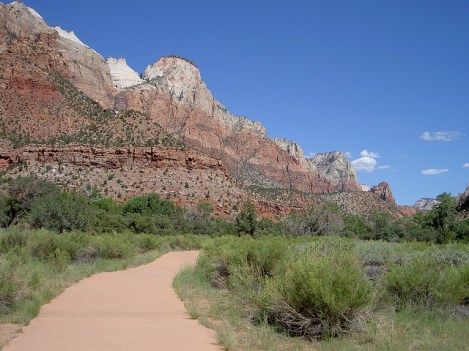
Geology is one of those subjects I would like to know much more about. Although I took the subject in college during late Ordovician times, it was all dictated by synclines, geosynclines, and anticlines, which I never quite understood—nor did the geologists who promulgated the notion.

Living as I do in the American Southwest, where the rocks are not covered by all that dirt, geology is something that seems more immediate. All the more so when the earth shakes as the tectonic plates are slowly marching on their pre-ordained paths to their next destination.

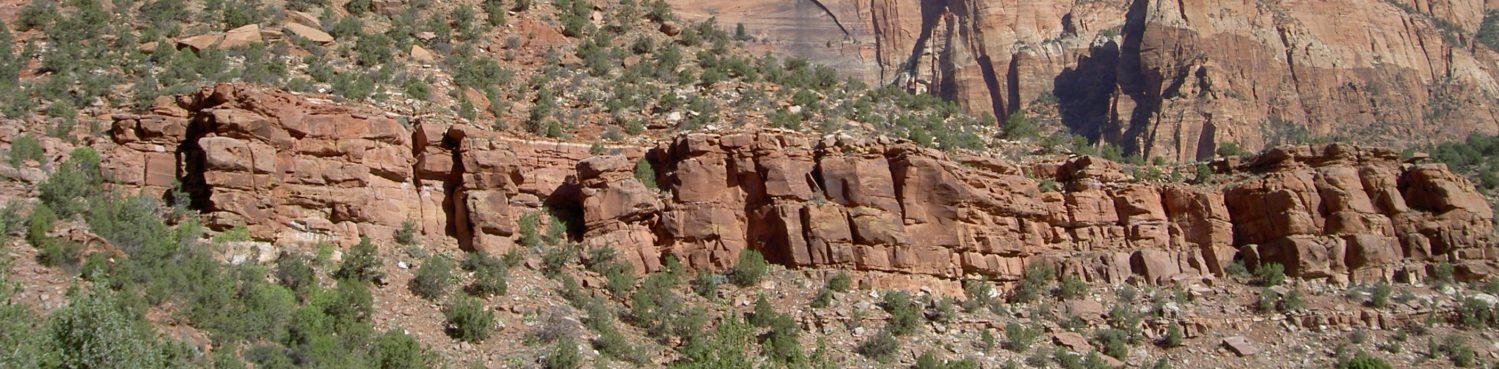
Geology is the history of what lies under our feet. It’s not just the study of rocks—though I can see where that could be interesting—but the study of long, slow processes that are changing the face of the earth. I saw some of those processes in action at Vatnajökull Glacier in Iceland, which has retreated hundreds of meters since the 1930s, when a road around the whole of the country was a laughable ides. Even now, the road across the black sands drained by the glacier is only a temporary expedient.

But then we are all temporary. If we want to see how small we are, we could make a study of the stars. But why go that far? The earth under our feet can be just as bizarre and alien. We talk about global warming as if it had never occurred before. It is just as likely that the currents of the oceans will reverse, bringing cold weather southward; and the glaciers may just start to re-form. We just don’t know.

I just finished reading John McPhee’s book In Suspect Terrain, about the forces that formed the eastern part of the United States, mostly the Appalachian Mountains. Plate tectonics explains some things, but as one geologist remarked, “While geologists argue, the rocks just sit there. And sometimes they seem to smile.”

This and the other titles in McPhee’s geological tetralogy, are good books to read if you want to puncture a few misconceptions.